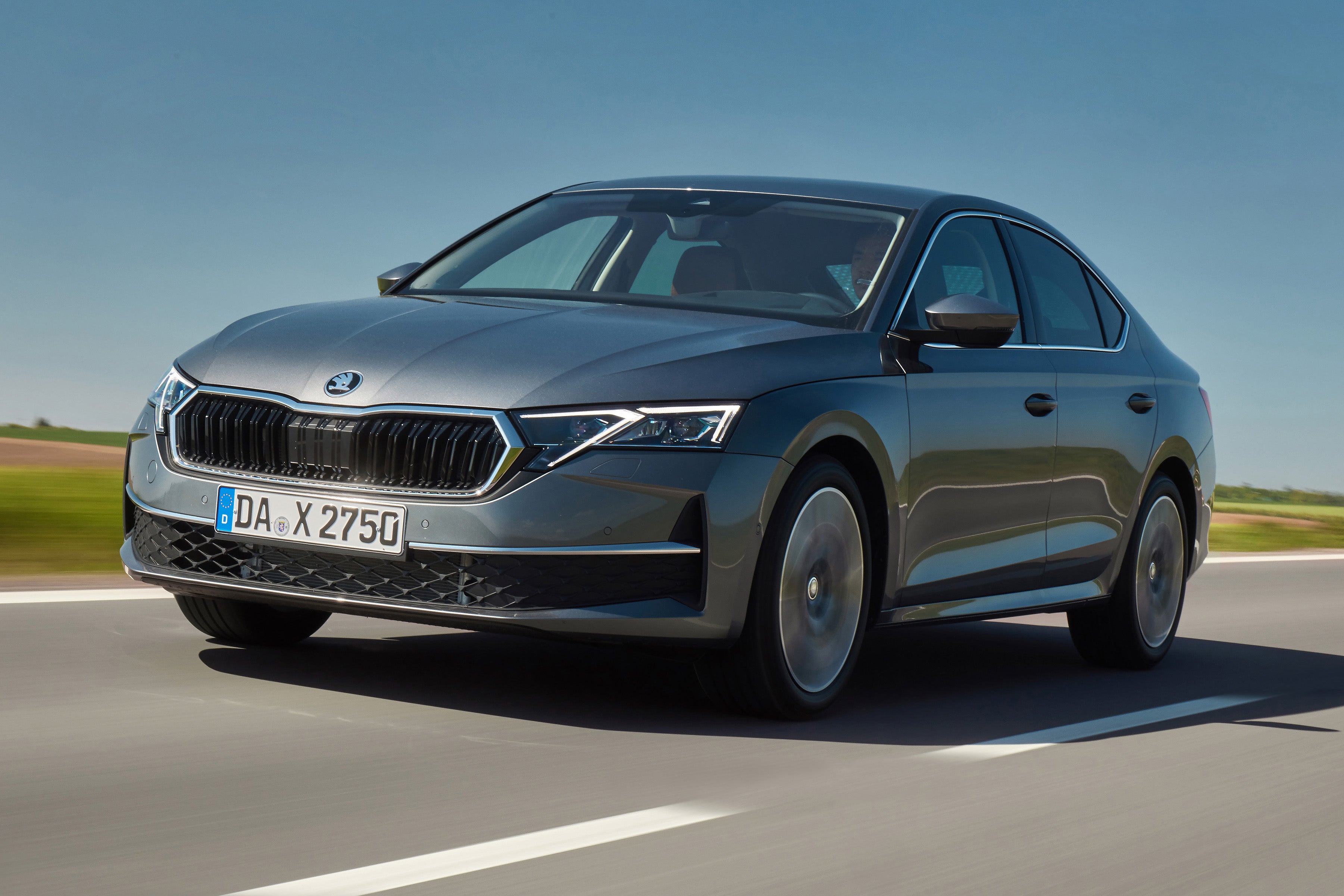
Skoda Superb Review

Written By Ivan Aistrop
- 2024
- Hatchback
- Petrol, mild hybrid petrol, diesel
What we love
Excellent cabin and rear-seat space
More comfortable and more grown-up than most alternatives
Huge boot and very strong long-distance refinement
Things to consider
Higher-spec versions carry a noticeable premium
Some buyers will still prefer the extra versatility of the estate
Large dimensions are worth bearing in mind around town
The DRIVE take on the Skoda Superb, is it the right car for you?
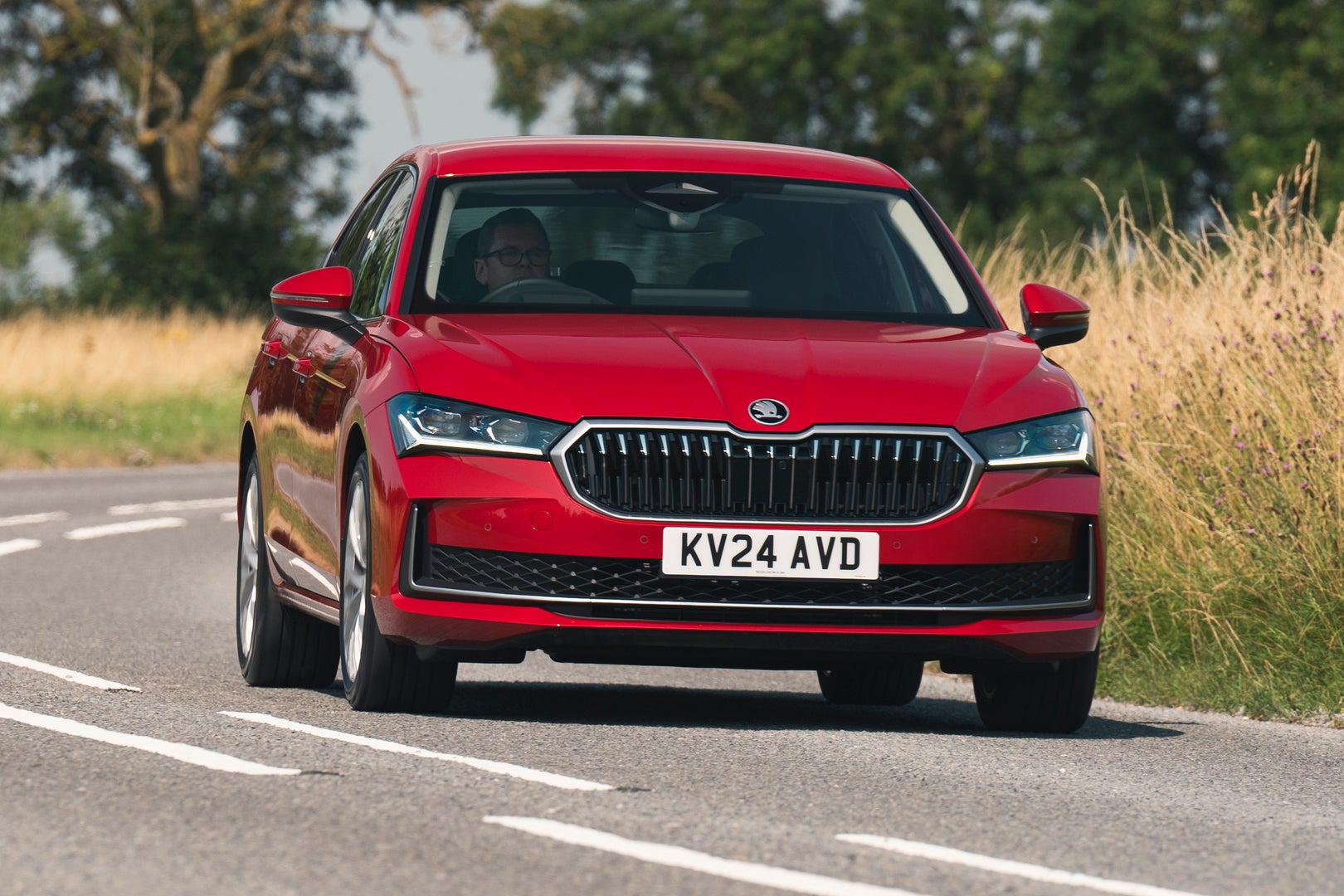
The Skoda Superb remains one of the easiest large family cars to recommend if you want comfort, space and sophistication without moving into premium-badge price territory. It’s not exciting in the way a BMW 3 Series can be, and if you want the last word in outright handling sharpness or brand cachet, there are better places to look. But for real-world buyers who spend lots of time on motorways, carry adult passengers regularly and want a car that feels properly relaxing to live with, the Superb really hits the spot. In hatchback form, it is especially appealing if you like the lower running costs and tidier shape of a saloon-style car, but still want the practicality of a huge opening tailgate.
The Skoda Superb in more detail
The current Skoda Superb is the fourth generation of Skoda’s long-running flagship, and the basic recipe has always been the same. This is a big, sensible, quietly clever family car designed to deliver exceptional everyday practicality and comfort with minimum fuss. This generation of Superb feels more polished and more upmarket than before, with a cleaner cabin, smarter technology and a more cohesive engine line-up.
In the UK, the hatchback sits alongside the Superb Estate, with petrol mild-hybrid, regular petrol and diesel powertrains available depending on trim. The Estate is also offered with a plug-in hybrid powertrain, but that’s not currently offered with the hatchback.
The 150PS 1.5-litre e-TEC mild hybrid petrol is the entry point to the range, while the 150PS 2.0-litre diesel still makes a lot of sense for those who do regular high-mileage motorway work. The stronger 2.0-litre petrol and diesel versions, some of which have four-wheel drive, give the range a bit more breadth for buyers who want effortless pace.
Browse used Škoda Superbs for sale →
The key reason people buy a Superb, though, is space, because there’s absolutely loads of it. Rear legroom is particularly generous, to the point that adults can stretch out in the back in a way that they simply can’t in most cars at this price. The hatchback’s 645-litre boot is huge, and because this is a hatchback rather than a traditional saloon, it is much easier to load bulky items than the three-box shape might suggest.
That practicality is matched by a calm, mature feel on the move. The Superb majors on ride comfort, refinement and easy progress rather than sharp handling, and that’s precisely what a car like this should do.
The car also benefits from fairly slick infotainment hardware, while Skoda’s Smart Dials help keep key functions easier to access than in rivals that rely more heavily on the touchscreen functionality.
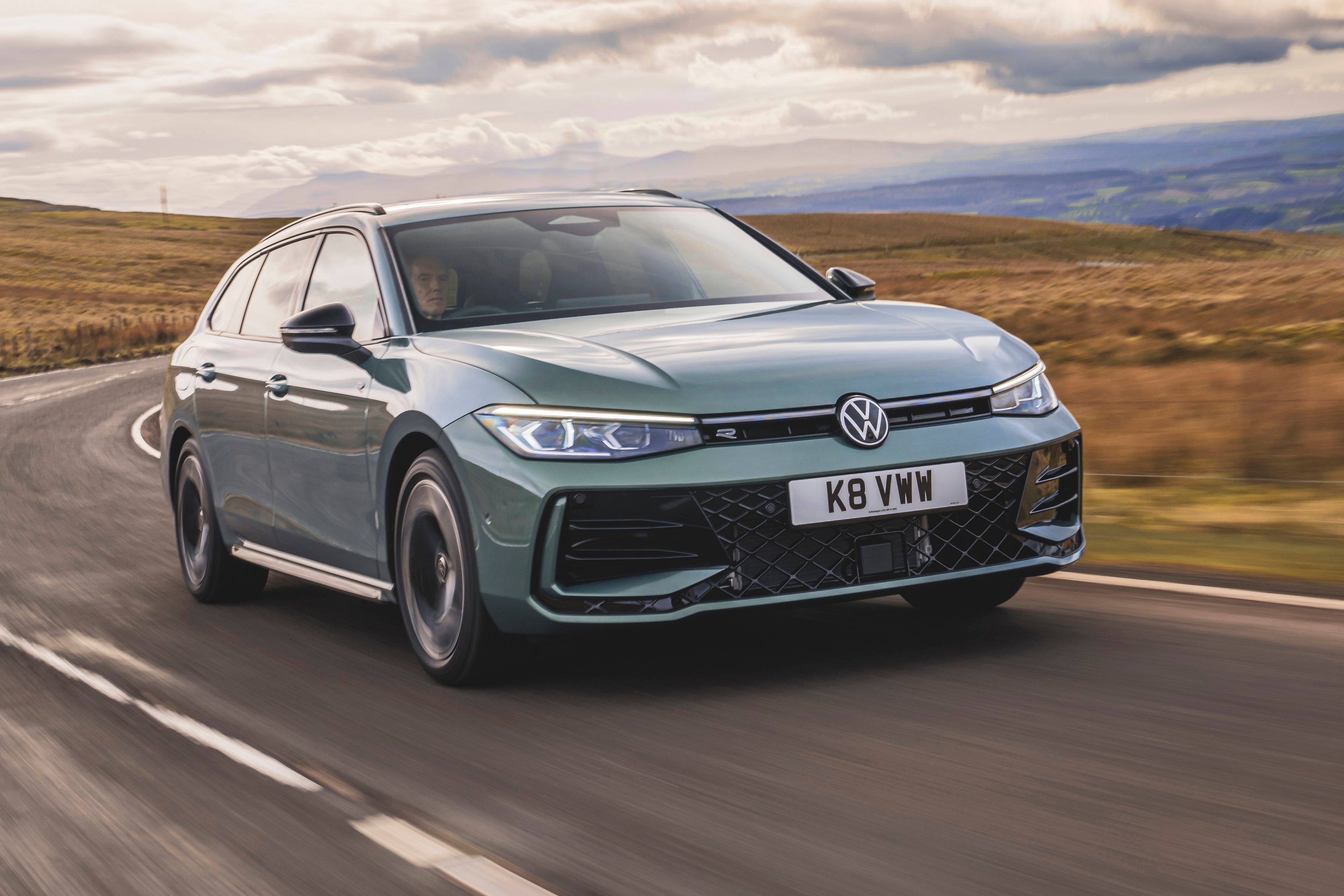
There are alternatives, including the closely related Volkswagen Passat (which is only available in estate car form these days), but the Superb keeps its own identity. It feels slightly less image-led and more pragmatic, which is precisely why a lot of buyers will prefer it.
What's the best Skoda Superb trim and engine option?
For most private buyers, the sweet spot in the hatchback range is the Superb SE L with the 1.5 TSI e-TEC 150PS DSG. That combination gives you a posher-feeling car than the entry-level SE Technology, but without pushing the price up into a territory where the Superb starts to lose one of its biggest strengths, which is value. The 150PS mild-hybrid petrol is not especially exciting, but it is smooth, quiet and perfectly adequate for the way most Superbs will be used. It also keeps fuel economy respectable and company car tax less painful than the bigger petrol engines.
Don’t get us wrong, the SE Technology is not a bare-bones car, but SE L is where the Superb starts to feel properly plush. You get more comfort kit, more adjustment and a more convincing executive-car feel, which suits the model’s character. If you spend hours at a time behind the wheel, it’ll make an appreciable difference.
The other engine worth serious consideration is the 2.0 TDI 150PS DSG. Diesel is no longer the default choice it once was in cars like the Superb, but it still makes a convincing case for itself if you do frequent long motorway runs. With that kind of use, you’ll get better real-world fuel returns than with any of the other powertrain offerings, and the extra shove and relaxed cruising ability fit the car brilliantly. The more powerful 193PS diesel 4x4 and 265PS petrol 4x4 only really make sense if you specifically want four-wheel drive for better all-weather traction or towing.
The SportLine looks good, and Laurin & Klement trim adds a lot of luxury, but both push the Superb towards premium-brand money. Unless you know you want those trims, SE L is the version that best preserves the Superb’s common-sense appeal.
What’s the price of the Skoda Superb?
The Skoda Superb Hatch starts from £36,800 in SE Technology 1.5 TSI e-TEC form, rising to just over £37,000 for the entry diesel. From there, SE L models move to around the £40,000 mark, SportLine starts at £43,395, while the cheapest Laurin & Klement hatchback will set you back £46,580. That means there is a broad spread from sensible family-car money into near-premium territory. There are also plenty of used Škoda Superbs for sale for considerably less.
The important thing here is not just the starting price, but where the car represents good value for money. The entry car is very competitively priced for the amount of room and equipment on offer, while mid-spec versions remain easier to justify than top trims. We reckon SE L trim with a modest engine choice is the sweet spot. Once you move into the mid-to-high-forties, the Superb is still good, but buyers will - quite reasonably - start looking at premium-badged alternatives or the Volkswagen Passat.
Alternatives to the Skoda Superb
The closest alternative is the Volkswagen Passat, because underneath they are effectively sister cars. The Passat is estate-only in the UK, though, so the Superb Hatch has a point of difference if you want this kind of passenger space, but don’t need such a vast boot. Choose the Volkswagen if you prefer its styling or image. Choose the Skoda if value matters more.
The smaller Skoda Octavia is also worth considering if you do not need as much rear-seat space and want to save money. It’s not quite as plush or as roomy, but it has a very similar set of abilities for considerably less cash. At the other end of the scale, an Audi A5 or used A6 may tempt buyers who care more about badge appeal and interior theatre, but they’re not as strong on value.
It’s interesting that outside the Volkswagen Group, brand new rivals to the Superb are very thin on the ground these days. The Mazda 6 used to be the obvious answer, and the Peugeot 508 gave buyers another option, but these are no longer offered as new cars.
That is one reason the Superb remains so relevant. If you have been defaulting to an SUV simply because there do not seem to be many large hatchbacks left, the Superb is exactly the sort of car that deserves a rethink. It is roomier and more efficient than many similarly priced SUVs, and in many cases, more comfortable, too.
What's the interior like in the Skoda Superb?
The Superb’s interior is one of its biggest selling points. It feels airy, calm and sensibly laid out, with excellent space in both rows and a more upmarket atmosphere than older Superbs managed. It is not flashy, but it is very pleasant and easy to live with.
Skoda Superb boot space and practicality
If outright space is one of your priorities, the Skoda Superb is very, very difficult to beat. Front-seat space is excellent, as you would expect in a car of this size, but it is the rear accommodation that really sets the Superb apart. Legroom in the back is outstanding for the money. Adults can sit behind tall drivers and still have room to stretch out, making the Superb a truly brilliant family car, airport shuttle, or simply something you use regularly for longer journeys with colleagues or friends.
The driving position is easy to get comfortable in, visibility is generally good, and the dashboard design is clean without feeling barren. The cabin of this latest version of the Superb looks tidier than before, partly because the gear selector has moved to the steering column (all Superbs have an automatic gearbox these days), freeing up more room around the centre console.
The hatchback boot holds 645 litres with the seats up, which is enormous. That is comfortably more than most family SUVs and one of the Superb’s clearest advantages over more fashionable alternatives. Fold the rear seats and capacity rises to 1,795 litres, while the hatchback opening makes it easier to load bulky items than a conventional saloon boot would. If you need even more outright luggage room, the Superb Estate remains the obvious next step, but the hatch is already more practical than many buyers will expect.
Compared with rivals, the Superb’s size is one of the reasons it stands out. The Volkswagen Passat estate gives you similar passenger room, but is only available in estate-car form, while the Skoda Octavia is still very practical but not as roomy in the back. Compared with SUVs such as the Volkswagen Tiguan or Skoda Kodiaq, the Superb trades a high seating position for a lower-slung one, giving better efficiency while still maintaining a genuinely cavernous cabin.
Skoda Superb dimensions
The Skoda Superb Hatch measures 4,912mm long, 1,849mm wide and 1,481mm tall. In simple terms, that means it is a large car, but it uses that footprint very effectively.
You will notice the size in tighter urban parking spaces, but the Superb does not feel unwieldy from the driver’s seat. The payoff is that limousine-like rear legroom and a very substantial boot. If you want something a little easier to place in town, the Octavia is the more manageable alternative.
Tech and infotainment in the Skoda Superb
The latest Superb gets a 13.0-inch central infotainment screen and a 10.25-inch digital driver display, which immediately gives the cabin a more modern feel than older incarnations. The better news from an ease-of-use point of view is that Skoda hasn’t relied solely on the touchscreen for operating the car’s myriad functions, like so many rivals do these days. The company has fitted the Superb with its Smart Dials: these combine physical rotary controls with small digital displays, allowing quick-and-easy access to functions like cabin temperature, seat settings, stereo volume and drive-related settings. On their own, the Smart Dials make the Superb easier to live with than many rivals.
The touchscreen in the Superb isn’t perfect, mind: there are a lot of on-screen icons, and some of them are ambiguously designed, sometimes making it difficult to pick out the one you need first time. You get used to it over time, though, and the various menus are actually quite logically arranged once you get into the meat of them.
The central display is large enough without feeling absurd, the digital instruments are clear, and there are useful options such as a head-up display and upgraded audio depending on trim and option pack.
Wireless phone charging is included, and higher trims bring more comfort and convenience kit rather than just decorative upgrades. That suits the car’s character. This is not a technology showcase in the way some premium rivals try to be. Instead, it feels like Skoda has focused on features people will actually use every day.
Compared with the Passat, the experience is broadly similar. Compared with premium-badge alternatives, the Superb may not wow you with visual drama, but it’ll still keep you happy day-after-day because the basics are well judged.
Materials available on the Skoda Superb
Skoda offers the Superb with a range of Design Selections rather than a simple ladder of black cloth upholstery to black leather. Entry themes such as Loft use durable grey fabric and a clean, understated finish, while Lounge adds microsuede and artificial leather with more visual warmth. Higher trim levels move into Suite Black or Suite Cognac interiors, which bring a more overtly luxurious feel with leather and more decorative trim.
SportLine versions get their own sportier treatment, with microsuede, artificial leather, and darker trim. Laurin & Klement versions lean hardest into luxury, with richer finishes and a more executive look.
What's the Skoda Superb like to drive?
The Superb is very easy to like from behind the wheel because it does exactly what a large family hatchback should do. It is comfortable, quiet and undemanding. This is not a car bought for thrills, but it is one of the better long-distance cars at this price.
Skoda Superb range and performance
The Skoda Superb Hatchback is available with a choice of five powertrains, three petrol and two diesel. Interestingly, the estate version of the car is offered with a plug-in hybrid powertrain that combines a 1.5-litre four-cylinder petrol engine with an electric motor and a high-capacity battery to deliver 204PS and an all-electric driving range of more than 80 miles, but for some reason, that’s not offered on the hatchback version we’re discussing here.
The petrol choices start with the 1.5 TSI e-TEC, which has mild hybrid technology for marginal gains in performance and efficiency, and with 150PS, it’ll do the benchmark 0-62mph sprint in 9.2 seconds.
The other petrol options are both 2.0-litre turbos. The first of them only gets a fairly modest upgrade in power over the entry-level 1.5 to 204PS, making it capable of 0-62mph in 7.2 seconds. The brawnier option can only be had with high-end SportLine and Laurin & Klement trim levels, and with four-wheel drive, and with 265PS, it’s capable of taking the Superb from 0-62mph in 5.6 seconds.
The 2.0-litre TDI diesels come with either 150PS or 193PS. The former has a 0-62mph time of 9.2 seconds, while the latter, which comes with four-wheel drive, cuts this to 7.5 seconds. All of them use a seven-speed DSG dual-clutch automatic gearbox.
So far, we’ve only had the opportunity to drive the entry-level petrol, and to be honest, we can’t find a lot wrong with it. There’s a gap of a second or so when you initially put your foot down before the engine and gearbox start talking to each other to figure out what level of acceleration you’re asking for, but once the power kicks in, it does so reasonably strongly, and there’s enough muscle to move you along quite nicely without the petrol engine having to work its socks off. It’s not fast, but it’ll be plenty fast enough for most folk, and the level of performance actually really suits the easy-going nature of the car.
Performance data
| Model | Engine/battery size | Power | 0-62mph | Range/MPG |
|---|---|---|---|---|
1.5 TSI e-TEC 150PS | 1.5-litre | 150PS | 9.2 seconds | Up to 56.5mpg |
2.0 TDI 150PS | 2.0-litre | 150PS | 9.2 seconds | Up to 56.5mpg |
2.0 TDI 4x4 193PS | 2.0-litre | 193PS | 7.5 seconds | Up to 47.1mpg |
2.0 TSI 204PS | 2.0-litre | 204PS | 7.4 seconds | Up to 40.4mpg |
2.0 TSI 265PS 4x4 DSG | 2.0-litre | 265PS | 5.6 seconds | Up to 35.3mpg |
Skoda Superb driving and refinement
The enormous Skoda Superb is getting on for the size of a luxury limousine, and although it’s overstating the case to claim that it drives like one, that’s very much the kind of character it portrays.
That’s because the Skoda Superb is a car that very much focuses on comfort, and the softish suspension does a really good job of massaging out most lumps and bumps in the road. Sharper ones can be felt more, but it takes a really nasty pothole or rut to upset the suspension in any way.
Despite the impressive level of comfort, the Superb doesn’t feel like a pudding in the corners, either. Okay, so it’s not exactly what you’d call nimble or agile, and you never forget that you’re driving a very large car, but the body stays reasonably level as you change direction and there’s lots of grip.
The steering is nice, too. There’s an initial period of inactivity as you turn the steering wheel away from the straight ahead position, but once it does start to turn the front wheels, it does so quickly and consistently, while the weighting is light enough to complement that easy-going character, but not so light as to make it feel vague in corners.
Dynamic Chassis Control (DCC) adaptive suspension is standard on the SportLine and Laurin & Klement models, and optional on the SE L. This lets you firm up or soften off the suspension depending on your preference. It’s effective if you like your car to have that kind of duality, but the standard suspension setup copes well enough that we certainly don’t see DCC as a must-have.
The Superb’s relaxing and easy-going nature is contributed to further by an impressive level of refinement. Wind- and road noise are well contained, even at 70mph, and the petrol engine we’ve tried stays calm and muted for the vast majority of the time, even on the motorway. It becomes a bit more vocal if you really floor the throttle pedal, with a raspy, strained note emanating from under the bonnet, but it’s not too loud and there are very few occasions where you feel it necessary to work the engine that hard.
How safe is the Skoda Superb?
As standard, the Skoda Superb gets all the driver assistance tech you expect. There’s automatic emergency braking, adaptive cruise control with traffic jam assistance, lane keeping assist, side assist, an exit warning system, an excess speed warning, rear cross traffic alert, manoeuvre braking, and a driver attention and fatigue sensor.
That’s all very well and good, but the last two items can be annoying. The manoeuvre braking sensors are sensitive and overcautious, and often when you’re slotting the car into a tight parking space, the brakes get slammed on when the system considers that the extremities of your car have come too close to another object, an object that you have a perfect view of and are plainly not going to hit.
The driver attention system might annoy you, too, because when you’re trying to find and perform a particular function on the touchscreen while you’re going along, it bongs at you and tells you to keep your eyes on the road.
Euro NCAP has awarded the Skoda Superb the full five-star rating after conducting the usual crash tests, albeit that the tests were actually conducted on the mechanically related VW Passat.
Running costs: What it's like to live with a Skoda Superb
As always, your running costs will depend heavily on the engine you choose, but the broad range of engine options offered by the Skoda Superb means you should be able to specify an engine to best suit your needs. The mild-hybrid petrol makes the most sense for mixed use, while the entry-level diesel is still the mileage high-hero.
Skoda Superb fuel economy
If you’re looking for the most efficient Superb hatchback on paper, it’s a tie between the 1.5 TSI e-TEC mild hybrid petrol and the 2.0 TDI 150PS diesel, both of which have official combined fuel economy of up to 56.5mpg. Regardless of the official figures, though, there’s a difference in how likely you are to get near those figures. If most of your driving takes place on the motorway and your mileage is generally high, the diesel will give you the best chance of matching those returns. If your driving is more mixed or urban-focused, you’ll be better off with the petrol.
Move up to the more powerful engines, and economy drops as you would expect. The 204PS petrol manages around 40.4mpg officially, while the 265PS 4x4 falls to 35.3mpg. None of that is outrageous for a large car, but it does reinforce the point that the Superb makes most sense when fitted with the more modest engine choices.
For company car users, the hatchback’s non-plug-in line-up means benefit-in-kind casts are not as attractive as with the estate-only plug-in hybrid. If considering the Superb as your company car, that alone may push you towards the estate iV plug-in hybrid.
Skoda Superb warranty and servicing
Skoda’s standard UK warranty is three years, made up of two years with unlimited mileage and a third year capped at 60,000 miles. That is not class-leading, but it is in line with much of the mainstream car market. Skoda also offers optional extended cover, while Approved Used cars from the network come with a one-year warranty.
Servicing on the Superb can be done in two ways, and you choose which applies to you when you order. You can either go for a fixed regime of one year or 10,000 miles, whichever happens first, and this is recommended for lower-mileage drivers (less than 10,000 miles annually) who mainly operate in low-speed urban environments, or those who tow regularly. If your regular driving is at a more constant speed and you do more than 25 miles per day, then it’s recommended that you go for the flexible servicing regime, where the car tells you when it needs maintenance. This can occur anywhere between 9,000 miles and 20,000 miles, up to a maximum of two years between services.
Skoda Superb insurance groups
The current Superb hatchback range spans insurance groups 23 to 34, depending on engine and trim. The 1.5 TSI e-TEC SE Technology sits at the most affordable end, while faster petrol and four-wheel-drive versions predictably push the number up.
This is another reason that the more modest engine choices make the most sense. They keep the Superb’s running costs aligned with its practical, rational appeal instead of nudging it towards unnecessarily expensive territory.
How much does it cost to tax a Skoda Superb?
For 2026, the standard flat rate for VED road tax is £200 a year for cars with a list price of below £40,000. Buy a car with an original list price above that - including optional extras and regardless of whether you’re buying it new or used - and you’ll pay an extra £440 a year for a five-year period from year two of the car’s life onwards.
It’s worth noting that only a couple of variants of the Superb - the SE Technology cars with either entry-level petrol or diesel power - fall below that price threshold, so the vast majority of Superb variants will be liable for higher-rate tax. That can make even a seemingly small and sensible upgrade in your choice of trim level a lot less attractive.
What trims are available with the Skoda Superb?
The hatchback range starts with SE Technology, then moves through SE L, SportLine and Laurin & Klement.
Superb SE Technology already covers the basics well. You get the full infotainment system, adaptive cruise control, front- and rear parking sensors, a rear-view camera and split-folding rear seats. For many buyers, it will already feel like a lot of car.
Superb SE L is the trim most buyers should target, though. It adds the extra comfort and convenience features that make the Superb feel like a proper alternative to premium cars, rather than simply sensible. These features include, heating-, ventilation-, and electrical adjustment for the front seats, upgraded leather seat trim, ambient lighting, Matrix LED headlights, keyless entry and start and a handsfree powered bootlid.
Superb SportLine is primarily a visual upgrade. It gets 19-inch alloys, black exterior detailing, sportier bumpers and a darker, racier cabin treatment. It looks sharper, and some buyers will understandably want that, but it does edge the Superb away from its sensible, value-first appeal. That said, you do get DCC adaptive suspension and massaging front seats thrown in for your extra cash.
Superb Laurin & Klement is the luxury choice. It adds a self-parking function, 360-degree cameras, heated rear seats, a heated steering wheel, richer interior trim, and the sort of executive-car ambience that makes the Superb feel like a cut-price alternative to something German and premium. It is impressive, but it certainly isn’t cheap.
Ask the Drive experts: common questions
Is the Skoda Superb a good family car?
Is the Skoda Superb better than the Volkswagen Passat?
What is the best Skoda Superb engine?
Does the Skoda Superb Hatch have a big boot?
Get our latest advice, news and offers
Keep me updated by email with the latest advice, news and offers from Drive.
.jpg)