Volkswagen Passat Estate Review

Written By Ivan Aistrop
- 2024
- Estate
- Petrol, plug-in hybrid
What we love
Huge rear-seat space and a genuinely massive boot
Feels more upmarket than most mainstream rivals
Very well equipped even in lower trims
Things to consider
eHybrid gives up some boot space
Range is focused on comfort rather than sporty driving
Touchscreen handles many everyday functions
The DRIVE take on the Volkswagen Passat, is it the right car for you?
The Volkswagen Passat is one of the best large family estates on sale if you want space, comfort and a more understated alternative to an SUV. It is roomy, refined and impressively polished, with the sort of long-distance ease that really suits a big estate. The touchscreen-heavy cabin is frustrating and prices aren’t cheap, but if rear-seat space, boot capacity and comfort matter most, the Volkswagen Passat deserves a place on your shortlist.
The Volkswagen Passat in more detail
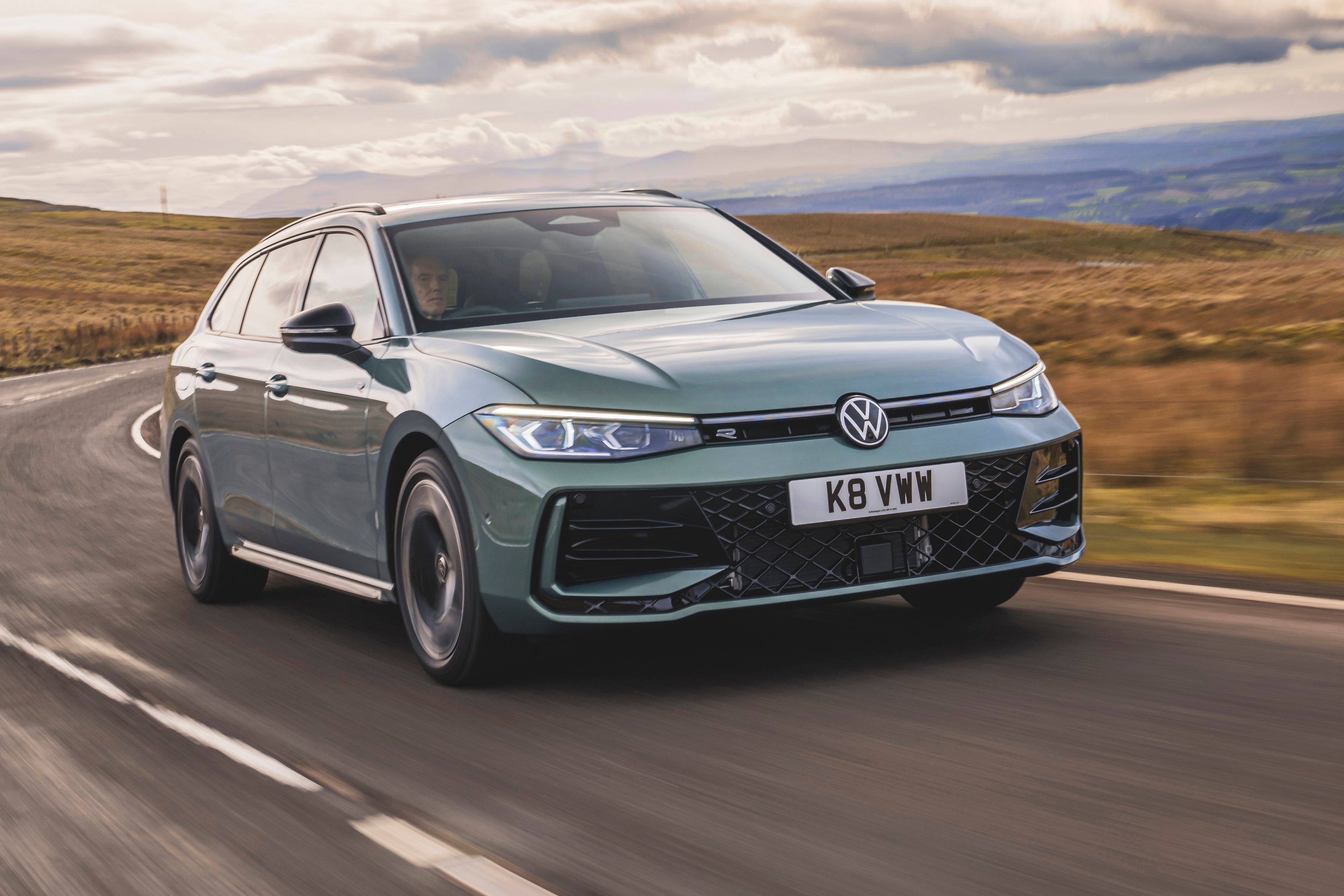
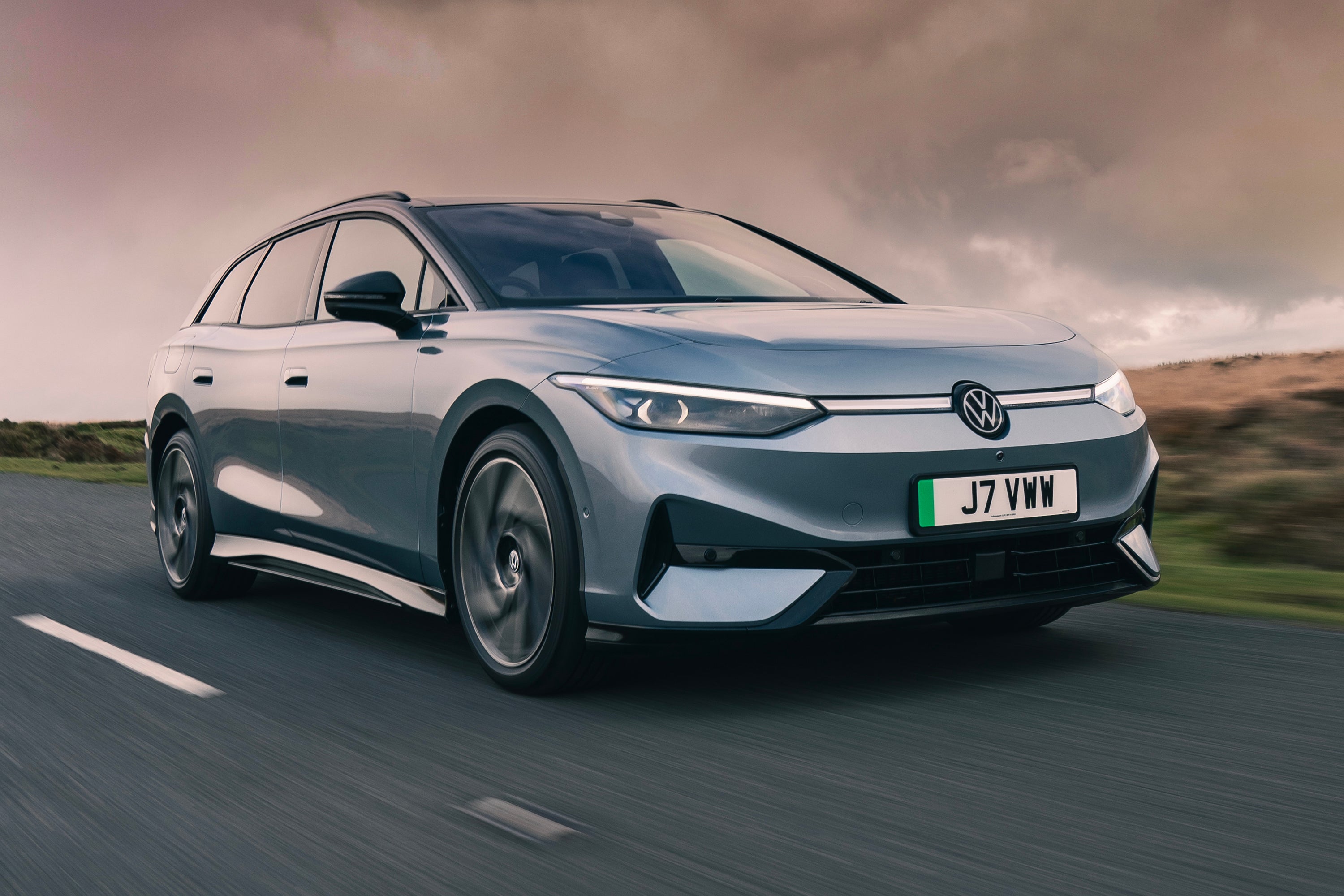
The Volkswagen Passat is a rare thing these days. It’s a mainstream family estate car that feels plush and sophisticated, but isn’t overly showy in the way that many premium-badged alternatives are. And in a family-car market dominated by SUVs, it really stands out.
And yes, this latest Volkswagen Passat is available only as an estate: there’s no saloon variant like there used to be. This actually suits it, though. It’s almost five metres long, so there is loads of passenger space, and in petrol form, the boot is one of the biggest in the class. Even the plug-in hybrid version remains usefully practical, although the battery does reduce luggage space. There’s more to like than sheer size, too. The Passat feels solidly built, the design is clean and mature, and the cabin has the sort of class that makes some rivals feel ordinary.
Browse used Volkswagen Passats for sale →
The current UK line-up is broader than it was at launch. Alongside the 1.5 eTSI 150PS mild-hybrid petrol, there are now plug-in-hybrid - known as eHybrid - versions with 204PS or 272PS. Trims run through Life, Match, Elegance, R-Line and Black Edition, although not every engine is offered with every trim.
The biggest frustration remains the cabin interface. Volkswagen has made the Passat look cleaner and more high-tech by stripping out physical controls, but the result is not especially intuitive to use. The screens are sharp and responsive enough, but too many everyday functions are operated by complicated on-screen menus or touch-sensitive controls that are harder to use than proper buttons. It is not bad enough to spoil the car, but it is enough to stop this being the easy class recommendation it might otherwise have been.
Even so, the underlying appeal is very strong. If you know you do not want an SUV and you need a large family car with genuine carrying ability, the Volkswagen Passat remains one of the smartest choices around.
What's the best Volkswagen Passat trim and engine option?
For many buyers, the entry-level Life trim will be entirely sufficient. The Passat does not feel stripped out in base form, and Volkswagen includes enough kit as standard that you are not forced into spending thousands more just to get the essentials. If you simply want a large, comfortable petrol estate and do not need the tax advantages or electric-only commuting ability of a plug-in hybrid, the 1.5 eTSI Life is the simplest version to recommend.
That said, there’s also a to be said for the Match eHybrid 204PS. It adds genuinely useful extra equipment over Life, and combines that with the long official electric range that makes the plug-in hybrid version far more appealing than older PHEVs used to be. If you can charge at home or at work and do lots of shorter weekday trips, it could make sense. Match is also the point in the range where the Passat starts to feel particularly plush without tipping the price too far into indulgent territory.
The 272PS eHybrid versions will appeal if you want stronger performance, but they are expensive and harder to justify unless you specifically want the extra pace. Likewise, R-Line and Black Edition bring more visual attitude, but the Passat’s core strengths are comfort, space and subtlety, rather than overt sportiness.
What’s the price of the Volkswagen Passat?
The Volkswagen Passat range currently starts at £40,875 and stretches to £50,655, so this is by no means a bargain-basement family estate. It is priced above the Skoda Superb in comparable forms, and the upper end of the range nudges into territory where you’ll start to consider premium-badged alternatives. There are also plenty of used Volkswagen Passats for sale for considerably less.
That said, the Passat does at least feel expensive in a convincing way. Space, comfort, cabin finish and generous standard equipment all help justify the asking price better than some rivals manage.
The key thing to watch is where the trim and powertrain choices take you. The lower end of the line-up makes sense as a roomy, classy family car, but move into the plug-in hybrid versions or the more lavish trims, and the Passat becomes a far bigger financial commitment. If list price matters to you for tax reasons, don’t assume all Passats are broadly alike, because they’re not.
Alternatives to the Volkswagen Passat
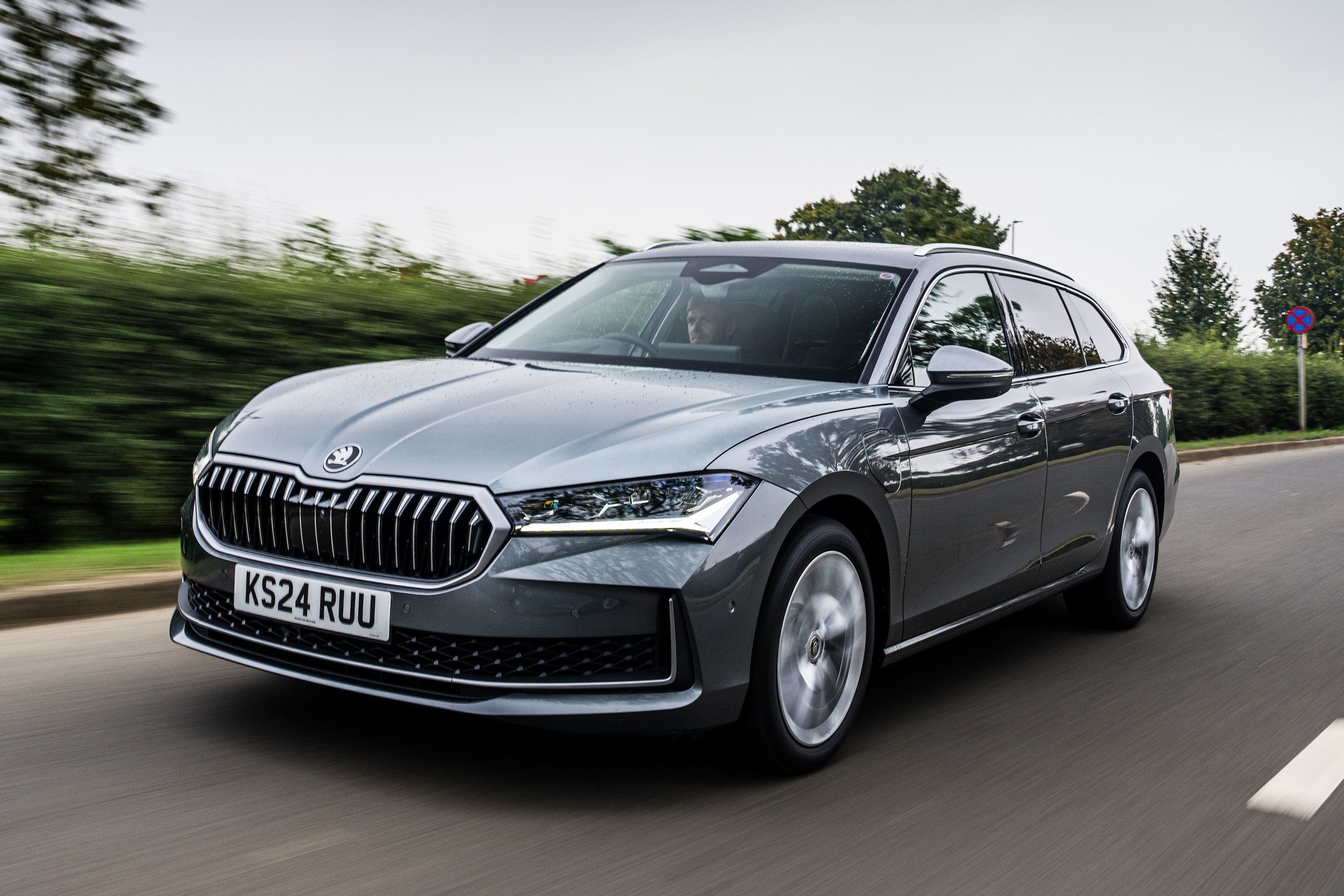
The most obvious alternative is the Skoda Superb Estate. It shares much of the same underlying engineering and technology, gives you just as much space, and generally asks a bit less money for it. If value matters more than badge appeal, the Skoda makes a very strong case. For many private buyers, it is arguably the Passat’s most serious rival.
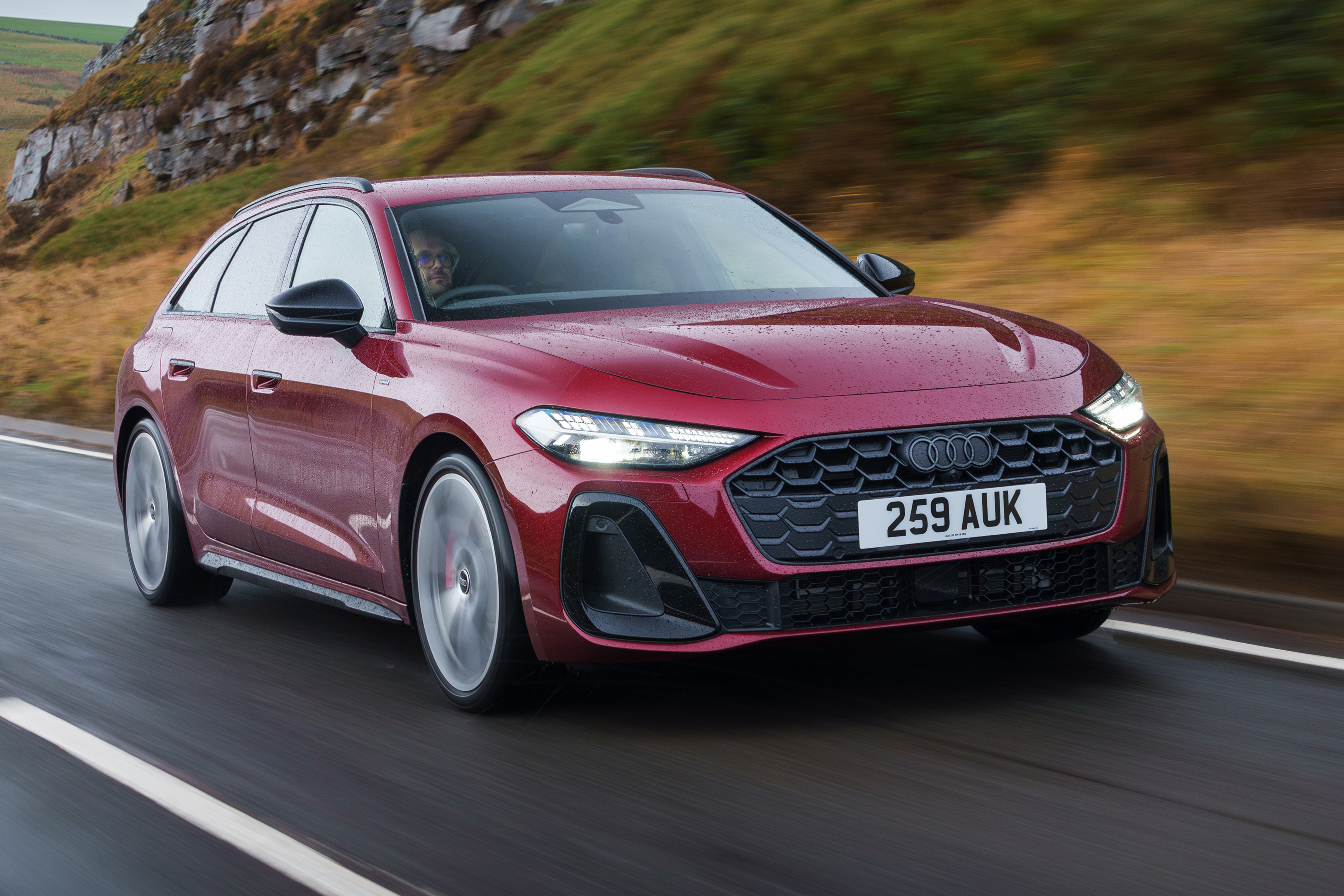
The Audi A5 Avant is one of the main premium alternatives. It has more badge appeal, a sharper sense of occasion and a more overtly high-tech cabin, but it is not as roomy in the back and it gives away a lot of boot space. If image and a premium feel matter most to you, the Audi is tempting, but if family usability is the priority, the Passat is the more convincing car.
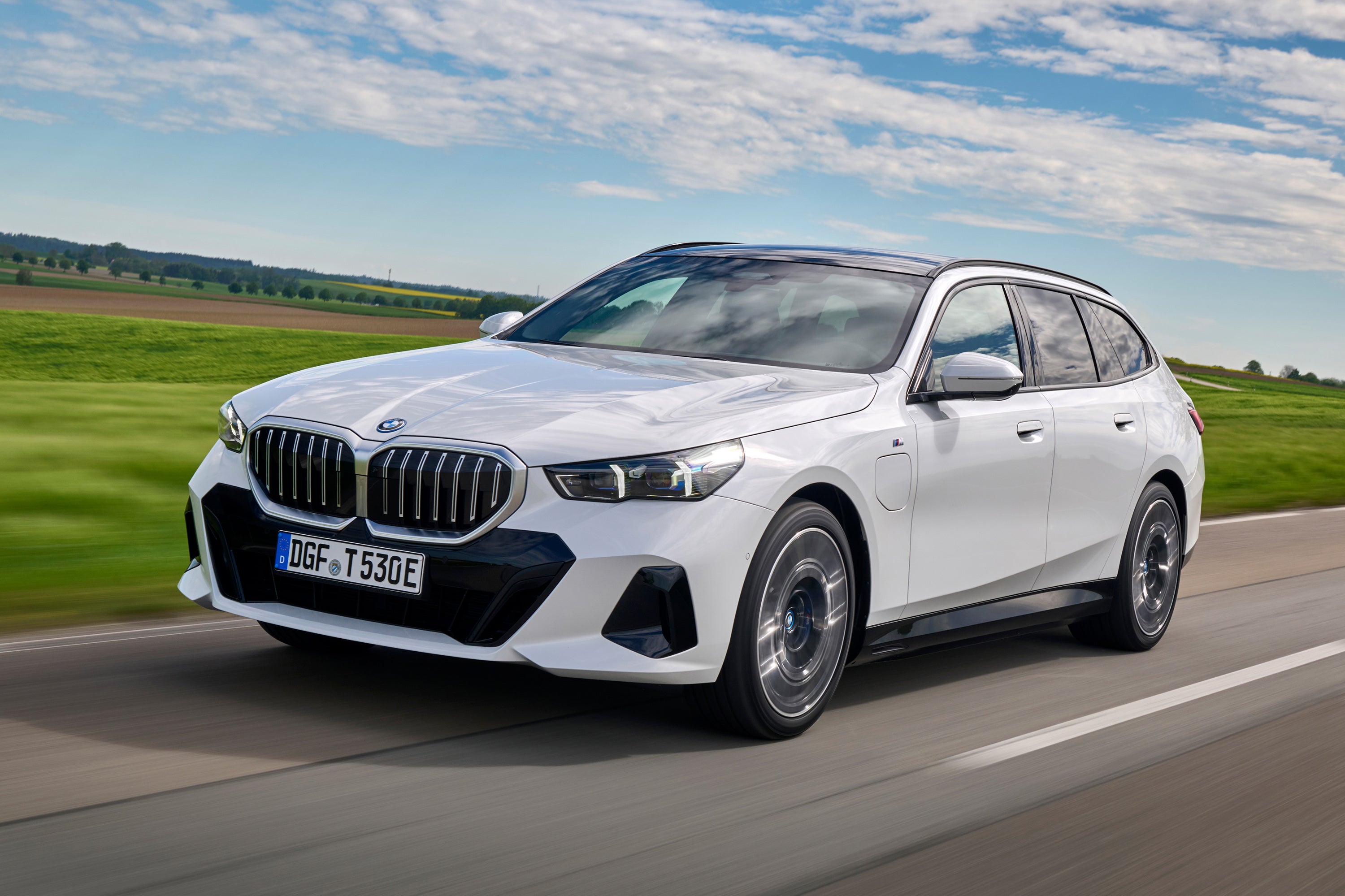
The BMW 5 Series Touring is another important rival. It is more expensive, more premium and still very practical, but again the Volkswagen Passat counters with a bigger boot (in petrol form) and a lower-key feel that some buyers will actually prefer. If you want your estate car to feel discreet and sensible rather than overtly shouty, the Passat plays that role very well.
What's the interior like in the Volkswagen Passat?
The Volkswagen Passat gets the big things right inside. It feels airy, expensive, impressively roomy, and it has the sort of mature character that suits a large family estate car. There are some ergonomic quirks, though, not least with the complex infotainment system.
Volkswagen Passat boot space and practicality
If practicality is high up on your list of priorities, the Volkswagen Passat delivers bigtime. Up front, it’s easy to get comfortable, with plenty of adjustment in the seat and steering column. The driving position is good, visibility is decent, and the cabin feels broad and open rather than hemmed in.
It’s on rear-seat space that the Passat really dazzles, though. There is a huge amount of legroom, and gangly adults can sit behind other adults of similar proportions with fear of their knees getting anywhere near the front seats. Headroom and shoulder room are also generous, so the passenger compartment feels roomy in every direction, especially when carrying two in the back. There’s room to squeeze in a third when needed, although the person in the middle will have to sit with their feet positioned either size of a very bulky transmission tunnel in the floor.
The boot is even more impressive. In the 1.5 eTSI petrol, the Volkswagen Passat offers a whopping 690 litres, which is nothing short of huge, even for a large estate car. The rear seats fold down in a 60/40 split (not as versatile as the 40/20/40 split in some rival family cars), and this can be done using catches either in the boot or on top of the seats themselves. The backrests lie almost flat, and with the moveable boot floor in its uppermost position, there’s no step between them and the boot floor, leaving you with a usefully level loading area. That also leaves barely any load lip at the boot entrance, and you get a smidge of extra space under the boot floor. To make life even easier, a powered tailgate and powered load cover is provided as standard throughout the range.
Do bear in mind, though, that if you want one of the eHybrid versions, you get considerably less boot space. The packaging of the battery sees capacity drop to 510 litres. That is still useful, though, and still enough for plenty of family car buyers.
Volkswagen Passat dimensions
The Volkswagen Passat measures 4,916mm long, 1,849mm wide (without door mirrors) and 1,521mm tall. This is one very large family estate, then, and that is exactly why it is so roomy inside.
Tech and infotainment in the Volkswagen Passat
Most versions of the Passat get the same infotainment system as standard. This brings together a 10.25-inch digital instrument panel behind the steering wheel and a large 12.9-inch central infotainment touchscreen in the middle of the dashboard. If that’s not large enough for you, then a massive 15.0-inch central screen upgrade is available on the options list, or is standard on Black Edition cars. You also get navigation, Apple CarPlay and Android Auto, DAB, Bluetooth, wireless smartphone charging, voice control and eight speakers.
The whole thing looks great, initially with sharp, modern graphics and really slick screen transitions, while the screen also reacts quickly and reliably to taps and swipes.
Unfortunately, the system is also rather confusing to use. With almost no physical switchgear in the car, pretty much everything has to be operated through the screen, and the sheer amount of icons, shortcuts and tiles on display as a result makes the screen look cluttered despite its generous size. There are seemingly endless menus and submenus, most of which aren’t arranged very logically, and many of them are signified by ambiguously-designed icons. Performing even the most basic of tasks can seem complicated and time consuming, and we found that things didn’t improve with time and familiarity, either. Throw in the fact that touchscreens are inherently more distracting to use on the move than physical buttons and dials, and might well find yourself wanting to pull over to operate some functions, rather than trying to do it on the move.
There are other ergonomic quirks, too. Like in most cars, you have stalks behind the steering wheel, and most drivers will be used to the left one operating the indicators, and the right one doing the wipers. Here, though, the right one is the gear selector for the automatic transmission, and so the left stalk has to take care of both wipers and indicators, and that takes a little while to get used to.
Materials available on the Volkswagen Passat
Volkswagen’s cars often feel posher than mainstream rivals, if not quite as plush as premium competition, providing a sort of middle ground on the quality front. And that’s very much the case with the latest Passat. The glossy-looking infotainment screens immediately make things feel high-end and high-tech, while the plush-looking materials and finishes directly in your eyeline are appealing to both your eyes and your fingertips.
Explore the lower reaches of the cabin, and you will find a few plastics that aren’t quite up to the same high standard, but that’s something you’ll observe in the vast majority of cars, and those plastics are good enough that they don’t undermine the general feeling of poshness. You’ll have no complaints whatsoever in this area.
What's the Volkswagen Passat like to drive?
The Volkswagen Passat is easy to drive, comfortable and refined, and that suits its role perfectly. It makes family and business travel feel calm and grown up, and that’s precisely what it should do.
Volkswagen Passat range and performance
The engine line-up centres around a 1.5-litre petrol engine. In its most basic form, it’s an eTSI mild-hybrid with 150PS, driving the front wheels through a seven-speed DSG automatic gearbox.
Pace is adequate, but not much more than that. The Passat is a very big car at almost five metres long, and the modest engine has its work cut out in dragging the huge, heavy body around. You’ll notice the engine revving surprisingly hard just to maintain a moderate pace (it’s not noisy, but it is noticeable) and the gearbox searching around, trying to figure out which of its ratios is best-suited to the task at hand. If you need more pace and give the throttle pedal a shove, the revs climb even higher, but you feel a disproportionately small increase in forward momentum. It’s fine if you’re not in a hurry and just adopt a relaxed driving style, but it will get a little frustrating when you want to get a wriggle on.
The plug-in hybrid versions use the same basic petrol engine, although this time with the assistance of an electric motor and a 19.7kWh battery. Two versions are available, one with a total combined output of 204PS and one with 272PS. We haven’t driven either of them yet, so we can’t yet tell you how much - if any - more urgent they feel, but they have better acceleration figures on paper, as you’ll see in the table below, so there should be a useful uplift in real-world performance.
Depending on trim level, the 204PS eHybrid manages up to 82 miles of electric-only running according to combined WLTP figures, while the 272PS version reaches up to 81 miles. That is enough for plenty of commuters to cover a typical weekday almost entirely on electricity if they charge regularly.
Performance data
| Model | Engine/battery size | Power | 0-62mph | Range/MPG |
|---|---|---|---|---|
1.5 eTSI DSG 150PS | 1.5-litre petrol automatic | 150PS | 9.3 seconds | Up to 52.6mpg |
1.5 eHybrid DSG 204PS | 1.5-litre plug-in hybrid | 204PS | 8.1 seconds | Up to 222.1mpg |
eHybrid DSG 272PS | 1.5-litre plug-in hybrid | 272PS | 7.1 seconds | Up to 210.5mpg |
Volkswagen Passat driving and refinement
Most versions of the Passat have a passive suspension setup as standard, and it strikes a very decent balance of comfort and control. The ride is perhaps a little firmer edge than you might expect, with some ripples and ruts in the road surface making themselves known in the cabin, but they’re not troublesome so it’s still a comfortable and relaxing car. The suspension does a good job of taking the sting out of larger bumps and potholes, too.
Encounter a corner, and the car displays solid control over the movements of its bulky body, and there’s lots of grip, so everything feels secure and tidy. The sheer size of the car stops it from feeling in any way agile, but it’s entirely precise and predictable. The steering helps on that score, because it’s responsive, accurate and nicely weighted.
Spec your Passat in R-Line trim, and you’ll get Volkswagen’s Dynamic Chassis Control system as standard (it can also be added to the other trims as an optional extra). This varies the stiffness of its dampers according to which of the driving modes you select. We haven’t tried it yet, though, so we can’t yet tell you how effective it is.
Higher-end versions come with extra sound insulation compared with the entry-level Life car, but wind- and road noise is hardly deafening in that one, so whichever Passat you choose, it should be a reasonably serene and relaxing companion.
How safe is the Volkswagen Passat?
The Volkswagen Passat not only received a five-star Euro NCAP rating when it was tested in 2024, but it was also awarded the Best in Class title by the same body in its Large Family Car category. That’s a really impressive performance.
The standard assistance kit is competitive across the range: the Passat comes with adaptive cruise control, autonomous emergency braking with pedestrian and cyclist detection, lane support, speed assistance, and a driver monitoring system.
Running costs: What it's like to live with a Volkswagen Passat
The Volkswagen Passat should be easy enough to live with day to day, but the right powertrain makes a big difference. The petrol is already pretty good on fuel, while the plug-in hybrids have the potential to be much cheaper if you use them properly and charge them regularly.
Volkswagen Passat fuel economy
According to official WLTP figures for the 1.5 eTSI petrol, it’ll return 52.6mpg when combined with Life trim, or 50.9mpg when paired with R-Line trim because of its bigger wheels. Either way, a return in the mid-40s should be realistic in the real world, which is pretty decent for a large automatic estate.
Official weighted figures for the eHybrid PHEV versions run up to 222.1mpg for the 204PS version or 210.5mpg for the 272PS version, although again, precise figures vary according to trim level.
As ever with plug-in hybrids, though, those numbers are likely to be pure fantasy for most people, and what you actually get will depend entirely on how you use the car. For the best returns, keep your battery topped up and your regular journeys short enough that they can be completed entirely on the car’s electric-only range: that way, you can - in theory - do your regular journeys without using a drop of fuel. As soon as the petrol engine fires up, though, the car will become thirsty due to the added weight of the battery.
Volkswagen Passat warranty and servicing
The Volkswagen Passat comes with a three-year, 60,000-mile manufacturer warranty, while if you want longer cover, Volkswagen offers extended warranty products separately.
Most Volkswagens are maintained on either a fixed regime of either 12 months or 9,300 miles, or on a flexible regime that can allow up to two years between services. This latter arrangement is available to high-mileage drivers, and a service light in the car will let you know when work is needed.
Volkswagen Passat insurance groups
Insurance looks reasonable for a car this size, but not especially cheap. The lowest-spec 150PS eTSI versions start in group 30, while the plug-in hybrids rise into the low 30s and top out at group 34. In other words, the Passat is not prohibitively expensive to insure for its class, but it is not a bargain, either. It’s broadly in line with what you would expect from a large, expensive family estate packed with safety tech and, in eHybrid form, a fair amount of performance.
How much does it cost to tax a Volkswagen Passat?
From the second year onwards, the current standard VED rate for petrol, diesel and hybrid cars is £200 a year. Cars with a list price above £40,000 also pay the Expensive Car Supplement on top of that for five years, taking the annual bill to £640 during that period.
All versions of the Passat currently cost more than that threshold, so higher-rate tax is an inevitability, unfortunately.
What trims are available with the Volkswagen Passat?
The current Volkswagen Passat range spans Life, Match, Elegance, R-Line and Black Edition. Not every trim is available with every powertrain, but the line-up is straightforward enough.
Life is the starting point, and it gets a thoroughly decent spread of kit including 17-inch alloy wheels, automatic high-beam LED headlights, rain-sensing wipers, parking sensors, reversing camera, a powered tailgate, keyless entry and start, three-zone climate control, heated front seats with powered adjustment and massage function, and ambient interior lighting. That’s on top of all the infotainment and safety kit we mentioned earlier. We reckon many buyers will be perfectly happy with that.
Match trim adds LED Matrix headlights, a front light bar, rear privacy glass, and 360-degree parking cameras, while Elegance cars get a panoramic roof, ventilated front sports seats, and extended ambient cabin lighting.
R-Line adds sportier styling, larger 18-inch alloy wheels, Dynamic Chassis Control suspension and sports front seats with extended massage function. Go for the Black Edition, and you’ll get 19-inch alloys, the 15.0-inch infotainment screen, a head-up display, and heated rear seats.
Ask the Drive experts: common questions
Is the Volkswagen Passat only available as an estate?
How big is the Volkswagen Passat boot?
What is the best Volkswagen Passat engine?
Is the Volkswagen Passat good value?
Get our latest advice, news and offers
Keep me updated by email with the latest advice, news and offers from Drive.