Tesla Model X Review

Written By Andrew Brady
- 2016
- SUV
- Electric
What we love
Huge interior with up to seven seats
Exceptional straight-line performance
Falcon Wing rear doors are genuinely distinctive
Things to consider
Ride and refinement lag behind newer EVs
Cabin quality does not always match the price
Complex doors and suspension could be expensive to repair
The DRIVE take on the Tesla Model X, is it the right car for you?
The Tesla Model X remains one of the most distinctive used electric SUVs. It is enormous inside, available with up to seven seats and dramatically quick, while its Falcon Wing doors still give it a sense of occasion few rivals can match. Later Long Range cars are the best buys, combining around 315 miles of official range with more than enough performance. The trade-offs are patchy cabin quality, an unsettled ride and the potential repair costs of such a complex car.
The Tesla Model X in more detail
The Model X was Tesla’s first SUV and remains one of its most ambitious cars.
It takes much of the technology developed for the Model S and combines it with a much larger body, standard dual-motor four-wheel drive and a choice of five, six or seven seats.
Its defining feature is the pair of electrically operated Falcon Wing rear doors. Rather than opening conventionally, they rise upwards using two articulated sections.
The doors create a huge opening and make access to the rear seats unusually easy. They also guarantee attention whenever the car is parked.
The Model X arrived in the UK in right-hand-drive form in 2016. Tesla changed the range repeatedly, initially using names such as 75D, 90D and 100D before later simplifying the line-up to Long Range and Performance.
For a used buyer in 2026, later Long Range and Performance cars are the versions we would concentrate on.
These gained Tesla’s later Raven-generation drivetrain and adaptive air suspension, improving both efficiency and comfort.
A 2019 to 2021 Long Range is particularly appealing. It combines strong acceleration with an official WLTP range of around 315 miles and avoids the extreme performance focus of the quickest models.
Tesla substantially redesigned the Model X after right-hand-drive UK production ended, adding a new interior and, later, the Plaid powertrain. Those newer cars are not conventional right-hand-drive UK models.
Tesla’s current UK website still lists the Model X, but specifically states that it is available only in left-hand drive. That makes the 2016 to 2021 right-hand-drive cars covered here a distinct used proposition.
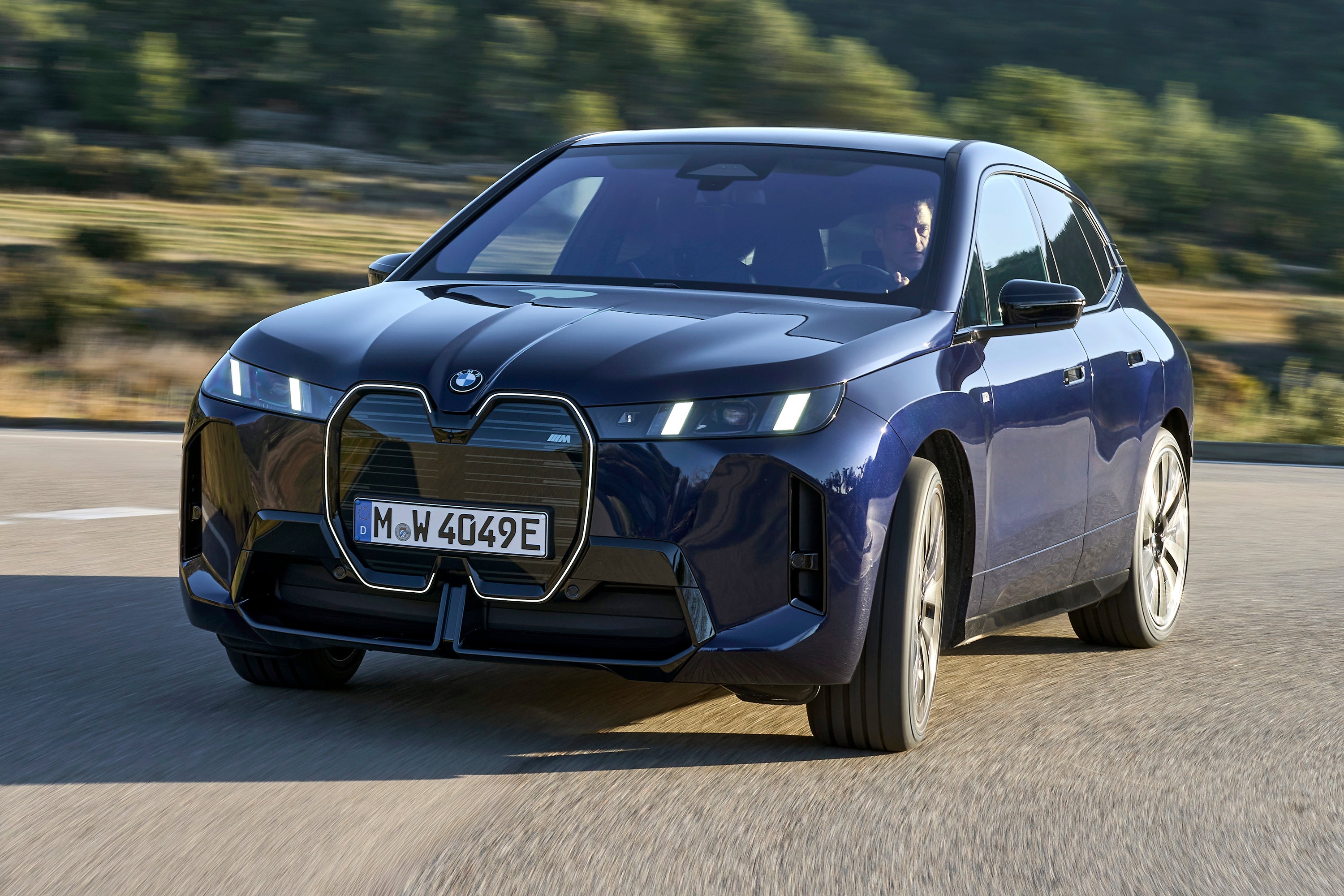
The Model X remains impressive for space and performance, but newer electric SUVs have moved the game on. Alternatives such as the BMW iX provide far better ride comfort and cabin quality, while newer EVs also charge considerably faster.
What's the best Tesla Model X trim and battery option?
A later Long Range is the version we would choose.
It provides more than enough performance, around 315 miles of official WLTP range and a better balance between speed and efficiency than the Performance.
A later Long Range produces around 423PS and reaches 62mph in approximately 4.4 seconds. For a car weighing well over two tonnes and capable of carrying seven people, that remains seriously quick.
Performance versions take things much further. Depending on production date and software, later Performance Ludicrous cars can reach 60mph in around 2.6 seconds.
That is spectacular, but it adds little to the Model X’s usefulness as a family SUV. Performance cars are also more likely to have large 22-inch wheels, which worsen ride comfort and increase tyre costs.
Seat configuration matters almost as much as drivetrain.
Five-seat models provide maximum luggage space. Seven-seat cars use a conventional three-person second-row bench with two extra seats behind it.
Six-seat cars have two individual middle-row chairs and a useful walkway between them. This arrangement is particularly good for families regularly using the third row.
For most buyers, a Long Range on 20-inch wheels with six or seven seats is the sweet spot.
What’s the price of the Tesla Model X?
The Model X is relatively rarem reflecting the limited number of right-hand-drive cars originally sold in Britain.
Current stock starts at around £30,000 for a 2020 Long Range with approximately 60,000 miles.
At the other end of the current range, a 2020 Performance Ludicrous with around 33,000 miles is advertised at just under £42,000.
That represents enormous depreciation from new. Many Model X variants originally cost well above £80,000, while heavily specified versions could exceed £100,000.
The lower purchase price makes the Model X tempting, but that does not make it a cheap car to own.
Large tyres, air-suspension components, body repairs and Falcon Wing door hardware can all be expensive. Insurance costs are also high.
Condition and history should therefore take priority over finding the cheapest example.
Alternatives to the Tesla Model X
The BMW iX is one of the strongest alternatives. It is considerably newer, more comfortable and better finished, although it does not offer the Model X’s seven-seat flexibility.
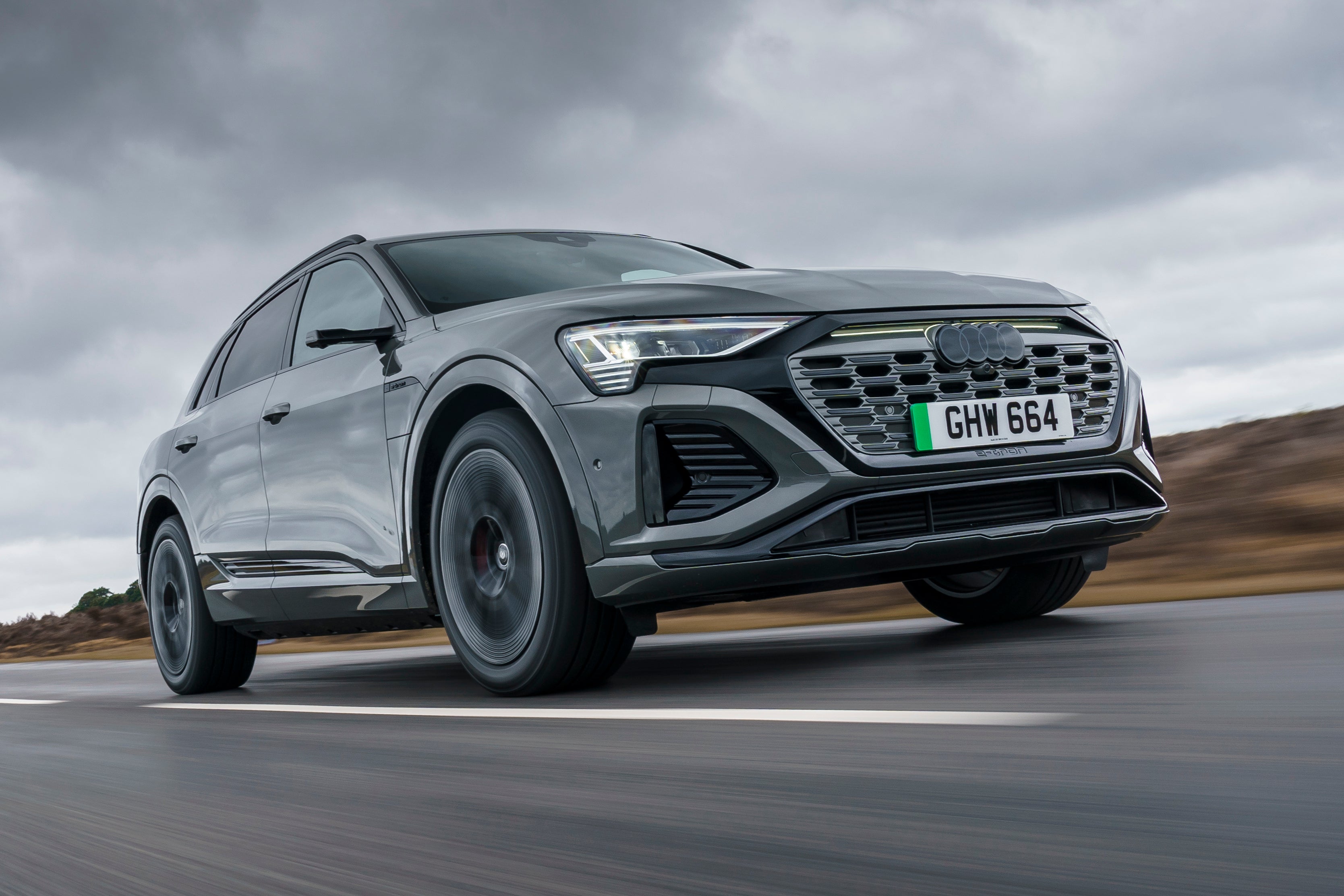
The Audi Q8 e-tron is similarly more refined and luxurious. Used prices have fallen heavily, making it a compelling alternative if five seats are enough.
The Kia EV9 is the most obvious modern alternative if seven seats are essential. It offers much newer charging technology and a better-finished cabin.
What's the interior like in the Tesla Model X?
The Model X feels airy, futuristic and exceptionally spacious, but cabin materials and assembly are less consistent than you would expect from a car that cost so much when new.
Tesla Model X boot space and practicality
Practicality is one of the Model X’s biggest strengths.
There is generous space in the front, along with extensive electric adjustment for the seats and steering wheel.
The huge windscreen adds to the sense of space and gives an excellent view ahead, although rear visibility is much less impressive.
The Model X was offered with five, six or seven seats.
Five-seat cars provide the greatest luggage capacity. Tesla quotes as much as 2,299 litres behind the front seats, plus a useful 187-litre front boot.
Seven-seat versions retain some luggage space with all seats in use, although the area behind the third row is naturally limited.
The third row is best suited to children and smaller adults. Headroom and legroom are restricted for taller passengers.
Six-seat cars are particularly easy to move around inside because the two individual middle-row seats leave a central walkway to the back.
The Falcon Wing doors are genuinely useful when fitting child seats or helping passengers into the rear. The opening extends into the roof, so you do not need to stoop as much as you would with conventional rear doors.
Sensors alter their opening path in confined spaces.
The downside is complexity. They can be slow and may not open fully when parked close to another vehicle. Make sure both doors operate smoothly and consistently on any car you are considering.
Tesla Model X dimensions
The Model X measures 5,052mm long, 1,999mm wide without its mirrors and 1,684mm high.
With the mirrors extended, it is 2,271mm wide.
That makes it a genuinely large car for UK roads. Older multi-storey car parks, width restrictions and narrow country lanes can all feel tight.
The elevated driving position helps, as do the parking sensors and reversing camera, but buyers moving from an ordinary family SUV should expect an adjustment period.
Tech and infotainment in the Tesla Model X
Later right-hand-drive Model X cars use a 17-inch portrait touchscreen in the centre of the dashboard.
Most major functions are controlled through it.
The software remains quick and the graphics are sharp, while Tesla’s navigation is particularly good at integrating Supercharger stops into a longer journey.
Unlike the Model 3 and Model Y, the Model X also has a separate digital instrument display directly ahead of the driver.
There is no Apple CarPlay or Android Auto.
Tesla’s over-the-air software updates can alter or add features throughout the car’s life, so individual used examples may not have exactly the same functionality.
Materials available on the Tesla Model X
The cabin design has aged reasonably well, but material quality is less convincing.
Some surfaces feel appropriately expensive, while others look and feel ordinary for a car that originally occupied six-figure territory.
Build quality can vary between individual cars, too.
Inspect panel alignment, upholstery condition, the dashboard and door trims carefully. Make sure every powered seat works properly and test both Falcon Wing doors several times.
What's the Tesla Model X like to drive?
The Model X is astonishingly fast and impressively secure for its size, but it cannot disguise its weight. Ride comfort and refinement are weaker than in the best modern electric luxury SUVs.
Tesla Model X range and performance
For a used purchase, the later Long Range and Performance versions are the ones to concentrate on.
Tesla changed published power and performance figures repeatedly through hardware and software updates, so apparently similar cars can have slightly different specifications.
The Long Range already feels extremely fast. Electric motors deliver their torque immediately, so acceleration from normal road speeds is even more striking than the headline figure suggests.
Performance versions are dramatically quicker, with Ludicrous-equipped cars capable of acceleration usually associated with supercars.
The trade-off is a slight reduction in range.
Later Long Range cars were officially capable of around 315 miles WLTP, although motorway range in real conditions will usually be lower.
Cold weather, sustained high speeds and 22-inch wheels can all make a significant difference.
Performance data
| Model | Engine/battery size | Power | 0-62mph | Range/MPG |
|---|---|---|---|---|
Model X Long Range | 100kWh | 423PS | 4.4 seconds | Up to 315 miles |
Model X Performance | 100kWh | 600PS | 3.5 seconds | Up to 300 miles |
Model X Performance Ludicrous | 100kWh | 790PS | 2.6 seconds | Up to 300 miles |
Tesla Model X driving and refinement
The Model X controls its considerable weight better than you might expect.
Standard air suspension limits body roll, while the battery pack is mounted low in the chassis, lowering the centre of gravity.
There is huge grip and the dual-motor four-wheel-drive system makes the car feel exceptionally secure.
It is not particularly enjoyable to drive hard, though.
The steering lacks the accuracy and feedback of a Jaguar I-Pace and the Model X’s width discourages enthusiastic driving on narrow roads.
Ride comfort is the bigger weakness.
Even with air suspension, the Model X can feel restless over smaller imperfections. Cars on 22-inch wheels are noticeably firmer than those on the standard 20-inch setup.
A BMW iX or Mercedes EQS SUV is considerably more comfortable.
The electric motors are quiet, but tyre and wind noise are more noticeable at motorway speeds than in newer premium EVs.
How safe is the Tesla Model X?
Euro NCAP awarded the Model X five stars when it tested the car in 2019.
It scored 98 per cent for adult occupant protection, 81 per cent for child occupants, 72 per cent for vulnerable road users and 94 per cent for safety assistance.
Those were excellent results at the time.
Standard safety equipment includes automatic emergency braking, blind-spot monitoring and Tesla’s Autopilot assistance technology.
Autopilot does not make the Model X autonomous. The driver remains responsible for monitoring the road and controlling the vehicle.
Running costs: What it's like to live with a Tesla Model X
Home charging can make energy costs reasonable, but insurance, tyres and repairs mean the Model X should not be mistaken for a cheap luxury SUV simply because depreciation has reduced its purchase price.
Tesla Model X charging times and costs
Later right-hand-drive Model X cars can charge at up to around 150kW at a suitable Tesla Supercharger.
That remains usable, but it is modest by current standards.
A substantial rapid charge will therefore take longer than it would in newer electric SUVs capable of accepting 200kW, 250kW or more.
The Supercharger network remains a major benefit. Tesla’s navigation integrates charging stops into routes and shows charger availability.
Prices vary by Supercharger site and time, so owners should check the live cost through the car or Tesla app.
Some older Model X cars were originally supplied with free Supercharging. Do not assume this transfers with the vehicle. Verify the status of the individual car before buying.
Tesla Model X warranty and servicing
The Model X originally came with a four-year or 50,000-mile basic vehicle warranty.
Most right-hand-drive cars are now outside that cover.
There is no conventional annual servicing schedule, but tyres, suspension, brakes, air-conditioning and the powered doors still need inspection and maintenance.
Tesla Model X insurance groups
Later Long Range and Performance cars sit in insurance group 50, the highest UK group.
That reflects their speed, repair costs and original value. Always obtain an insurance quote for the specific registration before buying.
How much does it cost to tax a Tesla Model X?
Electric cars are no longer exempt from Vehicle Excise Duty. Most right-hand-drive Model X cars were registered between 1 April 2017 and 31 March 2025. These now pay the standard annual VED rate of £200.
Older zero-emission cars registered between 1 March 2001 and 31 March 2017 pay £20 for 2026/27. That means the earliest UK Model X examples may fall into the lower rate.
What trims are available with the Tesla Model X?
Tesla changed the Model X line-up frequently, which can make used listings confusing.
Early cars used names including 60D, 75D, 90D and 100D. Broadly, the number indicated battery capacity, while the D identified the dual-motor drivetrain.
Performance cars added a P to the name, with models such as the P90D and P100D.
Tesla later simplified the range to Long Range and Performance.
Those later versions are the ones we would prioritise today because they represent the most developed right-hand-drive Model X.
Long Range combines the best range with more than enough performance.
Performance and Performance Ludicrous cars add extraordinary acceleration but little additional everyday usefulness.
Check the seating layout as carefully as the model name. Five, six and seven-seat cars were all sold in the UK.
Ask the Drive experts: common questions
How much does a used Tesla Model X cost?
What is the range of a Tesla Model X?
How many seats does a Tesla Model X have?
Can you still buy a new Tesla Model X in the UK?
Get our latest advice, news and offers
Keep me updated by email with the latest advice, news and offers from Drive.
.jpg)
.jpg)