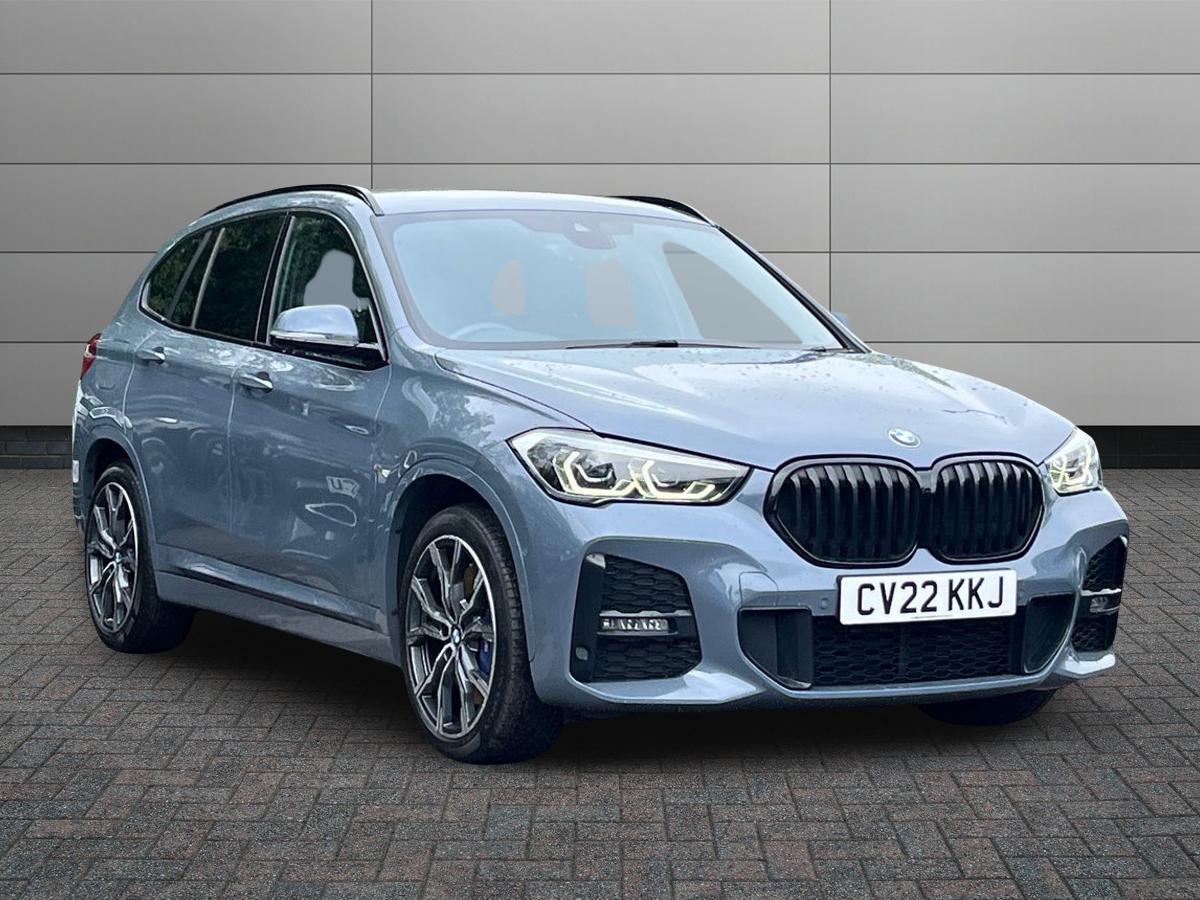
Used BMW X1 for sale: everything you need to know
When the original BMW X5 turned out to be a money-making machine, other X models were an inevitability - and the first generation of BMW’s entry-level SUV appeared in 2009.
Since then, the BMW X1 has been through two further generations, the current model arriving in 2022, and like its predecessor, closely related to the front-wheel drive models in BMW’s range, the 1-series and the 2-series Active Tourer, with petrol, diesel, petrol hybrid, and fully electric variants, the latter badged iX1.
It’s a car with the usual sharp BMW driving characteristics and solid image, and it isn’t short of competition either, pitched at the same kind of customers who might be interested in Audi’s Q2 and Q3, the Mercedes-Benz GLA, as well as models from outside Germany such as the Volvo XC40 and Range Rover Evoque.
Should you buy a BMW X1?
The BMW X1’s popularity isn’t difficult to understand. It’s got the right badge, a wide range of available models, a price tag that makes it more affordable than BMW’s larger SUVs, and to cap it all, it’s also good to drive.
That applies to used BMW X1s just as much as it does new ones, and continues to apply to the two generations prior to the current model. What the second-generation model misses in terms of the very latest technology found in the post-2022 cars, it makes up for in value. And while there’s no electric iX1 in the older car, there’s still a wide range of petrol and diesel variants, plus a plug-in hybrid.
The last two X1 generations sit on the same underpinnings too, widely used not just in BMW’s 1-series and 2-series Active Tourer ranges, but also in larger Mini models, like the Countryman. There’s certainly nothing wrong with this cross-pollination - the X1 has the kind of agile handling that you might not expect from a small SUV, but that you’d certainly hope for from a BMW.
The latest car is the most practical BMW X1 yet, though once again its predecessor wasn’t bad in this area - it’ll easily fit a small family and their paraphernalia. BMW X1s feel well-built too, and have classy interior fittings.
Of course, you can say this about the BMW X1’s rivals from Audi and Mercedes-Benz too, as well as Range Rover and Volvo. The BMW X1 remains among the best to drive in its class, though the cabin does lack the flash appeal of the Mercedes GLA, while the Range Rover Evoque has arguably the most stylish exterior styling.
At this level, you’d be forgiven for choosing purely based on which badge appeals the most, but the BMW X1 has plenty of qualities that make it easy to recommend even in a class as competitive as this one.
A BMW X1 not for you? We've got 1000s of used cars for sale to suit all budgets and needs.
What’s the best used BMW X1 model to buy?
For family buyers even the regular BMW X1 Sport will be no hardship, with a long list of standard equipment and a couple of frugal engine options. Don’t be too put off by the meek-looking 17-inch alloy wheels fitted as standard either, since the taller tyres they wear are beneficial for ride quality.
That said, the BMW X1 xLine and M Sport trims do come with benefits, not least the availability of a wider range of powertrains - including a fully electric iX1. Find a good deal on one of these, and you’ll benefit from a decent 270-mile range and low running costs.
Don’t feel you have to stick to the very latest, post-2022 BMW X1s though, as the previous model is still an excellent buy. It drives well and has a spacious, well-built cabin regardless of trim line, but it may also be worth noting that some engines were available with a manual transmission, so if you prefer changing your own gears, this becomes the automatic choice - if you’ll pardon the pun.
The more frugal BMW X1 20i and 20d versions of the older model also have low CO2 figures of under 130g/km, which actually makes them a little cheaper to tax than the flat rate applied to post-2017 cars, as well as being impressively economical.
Used BMW X1 fuel economy and performance
BMW X1 sDrive 20i: The least potent of BMW’s petrol X1s is still a strong performer, with a 1.5-litre turbocharged three-cylinder delivering 170PS and 0-62mph in 8.3 seconds, with combined economy of up to 47.9mpg.
BMW X1 xDrive 23i: Next up the petrol pecking order is the 218PS 2-litre four-cylinder. It can cover the 0-62mph dash in 7.1 seconds, with claimed fuel economy returns of 42.2mpg.
BMW X1 sDrive 18d: The starting point to the diesel range uses a 2-litre turbodiesel making 150PS, and capable of accelerating from 0-62mph in 8.9 seconds. Combined economy of up to 57.6mpg helps keep running costs low.
BMW X1 xDrive 23d: Also a 2-litre, four-cylinder turbodiesel, a 197PS output helps the 23d to cover 0-62mph in 7.4 seconds, yet there’s no on-paper economy penalty to the 18d, with the same 57.6mpg.
BMW X1 xDrive 25e: Plug-in hybrid technology means the 245PS, 1.5-litre petrol hybrid 25e achieves a combined consumption figure of up to 403.5mpg - provided you plug it in to benefit from up to 56 miles of electric range. It can cover the 0-62mph sprint in 6.8 seconds.
BMW X1 xDrive 30e: The 30e makes real power, with 326PS, contributing to a brisk 0-62mph run in 5.6 seconds. It uses a similar plug-in hybrid drivetrain to the 25e, but the extra performance does bring combined consumption down to 353.1mpg.
BMW iX1 xDrive 30: The all-electric iX1 has a quoted range of up to 270 miles in xLine trim, from a 313PS, twin-motor drivetrain. Like many electric cars, straight-line acceleration is brisk, with 0-62mph in 5.6 seconds.
What used BMW X1 trim levels are available?
BMW keeps things relatively simple with the BMW X1 trim levels. A Sport trim serves as the entry-level line, with xLine and M Sport offering luxurious and more dynamic options respectively. Naturally, there’s also a huge range of options available, so it’s likely you’ll find no two BMW X1s specified precisely the same.
The BMW X1 Sport is the starting point in the X1 range, so don’t let the word ‘Sport’ fool you. That said, you’d hardly know it from its generous equipment levels. It’s only available with the two least powerful engines, the 20i and 18d, but as you’ll have read above, both perform well and don’t use much fuel either.
The BMW X1 xLine serves as the more luxurious X1 variant. You can pair this trim with most engines, including the electric iX1, and it comes as standard with ‘Veganza’ upholstery, a vegan leather in black, mocha or oyster colour themes.
The BMW X1 M Sport is the sportiest one of the bunch. Again available with most of the powertrain options, standard kit here includes a more aggressive body styling package, an M Sport leather steering wheel, and there’s the option of adaptive suspension.
Used BMW X1 dimensions and boot size
The third-generation BMW X1 (2022 onwards) has the following dimensions:
Length: 4,500mm
Width: 1,845mm (2,104mm including mirrors)
Height: 1,642mm on conventional petrol and diesel versions
Boot capacity varies depending on the engine:
500–540 litres with the rear seats in place on conventional petrol and diesel models
1,545–1,600 litres with the rear seats folded
490 litres on plug-in hybrid models, increasing to 1,495 litres with the rear seats folded
Earlier BMW X1 generations are smaller, so dimensions and luggage capacity will differ depending on the age of the car.
Used BMW X1 road tax
Most BMW X1 models registered from 1 April 2017 cost £200 a year to tax under the current Vehicle Excise Duty (VED) rules. This includes petrol, diesel and plug-in hybrid versions, as the previous £10 annual discount for hybrids has been removed.
BMW X1 models with an original list price of more than £40,000, including factory-fitted options, are subject to an additional £440 annual supplement for five years, starting with the second year of registration. This increases the annual road tax bill to £640 while the supplement applies.
The fully electric BMW iX1 also costs £200 a year to tax, following the end of the electric car VED exemption in April 2025. However, electric iX1 models registered before April 2025 are exempt from the expensive car supplement. For electric models registered from April 2025, the supplement applies if their original list price exceeded £50,000 under the current rules.
Older BMW X1 models registered before April 2017 are taxed according to their emissions. Some economical diesel versions can therefore be considerably cheaper to tax than newer models.
Always check the road tax for the specific BMW X1 you're considering, as the amount depends on its registration date, emissions and original list price.
How much is it to insure a BMW X1?
The post-2022 BMW X1 starts in group 24 (out of 50) for an sDrive18d Sport model, while highest of the combustion models is the xDrive 23i M Sport, in group 31. It’s the all-electric iX1 with the highest grouping though, at 38. Pre-2022 X1s sit in a similar spread of insurance groups.
Read our full BMW X1 review