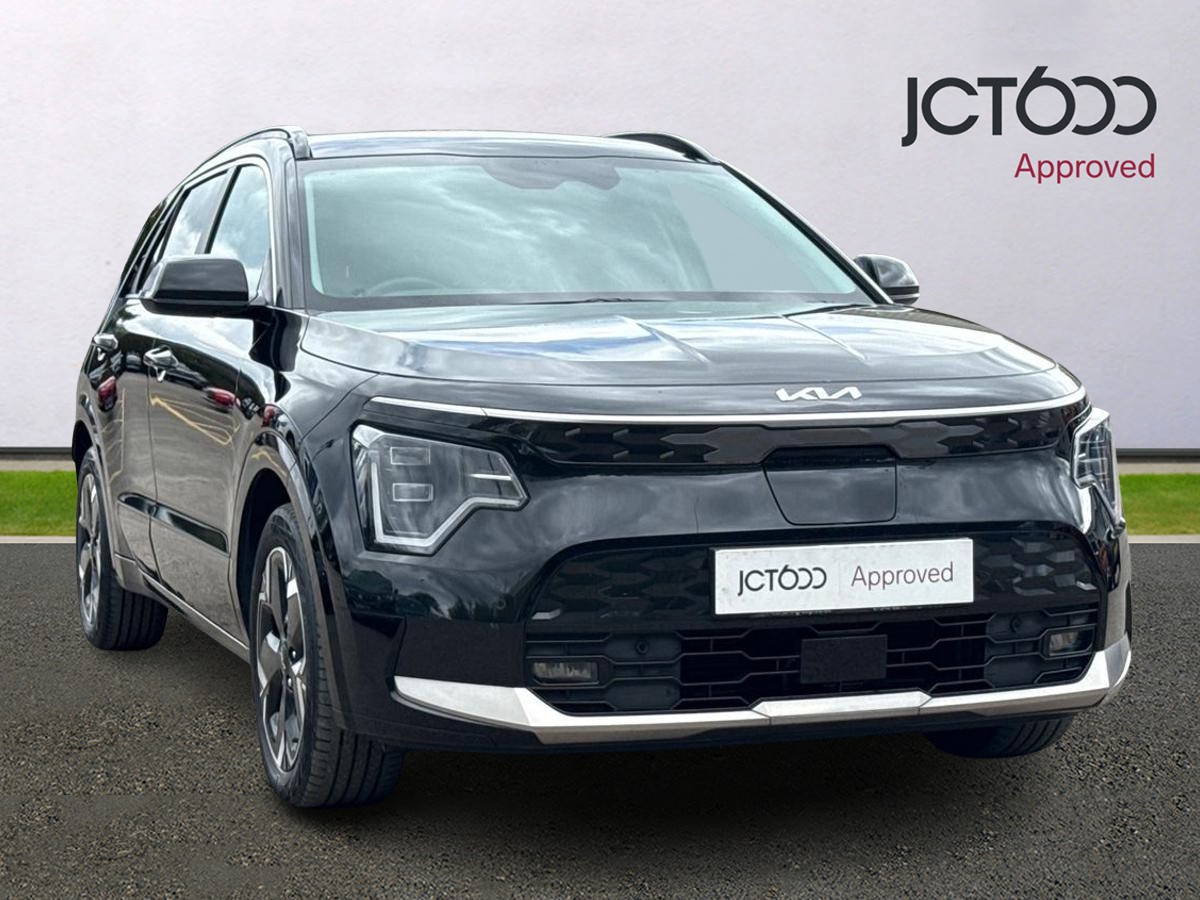
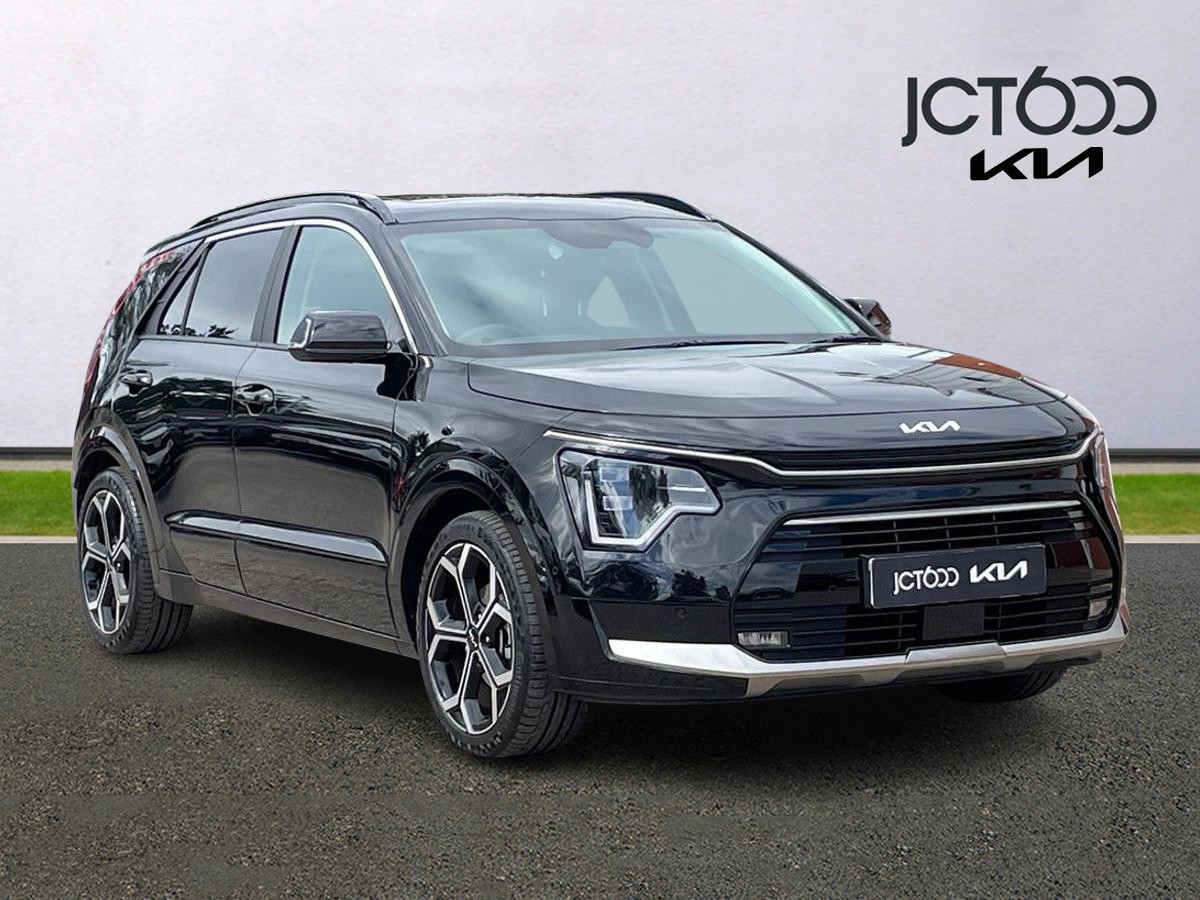
Used Kia Niro for sale: everything you need to know
There have now been two generations of Kia Niro, the first sold between 2016 and 2021, and the model that’s currently on sale offered since then. We’re concentrating on the older model here as that’s what you’re likely to find in the largest numbers on the used market - and they’re looking increasingly good value as depreciation takes hold, too, especially for models still covered by the remainder of Kia’s 7-year warranty.
Taking the form of a relatively small SUV, the Niro was offered in hybrid, plug-in hybrid, and full electric variants, which means there’s an option whether you’re wishing to merely dip a toe into electrification, or dive in headlong. Bountiful equipment levels and an easy-going driving experience add to the original Niro’s appeal.
The Niro was among the first cars to introduce hybrid and plug-in variants across the range so for older models at least, it doesn’t have much competition. But the newer you go, the easier rivals are to find, with cars like the Toyota C-HR and Peugeot 3008 offering similar characteristics.
Should you buy a Kia Niro?
As an all-rounder the Kia Niro has a lot to recommend it. In our full review we described it as perhaps “the ultimate ‘white goods’ purchase”, and we don’t mean that as an insult to the car - it’s simply a vehicle that does everything you ask of it with minimal fuss for as long as you need it too, and you’ll probably give it little more thought until the next time you come to buy a car.
It’s relatively easy on the eye but won’t have the neighbours’ curtains twitching, and since all models are electrified, it won’t wake the neighbours each morning either. The engines are quiet and smooth and controlled by an effective dual-clutch automatic gearbox (making them feel slightly more precise than the CVT equivalents in some rival hybrids) and the ride and handling are both perfectly adequate - again, not a criticism so much as an observation.
The interior is similarly straightforward. Boot space varies depending on the model, with the plug-in hybrid having the least room for luggage, but passenger space is comparable to rivals in all versions, and the raised seating position affords a good view out. It’s built well too, and while the dashboard isn’t as flashy as later Kias, it’s about as logical and easy to use as cabins get.
Then there’s the e-Niro electric car, which has a very useful range for what’s now a relatively outdated model, and the best performance of the bunch. As used electric cars go, it’s a very sensible option.
Earlier Niros didn’t have much competition but more manufacturers introduced similar vehicles over the years, so if the Niro doesn’t appeal, you might want to look at a Toyota C-HR or Peugeot 3008 for something more stylish, or a regular petrol or diesel equivalent like the Nissan Qashqai if you’re still not convinced by hybrid technology.
A Kia Niro not for you? We've got 1000s of used cars for sale to suit all budgets and needs
What’s the best used Kia Niro model to buy?
With three distinctly different drivetrains on offer - hybrid, plug-in hybrid, and full electric - you’ll have to decide just what you need from your next car, but the regular hybrid makes sense for anyone not yet comfortable with plugging in a car at home or at work, or if you simply don’t have the access to charging. The EV’s useful range makes it a genuinely usable electric car if you do have charging facilities, though.
In terms of specification, all Niros are well-equipped. We’d be tempted to go for at least ‘3’ trim though for its larger infotainment screen and the heated steering wheel and front seats.
Used Kia Niro fuel economy and performance
Kia Niro 1.6 GDi Hybrid: The regular hybrid version of the Niro used a 1.6-litre four-cylinder petrol engine and electric motor combination, for 141PS through a six-speed dual-clutch automatic. 0-62mph took 11.5 seconds and economy was a claimed 58.mpg.
Kia Niro 1.6 GDi Plug-In Hybrid: With a similar layout to the hybrid but more electric power (and 36-mile pure EV range), it’s a touch quicker at 10.4 seconds to 62mph. Combined economy was a claimed 201.8mpg, though this clearly makes heavy use of electric running.
Kia e-Niro: The all-electric e-Niro was the most powerful model, with 204PS to the front wheels and a 0-62mph time of 7.5 seconds. 39kWh or 64kWh battery packs allowed for either 180 or 282 miles of range.
What used Kia Niro trim levels are available?
Kia’s familiar number-based trim level system made a return on the Niro, which keeps things simple when you’re looking through used examples - basically, the higher the number, the more kit you’ll get. No Niro is badly equipped, though you will find variations depending on what’s powering the car, as plug-in hybrid and full EV models will tend to have smaller wheels, aimed at maximising efficiency.
The Kia Niro 2 started things off with 16-inch alloy wheels, dual-zone air conditioning, adaptive cruise control, an 8-inch touchscreen media display with Apple CarPlay and Android Auto, a reversing camera and rear parking sensors, privacy glass, and cloth and leather combination upholstery.
The Kia Niro 3 upgraded to 18-inch alloys, a larger 10.25-inch touchscreen, leather upholstery, front parking sensors, LED fog lights, and a heated steering wheel and front seats. Plug-in hybrid models kept 16-inch alloy wheels to maximise efficiency.
The Kia Niro 4 stepped up to LED headlights, keyless entry and go, 8-speaker JBL audio, heated outer rear seats, ventilated front seats, a 7-inch TFT driver display, and LED interior lighting with ambient illumination.
The Kia Niro First Edition was available in e-Niro form only and based on the ‘3’ model. It didn’t get LED foglights but did get 17-inch alloys, a 7-inch TFT driver cluster, and 8-speaker JBL audio.
Used Kia Niro dimensions and boot size
The second-generation Kia Niro (2022 onwards) has the following dimensions:
Length: 4,420mm
Width: 1,825mm (excluding mirrors)
Height: 1,545–1,570mm, depending on the version
The Kia Niro's boot capacity varies depending on the powertrain:
Plug-in hybrid (PHEV): 348 litres, increasing to 1,342 litres with the rear seats folded
Self-charging hybrid: 451 litres, increasing to 1,445 litres with the rear seats folded
Niro EV: 475 litres, increasing to 1,392 litres with the rear seats folded
The Niro EV also has a 20-litre storage compartment under the bonnet.
Earlier Kia Niro models (2016–2022) are slightly smaller and have different boot capacities, so check which generation you're considering.
Used Kia Niro road tax
Road tax for a used Kia Niro depends on its registration date and whether it's a hybrid, plug-in hybrid or fully electric model.
Kia Niro hybrid and plug-in hybrid models registered from 1 April 2017 cost £200 a year to tax under the current Vehicle Excise Duty (VED) rules. The previous £10 annual discount for hybrids has been removed.
The fully electric Kia e-Niro and Niro EV also cost £200 a year to tax, following the end of the electric car exemption in April 2025. Electric models registered before April 2025 are exempt from the expensive-car supplement. However, electric models registered from April 2025 with an original list price of more than £50,000 attract an additional £440 a year for five years, starting with the second year of registration.
Older Kia Niro models registered before 1 April 2017 are taxed according to their CO2 emissions. The most economical versions, emitting up to 100g/km, cost £20 a year under current rates.
Always check the road tax for the specific Kia Niro you're considering, as rates vary depending on its age and specification. For more information, read our guide to car road tax.
How much is it to insure a Kia Niro?
Insurance could be pretty affordable depending on the Niro you’re looking at. A hybrid in the most basic ‘2’ trim starts in only group 11, which is the kind of insurance group you’d expect to see on some superminis. Plug-in hybrids start in group 14 and even the e-Niro is reasonable, sitting in group 20 in the 1-50 group system.
Read our full Kia Niro review