Kia Niro Review

Written By Andrew Brady
- 2022
- SUV
- Hybrid, plug-in hybrid
What we love
Exceptionally low running costs in hybrid form
Spacious cabin and strong rear-seat room
Smart EV6-inspired interior design
Things to consider
No longer the bargain it once was
Hybrid is a little slow when fully extended
PHEV only really makes sense for the right buyer
The DRIVE take on the Kia Niro, is it the right car for you?
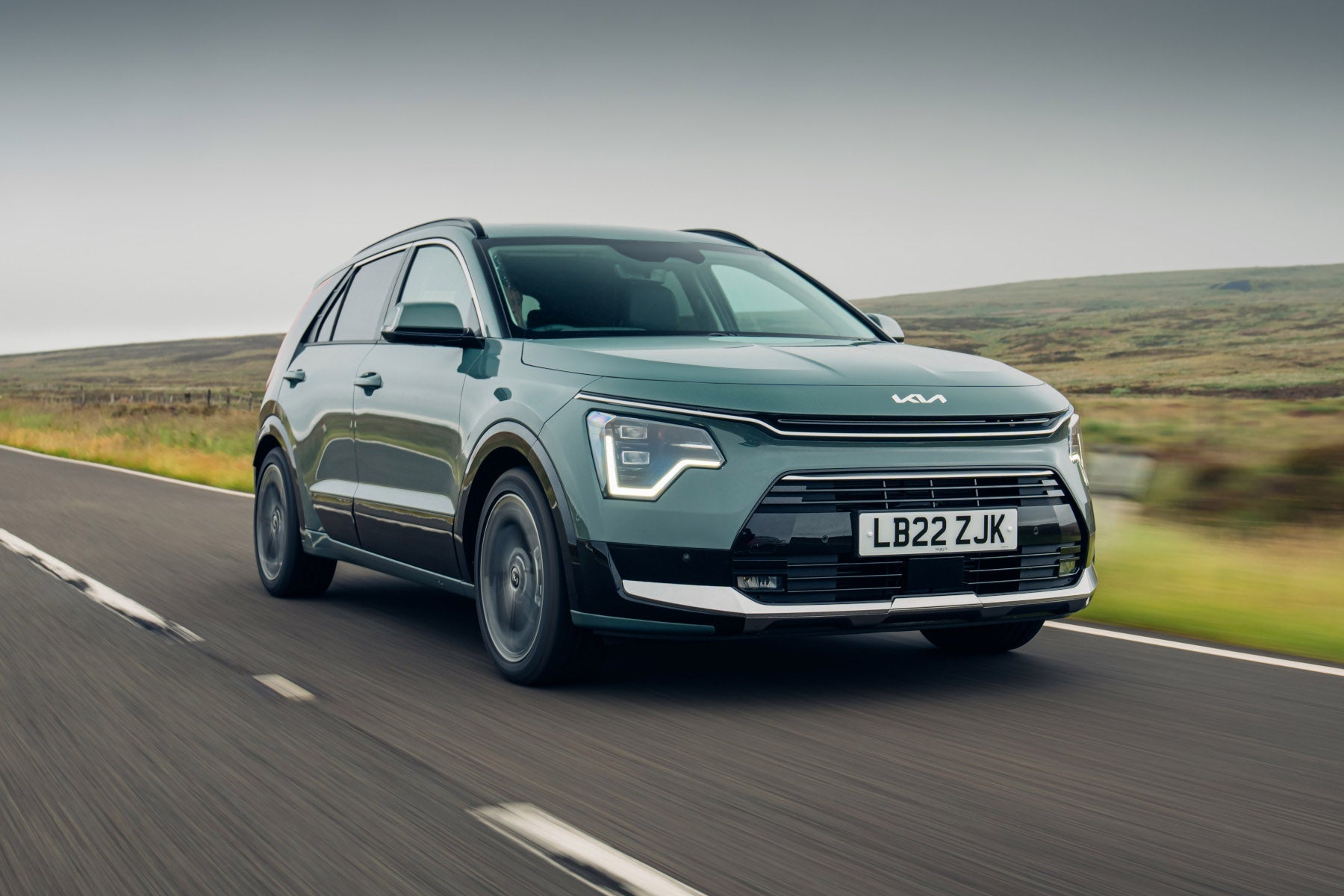
The Kia Niro remains one of the smartest family SUV choices if low running costs, sensible dimensions and straightforward usability matter more than badge prestige or driving sparkle. The latest-generation car is much more appealing than the original, with sharper styling, a more modern cabin and a stronger sense of quality throughout. It still is not especially exciting to drive, and the plug-in hybrid asks a lot of money for relatively niche benefits, but the Kia Niro Hybrid in particular makes a very strong case as an everyday family car.
The Kia Niro in more detail
The original Kia Niro always made sense on paper. It was cheap to run, roomy enough for family use and available with a full range of electrified powertrains. The problem was that it never felt especially desirable.
This second-generation car fixes that. It is more distinctive outside, far more appealing inside and generally feels like a car that buyers might actively want rather than merely tolerate for the sake of economy.
Browse used Kia Niros for sale →
This review focuses on the hybrid and plug-in hybrid models. The Kia Niro EV is a separate proposition and works better as its own review.
That leaves two versions to concentrate on. The regular hybrid is the one most buyers should be looking at because it gives you the Niro’s core strengths for the most sensible outlay. The plug-in hybrid adds a useful electric-only range on paper, but the extra purchase price narrows its appeal quite a bit for private buyers.
The broader point is that the Kia Niro still hits a sweet spot. It sits between smaller crossover models and larger family SUVs, which gives it a useful footprint for mixed family use. It feels easy to live with in town, but it is large enough inside to work properly as a main family car.
What's the best Kia Niro trim and engine option?
For most buyers, the Kia Niro Hybrid in 3 trim remains the strongest choice. It gets the larger infotainment screen, heated seats, heated steering wheel, wireless phone charging and the most useful driver-assistance upgrades without straying too far into the more expensive end of the range.
The plug-in hybrid only really makes sense if you can charge regularly and mostly cover shorter trips. If that sounds like your use case, it can work well, but for most private buyers the regular hybrid remains the better-balanced and better-value option.
What’s the price of the Kia Niro?
The current Kia Niro Hybrid starts at £30,860, while the Plug-in Hybrid starts at £35,490. At the top of the range, the Niro Plug-in Hybrid 4 reaches £40,490 on the road. There are also plenty of used Kia Niros for sale for considerably less.
That means the Niro is no longer the budget-minded left-field choice it once was. It now sits in more serious family-car territory, but the standard equipment levels and the long warranty help justify the price.
Alternatives to the Kia Niro
The Honda HR-V remains one of the clearest alternatives if you want another hybrid-only family SUV with clever packaging and a strong reliability reputation. The Toyota C-HR is also a natural rival, though it trades a little practicality for a more dramatic look.
The Renault Arkana is worth a look if you like the coupe-SUV style, while the Nissan Qashqai e-Power makes a lot of sense if you want something slightly larger with a hybrid powertrain and stronger motorway refinement.
If you want something from the same showroom but a size up, the Kia Sportage is also an obvious alternative.
What's the interior like in the Kia Niro?
The Kia Niro’s interior is one of the biggest improvements over the old model. It takes a lot of inspiration from the EV6 and feels much more modern, much more stylish and much more convincing than before.
Kia Niro boot space and practicality
The Kia Niro has always been a useful family car, and this newer version keeps that strength intact. Front-seat space is good, the driving position is pleasingly upright and there is loads of headroom, so it feels more like a compact family SUV than an overgrown hatchback.
Rear-seat room is another plus. Adults fit comfortably in the back, and the adjustable rear backrests add another layer of flexibility. That matters because some of the Niro’s obvious rivals give away practicality in the name of style. A Toyota C-HR looks more dramatic, for example, but the Kia feels airier and easier to live with in the back, while the Honda HR-V is cleverly packaged but does not feel obviously roomier.
The Niro’s rear doors open wide enough to make child-seat loading straightforward, and the cabin shape helps here too. There is enough knee room for adults behind adults, plenty of headroom and a seating position that does not leave rear passengers with their knees up around their ears. For family use, it feels more accommodating than many coupe-SUV alternatives.
Boot space depends on which version you choose. The regular hybrid gets 451 litres, while the larger battery in the plug-in hybrid trims that to 348 litres.
That means the hybrid is the one to go for if luggage space matters. A 451-litre boot is strong for this class and enough for a pushchair, family shopping or a decent weekend away. It also means the hybrid Niro is more practical than a Toyota C-HR Hybrid and broadly the sort of size families can live with every day without compromise.
The plug-in hybrid is still usable, but 348 litres is a much more noticeable sacrifice. That puts it closer to smaller or more style-led alternatives, and it makes the PHEV harder to recommend if you regularly carry a buggy, larger weekly shops or holiday luggage.
The boot itself is sensibly shaped, with a dual-height floor that lets you choose between outright space and an easier lift-in height. Fold the rear seats and the load area opens up well, with the seatbacks dropping almost flat. That all helps the Niro feel more practical in day-to-day use than some rivals that might post a decent number on paper but are less helpful in shape or flexibility.
Kia Niro dimensions
The Kia Niro measures 4,420mm long, 1,825mm wide and 1,545mm high. That places it neatly between the smallest crossover SUVs and more overtly family-sized models.
In practice, it feels easy enough to manoeuvre while still offering the sort of cabin space buyers expect from a family SUV. It is also compact enough to feel less cumbersome than something like a Kia Sportage or Nissan Qashqai in tighter urban use.
Tech and infotainment in the Kia Niro
The Niro’s infotainment is much stronger than before. Later cars get the larger 10.25-inch central touchscreen as standard, while higher trims pair that with a 10.25-inch digital instrument display.
The system itself is clear and easy enough to use, and standard Apple CarPlay and Android Auto mean most buyers will simply plug in and rely on their phone apps anyway.
One of the neatest cabin touches is the multi-mode control panel beneath the screen, which switches between climate and infotainment functions. It is a clever compromise between physical buttons and a cleaner dashboard.
Materials available on the Kia Niro
Material quality is strong for the class. It does not quite feel premium-brand plush, but the cabin is solid, well finished and a lot more interesting to look at than the old car’s.
The top-spec 4 adds the richer bits, including vegan leather trim, Harman Kardon audio and the full twin-screen look, but even lower trims feel well judged.
What's the Kia Niro like to drive?
The Kia Niro is set up for comfort and ease rather than entertainment, and that feels entirely appropriate for the sort of car it is.
Kia Niro range and performance
The Kia Niro range offers a choice of hybrid and plug-in hybrid power.
The regular hybrid is not fast, but it feels responsive enough around town because the electric motor helps with initial pick-up. That makes it well suited to urban and suburban use.
The plug-in hybrid is noticeably punchier, but not dramatically so. It feels smoother and more relaxed when the battery has charge, though the price premium means you need to use its electric capability properly to make it worthwhile.
Performance data
| Model | Engine/battery size | Power | 0-62mph | Range/MPG |
|---|---|---|---|---|
Kia Niro Hybrid | 1.6-litre hybrid auto | 141PS | 10.8 seconds | up to 64.2mpg |
Kia Niro Plug-in Hybrid | 1.6-litre plug-in hybrid auto | 168PS | 9.8 seconds | up to 40 miles |
Kia Niro driving and refinement
The Kia Niro is comfortable, easy and predictable to drive. It deals with broken surfaces well, the steering is light enough for town work and there is none of the fussy ride quality that can plague some larger-wheeled crossover SUVs.
It does lean a little more than some rivals in faster corners, and it is not the most involving family SUV on a back road, but that is not really what the Niro is for.
Refinement is generally good, particularly in lower-speed running when the hybrid system is spending more time in electric mode. The petrol engine becomes more noticeable when you ask for full performance, though it never becomes especially harsh.
The plug-in hybrid is the more refined version overall because it has more electric assistance and a little more performance in reserve.
How safe is the Kia Niro?
The Kia Niro has two Euro NCAP safety ratings: four stars in standard form and five stars with the optional safety pack. Not every Niro therefore carries the same headline result.
Standard safety equipment is still generous, and higher trims add more advanced systems such as Highway Driving Assist, Blind Spot Collision Avoidance and more sophisticated versions of the forward collision system.
Running costs: What it's like to live with a Kia Niro
Running costs are where the Kia Niro really makes its case. Fuel economy is strong, servicing is straightforward and the warranty remains one of the best in the business.
Kia Niro fuel economy
The regular Kia Niro Hybrid returns up to 64.2mpg officially, which is a very strong figure for a family SUV and one of the car’s biggest selling points.
The plug-in hybrid looks even more dramatic on paper, with weighted combined fuel economy of up to 353.1mpg in 2 trim, falling to 282.5mpg in 4 trim. As ever with PHEVs, those numbers only make sense if you charge frequently and use the electric-only range regularly.
That electric range is up to 40 miles in 2 trim and 37 miles in grades 3 and 4. Charging the 11.1kWh battery from a 7.2kW wallbox takes 2 hours 55 minutes.
Kia Niro warranty and servicing
Kia covers the Niro with its seven-year / 100,000-mile warranty, which remains one of the best manufacturer-backed warranties in the market.
That goes a long way to reinforcing the Niro’s reputation as a dependable, low-risk family car.
Kia Niro insurance groups
Insurance groups start at 18A for the regular hybrid and rise to 24A for the plug-in hybrid. That keeps the Niro fairly manageable by class standards, even if the PHEV is a clear step up.
How much does it cost to tax a Kia Niro?
The standard VED rate from year two onwards is £200 a year for both the hybrid and plug-in hybrid.
The key issue is the Expensive Car Supplement. The more expensive Niro Plug-in Hybrid 4 sits above the £40,000 threshold for non-zero-emission cars, so it attracts the additional charge from years two to six. The rest of the current hybrid line-up stays below that point.
What trims are available with the Kia Niro?
The Kia Niro is available in trims 2, 3 and 4.
The Niro 2 gets 16-inch alloy wheels, LED headlights, cloth upholstery, rear parking sensors, a reversing camera, the central touchscreen, Apple CarPlay and Android Auto, and a good spread of active safety kit.
The Niro 3 is the one most buyers should look at. It adds 18-inch alloy wheels, the larger 10.25-inch touchscreen with navigation, heated seats and steering wheel, front parking sensors, wireless phone charging, keyless entry and more advanced assistance systems.
The Niro 4 adds richer trim, twin 10.25-inch displays, Harman Kardon audio, heated and ventilated front seats, heated outer rear seats, electric tailgate, sunroof and the most comprehensive driver-assistance package.
Ask the Drive experts: common questions
How much does the Kia Niro cost?
Is the Kia Niro a good family SUV?
Should I buy the Kia Niro Hybrid or Plug-in Hybrid?
Is the Kia Niro EV included in this review?
Get our latest advice, news and offers
Keep me updated by email with the latest advice, news and offers from Drive.


.jpg)