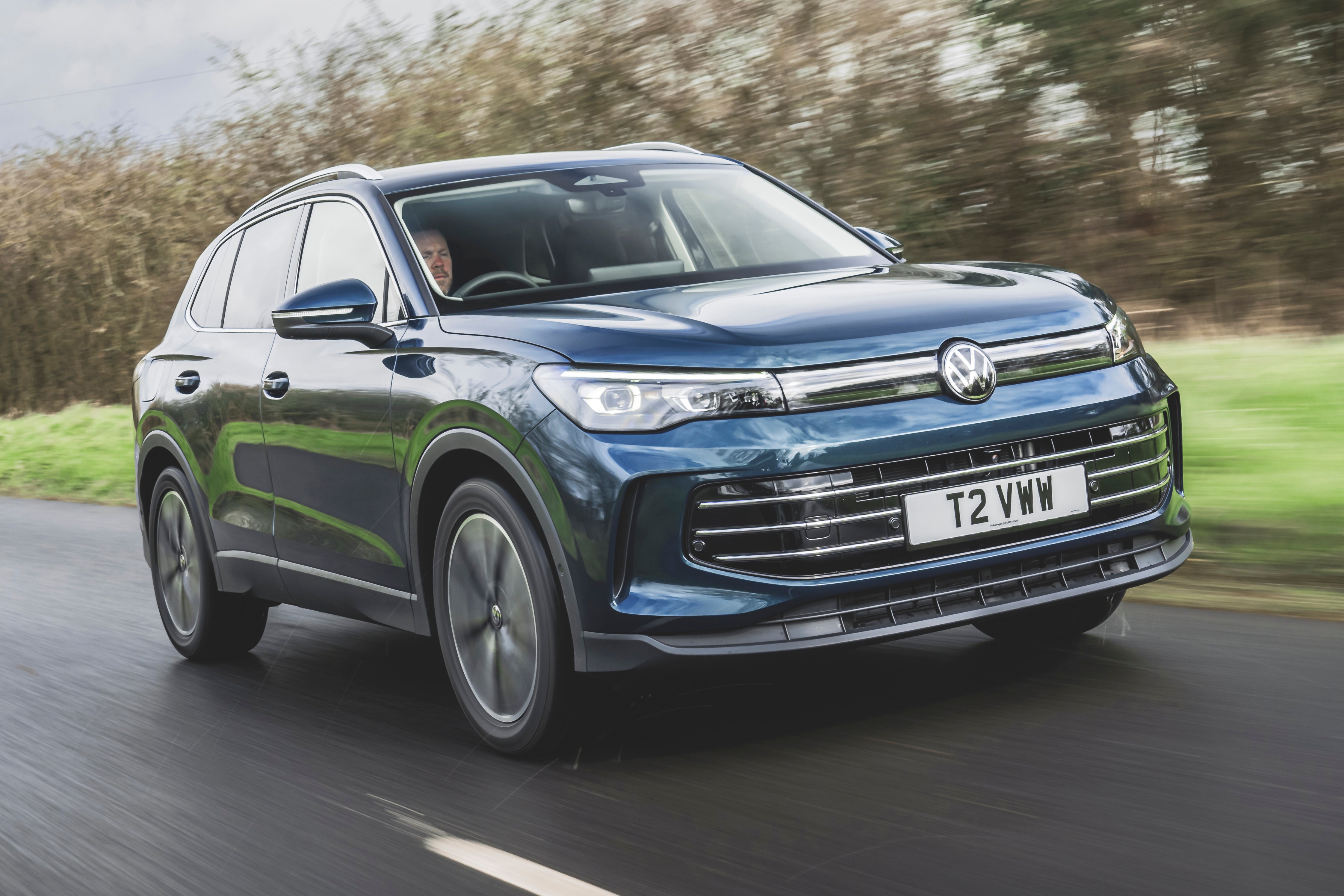
Volkswagen Caddy Review

Written By Andrew Brady
- 2021
- MPV
- Petrol, diesel
What we love
Incredibly comfortable and versatile interior
Easy to drive with excellent visibility
Strong value next to many SUV alternatives
Things to consider
7-seat layout reduces boot space when all seats in use
Rear windows don't open
Higher trims give the Caddy a more passenger-car feel
The DRIVE take on the Volkswagen Caddy, is it the right car for you?
The Volkswagen Caddy is one of those cars that makes a lot more sense than the market gives it credit for. If what you need is space, flexibility, easy access and a big boot, it does all of that better than most similarly priced SUVs, while also being easier to drive than a boxy van-based MPV really ought to be. It is not glamorous or fancy in any way, but if you want a family car that prioritises usefulness over image, the Volkswagen Caddy is a very good buy.
The Volkswagen Caddy in more detail
The Volkswagen Caddy belongs to a category of car that has become rarer than it should be. It is a van-based MPV, and that means it puts space, access and versatility ahead of styling or glamour. In a market full of crossovers trying to look cool and adventurous, the Caddy just gets on with the job of being useful.
Quite simply, the Caddy offers the sort of practicality that most family SUVs simply cannot match, whether that means a huge boot, removable seating, wide-opening sliding side doors or the availability of a longer-wheelbase Maxi version when the standard car is still not enough. If you have a large family, carry bikes or pushchairs regularly, or just want a car that can swallow awkward loads without complaint, the Caddy will likely deliver.
It is also more polished than older van-based MPVs used to be. Because its underpinnings now come from Volkswagen’s passenger-car range, the current Caddy drives with a lot more composure and precision than the old one. Inside, it also feels much more car-like, even if there are still a few clues that its roots are those of a commercial vehicle.
That means the Caddy does not need to be defended as a worthy but dull alternative to an SUV. It is simply a more sensible answer to the same question of what makes a good family car. The compromise is that it will never impress the neighbours in quite the same way as a Tiguan or similar crossover. But if you care more about what a car does than what it says about you, the Volkswagen Caddy remains one of the smartest options of its kind.
What's the best Volkswagen Caddy trim and engine option?
For most buyers, the 2.0 TDI diesel is still the engine that makes the strongest case. It suits the Caddy’s family-and-load-lugging role better than the petrol because it is more economical and better suited to carrying weight or covering long distances. The 102PS version was enough for most people, but that’s now been discontinued, leaving only the stronger 122PS version for diesel buyers, and it’s better when you’re fully loaded up.
Trim-wise, Life is the one to target. There was previously an entry-level trim below that, simply called Caddy, which has now been discontinued, but these felt a bit sparse. Life adds a few more luxuries that bring the Caddy closer to feeling like a proper family car, rather than a van with seats and windows.
What’s the price of the Volkswagen Caddy?
The Volkswagen Caddy range currently starts at £35,677 and rises to £42,669. That is not bargain-basement money for a van-based MPV, and there are cheaper alternatives such as the Citroen Berlingo and Peugeot Rifter. However, the Caddy feels more polished than those rivals, and while most similarly sized SUVs feel more polished still, none can match the Caddy’s level of practicality.
Alternatives to the Volkswagen Caddy
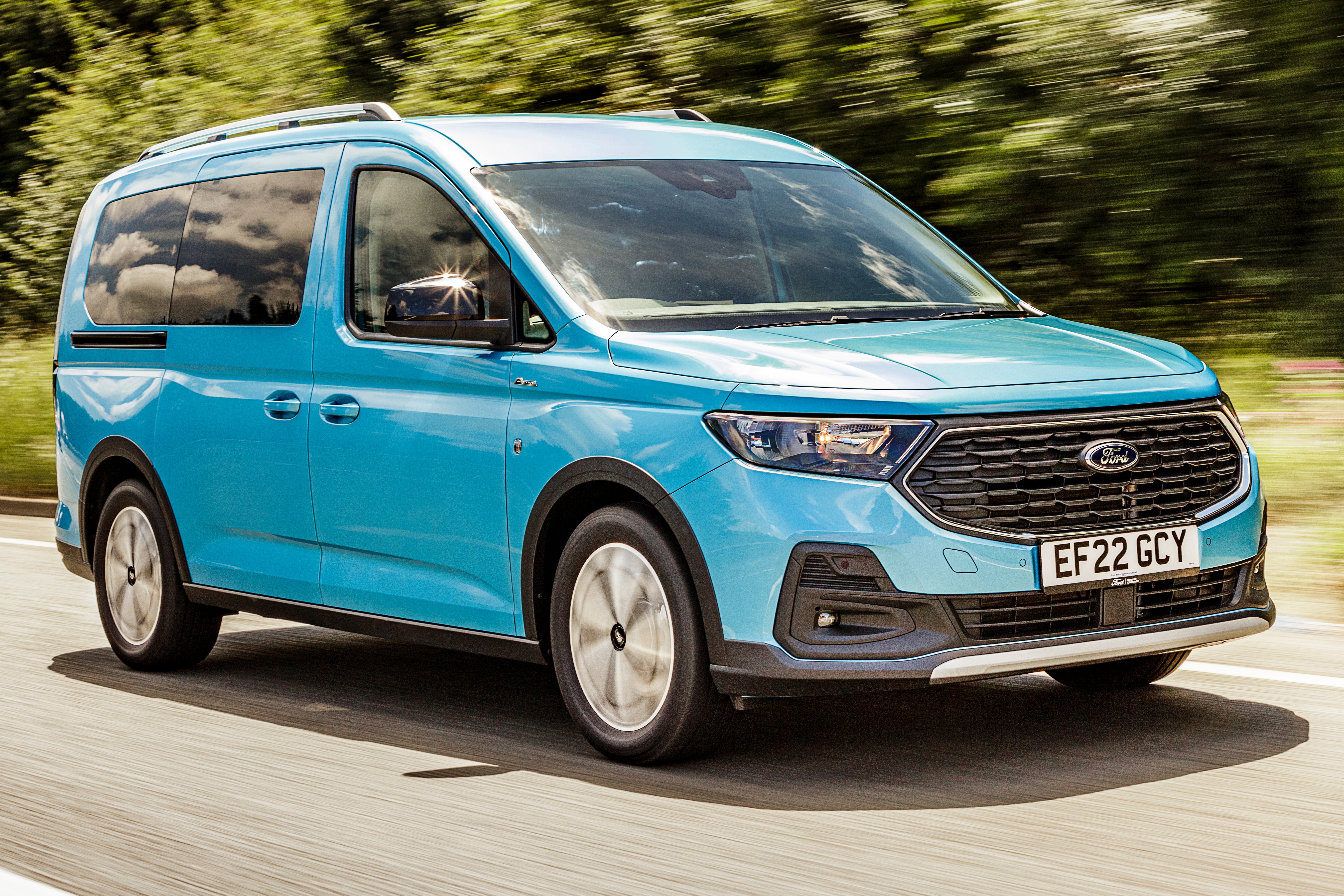
The most obvious alternative is the Ford Tourneo Connect, primarily because it shares its mechanicals, technology, and pretty much everything else except its badge, with the Caddy. Other alternatives include the Citroen Berlingo, Peugeot Rifter and Vauxhall Combo Life, which are also exceptionally practical, but a little less polished than the Caddy on the road.
The more fashionable alternatives are mid-size SUVs such as the Skoda Karoq and Volkswagen Tiguan. Those cars may look more desirable, but they cannot touch the Caddy for rear access, boot space, or the ability to be had with seven seats.
What's the interior like in the Volkswagen Caddy?
The Volkswagen Caddy’s cabin doesn’t feel like that of a van, thankfully. The dashboard design is recognisable if you’re familiar with recent Volkswagen passenger cars, and the big screens you’re faced with means it feels much more like a hatchback than something derived from a commercial vehicle.
Volkswagen Caddy boot space and practicality
Practicality is the whole point of the Volkswagen Caddy, and this is where it delivers in spades. To explain this fully, we need to catch you up on the various flavours of Caddy available.
There’s a regular Caddy with a shorter wheelbase, and this one gets five seats as standard, while a third row of seats can be added as an optional extra to make it a seven-seater. Then there’s the Caddy Maxi, which has a longer wheelbase, and this one comes with seven seats as standard. In both, the third-row seats and middle-row seats can be folded over or removed altogether.
First off, let’s talk about boot space. With all seven chairs in place, the regular Caddy gives a modest 191 litres of cargo space, while the Maxi ups that to a more useful 446 litres.
On those occasions where you only need five of the seats, though, and you whip the third-row seats out, the loadbay becomes truly massive: 1,213 litres in the regular Caddy and 1,720 litres in the Maxi. We suspect those figures are measured to the ceiling rather than the window line as is more conventional, inflating them a bit, but rest assured that in both cases, the cargo space you get is massive.
When maximum loadspace is needed, you can whip out the middle row of seats (although this takes some muscle as they’re pretty heavy and awkward to lift) to return the Caddy to van-like capacity: you get 2,556 litres of loadspace in the regular Caddy and 3,105 litres in the Maxi.
And not only is the space massive, it’s wonderfully usable. There’s a completely flat floor throughout, brilliant access through the wide-opening sliding rear doors and massive tailgate, and there’s not even a lip to negotiate where the tailgate opens.
Reinstate the seats, and passenger space is also really impressive. Both bodystyles have bags of headroom and legroom in the middle row for tall adults to travel comfortably, and the generous width of the cabin means that three passengers will fit across the bench in relative comfort. The third-row seats in the Maxi also have enough space for adults, making it much more than just an occasional seven-seater. Things are a little tighter in the regular Caddy when specified with seven seats. Adults will fit, but you might want to upgrade to the Maxi if regularly carrying grown-ups back there. Kids will be fine, though.
Like we say, access is brilliant thanks to the sliding rear doors, especially in tight car parks. However, in order to get the massive tailgate open, you’ll have to make sure that there’s plenty of space behind the car when you park up.
A few of the finer details remind you of the Caddy’s van roots, too: the rear windows don’t open, for example, which can be annoying for families. However, the driving position is easy to get comfortable in, and visibility is brilliant, with a broad windscreen and big mirrors.
Against rivals, the Caddy is right up there with any of them for space and practicality. And that’s compared with other van-based-MPV rivals, such as the Ford Tourneo Connect, Citroen Berlingo and Peugeot Rifter. Compared with SUV rivals such as the Nissan Qashqai, the Caddy is simply in another league.
Volkswagen Caddy dimensions
The Volkswagen Caddy measures 4,500mm long, 1,855mm wide (without door mirrors) and 1,832mm tall in standard-wheelbase form. The Maxi is identical for width, but it’s obviously longer at 4,853mm, and also a smidgen taller at 1,836mm. In practice, that gives you a vehicle that feels manageable in town, despite the huge amount of interior space it has.
Tech and infotainment in the Volkswagen Caddy
The Caddy has been offered with a variety of different infotainment systems depending on trim level and the age of the car. Early on, the entry-level Caddy made do with a simple 6.5-inch display that didn’t do a great deal more than play the radio or stream music from your phone via Bluetooth.
The Caddy Life came with a bigger 8.25-inch display, which also brought with it Apple CarPlay and Android Auto. Native navigation wasn't available on this system but the smartphone integration meant that you could just use your phone’s mapping software instead. A bigger 10.0-inch unit with built-in sat-nav was available as an optional extra, but it was quite pricey.
Later on, Volkswagen decided to fit all Caddy models with an updated 10.4-inch infotainment screen that has sharper graphics and is marginally easier to use than previous systems.
Another desirable (and, again, expensive) feature was the Digital Cockpit. This replaced the conventional instrument dials with a 10.25-inch digital display that can be configured to show things like audio information or even navigation information including a map of your location. All new Caddy models now come with this digital instrument display.
We’ve seen a press release issued in March 2026 that hinted at upcoming interior upgrades, including a new larger, free-standing central display. That’s the extent of the information that’s been released so far, though, so we’ll update this review once we have more detail.
Materials available on the Volkswagen Caddy
How happy you'll be with the Caddy's interior quality will probably come down to your expectations. If you're trading in a mid-range crossover SUV, you might be disappointed with the slightly hard finish of the dashboard, or the flimsy door bins. But it doesn't feel a great deal cheaper than the latest Volkswagen Golf, and it's certainly plusher than some van-based people carriers. The leather-trimmed steering wheel helps lift the cabin a little, as do the silver accents on things like the air vents and door handles.
What's the Volkswagen Caddy like to drive?
The latest Caddy is much better to drive than the old one, and much better than the shape suggests. It is not entertaining, but it is easy, accurate and composed in a way that suits family use very well.
Volkswagen Caddy range and performance
Most Caddy buyers will find that diesel power will suit their needs best. A 2.0-litre TDI unit is offered, previously available with either 102PS and a six-speed manual gearbox, or 122PS and a seven-speed DSG automatic transmission. These days, only the latter option is available for factory order.
While we're yet to try the old entry-level unit, we've sampled the 122PS diesel in the Caddy and found it to have plenty of guts. The automatic gearbox can be a little hesitant at low speeds – a typical DSG trait – but it changes gear surprisingly rapidly once you up the pace, and the changes are always smooth.
If you live in a city centre or don't cover many miles each year, then the sole petrol engine on offer might suit you better. This Volkswagen's 1.5 TSI turbo, providing 116PS. Previously, it could be paired with the manual or automatic gearboxes, but these days, it’s auto-only.
We've spent time in the automatic version, and it's great. It’s certainly not quick, but it feels as gutsy and as eager as anyone will ever need it to be: it doesn't feel out of breath when joining a motorway and will happily cruise at 70mph, while staying smooth and settled at all times.
Performance data
| Model | Engine/battery size | Power | 0-62mph | Range/MPG |
|---|---|---|---|---|
1.5 TSI 116PS DSG | 1.5-litre | 116PS | 11.9 seconds | Up to 42.8mpg |
1.5 TSI 116PS DSG Maxi | 1.5-litre | 116PS | 11.9 seconds | Up to 41.5mpg |
2.0TDI 122PS DSG | 2.0-litre | 122PS | 11.4 seconds | Up to 51.4mpg |
2.0TDI 122PS DSG Maxi | 2.0-litre | 122PS | 11.8 seconds | Up to 49.6mpg |
Volkswagen Caddy driving and refinement
The biggest transformation with the current Caddy compared to the previous version is how much better it is to drive. That’s largely thanks to the Caddy having Golf-related mechanicals underneath, rather than those designed for use in a commercial vehicle.
Its boxy shape often makes you forget that the Caddy’s footprint is still quite compact, so it doesn’t feel cumbersome or intimidating on narrow city streets. The steering is light and the turning circle is excellent, while visibility is superb, which all helps make the Caddy a doddle to thread through traffic or park.
Out of town, it is composed rather than exciting, but that’s absolutely fine. The coil-sprung rear suspension means it doesn’t fidget and bounce like older van-based MPVs, so both the ride and handling feel settled, predictable and completely unflustered.
Refinement is surprisingly good, too. Wind- and road noise are isolated very well, and while the petrol engine makes itself heard if you really stamp on the throttle, you won’t often need to, and it’s smooth and quiet the rest of the time. The diesel engine makes more of a characteristic clatter, but it’s no worse than in rivals.
How safe is the Volkswagen Caddy?
The Volkswagen Caddy received a five-star Euro NCAP rating when it was tested back in 2021. It’s since been assessed by Euro NCAP once again, in 2025, and downgraded to four stars when tested against the very latest safety standards, but such is their toughness that that’s no disgrace.
Standard safety equipment includes Adaptive Cruise Control, lane assistance, a driver monitor, and seven airbags including curtain airbags that cover the rear seats. There are also front- and rear parking sensors, and a rear-view camera, to help you avoid parking scrapes.
Running costs: What it's like to live with a Volkswagen Caddy
The Caddy should be relatively straightforward to live with. Diesel economy is strong, insurance costs are sensible, and if you spec your car sensibly and carefully, you can avoid higher-rate tax.
Volkswagen Caddy fuel economy
The diesel engine is the star here. The current 122PS 2.0 TDI DSG can officially manage up to 51.4mpg in the standard Caddy and up to 49.6mpg in the Maxi, which means long ranges between fill-ups are realistic. You’ll get a fraction less in the top-spec Style Edition car due to its slightly larger alloy wheels.
The 1.5 TSI petrol is less efficient, predictably, but it’s hardly a disaster, with a figure of up to 42.8mpg on the regular Caddy and up to 41.5mpg on the Maxi. It’s also the engine to go for if you do mainly shorter urban journeys, but those doing regular long motorway stretches will definitely want the diesel.
Volkswagen Caddy warranty and servicing
Volkswagen provides a better warranty on its commercial vehicles than it does its passenger cars, and even though this Caddy carries passengers, it still gets the improved commercial-vehicle cover. So, instead of a bog-standard three-year, 60,000-mile warranty, you’re covered for three years or 100,000 miles, whichever elapses first. You also get complimentary roadside assistance for the same period as your warranty.
Volkswagen Caddy insurance groups
Depending on your choice of engine and trim options, the Caddy’s insurance grouping have ranged between 8 and 15 during its time on sale, while buyers of the Maxi will be looking at classifications of between 9 and 15. As such, no version is going to be expensive to tax if you have a decent no-claims bonus.
How much does it cost to tax a Volkswagen Caddy?
Most Caddy passenger versions sit below the expensive-car threshold of £40,000, so it’s possible to avoid the extra VED road tax cost that brings. Only the Style Edition versions bust the threshold, which is all the more reason to stick with our favoured Life trim, but the Maxi version of the Life gets very close to the threshold when specified with diesel power. So, if buying that version, be careful not to add optional extras that’ll take it over the threshold, saddling you with liability for the extra cost. And what is that extra cost? Well, on top of the annual lower-rate sum of £200 per year, you’ll have to pay an additional £440 per year between years two and six of the car’s life.
What trims are available with the Volkswagen Caddy?
There was previously an entry-level version of the Caddy, known simply as Caddy, but it felt rather too sparse and downbeat to suit family use.
Life is now the entry-level trim, which is no bad thing because it’s always been the one we’ve recommended. Standard equipment includes 16-inch alloy wheels, power folding and adjusting door mirrors, front- and rear parking sensors, a reversing camera, keyless entry and go, adaptive cruise control, single-zone air-conditioning, electric front windows, and electronic parking brake. For many families, that’ll be enough to be getting on with.
To be honest, we can’t really see the point in upgrading to Style Edition trim, even if you can live with the extra costs it brings. You might like the 17-inch alloy wheels and dual-zone climate control, but otherwise, all it really adds is LED headlights and privacy glass.
Ask the Drive experts: common questions
Is the Volkswagen Caddy a good family car?
Which Volkswagen Caddy engine is best?
Is the Volkswagen Caddy better than an SUV?
What is the best Volkswagen Caddy trim?
Get our latest advice, news and offers
Keep me updated by email with the latest advice, news and offers from Drive.
.jpg)
.jpg)