Volkswagen Golf GTE Review

Written By Richard Aucock
- 2020
- Hatchback
- Plug-in hybrid
What we love
Strong plug-in hybrid pace
Genuinely useful EV range
Generous standard kit
Things to consider
PHEV system reduces boot space
Regular charging is key to getting the best from it
Facelift brings a much longer electric range
The DRIVE take on the Volkswagen Golf, is it the right car for you?
The Volkswagen Golf GTE makes a decent case for itself if you want a warm hatch with low running costs. It’s quick, well equipped and polished in the way a Golf should be, and the latest battery upgrade makes the electric-only range of this plug-in hybrid much more convincing than it used to be. It is not as playful as a Golf GTI and the boot is noticeably smaller, but for company-car drivers or buyers who can charge regularly, the Golf GTE is a canny choice among performance hatchbacks.
The Volkswagen Golf in more detail
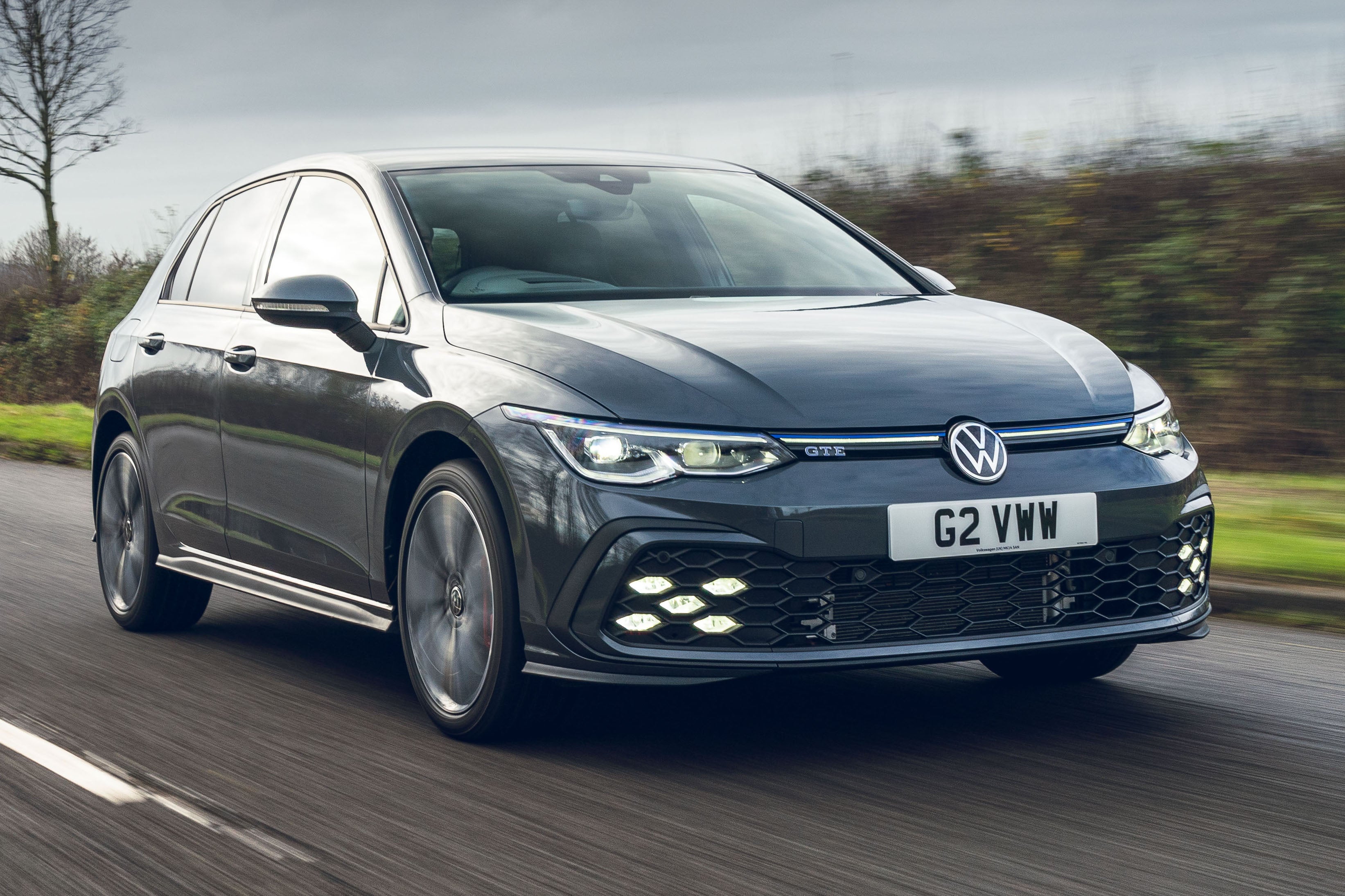
The Volkswagen Golf GTE is a car that promises a lot. It takes the familiar Golf GTI theme of strong everyday performance and understated raciness, and mixes it with plug-in hybrid running, meaning (potentially) lower fuel bills and lower company-car tax.
That promise is now delivered upon better than it was when this generation of Golf first arrived. The original Mk8 Golf GTE had decent pace and a reasonably broad skill set, but the 2024 facelift made it much more convincing by fitting a much larger battery and boosting electric range dramatically.
The GTE now uses a 1.5-litre turbo petrol engine, an electric motor and a 19.7kWh battery for a combined output of 272PS. That is actually more power than the regular Golf GTI offers, although it has to be said that the GTE cannot quite match that car for driver appeal.
What the GTE does do very well, however, is combine speed with polish. It feels brisk, refined and easy to drive quickly, and it still carries the broad competence that has always made fast Golfs such appealing daily cars. It is also very well equipped as standard, so you do not have to add expensive options just to get the basics.
The weaknesses are familiar enough. Like other Mk8 Golfs, the GTE relies too heavily on the touchscreen, and while the facelift improved some of the hardware and controls, there are still some ergonomic gripes remaining. The battery also eats into luggage space, which means the GTE is less practical than a regular Golf.
Even so, it remains a strong package for the right buyer. If you want a fast hatchback that has the ability to slash fuel costs if used correctly, and keep company-car tax low at the same time, the Volkswagen Golf GTE has plenty going for it.
What's the best Volkswagen Golf trim and engine option?
This is a simple one, because there is only one Volkswagen Golf GTE. It comes with a plug-in hybrid powertrain delivering a total of 272PS through a six-speed DSG automatic gearbox, and a generous standard specification. Or, if you’re buying used, you might find a GTE with the older powertrain, which gave 245PS and was based around a 1.4-litre petrol engine.
The real decision is whether the GTE suits your needs better than a Golf GTI, or a Golf with the more modest plug-in hybrid powertrain. If you can plug in at home and do mainly short journeys, but still want a bit of sizzle on your commute, then the GTE has plenty going for it.
What’s the price of the Volkswagen Golf?
With the Volkswagen Golf GTE coming in just one trim level and engine combination, there is less to worry about when comparing prices.
The Volkswagen Golf GTE currently costs £40,145 before you add any options. That makes it expensive for a Golf, and it also pushes it above the £40,000 threshold that triggers higher-rate VED road tax. However, the standard equipment is generous, the plug-in hybrid powertrain is more convincing than before the 2024 facelift and, for the right buyer, the running-cost case can still make the numbers add up.
Alternatives to the Volkswagen Golf
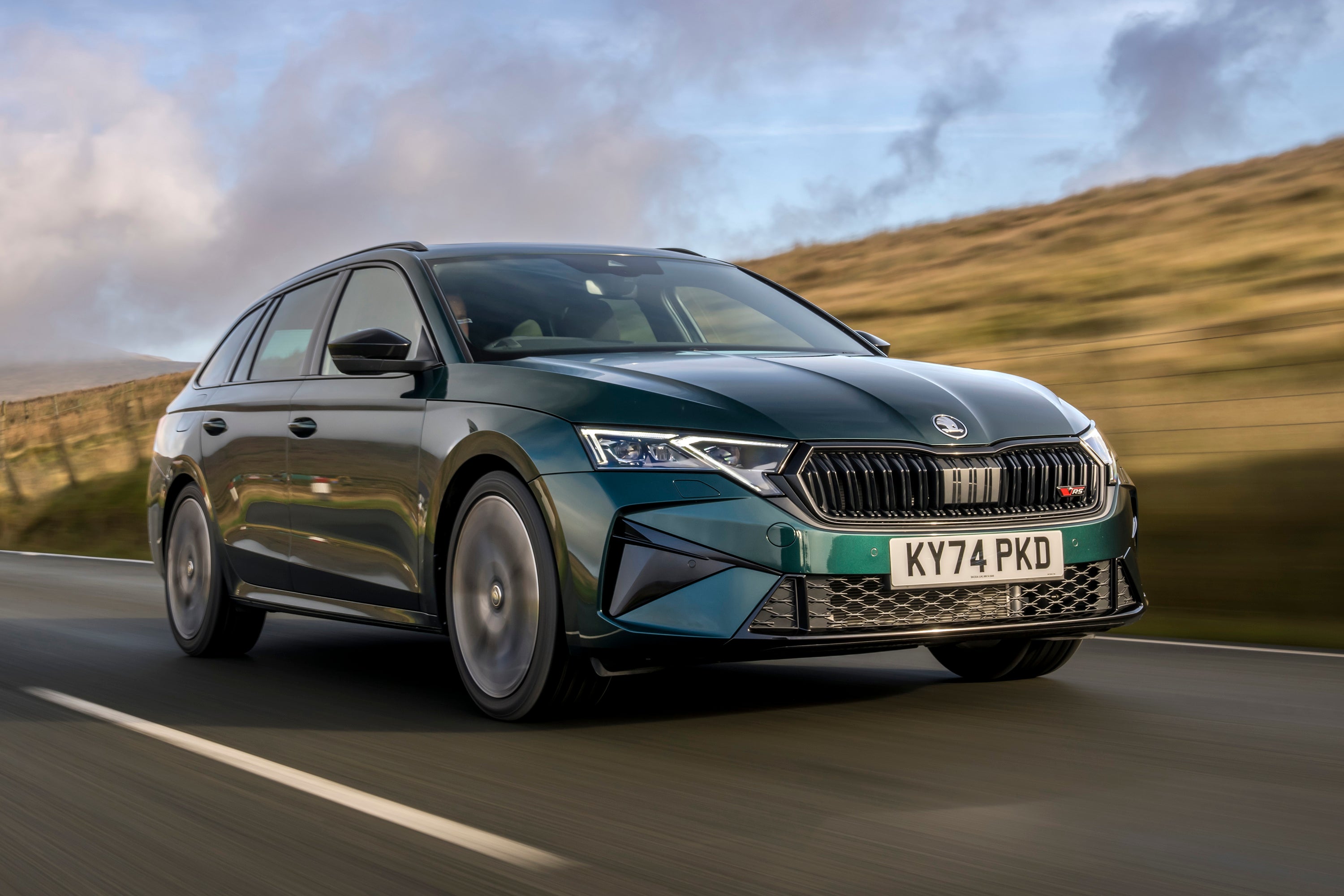
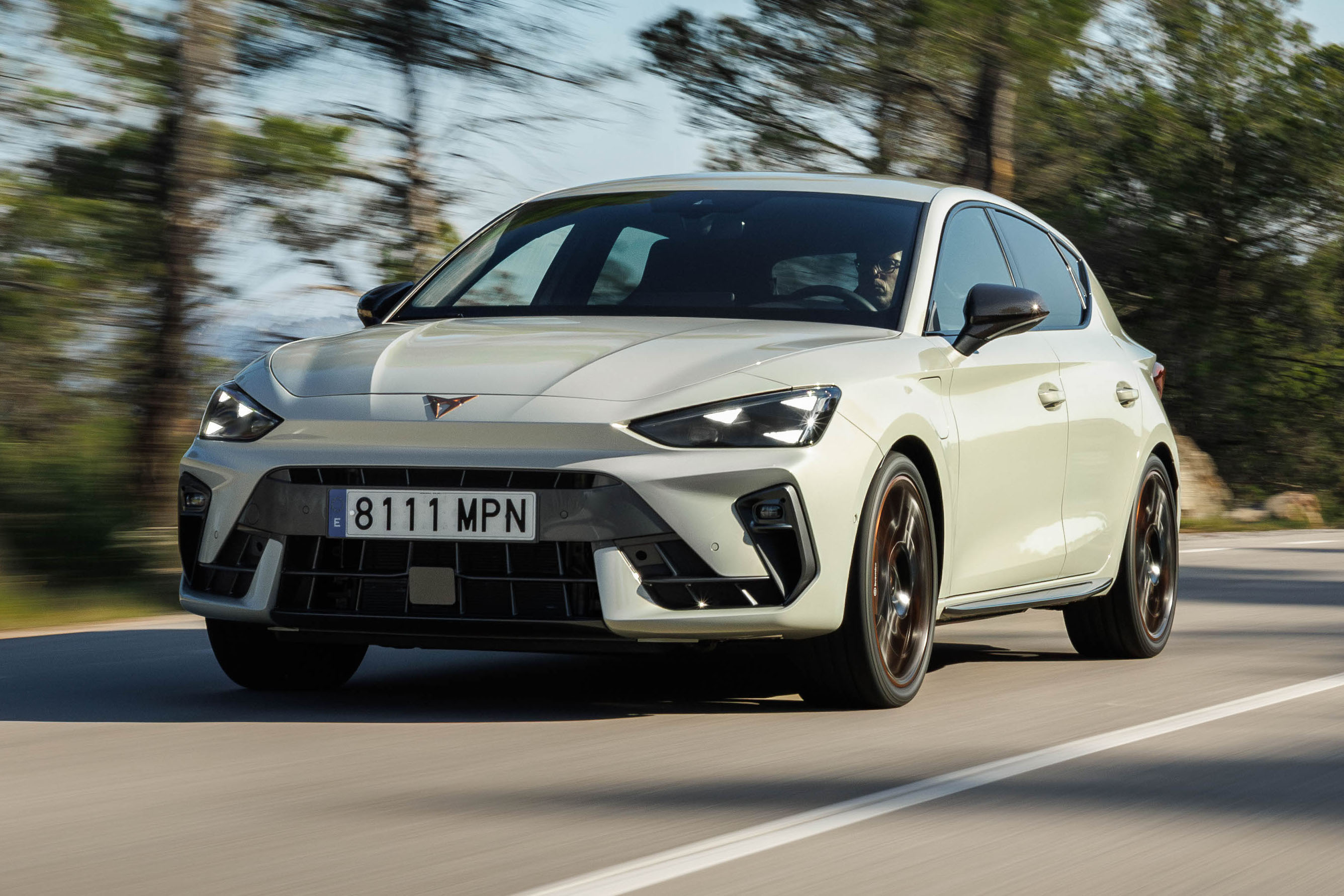
The most obvious alternatives are the Cupra Leon eHybrid and, if you’re buying used, the now-defunct Skoda Octavia vRS iV. Both use closely related plug-in hybrid running gear, but they bring slightly different personalities. The Cupra has the sharper image, while the Skoda majors more obviously on space and value.
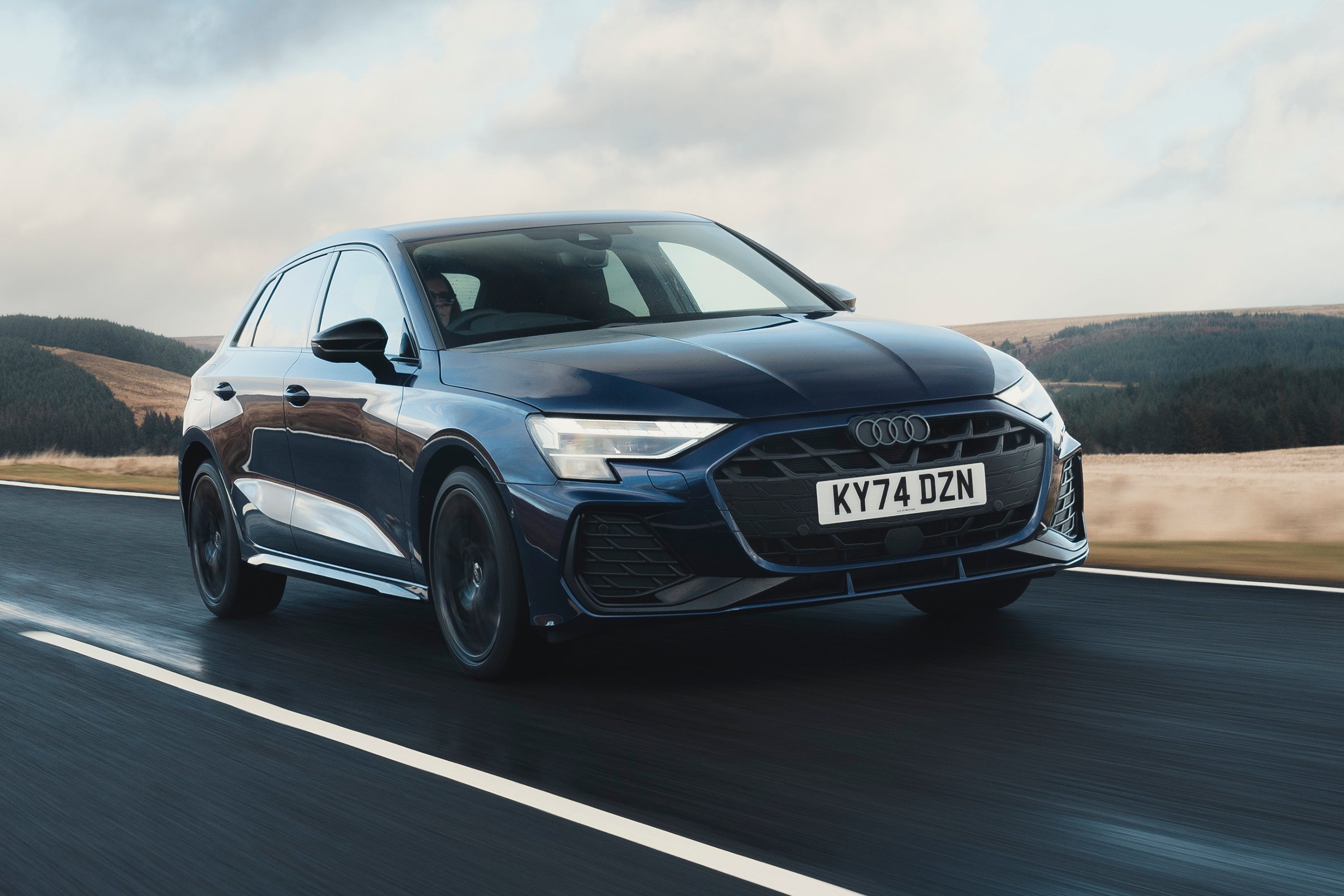
The Audi A3 TFSI e is another key alternative if you want a more premium feel, while the Mercedes-Benz A250e offers similar plug-in hybrid appeal from a rival German brand. Both make sense if badge appeal matters to you.
If you don’t absolutely have to have a plug-in hybrid, the Golf GTI is the obvious petrol alternative. It’s almost identical in a variety of ways, but it’s more engaging to drive, although it can’t match the GTE on company car tax bills.
What's the interior like in the Volkswagen Golf?
The Volkswagen Golf GTE has a smart, sporty cabin with just enough sparkle to mark it out from lesser Golfs. It feels modern and well put together, even if some materials and the user interface aren’t quite as impressive as in older Golfs.
Volkswagen Golf boot space and practicality
The Volkswagen Golf GTE offers the same front-seat space as any other current Golf, and there’s plenty of adjustment, a comfortable driving position and enough cabin storage to keep life easy.
Rear-seat space, on the other hand, is decent rather than exceptional. Two tall adults will be comfortable in the back, but there won’t be room to spare like there will be in the equivalent Skoda Octavia or Cupra Leon. You won’t want to squeeze a third person onto the rear bench very often, either, because the cabin is too narrow for three sets of shoulders to fit comfortably, but to be fair, that’s the case with most cars of this type.
The biggest compromise comes in the luggage space you get. While a regular Golf has 381 litres of boot space and a GTI only slightly less at 374 litres, the battery packaging of the GTE sees luggage capacity reduced to just 273 litres. That’s just about enough for the GTE to still work as a family hatchback, but it’s a big deficit.
Volkswagen Golf dimensions
The Volkswagen Golf GTE measures 4,289mm long, 1,789mm wide (without door mirrors) and 1,478mm high. That makes it compact enough to work well in town, but still large enough inside for everyday family duties.
Tech and infotainment in the Volkswagen Golf
When the Golf first went on sale in 2020, it had a 10.0-inch central touchscreen, and it was one of the car’s biggest weak points. It had an illogical user interface, sloppy responses and glitchy software. The car also had other ergonomic shortcomings, such as the fussy touch-sensitive slider controls for stereo volume and cabin temperature, which were less precise - and thus more distracting - to use than conventional buttons and knobs. And, because they weren’t illuminated, you couldn’t see them when it was dark.
Things improved greatly with the 2024 facelift. The central screen was replaced with a new 12.9-inch touchscreen as standard across the range, and it has a much slicker, more intuitive interface than before. It’s still not perfect in either regard, but it’s a lot better. Those fiddly touch-sensitive slider controls remain, and they’re still a gripe, but at least they’re now backlit so you can use them at night.
As standard, the infotainment system has wireless Apple CarPlay and Android Auto, DAB radio, Bluetooth, navigation and wireless phone charging.
Materials available on the Volkswagen Golf
The Golf GTE’s cabin materials are decent, but they no longer feel like the class benchmark. The overall design is clean and the fit is solid, but there are some plastics and surfaces, most notably lower down in the cabin, that don’t feel quite so premium.
The details in the GTE give the interior a lift, though, with blue tartan upholstery, stainless steel pedals, ambient lighting and a sporty steering wheel.
What's the Volkswagen Golf like to drive?
The Volkswagen Golf GTE is fast, composed and easy to live with, but it is best viewed as a quick plug-in hybrid with a sporty edge, rather than a full-on hot hatch.
Volkswagen Golf range and performance
When it first went on sale, the Golf GTE was offered with a PHEV powertrain that mated a 1.4-litre turbocharged petrol engine with an electric motor and a 13kWh battery pack. The combined output was 245PS, matching that of the Golf GTI, although with a 0-62mph time of 6.7 seconds, it was a second slower about the benchmark sprint than its petrol-only counterpart. It felt quick, but didn’t really deliver the sizzle you’d want from a proper hot hatch, so it’s best viewed as a brisk version of the regular hatchback with slightly sportier styling.
The 2024 facelift saw a new powertrain introduced for the Volkswagen Golf GTE. It combines a 1.5-litre turbocharged petrol engine with an electric motor and a 19.7kWh battery for a total system output of 272PS.
Despite the extra power, it’s only fractionally quicker than before, getting from 0-62mph in 6.6 seconds. Again, it’s quick, and the instant shove from the electric motor helps it feel responsive from low speeds, but those expecting proper hot hatch pace will be a little underwhelmed.
The more important figure for many buyers is the improvement of the GTE’s electric range. Officially, the current Golf GTE can travel up to 81 miles on battery power alone, which is a huge improvement over the circa 37 miles on the earlier version, and one of the best figures available in a plug-in hybrid hatchback.
Performance data
| Model | Engine/battery size | Power | 0-62mph | Range/MPG |
|---|---|---|---|---|
GTE | 1.5-litre plug-in hybrid | 272PS | 6.6 seconds | Up to 81 miles |
Volkswagen Golf driving and refinement
The Volkswagen Golf GTE is a pleasing car to drive. The strong grip and tight body control keep the car feeling tidy in bends, and the steering is direct and nicely weighted. However, don’t go thinking that it feels just like a GTI but with a different powertrain, because it doesn’t. The battery on board means it carries a good bit more weight that the GTI, and you can feel that in the way the car goes, turns and stops. It just doesn’t have the same light-on-its-feet feel.
It does ride well, though, giving the GTE a similar amount of everyday usability to the GTI, and it settles into a motorway cruise with the sort of refinement you expect from a Golf. In electric mode it is very quiet indeed, and when the petrol engine cuts in the transition is smooth and quiet.
How safe is the Volkswagen Golf?
The Volkswagen Golf has been tested by Euro NCAP on three occasions - in 2019, 2021 and 2025 - to see how it stacks up against ever improving safety levels. And on all three occasions, it has achieved the full five stars, which is very good news.
As you’d expect, all models have good safety kit, including adaptive cruise control, Front Assist automatic emergency braking, a wide range of airbags, and three sets of Isofix child seat mounting points.
Running costs: What it's like to live with a Volkswagen Golf
The Volkswagen Golf GTE exists to blend performance with lower running costs, and it does that job well if you charge it regularly. The large battery and long EV range give you a real chance of going weeks without filling up with petrol.
Volkswagen Golf fuel economy
The current GTE’s official WLTP combined fuel economy is up to 212.4mpg, but as with any plug-in hybrid, that number needs to be taken with a sizeable pinch of salt, because the official tests are unrealistically flattering to such cars. What you’ll actually get will depend entirely on how you use your car. Keep the batteries topped up and only ever do short journeys that can be completed on electric power, and you’ll hardly use any petrol. Rely on the combustion engine on a regular basis, and you’ll use loads because of the extra weight of the battery.
That battery was upgraded during the 2024 facelift from a 13kWh unit to a 19.7kWh one, extending the car’s all-electric range figure from 37 miles up to 81 miles. The new battery takes around 12 hours to fully charge on a regular three-pin domestic socket, and that full charge will cost around £5 on a normal domestic power tariff.
Volkswagen Golf warranty and servicing
The Volkswagen Golf GTE comes with a three-year vehicle warranty, made up of two years of unlimited-mileage cover and a third year up to a limit of 60,000 miles.
Servicing shouldn’t be any more costly than on a regular Golf, despite the GTE being a more complicated car. You’ll have a fixed regime of maintenance every 12 months or 9,300 miles if you don’t do that many miles, or if you do more, you can use a flexible regime that can allow anywhere up to 24 months between services. A service light will come on in your car when work is needed.
Volkswagen Golf insurance groups
Earlier versions of the Volkswagen Golf GTE sat in insurance group 27, but when the powertrain was upgraded as part of the 2024 facelift, its classification snuck up to group 30. That’s likely partially because of the hike in power from 245PS to 272PS.
Insuring the GTE won’t be cheap, then, but neither should it be excessive given the performance on offer.
How much does it cost to tax a Volkswagen Golf?
List price is very important here. Combustion-engined cars with a list price - inclusive of any optional extras fitted - of less than £40,000 when brand new are liable for a flat rate of annual VED road tax, and that flat rate is currently charged at £200 per year. If a car’s price is any higher than that threshold, it becomes liable for an Expensive Car Supplement on top of the flat rate. That amounts to an additional £440 per year, and it’s chargeable between years two and six of the car’s life.
Currently, the Golf GTE has a basic price of more than £40,000, so if you buy brand new today, then higher-rate tax is inevitable. However, the price of the car wasn’t always as high as it is today, so you might be able to get around it by buying a used example instead. Just make sure it’s an early enough car that it beats the threshold, and that the original owner didn’t spec it up past the £40,000 threshold.
What trims are available with the Volkswagen Golf?
The Volkswagen Golf GTE is a single trim level, and it is generously equipped. Standard kit includes 17-inch Richmond alloy wheels, sports styling, Matrix LED headlights, rain-sensing wipers, front- and rear parking sensors, a reversing camera, keyless entry and start, heated front sports seats, three-zone climate control, 30-colour ambient lighting, and adaptive cruise control. That’s on top of all the safety and infotainment gear we talked about earlier on.
In other words, this is not a car that needs lots of optional extras to feel complete. The standard spec should be generous enough for most buyers.
Ask the Drive experts: common questions
Is the Volkswagen Golf GTE better than a Golf GTI?
How far can the Volkswagen Golf GTE go on electric power?
Is the Volkswagen Golf GTE a good company car?
What is the main drawback of the Volkswagen Golf GTE?
Get our latest advice, news and offers
Keep me updated by email with the latest advice, news and offers from Drive.
.jpg)