Volkswagen ID.4 Review

Written By Andrew Brady
- 2021
- SUV
- Electric
What we love
Comfortable ride
Spacious, family-friendly cabin
Easy EV to live with
Things to consider
Rapid-charging capability varies by version
Larger wheels can affect ride comfort
The infotainment takes some familiarisation
The DRIVE take on the Volkswagen Id4, is it the right car for you?
The Volkswagen ID.4 is a very convincing family EV if what you want is comfort, space and an easy introduction to electric motoring. It is not the sharpest or most characterful choice, and the touchscreen-dependent interior will irritate some people, but there’s little to complain about otherwise. The ride is plush, the cabin is roomy, the range figures are competitive if you go for the right version and nothing about the car feels intimidating. If you want an electric SUV that will slip neatly into everyday family life, the Volkswagen ID.4 deserves a place on your shortlist.
The Volkswagen Id4 in more detail
The ID.4’s core appeal lies in its straightforwardness. It’s an easy-to-live-with electric SUV for people who simply need one car to do everything, and it doesn’t attempt to do anything flashier or more complicated than that. It’s big enough to work as a main family car, comfortable enough to make long journeys painless and easy enough to drive that even buyers who are a bit nervous about going electric should settle into it quickly. Granted, the Volkswagen ID.4 is not especially exciting, but it is very approachable.
During its many years on sale, it’s been offered in such a vast variety of different forms - with different mixtures of trim levels, powertrain options and battery sizes - that we’ve genuinely lost count. Today, the UK line-up runs from Pure Essential and Pure Match (58kWh battery and 190PS), through Pro Essential, Pro Match and Pro Black Edition (79kWh battery and 286PS), and through Pro Match 4MOTION and Pro Black Edition 4MOTION (77kWh battery, 299PS, and four-wheel drive), right up to the range-topping GTX Edition (77kWh battery, 340PS, and four-wheel drive).
Browse used Volkswagen ID.4s for sale →
Depending on version, the official WLTP range figures sit anywhere between 265 miles to 351 miles. That means there’s an ID.4 for various types of buyer, from those who simply want a sensible and affordable electric family SUV, to those who want high performance and/or all-wheel drive.
There are weaknesses, mind. The interior is too reliant on touch-sensitive controls, and the infotainment system, while improved as of the 2024 facelift, could still be considerably easier to use. Interior quality is also merely competitive, rather than class-leading.
The ID.4 also faces much stiffer competition than it did when it was first launched, with new opponents from a wide variety of different manufacturers arriving all the time. The Skoda Enyaq remains the obvious challenge, offering much of the same substance for less money, while alternatives such as the Audi Q4 e-tron, Tesla Model Y, Renault Scenic E-Tech and Kia EV6 make the class more competitive than ever.
What's the best Volkswagen Id4 trim and battery option?
For most buyers, the best all-round choice in the current line-up is the Volkswagen ID.4 Pro Essential. It’s one of the most affordable versions to buy, and yet it still combines the long-range battery with a healthy amount of standard equipment. With up to 351 miles of official range, it has the best range figure of any ID.4.
The smaller-battery Pure models also make sense if your mileage is modest and you’d rather keep purchase prices down. Even so, the jump to a Pro model is easier to justify here than it is in some rivals, simply because the extra range makes the car feel much more versatile.
What’s the price of the Volkswagen Id4?
The Volkswagen ID.4 range currently starts at £36,995 and rises to £52,900. That means the entry point now looks a lot more competitive than it did when the car first arrived, but the upper end of the range still pushes into premium-money territory. There are also plenty of used Volkswagen ID.4s for sale for considerably less.
The key thing to understand is that not all versions are equally easy to justify. The cheaper Pure models make a lot of sense as family EVs if you can live with the shorter range, and some also qualify for the Government Electric Car Grant. The cheaper Essential version of the Pro model also qualifies, making it look like great value for money, and this is the version most buyers will really want because it has the extra range that makes the ID.4 feel properly long-legged. Venture any further up the range, though, and the car starts to look expensive.
Alternatives to the Volkswagen Id4
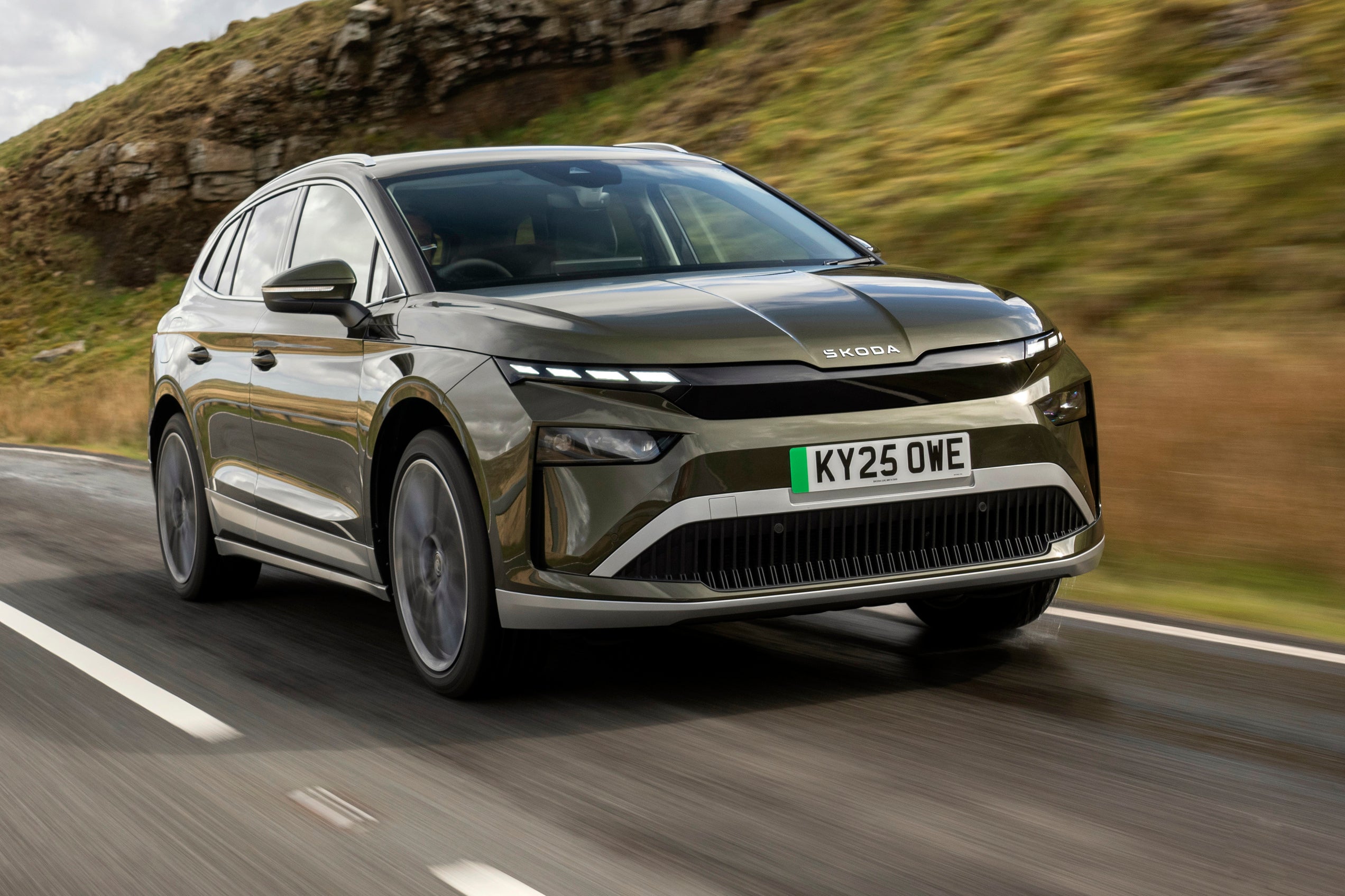
The Skoda Enyaq is the most obvious rival. It’s closely related, using the same platform and powertrains, it offers similar space and practicality, and version-for-version, it usually undercuts the Volkswagen ID.4 on price. Some buyers may prefer the extra clout of the Volkswagen badge, but if value matters more, the Skoda is very tough to beat.
The Audi Q4 e-tron is another key alternative. Again, it’s closely related to the VW and Skoda, and offers a more premium take, with a posher badge and a slightly more upmarket cabin. However, it’s appreciably more expensive without delivering a dramatic uplift in ability.
The Tesla Model Y remains one of the big-name alternatives, especially if rapid-charging infrastructure and touchscreen tech rank highly on your shortlist of attributes. It feels quicker and more high-tech than the Volkswagen ID.4, too. The downside is that it is less soothing in the way it goes about its business, and not everyone will warm to Tesla’s minimalist cabin design.
The Renault Scenic E-Tech is another smart option. It brings a fresh interior, competitive range and smart handling, while the Kia EV6 adds stronger performance and a more distinctive design. If you want something a bit more interesting to drive or to look at, both are worth considering.
What's the interior like in the Volkswagen Id4?
The Volkswagen ID.4’s cabin majors on space and a relaxed atmosphere, and that suits the car very well. It feels airy, practical and easy to get along with. The weak point, however, is the over-reliance on touch controls.
Volkswagen Id4 boot space and practicality
The Volkswagen ID.4 is spacious enough and practical enough to serve as a family’s only car. There’s plenty of room up front, the seats are comfortable and the view out is clear. You don’t sit quite as high as you might expect in an SUV, but the driving position is still easy to get on with and there is enough adjustment for most drivers to get comfortable without much effort.
Rear-seat passengers are well catered for, too. There’s enough legroom and headroom for adults to travel comfortably, and the flat floor helps make the middle seat more usable than in many combustion-powered rivals, even if it is still the least desirable place to sit. Three people will just about fit across the rear bench, but tight shoulder room means you won’t want to fill all three pews on a regular basis.
Boot space is pretty good at 533 litres, and the shape is usefully square. That’s not as large as a Skoda Enyaq’s boot, but it has the edge over the Audi Q4 E-Tron. The access to the space through the large tailgate opening is good, too, but things aren’t perfect. There’s a fairly large lip at the boot entrance that you’ll have to lift heavy items over, and when you fold down the rear seats to extend the loadspace, the load floor that’s left is both stepped and sloped.
Volkswagen Id4 dimensions
Most versions of the Volkswagen ID.4 measure 4,584mm long, 1,852mm wide and 1,634mm high. The exceptions are the 4WD models, which are 2mm shorter and 15mm lower. That places it in the middle of the pack among mid-size electric SUVs, and big enough to offer proper family-car space without feeling quite as bulky as some larger alternatives.
Tech and infotainment in the Volkswagen Id4
Depending on trim level, early ID.4 models came with a 10.0-inch or 12.0-inch touchscreen system with navigation. It looked pretty good and was fairly responsive, and standard-fit Apple CarPlay and Android Auto meant you could use some of the apps from your phone on the central screen.
However, it frustrated in other ways. The software was often very laggy and, due to Volkswagen’s mission to purge physical switchgear from the car’s cabin, almost every function had to be operated through the touchscreen. That made the menu structure too complicated to use easily, and the structure wasn’t massively logical, either.
More annoying still, however, were the touch-sensitive slider pads below the screen for adjusting the temperature of the climate control, and for changing the volume of the stereo. Not only are these more fiddly and less precise to use on the move than conventional buttons or dials are, making them more distracting, but also, they weren't backlit, so they were virtually impossible to use at night.
During the car's facelift in early 2024, the infotainment system was replaced by a new one that implemented a 12.9-inch screen across the entire range. It was a distinct improvement, with most of the software glitches being eradicated and the menus structure being made slightly simpler, although the latter is still by no means perfect. Those annoying slider controls remained, frustratingly, but at least they were now illuminated.
Materials available on the Volkswagen Id4
There are some pleasing tactile and soft-touch surfaces, but it certainly doesn't feel any nicer than the more affordable Skoda Enyaq's interior. If you want something a little more sophisticated, then you'll have to dig a little bit deeper and splash the cash on something like an Audi Q4 e-tron.
What's the Volkswagen Id4 like to drive?
The Volkswagen ID.4 is not especially exciting, but it is very easy to drive and very easy to live with. More than anything, it feels calm, and that’s exactly what many family EV buyers will want.
Volkswagen Id4 range and performance
Like we mentioned earlier, the ID.4 has been offered in countless different forms over its considerable time on sale, not just where its trim levels are concerned, but also with the batteries and motors on offer, the range of which has undergone almost constant change since the car’s 2021 release.
There are simply too many to cover in detail here, so we’ll concentrate on the ones available today, but just know that traditionally, the powertrain options have run the full gamut from modestly restrained to very powerful indeed.
First up are the Pure versions. These are offered in Essential and Match trims, and these get a 58kWh battery and rear-mounted motor delivering 190PS. Then come the Pro versions, offered in Essential, Match and Black Edition trims, and these have the largest 79kWh battery and a 286PS motor powering the rear wheels. Then you have the Pro 4MOTION models (available in Match and Black Edition trims): these have a slightly smaller battery at 77kWh, but a higher power output of 299PS, delivered to all four wheels by a pair of electric motors. At the top of the range is the GTX, which also has dual-motor four-wheel drive and the 77kWh battery, but this time with power hiked up to 340PS.
We won’t bother taking you through all the various figures for performance and range - that’s all in the table below if you want it - but we will describe what the level of performance feels like in each version.
The entry-level Pure cars aren’t quick, but they feel a fraction brisker than the performance figures suggest when getting off the mark. The level of acceleration does tail off markedly when you’re already going at a decent pace, but that’s not uncommon and you never feel like you’re lacking enough pace to keep life easy and safe.
That said, the rear-drive Pro cars do have a useful uplight in accelerative performance as well as considerably more range, and that’s another reason why you might want to make the upgrade. It feels properly brisk off the line, and your on-the-move performance feels brawnier and easier, too.
The Pro 4MOTION models are a little brisker against the stopwatch, but you’ll hardly notice the difference in day-to-day use, so this upgrade is only really worth making if you often drive in slippery conditions where the four-wheel drive might be helpful.
Lastly, the GTX does feel like the fastest of the bunch - largely because it is - but again, the difference doesn’t feel massive, certainly not massive enough for buyers to think of it as a standalone performance model. It feels effortlessly brisk rather than properly rapid.
For most buyers, we definitely think that the sweet spot in the range is the 286PS rear-wheel-drive Pro car.
Performance data
| Model | Engine/battery size | Power | 0-62mph | Range/MPG |
|---|---|---|---|---|
Pure | 58kWh | 190PS | 8.5 seconds | Up to 268 miles |
Pro | 79kWh | 286PS | 6.7 seconds | Up to 351 miles |
Pro 4MOTION | 77kWh | 299PS | 6.1 seconds | Up to 341 miles |
GTX Edition | 77kWh | 340PS | 5.4 seconds | Up to 325 miles |
Volkswagen Id4 driving and refinement
You could say that the most remarkable thing about the ID.4’s driving experience is how entirely unremarkable it is. And that’s not necessarily a bad thing. If you’re new to electric cars, there’s absolutely nothing about the ID.4 that feels in any way alien or intimidating. You can just get it and drive it like you would any normal automatic car. The steering is light, the pedals are responsive and visibility is really good, too.
There are two other characteristics that further convey that easy-going nature. The first is the impressive level of comfort. The suspension does a good job of smoothing off rough roads and taking the sting out of bumps, and that’s the case whether you’re pottering around town or pounding along the motorway. Things do get a little jigglier in the versions with the biggest wheels, but that’s not uncommon and we recommend the lower-end, smaller-wheeled versions anyway.
The second is refinement, which again, is really good. There’s barely any noise from the electric motor, and although you can hear wind-and road at motorway pace, both are kept to low levels. On all sorts of road, this is a car that keeps you settled and relaxed at all times.
Fair enough, it’s not an exciting car, and there are plenty of rivals that’ll suit you better if that’s what you’re after. But how many buyers really want that from their family SUV? Not many, we’d argue. Importantly, the charge always feels stable, secure and predictable when changing direction, while majoring on comfort and sophistication.
If you’re expecting things to be any different with the sporty GTX version, think again. It has a sports suspension, and can be specified with adaptive suspension as an option if you so wish, but even so, it feels more like a slightly faster version of the regular ID.4 rather than a proper performance model.
How safe is the Volkswagen Id4?
The Volkswagen ID.4 has been crash-tested by Euro NCAP twice, once at its original release in 2021, and again in 2025 to see how it fared against newer, tougher safety standards. Happily, it scored the full five stars on both occasions.
Standard safety equipment is competitive. The ID.4 includes assistance features such as lane assist, front assist with autonomous emergency braking, adaptive cruise control, driver monitoring, and front- and rear cross traffic alert. Front-and rear parking sensors and a reversing camera are provided across the range to help prevent parking scrapes.
Running costs: What it's like to live with a Volkswagen Id4
The Volkswagen ID.4 isn’t massively cheap to buy, but running costs should be relatively painless if you charge at home and choose the version that suits your mileage.
Volkswagen Id4 charging times and costs
Like with all EVs, running your ID.4 will be most affordable if you charge at home. Assuming for a moment that you pay the UK’s national average rate for your domestic electricity, and that you have a conventional 7.2kW wallbox charger, then an empty-to-full charge of the smallest 58kWh battery pack will take around eight hours and cost around £16. With the larger 77kWh battery, the same charge will take around 10.5 hours and cost around £21, while with the largest 79kWh battery, the charging time will be around 11 hours and the cost around £22.
That’s probably not an accurate assumption to make, though, because most EV owners don’t charge their cars at the UK’s national average rate. Instead, the smart ones get themselves on a variable-rate home electricity tariff that allows them to charge their cars with heavily discounted off-peak power. Doing so can see your charging costs tumble to less than half, so it’s a move worth making.
Conversely you can probably triple our quoted charging costs whenever you need to use public DC rapid charging points, because the power that comes out of these is super-expensive due to its speed and convenience. And the rate at which the ID.4 accepts DC charge depends on the version, too. Cars with the smallest 58kWh battery can only rapid charge at up to 105kW, while cars with the biggest 79kWh battery raises this to a maximum speed of 165kW. With the mid-range 77kWh battery, the Pro 4MOTION models have the same 165kW maximum speed, while the GTX ups it to 185kW. In all cases, though, a 10% to 80% top-up can be delivered in between 26 and 29 minutes if conditions are perfect.
Volkswagen Id4 warranty and servicing
The Volkswagen ID.4 comes with a three-year warranty, made up of a two-year unlimited-mileage manufacturer warranty, followed by a third year up to 60,000 miles. Volkswagen covers the high-voltage battery for up to eight years or 100,000 miles, with a guarantee that it will retain at least 70 per cent of its original capacity within that period.
Servicing should be simpler than for an equivalent petrol or diesel SUV because there are fewer moving parts in an EV, but don’t expect a service to be any cheaper. However, you will need to present your electric car for routine work less often than you will a petrol or diesel car, saving you cash. Services are needed every two years, regardless of mileage.
Volkswagen Id4 insurance groups
Insurance costs are not especially low, but the ID.4 is not as punishing here as some faster or more premium electric SUVs. Early examples started in the high teens, but current classifications are higher. In today’s range, insurance groups run from 23 to 39. Predictably, the Pure models look the most affordable to insure, while the GTX Edition is naturally the most expensive.
How much does it cost to tax a Volkswagen Id4?
The price threshold (including optional extras) at which an electric car becomes liable for higher-rate VED tax is £50,000. If your car is priced below that, you pay just the flat rate of £200 per year. If your car is priced above that, then the exchequer will add on another £440 on top of that for a five-year period between years two and six of the car’s life.
Currently, the only version with a list price that busts the threshold is the GTX. However, a few of the other higher-end versions get a little too close to the threshold for comfort, and adding one too many options can easily push you over. Be careful when speccing your car if buying new, and if buying used, make sure to Google the reg of any potential purchase to ensure that the original owner did the same.
What trims are available with the Volkswagen Id4?
As mentioned previously, the ID4 has been offered in a vast array of different forms during its considerable time on sale, and nowhere is that more true than when talking about trim levels. We’re at upwards of a dozen nowadays.
Obviously, we don’t have time or space to discuss them all in detail here, so we’ll just concentrate on the ones available in today’s new-car market.
The current Volkswagen ID.4 line-up consists of Essential, Match, Black Edition and GTX Edition.
Standard kit in the entry-level Essential version includes 19-inch steel wheels, LED headlights, black roof rails, front- and rear parking sensors, a reversing camera, a heated windscreen, heated front seats, heated leather steering wheel, dual-zone climate control, keyless entry and start, rain-sensing wipers, adaptive cruise control, and 30-colour ambient lighting, along with the 11.9-inch infotainment screen with navigation, DAB, AI-equipped voice assistant, six-speaker sound, four USB-C ports, wireless smartphone charging, and wireless operation of Apple CarPlay and Android Auto.
Match trim adds to that 19-inch alloy wheels, a handsfree powered tailgate, rear privacy glass, metallic paint. Pair this trim with the 286PS Pro powertrain option, and you also get Matrix LED headlights and LED tail light with dynamic turn signal, plus additional exterior ambient lighting.
The Black Edition gets a panoramic glass roof, gloss black mirror housings, and front seats with power adjustment and massaging.
At the top of the range, the GTX not only gets the trim-specific power upgrade, but it also comes with larger 20-inch alloys, 360-degree cameras, a self-parking feature, an augmented-reality head-up display, and three-zone climate control with a control panel for those in the back.
Ask the Drive experts: common questions
Is the Volkswagen ID.4 a good family car?
What is the best Volkswagen ID.4 version to buy?
Is the Volkswagen ID.4 better than the Skoda Enyaq?
Get our latest advice, news and offers
Keep me updated by email with the latest advice, news and offers from Drive.
.jpg)
.jpg)
.jpg)
.jpg)
_1.jpg)