Volkswagen ID.5 Review

Written By Andrew Brady
- 2022
- SUV
- Electric
What we love
Good range from Pro versions
Coupe styling barely dents practicality
Very comfortable and easy to drive
Things to consider
Sloping roof prioritises style over maximum practicality
Rear visibility a little more restricted than ID.4
Higher-spec models can become expensive
The DRIVE take on the Volkswagen Id5, is it the right car for you?
The Volkswagen ID.5 makes sense if you like the easy-going, family-friendly nature of the ID.4 but want something that looks a little more stylish. It’s roomy enough to work as a main family car, comfortable enough for long trips and most versions have the sort of range that makes life with an EV much easier. It is not the most exciting electric SUV to drive, and the interior doesn’t feel as premium as it should for the price, but if comfort, practicality and a sleeker shape matter more than dynamic- or interior sparkle, the Volkswagen ID.5 is well worth a look.
The Volkswagen Id5 in more detail
The Volkswagen ID.5 has always had a slightly harder job to do than the ID.4. Underneath, the two cars are very closely related, and in day-to-day use they feel much the same. The difference is that the ID.5 adds a coupe-style roofline and asks buyers to pay more for it. That means it needs to justify itself not just as an electric SUV, but as a more desirable one.
To a large extent, it succeeds. The ID.5 keeps the ID.4’s biggest strengths, which means it is comfortable, spacious and very easy to drive, while also looking a little sleeker and more distinctive. Better still, the sloping roof does not ruin practicality in the way it does with some coupe-SUVs. There is still enough rear headroom for adults, the boot remains usefully large, and it still feels like a credible one-car solution for a family.
Browse used Volkswagen ID.5s for sale →
Like with most of Volkswagen’s all-electric ID models, the ID.4 has undergone plenty of change during its time on sale. That applies to a variety of things: the output of the electric motors that power it, the capacity of the batteries that feed those motors, and the nature of the trim levels that the car is offered in. These days, the battery capacities offered range from 58kWh to 79kWh, delivering official range figures of between 271 miles and 352 miles. Power outputs for the mainstream range stand between 190Ps and 286PS: the range-topping GTX version gets 340PS, but we’ve covered that one in a separate ID.5 GTX review. The regular trim levels include Essential, Match and Black Edition.
The weaknesses of the ID.5 are familiar from other ID models. The touch-sensitive controls are more fiddly and annoying than they need to be, and the interior finish does not quite justify the price tag in the way some buyers may expect. Also, the car sits in a fiercely competitive class, where alternatives such as the Audi Q4 Sportback E-Tron, Skoda Enyaq Coupe, Tesla Model Y and Kia EV6 all make strong cases in their own way.
Even so, the Volkswagen ID.5 is an appealing electric family SUV. If you want something stylish enough to feel a little more special than the boxier ID.4, but without giving away much space or comfort in the process, it might well fit the bill.
What's the best Volkswagen Id5 trim and battery option?
For most buyers, the sweet spot is the Volkswagen ID.5 Essential Pro. The entry-level trim comes with most of the kit you really want, and so doesn’t feel basic. Because it’s the Pro version, it also comes with the bigger 79kWh battery pack, allowing the longest range of any ID.5 at an official 352 miles.
Here’s the interesting bit. The next-rung Match trim is offered with both battery options, the smaller 58kWh Pure one and the same 79kWh Pro as the Essential we’ve just talked about. However, even when equipped with the smaller battery, the Match is considerably more expensive than the Essential. And, when fitted with the equivalent battery, the Match costs - at the time of writing - almost ten grand more than the Essential, and doesn’t have anywhere enough extra to justify the cost, Right now, it’s an utter no-brainer.
What’s the price of the Volkswagen Id5?
Not including the GTX, which we’ve reviewed separately, the Volkswagen ID.5 range currently starts at £36,995 and rises to £48,470. That puts it firmly into the territory where buyers will expect a strong mix of range, quality and standard equipment. There are also plenty of used Volkswagen ID.5s for sale for considerably less.
The cheaper versions make the strongest financial case, especially where the Electric Car Grant applies and the final price stays below £42,000. Indeed that only currently applies to the Essential Pro and the Match Pure, so we can’t see any real reason to look any higher in the range than that.
Alternatives to the Volkswagen Id5
The Audi Q4 Sportback e-tron is one of the most obvious alternatives. It does a similar job to the ID.5 but in a slightly more premium way, with a more desirable badge and a slightly posher cabin. It’s more expensive, though, and it doesn’t really improve on the Volkswagen ID.5 for space or everyday family-friendliness.
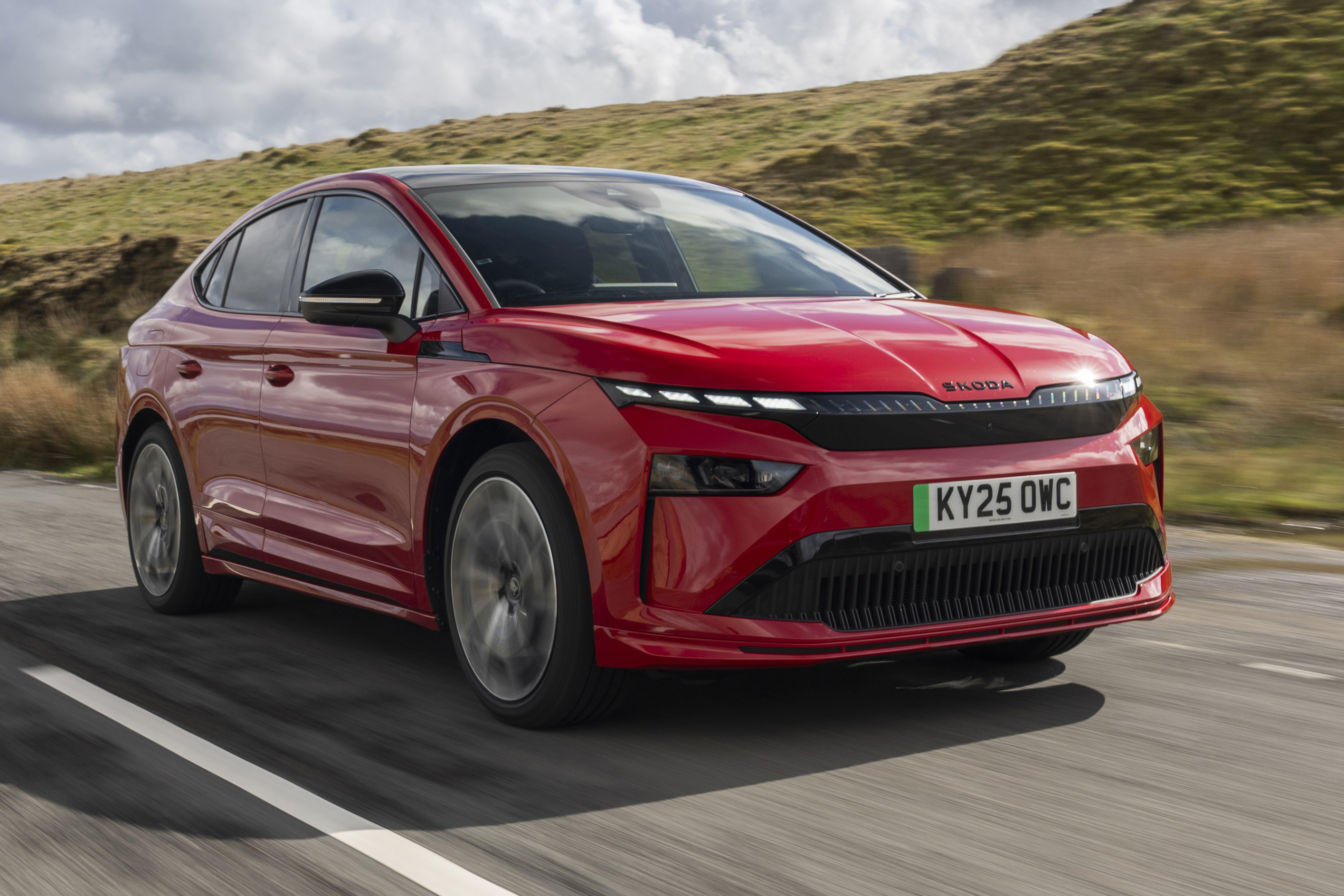
The Skoda Enyaq Coupe is another key rival. Again, it offers much the same family-friendly ability, and cabin quality is just as good - maybe even better - but it’s offered at a keener price. If value matters more than badge appeal, it is a very good option.
The Tesla Model Y is one of the most popular cars in the class thanks to its theatrical infotainment, extensive charging infrastructure and high-tech image. It feels quicker than the Volkswagen ID.5, too, but it is also less comfortable and relaxed.
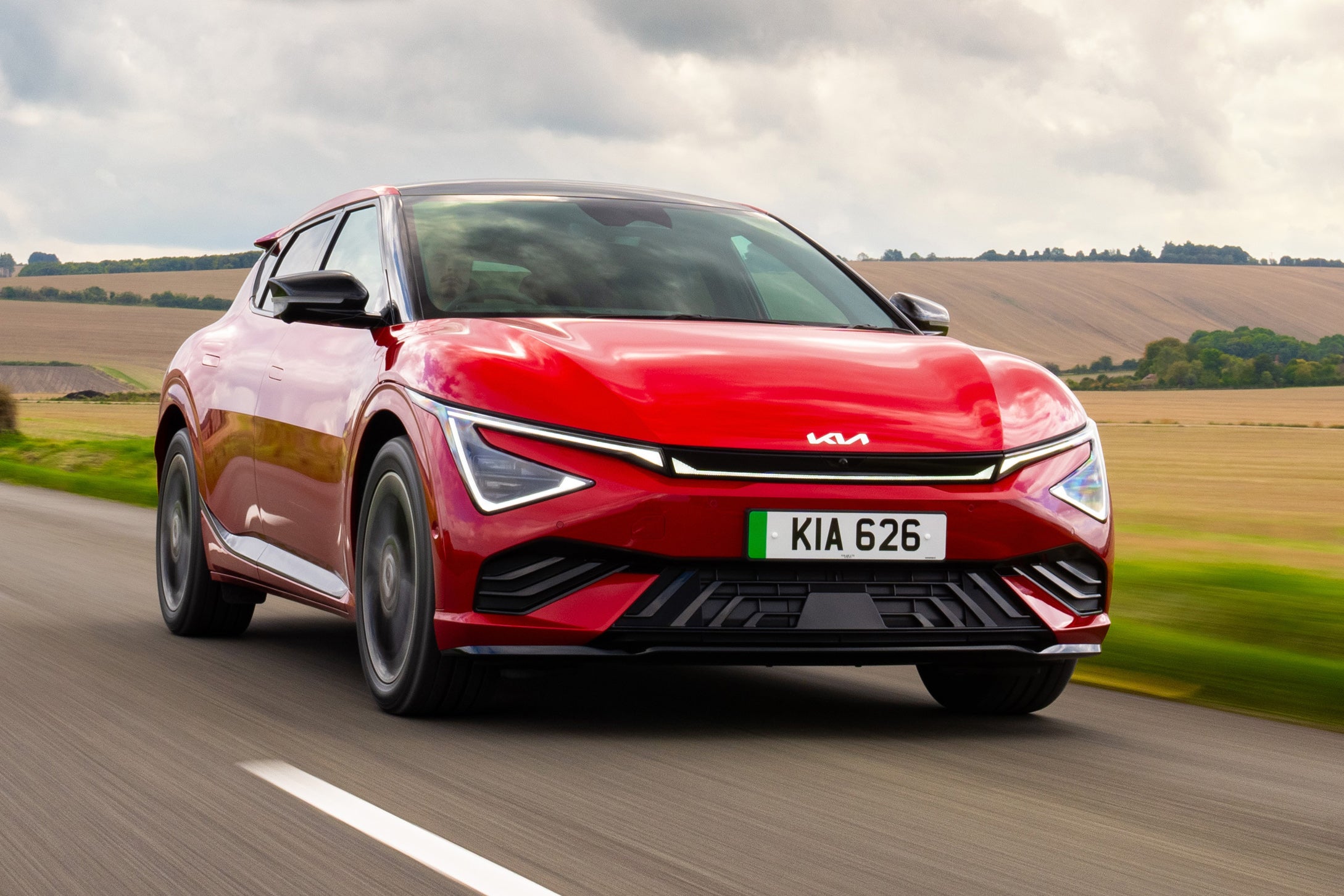
The Kia EV6 is worth a look if you want something more distinctive and more engaging to drive, while the Volvo EC40 adds a more premium feel. The Volkswagen ID.5’s strength is that it sits somewhere between all of these, offering a broad spread of abilities.
What's the interior like in the Volkswagen Id5?
Volkswagen Id5 boot space and practicality
The Volkswagen ID.5 is proof that a coupe-SUV does not have to be impractical. Up front, there is plenty of room, the driving position is easy to get comfortable in and the cabin feels airy. You don’t sit especially high for an SUV, but you’ll decide for yourself whether that bothers you or not.
Importantly, rear-seat space is stronger than the car’s shape suggests. Headroom remains generous enough for adults, even with the sloping roofline, and there is plenty of legroom. Like most cars in this class, it is best used as a four-seater, with the occasional ability to squeeze in a fifth passenger for short hops, but the cabin is easily roomy enough for the ID.5 to feel properly family-sized.
Boot space is a strength, too. The Volkswagen ID.5 offers 539 litres, which is actually slightly more than the ID.4 on paper, making the car feel easily practical enough for family life. The shape is good, and access is easy thanks to the large opening through the tailgate. However, there is a lip at the boot opening that you’ll have to lug heavy items over.
The rear seats fold down in a 60/40 split to free up more cargo space. However, the folded seatbacks don’t lie flush with the boot floor, so there’s a significant step in your extended loadbay, and because those seatbacks also lie at an angle, there’s also a slope as well.
Volkswagen Id5 dimensions
The Volkswagen ID.5 measures 4,599mm long, 1,852mm wide and 1,618mm high. That makes it a fraction larger than the average mid-size electric SUV. The upside is proper family-car space despite the sloping roofline, while the downside is that it feels its size in tighter town streets or narrow car parks. Still, visibility is decent enough and the light steering means it never feels overly cumbersome.
Tech and infotainment in the Volkswagen Id5
Early ID.5s had a 12.0-inch touchscreen across the range. It looked ok, with graphics that were colourful and crisp, but it was far from perfect. The software was prone to glitches and, partly because so many functions had to be operated through the touchscreen interface, the menu structure was convoluted, confusing, and not very logically arranged.
We also weren’t fans of the touch-sensitive slider controls for adjusting the stereo volume and cabin temperature. They’re more fiddly and less precise than a traditional button or dial would be, and because they weren’t illuminated, you’d really struggle to see and use them at night.
The facelift in late 2023 brought a new system with a 12.9-inch screen, and it was a little better. The software glitches were largely eliminated and the menu structure became a bit more user-friendly, but even today, it still leaves quite a lot to be desired on that score. The annoying slider controls remain, but at least they’re now backlit for easier use in the dark.
All ID.5s have navigation, DAB radio, AI-powered voice control, wireless phone charging, and wireless operation of Apple CarPlay and Android Auto.
Materials available on the Volkswagen Id5
The Volkswagen ID.5’s cabin materials are respectable, but not brilliant. There are enough soft-touch surfaces and smart details for it to feel modern and reasonably smart, but these are comprehensively outnumbered by harder, less tactile finishes, so it never quite delivers the plushness you might expect from a car wearing a Volkswagen badge, especially one that costs this much.
That is most obvious when you compare it with the Audi Q4 Sportback E-Tron or a Volvo EC40, both of which feel more premium inside. The ID.5 is not badly built, and it certainly isn’t an unpleasant place to sit, but it doesn’t have much sparkle, either.
What's the Volkswagen Id5 like to drive?
The Volkswagen ID.5 is easy, comfortable and calming on the road, and makes everyday driving feel impressively effortless.
Volkswagen Id5 range and performance
As we’ve alluded to already in this review, the Volkswagen ID.5 has been offered in a wide variety of different forms during its considerable time on sale, and there’s been almost constant change with the power outputs of its electric motors and the capacities of its batteries. There’s not the time or space to go through each and every one of them in detail, so we’ll concentrate on the ones that are available right now on the new-car market.
The entry-level version is the Pure, which has a 58kWh battery feeding a rear-mounted motor to the tune of 190PS. Then comes the Pro, which ups the battery size to 79kWh, and increases the power output of the motor to 286PS. The GTX, meanwhile, adds a second motor to the front axle to give four-wheel drive and a total of 340PS.
We won’t bother quoting performance- and range figures here, because that’s all in the table immediately below, but we will describe what the level of performance feels like.
The Pure will be adequate enough for most drivers in terms of its pace. It feels sprightly off the line, and although its rate of acceleration tails off the faster you go, which it does in many EVs, it never feels desperately short of go. If you do feel compelled to make the upgrade from Pure to Pro, it’ll probably be due to the extra range rather than the extra performance.
That said, the extra performance is marked. The Pro is markedly quicker off the line, feeling very brisk as you pull away, when you’re already going at a fair old lick, the amount of accelerative force held in reserve is much larger. It’s generally an easier, more muscular performer, and it’s capable of some proper pace when you need it.
We won’t go into the GTX in too much detail here because we’ve written a separate review for that car, but suffice it to say that in the real world, it doesn’t feel a whole lot faster or more exciting than the Pro.
Performance data
| Model | Engine/battery size | Power | 0-62mph | Range/MPG |
|---|---|---|---|---|
Volkswagen ID.5 Pure Match | 58kWh | 190PS | 8.4 seconds | Up to 271 miles |
Volkswagen ID.5 Pro Essential | 79kWh | 286PS | 6.7 seconds | Up to 352 miles |
Volkswagen ID.5 Pro Match | 79kWh | 286PS | 6.7 seconds | Up to 351 miles |
Volkswagen ID.5 Pro Black Edition | 79kWh | 286PS | 6.7 seconds | Up to 347 miles |
Volkswagen ID.5 GTX Edition | 77kWh | 340PS | 5.4 seconds | Up to 331 miles |
Volkswagen Id5 driving and refinement
Don’t be fooled by the coupe-SUV styling: the Volkswagen ID.5 is much more about comfort than sportiness. In that sense it feels very similar to the ID.4, which is no bad thing.
The plush ride is one of the ID.5’s best qualities. The suspension does a very good job of smoothing over poorly surfaced roads, of which there are a great many in the UK, and that’s the case on all sorts of roads. Whether you’re tip-toeing through tight urban streets or monstering down the motorway, the ID.5 feels comfortable, calming and utterly chilled out.
Granted, there’s not really much enjoyment to be had from a B-road blast in the ID.5, but seriously, how many people really want that from their electric family SUV anyway? Yes, some rivals are more enjoyable to drive, but the ID.5 is nevertheless very capable, with strong grip, decent body control, and steering that’s responsive and predictable, if a bit light.
The much more important attribute in a family car like this is refinement, which the ID.5 has in spades. You barely hear a beep from the motors, and wind noise and road noise are well suppressed on the motorway. Add this quiet and calm to the car’s comfortable ride, and it makes for a very chilled-out experience.
How safe is the Volkswagen Id5?
When independent safety organisation Euro NCAP assessed tested the VW ID.4 in 2021, the safety body stated that the ID.4 and ID.5 were so similar in all ways concerning safety that the ID.4’s rating could apply to the ID.5 as well. Happily, that rating was the full five-star rating.
Euro NCAP then tested the ID.4 again in 2025, where it again scored the full five stars despite the testing standards being much tougher than the first time around. On this occasion, Euro NCAP didn’t explicitly say that the rating could apply to the ID.5 as well, but it has to bode well, right?
Standard safety equipment across the ID.5 range includes adaptive cruise control, autonomous emergency braking, front cross traffic assist, driver monitoring, active road sign display, and various levels of lane support. You also have front- and rear parking sensors to help avoid parking mishaps.
Running costs: What it's like to live with a Volkswagen Id5
The Volkswagen ID.5 should be straightforward enough to live with if you have home charging and choose the version that suits your mileage.
Volkswagen Id5 charging times and costs
Like with all EVs, running your ID.5 will be most affordable if you charge at home, and that’ll be most convenient if you get a 7kW wallbox charger installed at your house, because charges on a regular three-pin domestic plug will take days rather than hours.
If you pay for your domestic electricity at the UK’s national average rate, then an empty-to-full charge of the smallest 58kWh battery pack will take around eight hours on a wallbox, and cost around £16. With the larger 77kWh battery in the GTX, the same charge will take around 10.5 hours and cost around £21, while with the largest 79kWh battery in the Pro versions, the charging time will be around 11 hours and the cost around £22.
However, the chances are that you won’t be paying to charge your car at the national average rate, because most EV owners get themselves on a variable-rate home electricity tariff that allows them to juice-up their cars overnight with heavily discounted off-peak power. That’s very much the sensible thing to do, because it’ll likely see your charging costs tumble to less than half.
By contrast, charges at public DC rapid charging points will probably cost somewhere in the region of three times our quoted totals, because the power that comes out of these is super-expensive: that’s due to its speed and convenience.
The various different versions of the ID.5 have different maximum DC charging speeds, too. Cars with the smallest 58kWh Pure battery have a maximum rate of 105kW, while cars with the biggest 79kWh battery can accept DC charge up to a maximum speed of 165kW. The maximum speed in the GTX is it to 185kW, meanwhile. In any case, a 10% to 80% top-up can be delivered in between 26 and 29 minutes, assuming that conditions are perfect.
Volkswagen Id5 warranty and servicing
Like all Volkswagens, the ID.5 comes with a three-year warranty, made up of a two-year unlimited-mileage manufacturer warranty, followed by a third year up to 60,000 miles. The battery warranty comes with cover of up to eight years or 100,000 miles, and a guarantee that it will retain at least 70 per cent of its original capacity within that period. If it doesn’t, it’ll be repaired or replaced for free.
Servicing will be much less frequent than with a petrol or diesel car, which should save you cash. While VW’s combustion cars usually need routine work every year or 9,300 miles, the firm's EVs need a service every two years, regardless of mileage.
Volkswagen Id5 insurance groups
If you ignore the GTX range-topper, which we largely have for the lion’s share of this review, then the ID.5’s insurance groups run from 28 to 38. That’s not unreasonable for a car of this power and price, so there shouldn’t be any nasty surprises
How much does it cost to tax a Volkswagen Id5?
EVs were once exempt from VED road tax, but those days are long gone. They do, however, enjoy a higher price threshold before they become liable for higher-rate road tax: £50,000 including option extras, where the figure is £40,000 for combustion-engined cars.
If your car’s list price is below that, you pay just the regular flat rate of VED, currently charged at £200 per year. If your car is priced above that threshold, then you’ll have to pay and additional £440 per year on top of that for a five-year period between years two and six of the car’s life.
Currently, the only version with a list price above the threshold is the GTX. Do bear in mind, however, that a few of the other higher-end versions get quite close, and adding one too many optional extras could well push you over. If buying brand new, be diligent when speccing your car, and if buying used, Google the reg of any potential purchase to ensure that the original owner did the same.
What trims are available with the Volkswagen Id5?
As we’ve said previously in this review, the ID.5 has been offered in a large number of various different forms over its time on sale, and this applies to the trim levels available as well. There have been too many over the years for us to talk about all of them in detail here, so we’ll just concentrate on the ones available today to new-car buyers.
The range kicks off with the Essential, and we think this will have enough luxury gear for the vast majority of buyers. It comes as standard with 19-inch alloy wheels, LED headlights and rear lights, power-folding and adjusting door mirrors, rain-sensing wipers, front- and rear parking sensors, keyless entry and start, dual-zone climate control, heated front seats, a heated steering wheel, 30-colour ambient cabin lighting, adaptive cruise control, and the full infotainment system with navigation wireless phone charging and wireless operation of Apple CarPlay and Android Auto.
Match adds a reversing camera, metallic paint, rear privacy glass, and a handsfree powered tailgate. That’s not a whole heck of a lot when you consider how much more it costs than the Essential.
The Black Edition costs more still, but compensates with a panoramic glass roof, upgraded upholstery, and front seats with power adjustment and massaging function. Again, that’s not a whole heck of a lot for the price.
The GTX is, predictably, the priciest of the lot, and comes with 20-inch alloys, sports suspension, an augmented-reality head-up display, a self-parking function, and 360-degree cameras.
Ask the Drive experts: common questions
Is the Volkswagen ID.5 more practical than it looks?
What is the best Volkswagen ID.5 version to buy?
How much range does the Volkswagen ID.5 have?
Is the Volkswagen ID.5 better than the Audi Q4 Sportback e-tron?
Get our latest advice, news and offers
Keep me updated by email with the latest advice, news and offers from Drive.
.jpg)
.jpg)