09/07/2026
Clean air zones explained: ULEZ, LEZ and CAZ rules

Written By Mark Nichol
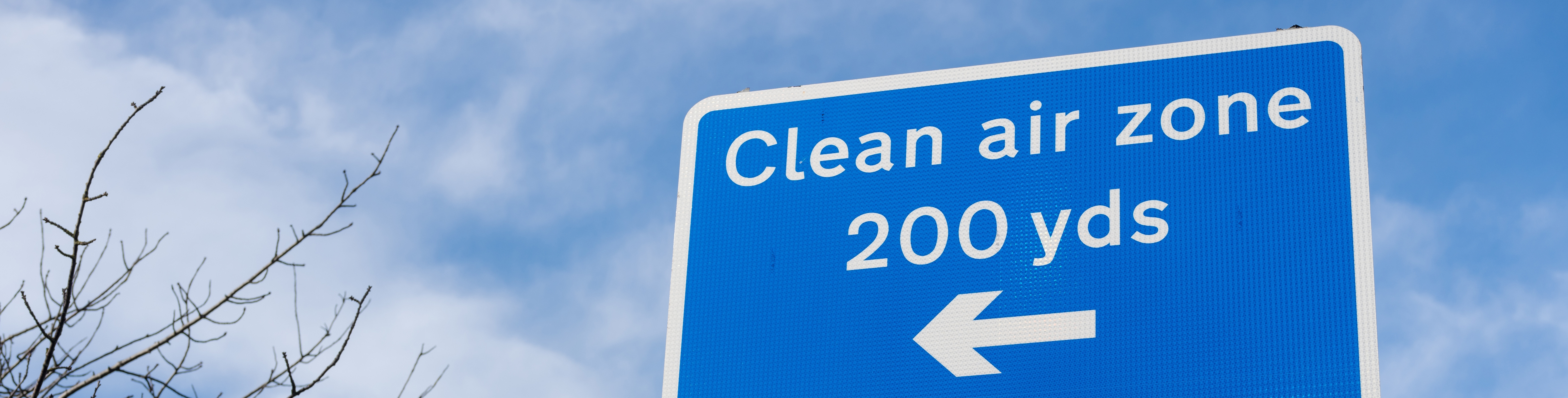
Clean Air Zones (CAZs) are designed to improve air quality by reducing the number of the most polluting vehicles on our roads. The rules vary slightly from city to city, but the aim is always the same. Drivers of older petrol and diesel vehicles may need to pay a daily charge to enter certain areas, while cleaner vehicles can usually drive through free of charge.
London's Ultra Low Emission Zone (ULEZ) is the UK's largest, covering all of its boroughs. Elsewhere in England, CAZs which attract a charge operate in cities including Bath, Birmingham, Bradford, Bristol, Portsmouth, Sheffield and Tyneside, encompassing Gateshead and Newcastle.
Scotland has also introduced Low Emission Zones (LEZs) in its four largest cities – Aberdeen, Dundee, Edinburgh and Glasgow.
If you're planning to drive into a city centre, it's worth checking whether a CAZ is in place before you travel. Here's everything you need to know:
What are Clean Air Zones?
A Clean Air Zone (CAZ) is an area where the local authority has introduced measures to improve air quality by reducing harmful vehicle emissions.
Some CAZs only apply to commercial vehicles such as vans, lorries, buses and taxis, while others also include private cars. Whether you'll need to pay depends on where you're driving and whether your vehicle meets the required low emissions standard.
CAZs form part of the government's wider strategy to improve air quality and encourage the transition to lower-emission vehicles. As it stands, the UK will end the sale of brand new non-hybrid petrol and diesel cars in 2030, although used cars can continue to be driven, bought and sold after that date.
What types of Clean Air Zones are there?
You'll come across two types of CAZ: charging and non-charging.
Non-charging CAZ, such as those in Southampton and York, work to improve air quality without imposing charges on vehicles entering the zone. This can be done in a variety of ways, such as improving traffic flow management and public transport networks.
Government advice initiatives work alongside this: educating people on the health impacts of poor quality air, as well as encouraging the use of cycles and advising drivers to switch their engines off when parked up. This is the soft approach, designed to change attitudes towards air pollution while gently steering us towards behaviour that lowers it.
CAZs that charge take a more direct approach by levying fees on higher emissions vehicles when entering the zone. This charge is usually based on vehicles' Euro emissions levels, as legislated by the EU and to which the UK continues to adhere.
In London's ULEZ, diesels that don't conform to Euro 6 emissions regulations and petrols that don't meet Euro 4 standards, all pay a fee. The exact rules vary between cities and may change over time as local authorities review air quality and emissions standards.
Automatic Number Plate Recognition (ANPR) cameras log the registrations of vehicles entering CAZs. Stationary cars parked within them are not charged.
With some CAZs, drivers have a certain period of time in which to pay the appropriate charge online. If payment isn't made within the timeframe, a penalty notice is automatically issued to the registered keeper of the vehicle, requiring payment of a much larger penalty. In others – including those in Scotland – there's no fee for driving within a LEZ if your vehicle is compliant, but all non-compliant vehicles detected driving within the zone are immediately issued with a penalty charge.
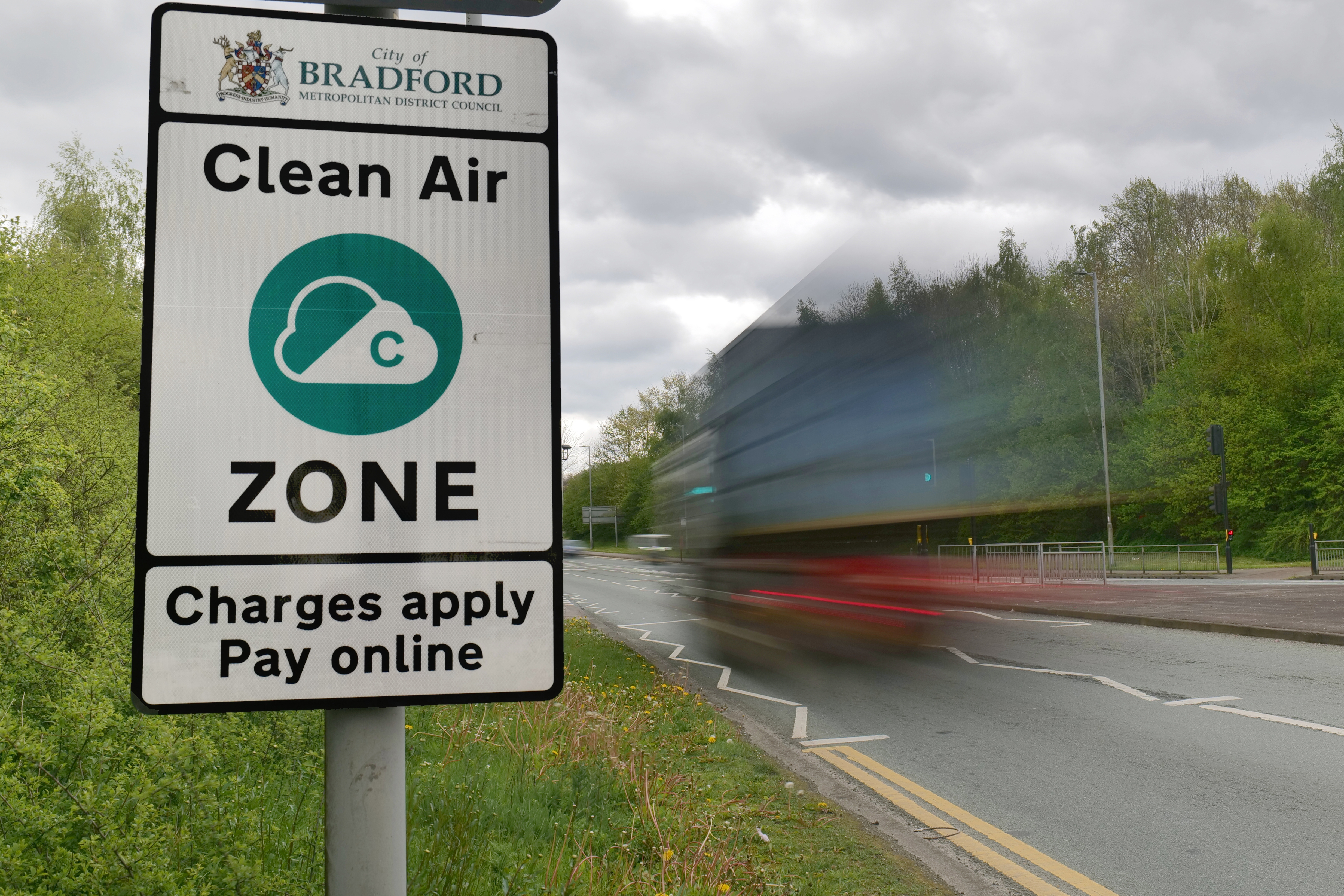
Classes of Clean Air Zones
Charging Clean Air Zones are divided into four classes: A, B, C and D. The class doesn't indicate how severe the restrictions are – it just defines which types of vehicles can be charged.
Class A – applies to buses, coaches and taxis.
Class B – adds private hire vehicles and heavy goods vehicles (HGVs).
Class C – also includes vans and minibuses.
Class D – the broadest category and includes cars as well as all of the above. Local authorities also have the option of including motorcycles.
Not every city uses every class and local authorities decide which one best suits their air quality goals. That's why some CAZs only affect commercial vehicles, while others – such as Birmingham's Class D zone – also charge non-compliant private cars.
Why were Clean Air zones Introduced in the first place?
The Royal College of Physicians estimates that around 30,000 deaths each year in the UK are linked to air pollution. Poor air quality is associated with conditions including heart disease, stroke, lung disease and some cancers. Air pollution also places a significant financial burden on the NHS and wider economy.
To help tackle illegal levels of nitrogen dioxide (NO2), successive UK governments have introduced CAZs and other measures designed to reduce emissions from road traffic. While the approach varies between cities, the aim is the same: cleaner air and healthier places to live.
Where are the Clean Air Zones in the UK?
Charging CAZs now operate in Bath, Birmingham, Bradford, Bristol, Portsmouth, Sheffield and Tyneside which covers Gateshead and Newcastle. London operates its own separate ULEZ scheme, while Scotland has Low Emission Zones (LEZs) in Aberdeen, Dundee, Edinburgh and Glasgow.
Here's a full rundown of every clean air zone currently in operation in the UK:
Aberdeen Low Emission Zone
Aberdeen introduced its city centre LEZ in May 2022, where air quality is poorest. There was initially a two-year grace period for all vehicle types where charges weren't enforced on non-compliant vehicles in order to allow people time to change vehicles. Charges eventually began in June 2024.
Pre-Euro 6 diesel cars (generally those registered before 2015) and pre-Euro 4 petrol cars (mainly registered before 2006) are fined £60 if they enter Aberdeen's LEZ, a fee reduced to £30 if it's paid within 14 days.
That penalty is doubled with each subsequent breach of the regulations by the same vehicle within a 90-day period, with the maximum capped at £480 for cars and Light Goods Vehicles (LGVs), but up to £960 for buses, coaches and lorries. After 90 days, the rate is reset to the initial £60 charge.
Bath Clean Air Zone
Bath was the first city outside London to introduce a CAZ, coming into force in March 2021. It covers the city centre, operates 24 hours a day, 365 days a year. Non-compliant vans, taxis and minibuses (pre-Euro 6 diesel and pre-Euro 4 petrol) are charged £9 per day to enter the zone, while lorries, buses and coaches face a £100 daily charge. Private cars and motorbikes are currently exempt.
Drivers have 28 days to pay the charge. Should it remain unpaid, a £120 fine is issued on top of the original charge – which still needs to be settled. That fine is reduced to £60 if it is subsequently paid within 14 days.
Birmingham Clean Air Zone
Birmingham's Class D CAZ took effect on 1 June 2021 and operates within the inner ring road (A4540 Middleway). Non-compliant cars, taxis and vans pay an £8 daily charge, while buses, coaches and HGVs that don't comply pay £50. It operates 24 hours a day, 365 days a year, with the charges applied daily to non-compliant vehicles. Non-compliant vehicles driving in the zone pay once for a day, but can then drive within it as much as they choose without incurring additional fees.
If your vehicle meets the necessary emission standards, you won't need to pay the daily charge. For diesel cars, the standard is Euro 6 or better, while petrol cars need to meet at least Euro 4. Fully electric and hydrogen fuel cell-powered vehicles don't need to pay the charge.
Drivers have a 13-day window to pay their charge: they can pay on the day of travel, six days before the day of travel or six days after. Failure to pay results in a £120 fine, which must be paid within 28 days, but is reduced to £60 if settled within 14 days.
Bradford Clean Air Zone
Bradford CAZwas launched on 26 September 2022. Non-compliant vans are charged £9, non-compliant taxis £7 and non-compliant lorries, buses and coaches £50. There is no charge for private cars.
The Bradford zone covers the area inside and including the Bradford outer ring road. It also extends out along the Aire Valley corridor (Manningham Lane/Bradford Road and Canal Road area) to include Shipley and Saltaire.
You can pay your charge up to six days before your visit or up to six days after, but failure to pay results in the issue of a £120 fine, which must be paid within 28 days and is reduced to £60 if settled within a fortnight.
Bristol Clean Air Zone
Bristol's CAZ took effect on 28 November 2022. Private cars, taxis and vans are charged £9 per day, while buses, coaches and HGVs are charged £100 per day. Charges do not apply to Euro 4, 5 and 6 petrol vehicles (roughly 2006 onwards), to Euro 6 diesels (generally from the end of 2015 onwards), or to electric and hydrogen fuel cell vehicles. Also exempt are modified or retrofitted vehicles registered with the Energy Saving Trust's Clean Vehicle Retrofit Accreditation Scheme (CVRAS) and motorbikes.
Charges must be paid within six days either side of the day of travel and a fine will be issued if charges remain unpaid. Fines must be paid within 28 days and are halved if paid within the first two weeks.
Dundee Low Emission Zone
Dundee introduced its LEZ in mid-2022 with the inner ring road forming the boundary. A two-year grace period was initially granted where charges would not be enforced, but that has now expired and enforcement began on 30 May 2024.
The Dundee LEZ operates 24 hours a day, 365 days a year and applies to all vehicle types apart from motorcycles and mopeds. The minimum emission standards required for entry are Euro 4 for petrol cars and vans and Euro 6 for their diesel equivalents. Cars that don't meet these standards and enter the zone are fined £60, reduced by 50% if paid within 14 days. The fines are doubled for subsequent offences in the same vehicle within 90 days, capped at £480 for cars and vans, and £960 for buses and lorries.
Edinburgh Low Emission Zone
Enforcement of Edinburgh's LEZ began on 1 June 2024 and runs 24 hours a day, 365 days a year. The minimum standard for petrol cars and vans is Euro 4 and Euro 6 or better for diesels. Non-compliant cars caught driving within the zone are automatically issued with a £60 fine, payable within 28 days. If not paid within that timeframe, the fine increases by 50%, but if paid within the first 14 days, it decreases by half. Fines double for subsequent offences made in the same vehicle within 90 days, with caps of £480 for cars and vans and £960 for buses and lorries.
The Edinburgh LEZ covers most of the city centre, stretching from Tollcross and Palmerston Place in the west to Picardy Place, Abbeyhill and Holyrood Road in the east.
Glasgow Low Emission Zone
Glasgow was Scotland's first city to introduce a LEZ at the end of 2018 and initially only applied to local bus services. From June 2023, however, all non-compliant vehicles were fined if they enter the LEZ in the city centre. People who live in the zone were granted an additional grace period of one year (until 1 June 2024) to comply. It operates 24 hours a day and all year round.
The standard fine is £60, with Euro 4 petrol vehicles, Euro 6 diesels and EVs all compliant with the Glasgow LEZ. Motorcycles, mopeds, motorised tricycles and quadricycles are unaffected by LEZ schemes in Scotland.
Glasgow's LEZ runs in an area bounded by (but not including) the M8 motorway to the north and west, the River Clyde to the south and Saltmarket/High Street to the east.
London Ultra Low Emission Zone
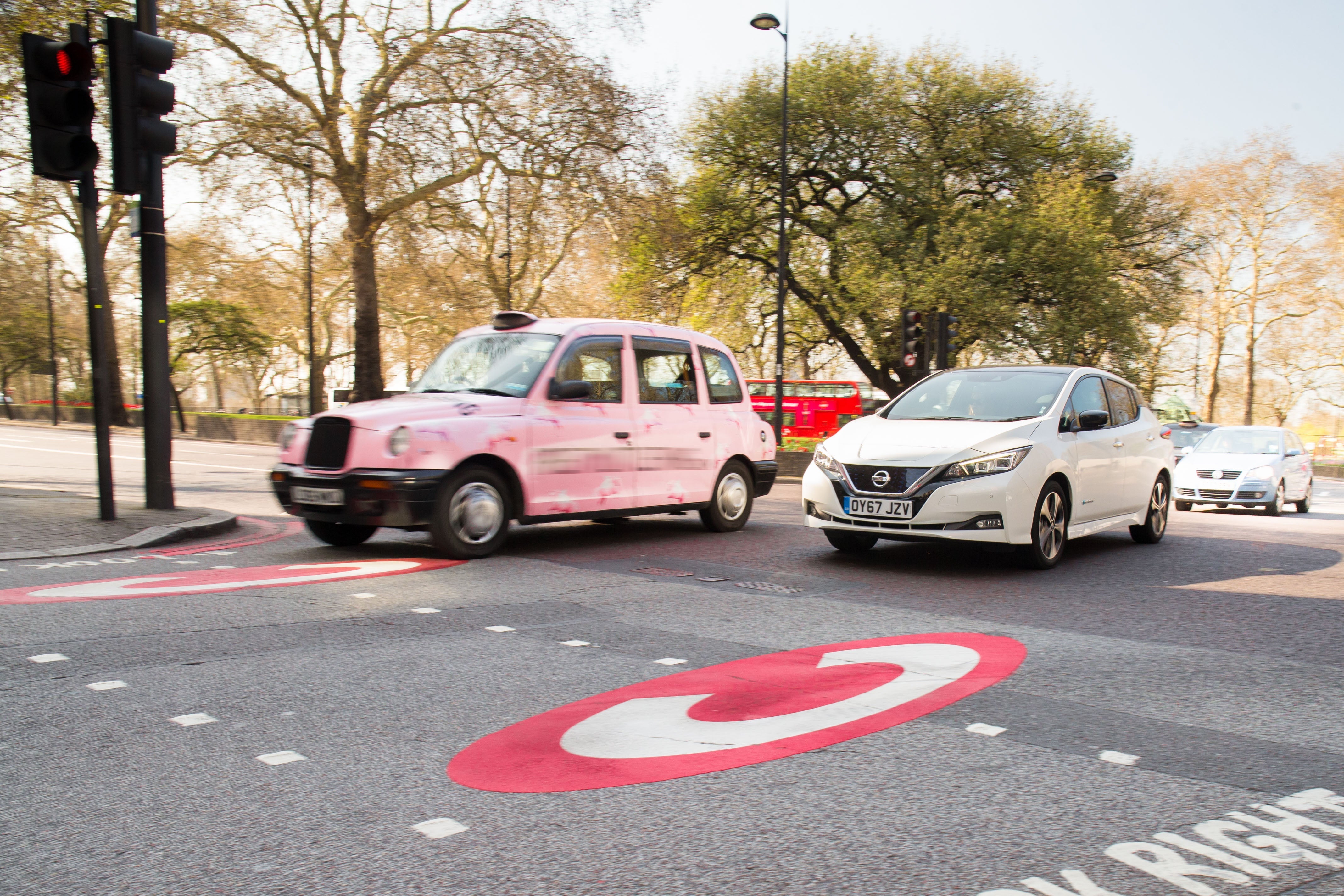
London's ULEZ charges £12.50 per day for non-compliant cars, motorcycles and vans, going up to £100 per day for heavier vehicles including lorries. These charges are payable in addition to the weekday Congestion Charge and Low Emission Zone (LEZ) charge where applicable.
The ULEZ was extended to an area 18 times larger than the original zone in October 2021, encompassing boroughs up to both the North and South Circular roads. It was then expanded across all London boroughs in August 2023.
Oxford Zero Emission Zone
Oxford operates a pilot ZEZ covering a handful of streets in the heart of the city centre. It runs from 7am to 7pm every day, with plans to expand the scheme still under consideration.
Unlike most clean air zones, the charge depends on your vehicle's actual emissions. Zero-emission vehicles, such as electric cars, can enter free of charge. Cars emitting less than 75g/km of CO2 pay £2 per day, Euro 4 petrol and Euro 6 diesel cars pay £4, while older, more polluting vehicles are charged £10.
Drivers who fail to pay receive a £60 penalty charge, reduced to £30 if settled within 14 days. If the penalty remains unpaid after 28 days, it increases to £90.
Tyneside – Newcastle and Gateshead Clean Air Zone
A charging CAZ covers most of Newcastle city centre, as well as routes over bridges including the Tyne, Swing, High Level and Redheugh. It applies to taxis, vans, buses, coaches and HGVs that don't meet its emissions requirements. Private cars are not affected by the CAZ.
For taxis and vans, this means Euro 6 diesel vehicles registered from September 2015 onwards and Euro 4 petrol vehicles registered from 2006 onwards. For buses, coaches and HGVs, this means Euro 6 vehicles registered after 2014. Charges for non-compliant vehicles are £12.50 per day for vans and taxis rising to £50 per day for buses, coaches and HGVs.
Portsmouth Clean Air Zone
Portsmouth's CAZ was introduced in November 2021 and is located to the south-west of the city. For Portsmouth's charging CAZ, non-compliant vehicles are heavy goods vehicles (HGVs), buses and coaches, taxis and private hire vehicles (PHVs) that don't meet Euro 6 emissions standards if diesel or Euro 4 emissions standards if petrol.
Older, more-polluting HGVs, buses and coaches pay £50 per day to travel through the zone, while non-compliant taxis and private hire vehicles pay £10 per day. Private cars, motorcycles and vans are not charged under this Class B CAZ.
Sheffield Clean Air Zone
Sheffield introduced a charging CAZ in February 2023, which covers the inner ring road and the city centre, including Park Square and the A61/Parkway junction. It does not charge private cars for entering the city centre. Buses, HGVs and taxis are responsible for around half of the city's road transport pollution, despite making up only around 20% of the traffic, so the scheme focuses on those vehicles.
Vehicles that meet these standards are not charged: taxis that are ultra-low emission (hybrid, electric or hydrogen fuel cell) or run on Liquid Petroleum Gas (LPG); LGVs and minibuses with Euro 6 diesel or Euro 4 petrol engines; buses and coaches with Euro 6 diesel; and HGVs with Euro 6 diesel.
Vehicles that do not meet these standards are charged £10 per day for polluting LGVs and taxis, up to £50 per day for coaches, buses and HGVs.
Diesel cars aren't being banned from UK roads. Instead, the sale of brand new petrol and diesel cars which aren't hybrids is due to end in 2030, although new hybrids that meet the government's emissions rules may be sold new until 2035.
Existing petrol and diesel cars can continue to be driven, bought and sold after 2030, so there's no deadline that suddenly makes your current car illegal. Local CAZs may still apply charges to older, more polluting vehicles, however.
ULEZ compliance is worth checking, even if you don't live in London. A car that meets ULEZ emissions standards is less likely to face charges in CAZs elsewhere in the UK, making it a more future-proof purchase. As a rule, most petrol cars registered from 2006 onwards and most diesel cars registered from September 2015 onwards are compliant, but always check the individual vehicle rather than relying solely on its registration date.
Not necessarily. A modern Euro 6 diesel still makes plenty of sense if you regularly cover long motorway journeys, tow heavy loads or rack up high annual mileage. They're typically more fuel-efficient than equivalent petrol cars on longer trips. However, if most of your driving is short urban journeys, a petrol, hybrid or electric car is likely to suit you better. Just make sure any diesel you're considering meets the latest emissions standards if you drive into clean air zones regularly.