27/08/2026
Crit’Air stickers for France 2026: Official cost, rules and how to apply

Written By David Ross

Just as London has the Ultra Low Emission Zone and other UK cities have Clean Air Zones, France has a clean air system called Crit’Air.
If you are driving in France, you may need a Crit’Air sticker to enter certain low-emission zones. This applies to foreign-registered vehicles as well as French vehicles, so UK drivers are not exempt.
The best way to obtain a sticker is to apply for one the French government's official Crit’Air website. Avoid unofficial sites that charge much more for the same sticker.
What is Crit’Air?
Crit’Air is France’s vehicle emissions sticker system. It is used to identify how polluting a vehicle is, based on fuel type, age and Euro emissions standard.
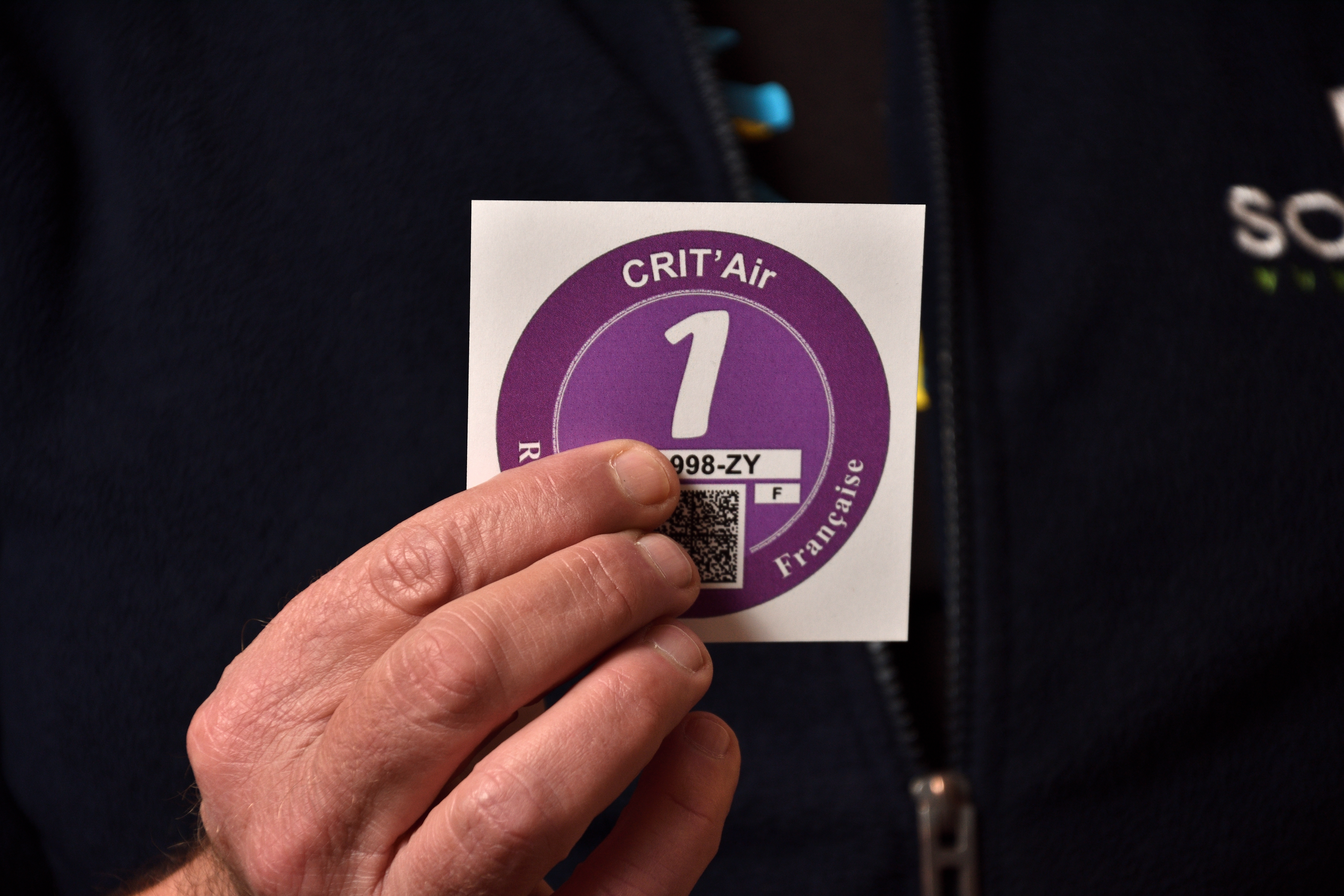
The sticker is displayed on the windscreen and places your vehicle into one of seven categories. Cleaner vehicles receive a lower-numbered category, while older and more polluting vehicles receive a higher-numbered category or may be unclassified.
The system is used in French low-emission zones, known as ZFE-m. Local authorities can use these zones to restrict the most polluting vehicles, either permanently or during periods of poor air quality. The official French road guidance says restrictions apply within defined areas and time slots set by local authorities, so drivers should check the exact rules for their route before travelling.
What do the Crit’Air sticker colours mean?
Crit’Air stickers are colour-coded and numbered according to the vehicle’s specifics:
Crit’Air 0 — green and white sticker: Zero-emission vehicles, such as electric and hydrogen-powered cars vehicles.
Crit’Air 1 — purple sticker: Plug-in hybrids and petrol-fuelled cars which conform to Euro 5 and Euro 6 emission standards.
Crit’Air 2 — yellow sticker: Petrol cars conforming to Euro 4 standards and diesels meeting Euro 5 and Euro 6 emissions levels. Note that some French cities are gradually tightening restrictions on cars in this category, so always check which rules are being applied where you intend to travel.
Crit’Air 3 — orange sticker: Euro 2 and Euro 3 standard petrol cars plus Euro 4 diesels.
Crit’Air 4 — brown sticker: Diesel cars complying with Euro 3 emissions levels.
Crit’Air 5 — grey sticker: Euro 2 standard diesel-powered cars.
Unclassified — no sticker: Petrol and diesel cars registered before 1997. Note these vehicles may be banned from entering ZFE-m areas when restrictions apply.
Do I need a Crit’Air sticker?
Yes, if you plan to drive in or through a French low-emission zone where Crit’Air restrictions apply.
The scheme applies to cars, vans, motorcycles, motorhomes and other vehicles, including those registered outside France. If you are driving a UK-registered car in a restricted zone, you still need the correct sticker. France’s official Crit’Air sticker ordering site also provides the application route for foreign-registered vehicles.
You may not need one if you are only driving through areas with no low-emission restrictions, but many visitors pass through or near major cities without realising it, so check the rules before travelling.
It is also worth applying if there is any chance your plans may change. The sticker is inexpensive and lasts for the life of the vehicle, so it can be a sensible precaution for regular trips to France.
Where are the Crit’Air zones?
Crit’Air stickers are used in French low-emission zones, which are usually found in and around larger cities.
The rules are not the same everywhere. Each local authority can set its own boundaries, operating times and vehicle restrictions. Some restrictions apply all year, while others can be triggered or tightened during high pollution episodes.
Cities and areas with Crit’Air-related restrictions include:
Grenoble
Lyon
Marseille
Montpellier
Nice
Paris and Greater Paris
Reims
Rouen
Strasbourg
Toulouse
This list can change,and local restrictions can be updated at very short notice. Check the official French Crit’Air and low-emission-zone information before you travel, especially if you are planning to drive into a city centre or around Paris.
How do I know if I’m in a restricted zone?
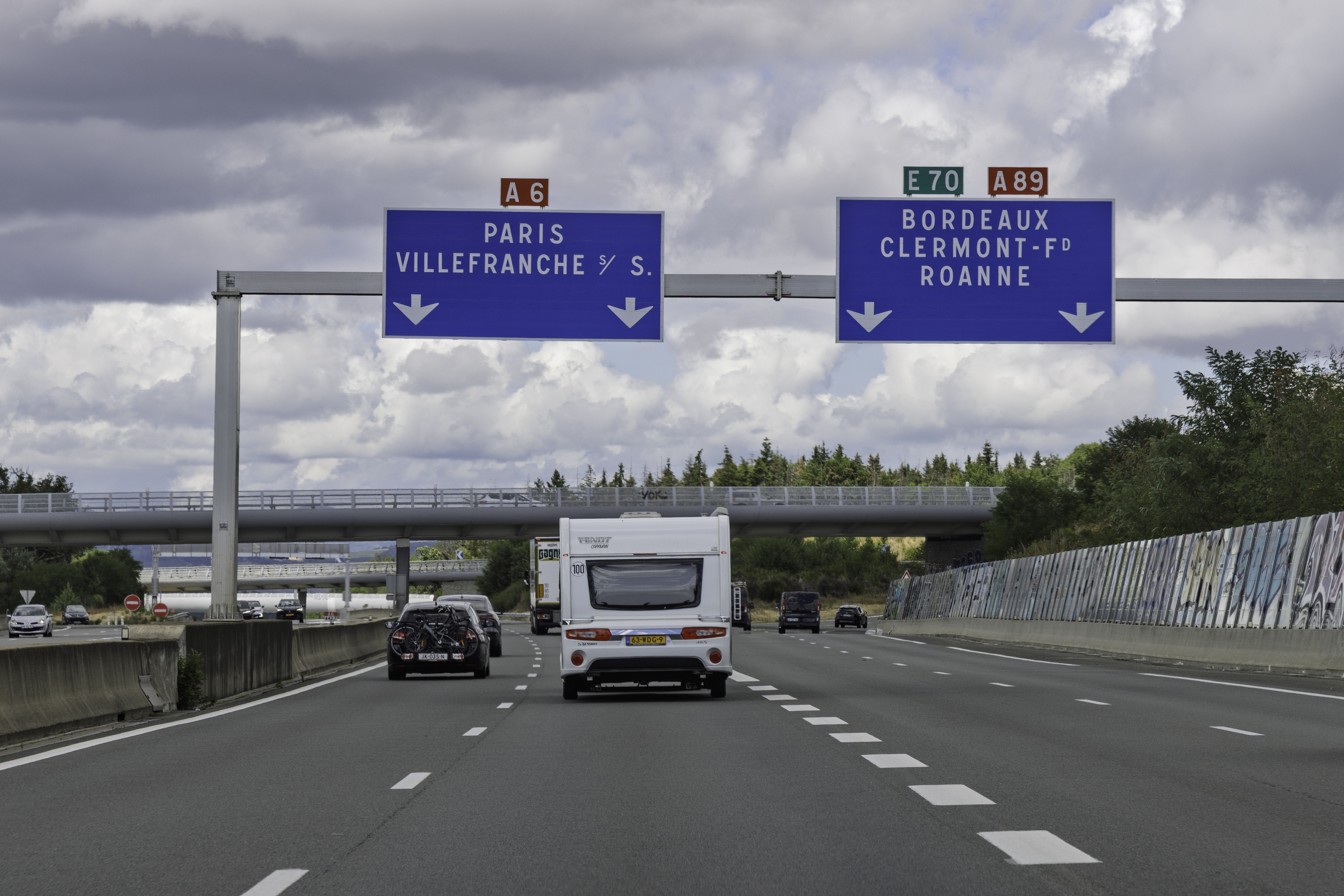
French low-emission zones are marked by road signs at the beginning and end of the restrictions.
The signs usually show that you are entering a ZFE-m or restricted traffic zone and may include details of which Crit’Air categories are allowed. However, relying on signs alone is not ideal if you are driving in an unfamiliar city.
Check your route before you leave, then check again on the day of travel. Rules can vary by city, date, time of day and pollution level.
Where can I get a Crit’Air sticker from?
The best way to get a Crit’Air sticker is to order it from the French government’s official Crit’Air website.
Use the official government application route rather than a third-party intermediary — unofficial websites may charge significantly more for arranging the same sticker.
To apply for a Crit'Air sticker for a UK-registered vehicle, you will need:
The vehicle registration number.
The date of first registration.
Vehicle details from its V5C registration document.
A scan or photo of the V5C.
A debit or credit card.
The registered keeper’s address.
The official site accepts foreign-registered vehicles and quotes the sticker's cost at €3.70 per vehicle plus postage, which varies by destination country.
Apply well before you travel as delivery can take time, especially for overseas addresses.
What should UK drivers check before driving in France?
Before driving in France, check:
Whether your route enters any low-emission zones.
Whether your vehicle qualifies for a Crit’Air sticker.
Which Crit’Air categories are allowed in the cities you plan to visit.
Whether restrictions apply only at certain times.
Whether pollution-day restrictions are in force.
Whether your V5C address is correct before applying.
Whether the sticker has arrived before travel.
Whether your insurance and breakdown cover are valid for France.
Whether you have the other equipment and documents required for driving abroad.
If you are driving a Volkswagen Group car, such as a Volkswagen, Audi, Skoda, SEAT or Cupra, the Crit’Air category will still depend on the individual vehicle’s fuel type, age and emissions standard. Do not assume two similar models will qualify for the same sticker, especially if one is petrol and the other is diesel.
What this means for you
If you are driving to France, check whether your route takes you into a Crit’Air zone before you travel.
The sticker is inexpensive, lasts for the life of the vehicle and applies to UK-registered cars as well as French ones. The safest approach is to apply through the official French government website well in advance and avoid unofficial sites charging inflated fees.
A Crit’Air sticker does not automatically let you drive everywhere. It simply shows your vehicle’s emissions category. You still need to check the local rules for the zone you plan to enter.
No, you should not plan to buy one after arriving in France.
Crit’Air stickers must be ordered online and posted to the registered address. If you leave it until the last minute, you may not receive it before your trip.
No, you cannot buy an official Crit’Air sticker over the counter in the UK.
UK drivers should apply online through the official French government website before travelling. Be cautious with UK-based or English-language third-party sites that appear in search results, as they may charge much more than the official price.
Do not rely on buying a Crit’Air sticker at Eurotunnel, a ferry port or a French service station.
The official route is online application through the French government website. If you are driving straight from Calais towards a restricted zone, apply before you travel.
The official sticker itself is cheap. The French government application site lists the price as €3.70 per vehicle plus postage, with postage varying by country.
The key point is that it should only cost a few euros through the official route. If a website is asking for much more, check carefully that it is not an intermediary service.
A Crit’Air sticker lasts for the life of the vehicle, provided it remains legible and the vehicle details do not change.
You do not need to buy a new sticker for every trip to France. If the windscreen is replaced or the sticker is damaged, you may need to order a replacement.
The Crit’Air sticker should be displayed on the inside of the windscreen where it can be seen clearly from outside the vehicle.
For a UK right-hand-drive car, place it in a visible lower corner of the windscreen, making sure it does not block the driver’s view and does not interfere with sensors, cameras or the swept area of the wipers.
Clean and dry the glass before applying it. Once attached, it is not designed to be removed and reused.
If you have applied but the physical sticker has not arrived before travel, check the confirmation email and application status from the official website.
Do not assume that an application alone will always be accepted by enforcement authorities. If you need to enter a restricted zone before the sticker arrives, check the latest official guidance and avoid the zone if you are unsure.
The safest approach is to apply well in advance, especially before holiday periods.
If you drive in a restricted zone without the correct Crit’Air sticker or if your vehicle is not allowed in that zone at that time, you risk a fine.
The common fine for cars is often quoted as €68, but penalties can rise if not paid on time. The exact amount can also depend on the vehicle type and circumstances. Given the official sticker costs only a few euros, it is not worth risking a fine if you are likely to drive in or near a restricted zone.
No, older vehicles are not automatically exempt.
In fact, some older vehicles are not eligible for a Crit’Air sticker at all. Cars first registered before January 1997 and motorcycles or scooters first registered before June 2000 are generally unclassified and may not be allowed into low-emission zones where restrictions apply. The RAC also notes that ineligible older vehicles cannot be driven where restrictions apply.
If you are taking an older car to France, check your route carefully before travelling.
Disneyland Paris is outside central Paris, but many UK drivers travel through or close to the Greater Paris area to get there.
Whether you need a Crit’Air sticker depends on your route and whether you enter a restricted zone. If you plan to drive around Paris, use the A86 area, or divert into Greater Paris, you should check the latest zone map and restrictions before travel.
If in doubt, applying in advance is usually the simplest option because the sticker is low-cost and lasts for the life of the vehicle.
You do not choose the sticker yourself. The official application system assigns the correct Crit’Air category using your vehicle details.
For a UK car, the information comes from the V5C and the vehicle’s age, fuel type and emissions standard. Make sure the details you enter match the V5C exactly.
If your car is a newer petrol, hybrid or electric vehicle, it is likely to fall into a cleaner category. Older diesels are more likely to receive a higher-numbered sticker or be excluded from some zones.