16/07/2026
Keyless car theft: everything you need to know

Written By Phil Hall

Want to know more about keyless car theft? Then you've come to the right place. This guide to explains what it is, which cars are vulnerable and how you can avoid becoming a victim of keyless car crime.
Thieves are increasingly thought to be using keyless technology to bypass security systems on modern cars, with some of today’s most popular models – including the Ford Fiesta, Nissan Qashqai and Volkswagen Golf – being vulnerable to it.
What is keyless car theft?
Keyless car theft – sometimes called relay theft – is a way of stealing a vehicle without taking the physical key. The targeted vehicles are those equipped with keyless entry and start systems, with thieves exploiting the technology to gain access to the car and drive it away.
Keyless car theft is simpler and quicker than you might imagine – Police say that it can take less than two minutes for a car to be stolen. In 2019, a vehicle was stolen every five minutes in the UK, with many of these thefts involving cars with keyless entry. It’s a crime that’s increasing significantly.
How does keyless car theft work?
A keyless fob has an in-built transceiver, which sends and receives coded radio signals. The car and the key send these unique, encrypted signals to each other to lock the doors when the key isn't within range and unlocking them when the key is sufficiently close. When thieves target a car, they can use the keyless entry function to unlock it without actually having the keyfob itself.
One of the most common types of keyless car theft can be done quickly, right from outside your house, by criminals using a pair of devices.
Firstly, the signal from your car key is copied or amplified before being sent to another transmitter, which can be done quite easily, even if your key is indoors. The criminals' technology extends the key's signal from inside your home by tricking it into behaving as though it's very close to the car .
This transmitter with the copied code then acts as an additional key, enabling the car can be opened, started and driven away.
Once the car has been stolen it may be sent and sold abroad, re-sold in the UK with false documentation, be used as transport for further criminal activities or stripped down for parts which are sold on the black market.
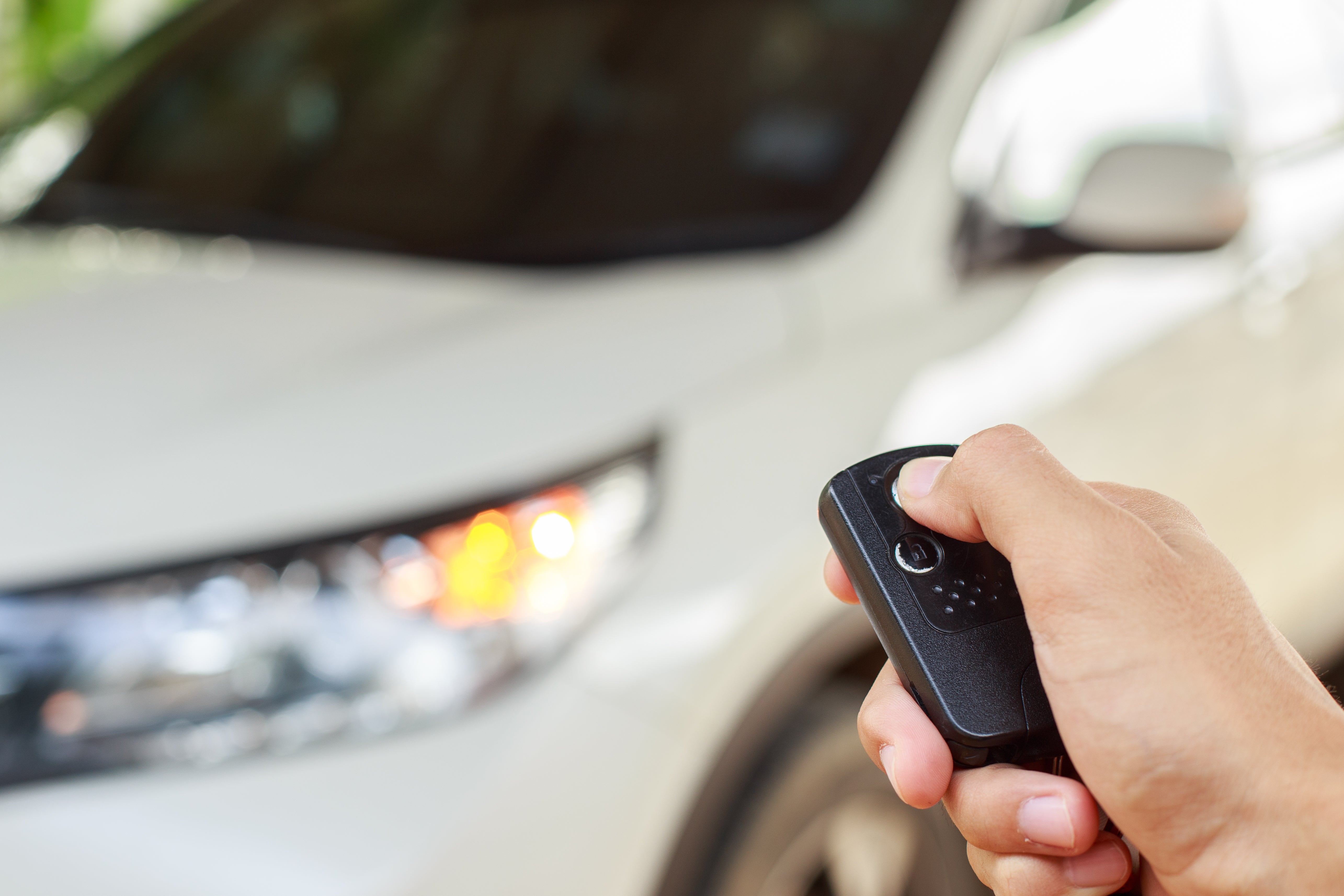
Are keyless cars easier to steal?
Yes, in many circumstances keyless cars are easier to steal. That said, it also depends on the particular model as well as the situation.
Some models have keyless entry, but which still require a conventional key to start the car. Cars which are most vulnerable to relay theft are those with both keyless entry and keyless start.
Relay theft is no longer new, so manufacturers have been working on ways to combat it for a while. This means some more advanced models now have systems designed to thwart the keyless car theft.
Which cars are vulnerable to keyless car theft?
Any vehicle that has both keyless entry and starting is more vulnerable to theft than one without either. A large number of new cars have keyless entry either as standard or as an optional extra, meaning that there are thousands of used models already on the road with this technology.
However, some models are arguably more secure than others. Jaguar and Land Rover have fitted some models with ultra-wideband (UWB) radio technology, which transmits over a broader range of frequencies to prevent thieves from tracing the codes as easily.
Audi, BMW, Ford and Mercedes-Benz have added motion sensors in their keyless fobs that stop them from sending out a code when they haven't moved for a while. While this offers protection when the fob is in sleep mode, they don’t provide as much if they’re moving – such as when you're out and about with the key in your pocket.
This led some carmakers to introduce two methods of activating the sleep mode on the fob:
Automatically after it hasn’t been moved
Immediately by pressing a button on the fob to activate it
Keyfobs that can't be manually deactivated are just as vulnerable as regular keyless fobs if, say, you park at a supermarket and walk away from your car, leaving the fob at risk of being relayed by thieves hanging about in wait.
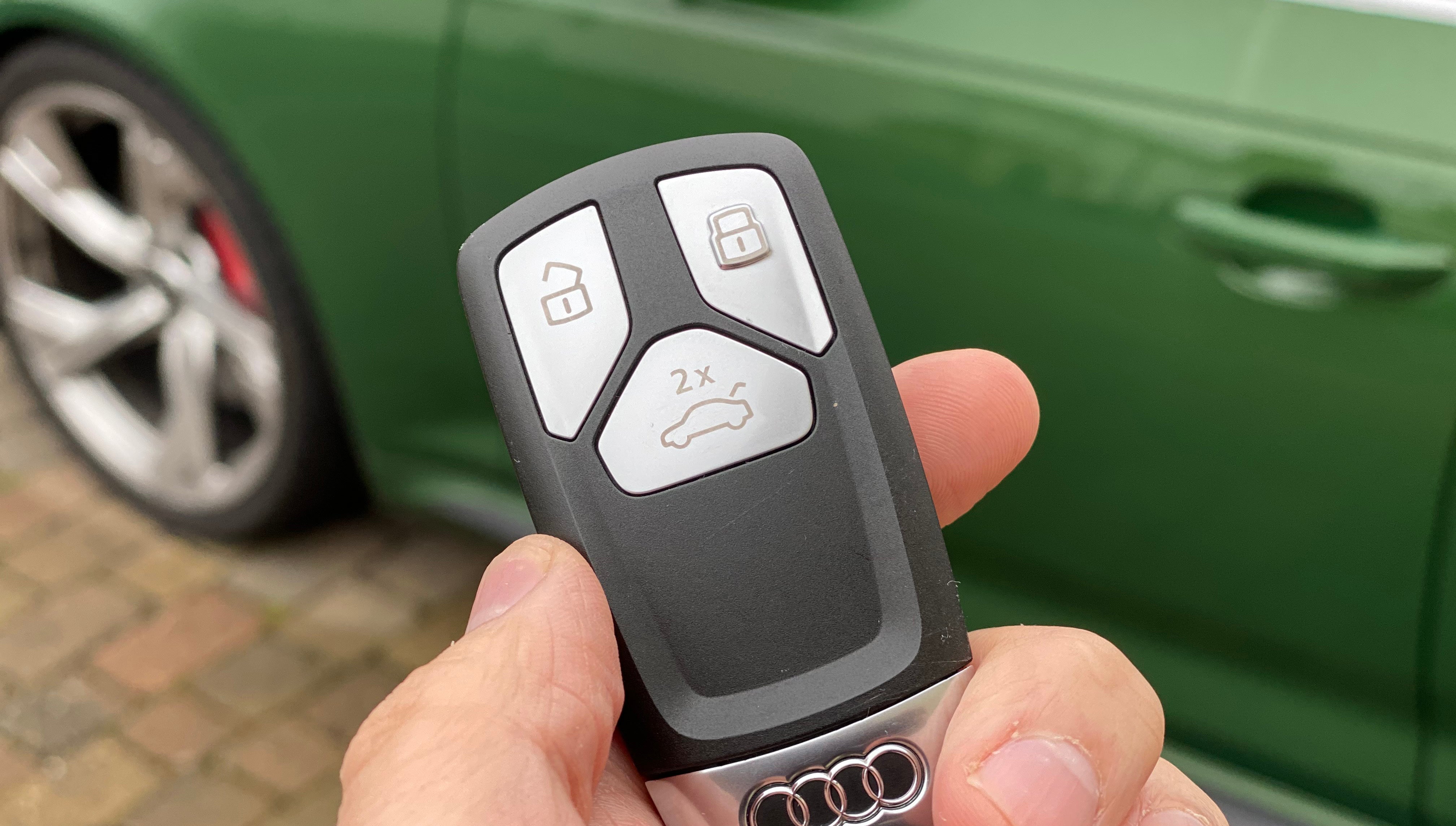
How to avoid keyless car theft
Keyless car theft sounds almost unstoppable, but that doesn’t mean there aren’t preventative steps you can take.
If you haven’t bought your next car yet, the easiest way to avoid keyless theft is to buy a car without it. It's becoming increasingly popular as a standard feature on cars, though, so that may not be possible. If you're in the process of buying, talk to the dealership or current owners about the security of the keyless function and find out if the system can be disabled.
If you already have a car with keyless entry and starting, putting the keyfob somewhere safe within your house should be your number one priority. Firstly, keep the fob as far away from doors, windows and outside walls as possible. Thieves usually have to try and electronically ‘grab’ the signal from outside, so the closer the keyfob is to the centre of your home the better.
Signal-blocking Faraday boxes and bags are metal-lined containers which thwart thieves' efforts. You can buy them online and from motor retailers with prices starting at about £5, ensuring what you buy is also big enough to house the spare key. To check that it works, put the key in the Faraday bag when you’re standing beside the locked car – if it's doing its job it won't unlock it when you grab the door handle.
Some metal boxes, such as those which expensive biscuits come in, can also block the signal – plus, you get biscuits, too – but be sure to check it work effectively because not all types will.
Anything else you can do to make the car harder to steal will be a deterrent. Putting the car in a garage, installing a lockable post at the end of your driveway and in-car security devices such as steering wheel locks can also help.
If you have a high-value car, consider getting a tracking device fitted as well.
No, while keyless entry is no longer the rare commodity it once was, not all cars have the feature. Many new models still have keyless entry listed as an additional extra.
Whether keyless or not, most fobs usually have buttons on them for locking and unlocking the car. If your car doesn't have keyless entry using them will be your typical way to lock and unlock the car. A physical key being inserted into the barrel lock on the door will essentially only be used in emergencies.
Cars which have keyless entry are designed so that the fob is simply close to you, in your pocket or bag, so you won't need to physically use it. Some systems may work slightly differently, but generally as you approach the car it will give a signal that it knows the key is close by, such as turning on the exterior and interior lights on unfolding the door mirrors. Some keyless cars are also unlocked from that point, while others require you to grab the door handle.
When locking a keyless car the usual method is, once you're outside and the doors are shut, to rest your hand against a specifc point on the door handle for a second or two. The point is typically marked by a small trio of surface ribs or a square moulded into the handle. It's also becoming common for keyless cars to automatically lock as you simply walk away from it.
The latest keyless systems also allow you to pair your phone or smartwatch to the car's security system, enabling them to be used as digital keys. Just be sure not to let their batteries run flat if you leave the keyfob elsewhere.
If your car neither unlocks or locks when trying the above with the key in your pocket, then it most likely doesn't have keyless entry. Refer to your owner's manual for confirmation in case you're trying it with a keyless fob that's got a flat battery.
Generally speaking, there's no limit to the distance a vehicle with keyless entry and start can go without the keyfob being in the car. The vehicle will often just beep without the key present, but the engine will keep running.
If criminals steal a vehicle, but don't have the copied signal on them, they tend to leave it running until it's either out of fuel or they no longer intend to drive it. Many of the stolen cars are hidden away ready for stripping down or driven to ports where they're parked in shipping containers ready to be illegally exported and sold overseas.