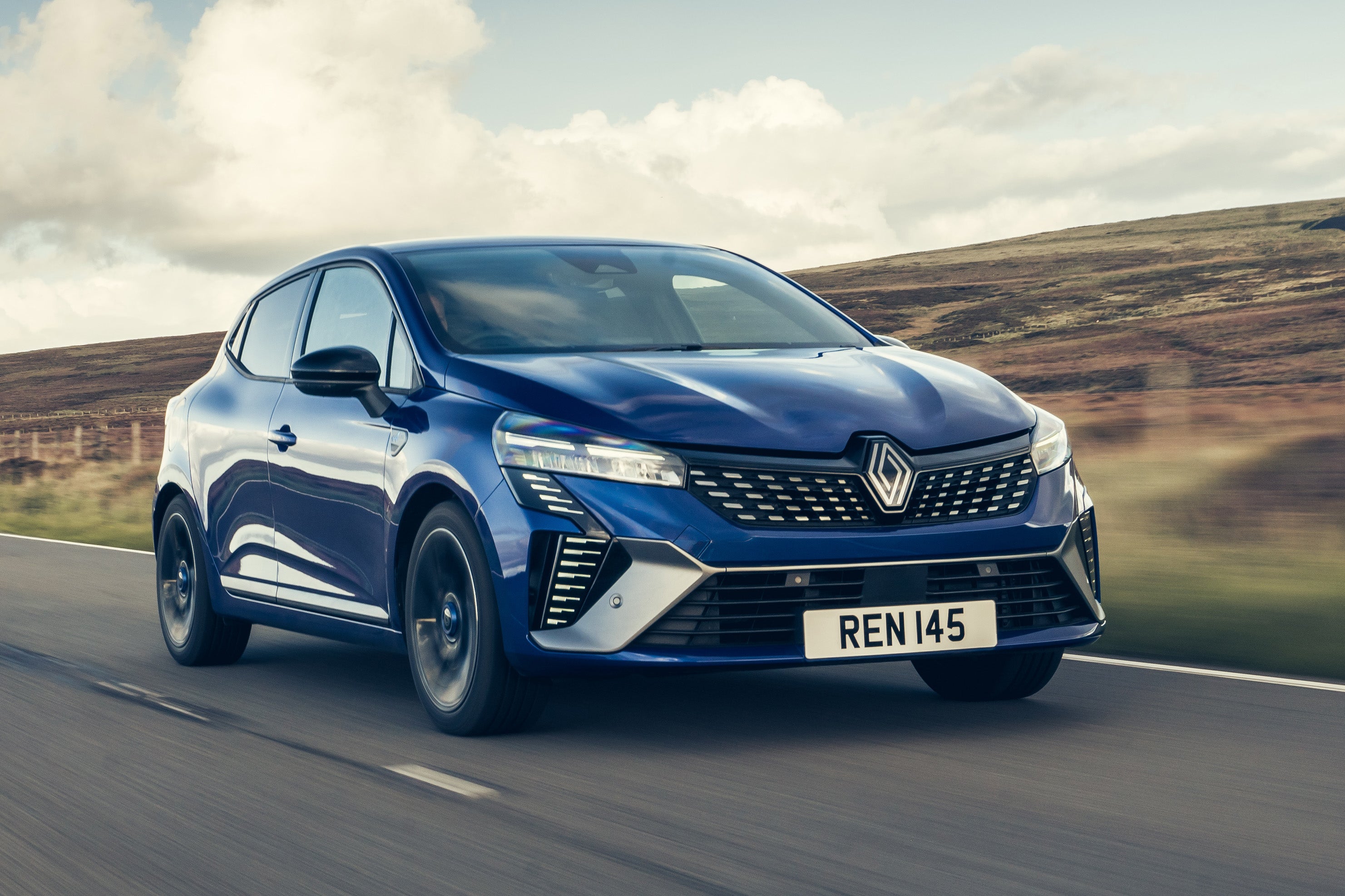
Ford Fiesta (2017-2023) Review

Written By Andrew Brady
- 2017
- Hatchback
- Petrol, diesel and petrol mild hybrid
What we love
Still one of the best small cars to drive
Comfortable and refined enough for long journeys
Huge choice of engines, trims and used examples
Things to consider
No longer available new and has no direct replacement
Rear passenger and boot space trail newer rivals
Some engines and automatic gearboxes need careful checking
The DRIVE take on the Ford Fiesta, is it the right car for you?
The Ford Fiesta remains one of the best used small cars for buyers who want low running costs without sacrificing comfort or driving enjoyment. It is easy to use in town, refined enough for motorway journeys and more rewarding on a winding road than most rivals. The cabin is well laid out, the engines are economical and there is enough space for everyday family use. Rear passenger room and boot capacity are only average, but the Fiesta’s blend of comfort, efficiency and sharp handling still makes it an excellent all-rounder.
The Ford Fiesta in more detail
Few cars have played a bigger role in British motoring than the Ford Fiesta. Across several generations it served as a first car, family runabout, company car and affordable source of driving enjoyment. The final generation arrived in 2017 and remained in production until July 2023.
There is no direct replacement in Ford’s current range, making this a used-only proposition. Fortunately, supply is plentiful. The Fiesta sold in huge numbers and was offered with three or five doors, petrol and diesel engines, mild-hybrid technology and a broad spread of trim levels.
Browse used Ford Fiestas for sale →
That variety is one of its greatest strengths as a second-hand purchase. Basic versions provide affordable transport and low insurance costs, while Titanium models add useful comfort and convenience features. ST-Line cars have sportier styling and firmer suspension, Active versions sit slightly higher and wear SUV-inspired body trim, and the short-lived Vignale attempted to add a more luxurious finish.
Ford updated the Fiesta for 2022 with revised exterior styling, more standard equipment and additional driver-assistance technology. Selected versions also received a configurable 12.3-inch digital instrument display. These facelifted cars are the most modern-looking and desirable, but a well-maintained earlier example can provide much better value.
The Fiesta’s enduring appeal lies in its balance. Some rivals have larger boots, while others offer longer warranties or more premium interiors. Few combine ride comfort, precise controls, refinement, economy and driver enjoyment as successfully.
It is simple enough for a newly qualified driver to feel confident in, yet polished enough to serve as a household’s only car. Buyers looking for the full performance experience should consider the Fiesta ST, which uses a more powerful engine and a much more focused chassis than the mainstream range.
What's the best Ford Fiesta trim and engine option?
The five-door Ford Fiesta 1.0 EcoBoost 125PS Titanium is the best all-round used version. Its engine has enough performance for motorway driving and overtaking without the higher insurance and running costs associated with the most powerful models.
Titanium trim provides a useful amount of equipment and retains the more comfortable standard suspension.
Buyers prioritising value should also consider the 100PS EcoBoost in Zetec or Trend trim.
The 100PS engine is slower but perfectly adequate for ordinary driving, and these versions are widely available at sensible prices.
ST-Line models look sharper and feel more controlled through bends, but their firmer suspension and larger wheels reduce comfort on broken roads.
The 1.1-litre non-turbocharged petrol is best reserved for new drivers or buyers focused on insurance costs. It works adequately in town but feels strained on faster roads.
What’s the price of the Ford Fiesta?
Early examples of the final-generation Fiesta start at approximately £5,500 to £7,000.
Cars at this end of the market may have higher mileages, basic trim or incomplete histories, so condition matters more than the lowest advertised price.
Around £8,000 to £11,000 buys a broad choice of 2018 to 2020 cars, including many 1.0-litre EcoBoost Zetec, Trend, Titanium and ST-Line models. Facelifted 2022 and 2023 examples generally start at approximately £12,000, with low-mileage Titanium X and ST-Line X cars approaching £17,000 to £20,000. There are plenty of used Ford Fiestas for sale so you have plenty of choice.
The performance-focused Fiesta ST occupies a different part of the used market and commands higher prices than an equivalent mainstream model.
There are enough ordinary Fiestas available that buyers do not need to compromise. Walk away from cars with missing service history, dashboard warning lights, accident damage, poor tyres or obvious signs of neglect.
Alternatives to the Ford Fiesta
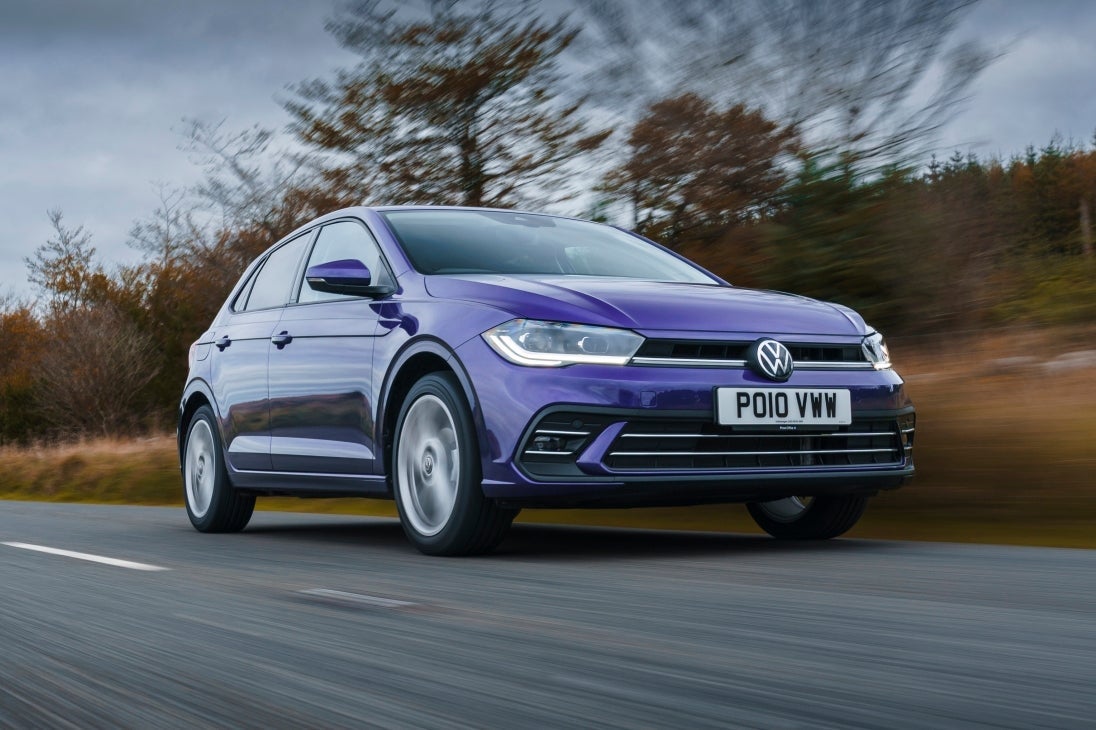
The Volkswagen Polo feels more mature and has a slightly more upmarket cabin. It is less enjoyable to drive and often costs more for an equivalent age and specification.
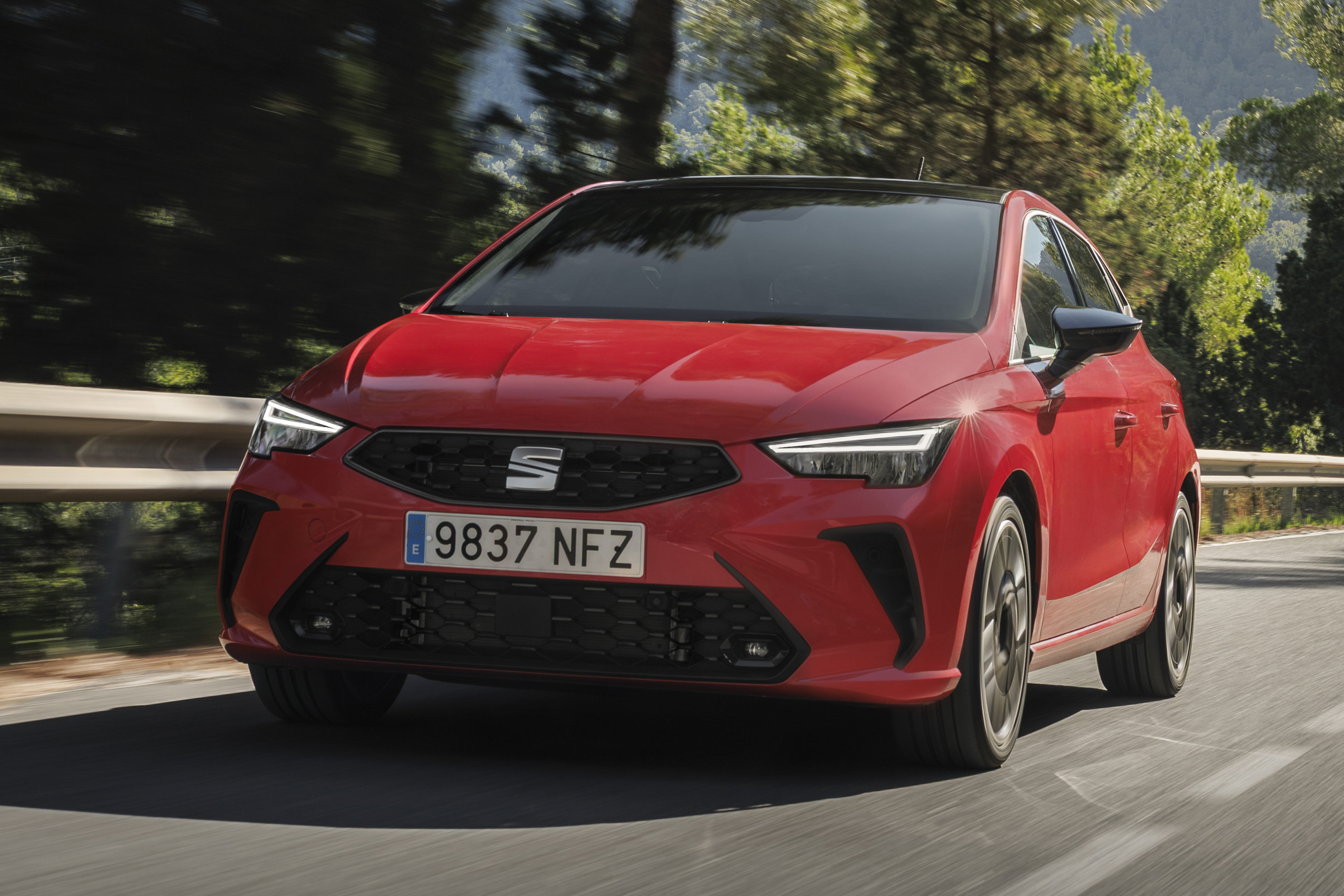
The SEAT Ibiza is spacious, sharp to drive and good value. Its interior feels less polished than the Fiesta’s in some trims.
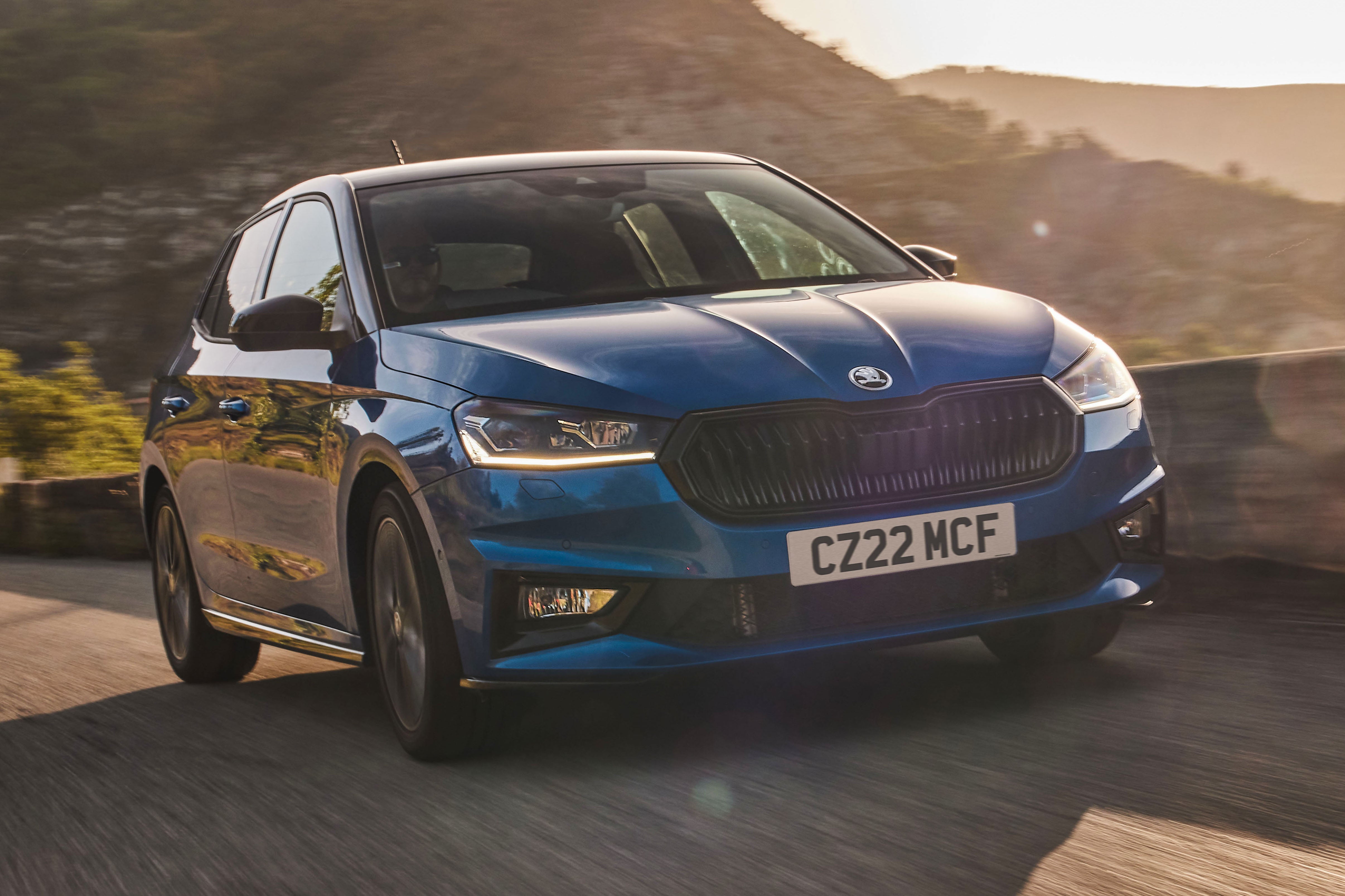
The Skoda Fabia offers more rear passenger room and a larger boot. It is sensible and comfortable but less engaging.
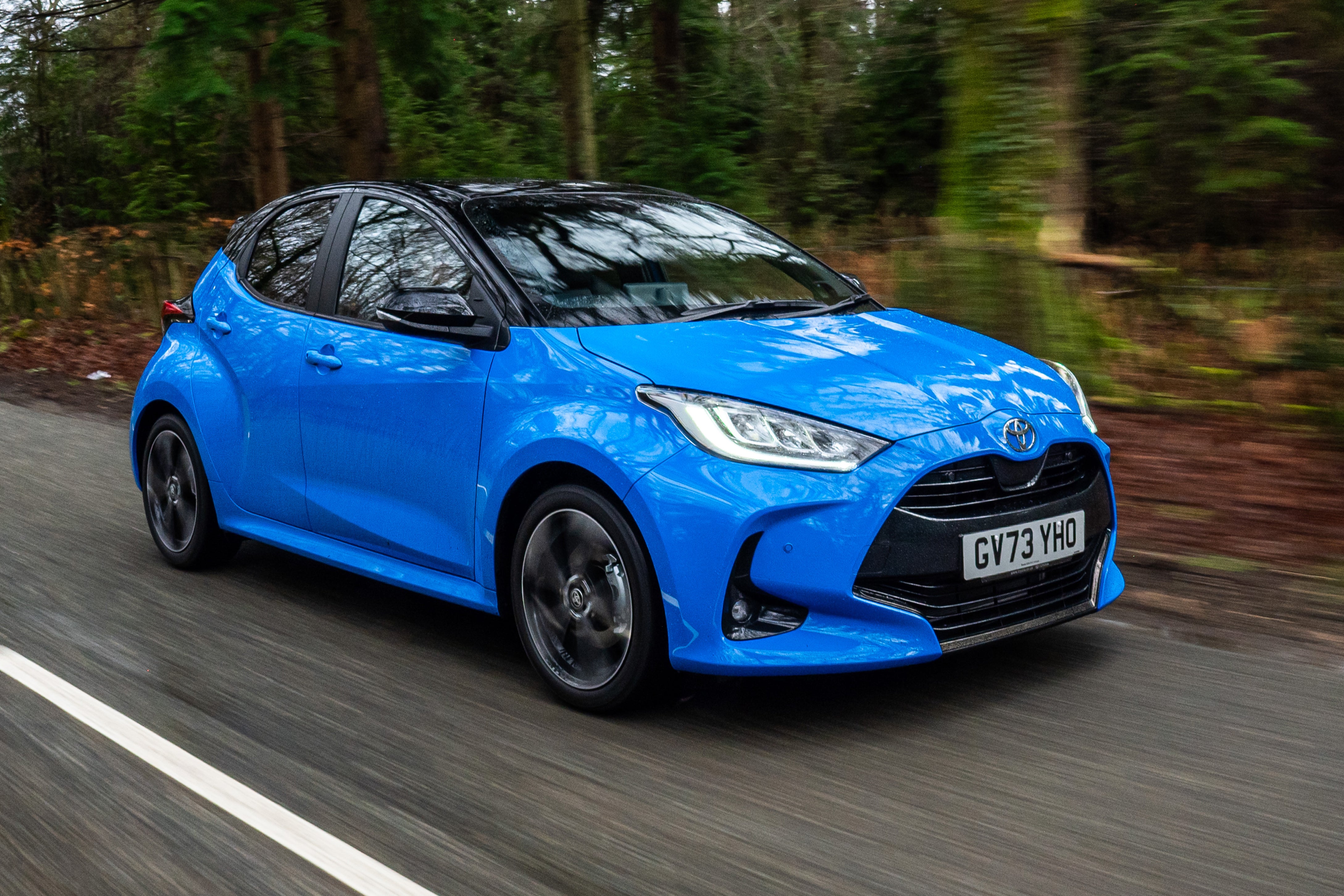
The Toyota Yaris Hybrid is extremely economical in town and has a strong reliability reputation. Its hybrid gearbox becomes noisy under hard acceleration.
The Renault Clio has a larger boot and a more stylish cabin, especially in its latest generation. The Ford has more natural steering and a better manual gearbox.
The Vauxhall Corsa is easy to find and straightforward to own. It does not match the Fiesta’s ride and handling balance.
What's the interior like in the Ford Fiesta?
The Fiesta’s cabin is comfortable, logically arranged and much more modern than that of its predecessor. Material quality is respectable rather than class-leading, but the controls are easy to use and the driving position is excellent.
Ford Fiesta boot space and practicality
Both the three- and five-door Ford Fiesta models offer exactly the same amount of cabin space. However, the five-door has a clear advantage when it comes to accessing the back seats, which will be a prime consideration for anyone with children. Letting them into the back with the three-door model is simple enough as the front seats tip and slide forwards, but it’s just more of faff than simply opening a rear door.
Once in the back of the Ford Fiesta, there’s a trio of three-point belts and the two outer chairs have ISOFIX kiddy seat mounts. The window line is quite high in the rear of the Fiesta, so younger children may find themselves feeling a bit hemmed in, especially with the standard dark cloth upholstery of most trims.
There’s reasonable space for kids in the back of the Fiesta and it can, at a pinch, take three abreast. For adults, it’s strictly for two and they will find head and leg space at a premium if they are of average or above height.
Turning our attention to load carrying, the Ford Fiesta’s boot has 292-litres of space in normal use, which puts it in the middle ground of this class. It’s deep and uninterrupted by intrusions from the wheel arches, but there is a high load sill to drag heavier bags over.
Extending the load space is simple as the 60/40 split rear seat tips forward when the release levers are pulled. This frees up as much as 1093-litres of space, but it comes with the caveat that its load floor is not flat and has a marked step where the back seat base meets the floor. Nor does the rear bench fold completely horizontal, which hampers its ability to carry bigger boxes home from the DIY shop or cart rubbish to the dump.
Step round to the front cabin of the Ford Fiesta and the driver is well catered for thanks to big door pockets and a centre tray in front of the gear lever. There’s also a lidded cubby between the front seats and a glovebox with enough space to stash a phone charger.
Ford Fiesta dimensions
The Fiesta measures 4,040mm long, 1,735mm wide & 1,476mm high.
Its compact dimensions, light steering and tight turning circle make it easy to park and well suited to narrow urban roads. Rear sensors and a camera were fitted to higher trims or included in option packs.
Tech and infotainment in the Ford Fiesta
Every Ford Fiesta comes with an infotainment screen of some sort. Basic Trend and Zetec models made do with a 6.5-inch touchscreen, but other trims gained an 8.0-inch display. With the Trend and ST-Line models, you get the SYNC system that comes with a touchscreen and steering wheel buttons. It is easily hooked up to Apple CarPlay or Android Auto for music and apps.
It’s as well you can access apps so readily as this version of the SYNC system is rather basic otherwise, even if it’s much easier to navigate your way through now than Ford’s older versions. The screen is big, bright and has easily prodded icons.
Move into most other Ford Fiesta trims and you get an upgrade to the SYNC 3 infotainment system that includes navigation, voice control and FordPass Connect internet access. Again, this still requires your smartphone to work at its best, but it’s still simple to work.
Both SYNC systems come with Emergency Assistance and DAB radio. Alternatively, you could have the Titanium X or Vignale models with a Bang and Olufsen Premium set-up that has 10 speakers for greater sound quality. This is an option for other trim levels except the base Trend.
From 2022, Ford offered a 12.3-nich digital dash display in place of the standard instrument gauges and it's a great system if you choose a used Fiesta with this fitted.
Materials available on the Ford Fiesta
This is an area where Ford worked hard to shed the previous Fiesta’s somewhat utilitarian approach to fabrics and materials. It’s a partial success as the upper section of the dash softly padded plastic looks and feels good, while the main sweep of the dash and centre console are just as pleasing. All of the controls work with a pleasingly positive action, particularly the column stalks.
Glance further down and deeper into the cabin of the Ford Fiesta and you begin to notice far more basic looking finished and textures. They are hard-wearing and robust, and Ford put the Fiesta together as well as any of its rivals, but it just misses that last degree of wow factor you get in a MINI or Volkswagen Polo.
This is addressed to some degree in the Vignale model with its upscale trim and appearance. However, there are still some standard Fiesta parts on show in this car. Despite this, the Vignale does impart the feel of a luxury car that has been distilled into a smaller package.
What's the Ford Fiesta like to drive?
The Fiesta remains the benchmark for how an affordable small hatchback should drive. It is comfortable, agile and easy to control without demanding effort from the driver.
Ford Fiesta range and performance
The Ford Fiesta line-up started with an entry-level 1.1-litre Ti-VCT petrol engine. We'd recommend avoiding this engine unless you're on a tight budget (or perhaps are a new driver struggling with insurance costs). With a power output of just 85PS, it soon starts to feel out of its depth on the motorway and it's only available with a five-speed manual gearbox.
Far and away the best choice of engine in the Fiesta is the three-cylinder 1.0-litre Ecoboost turbo petrol unit. It was originally offered in 100-, 125- and 140PS outputs and we’d plump for the middle one for its blend of punch, economy, refinement and running costs. All three deliver plenty of low-down pep and are happy to rev hard when required, though you are unlikely to need this as they pull strongly through the standard six-speed manual gearbox. If you want an automatic transmission, this is offered with six gears attached to the 100PS Ecoboost motor. It can be slow to swap gears and is not noted for the smoothness of its shifts, but generally the auto gearbox is inoffensive.
Mild-hybrid tech was added to the Fiesta range in 2020, with a belt-driven starter/generator replacing the standard alternator on 125 and 155PS 1.0-litre EcoBoost models. This isn't a full hybrid, so don't expect huge differences in performance or fuel economy, but it will capture a small amount of energy ordinarily lost under braking. The 100PS engine continued without any hybrid help.
For those covering bigger distances, Ford originally offered the Fiesta with a pair of 1.5-litre turbodiesel engines available in the Fiesta. They are three-cylinder units and can be ordered with 85- or 120PS. It’s a shame there isn’t an option that sits in the middle as the 85PS motor can feel a bit underwhelming at higher speeds while the 120PS unit can feel like overkill. Still, we like the pace of the 120PS turbodiesel and its ability to cruise all day long on the motorway.
Performance data
| Model | Engine/battery size | Power | 0-62mph | Range/MPG |
|---|---|---|---|---|
1.1 Ti-VCT | 1.1-litre | 85PS | Up to 53.3mpg | |
1.0 EcoBoost | 1.0-litre | 100PS | Up to 56mpg | |
1.0 EcoBoost | 1.0-litre | 125PS | Up to 56mpg | |
1.0 EcoBoost mild hybrid | 1.0-litre | 125PS | Up to 56.5mpg | |
1.0 EcoBoost mild hybrid | 1.0-litre | 155PS | Up to 56mpg | |
1.5 TDCi | 1.5-litre | 85PS or 120PS | Up to 74.3mpg |
Ford Fiesta driving and refinement
On any type of road, whether in town or motorway, country lane or faster routes, the Ford Fiesta has a knack of flowing along. It does this without any apparent effort, whereas much of the competition will be bouncing around and leaving their occupants feeling less than keen to continue.
As well as its finely controlled suspension, the Fiesta comes with controls for the pedals, gear change and steering that are that little bit better judged for weight and reaction than its rivals. They all combine to give the driver a greater sense of involvement and overall say in how the car behaves that makes it fun, agile and cosseting. It’s also easy to park in packed city streets with a tight turning circle and light power-assisted steering.
Most versions of the Ford Fiesta have the standard suspension set-up. This is ideal for the majority of drivers and situations, but keener drivers might find the ST-Line with its firmer settings is the one to have. It does nothing to undermine the Fiesta’s impressive comfort but curbs body lean and movement along undulating roads to have a sportier edge that many will associate with Ford’s small hatch.
With any Fiesta, motorway driving holds no concerns as the car is stable at high speeds and unfazed by side winds or the blast as you pass lorries. It makes the Ford a great all-round choice in this class and capable of working as your only car as well as a superb second car in a household.
How safe is the Ford Fiesta?
The Ford Fiesta received five stars from Euro NCAP when tested in 2017.
That rating was awarded under an older test protocol and should not be compared directly with the score of a newly assessed car.
Protection was generally good or adequate for the front occupants, although the rear passenger’s chest protection was rated marginal in the full-width frontal test.
Every Fiesta has six airbags, stability control, anti-lock brakes, hill-start assistance and tyre-pressure monitoring.
Lane-keeping assistance, traffic-sign recognition, autonomous emergency braking, blind-spot monitoring and driver-attention systems were fitted according to age, trim and option selection.
Later facelifted cars generally have the strongest assistance specification.
Buyers should check the equipment fitted to the individual vehicle, particularly if autonomous emergency braking or blind-spot monitoring is important.
Running costs: What it's like to live with a Ford Fiesta
The Fiesta is economical, affordable to insure in lower-powered forms and supported by a large network of independent garages and parts suppliers.
Ford Fiesta fuel economy
The 125PS mild-hybrid EcoBoost returns up to 56.5mpg with the six-speed manual gearbox and up to 53.3mpg with the automatic.
Real-world figures in the mid to high 40s are achievable with restrained driving.
The standard 100PS EcoBoost offers similar everyday economy and may be cheaper to buy.
The 1.1-litre petrol can return more than 50mpg, although drivers working it hard on faster roads may see a lower result.
The diesel is the economy champion, with official figures reaching 74.3mpg. It only makes sense for drivers covering enough long journeys to keep the emissions system operating correctly.
Ford Fiesta warranty and servicing
The original three-year or 60,000-mile warranty will have expired on most used Fiestas.
Some late cars may have remaining extended cover, while approved-used examples may include a dealer-backed warranty.
Ford Fiesta insurance groups
Insurance groups vary substantially according to engine, trim and model year. Basic 1.1-litre Style and Trend versions can sit as low as group 2 to 5, making them attractive to new drivers. The 100PS 1.0-litre EcoBoost generally occupies groups 10 to 12. The 125PS EcoBoost typically sits in groups 12 to 15, depending on trim and body style.
The 140PS and 155PS versions generally occupy groups 14. to 17. Performance models are rated higher, so buyers should check the exact registration before arranging cover.
How much does it cost to tax a Ford Fiesta?
For Fiestas registered from 1 April 2017, annual Vehicle Excise Duty from the second licence is £200.
No mainstream Fiesta had a list price above the relevant £40,000 Expensive Car Supplement threshold, so the additional charge does not apply.
Cars registered before 1 April 2017 use the older emissions-based tax system, but that mainly affects examples of the previous generation.
What trims are available with the Ford Fiesta?
Zetec was the popular core trim on earlier cars. It usually includes alloy wheels, air conditioning, a heated windscreen and touchscreen infotainment, making it a sound used choice.
Trend replaced Zetec in 2019 and became the entry point to the later range. It includes LED headlights on facelifted cars, air conditioning, cruise control, smartphone connectivity and lane assistance.
Titanium adds convenience features such as rear parking sensors, keyless start, traffic-sign recognition and automatic high beam.
Titanium X brings heated front seats, a heated steering wheel, climate control, keyless entry and upgraded upholstery.
ST-Line adds sportier styling, larger wheels and firmer suspension. ST-Line X combines that appearance with more comfort and convenience equipment.
Active versions have raised suspension, body cladding and an SUV-inspired look. They remain front-wheel drive and offer no serious off-road ability.
Vignale adds leather upholstery, a panoramic roof and more elaborate exterior trim. It is rare and may not represent the strongest value.
For most buyers, Titanium offers the best balance. Zetec and Trend provide better value, while ST-Line suits those prepared to sacrifice some comfort for sharper styling.
Ask the Drive experts: common questions
Is the Ford Fiesta still available new?
What replaced the Ford Fiesta?
Which used Ford Fiesta is best?
How big is the Ford Fiesta’s boot?
Get our latest advice, news and offers
Keep me updated by email with the latest advice, news and offers from Drive.
.jpg)