BYD Sealion 7 Review

Written By Matt Robinson
- 2024
- SUV
- Electric
What we love
Spacious, well-finished interior
Huge amount of standard equipment
Strong performance across the range
Things to consider
Unsettled ride
Distracting touchscreen and assistance systems
Some rivals are more efficient and travel further
The DRIVE take on the Byd Sealion 7, is it the right car for you?
The BYD Sealion 7 is worth shortlisting if you want a spacious, powerful and comprehensively equipped electric SUV. Its cabin feels expensive, the 520-litre boot is family-friendly and even the entry model is quick. The rear-wheel-drive Comfort is the version to choose, combining a 300-mile official range with nearly all the equipment most buyers need. Its unsettled ride and vague handling, however, prevent it from matching the best electric SUVs.
The Byd Sealion 7 in more detail
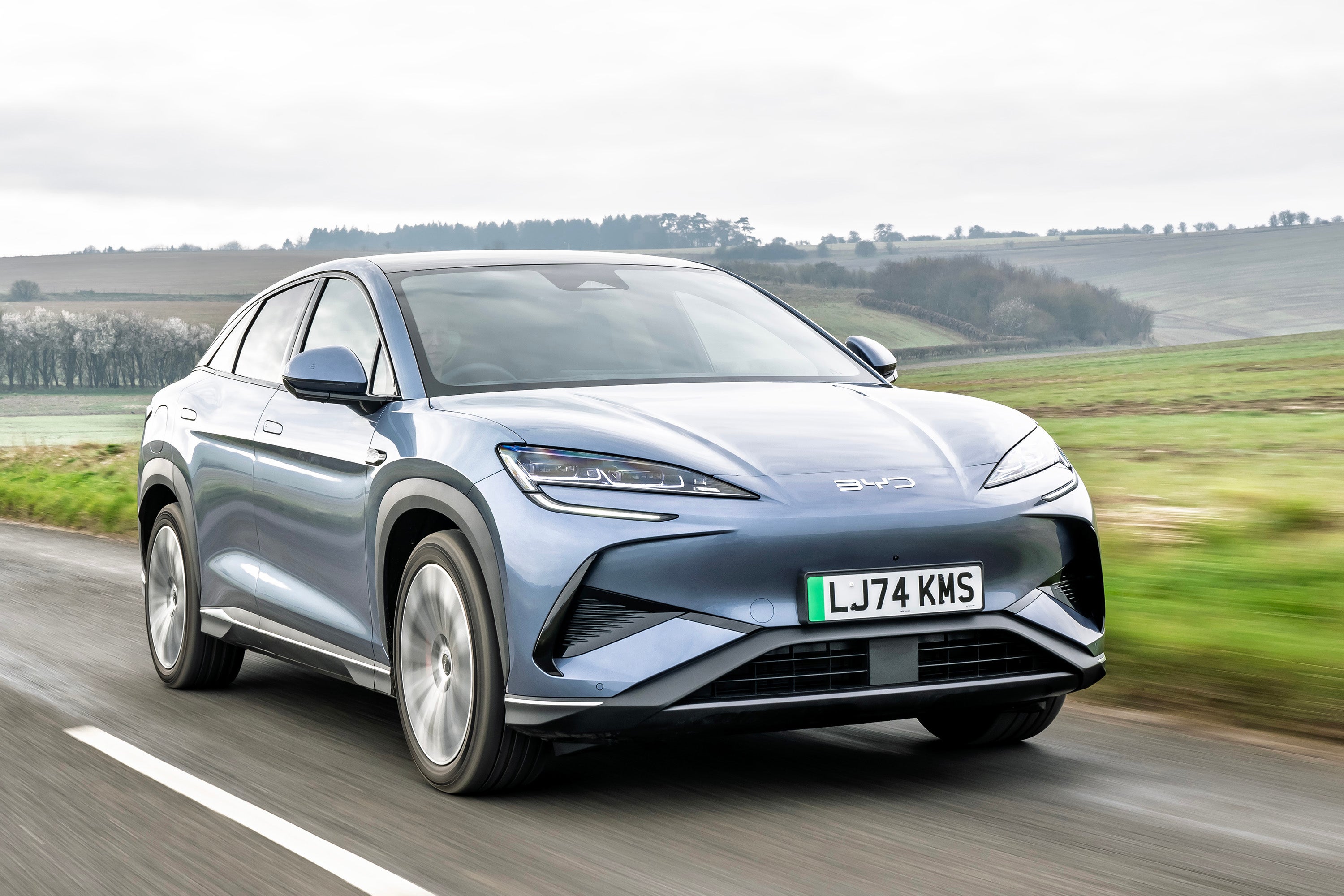
The Sealion 7 is a large electric SUV aimed directly at the Tesla Model Y, the Kia EV6, the Hyundai Ioniq 5, the Volkswagen ID.5 and the Ford Mustang Mach-E. Its low nose, sloping roof and fastback-style tail give it a sportier shape than a traditional upright SUV, although it still provides the space and raised driving position family buyers expect.
It’s currently BYD’s largest pure-electric SUV in the UK (The similarly named Seal U DM-i is a separate plug-in hybrid and shouldn’t be confused with this fully electric model). There are three versions. Comfort uses an 82.5kWh Blade Battery and a single 313PS motor driving the rear wheels. Design AWD combines the same battery with a second motor at the front, raising total output to 530PS. Excellence AWD retains the dual-motor system but upgrades to a 91.3kWh battery and much faster charging capability.
The interior is one of the Sealion 7’s strongest features. It has plenty of room for five adults, the materials feel substantial and almost every item of equipment buyers are likely to want is fitted as standard. Even Comfort has heated and ventilated front seats, heated rear seats, a panoramic roof, a 360-degree camera and a 12-speaker Dynaudio audio system.
Its technology is less polished. The 15.6-inch rotating touchscreen is eye-catching, but the menu structure demands too much attention and the climate controls are difficult to use while moving. Voice control was unreliable during testing, while the driver-monitoring and lane-assistance systems could intervene unnecessarily.
The way the Sealion 7 drives is a more significant weakness. It’s quiet and secure, but the suspension struggles to combine comfort with control. The body leans noticeably in corners, yet the ride remains fidgety on uneven roads. That compromise is difficult to overlook, particularly when the most expensive model costs almost £60,000.
Buyers who prioritise interior quality, standard equipment and straight-line performance will still find plenty to like. The Tesla Model Y is more efficient, the Skoda Enyaq is more comfortable and the Kia EV6 is more enjoyable to drive, but the Sealion 7 counters with a high-quality cabin and an unusually complete specification.
What's the best Byd Sealion 7 trim and battery option?
The rear-wheel-drive Comfort is the strongest choice. It costs £47,025 and combines an 82.5kWh battery with a 313PS motor, giving it an official range of 300 miles.
That makes it more efficient than Design AWD, which uses the same battery but loses 17 miles of range because of its additional motor and weight. Comfort is hardly slow, either. Its 6.7-second 0–62mph time provides more than enough performance for motorway joining and overtaking.
There’s little need to upgrade for equipment. Comfort includes heated and ventilated front seats, heated rear seats, dual-zone climate control, a panoramic roof, a heat pump, adaptive cruise control, a 360-degree camera, wireless phone charging and the Dynaudio sound system.
Design AWD costs £5,000 more and adds four-wheel drive, 530PS and 20-inch wheels. Its 4.5-second 0–62mph time is dramatic, but the extra performance is difficult to use on public roads and its official range falls to 283 miles.
Excellence AWD is the best option for repeated long journeys. Its larger 91.3kWh battery provides 312 miles of official range and accepts up to 230kW, reducing a 10–80% charge to 24 minutes. It also gains Nappa leather and a head-up display.
At £59,025, however, Excellence faces more polished premium competition. Comfort delivers almost all the Sealion 7’s strengths for considerably less.
What’s the price of the Byd Sealion 7?
The BYD Sealion 7 Comfort costs £47,025. Design AWD is priced at £52,025, while the range-topping Excellence AWD costs £59,025.
The £5,000 step from Comfort to Design AWD principally buys the second motor, four-wheel drive, 530PS and 20-inch wheels. Excellence costs another £7,000 and adds the larger 91.3kWh battery, 230kW rapid charging, Nappa leather and a head-up display.
None of the Sealion 7 range qualifies for the current Government Electric Car Grant and even the cheapest version is above the scheme’s maximum price limit.
BYD doesn’t offer a lengthy catalogue of option packs, so the final price is easier to understand than it is with some premium rivals.
Alternatives to the Byd Sealion 7
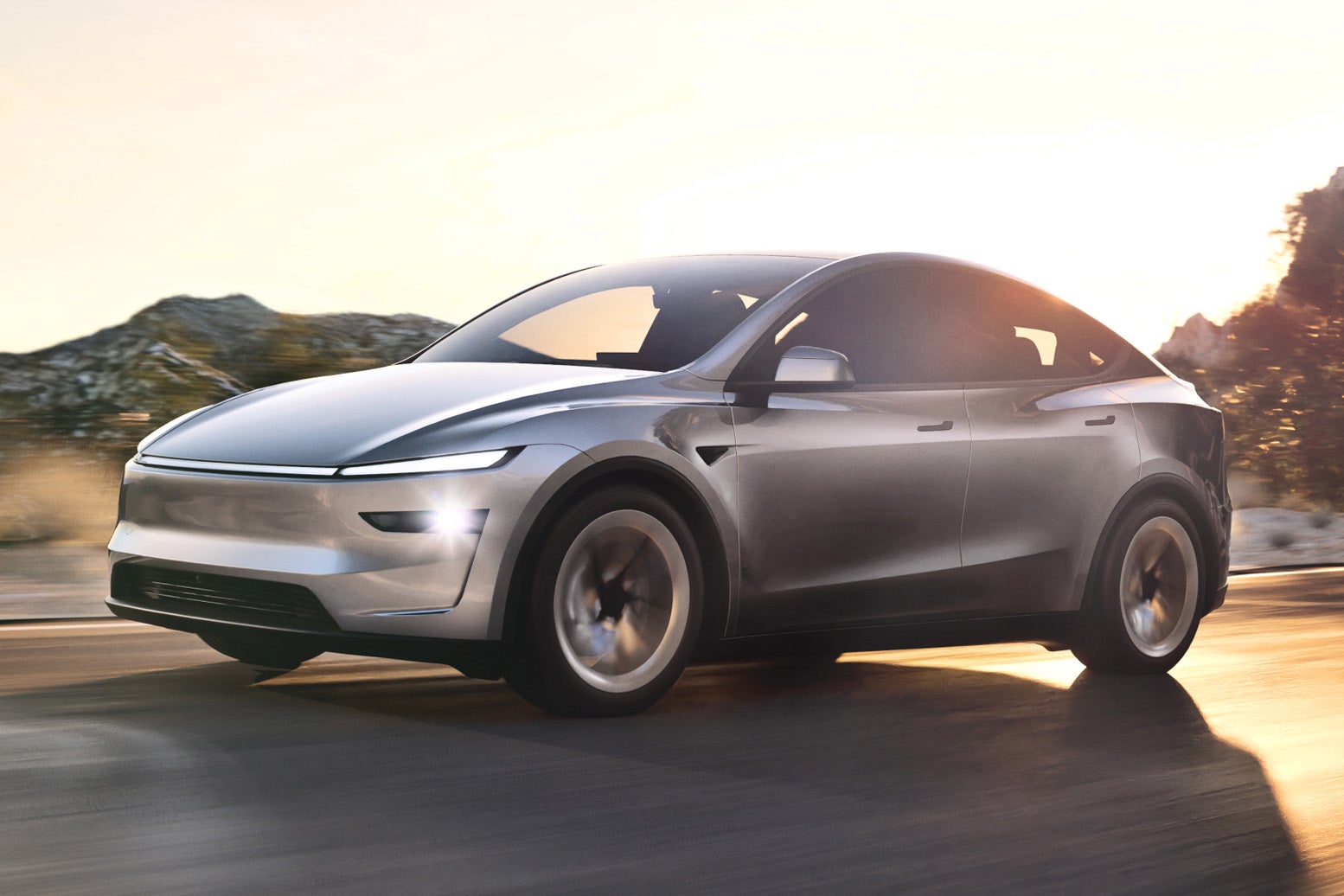
The Tesla Model Y is the Sealion 7's closest rival. It has a more efficient drivetrain, stronger route planning and a well-integrated public-charging experience, but the BYD counters with a more conventional dashboard, richer cabin materials and more equipment as standard.
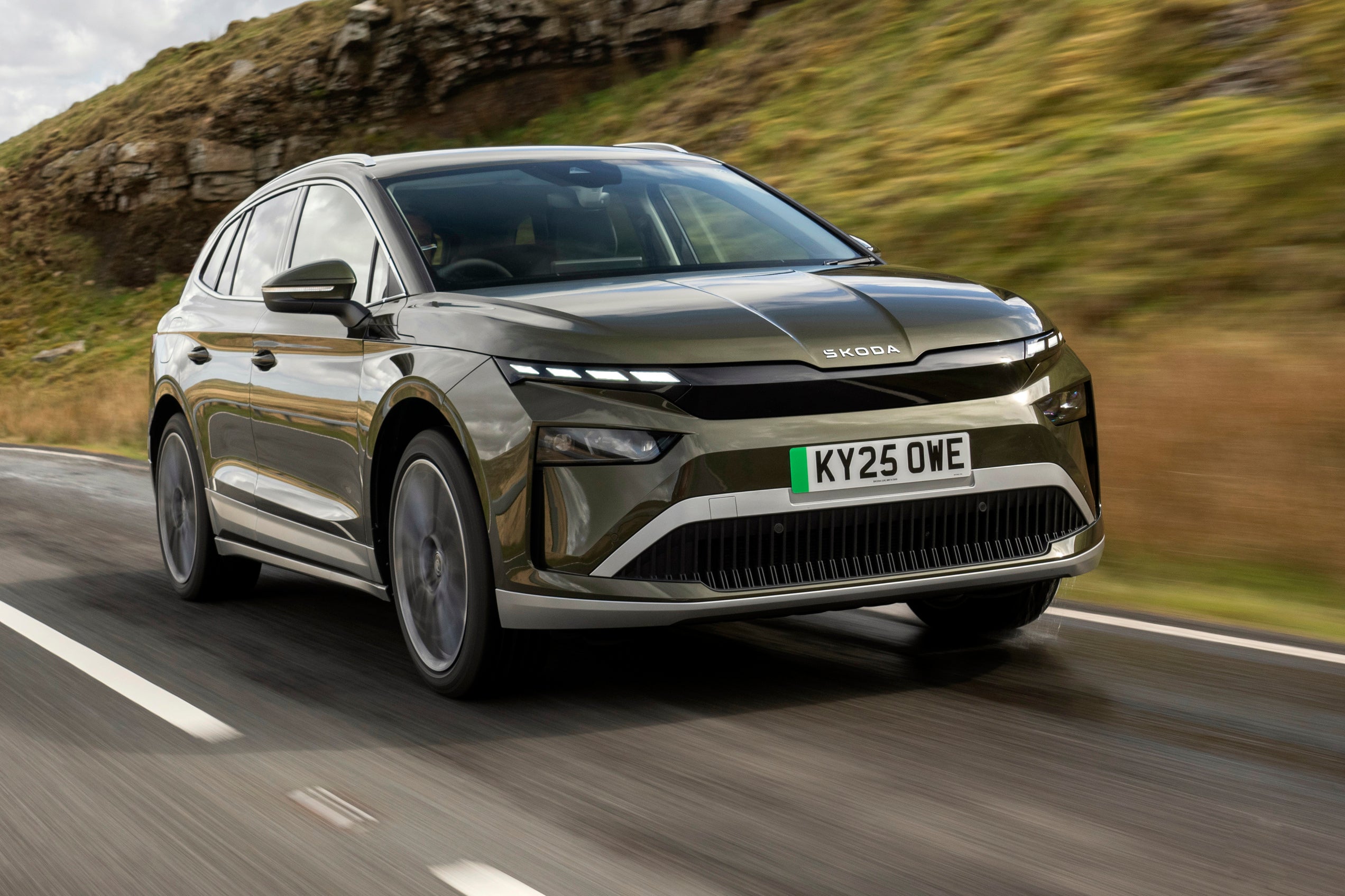
The Skoda Enyaq is less powerful but more comfortable and easier to live with. Its controls are simpler, its ride is calmer and its boxier rear makes it an especially sensible family choice.
A Volkswagen ID.5 offers similarly sleek coupe-SUV styling with more composed road manners. Its cabin doesn’t feel as lavish as the BYD’s, but it’s more settled and predictable to drive.
The Kia EV6 is sharper and more engaging, while its 800-volt electrical system supports very rapid charging. Its lower seating position and restricted rear visibility make it feel less like a conventional SUV.
The Hyundai Ioniq 5 provides a more flexible cabin, a comfortable ride and fast charging. Buyers who prioritise interior versatility and long-distance usability over outright performance may find it the more rounded car.
What's the interior like in the Byd Sealion 7?
The Sealion 7 has a spacious, comfortable and impressively finished cabin. Its materials and standard equipment compare well with more expensive rivals, although the rotating touchscreen and over-sensitive assistance systems make it less intuitive than it first appears.
The curving dashboard design and widespread use of soft-touch and leather-effect materials create a convincing sense of quality. Comfort and Design use vegan leather upholstery, while Excellence upgrades to Nappa leather.
There are some less impressive details if you start looking closely, but first impressions are strong and there’s little about the cabin that obviously gives away BYD’s relatively recent arrival in this part of the UK market.
Byd Sealion 7 boot space and practicality
The driving position is elevated without placing the driver as high as in a traditional boxy SUV. There’s extensive electric seat adjustment, including lumbar support, while the steering wheel adjusts for reach and height.
Forward visibility is generally good, although the Sealion 7’s width and sloping rear screen make it harder to judge than a smaller SUV. Front and rear parking sensors and a clear 360-degree camera are standard, removing much of the stress from tight manoeuvres.
Front passengers have generous headroom and legroom. The wide centre console separates the two seats, but the cabin doesn’t feel restrictive. Storage includes a large compartment under the centre armrest, space beneath the dashboard and two variable-depth cupholders.
Rear passenger space is generous with excellent legroom, while the flat floor makes the middle seat more usable because there’s no transmission tunnel to straddle. Headroom is less generous for particularly tall passengers because of the sloping roof, although the reclining outer rear seatbacks help. Heated rear seats are standard, which remains unusual even in more expensive electric SUVs. Isofix and i-Size mounting points are fitted to the front passenger seat and both outer rear seats.
The rear boot holds 520 litres with all five seats in use. Folding the rear seatbacks increases capacity to 1,789 litres, while a separate 58-litre compartment under the bonnet provides enough room for charging cables or a small bag. The sloping roof means the luggage area isn’t quite as useful for very tall loads as those figures might suggest, but overall practicality is strong.
Byd Sealion 7 dimensions
At 4,830mm long, 1,925mm wide and 1,620mm high, the Sealion 7 is a substantial family SUV. Its long 2,930mm wheelbase helps create excellent passenger space, but the width is noticeable on narrow roads and in older multi-storey car parks. With its door mirrors extended, it measures 2,189mm wide.
The standard 360-degree camera, front and rear parking sensors and clear screen views make it easier to position. Buyers moving from a compact SUV should still check that it fits comfortably on their driveway or in their garage.
Tech and infotainment in the Byd Sealion 7
A 15.6-inch touchscreen dominates the centre of the dashboard. It rotates electrically between landscape and portrait orientations using an on-screen command or the voice-control system. The mechanism is an effective demonstration feature, but landscape mode works better for most functions. Navigation, smartphone mirroring and menus are easier to view horizontally, and many owners are likely to use the rotation function only occasionally once the novelty has worn off.
The display responds quickly, but its interface isn’t as intuitive as the systems used by Tesla, Polestar or Google-equipped Renault models. Some menus require more steps than expected, while several graphics and translated messages lack polish.
Climate controls sit along the lower edge of the screen. The icons are small and can be difficult to select accurately while driving, so physical temperature controls would be a welcome improvement. Wireless Apple CarPlay and Android Auto are standard and provide an easier route to familiar navigation and media apps. Guidance information can also be shown on the 10.25-inch digital instrument display.
Excellence adds a head-up display, while every version gets the 12-speaker Dynaudio audio system, USB connections for front and rear occupants and wireless phone charging.
The equipment level is excellent, but the user experience is less polished. Some functions take too many taps to reach, the small on-screen climate controls are awkward to use while driving and the voice-control system didn’t always understand commands reliably.
Materials available on the Byd Sealion 7
Comfort and Design use vegan leather upholstery across the seats, with similar soft-touch material used extensively around the dashboard and door panels. It looks convincing and contributes to a cabin that feels more expensive than the badge or starting price might suggest.
Excellence upgrades to quilted Nappa leather and is available with a more distinctive blue interior treatment.
Soft-touch finishes cover most visible areas and there’s little evidence of obvious cost-cutting. Ambient lighting provides a choice of 128 colours, while metallic-effect and gloss details prevent the dashboard from appearing plain.
What's the Byd Sealion 7 like to drive?
The Sealion 7 is quiet, secure and extremely fast in its dual-motor forms, but it falls short on ride comfort and handling precision. The suspension allows noticeable body movement while remaining fidgety over imperfect roads, leaving it less relaxing than its luxurious cabin suggests. The steering is light and easy to use but doesn’t give you much sense of what the front tyres are doing.
Comfort is easily quick enough for normal driving, while the 530PS Design and Excellence are startlingly rapid in a straight line.
Byd Sealion 7 range and performance
The Comfort model has a single rear-mounted motor producing 313PS and 380Nm of torque. Its 6.7-second 0–62mph time is more than sufficient for a large family SUV and makes overtaking or joining a motorway effortless.
Design AWD adds a motor at the front axle, increasing combined output to 530PS and 690Nm. Acceleration to 62mph takes 4.5 seconds, but the additional weight and performance reduce the official range to 283 miles.
Excellence uses the same dual-motor powertrain but has a larger 91.3kWh battery. This extends the official range to 312 miles, making it both the quickest and longest-range version.
The performance of the all-wheel-drive cars is dramatic, but it’s unlikely to be a deciding factor for most family buyers. Comfort already feels brisk and delivers its power more progressively.
Official WLTP figures are best used to compare versions rather than predict an exact real-world result. Temperature, speed, traffic, wheel size and use of the heating or air conditioning will all influence range.
Independent Green NCAP testing of the rear-wheel-drive Comfort recorded a mixed-route range of 248 miles in warm conditions and 209 miles in cold weather. Those figures are useful real-world context for the official 300-mile claim.
Performance data
| Model | Engine/battery size | Power | 0-62mph | Range/MPG |
|---|---|---|---|---|
Sealion 7 Comfort | 82.5kWh | 313PS | 6.7 seconds | 300 miles |
Sealion 7 Design AWD | 82.5kWh | 530PS | 4.5 seconds | 283 miles |
Sealion 7 Excellence AWD | 91.3kWh | 530PS | 4.5 seconds | 312 miles |
Byd Sealion 7 driving and refinement
The Sealion 7 is smooth and easy to operate in town. Its power delivery is progressive, the steering is light enough for low-speed manoeuvres and the surround-view camera reduces the difficulty created by its size.
Ride comfort is less convincing. The suspension initially feels soft, but it doesn’t absorb repeated bumps cleanly. The body continues to move over rippled surfaces, producing a constant low-level fidget that prevents the car from settling. Sharper potholes and broken road edges also pass noticeable impacts into the cabin. It isn’t harsh in the conventional sense, but the combination of softness and persistent movement can become tiring.
The weakness continues on country roads. There’s noticeable body roll through bends, while the steering provides little useful feedback. Its weighting is consistent and the response is quick enough, but the driver is given little sense of how much grip remains.
Both all-wheel-drive models produce strong traction and transfer their power to the road cleanly in dry conditions. The tested Excellence reached 62mph in 4.4 seconds using the car’s built-in timer, marginally beating BYD’s official claim. But that performance doesn’t make the Sealion 7 particularly engaging. A Kia EV6, a Ford Mustang Mach-E or a BMW iX1 feels more controlled and responsive, while a Skoda Enyaq is calmer and more comfortable.
Refinement is otherwise strong. Motor noise is almost absent and tyre noise is reasonably contained. Wind noise was noticeable around the driver’s window on the tested car, although the quieter passenger side suggested this may have been specific to that example.
Motorway stability is good and the standard adaptive cruise control reduces fatigue in traffic. The driver-monitoring system can be over-sensitive, however, while the lane assistance intervened incorrectly during testing.
How safe is the Byd Sealion 7?
Independent safety organisation Euro NCAP awarded the BYD Sealion 7 five stars in 2025. It scored 87% for adult occupant protection, 93% for child occupant protection, 76% for vulnerable road-user protection and 79% for safety assist.
Protection was generally strong in the frontal-offset and side-impact assessments. Euro NCAP recorded weak chest protection for the rear passenger in the full-width frontal test, but the centre airbag performed well in reducing the chance of the front occupants striking one another during a side impact.
Nine airbags, automatic emergency braking, adaptive cruise control, lane assistance, blind-spot monitoring, front and rear cross-traffic systems, door-opening warning, traffic-sign recognition and driver monitoring are standard.
The assistance systems performed well overall in Euro NCAP’s controlled tests. Their behaviour on the road isn’t always as polished, with the driver monitor and lane assistance sometimes intervening unnecessarily.
Running costs: What it's like to live with a Byd Sealion 7
The Sealion 7 has a long warranty and generous standard equipment, but its efficiency is only average for a modern electric SUV. Official figures range from 2.8 to 3.1mi/kWh, with the rear-wheel-drive Comfort the most efficient version.
Servicing is required every 20,000 miles or 24 months, while BYD’s six-year vehicle warranty and recently extended eight-year battery warranty are both strong. Insurance is expensive, however, and the Design and Excellence models also attract the Expensive Car Supplement for VED because their list prices exceed £50,000.
Byd Sealion 7 charging times and costs
Comfort and Design AWD can charge at up to 150kW from a suitable DC rapid charger. BYD quotes 32 minutes for a 10–80% recharge under ideal conditions.
Excellence AWD accepts up to 230kW and can complete the same 10–80% charge in 24 minutes despite having the larger battery. A 30–80% top-up is quoted at 18 minutes.
There’s an interesting real-world caveat. Green NCAP’s independent test of the Comfort briefly achieved BYD’s claimed 150kW peak, but its 10–80% charge took around 40 minutes, about eight minutes longer than the official figure.
All versions have an 11kW onboard AC charger. BYD quotes 8.6 hours for a full 0–100% charge of the 82.5kWh battery at 11kW and 9.6 hours for the 91.3kWh pack. On a typical 7kW home wallbox, those figures increase to around 13.5 and 14.9 hours respectively.
As of September 2026, at the capped electricity rate of 26.11p/kWh, the battery capacity equates to roughly £22 for the 82.5kWh versions or £24 for Excellence from empty, before charging losses. However, a dedicated overnight EV tariff can make home charging considerably cheaper.
A heat pump and Vehicle-to-Load (V2L) functionality are standard. The latter lets you charge exteral devices from the battery using a three-pin socket.
Byd Sealion 7 warranty and servicing
The Sealion 7 has a six-year/93,750-mile vehicle warranty, while its electric drive unit is covered for eight years or 93,750 miles. BYD extended its European battery cover in 2026 to eight years or 250,000km – equivalent to around 155,350 miles – with at least 70% state of health guaranteed. The new limit applies retrospectively to existing cars as well as new ones, including vehicles in the UK and replaces the earlier 125,000-mile battery warranty.
Routine servicing is every 20,000 miles or 24 months, whichever comes first.
Byd Sealion 7 insurance groups
The BYD Sealion 7 sits in insurance groups 45 to 49. Comfort occupies group 45, while the more powerful Design AWD and Excellence AWD sit higher in the range. Those are high classifications, reflecting the Sealion 7’s performance, price, weight and likely repair costs. The 530PS all-wheel-drive versions in particular are likely to be expensive for some drivers to insure.
How much does it cost to tax a Byd Sealion 7?
A new electric Sealion 7 currently costs £10 in Vehicle Excise Duty for its first year, then moves onto the standard £200 annual rate from the second tax payment onwards. The Expensive Car Supplement now applies to zero-emission cars with an original list price of more than £50,000. Comfort, at £47,025, stays below that threshold, while the £52,025 Design AWD and £59,025 Excellence AWD exceed it.
Design and Excellence models therefore incur the additional £440 a year for five years from the second tax payment, taking their current annual VED bill to £640 during that period. Discounts and finance contributions don’t alter the list price used for this calculation.
What trims are available with the Byd Sealion 7?
The BYD Sealion 7 range is split across Comfort, Design AWD and Excellence AWD. Unlike some rivals, you cannot mix and match the trim level, battery and drivetrain, so moving up the range also changes the mechanical specification.
Comfort is the best value option and should provide everything most buyers need. It uses an 82.5kWh battery with a single 313PS motor driving the rear wheels, giving it an official range of up to 300 miles. Standard equipment is generous, including 19-inch alloy wheels, LED headlights, a panoramic glass roof with an electric sunblind and an electric tailgate. A heat pump and Vehicle to Load capability are included, too.
Inside, Comfort gets vegan leather upholstery, electrically adjustable heated and ventilated front seats, heated rear seats and a heated steering wheel. Dual zone climate control is also standard, along with BYD's 15.6-inch rotating central touchscreen, a 10.25-inch driver display and wireless phone charging. A 12 speaker Dynaudio audio system is included, while front and rear parking sensors and a 360 degree camera should make manoeuvring relatively straightforward. Adaptive cruise control, blind spot monitoring and automatic emergency braking are also fitted as standard.
Design AWD costs around £5,000 more and adds a second electric motor at the front. Total output rises to 530PS and four wheel drive provides substantially stronger performance. Most of the remaining equipment closely mirrors Comfort, so you are primarily paying for the extra motor and performance. Design also gets 20-inch alloy wheels and red brake calipers.
Excellence AWD retains the same 530PS dual motor drivetrain but upgrades to the larger 91.3kWh battery. It also adds Nappa leather upholstery and a head up display.
For most buyers, Comfort is the strongest all round choice. It already comes exceptionally well equipped and its rear wheel drive powertrain is hardly short of performance. Design AWD makes more sense if outright acceleration or four wheel drive matters, while Excellence AWD is the version to choose if you want the larger battery and most luxurious specification.
Ask the Drive experts: common questions
How much does the BYD Sealion 7 cost?
What is the maximum range of the BYD Sealion 7?
How big is the BYD Sealion 7’s boot?
Is the BYD Sealion 7 a seven-seater?
Get our latest advice, news and offers
Keep me updated by email with the latest advice, news and offers from Drive.
.jpg)
.jpg)