Hyundai Ioniq 5 Review

Written By Andrew Brady
- 2021
- SUV
- Electric
What we love
Spacious cabin
Ultra-fast charging capability
Distinctive design and strong standard tech
Things to consider
Not as sharp to drive as the Kia EV6
Still a large car to thread through town
Upper trims are expensive
The DRIVE take on the Hyundai Ioniq 5, is it the right car for you?
The Hyundai Ioniq 5 is still one of the most convincing electric family cars on sale. It combines standout styling with a spacious, cleverly designed cabin, fast charging and the sort of everyday usability that makes an EV easy to recommend rather than merely interesting to talk about.
What makes it so appealing is that it never really feels like a compromise. It is comfortable, refined, well equipped and genuinely roomy, while the 800V charging system remains a major advantage on longer trips. The catch is that the best versions are now priced well into premium territory, and the Ioniq 5 is not especially nimble on a twisty road. But if you want a stylish, relaxing and genuinely useful electric family car, it remains right near the top of the shortlist.
The Hyundai Ioniq 5 in more detail
The Ioniq 5 was the car that really changed perceptions of Hyundai as an electric-car maker. Earlier EVs from the brand had been good in a sensible, worthy kind of way, but the Ioniq 5 felt different from the outset. It looked dramatic, brought genuinely advanced EV tech into the mainstream and managed to make a family-friendly electric car feel desirable rather than merely rational.
That appeal has not faded. The 2024 update sharpened the package rather than rewriting it, bringing revised bumpers, a larger rear spoiler, a rear wiper, updated interior details, a standard heat pump and battery pre-conditioning across the range. That last point matters because it helps the Ioniq 5 make better use of its rapid-charging ability in real-world UK conditions.
Browse used Hyundai Ioniq 5s for sale →
The current UK range starts with a 63kWh Standard Range rear-wheel-drive model with 170PS, then moves to 84kWh Long Range versions with either 228PS rear-wheel drive or 325PS all-wheel drive. Advance and Premium trims are available with both battery sizes in rear-wheel-drive form, while Ultimate, N Line and N Line S are sold only with the larger battery. Ultimate, N Line and N Line S can also be had with all-wheel drive.
Range remains one of the Ioniq 5’s stronger points, even if some rivals now edge ahead in outright headline terms. The 63kWh car manages up to 273 miles officially, while the most efficient 84kWh rear-wheel-drive version can cover up to 354 miles. The sportier N Line and N Line S sacrifice some of that for style, while the more powerful all-wheel-drive models give away range for extra performance.
What really helps the Ioniq 5 stand apart, though, is the way it mixes EV sophistication with plain old usability. The cabin is airy and practical, the screens are easy to use, the seating is flexible and the ride comfort is unusually good for a heavy electric car. It is not trying to be sporty, and that is fine, because its real strength is being a relaxing and well-rounded family EV.
What's the best Hyundai Ioniq 5 trim and battery option?
The best version for most buyers is the Premium 84kWh rear-wheel-drive. It gets the more useful long-range battery, enough performance to feel effortlessly quick and a much more complete equipment count than the base car without pushing the price to the point where the value case starts to fray.
Advance is still worth a look if budget matters most, because the entry-level car is far from sparse and the 63kWh battery will be enough for plenty of drivers. But Premium is where the Ioniq 5 starts to feel like the fully rounded product it was always meant to be. The heated steering wheel, powered driver’s seat, electric tailgate, sliding console and extra comfort kit all suit the car’s long-distance character.
Ultimate adds some genuinely desirable luxuries, and the N Line trims certainly look the part, but the Premium 84kWh RWD remains the sweet spot for balancing range, equipment and price.
What’s the price of the Hyundai Ioniq 5?
The current Hyundai Ioniq 5 range starts at £40,695 for the Advance 63kWh rear-wheel-drive model. The Advance 84kWh is £43,255, while the Premium 63kWh starts at £43,255 and the Premium 84kWh at £45,815.
Above that, the N Line 84kWh rear-wheel-drive model costs £48,255, the Ultimate 84kWh rear-wheel-drive is £50,255 and the N Line S 84kWh rear-wheel-drive is £53,255. Opting for all-wheel drive pushes prices higher still, with Ultimate AWD at £53,295, N Line AWD at £51,295 and N Line S AWD at £55,695. There are also plenty of used Hyundai Ioniq 5s for sale for considerably less.
That means the Ioniq 5 is no longer a cut-price route into slick EV ownership, but it still makes a convincing value case once you factor in its charging performance, standard equipment and cabin quality. The issue is simply that some versions now sit firmly in premium-brand territory.
Alternatives to the Hyundai Ioniq 5
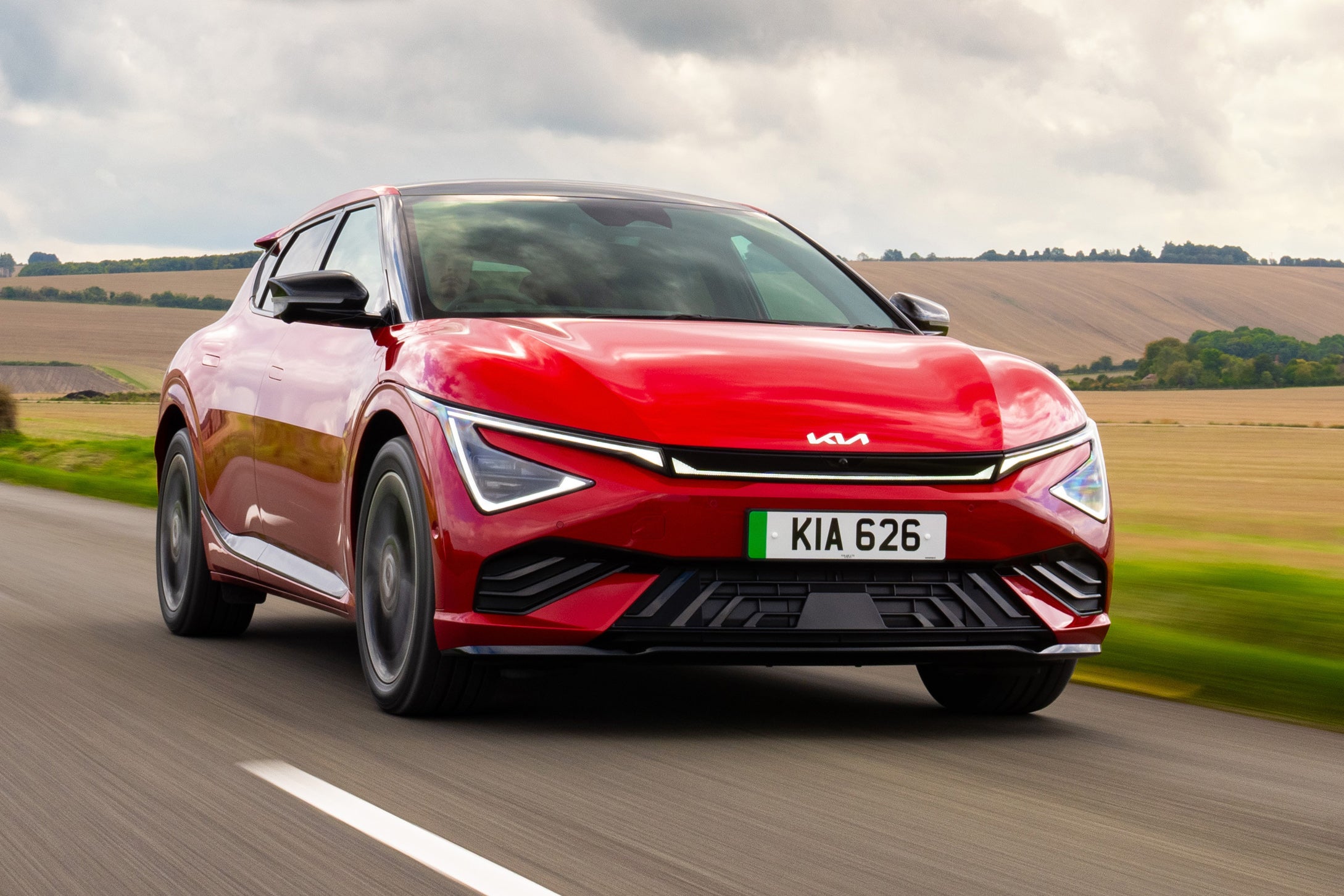
The Kia EV6 is the most obvious alternative because it shares the same E-GMP platform, battery tech and charging capability. The Kia is slightly firmer and more engaging to drive, while the Hyundai majors more clearly on comfort and cabin space.
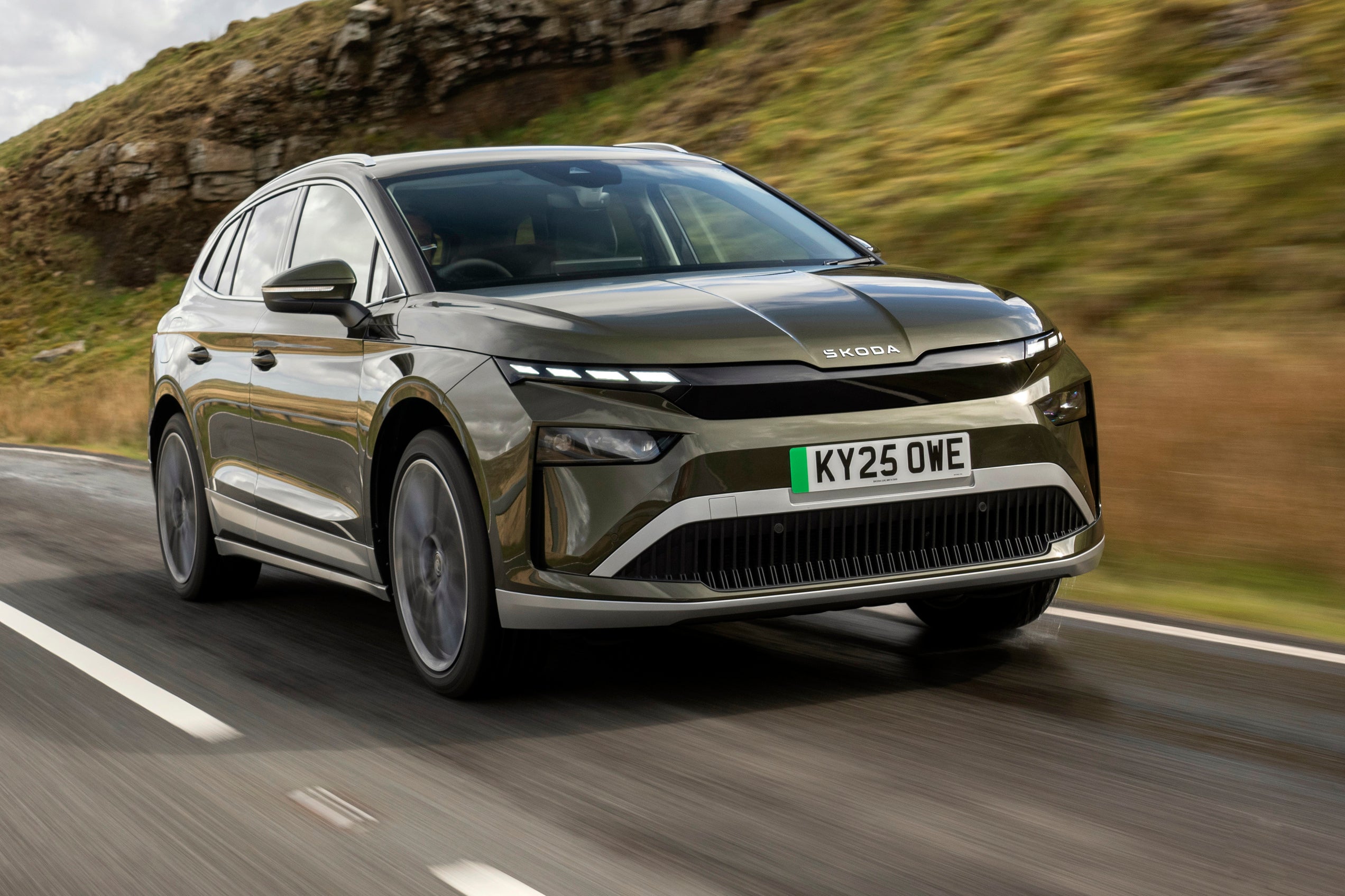
The Skoda Enyaq remains one of the strongest mainstream alternatives if practicality is your main concern, while the Volkswagen ID.4 covers similar ground with a more conservative design. If you want a premium badge, the Audi Q4 e-tron is the obvious rival, although it does not feel markedly better enough to make the Hyundai look out of its depth.
The Polestar 2, Renault Scenic E-Tech and Nissan Ariya also deserve a place on the shortlist, while buyers who like the Ioniq 5’s design-led approach may also want to consider the Tesla Model Y if outright practicality and charging infrastructure matter most.
What's the interior like in the Hyundai Ioniq 5?
The Ioniq 5 still has one of the best interiors in its class. It feels airy, modern and cleverly packaged, yet it avoids the trap of becoming so minimalist that it is irritating to use. The result is a cabin that feels special without feeling needlessly complicated.
Hyundai Ioniq 5 boot space and practicality
The Ioniq 5 makes excellent use of its electric platform. There is a completely flat floor, loads of rear legroom and more of an open, lounge-like feel inside than you get in most conventional family SUVs. The rear bench slides backwards and forwards, which lets you trade passenger room against luggage space depending on what you need that day.
Front-seat comfort is another strength. The seats are wide and supportive, the driving position is easy to get comfortable in and there is plenty of adjustability. Higher-spec versions add even more seat adjustment, plus the sliding centre console that helps make the front of the cabin feel especially flexible.
Rear-seat space is where the Ioniq 5 really impresses. There is loads of legroom, a flat floor and enough width to make it feel usefully family-friendly. It is one of those EVs that feels bigger inside than you expect from the outside.
The boot measures 520 litres, which is a healthy figure, although the shape is shallower than some rivals and the Tesla Model Y in particular remains the more versatile load-lugger. The Hyundai does also offer a small front storage area, but the real practicality story is the combination of strong rear-seat room, sliding rear bench and a roomy main boot.
Hyundai Ioniq 5 dimensions
The Hyundai Ioniq 5 measures 4,655mm long, 1,890mm wide & 1,605mm high. That makes it bigger than it first appears in photos, and you do notice its width and length in tighter urban spaces.
The pay-off is that those dimensions help create one of the roomiest cabins in this part of the EV market. It is not a tiny crossover dressed up to look futuristic. It is a properly substantial family car.
Tech and infotainment in the Hyundai Ioniq 5
All versions get twin 12.3-inch displays, one for infotainment and one for the driver’s instruments, and the whole system remains one of the easier EV interfaces to live with. The graphics are sharp, the menus are clear and Hyundai sensibly retains physical shortcut buttons and a proper volume control.
That matters because it means the Ioniq 5 feels advanced without becoming frustrating. The climate controls are touch-sensitive rather than physical, but they sit separately below the main screen, which is a better solution than burying them in sub-menus.
Apple CarPlay and Android Auto are standard, as are connected services and USB-C ports. Higher trims add extras such as the Bose audio system, head-up display and more advanced parking technology. It all contributes to the sense that the Ioniq 5 is a high-tech car that has still been designed by people who understand basic ergonomics.
Materials available on the Hyundai Ioniq 5
The Hyundai Ioniq 5’s cabin materials are good rather than flawless. It does not quite have the richness of a premium Audi or Volvo in every corner, and there are still a few lighter-weight plastics that remind you where Hyundai has saved money.
Even so, the overall impression is strong. The textures, colours and broad design all feel more interesting than those of many rivals, and the upholstery choices on Premium and above help lift the sense of occasion. N Line trims add sportier detailing, while Ultimate leans harder into the comfort-luxury angle.
So while the Ioniq 5 may not be a premium car in the strict badge sense, it feels special enough inside to justify much of its price.
What's the Hyundai Ioniq 5 like to drive?
The Hyundai Ioniq 5 is not trying to be sporty, and that is no bad thing. Its real appeal is the way it combines comfort, refinement and easy-going performance into something that feels relaxing and effortless most of the time.
Hyundai Ioniq 5 range and performance
The current line-up opens with the 63kWh Standard Range rear-wheel-drive model, which has 170PS, reaches 62mph in 8.5 seconds and manages up to 273 miles officially.
Move to the 84kWh Long Range rear-wheel-drive model and power rises to 228PS. That cuts the 0-62mph time to 7.5 seconds, while the most efficient version can cover up to 354 miles on the WLTP cycle. Ultimate trims manage slightly less at 329 miles, while N Line and N Line S versions sit at 320 miles.
The all-wheel-drive 84kWh models produce 325PS and cut the 0-62mph time to 5.3 seconds. Range varies by trim, with N Line and N Line S at up to 307 miles and Ultimate at up to 311 miles.
That makes the 84kWh rear-wheel-drive model the version to target for most buyers. It has the strongest long-distance credentials without adding the extra cost or reduced range of the all-wheel-drive versions.
Performance data
| Model | Engine/battery size | Power | 0-62mph | Range/MPG |
|---|---|---|---|---|
63kWh RWD | 63kWh | 170PS | 8.5 seconds | Up to 273 miles |
84kWh RWD | 84kWh | 228PS | 7.5 seconds | Up to 354 miles |
84kWh AWD | 84kWh | 325PS | 5.3 seconds | Up to 311 miles |
Hyundai Ioniq 5 driving and refinement
The Ioniq 5’s greatest dynamic strength is its comfort. It rides with an easy-going softness that is still unusual in a heavy electric car, and it smooths off rough UK roads better than many rivals. Stick with the smaller wheels and it is especially impressive.
The trade-off is that it never feels especially agile. The steering is light and accurate enough, but there is not much in the way of real feedback, and if you want a more engaging EV the Kia EV6 or Ford Mustang Mach-E will hold more appeal.
That said, the Hyundai remains a very easy car to drive. Visibility is decent, the low-mounted battery helps it feel stable and the regenerative braking system is well judged. Around town, it feels smaller than its dimensions suggest, while on the motorway it settles into a very calm, quiet stride.
Refinement is another strong point. Motor noise is barely noticeable, wind noise is well suppressed and overall isolation is excellent for the price. It is simply a very relaxing thing to cover miles in.
How safe is the Hyundai Ioniq 5?
The Hyundai Ioniq 5 has a five-star Euro NCAP safety rating from 2021. That is not the newest test in the world now, but it remains a strong result and the car continues to come with a generous amount of standard safety kit.
Across the range, Hyundai includes Forward Collision Avoidance Assist, Highway Drive Assist, Lane Follow Assist, Lane Keep Assist, smart cruise control, parking sensors and seven airbags. Higher trims and options add more advanced parking features and digital mirror technology.
So while the rating itself is not brand new, the underlying safety story remains one of the Ioniq 5’s clear strengths.
Running costs: What it's like to live with a Hyundai Ioniq 5
The Hyundai Ioniq 5 is not a cheap car to buy, but it does make a strong running-cost case by EV standards. It charges very quickly, should be inexpensive to run at home and is backed by Hyundai’s long warranty.
Hyundai Ioniq 5 charging times and costs
The Hyundai Ioniq 5's 800V architecture remains one of its headline features. On a sufficiently powerful ultra-rapid charger, Hyundai says the battery can go from 10 to 80 per cent in as little as 18 minutes. That is still excellent, and it remains one of the car’s biggest advantages over many rivals.
On a 7kW home wallbox, Hyundai quotes roughly eight hours for a full charge of the 63kWh model and close to 11 hours for the 84kWh versions. That makes overnight home charging easy enough, and on a good off-peak tariff the running costs can be very reasonable.
The standard heat pump, battery heating system and pre-conditioning all help support real-world efficiency and charging consistency, which is useful in a UK winter rather than just on a sunny brochure day.
Hyundai Ioniq 5 warranty and servicing
Hyundai backs the Ioniq 5 with a five-year unlimited-mileage warranty, while the high-voltage battery is covered for eight years or 100,000 miles. That remains one of the stronger warranty packages in this class.
As with most EVs, the drivetrain itself should be simpler to maintain than an equivalent petrol or diesel car, although the usual wear items still apply. In broad terms, the Ioniq 5 ought to be a reassuringly easy car to own.
Hyundai Ioniq 5 insurance groups
Insurance groups are fairly high, running from 33 to 41 across the mainstream range. That is not unusual for a family EV of this size and value, but it does mean the Ioniq 5 is unlikely to be a bargain to insure.
The smaller-battery rear-wheel-drive cars make the most sense if you are trying to contain insurance costs, while the higher-powered all-wheel-drive versions naturally sit at the top end of the scale.
How much does it cost to tax a Hyundai Ioniq 5?
After year one, the Hyundai Ioniq 5 falls under the standard annual VED rate for all cars, currently £200.
The more expensive versions also breach the £50,000 Expensive Car Supplement threshold for EVs. That means some Ultimate, N Line and N Line S variants attract the extra annual charge from years two to six, while cheaper versions do not. It is worth checking the list price carefully before ordering, because the threshold is based on the official list price before discounts.
What trims are available with the Hyundai Ioniq 5?
The current Hyundai Ioniq 5 range consists of Advance, Premium, N Line, Ultimate and N Line S.
Advance opens the line-up with 19-inch alloy wheels, dual 12.3-inch displays, climate control, heated front seats, electric driver lumbar support, a rear-view camera, front and rear parking sensors and a wide spread of safety technology. It is a strong start.
Premium is the sweet spot. It adds part-leather upholstery, electric seat adjustment, a sliding centre console, ambient lighting, intelligent LED headlights, an electric tailgate, a three-pin plug socket and wireless charging. These extras suit the Ioniq 5’s laid-back, tech-forward character especially well.
N Line builds on Premium with a sportier styling package and trim details, while Ultimate adds the luxury-leaning extras such as ventilated front seats, heated outer rear seats, leather upholstery, head-up display and the Bose audio system.
N Line S sits at the top and effectively combines the sportier N Line look with the richer Ultimate-style equipment count. It is visually striking, but it is also the hardest version in the range to justify on value grounds.
Ask the Drive experts: common questions
How much does the Hyundai Ioniq 5 cost?
What’s the maximum range of the Hyundai Ioniq 5?
Is the Hyundai Ioniq 5 practical?
What is the best Hyundai Ioniq 5 version?
Get our latest advice, news and offers
Keep me updated by email with the latest advice, news and offers from Drive.
.jpg)
.jpg)
.jpg)
.jpg)