Ford Explorer Review

Written By Keith WR Jones
- 2024
- SUV
- Electric
What we love
Good official range
Fine handling with plenty of grip
Lots of standard kit
Things to consider
Expensive against key rivals
Boot space trails the best in class
Fiddly touchscreen and haptic controls
The DRIVE take on the Ford Explorer, is it the right car for you?
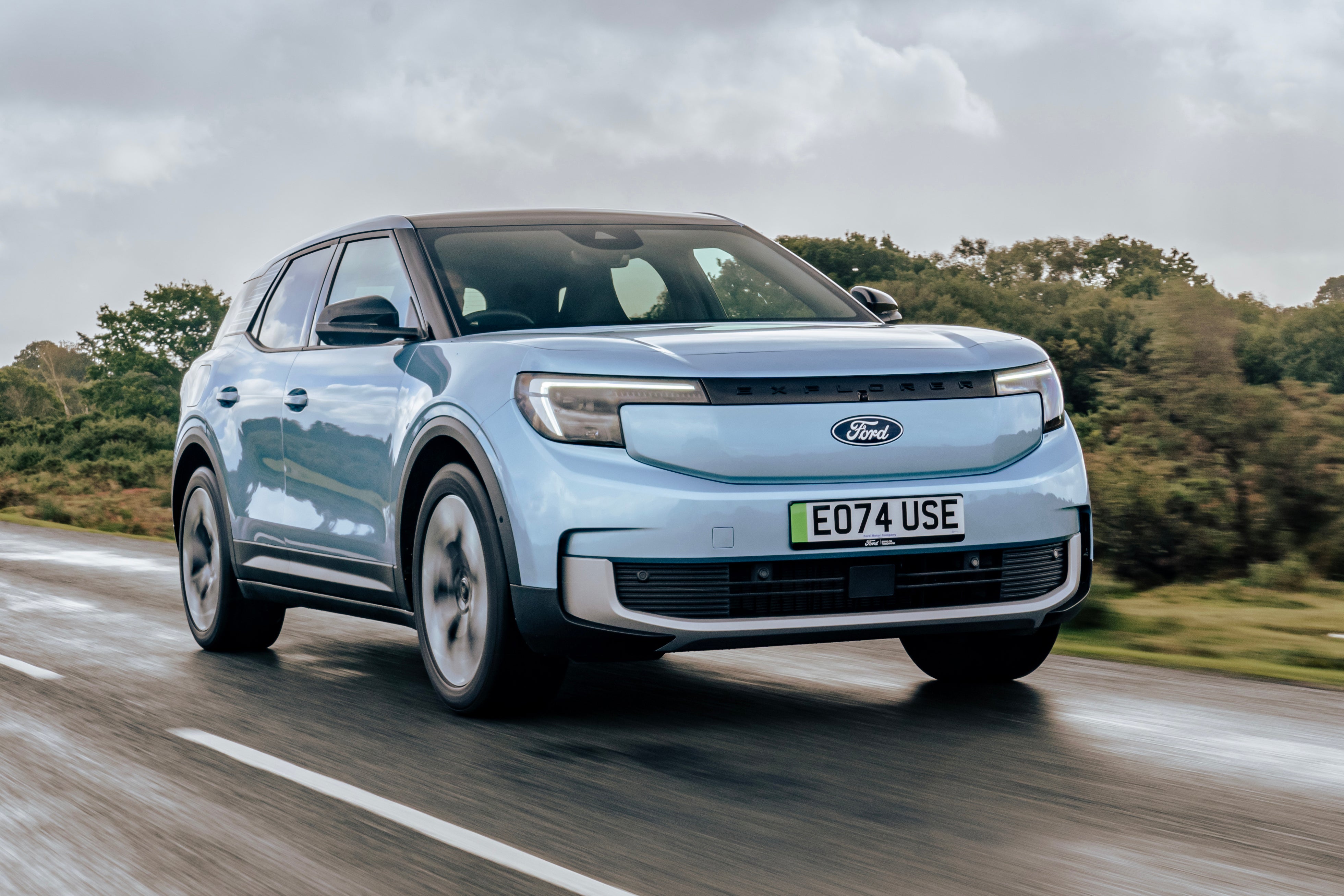
The Ford Explorer is easy to like. It looks sharp, it has plenty of standard equipment, and in the right version it offers the sort of range that makes an electric family SUV much easier to recommend. Ford has also managed to give it a little more handling sparkle than some of the Volkswagen Group cars it is related to, which helps it feel more distinctive than the shared underpinnings might suggest.
The problem is that the Explorer lands in a class full of very strong alternatives, and several of them make more sense. The Renault Scenic E-Tech remains the clearest example because it is roomier, more comfortable and usually better value, while a Skoda Enyaq or Tesla Model Y can also make the Ford look expensive for what it offers. So the Explorer is definitely worth shortlisting, especially if you like the styling and want a long-range EV that feels tidy to drive, but it is not the obvious class pick.
The Ford Explorer in more detail
Explorer is a familiar badge in North America, but in the UK this car is a very different proposition from the old petrol-powered Ford that briefly wore the name here years ago. This is a European electric SUV, built in Germany and engineered for European buyers, and it sits right in the thick of the family EV market.
Under the skin, the Explorer uses Volkswagen Group’s MEB platform, which means it shares core batteries, motors and electronics with cars such as the Volkswagen ID.4 and Skoda Enyaq. Ford has then gone its own way with the styling, the cabin design and the suspension set-up. That last point matters, because the Explorer does not simply feel like a rebadged VW. It still has the same broad strengths and weaknesses you would expect from an MEB-based SUV, but Ford has managed to inject a little more verve into the way it drives.
Browse used Ford Explorers for sale →
The current UK line-up starts with a 58kWh usable-battery rear-wheel-drive car with 190PS, then moves to the much more important 79kWh Extended Range rear-wheel-drive version with 286PS. At the top of the range there is a dual-motor Extended Range all-wheel-drive model with 340PS. Official range runs from 258 miles in the least efficient version to 374 miles in the longest-range model.
That healthy range is one of the Explorer’s main strengths. The best rear-wheel-drive versions go far enough on paper to remove a lot of the anxiety buyers still have about switching to electric, and the car is well equipped across the range. Inside, it looks smarter and more distinctive than some of its mechanical cousins, with a big portrait touchscreen and plenty of useful cabin storage. However, it is not as practical as some rivals, especially when it comes to boot space, and the price list still looks a little ambitious.
It is also worth being clear that the Explorer is not the more practical choice within Ford’s own electric line-up. The related Ford Capri gives you a longer body and a much bigger boot, so if carrying capacity matters more than the Explorer’s upright SUV styling, that is worth a look separately.
What's the best Ford Explorer trim and battery option?
The version that makes the most sense is the Explorer Select Extended Range RWD. It gets the larger 79kWh usable battery, the best blend of performance and range, and enough equipment to make the Explorer feel properly upmarket without pushing the price too far into premium-badge territory. Officially it can manage up to 374 miles, which is the headline figure most buyers will want to see, and with 286PS it is brisk enough not to feel like the sensible compromise.
Style trim is cheaper and now available with both battery sizes, so it is the entry point if budget matters most. But Select is where the Explorer starts to feel like a well-rounded family EV rather than simply a decently specified electric Ford. Premium trim adds some worthwhile luxuries, but it also moves the price into territory where a lot of buyers will start looking at larger, more practical or more premium alternatives instead.
What’s the price of the Ford Explorer?
The Ford Explorer range currently starts at £35,185 for the Style 58kWh rear-wheel-drive model. From there, the Style 79kWh Extended Range RWD costs £36,985, the Select Extended Range RWD is £41,115, the Collection Extended Range RWD is £45,935, the Premium 58kWh RWD is £39,185, the Premium 79kWh Extended Range RWD is £45,935 and the range-topping Premium Extended Range AWD is £49,885. There are also plenty of used Ford Explorers for sale for considerably less.
That pricing is where the Explorer starts to feel vulnerable. In isolation, the car does not look badly equipped for the money, and there is plenty of standard kit across the range. But stack it against the Renault Scenic E-Tech, Skoda Enyaq, Tesla Model Y or even some versions of the Kia EV6 and the Ford often feels expensive for a car that is not clearly best-in-class for space, comfort or charging speed. This is not a value disaster, but it is not the bargain some buyers might expect from the badge.
Alternatives to the Ford Explorer
The Renault Scenic E-Tech is the Explorer’s most obvious rival and, for many buyers, the better buy. It offers strong range, better rear-seat space, a bigger boot and a more forgiving ride, all while usually undercutting the Ford on price. If you are comparing just one rival, make it that.
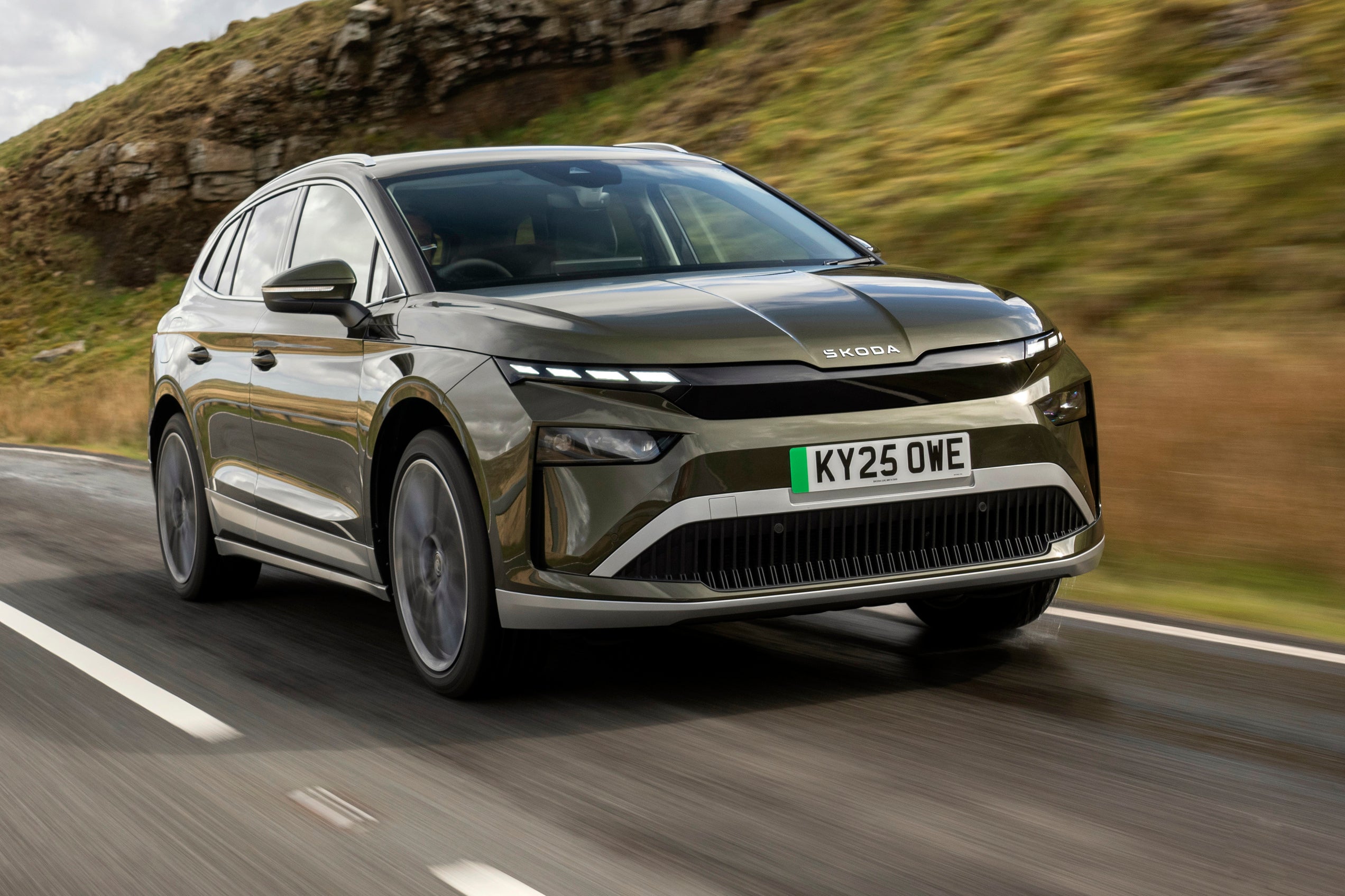
The Skoda Enyaq is another crucial alternative because it uses very similar core EV hardware but wraps it in a more practical body. It has a much bigger boot than the Explorer and generally feels more family-focused. The Volkswagen ID.4 sits in a similar area, although the Skoda is the one we would lead with if practicality is high on your priorities list.
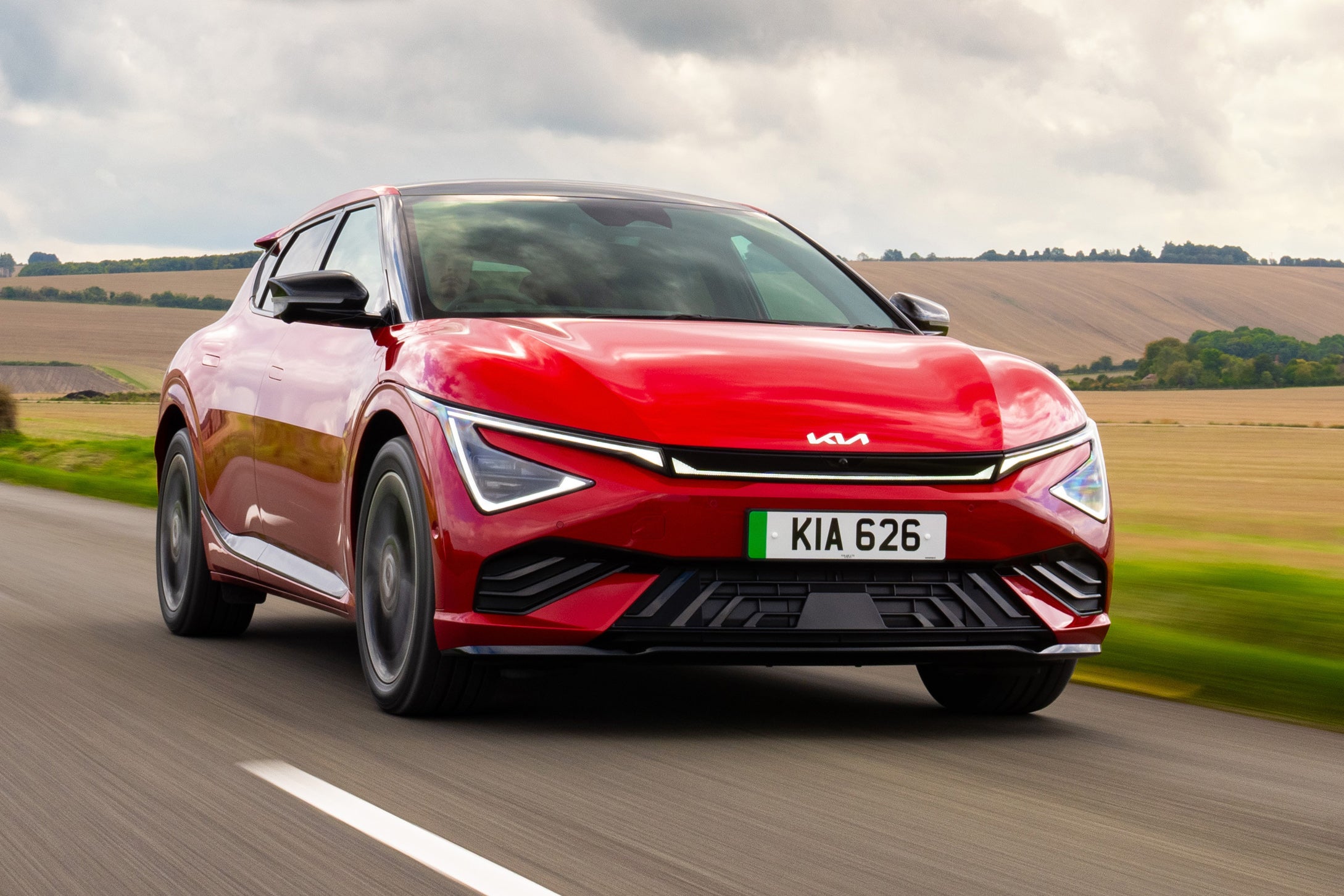
If you are spending into the mid-£40,000 bracket, the Kia EV6 and Hyundai Ioniq 5 are also hard to ignore because they remain among the most impressive all-round EVs in this market, especially for charging speed. Then there is the Tesla Model Y, which is bigger, more spacious and still unusually useful if you value the Supercharger network and outright carrying capacity.
What's the interior like in the Ford Explorer?
The Explorer makes a good first impression inside. It looks more distinctive than some of the Volkswagen Group cars it is related to, the driving position is well judged and there is lots of storage. It is not perfect, though, because too many everyday functions rely on touch-sensitive controls and screen menus that are more fiddly than they need to be.
Ford Explorer boot space and practicality
Let’s start with the driving position, because Ford has done a decent job here. The steering wheel, pedals and seat all line up properly, which helps the Explorer feel comfortable over longer journeys, and the front seats offer good support. You sit lower and further back than you might expect in an SUV, which actually gives the car a slightly more natural feel from behind the wheel.
Space up front is generous, too. There is plenty of room for tall drivers and passengers, and the cabin feels wide enough that you do not end up rubbing shoulders with the person next to you. Rear-seat space is also decent, with enough headroom and legroom for adults, plus a flat floor that helps make the middle seat a little more usable than in some alternatives.
The Explorer is not class-leading for passenger room, and it is less convincing still when it comes to luggage space. The boot measures 470 litres, which is perfectly usable and enough for a pushchair or a couple of large suitcases, but it lags behind the 545-litre Renault Scenic and the 585-litre Skoda Enyaq.
There are some clever touches. The height-adjustable boot floor is useful, the rear seats fold relatively flat, and there is underfloor room for charging cables. The cabin also excels for oddment storage, with deep bins, useful trays and Ford’s so-called Megaconsole under the centre armrest. One of the cleverest ideas is the hidden locker behind the sliding infotainment screen, which is a neat place to hide valuables.
So the Explorer is practical enough, but not especially spacious by class standards. That is the key point. It will cope with normal family life, yet several close rivals simply do the same job with more space.
Ford Explorer dimensions
The Ford Explorer measures 4,468mm long, 1,871mm wide and 1,630mm high. Width including mirrors is a little over 2.0 metres, while the turning circle is 10.8 metres.
In plain English, that makes it a useful size for UK roads and car parks. It is a little less bulky than some larger electric SUVs, and it is easy enough to place in town. The trade-off is that it does not exploit that footprint quite as cleverly as the best rivals, so you get tidy exterior dimensions without a clear advantage in practicality.
Tech and infotainment in the Ford Explorer
The main attraction here is the 14.6-inch portrait touchscreen, which is sharp, colourful and generally responsive. Ford’s adjustable-angle design is more than a gimmick because it helps cut reflections and can make the screen easier to reach. Wireless Apple CarPlay and Android Auto are standard, along with connected navigation, wireless phone charging and USB-C ports front and rear.
The hardware is not really the problem. The usability is. Some of the on-screen icons are too small, some menus feel needlessly awkward, and the overall experience is fussier than a family SUV’s infotainment system ought to be. The touch-sensitive steering-wheel controls are not much better, and the window-switch arrangement remains one of those ideas that makes less sense the more you use it.
So yes, there is plenty of tech, and some of it is genuinely impressive. But this is also a good reminder that more screen does not automatically mean better ergonomics.
Materials available on the Ford Explorer
The Explorer looks smart inside, and Ford deserves credit for making it feel more distinctive than some of its MEB-based cousins. The dashboard design has more flair, and the overall look is more polished than the slightly plain cabins of some related Volkswagen Group cars.
Not all of the materials quite back that up, though. Some of the plastics feel more ordinary than the price suggests they should, especially in lower trims. Nothing feels badly screwed together, and the cabin seems solid enough, but this is not a plush interior in the Audi Q4 e-tron sense. Premium versions do feel a bit more special thanks to their richer trim and panoramic roof, but the Explorer never quite feels expensive in the way its list price implies.
What's the Ford Explorer like to drive?
Ford has worked hard to make the Explorer feel like one of its own cars rather than simply a Volkswagen Group EV with a different body. It is still easy and secure rather than overtly sporty, but it does have a little more agility and a little more character than some obvious rivals.
Ford Explorer range and performance
The current range opens with the 58kWh usable-battery Standard Range rear-wheel-drive model, which gets a 190PS motor and manages 0-62mph in 8.0 seconds. Official range is up to 273 miles in Style trim and 258 miles in Premium trim.
Next comes the 79kWh Extended Range rear-wheel-drive model, and this is the heart of the line-up. It has 286PS, takes 6.4 seconds to reach 62mph and delivers up to 374 miles in Style and Select trims, 362 miles in Collection trim and 354 miles in Premium trim.
At the top sits the 77kWh usable-battery Extended Range all-wheel-drive Premium, which uses two motors for a combined 340PS. That cuts the 0-62mph time to 5.3 seconds, but official range drops to 321 miles.
For most people, the Extended Range RWD is the version to have. It is properly quick without feeling excessive, and that long official range is what really strengthens the Explorer’s case.
Performance data
| Model | Engine/battery size | Power | 0-62mph | Range/MPG |
|---|---|---|---|---|
Explorer Standard Range RWD | 58kWh | 190PS | 8.0 seconds | Up to 273 miles |
Explorer Extended Range RWD | 79kWh | 286PS | 6.4 seconds | Up to 374 miles |
Explorer Extended Range AWD | 77kWh | 340PS | 5.3 seconds | Up to 321 miles |
Ford Explorer driving and refinement
Ford’s suspension tuning gives the Explorer a slightly firmer, slightly keener feel than some of the softer alternatives in this class. That does not make it a sports SUV, but it does help it feel more composed and a little more eager on a twisty road. The steering is predictable, there is plenty of grip and the rear-wheel-drive versions in particular feel nicely balanced.
In town, the Explorer is easy to place. The steering is light at lower speeds, the turning circle is tight enough to make parking and manoeuvring straightforward, and the brake pedal is well judged for an EV. That matters because some electric cars have awkwardly calibrated regenerative braking, whereas the Ford’s pedal feel is progressive and natural.
The downside to Ford’s chassis tuning is the ride. Around town, especially on broken urban roads, the Explorer can feel a touch jittery. It is not harsh, but it is busier than the best rivals and never quite settles as calmly as a Renault Scenic or Skoda Enyaq. Things improve at higher speeds, and motorway refinement is good, with low wind and road noise by the standards of this class, but comfort is not the Ford’s defining strength.
How safe is the Ford Explorer?
The Ford Explorer has a full five-star Euro NCAP rating from 2024. Standard safety kit includes automatic emergency braking, lane-keeping aid, lane departure warning, traffic sign recognition, cross-traffic alert and exit warning, so the core safety story is strong.
That makes the Explorer competitive where it needs to be. Nothing about the safety specification feels mean, and family buyers should find plenty of reassurance here.
Running costs: What it's like to live with a Ford Explorer
The Explorer should be reasonably cost-effective to run if you charge mostly at home. Electricity can still be much cheaper than petrol or diesel on the right tariff, servicing should be simpler than for an equivalent combustion SUV, and the insurance groups are not excessive by EV standards. The bigger issue is that public charging can be expensive and the list price remains relatively high.
Ford Explorer charging times and costs
Charging performance is respectable rather than outstanding. The 58kWh Standard Range model can charge at up to 105kW and will go from 10 to 80 per cent in 26 minutes. The 79kWh Extended Range RWD can charge at up to 183kW and takes 29 minutes for the same 10 to 80 per cent top-up, while the AWD version peaks at 185kW and takes 27 minutes.
At home, a typical 7kW wallbox will need roughly eight and a half hours to fully recharge the smaller-battery car and around 12 hours 45 minutes for the Extended Range versions. Exact charging costs depend heavily on your tariff, but home charging remains the cheapest way to run an EV like this. Use off-peak electricity and the numbers can look very reasonable. Rely on public rapid chargers and the cost advantage shrinks quickly.
A heat pump is still an optional extra rather than standard, which is disappointing on a car at this price. It is worth considering because it can help preserve range and improve efficiency in colder weather.
Ford Explorer warranty and servicing
Ford covers the Explorer with a three-year, 60,000-mile manufacturer warranty, while the high-voltage battery is covered for eight years or 100,000 miles.
Ford also promotes a two-year EV service plan and roadside assistance package with the car, which helps strengthen the ownership proposition a bit.
Ford Explorer insurance groups
Insurance groups currently run from 20 to 32 across the range. That is fairly sensible for an electric SUV with this level of performance, and it means the rear-wheel-drive models in particular should not be cripplingly expensive to insure for the class.
As usual, the smaller-battery and lower-trim versions make the most financial sense here. The dual-motor car’s added pace is appealing, but it is the one most likely to push premiums up.
How much does it cost to tax a Ford Explorer?
After year one, the Ford Explorer falls under the standard annual VED rate, which is currently £200.
The important threshold for EVs is now £50,000, not £40,000. If an electric car’s list price, including factory-fitted options, exceeds £50,000 at first registration, it attracts the Expensive Car Supplement for five years from the second year onwards. That adds £440 a year, taking the annual total to £640 at current rates.
That matters here because Ford’s current list prices keep every regular Explorer version under the £50,000 EV threshold, with the most expensive Premium AWD priced at £49,885. So in standard form, none of them should trigger the supplement. However, buyers should still be careful with options because the threshold is based on list price before discounts.
What trims are available with the Ford Explorer?
The Ford Explorer line-up currently consists of Style, Select, Collection and Premium trims. The exact powertrain choice varies by trim, but that is the broad walk-up.
Style is the entry point, but it is not sparse. Standard kit includes 19-inch alloy wheels, LED headlights and rear lights, a 14.6-inch SYNC Move touchscreen, a 5.3-inch digital driver display, adaptive cruise control with stop and go, dual-zone climate control, a rear-view camera, front and rear parking sensors and keyless start. It covers the essentials well.
Select is the trim we would aim for. It adds a 12-way power-adjustable driver’s seat with memory and massage, heated front seats, a heated steering wheel, keyless entry, wireless phone charging, rear privacy glass and power-folding mirrors. This is the trim that gives the Explorer the right blend of comfort kit and value.
Collection is a style-led special edition with exclusive Cactus Grey paint and orange-accented trim, plus a few visual extras. It is distinctive, but it is harder to justify on value grounds.
Premium sits at the top of the regular range and adds 20-inch alloy wheels, Matrix LED headlights, a panoramic roof, a hands-free powered tailgate, ambient lighting and a 10-speaker Bang and Olufsen audio system. It is easy to like, but it pushes the Explorer into a price bracket where roomier or more premium alternatives start to make more sense.
Ask the Drive experts: common questions
How much does the Ford Explorer cost?
What’s the maximum range of the Ford Explorer?
Is the Ford Explorer practical?
What is the best Ford Explorer version?
Get our latest advice, news and offers
Keep me updated by email with the latest advice, news and offers from Drive.
.jpg)
_1.jpg)
.jpg)