Ford Ranger Review

Written By Richard Aucock
- 2023
- Pick-up
- Diesel, plug-in hybrid
What we love
Excellent road manners by pick-up standards
Strong towing and payload capabilities
Spacious and well-equipped five-seat cabin
Things to consider
Ride can feel unsettled with an empty load bed
The PHEV only covers around 27 miles electrically
High-specification models are expensive
The DRIVE take on the Ford Ranger, is it the right car for you?
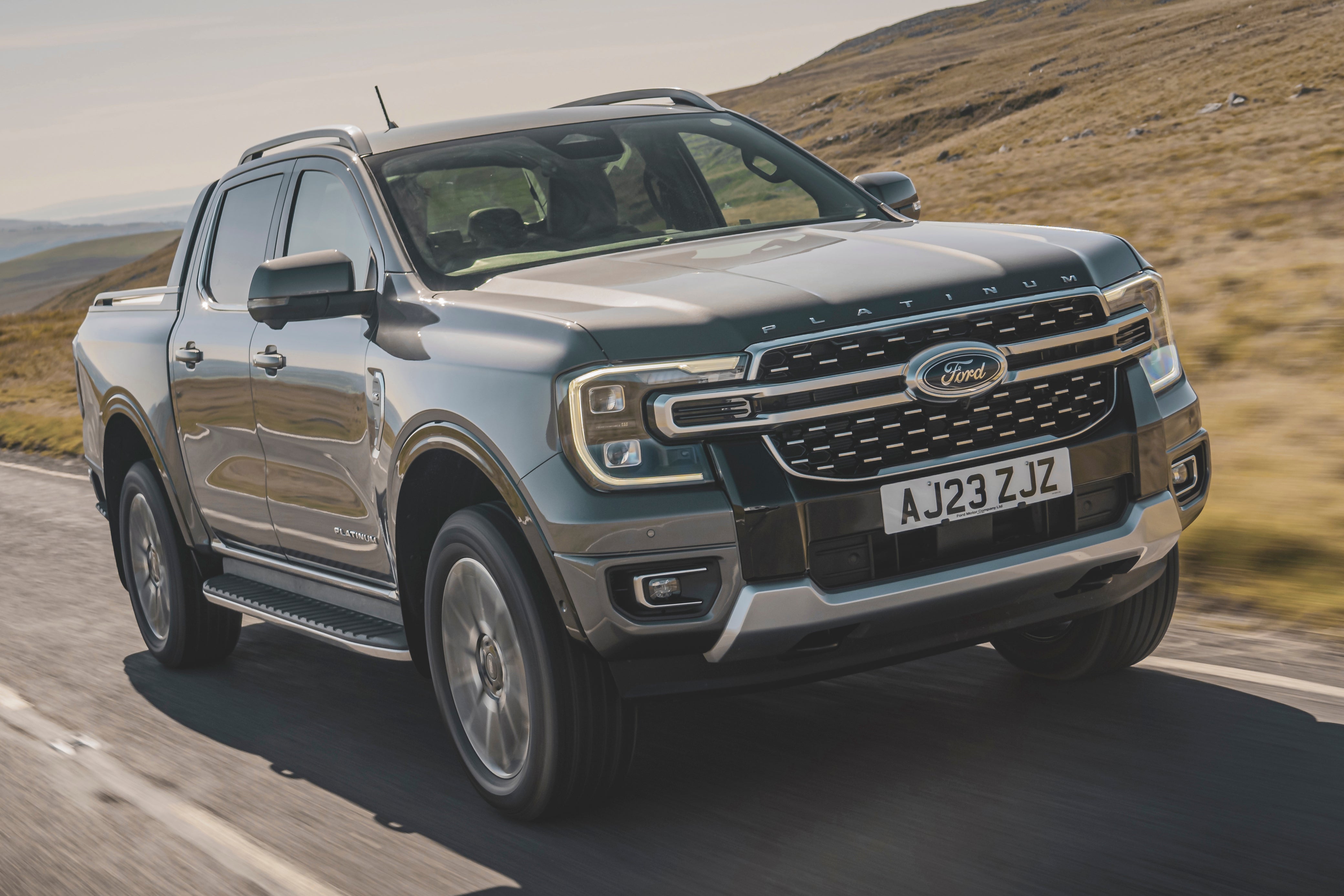
The Ford Ranger Double Cab is the most complete mainstream pick-up in the UK. It seats five, carries more than a tonne and tows up to 3,500kg, yet its cabin and road manners feel closer to those of a large SUV than a traditional work truck.
The V6 diesel is best for regular towing and long-distance work. The plug-in hybrid suits shorter journeys where it can be charged frequently and its onboard power supply can replace a separate generator.
The Ford Ranger in more detail
Ford has considerable experience of building pick-up trucks, thanks in particular to the enormously successful F-Series sold in North America. The Ranger channels much of that knowledge into a model developed for European roads and working requirements.
The current generation reached UK buyers in 2023, replacing a Ranger that had already become the dominant pick-up in the British market. Ford developed it in partnership with Volkswagen. The Ranger shares its underlying platform, South African factory and several mechanical components with the Volkswagen Amarok, although the two trucks have distinctive styling, cabins and model ranges.
The Ford Ranger offers the broader selection, but this review concentrates on the five-seat Double Cab. The work-focused single-cab models and high-performance Ranger Raptor serve sufficiently different buyers.
Earlier examples of the current Ranger were widely available with 170PS and 205PS four-cylinder diesel engines. These remain relevant used purchases, particularly the smooth and capable 205PS automatic. However, the current range focuses on a 240PS 3.0-litre V6 diesel and a 281PS plug-in hybrid.
The diesel combines strong low-speed pulling power with a 10-speed automatic gearbox and full-time four-wheel drive. It is particularly well suited to towing and sustained high-mileage work.
The PHEV pairs a 2.3-litre turbocharged petrol engine with an electric motor and rechargeable battery. It can officially cover up to 27 miles on electricity and retains the Ranger’s headline 3,500kg towing capacity. It also offers Pro Power Onboard, allowing tools and other electrical equipment to draw power from the truck. For some trades, this may prove more useful than the potential fuel saving.
Whichever powertrain you choose, the Ranger remains a large vehicle. Its 5.37-metre length and two-metre width require care in narrow streets and car parks, while the heavy-duty rear suspension can feel restless when the load bed is empty.
Even so, few rivals combine carrying ability, towing strength, off-road performance and passenger comfort as successfully. Perhaps the best pick-up truck you can buy.
What's the best Ford Ranger trim and engine option?
The V6 diesel Wildtrak is the best all-rounder. Its 240PS engine and 600Nm of torque make towing and carrying feel effortless, while Wildtrak adds the larger touchscreen, heated seats, dual-zone climate control and useful load-bed equipment.
Choose the PHEV Wildtrak when the truck can be charged regularly and most daily journeys fall within or close to its 27-mile electric range. XLT offers better value and a slightly higher payload, but its cabin is more workmanlike.
What’s the price of the Ford Ranger?
The V6 diesel XLT starts at £36,250 excluding VAT and on-road costs. The PHEV XLT costs £36,700.
Wildtrak is £46,750 with the diesel or £44,900 as a PHEV, while Platinum costs £48,800 and £46,950 respectively. The road-focused diesel MS-RT tops the regular Double Cab range at £51,650.
Options such as a tow bar, hardtop, load cover and drawer system can add thousands of pounds, so compare quotations on the same VAT and on-road basis.
Alternatives to the Ford Ranger
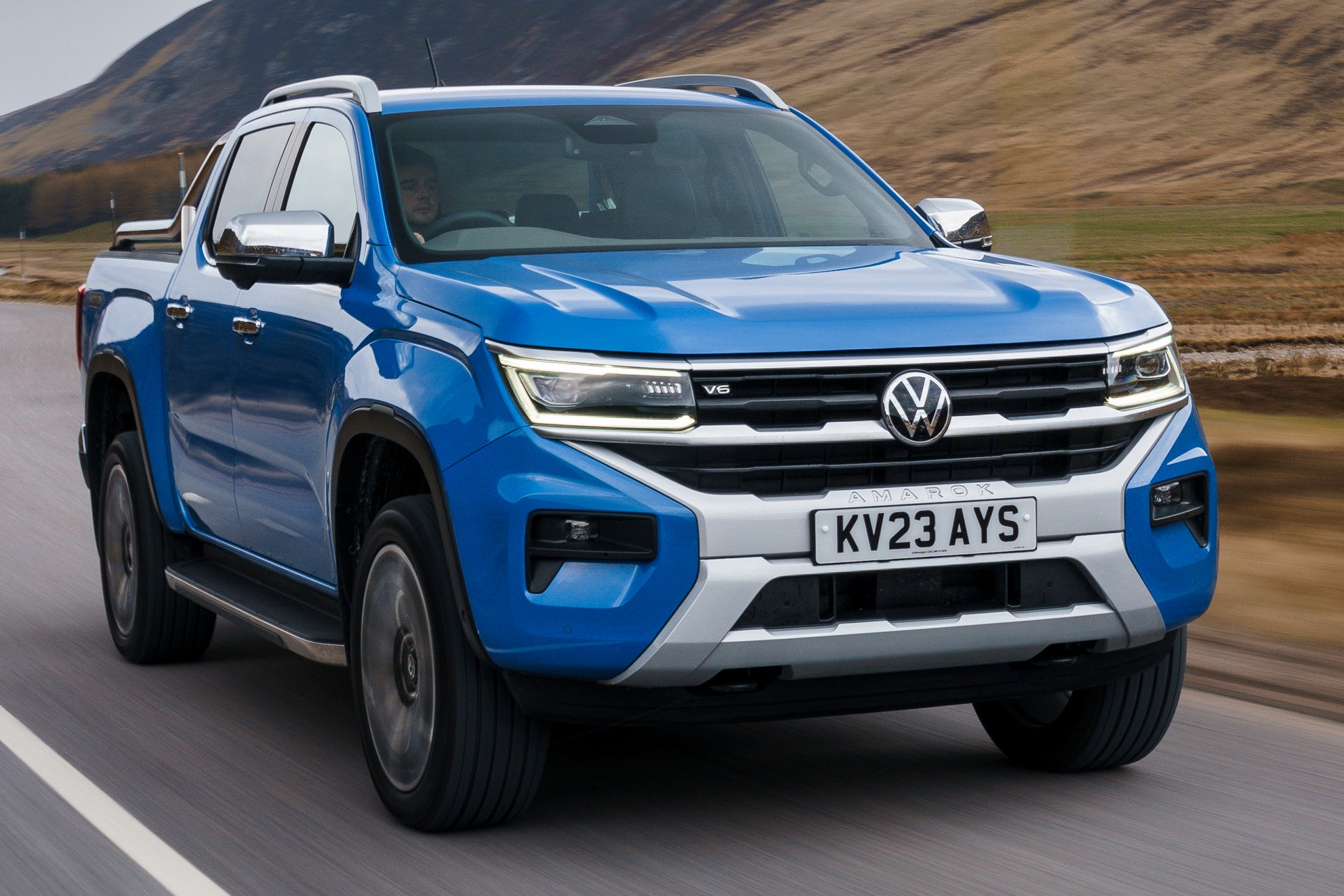
The Volkswagen Amarok is the closest alternative because it shares the Ranger’s structure, factory and V6 diesel engine. It feels slightly more upmarket in places, but the Ranger has simpler climate controls and offers the unique PHEV option.
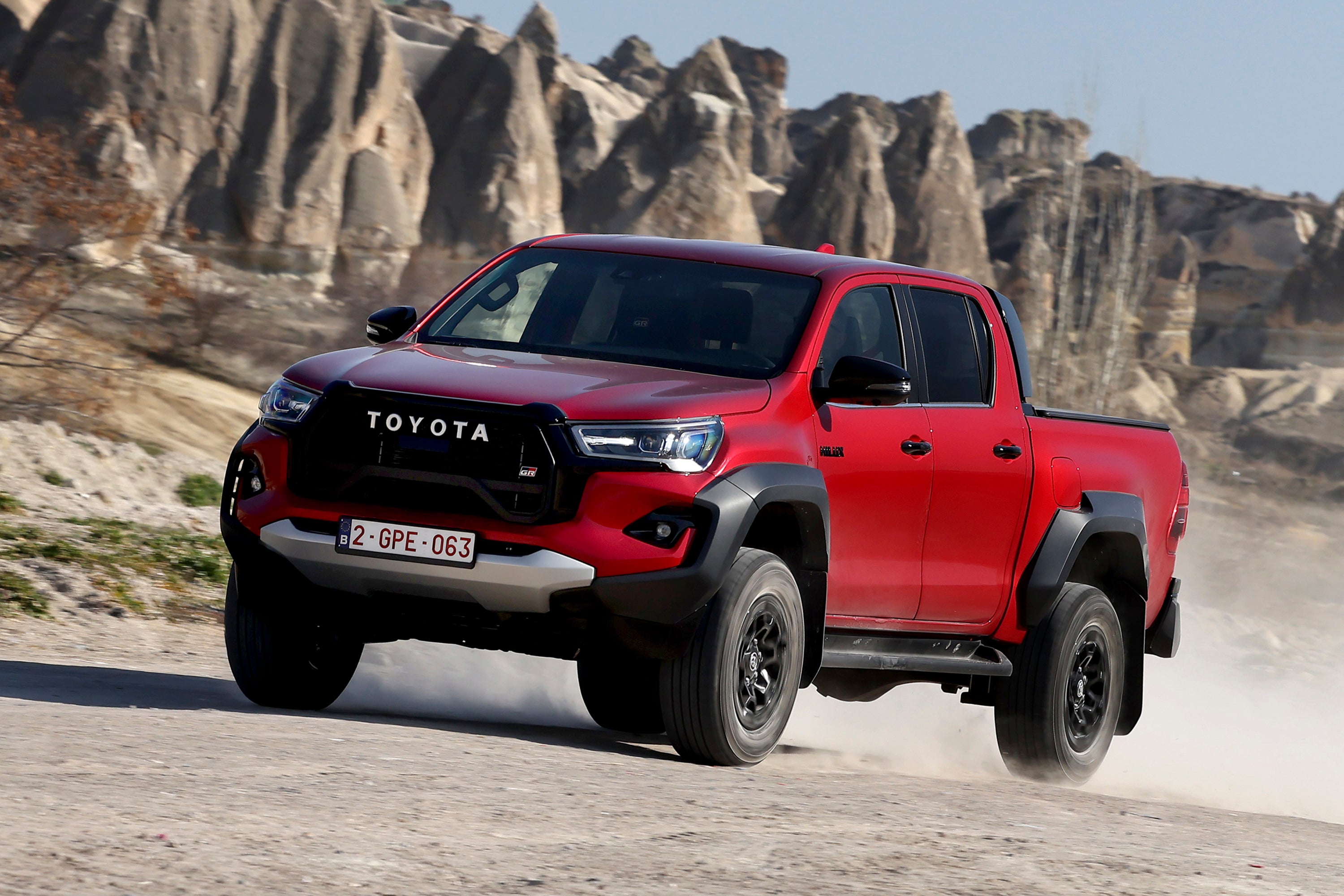
The Toyota Hilux has an outstanding reputation for toughness and potentially lengthy warranty cover, although its interior and road manners are less sophisticated.
The Isuzu D-Max is more utilitarian and usually cheaper, while the KGM Musso offers generous equipment and a spacious cabin for the money. Neither feels as polished as the Ford.
What's the interior like in the Ford Ranger?
The Ranger has one of the best cabins in the pick-up class. Its upright driving position, modern screens and robust materials make it feel closer to a family SUV than a conventional working truck.
Ford Ranger boot space and practicality
The elevated driving position provides an excellent view along the road, while relatively slim windscreen pillars make the Ranger easier to place than its size might suggest. There is plenty of adjustment in the driver’s seat and steering wheel. Higher trims add powered adjustment, heating, ventilation and more supportive upholstery.
Ford has fitted a large portrait infotainment display but retained physical controls for the heating and ventilation system. This makes routine adjustments easier than in the Volkswagen Amarok, which places more functions within its touchscreen.
Storage is plentiful, with large door pockets, cupholders, dashboard trays, a deep centre console and two glove compartments. The rear bench has enough headroom and legroom for adults, although its upright backrest and high floor prevent the Ranger feeling as comfortable as a large SUV. Four adults can travel easily, with the middle rear position better suited to occasional use. The seat backs are quite upright, though. Still, there's a clever feature where you can flip the rear seat bases upwards to find a concealed storage area below. That's handy for keeping your charging cables in on PHEV versions.
All versions of the regular Ford Ranger can carry a payload of more than 1000kg, meaning they qualify as light commercial vehicles. The single-cab model has the greatest carrying capacity: up to 1200kg can be transported in its load bed. Tie-down points are provided, while steps built into the rear bumper make it easier to reach into the bed. The open tailgate can support up to 750kg, creating a sturdy temporary work platform.
There is space to fit a standard Euro pallet in the rear of the Ranger, with multiple hooks and tie-down points included. Ford offers an extensive range of covers for the rear bed, along with plenty of accessories to customise your truck to your taste.
Ford Ranger dimensions
The Ranger Double Cab is 5,370mm long and 2,015mm wide with its mirrors folded. It measures around 2,208mm with them extended and stands up to 1,886mm high.
Its length, width and 12.9-metre turning circle are noticeable in tight car parks and older urban streets.
Tech and infotainment in the Ford Ranger
Portrait-orientated infotainment screens are a growing trend, and the Ford Ranger is right on the cutting-edge with a large upright touchscreen display.
All versions, even the entry-level Ranger XL, come with an infotainment touchscreen. For cheaper models, this measures 10.0 inches across, while trim levels from Wildtrak upwards gain a larger 12.0-inch display. All versions of the PHEV, meanwhile, get the bigger screen.
Both use Ford’s SYNC4 software, which is quick to respond and easy to read, thanks to large icons. Apple CarPlay and Android Auto smartphone connectivity is included as standard on all versions, with at least two USB connections on offer.
The range-topping Platinum model comes with wireless smartphone charging, although this can be added to others via an optional Technology pack.
One major advantage of the Ranger is that Ford has resisted the urge to use the touchscreen to control the air conditioning. Instead, there is a pleasing row of traditional dials underneath the infotainment display, which feel chunky and satisfying to use. The Volkswagen Amarok requires using the touchscreen to change the temperature, which is more of a faff.
A digital instrument panel is standard across the range, with numerous options to customise the display. A reversing camera is also fitted to all models, while the Ranger Platinum gets an upgrade to a 360-degree camera.
The Platinum benefits from an impressive B&O premium audio system, too.
Materials available on the Ford Ranger
The Ranger must withstand commercial use while satisfying buyers paying premium-SUV prices.
Lower areas of the cabin use tough plastics that should cope with muddy clothing and working equipment. More expensive trims add leather-effect finishes, contrast stitching and softer materials to the areas touched most frequently.
Wildtrak includes part-leather upholstery, while Platinum adds full leather and heated and ventilated front seats.
The Amarok feels marginally richer in places, but the Ranger remains a considerable step above cheaper pick-ups.
What's the Ford Ranger like to drive?
The Ford Ranger is unusually polished for a ladder-frame pick-up. Its accurate steering, strong body control and smooth engines make it easy to drive, although its ride remains firmer than that of a conventional SUV.
Ford Ranger range and performance
The V6 diesel produces 600Nm of torque and feels ideally suited to the Ranger. It responds smoothly from low engine speeds and builds pace without the strained character found in some four-cylinder pick-ups.
The 10-speed automatic can move through several ratios when rapid acceleration is requested, but the V6 has enough torque that it rarely needs to work particularly hard.
The PHEV combines a 184PS petrol engine with a 102PS electric motor, producing 281PS and 697Nm.
When both power sources work together, it accelerates with surprising strength. In electric mode, performance is gentler but adequate for urban traffic and local journeys.
There is a short pause when the driver requests full acceleration while the hybrid system and gearbox decide how to respond, but it is not troublesome in normal use.
Performance data
| Model | Engine/battery size | Power | 0-62mph | Range/MPG |
|---|---|---|---|---|
3.0 EcoBlue V6 | 3.0-litre | 240PS | 8.8 seconds | Up to 32.9mpg |
Plug-in Hybrid | 2.3-litre | 281PS | 9.2 seconds | Up to 91.1mpg |
Ford Ranger driving and refinement
Pick-up trucks have a reputation for being skittish to drive when unladen, or struggling to deal with bumps in the road. The Ford Ranger shrugs off these concerns, managing to feel controlled and settled, despite its utilitarian design underneath.
Such sophistication is all relative, though. The Ranger uses a ladder-frame chassis and has traditional leaf-spring rear suspension, so Ford’s tuning can only do so much to combat the laws of physics. It's way better than most trucks, but it is still a truck.
The Ranger’s steering feels responsive and accurate, making the vehicle easy to place on the road. It also manages to resist body-roll well, but keep in mind that versions with off-road-biased tyres will run out of grip sooner on tarmac.
Being able to carry more than 1000kg in the load bed means the Ranger’s suspension has to be firm enough to cope. The result is a ride that feels taut, allowing bumps and ruts in the road to be transmitted back into the cabin.
However, it's still more comfortable than most pick-up trucks you'll drive, and it never reaches the point of being uncomfortable. Unsurprisingly, only the Volkswagen Amarok really comes close to it.
And for those who'll need to take their truck into a muddy building site or across a national park, the Ranger's off-roading ability is sensational. Certain versions are equipped with extra kit that makes the even better off-road, such as bigger wheels and higher-riding suspension, and lots of off-roading accessories are available on the options list, too. The PHEV models are even better off-road than the diesel thanks to the strong and instantaneous torque they deliver.
How safe is the Ford Ranger?
Euro NCAP awarded the current Ranger five stars in 2022.
It scored 84 per cent for adult occupant protection, 90 per cent for children, 74 per cent for vulnerable road users and 84 per cent for safety assistance.
Standard equipment includes automatic emergency braking, lane assistance, traffic-sign recognition, driver monitoring and multiple airbags.
Double-cab versions have rear Isofix child-seat mountings, while higher trims add adaptive cruise control, blind-spot monitoring, rear cross-traffic alert and more extensive camera coverage.
The five-star result is reassuring, although the Ranger’s size and weight still demand additional care and stopping distance.
Running costs: What it's like to live with a Ford Ranger
The Ranger is costly to fuel compared with an ordinary family car. The PHEV can reduce petrol use for the right driver, but only when it is charged regularly.
Ford Ranger fuel economy
The V6 diesel officially returns between 26.7mpg and 32.9mpg, although most current derivatives have combined figures closer to 27mpg or 28mpg.
Towing, urban driving and a heavy payload can reduce that considerably.
The PHEV has an official weighted result of up to 91.1mpg and an electric range of approximately 27 miles.
That figure assumes frequent charging and regular use of electric power. A driver covering local journeys and charging overnight could use very little petrol, but a truck completing repeated motorway trips will not approach the official result.
The PHEV is intended to recharge at home, at work or at a depot rather than using public rapid chargers.
Ford Ranger warranty and servicing
The Ranger has a three-year or 60,000-mile warranty. That is adequate rather than generous, with the Toyota Hilux and Isuzu D-Max providing potentially longer protection.
Ford offers extended warranty and servicing products at additional cost. Trucks used for frequent towing, off-road driving or short journeys may require more maintenance than those covering steady motorway mileage.
Ford Ranger insurance groups
Higher-specification V6 and PHEV models are likely to cost substantially more to insure than a work-focused truck.
Obtain a quotation for the exact registration, particularly where several employees will drive the vehicle or valuable equipment is carried.
How much does it cost to tax a Ford Ranger?
A Ranger registered in the Light Goods Vehicle taxation class pays the flat commercial rate, currently £360 for 12 months in 2026/27.
Company-car taxation is separate. Most Double Cab pick-ups acquired from 6 April 2025 are now treated as cars for Benefit-in-Kind purposes. There's currently a 37 per cent Benefit-in-Kind rate for the V6 diesel and 20 per cent for the PHEV.
Businesses should seek tax advice because Benefit-in-Kind, VAT, capital allowances and Vehicle Excise Duty are governed by different rules.
What trims are available with the Ford Ranger?
XLT is the entry point and offers the highest payload. It includes four-wheel drive, digital instruments, smartphone connectivity, a reversing camera and rear parking sensors.
Limited adds comfort and visual upgrades and is currently associated mainly with the PHEV.
Wildtrak is the best-balanced specification. It adds LED lighting, heated front seats, a heated steering wheel, dual-zone climate control and the larger touchscreen.
Platinum moves closer to luxury-SUV territory with leather upholstery, ventilated front seats, Matrix LED headlights, a 360-degree camera and B&O audio.
MS-RT is the most expensive regular diesel Ranger. Its dramatic bodywork and road-focused wheels are primarily cosmetic, making the Wildtrak the more rational purchase.
Ask the Drive experts: common questions
How much does a Ford Ranger Double Cab cost?
What is the Ranger Double Cab’s maximum payload?
How much can a Ford Ranger tow?
What is the Ford Ranger PHEV’s electric range?
Get our latest advice, news and offers
Keep me updated by email with the latest advice, news and offers from Drive.