Toyota Hilux Review

Written By Ivan Aistrop
- 2016
- Pick-up
- Diesel
What we love
Should be faultlessly reliable
Very generous warranty package
Decent to drive by pick-up standards
Things to consider
Entry-level version sparsely equipped
Some rather functional interior plastics
Ride and refinement not up to passenger car standards
The DRIVE take on the Toyota Hilux, is it the right car for you?
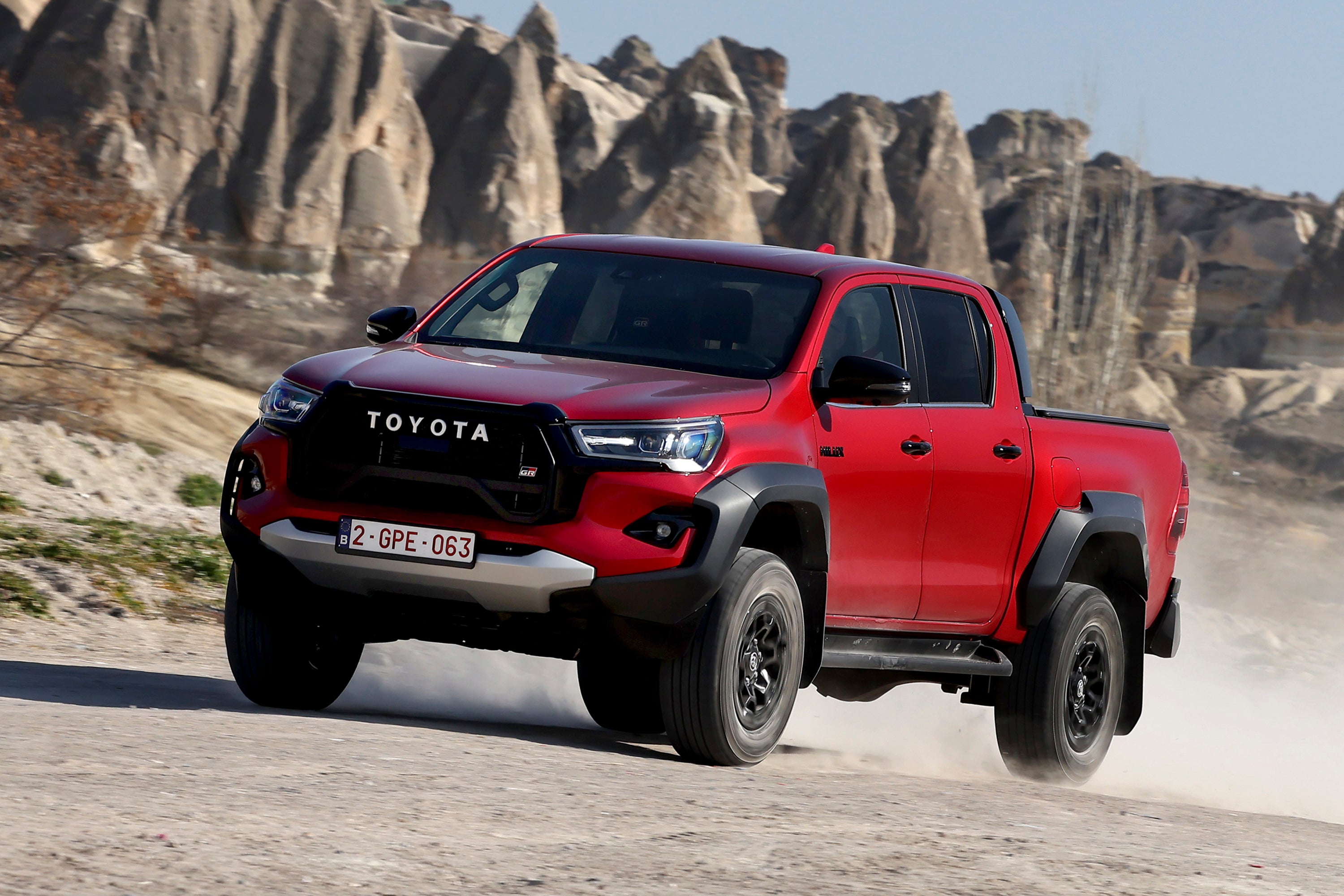
If you’re looking for a smart, reliable, dependable and borderline unbreakable workhorse, then the eighth-generation Toyota Hilux is certainly worth considering as a used buy, having now been replaced by the new ninth-generation version. Newer, more sophisticated rivals such as the Volkswagen Amarok and Ford Ranger may be more sophisticated inside and on the road, but the big Toyota is still a strong all-rounder.
The Toyota Hilux in more detail
The Toyota Hilux is a vehicle that has transcended its original purpose. It was designed as a no-nonsense workhorse pick-up truck for transporting hay bales around farms or bricks around building sites. And very good it was at those endeavours, too.
In its later iterations, however, the Hilux – and pick-up trucks in general – started being used more and more as conventional transport. The best double-cab examples can easily double as family cars, and if you have a family with an active lifestyle and plenty of outdoorsy hobbies, a pick-up can be the perfect foil for your exploits thanks to its vast cargo-carrying capacity and its go-anywhere off-roading ability. And for several years, the way that taxation worked in regards to pick-ups meant that it could be a very affordable means of running a vehicle that might otherwise be relatively expensive, until that loophole was closed in 2025.
Browse used Toyota Hilux for sale →
The Hilux has existed for several decades, so its various generations have been ever-present in the pick-up truck sector. And it's a sector that undergone plenty of change in recent years. Around the turn of the decade, there were lots of different models vying for your cash, but just a couple of years later, a mixture of emissions laws and economic pressures saw that selection condensed to just a handful as most of those models were withdrawn from sale. The Hilux was one of the few that stuck around (along with the Ford Ranger, Isuzu D-Max, Ssangyong/KGM Musso), and although it was an ageing vehicle, having first been introduced in 2016, regular updates helped keep it reasonably fresh.
And in more recent years, the pick-up truck market has started to fill out again, with some old names coming back to the fray (such as the Volkswagen Amarok and Mitsubishi L200), and some new names - many of them from China - joining the pick-up party as well.
As for the Hilux itself, well, time waits for no, erm, truck, so the eighth-generation version we're talking about here has now been replaced by an all-new version, which we'll bring you a separate review of once we've had the chance to drive it. Even so, the Mk8 Hilux remains a competitive option in the class, and used buyers would do very well to give it some consideration.
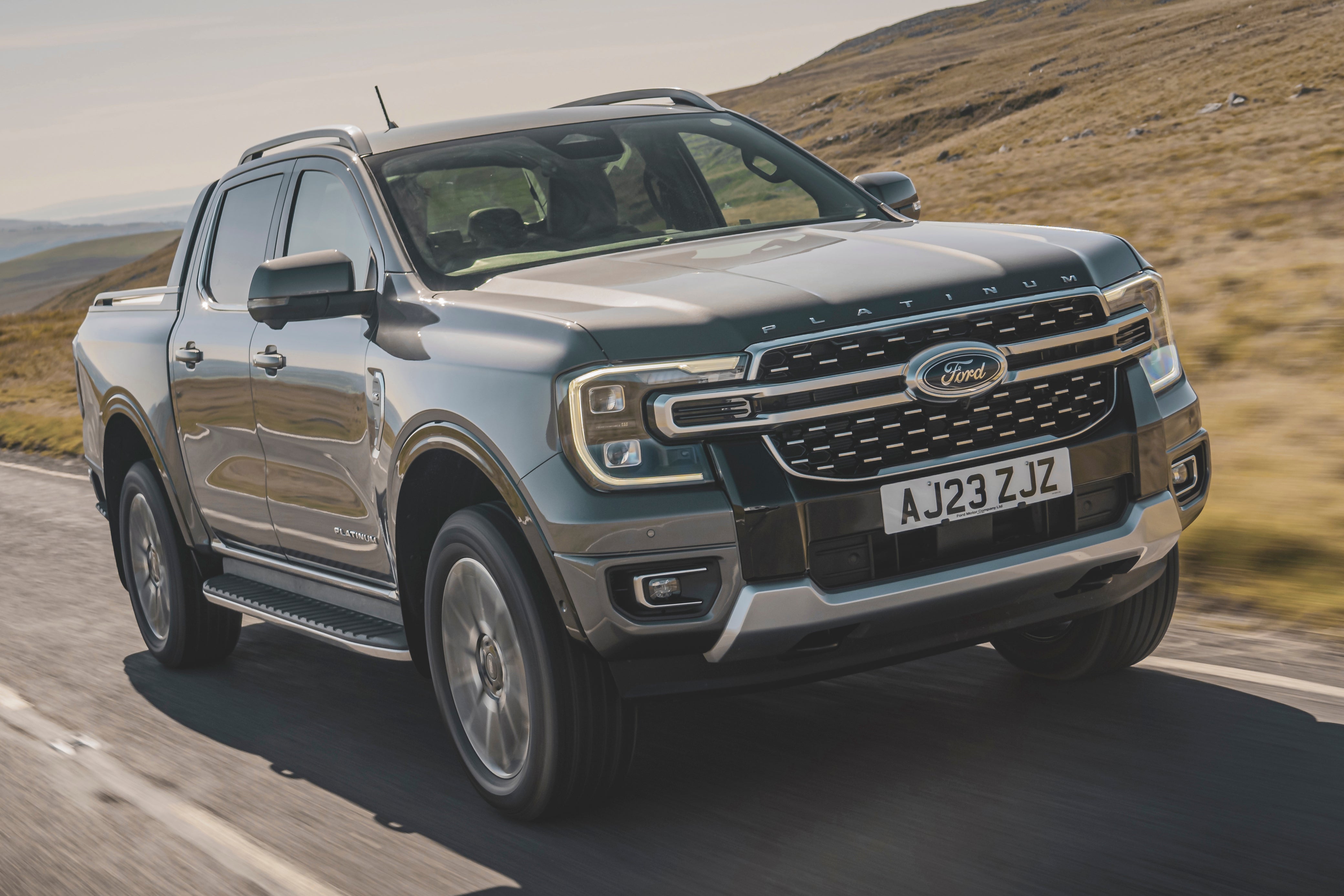
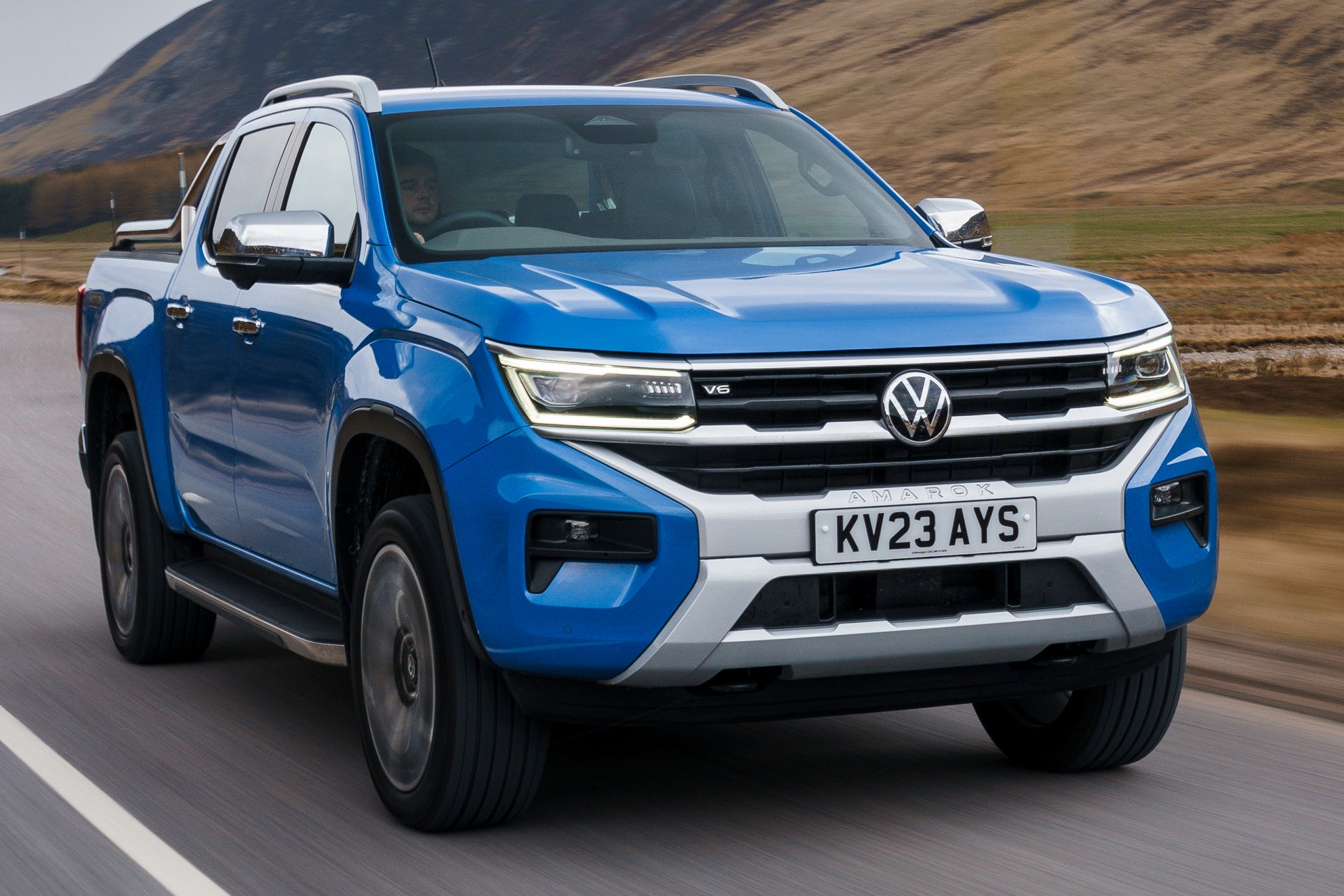
It’s important to recognise that, whatever time period you're talking about, the pick-up market has always been somewhat polarised in terms of the talents its various offerings bring. At one end of the scale, you have trucks like the Isuzu D-Max, which take the traditional no-nonsense workhorse route to appeal to the industrious end of the market. At the other end, you have offerings like the latest Volkswagen Amarok and Ford Ranger (a joint development effort between the two manufacturers) that are less hardcore and rather more civilised to appeal to the lifestyle set. The Hilux lies somewhere in the middle, but does that mean it’s a jack of all trades, or a master of none?
Well, there’s no doubting its durability. Sure, the more lifestyle-focused trucks on offer may feel posher inside, but the Hilux feels totally unbreakable in how it's constructed, and Toyota’s unbelievable reputation for reliability (backed up by an incredible warranty) means it probably is.
Otherwise, the Mk8 Hilux feels competitive with its rivals in pretty much every area. It feels pretty good on the road by pick-up truck standards, although those used to an SUV might find it a bit too rough-and-ready with its rather jumpy ride and clattery diesel engines. Provided you avoid the entry-level trim, it’s pretty well stocked with luxury equipment.
What's the best Toyota Hilux trim and engine option?
There are two engines to choose from, both four-cylinder turbodiesels. The entry-level 150PS 2.4-litre option will be fine if you don’t tend to hurry but you might find life a little more relaxing if you choose the brawnier 2.8-litre engine, with its 204PS. It’s perkier, quieter, and generally more pleasant to live with, not to mention actually being more economical than the smaller unit. For maximum relaxation, choose the six-speed automatic gearbox rather than the standard six-speed manual. Later on, a 48-volt mild-hybrid system became available on the automatic version of the 2.8 Invincible X.
Of the trim levels available, we’d steer clear of the basic entry-level Active trim for a variety of reasons (more on those later). The second-rung Icon trim gives some critically important upgrades that’ll make life vastly more palatable for you and your passengers, so that’s the one we’d recommend for the sweet spot of equipment and cost.
That said, we wouldn’t blame you for upgrading a step further to Invincible trim if only for the front- and rear parking sensors that will come in very handy on a vehicle as vast as this. Invincible X and GR Sport trims look comparatively expensive, though, even on the used market, and the AT35 Arctic Trucks version will basically just punch you repeatedly in the bank account.
What’s the price of the Toyota Hilux?
Now that this Mk8 version of the Hilux is only available to buy as a used vehicle, it's not affected by the 2025 changes to the Benefit in Kind system. And what precisely were these changes? Well, as of 1 April 2025, double-cab pick-up trucks like the Hilux were no longer considered commercial vehicles when it came to company car tax. And so, while the Hilux previously enjoyed the flat commercial-vehicle Benefit in Kind (BiK) tax rate of £3,960, it then became subject to 37% BiK, making a company-car-customer's annual tax bill several times more expensive than it was before. After this happened, it simply wasn't worth getting hold of a Hilux this way for most.
You can't claim back your VAT on a used Hilux like you can with a new one - provided the truck is bought through your business, and certain criteria are met - so that's not now an issue here, either.
Shortly before it went off sale in the UK, prices for the Hilux ranged between £36,000 and £52,000 (including VAT) depending on the version you went for. Well, they did if you ignored the ludicrously expensive AT35 version, which we will here, due to its bonkers £76,000 price tag and unbelievably niche appeal. There are also plenty of used Toyota Hilux models for sale for considerably less.
As this mk8 Hilux is now only available to buy used, you can expect a good slice off those prices. Look at our classifieds, and four-year-old double-cab examples with the 2.4 engine can be had for around £25,000, where similarly aged trucks with the more desirable 2.8 engine can be had for around the £30,000 mark.
Alternatives to the Toyota Hilux
Earlier on in its life, this eighth-generation Hilux plied its trade alongside lots of other pick-up truck rivals, all of which could be considered as rivals on the used market. These include the previous versions of the Volkswagen Amarok and Ford Ranger, along with other popular options such as the Mitsubishi L200, Nissan Navara and Isuzu D-Max. There were plenty of other offerings besides, though - some rather more obscure - such as the Mercedes X-Class, Fiat Fullback, Renault Alaskan, Ssangyong Musso, Great Wall Steed, and more.
These days, the market has undergone a lot of change and now moved on. We now have new iterations of the Volkswagen Amarok and Ford Ranger, and the Mitsubishi L200 has now made its return to the UK market after a five-year hiatus. The Isuzu D-Max and KGM Musso continue to press on, and have been joined in the market by new - even more obscure - names such as the Ineos Grenadier Quartermaster, Maxus T90, GWM Poer300, BYD Shark. And those last three being high-value offerings from China, they might well compete roughly on price with a late example of a used Mk8 Hilux.
What's the interior like in the Toyota Hilux?
The Hilux’s rather utilitarian interior may not be your cup of tea if you’re used to a family SUV, but if you’re accustomed to pick-up trucks, there’s nothing here that’ll make you moan and a few things you might even be quite impressed with.
Toyota Hilux boot space and practicality
This iteration of the Hilux was available in three body styles. The single cab has two doors and two seats, while the extra cab also has two doors, but also has a couple of extra chairs behind the front seats for occasional use. You will only want to use them occasionally, though, because they’re rather tight on space and the seating position is rather awkward.
The double cab is by far the most popular body style, as this gives you four doors and five proper seats, all of which come with a very decent amount of headroom and legroom. The wide cabin also gives plenty of shoulder room, so those in the back shouldn’t feel like they’re getting too over-familiar with their neighbours. The backrest of the rear seats feels pretty upright, but it’s still a fairly comfortable place to sit regardless.
Luggage space is a bit of an odd one. Obviously the load bay is huge in all versions – even more so in the single cab and extra cab body styles – but if your luggage needs to stay dry, you’ll either have to fit some sort of load cover over the top of the load bay, such as a retractable rolling cover, or stack your bags up inside the cabin, which will rob you of passenger space.
All Hiluxes have a payload of more than 1,000kg, and all versions can tow a braked trailer of up to 3,500kg, which is about as good as towing weights get.
There are a variety of reasons that you might want to avoid the entry-level Active trim, and one of them is the comfort of your driving position. This version misses out on a height-adjustable driver's seat, so while all versions get a steering column that adjusts for reach and rake, you may still struggle to find a comfortable driving position. Specify an Invincible X trim version or upwards, meanwhile, and you get powered adjustment for your driver’s seat.
Regardless of trim level, you get a lofty driving position – this is a vehicle you have to climb up into rather than plop down into – giving you a great view of the road ahead, aided further by slim windscreen pillars and a bonnet that it’s easy to see the extremities of. You might not be so confident with the rear end, because the small rear window makes it tricky to see where the massive load bay ends. It’s a good job, then, that all versions bar the Active get a reversing camera (yet another reason to swerve the entry-level trim).
Most switches and buttons are placed where you expect to find them, and although the Hilux’s dashboard design could be accused of looking a little dated, that does at least mean you get a set of buttons and rotary dials for controlling the air-con, meaning you don’t have to delve into on-screen menus.
Cabin storage is another impressive area for the Hilux. The centre console has a deep, lidded cubby, two cupholders and a number of other small storage nooks, while there are also two big gloveboxes, and ingenious little drawers that slide out of either side of the dashboard and double as two more cupholders.
The GR Sport and later GR Sport II are the fanciest inside, coming with GR-branded sports seats (good) and faux carbon fibre trim (not so good).
Toyota Hilux dimensions
The most popular version of the Hilux, the double cab, measures 5,325mm long, 1,855mm wide and 1,815mm tall. There are small (and we mean a few millimetres) variations in height and width with the single cab- and extended cab versions, but it's nothing you'll notice.
Tech and infotainment in the Toyota Hilux
The entry-level Active trim comes with a very basic stereo system that has AM/FM radio, a CD player (remember those?), a Bluetooth phone connection and four speakers (or only two in the single cab). You do get a USB port for charging devices, though. Then from Icon trim upwards, you get Toyota’s Touch 2 touchscreen multimedia system, which adds two more speakers, DAB radio, and smartphone connectivity via Apple CarPlay and Android Auto. If you want native navigation rather than letting your phone take care of navigation duties (although we can’t see why you would), you’ll need to specify Invincible X trim at least, and if you want a JBL premium audio system with nine speakers, it’s GR Sport (later GR Sport II) trim or nothing.
The touchscreen system isn’t the best one you’ll encounter, unfortunately, with small and fiddly on-screen icons and a screen that could be more responsive.
Materials available on the Toyota Hilux
You’d expect a workmanlike vehicle to have an interior that concentrates on durability and robustness rather than plushness and sophistication, and that’s just what the Hilux does. Those used to a family SUV might baulk at the hard-edged, grainy plastics used in much of the big Toyota’s interior, but folk coming from rival pick-ups will be completely unflustered, maybe even a little impressed. Everything has a properly sturdy, built-to-last feel, and versions with the touchscreen, which is all but the entry-level Active trim, even manage to feel a little bit high-tech.
What's the Toyota Hilux like to drive?
Toyota Hilux range and performance
Buyers of the Mk8 Hilux have the choice of two four-cylinder diesel engines. The first is a 2.4-litre unit with 150PS, while the other is a 2.8-litre engine pushing out 204PS. Both are available with either a six-speed manual gearbox or a six-speed automatic.
Going purely by the spec sheet, you’d say that no version of the Hilux looks especially sprightly. Go for the 2.4 engine and your 0-62mph sprint time will be just over the 13-second mark with the manual gearbox, and just under that threshold with the automatic. The 2.8-litre version is rather brisker, with equivalent 0-62mph sprint times of 10.2 seconds for the manual and 10.7 seconds for the automatic.
In the real world, though, we’re sure performance will be entirely adequate for most. The Hilux we tried was the 2.8 automatic and it felt effortlessly brisk enough to keep life easy. To be honest, when driving a vehicle like the Hilux, you wouldn’t want to go any faster than this engine and gearbox combination takes you anyway.
The 48-volt mild-hybrid version of the 2.8-litre diesel joined from the 2025 model year. It's included on the 2.8-litre engine when combined with an automatic gearbox. We never got to try it, but the official figures would suggest that it makes barely any difference, either in performance or economy.
Performance data
| Model | Engine/battery size | Power | 0-62mph | Range/MPG |
|---|---|---|---|---|
2.4 150 diesel manual | 2.4 diesel | 150PS | 13.2 seconds | Up to 30mpg |
2.4 150 diesel automatic | 2.4 diesel | 204PS | 12.8 seconds | Up to 31mpg |
2.8 204 diesel manual | 2.8 diesel | 204PS | 10.2 seconds | Up to 33mpg |
2.8 204 diesel automatic | 2.8 diesel | 204PS | 10.7 seconds | Up to 30mpg |
Toyota Hilux driving and refinement
The suspension of a pick-up truck has rather more to cope with than that of a regular car. Like in any vehicle, the suspension has to both absorb the effects of bumps in the road to keep you comfortable, and it has to control the movement of the bodywork as you move along the road. In a pick-up, however, the suspension also has to be able to deal with carrying huge amounts of weight in the load bed, and that inevitably has an impact on how it performs on the first two tasks.
The rear suspension of the Hilux has to be quite hard, and that makes the ride rather jumpy and unsettled at all speeds. Things improve when you get a bit of weight into the load bay because the ride becomes slightly less jittery, but whatever happens, you’ll still be less comfortable than you will be in a regular family SUV. You’ll also be a bit less comfy than you will be in the latest Volkswagen Amarok or Ford Ranger, although those rivals aside, the Hilux is very competitive in the pick-up truck class when it comes to ride comfort.
It’s pretty competitive when it comes to handling, too, although this still isn’t a vehicle you’ll want to drive quickly. The tall body leans over pretty easily, while the steering is rather slow and vague, and the tyres will soon start to protest if your cornering speeds become too optimistic. Again, a Volkswagen Amarok or Ford Ranger has the edge in this area, but the Hilux does an entirely decent job.
It’s off the beaten track where the Hilux becomes rather more impressive, though, thanks to the selectable four-wheel drive with high- and low-range gearing, plus various other bits of off-roading trickery including a switchable rear differential lock and various additional electronic systems such as hill-descent control. There are very few places you’ll need to go that a Hilux can’t take you to.
And then there’s the AT35, a Hilux prepared by off-roading firm Arctic Trucks, with heavy duty suspension that’s been jacked up even further, with performance dampers and all sorts of other specialist dynamic hardware. It’s very hardcore but very expensive.
The GR Sport II ups the ante in comparison to other Hilux models without going quite as far as the AT35, with a 155mm wider rear axle and a 135mm wider front axle, larger brakes and tweaked suspension. Toyota calls it the ‘best driving Hilux ever”, and while that's true - at least up until the arrival of this version's Mk9 successor - the difference between it and other versions isn’t cavernous. It certainly rolls a bit less and has better steering, while remaining fantastically capable off-road. On the flip side, the ride is noticeably choppier.
2025 saw the arrival of a mild-hybrid version of the Hilux, which adds a starter motor generator and a small battery. With the very limited electric running afforded by such a setup, the hybrid drives much like any other Hilux, albeit with the operation of the stop/start function being lengthened a bit. Toyota has also placed the electrical bits of the hybrid system nice and high, so the wading depth remains 700mm. Also, 48-volt models come with Multi-Terrain Select (MTS) with six modes to choose from: Sand, Mud, Rock, Dirt, Deep Snow and Auto.
Refinement isn’t an area you expect any pick-up truck to excel in, so it’s entirely forgivable that the Hilux does no better than the norm. Large, agricultural machines like these are always going to feel a bit rough-and-ready compared with your average family SUV, and so it proves.
The diesel engine rattles and clatters as the revs rise and fall, and while the engine noise stays reasonably distant just below the legal motorway limit, it becomes rather more pronounced when you’re right on that limit. The automatic gearbox we tried was a little slow to shift sometimes and often liked to hang onto lower revs to draw more performance from the engine, and that makes life a fraction noisier still.
At most speeds, you can hear the suspension clonking away as it goes about its work, while the chunky tyres kick up a fair bit of road noise at speed and the bluff design of the front end results in some wind noise, too. It’s not the most civilised vehicle you’ll ever drive, then, but that’s entirely forgivable considering the sort of vehicle it is, and it’s no worse than most of its direct rivals.
How safe is the Toyota Hilux?
We like it when a vehicle gives you the same comprehensive suite of safety kit regardless of which of the various trim levels you pick, and that’s broadly what the Hilux does.
All trims give you the Toyota Safety Sense package of electronic driver aids, including automatic emergency braking, adaptive cruise control, lane-departure warning and road-sign assist, and you also get the usual array of active traction management systems, on top of the standard four-wheel drive.
If the worst does happen, you get seven airbags to help keep you from harm, plus an eCall emergency alert system. The only slight difference in safety spec between versions is that entry-level Active trim misses out on Downhill Assist Control, and only double-cab body styles have Isofix child seat mounting points.
What trims are available with the Toyota Hilux?
Entry-level Active trim is the workhorse of the range, but it’s not an entirely no-frills experience. Sure, you have to make do with 17-inch steel wheels and durable fabric upholstery, but you do get remote locking, electrically adjusting door mirrors, manual air-conditioning, powered windows and automatic lights.
Next up are the Icon versions, and these look a good bit smarter with 17-inch alloy wheels and a range of other styling enhancements. You also get a reversing camera, automatic limited slip differential, a height-adjustable driver’s seat, upgraded fabric upholstery, leather steering wheel and gear selector, power-folding door mirrors and LED fog lights, plus those important infotainment grades we mentioned earlier.
Specifying Invincible trim gives you 18-inch alloys, smart entry and start, an auto-dimming rear-view mirror, front and rear parking sensors, windscreen wiper de-icers, automatic air-conditioning, heated front seats and LED headlights and tail lights. Invincible X trim, meanwhile, gets you a 360-degree camera, ambient lighting, heated rear seats, powered driver’s seat adjustment, dual-tone leather upholstery and a few more exterior styling bits.
The GR Sport II adds sportier front and rear bumpers, a deck cover that’s supposed to help with aerodynamics (which we found a bit annoying to see flapping around at speed in the rear-view mirror), bespoke 17-inch wheels, larger brakes, revamped suspension and a sportier interior with new pedals, GR-branded sports seats and - sadly - some naff-looking faux carbon fibre trim.
Ask the Drive experts: common questions
How much does a Toyota Hilux cost?
What insurance group is a Toyota Hilux?
How much is tax on a Toyota Hilux?
Get our latest advice, news and offers
Keep me updated by email with the latest advice, news and offers from Drive.