Isuzu D-Max Review

Written By Ivan Aistrop
- 2021
- Pick-up
- Diesel, Electric
What we love
Rugged truck with genuine off-road ability
Loaded with safety kit
Top-end models are surprisingly plush
Things to consider
Diesel engine feels underpowered
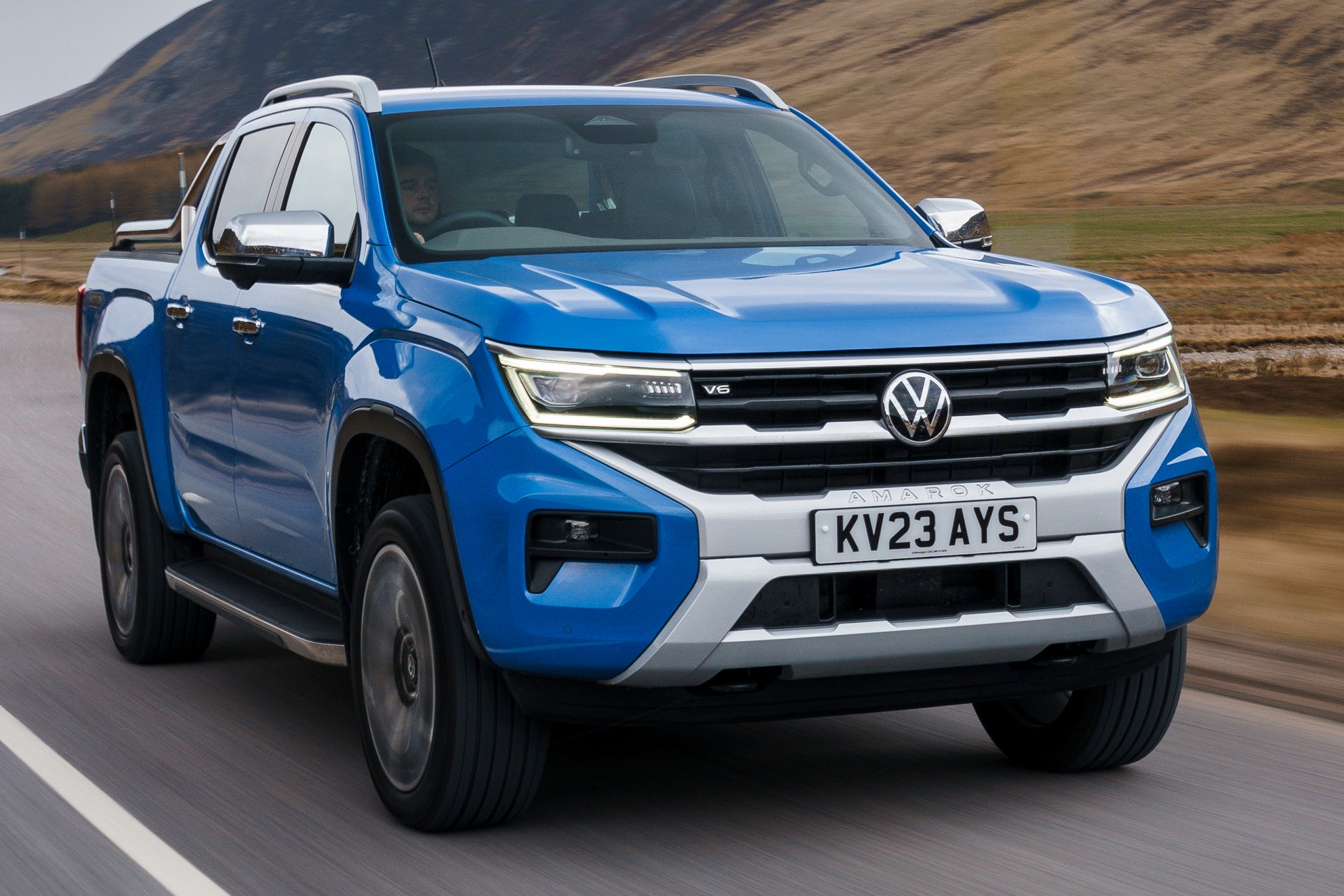
Not as stylish as a Volkswagen Amarok
Road manners aren't as polished as in some rivals
The DRIVE take on the Isuzu D Max, is it the right car for you?
The Isuzu D-Max is a rugged pick-up truck from a brand that knows how to make a successful work vehicle. It might not be as refined as some newer pickups, but its affordability and reliability make it a popular choice for those who need a tough working truck.
The Isuzu D Max in more detail
The Isuzu D-Max has been an ever-present feature in a pickup truck market that has seen many others come and go - and then come back again - over the last few years. If you're not familiar with what's been going on, allow us to provide you with a brief potted history.
Cast your mind back to around the turn of the decade, and the UK's pickup truck market was actually pretty crowded, with all sorts of contenders competing for customers' cash. Alongside the Isuzu D-Max, well known rivals included the Volkswagen Amarok, Ford Ranger, Toyota Hilux, Mitsubishi L200 and Nissan Navara, but there were plenty of other offerings besides, such as the Mercedes X-Class, Fiat Fullback, Renault Alaskan, Ssangyong Musso, Great Wall Steed, and more.
Just a couple of short years later, though, European emissions regulations meant that most of those vehicles were withdrawn from sale, leaving only a handful - namely the D-Max, Ranger, Musso and Hilux - to hoover up the demand.
In more recent times, however, the pickup market has started to broaden out once more. Volkswagen has made a return to the market with a new second-generation Amarok - which thanks to a deal between the two companies, was developed alongside the latest version of the Ford Ranger - and after Mitsubishi pulled out of the UK market altogether in 2021, it has now returned, with the ever-popular L200 pickup among its offerings. What's more, there are some new kids on the block, trying to tempt pickup buyers away from these familiar names. China offers us the Maxus T90, the GWM Poer300 and the BYD Shark, while the Ineos Grenadier Quartermaster hails from rather closer to home: a pub in London's Belgravia, in fact.
So, now that the competition has ramped back up again, the Isuzu D-Max won't have things all its own way. That said, the familiarity of its name an what it offers should stand it in good stead. And what is that, precisely? Well, D-Max owners have long lauded the vehicle for its largely unfaultering reliability, meaning that their businesses are rarely hamstrung by downtime for repairs. A generous five-year, 125,000-mile warranty helps sweeten the deal, too.
This toughness is accompanied by superb off-roading ability that allows owners to take their business pretty much anywhere. The vehicle's figure for payload and towing capacity are also very competitive for the class. And the fact that the D-Max's pricing is lower than many rivals also has a beneficial effect on the bottom line. Sure, some rival trucks are more sophisticated to drive or plusher inside, but to many who simply need a workhorse, that simply doesn't matter.
The D-max is offered in a range of bodystyles: single cab, extended cab and double cab (we'll explain more about these in the practicality section a bit later). It's also offered in a variety of trim levels. The entry-level Utility versions are designed as proper no-nonsense work horses, with limited kit (although the essentials are all there), wipe-clean vinyl floors and black plastic bumpers. The mid-range models - the DL20 and DL40 - add a bit more luxury, while the range-topping V-Cross models come properly tooled-up.
For most of its life, this generation of D-Max came exclusively with a 1.9-litre diesel engine, paired with either a six-speed manual gearbox or a six-speed automatic. That changed in 2026, though: the 1.9 was replaced by a newer 2.2 diesel that's a little cleaner and a little torquier, and an all-electric version was also introduced at a similar time, although a limited range o 163 miles will likely limit the appeal of the electric version for many. So will its laugh-out-loud price.
What's the best Isuzu D Max trim and battery option?
In terms of powertrain, we reckon most customers will want the diesel. We haven't yet tried the electric version, but it's extremely expensive to buy and its limited range of 163 miles will rule it out entirely for many.
In terms of trim level, we reckon the DL40 will hit the sweet spot for most customers. It's has enough in the way of creature comforts to feel properly luxurious, but without the needless fripperies and extra cost of the range-topping V-Cross.
In terms of the three bodystyles available, you'll just choose the one that suits your business best.
What’s the price of the Isuzu D Max?
If you're excluding VAT from the equation, then prices start at around £33,500 for the cheapest diesel, while the most expensive diesel will set you back around £43,000. Compared with many rivals that pricing is pretty aggressive, making the D-Max one of the more affordable vehicles of its type, version-for-version.
The picture is rather different with the electric version. Again, removing VAT from the equation, you'll be looking at between £60,000 and £62,500 for one of those. That's partly because the EV is only available in high-spec forms, but even so, it looks very steep, especially when you can have an electric Toyota Hilux for a little over £40,000.
Alternatives to the Isuzu D Max
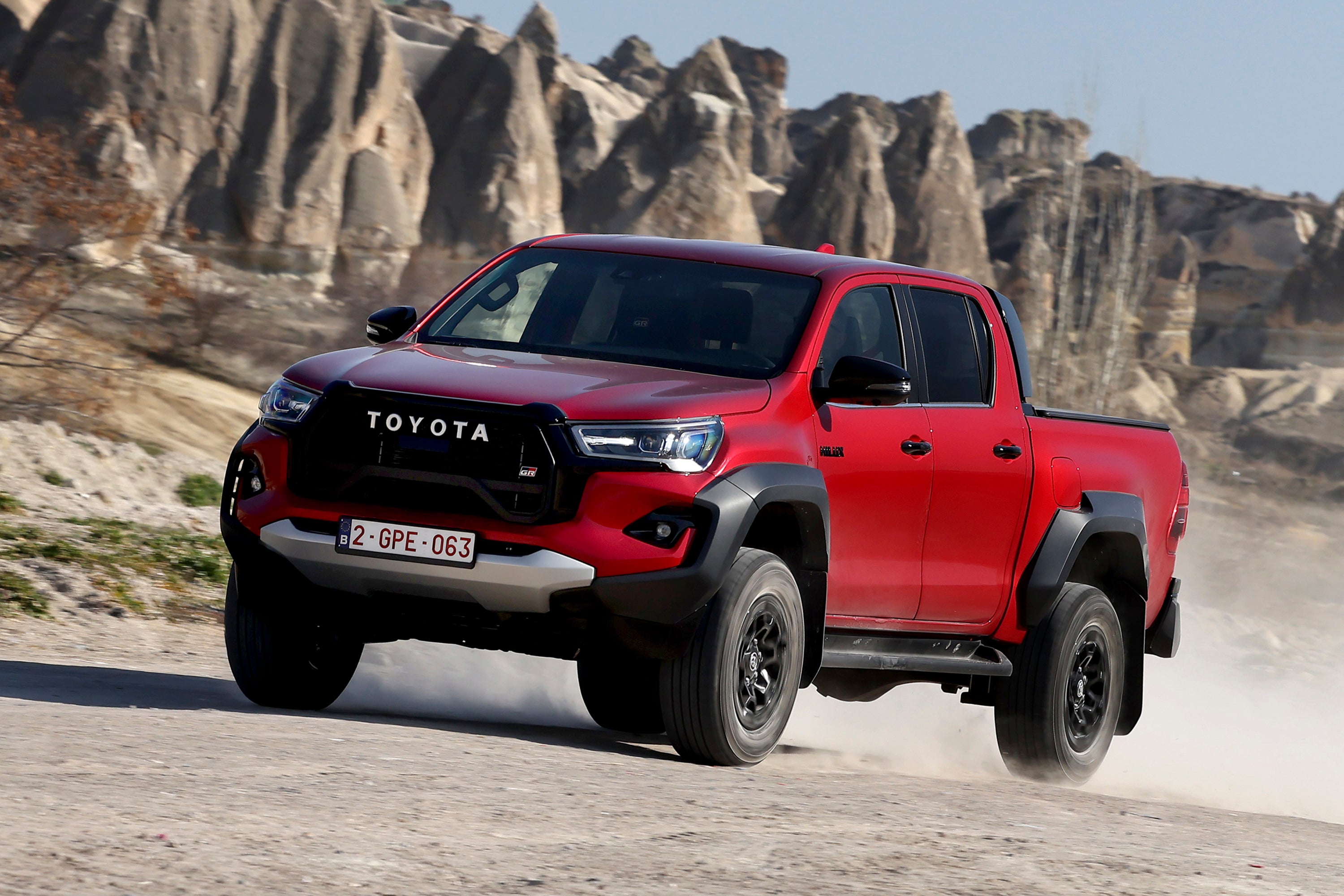
The Isuzu D-Max sits at the more affordable end of the UK pick-up truck market, alongside the the KGM Musso, Mitsubishi L200, and some of the more affordable new options from China. Higher-end alternatives include the Volkswagen Amarok, Ford Ranger, and Toyota Hilux.
What's the interior like in the Isuzu D Max?
The Isusu D-Max has all the important boxes ticked for a pickup truck: figures for payload, loadbed size and towing capacity are all very competitive. The nature of the interior depends on the version you choose: it can either be a stripped-out workhorse or a tooled-up luxury environment.
Isuzu D Max boot space and practicality
The Isuzu D-Max is available in three different body styles: single cab, extended cab and double cab. The double cab is the most popular, accounting for around 80% of sales. This has room for up to five people in the cabin, meaning that despite its utilitarian strengths, you could use the D-Max as your main family vehicle, or to carry several work colleagues.
And those family members or work colleagues will likely be very happy. The three-seater rear bench is surrounded by plentiful headroom and legroom, meaning that even tall folk will travel comfortably. There's also enough width to the cabin that three can sit back there without feeling too cramped.
The single cab, as the name suggests, has just two seats in the front , while in the extended cab, there are two further fold-down seats behind the front designed for occasional use on short journeys. Do be aware, though, that space is much more limited than in the double cab, so you want want to put colleagues in there regularly, or for long journeys.
In terms of loadbed capacity, it's the single-cab that has the largest, with a load length of 2,445mm. That's partly because it does without the extra seats, and partly because the single cab is actually physically longer than the other versions (see the dimensions section for details). The loadbed in the extended cab model measures 1,940mm in length, while the one in the double cab measures 1,675mm long.
According to Isuzu, al versions have a payload more more than a tonne. That's not quantified precisely on the EV versions for some reason or another, but on the diesels, payload figures range between 1,180kg and 1,055kg, with the highest payload figures being on the lowest-spec trucks and the lowest payloads being on the highest-spec trucks.
All versions available today have a towing weight of 3,500kg, which is about the maximum you can expect from any vehicle this side of an articulated lorry. Isuzu did once offer a rear-wheel drive version of the low-spec Utility single-cab version, and that one had a towing limit of 2,500kg, but this version has now been discontinued.
Whichever of the bodystyles you choose, you get a predictably lofty driving position that allows you to see over the top of most other vehicles on the road. It's easy to see where the bonnet ends, which helps with manouvring, and you rear view is also better than you might expect, with a large rear window and massive door mirrors. In case you need more help, all versions come with a reversing camera as standard.
On the subject of the D-Max's driving position, there is a slight unknown where that's concerned. All the versions we've driven have been range-topping V-Cross versions, which are the only ones to get a steering wheel that adjusts for height and reach as standard. While we found it easy to get comfy, we can't say for sure whether that'll be the case in versions without this feature. All versions have a driver's seat that has height adjustment, though.
Isuzu D Max dimensions
The physical size of your truck will depend on which bodystyle you choose. The single-cab version measures 5,320mm long, 1,810mm wide, and 1,770mm tall. The extended-cab and double-cab versions are actually a little shorter at 5,250mm long, but also a little wider at 1,870mm wide, and a little taller at 1,790mm.
Tech and infotainment in the Isuzu D Max
Most versions of the D-Max these days get an 8.0-inch central touchscreen equipped with DAB, Bluetooth, and wifi, along with Apple CarPlay and Android Auto (in the past, lower-spec versions did without a touchscreen at all and just got Bluetooth a USB port and a CD player). Top-spec V-Cross models, meanwhile, get a larger 9.0-inch screen, and it's this one we've had experience of.
And it's not great to be honest. The graphics look hopelessly dated - like they're lifted straight out of a 1990s Toyota - and the screen layout are cluttered. It's also pretty slow to respond to inputs, although it does seem to register them pretty reliably.
More positively, because the system isn't as sophisticated in terms of its functionality as many are these days, the menu structure is actually relatively simple, so once you've got used to the cluttered layout (which will take some time, admittedly), it's actually not too difficult to find your way around the system.
And, because there are chunky rocker switches on the dashboard to operate the air-conditioning system, you won't have to go trawling through on-screen menus just to fiddle with the cabin temperature.
Materials available on the Isuzu D Max
The interior feel of your D-Max differs quite a lot depending on which end of the range you shop at. At both ends of the scale, pretty much all the structural parts of the interior are fashioned from hard, grainy plastic. And in the lower-end versions, that goes for pretty much every surface you can see and touch, giving a fairly basic but durable feel. In a working truck like the D-Max, though, that's entirely appropriate, because it's much more important that your interior panels can withstand scruffs and scrapes than provide a tactile treat.
Having said that, if that's what you want, then the D-Max can provide that, too, at least to a degree. In high-end versions, the structural bits are once again hard and grainy, but there are a few bits of glossy trim and some stitched leather finishes on the dashboard steering wheel and doors that elevate the feeling of class in the cabin by quite a surprising degree. You still know you're in a hard-wearing, hard-working commercial vehicle, but there is at least some semblance of style and sophistication.
What's the Isuzu D Max like to drive?
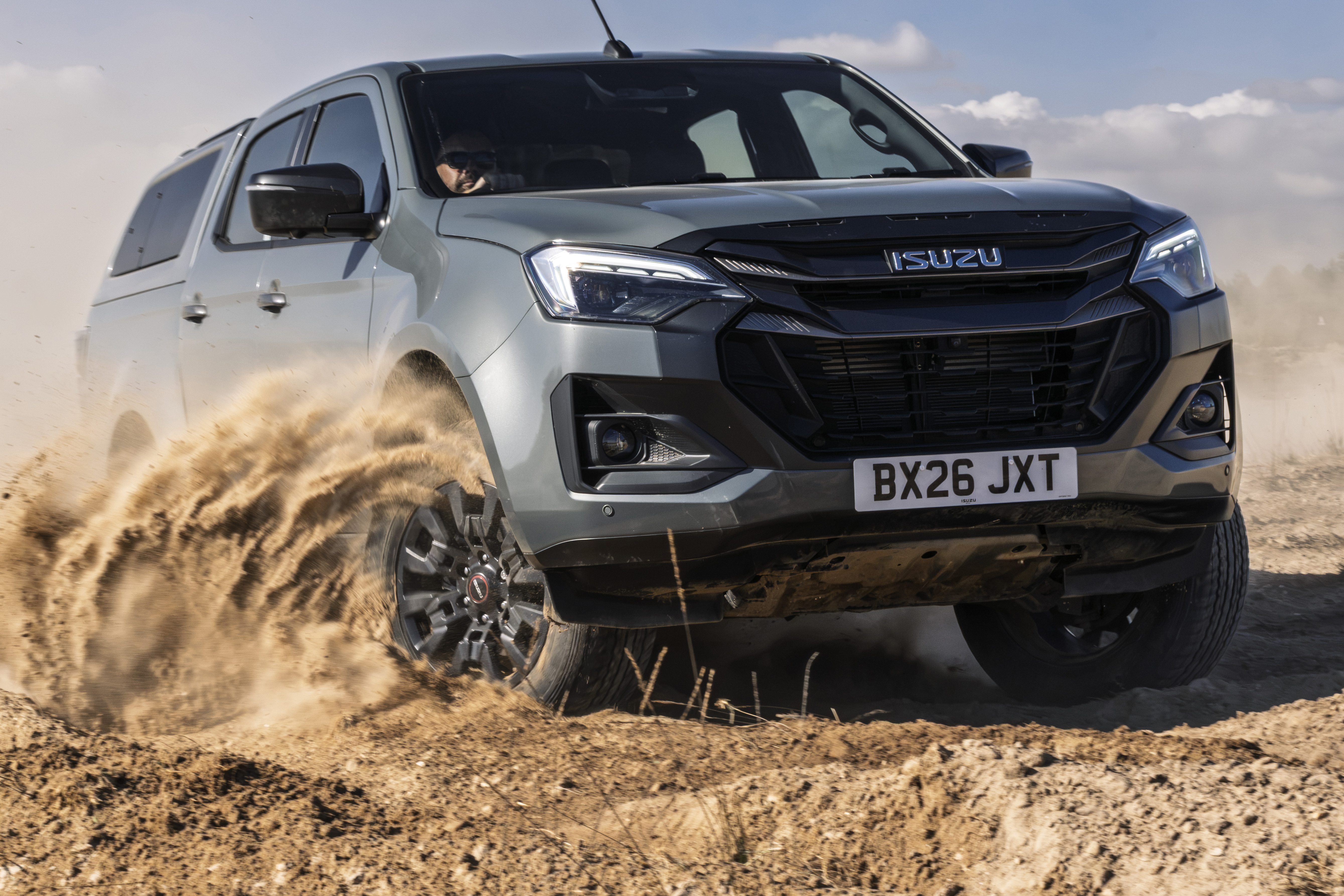
The Isuzu D-Max is noisier, clumsier and less comfortable to drive than most passenger cars, and it's also less capable in those areas than some rival pickup trucks. However, it does a good enough job in all those areas so as not to be problematic, and when you get it off-road, it turns from adequate to genuinely impressive.
Isuzu D Max range and performance
For most of its life, there was just one engine choice in this generation of the D-Max, a 1.9-litre diesel that's was available with either a six-speed manual gearbox or a six-speed automatic. It had 164PS and 360Nm, and Isuzu quoted a 0-62mph time of 12.7 seconds.
And while huge speed isn't exactly a vital area for a pickup truck, it felt rather too slow for comfort. You had to work the engine fairly mercilessly to get even adequate acceleration, and even when worked to its absolute limits, your rate of acceleration never got beyond the adequate mark. And that was with an empty loadbay: stick a few hundred kilos in the back, and it'd become even slower.
The manual gearbox had a long throw and a notchy action giving a fairly agricultural feel, while the automatic felt a little clumsy and had a tendency to hold lower gears, probably because it needed to in order to extract sufficient acceleration from the engine.
Things changed in 2026, when the 1.9 was replaced by a new 2.2-litre diesel, available with either a six-speed manual or a new eight-speed automatic transmission. It actually had slightly less power than the engine it replaced, with 163PS, but with 400Nm of torque, it had quite a bit more of that.
The stopwatch suggests improvement, with the 0-62mph dash trimmed to 12.0 seconds, but the character of the new engine is actually quite similar to before. Its extra grunt perhaps gave it a fraction more urgency when accelerating, and it's perhaps a wee bit smoother and quieter, but you still have to work the engine hard to get the level of acceleration you need, which makes your journeys feel less relaxing than in rivals with brawnier powertrains, of which there are many. The manual gearbox had the same long throw and notchy action to before, and while the new automatic gearbox changes gear quite smoothly, it also does so quite slowly, and again, it needs to keep the revs high in order to give the engine a fighting chance of providing the acceleration you need.
At roughly the same time that the new diesel engine was introduced, Isuzu also introduced a new all-electric powertrain. This is a dual-motor setup that delivers a combined 203PS, trimming the 0-62mph time down to 10.1 seconds. It's all fed by a 66.9kWh battery that gives an official WLTP combined range of 163 miles. We haven't yet tried the electric version, but we intend to shortly, and we'll update this review once we do.
Performance data
| Model | Engine/battery size | Power | 0-62mph | Range/MPG |
|---|---|---|---|---|
D-Max 1.9 | 1.9 diesel | 164PS | 12.7 seconds | Around 30mpg |
D-Max 2.2 | 2.2 diesel | 163PS | 12.0 seconds | Up to 32mpg |
D-Max EV | Electric 67kWh | 203PS | 10.1 seconds | 163 miles |
Isuzu D Max driving and refinement
All D-Max models come with old-school leaf-sprung suspension, which is great for carrying vast amounts of weight in the back, but it also means the vehicle lacks the on-road sophistication of a passenger car. It's also less polished than some pickup-truck rivals such as the Volkswagen Amarok and Ford Ranger.
There's a constant tremor through the body, even on seemingly smooth roads, and although this jittery feel is common to almost all pickups, it's more pronounced in the D-Max than in many rivals. Chuck a few bumps into the mix and things get even lumpier. It stops short of being unbearably uncomfortable, but it's also true than some rivals will give you a more relaxing time.
Some of those rivals will also handle better as well. There's plenty of grip and traction provided, partly due to all versions having four-wheel drive (Isuzu previously offered a two-wheel drive version, but this has been discontinued), but you feel lots of body lean and weight transfer as you change direction, making the D-Max feel a little clumsy. The steering is also slow, but again, that's a common trait in pretty much all pickup trucks.
As you'd expect, refinement is something of an afterthought where the D-Max is concerned. The diesel engines clatter away noisily, partly because they need so many revs to deliver sufficient pace, and while the later 2.2 is a little smoother than the 1.9 it replaced, you still hear plenty from it. Wind- and road noise are both very evident, and the suspension clonks away as it deals with lumps and bumps.
As limited as the D-Max's abilities are on Tarmac, though, things get much better when you venture off it. With four-wheel drive and low-range gears, you'll take mud and deep sand in your stride, and you can also wade though water up to 800mm deep. The generous ground clearance also allows you to clamber over rocks and negotiate deep ruts.
How safe is the Isuzu D Max?
Safety organisation Euro NCAP awarded the D-Max a maximum five-star score when it was tested in 2022, and it comes with lots of advanced safety systems. Automatic emergency braking, adaptive cruise control, traffic-sign recognition, a speed limiter with traffic sign recognition and lane-departure warning are all standard across the range. The Double Cab models feature blind-spot detection, emergency lane keeping and rear cross-traffic alert. The outer rear seats have Isofix child-seat mounting points.
Running costs: What it's like to live with a Isuzu D Max
Running a big heavy pickup truck is never a cheap undertaking, but it's no worse with the D-Max than with rivals. Fuel economy form the diesel is reasonable, and while the electric version has the potential to. be much cheaper to run day-to-day, it'll cost you way, way more in the first place.
Isuzu D Max charging times and costs
Plug the electric D-Max into a regular 7kW home wallbox charger, and you can expect the battery to fully replenish in about 12 hours. If you pay the UK's national average rate for your domestic electricity , then that charge will cost you around £19. However, if you have a tariff that allows you to charge up overnight on heavily discounted off-peak power, then you can easily cut that cost in half, and probably a bit more.
Conversely, you can take that quoted cost and multiply it by three on those occasions that you use a DC public rapid charger: precise costs vary, but that's a pretty good rule of thumb to work with for most DC charging stations. That charge won't even be that quick, either, because regardless of how powerful the charger is, the D-Max can only support a maximum DC charging speed of 50kW, so a 20% to 80% top-up will take an hour.
Isuzu D Max fuel economy
When Isuzu swapped out the old 1.9 diesel engine for the new 2.2 diesel in 2026, it brought small gains in fuel economy. But we do mean small: the official WLTP combined figures for the range now stand at between 31.4mpg and 32.8mpg. You'll still be chewing through a fair amount of diesel, then, and given the cost of the stuff at the moment, it'll set you back a fair amount. The D-Max's fuel costs certainly aren't unreasonable when compared with those of rivals, though, and high fuel costs kind of go with the territory when you run a big, heavy pickup truck. Unless you opt for the electric version, that. is, but what you save in fuel costs will likely be absorbed by how much more you have to pay for it.
Isuzu D Max warranty and servicing
Isuzu has an excellent reliability record, which is precisely the thing that most owners say attracted them to the D-Max in the first place. That's praise indeed. Meanwhile, Isuzu's generous five-year/125,000-mile warranty ought to put your mind at rest even further. All models come with five years roadside assistance, too.
Isuzu D Max insurance groups
Right now, all diesel version of the D-Max sit in insurance group 40 out of 50. We don't know what group the electric versions sit in, but if anything, it's likely to be higher due the the extra power and cost of that version. Although, as with all insurance, exact costs will depend on your personal circumstances.
How much does it cost to tax a Isuzu D Max?
As a light good vehicle, the D-Max is subject to a flat rate of Vehicle Excise Duty, which is currently charged at £360 a year.
What trims are available with the Isuzu D Max?
The Isuzu D-Max range is structured into three sections: Business, All-Purpose and Adventure. The Business line is basically just the entry-level Utility model, with its black plastic bumpers, steel wheels on proper workhorse demeanour. Having said that, all the essential features are still present and correct, with automatic lights and wipers, manual air-conditioning, remote central locking, a reversing camera, and the 8.0-inch infotainment screen with Apple CarPlay and Android Auto. The standard roster even includes some things you might not expect for the cash, like adaptive cruise control.
The All-Purpose range comprises the two mid-range trim levels, the DL20 and DL40 models (the DL signifies the presence of a differential lock as standard). For starters, the DL20 looks smarter that the Utility, with alloy wheels and body-coloured bumpers. You also get power folding door mirrors and rear parking sensors throw in.
The DL40, meanwhile, provides a sizeable uptick in luxury trappings. This includes keyless entry and start, front parking sensors, 360-degree cameras, LED exterior lighting, leather upholstery, a leather steering wheel, powered driver's seat adjustment, heated front seats, a carpeted floor, and dual-zone climate control with rear vents.
The Adventure range basically refers to just the range-topping V-Cross trim, which is properly tooled-up. It provides the larger larger 9.0-inch touchscreen, steering wheel audio controls, two extra USB ports in the front, a height-and-reach-adjustable steering column, rear ventilation controls, and a damped tailgate, as well as more styling touches.
Ask the Drive experts: common questions
Is the Isuzu D-Max any good?
Is the Isuzu D-Max good off road?
How reliable is the Isuzu D-Max?
Get our latest advice, news and offers
Keep me updated by email with the latest advice, news and offers from Drive.