Lexus LM Review

Written By Matthew MacConnell
- 2024
- MPV
- Petrol
What we love
Ludicrously comfortable
Luxurious and spacious rear compartment
Excellent build quality
Things to consider
Noisy engine under acceleration
Very expensive
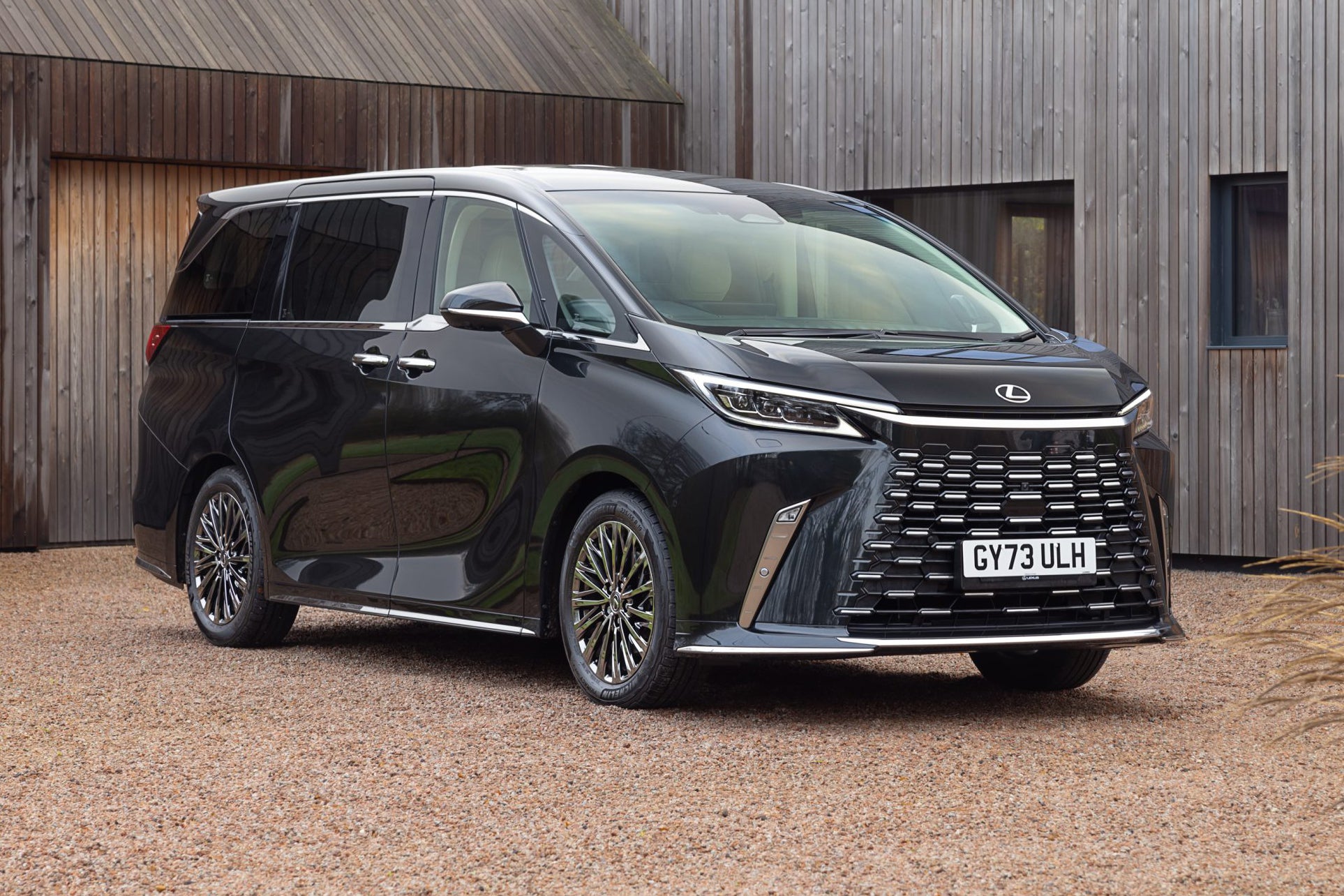
Challenging exterior looks
The DRIVE take on the Lexus Lm, is it the right car for you?
The Lexus LM is a left-field alternative to a luxury saloon or SUV, designed primarily for people who expect to spend more time being driven than doing the driving themselves.
It’s essentially a first-class lounge on wheels. Even the seven-seat version has electrically adjustable, heated, ventilated and massaging middle-row seats, while the four-seat Takumi goes considerably further with two vast reclining rear chairs, a cabin partition, refrigerator, 48-inch widescreen display and enough technology to make many luxury hotel rooms look under-equipped.
Ride comfort is excellent, build quality is superb and Lexus has put an extraordinary amount of effort into suppressing noise and vibration. However, its 2.5-litre hybrid can sound strained when you ask for strong acceleration, its sheer size is impossible to ignore and the styling won’t appeal to everyone. There’s also the not-insignificant matter of a starting price approaching £100,000.
But very few cars combine this much passenger space with this level of luxury. If your priority is making the people in the back as comfortable as possible, rather than impressing the person holding the steering wheel, the Lexus LM is in a class of its own.
The Lexus Lm in more detail
The first-generation Lexus LM appeared in Asian markets in 2019, taking inspiration from Toyota’s long-running Alphard and Vellfire luxury people carriers. It was never officially sold in the UK.
That changed with the second-generation LM, which arrived here at the end of 2023. It was the first Lexus MPV officially offered in Europe and represented something quite different from the brand’s familiar luxury saloons and SUVs.
LM stands for Luxury Mover, and that describes its purpose rather well. This isn’t really a conventional family MPV dressed up with some leather and chrome. It’s intended as an alternative to chauffeur-driven luxury saloons and SUVs, with the needs of the rear passengers taking priority.
The original UK range consisted of three versions: a seven-seat LM 350h with either front- or all-wheel drive (AWD) and the four-seat LM 350h Takumi with all-wheel drive. Demand was strong enough for the initial allocation to sell out, and Lexus temporarily stopped taking UK orders before putting the LM back on sale in August 2025.
The range has changed since then. Front-wheel drive is no available, so new buyers now choose between the seven-seat LM 350h AWD and four-seat LM 350h Takumi AWD.
The original front-wheel-drive model was a little lighter, slightly more economical and cheaper when new, so it remains worth considering as a used car if you don’t need the extra traction of E-Four (that's Lexus's name for its AWD system).
Whichever version you choose, the basic idea remains the same. The LM uses a 2.5-litre petrol-electric hybrid system and an e-CVT automatic transmission. There’s no plug, so it behaves in much the same way as other Lexus full hybrids, using regenerative braking and its petrol engine to keep the small hybrid battery charged.
The technology doesn’t make the LM feel like an electric limousine. Rather, it helps the enormous Lexus move away quietly and smoothly in town while reducing fuel use compared with relying on a large conventional petrol engine.
What's the best Lexus Lm trim and engine option?
There’s only one engine, so the main choice is between the seven-seat LM 350h AWD and four-seat Takumi.
The seven-seater is the better-value option at £97,645, costing £20,000 less than the Takumi while offering exceptional standard equipment levels, including electrically adjustable, heated, ventilated and massaging seats for second-row passengers, while other highlights include power blinds, twin roof windows, a 14-inch rear entertainment screen, 21-speaker Mark Levinson audio, a 14-inch touchscreen. It also seats seven, making it more practical for family use or airport transfers.
The £117,645 Takumi is designed primarily for chauffeur-driven travel. It has four seats, with two enormous reclining rear chairs separated from the driver by a full-width partition. They feature powered ottomans, heating, ventilation and seven massage programmes. The partition houses a dimmable glass window, 48-inch ultra-wide display and refrigerator. Takumi also gets 23-speaker Mark Levinson audio, wireless charging and folding tables, although it oddly loses the head-up display.
The seven-seat LM 350h AWD is the sensible choice; Takumi is for buyers who want maximum rear-seat luxury.
What’s the price of the Lexus Lm?
The current Lexus LM range starts at £97,645 for the seven-seat LM 350h AWD, while the four-seat LM 350h Takumi costs £117,645.
Prices have risen since the LM originally arrived in the UK. At launch, the front-wheel-drive seven-seater cost £89,995, the AWD version was £92,995 and the Takumi was £112,995.
Even at current used prices – which start at around £73,000 – the LM remains expensive. You’re paying for a very particular type of space, comfort and equipment rather than simply the amount of car you get for your money.
Alternatives to the Lexus Lm
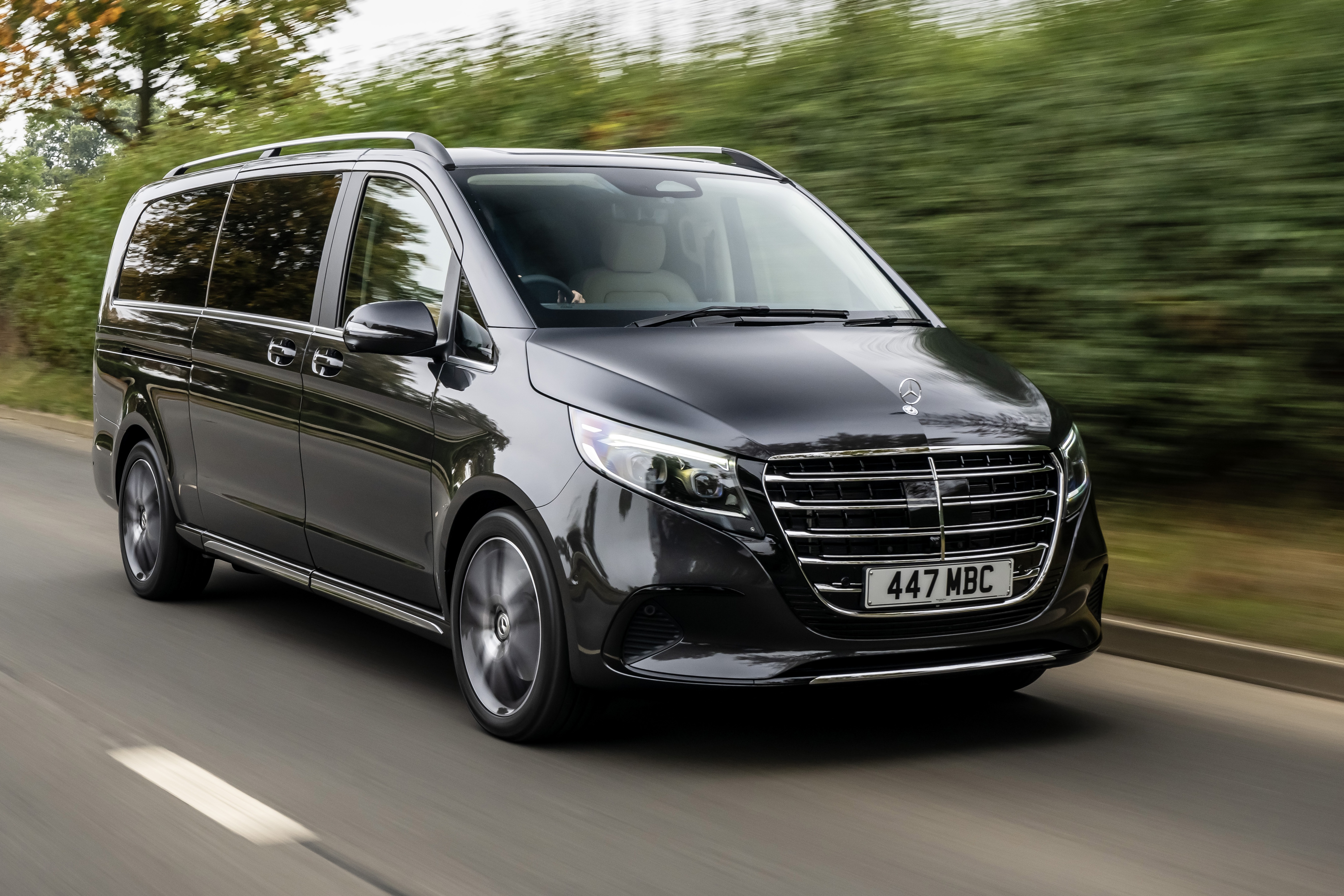
The Mercedes-Benz V-Class is the Lexus LM’s most obvious rival, another large people carrier that's suited to chauffeur work. However, even a lavishly equipped V-Class feels more like a luxury van than the LM Takumi’s private lounge.
The electric Mercedes EQV offers a similar format with zero-emission driving, making it appealing to urban chauffeur businesses, although its need for regular charging makes it less convenient for unpredictable long-distance journeys.
The Volkswagen Multivan is considerably cheaper and more flexible, making it a stronger choice as a luxurious family MPV. It can’t match the Lexus for rear-seat opulence, but it’s far easier to justify financially. A Range Rover provides a similarly imposing blend of luxury, comfort and status, while being much more capable away from tarmac, while the BMW 7 Series and electric i7 are more traditional limousine alternatives. They offer a better driving experience but nowhere near the LM’s headroom or rear-seat space.
Toyota’s Alphard and Vellfire follow the same luxury-MPV philosophy and are perhaps the closest conceptual rivals. They aren’t officially sold new in Britain, however, so you'll generally need to consider a Japanese import.
What's the interior like in the Lexus Lm?
The Lexus LM’s cabin is where its huge price begins to make sense. The front feels more like a luxury SUV than a van, with a 14-inch touchscreen, physical climate controls and an excellent driving position. Visibility is good, although thick rear-door pillars create blind spots; cameras and monitoring systems help. In the back, even the seven-seater offers business-class space and comfort. The four-seat Takumi goes further, creating a private lounge with a powered partition and near-total control over seating, climate, lighting and entertainment.
Lexus Lm boot space and practicality
Practicality depends dramatically on which Lexus LM you choose. The four-seat Takumi provides 752 litres of luggage capacity behind its two rear seats, which is an unusually large amount of room considering how much cabin space those enormous chairs consume, and Lexus says there’s space for two large 77cm suitcases.
The seven-seat LM is more complicated. With every seat occupied, there’s just 110 litres of official luggage capacity behind the third row. That’s tiny for a vehicle more than five metres long and means carrying seven people plus their holiday luggage will be difficult. However, the third-row seats can be tipped up against the sides of the cabin, which dramatically increases carrying capacity. Maximum luggage volume rises to 1,191 litres.
That layout also explains the LM’s passenger priorities. The second row is the star attraction, while the third row provides additional seating when required rather than receiving the same first-class treatment.
The third-row seats themselves are better than the occasional chairs in many seven-seat SUVs, with proper cushioning and USB charging, but anyone spending £100,000 on an LM will probably want to sit one row further forwards. Power-assisted sliding rear doors make entering and leaving the car much easier in narrow parking spaces than conventional enormous rear doors would.
Lexus Lm dimensions
The Lexus LM is 5,130mm long, 1,890mm wide and 1,940mm high, with a 3,000mm wheelbase, which makes it a very large vehicle. At more than 5.1 metres long, you’ll notice its size in multi-storey car parks and traditional British parking bays.
The height also matters. At around 1.94 metres, it’ll fit beneath many standard 2.0-metre height restrictions but without a huge amount of room to spare.
Despite its dimensions, the LM is easier to manoeuvre than you might expect. Lexus quotes a 5.9-metre minimum turning radius at the tyres, while the combination of a high driving position, 360-degree cameras, parking assistance and a digital rear-view mirror takes some of the stress out of squeezing it into tighter spaces.
It never shrinks around you, though. This remains a long, wide and unusually tall luxury car.
Tech and infotainment in the Lexus Lm
The front of every Lexus LM gets a 14-inch Lexus Link Pro touchscreen infotainment system with cloud-based navigation and voice control. Wireless Apple CarPlay is supported, but Android Auto uses a wired connection.
The interface is responsive and considerably easier to use than the older Lexus systems that relied on awkward touchpads. Physical audio and climate controls remain, which is especially welcome in a car designed to spend long periods on the road.
The seven-seat model gets a 14-inch rear entertainment screen that folds down from the roof. Rear passengers can connect devices through HDMI and can listen independently from those in the front. A 21-speaker Mark Levinson Reference 3D Surround Sound system is standard.
Takumi turns the technology up several levels. Its partition houses a 48-inch 3840x1080 ultra-wide display with a 32:9 aspect ratio, which can show one full-width picture or separate content on the left and right sides, with input through compatible wireless devices or HDMI. The sound system expands to 23 Mark Levinson speakers, while each passenger gets a smartphone-style removable controller for the seats, climate control, audio, lighting and blinds.
There’s also wireless device charging and numerous USB-C sockets, so keeping phones, tablets and laptops powered isn’t going to be an issue.
Materials available on the Lexus Lm
Build quality is outstanding and you’ll struggle to find much in the way of cheap-feeling plastic in either half of the cabin. Leather, soft-touch surfaces, wood trim and thick carpeting cover most of the areas occupants regularly see or touch.
The quality is more than superficial. Lexus have paid particular attention to the materials and construction of the seats, using vibration-absorbing layers designed to reduce the low-frequency movement that can make passengers tired or uncomfortable.
Traditional Japanese influences appear throughout the cabin. The wood trim uses a Yabane-style herringbone pattern, while the steering-wheel ornamentation combines open-pore walnut with Bengala red pigment inspired by material traditionally used in Japanese ceramics and buildings.
The seven-seat model uses semi-aniline leather with suede inserts in its middle-row seats. Takumi can be specified with black or Ammonite Sand upholstery. The latter combines semi-aniline leather with copper-coloured detailing and gives the rear compartment a particularly striking appearance.
Few vehicles at any price feel more carefully constructed.
What's the Lexus Lm like to drive?
The Lexus LM is designed to make journeys comfortable rather than entertaining, and it’s remarkably effective at doing that. This isn’t a car you’ll choose for a Sunday morning blast. Its steering is light, its body is enormous and the driving experience deliberately isolates you from much of what’s happening underneath.
Lexus Lm range and performance
Every current Lexus LM uses a 2.5-litre four-cylinder petrol-electric hybrid with an e-CVT automatic transmission and E-Four all-wheel drive. The system produces 250PS with up to 270Nm of torque. The AWD model reaches 62mph in 8.7 seconds, while the discontinued front-wheel-drive version took 9.1 seconds.
Performance is adequate rather than exciting. An 8.7-second 0–62mph time is perfectly respectable for something this big, but the LM never feels particularly eager.
Around town, the electric motor gives it immediate and smooth low-speed response. The petrol engine can switch off entirely for short periods, allowing the LM to creep through traffic very quietly.
Ask for strong acceleration and the character changes. The transmission, which is an e-CVT, allows the engine revs to rise sharply and remain there while road speed catches up, producing considerably more noise than you might expect from such a heavily insulated luxury car. The effect is less intrusive in the rear than at the wheel, but it’s still the power system's biggest weakness.
The LM 500h sold in some overseas markets provides substantially more performance, but it isn’t currently offered in the UK.
Performance data
| Model | Engine/battery size | Power | 0-62mph | Range/MPG |
|---|---|---|---|---|
Lexus LM 350h AWD | 2.5-itre inline four-cylinder, all-wheel drive, CVT | 250PS | 270Nm | Up to 39.2mpg |
Lexus Lm driving and refinement
The Lexus LM’s suspension is designed around the experience of the passengers rather than the entertainment of the driver, and it does an excellent job. Broken surfaces, potholes and motorway expansion joints are dealt with softly and progressively, without the repeated bouncing you might expect from something this tall and heavy.
Lexus has gone to unusual lengths to control passenger movement. The suspension, braking and powertrain systems work together to reduce pitch when accelerating or braking and minimise lateral movement through corners. There’s even a dedicated Rear Comfort drive mode, which alters throttle response and suspension behaviour to prioritise the stability of the rear compartment.
You can also choose conventional Eco, Normal and Sport settings, although Sport doesn’t suddenly transform the LM into something agile or exciting.
The steering remains light and fairly detached. At higher speeds, there’s no disguising the LM’s size, although the body is controlled more neatly through bends than its MPV proportions might suggest.
Slow things down and it’s an excellent cruiser. Refinement is particularly impressive at urban and suburban speeds. Lexus uses acoustic glass, Active Noise Control and extensive additional insulation around the engine bay, dashboard, roof and wheelarches. The 19-inch wheels were also specifically engineered to reduce resonant tyre noise. Some road and wind noise becomes noticeable at motorway speeds, but the LM remains exceptionally quiet overall.
The noisy engine under hard acceleration therefore stands out more precisely because the rest of the vehicle is so subdued.
How safe is the Lexus Lm?
The Lexus LM hasn’t been tested by independent safety organisation Euro NCAP, so there’s no official star rating to quote. We can't necessarily assume that it deserves five stars simply because other Lexus models have performed strongly, but we do know that the LM has an extensive standard active-safety package.
Lexus Safety System+ includes a Pre-Collision System with Emergency Steering Assist, Dynamic Radar Cruise Control, Lane Keep Assist, Lane Trace Assist, Road Sign Assist and a driver-monitoring system. Blind Spot Monitor and Rear Cross Traffic Alert are also standard.
The electronic e-Latch doors include Safe Exit Assist, which checks for vehicles and cyclists approaching from behind before allowing a door to be opened. Importantly for an MPV, the system also operates on the powered sliding rear doors.
There are front, side and curtain airbags, along with a front-passenger cushion airbag and Isofix mounting points.
Running costs: What it's like to live with a Lexus Lm
Nobody buying a Lexus LM should expect supermini running costs. It’s an enormous, heavy, £100,000-plus luxury vehicle, and fuel, insurance, servicing and tax all reflect that, although its hybrid drivetrain does at least make it substantially more efficient in town than you might expect from something of this size.
Lexus Lm fuel economy
The current all-wheel-drive Lexus LM is officially capable of up to 39.2mpg. Earlier FWD cars were more economical, with Lexus quoting 42.1mpg. That’s respectable for a vehicle of this size and weight but hardly miraculous.
The hybrid is at its best in urban and mixed driving, where it can recover braking energy and use its electric motor regularly. Long motorway journeys give the hybrid system fewer opportunities to save fuel, so economy is likely to drop.
A 60-litre fuel tank gives it a useful cruising range, although real-world results will depend heavily on speed, passenger load and driving style.
Lexus Lm warranty and servicing
The Lexus LM comes with a three-year or 60,000-mile manufacturer warranty, while its hybrid components have separate five-year or 60,000-mile cover. Lexus also provides 12 years of unlimited-mileage corrosion perforation protection.
More importantly, the LM is eligible for Lexus’s service-activated warranty scheme. Once the original three-year warranty has expired, each qualifying service at an authorised Lexus workshop activates another 12 months or 10,000 miles of warranty cover, which can continue until the car reaches 10 years old or 100,000 miles, whichever comes first. There’s no separate charge for the warranty beyond paying for the qualifying service.
Routine servicing is required annually or every 10,000 miles.
That long potential warranty is particularly valuable on something as technically complicated and expensive as the LM, and it gives used buyers a good reason to prioritise cars with a complete Lexus service history.
Lexus Lm insurance groups
Lexus hasn’t disclosed an insurance group for the LM, but we expect it to sit somewhere between 38-44, based on the equivalent Mercedes-Benz V-Class.
How much does it cost to tax a Lexus Lm?
A current Lexus LM 350h AWD attracts £1,410 of Vehicle Excise Duty (VED) in its first year, but that charge is already included in Lexus’s quoted on-the-road price. From the second year onwards, it pays the standard £200 annual rate. However, every Lexus LM also costs comfortably more than the £40,000 threshold for the Expensive Car Supplement, which remains the threshold for petrol and hybrid cars. The supplement currently adds £440 a year during years two to six after first registration, which means an LM costs £640 a year to tax during those five years.
What trims are available with the Lexus Lm?
The current Lexus LM range is exceptionally simple, with just two versions: the seven-seat LM 350h AWD and the four-seat LM 350h Takumi AWD.
The regular LM 350h is hardly an entry-level model in the conventional sense, as it comes outfitted with 19-inch alloy wheels, semi-aniline leather upholstery, electrically adjustable and heated and ventilated front seats, power-adjustable middle-row seats, massage functions, electrically operated sliding doors and powered window blinds. There are twin roof windows, a heated electrically adjustable steering wheel, digital rear-view mirror, 360-degree Panoramic View Monitor and remote parking. Other technology includes a 14-inch Lexus Link Pro touchscreen, a 21-speaker Mark Levinson 3D Surround Sound system and a 14-inch rear entertainment screen that folds down from the roof.
The seven-seat LM also gets a head-up display, which is notable because the considerably more expensive Takumi doesn’t.
Takumi reduces the seating capacity from seven to four and turns the rear half of the car into a private lounge. The two rear seats have powered ottomans, extensive adjustment, heating, ventilation and seven massage programmes. A full-width partition separates the occupants from the driver. Its upper glass section can be electrically opened, closed or dimmed, while the lower section contains the enormous 48-inch ultra-wide rear display. There’s also a refrigerator large enough for two standard Champagne bottles or three 500ml bottles, folding tables, individual wireless phone chargers and separate rear storage compartments. The Mark Levinson sound system expands from 21 to 23 speakers.
Takumi’s more sophisticated Climate Concierge uses thermal sensors to tailor heating and cooling around individual rear occupants. Passengers can also choose preset cabin environments that adjust the lighting, air conditioning, seat heating or ventilation, blinds and seat position.
There aren’t conventional option packs to worry about. Lexus currently lists all paint finishes at no extra cost, while buyers can choose black or Ammonite Sand interior treatments depending on version.
Used buyers should remember that the original UK range also included an LM 350h seven-seater with front-wheel drive. It’s no longer available new but was £3,000 cheaper than AWD when launched, returned better official fuel economy and had slightly slower acceleration.
Ask the Drive experts: common questions
How much does the Lexus LM cost?
Is the Lexus LM a seven-seater?
How big is the Lexus LM’s boot?
Which Lexus LM is best?
Get our latest advice, news and offers
Keep me updated by email with the latest advice, news and offers from Drive.
.jpg)