Mercedes-Benz V-Class Review

Written By Andrew Brady
- 2015
- MPV
- Diesel
What we love
Huge and highly configurable passenger compartment
Comfortable and refined on long journeys
Upmarket cabin with strong standard equipment
Things to consider
Very expensive beside mainstream MPVs
Rear seats are extremely heavy to move
Diesel engines become gruff under hard acceleration
The DRIVE take on the Mercedes Benz V Class, is it the right car for you?
The Mercedes-Benz V-Class is a luxury MPV for buyers who need more passenger and luggage space than even the largest SUVs can provide. It has seven seats as standard, can be configured for up to eight people and offers exceptional flexibility in the rear. The cabin feels appropriately upmarket, while the comfortable ride and relaxed diesel engines make it an excellent long-distance vehicle.
Its van origins remain apparent in the way it drives, and the price is difficult to justify as ordinary family transport. The V-Class makes most sense for executive travel, airport transfers or large families who value space and versatility more than driving enjoyment.
The Mercedes Benz V Class in more detail
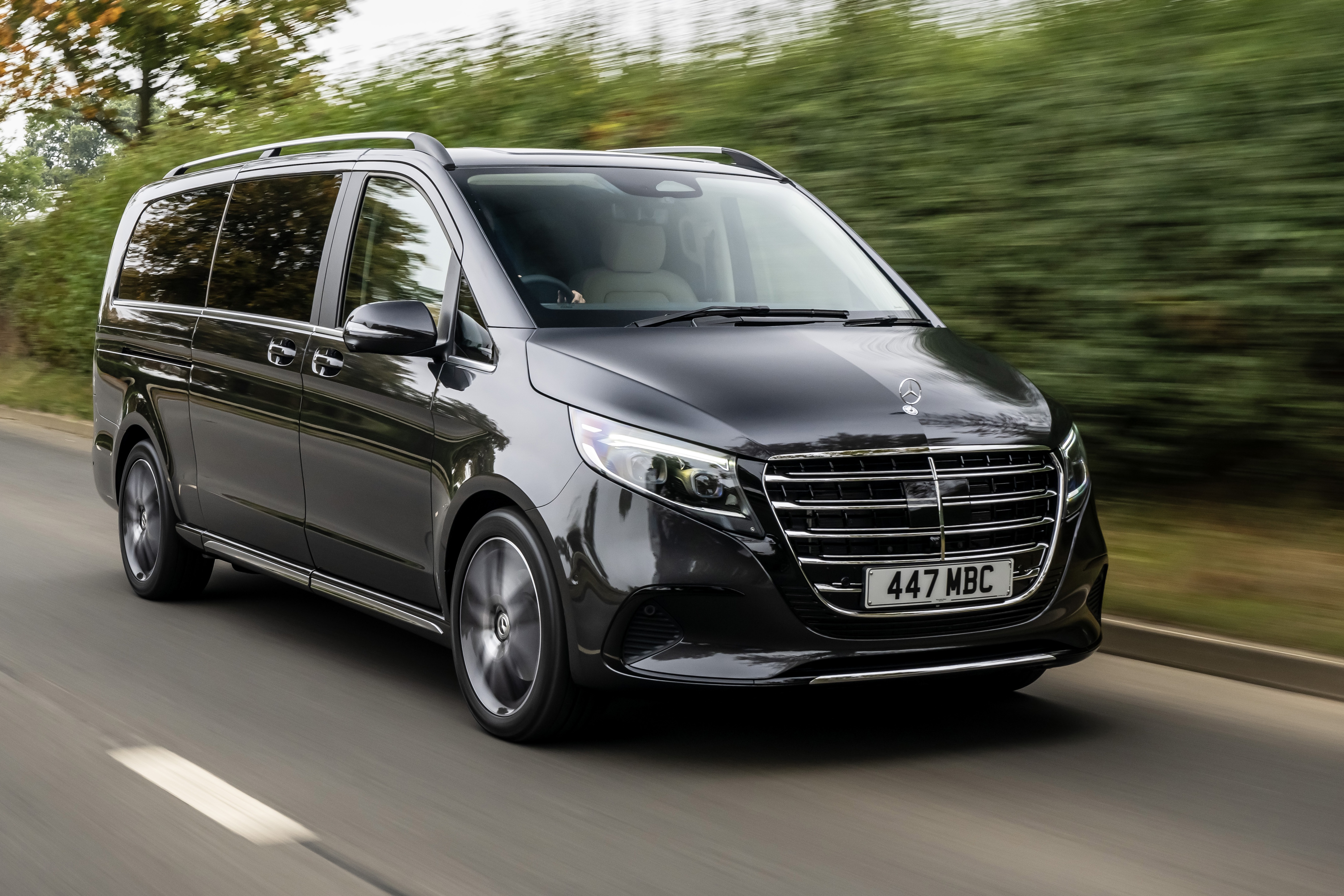
The Mercedes-Benz V-Class may be based on a commercial vehicle, but it is far more than a van with a few expensive seats fitted in the back.
Mercedes has worked hard to give it the appearance, equipment and refinement of a luxury passenger car. The latest dashboard is dominated by modern digital displays, the interior materials are more polished than those of most rivals and the rear cabin can be arranged to suit anything from family holidays to chauffeur work.
That adaptability is the V-Class’s greatest strength. Seven seats are standard in the current Long and Extra Long models, while alternative seating layouts allow up to eight occupants. Individual chairs and benches slide along rails set into the floor, enabling owners to balance passenger space against luggage capacity.
Selected seats can also be turned to face each other, creating a lounge-style arrangement for meetings, executive transport or long family journeys.
Removing them creates an enormous load area, although this is not a quick or easy process. The rear chairs and benches are extremely heavy, so changing the layout regularly can be more awkward than Mercedes’ configurator might suggest.
The V-Class is not primarily aimed at buyers seeking an affordable school-run MPV. Its equipment, image and price position it closer to executive transport and premium airport travel.
It can still work extremely well as a family vehicle, especially for households that regularly carry six or seven people. Few SUVs provide comparable third-row space, and fewer still leave enough room for substantial luggage behind the seats.
The current generation was launched in 2015 and has since received several major updates. The latest version brings a redesigned front end, a widescreen digital cockpit and more advanced assistance technology.
What's the best Mercedes Benz V Class trim and engine option?
The V 220 d Premium Long is the best all-round Mercedes-Benz V-Class.
Its 163PS diesel engine has enough torque to carry a full complement of passengers at motorway speeds, while the Long body provides enormous interior space without being quite as cumbersome as the Extra Long version.
Premium trim includes the features most buyers will want, including powered sliding doors, leather upholstery, heated front seats, widescreen MBUX infotainment and comprehensive parking assistance.
The V 300 d is considerably quicker and suits heavily laden chauffeur work or frequent motorway driving. Its extra performance is pleasant rather than essential for private buyers.
Premium Exclusive brings more elaborate rear seating and additional luxury equipment, but pushes the price towards £100,000. It makes most sense when the V-Class will be used professionally.
What’s the price of the Mercedes Benz V Class?
The Mercedes-Benz V-Class starts at approximately £77,160 for the V 220 d Premium Long.
Choosing the more powerful V 300 d, the Extra Long body or Premium Exclusive specification raises the price substantially, with the most expensive versions approaching £100,000.
That makes the V-Class considerably more expensive than a Ford Tourneo Custom and most versions of the Volkswagen Multivan.
Used examples offer better value, although some will have been used for private hire or airport work. Mileage should be considered alongside condition, seating configuration and service history.
Alternatives to the Mercedes Benz V Class
The Volkswagen Multivan feels more like a conventional car from behind the wheel and is easier to use in town. Its cabin is flexible, although it is neither as spacious nor as luxurious as the Mercedes’.
The Ford Tourneo Custom is significantly cheaper, practical and surprisingly good to drive. It cannot match the V-Class for interior finish or premium image.
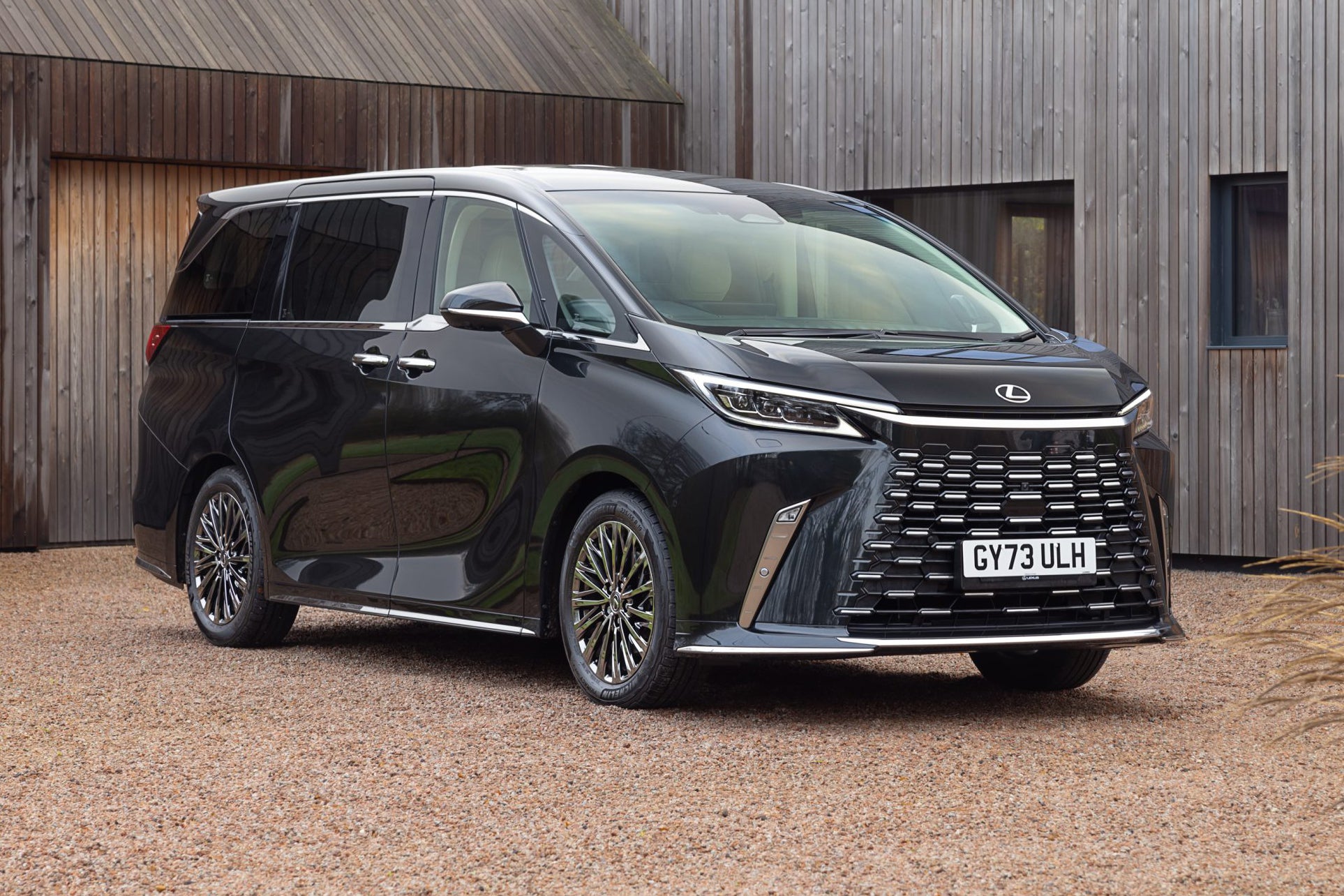
The Lexus LM provides a more extravagant rear-seat experience, particularly in four-seat form. It costs even more and is less adaptable as family transport.
The Volkswagen Caravelle remains a strong used alternative, with a comfortable cabin and excellent residual values. It does not feel as special inside.
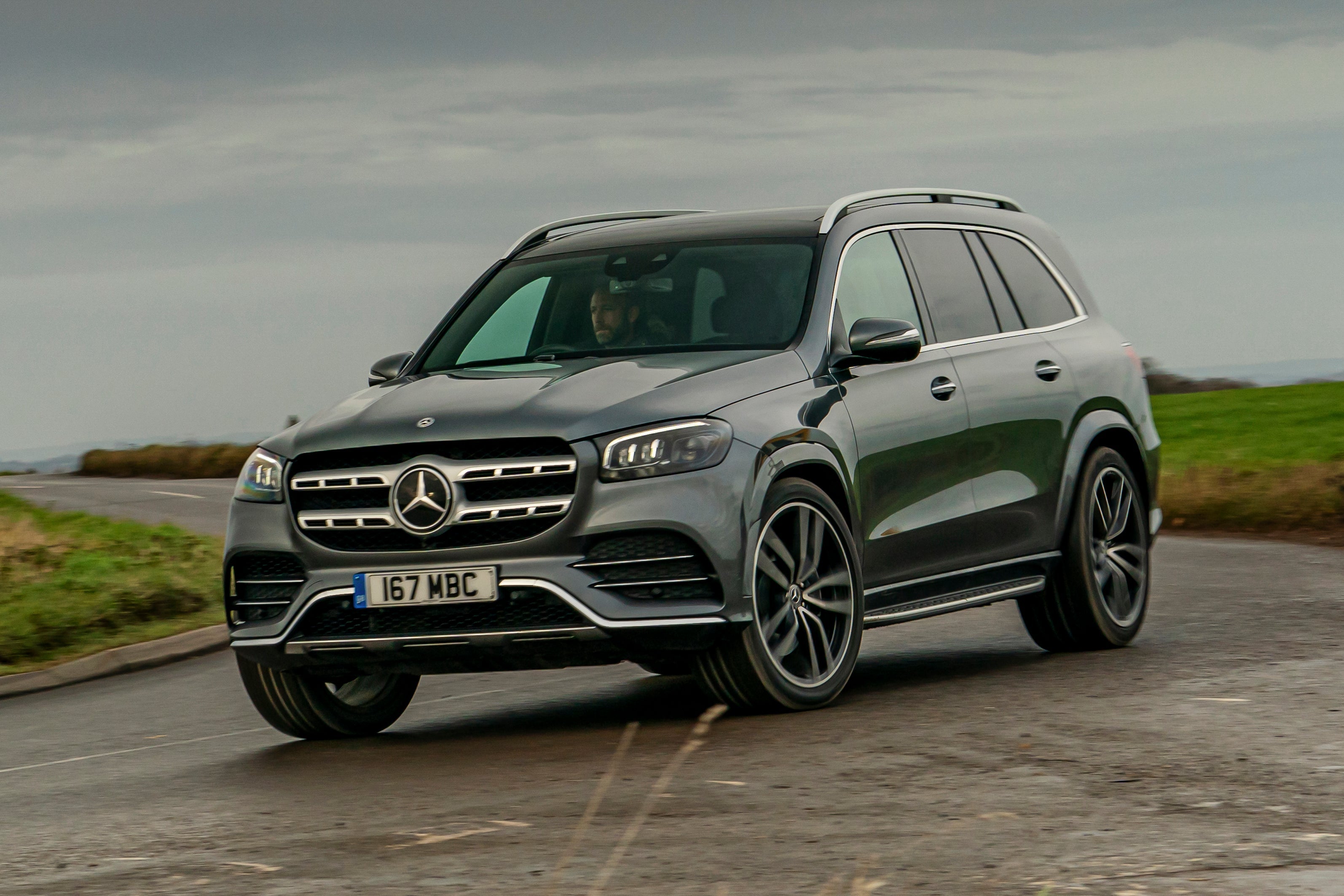
The Mercedes-Benz GLS offers seven seats in a more conventional luxury SUV. It is better to drive and feels less commercial, but provides far less space for rear passengers and luggage.
What's the interior like in the Mercedes Benz V Class?
The V-Class does an impressive job of disguising its commercial roots from the front seats. The latest dashboard is modern and well equipped, while the rear cabin provides outstanding space and flexibility.
Mercedes Benz V Class boot space and practicality
If you choose the standard body, you get seven seats arranged in a 2-2-3 format which allows for plenty of legroom for all in the car.
The Long and Extra-Long models have eight seats as standard, set out in a 2-3-3 pattern, again with loads of space for passengers to spread out. Even with a full complement of adults, the V-Class offers up more than enough room for everyone to sit without feeling squished up next to their neighbour.
It’s possible to remove any or all of the rear seats of the Mercedes-Benz V-Class and also to reposition them to configure the back part of the cabin to suit your own needs. This is a great option, but it comes with the caveat that its rear chairs are heavy to move or remove, so make sure you have some help on hand when doing this.
Getting in and out of the V-Class passenger compartment is simplicity itself through the electrically sliding side doors. They leave a big gap for you to walk through and into the car, while gaining entry to the third row is easy too thanks to the outer middle chairs tipping forward more than enough to create a generous corridor to walk past.
Head round to the boot and the Mercedes-Benz V-Class has the ability to cope with passengers’ luggage even when all of the seats are in use. In this way, the standard model offers up 610-litres of load capacity, which is more than most large estate cars. Opt for the Extra-Long model and that number goes up to 1410-litres. Or, you could remove the seats and have anything from 4200-litres all the way up to 5010-litres of cargo carrying ability.
One word of caution when using the V-Class’ boot, though. Due to the length of the tailgate, you need a fair amount of clear space behind the car to open the boot safely. Still, you can access the boot through the opening rear screen and, with the full hatch open, the opening is huge.
Mercedes Benz V Class dimensions
The Long V-Class measures 5,140mm from nose to tail, while the Extra Long version extends to 5,370mm. Both are 1,928mm wide and 1,901mm high, increasing to 2,249mm across the mirrors.
Its length is the main challenge in car parks, while its height may rule out some older multi-storeys. The 11.8-metre turning circle helps, but cameras and parking sensors remain essential.
Tech and infotainment in the Mercedes Benz V Class
The latest V-Class has a widescreen cockpit with two digital displays positioned beneath one glass panel. One acts as the driver’s instrument display, while the other handles navigation, media, telephone functions and vehicle settings.
This arrangement gives the V-Class a much more modern feel than earlier versions, whose small freestanding display had begun to look dated. The MBUX system can be controlled through the touchscreen, the steering wheel or Mercedes’ voice assistant. Graphics are crisp and the menus are reasonably logical, although the number of functions takes time to learn.
Saying “Hey Mercedes” allows the driver to enter a destination, choose music or adjust selected cabin settings using natural speech. The system can learn frequently used routes, radio stations and other preferences, making suggestions based on previous behaviour. Voice control is useful when it understands the request, although it can occasionally activate when occupants mention Mercedes in conversation.
Smartphone integration and multiple charging connections are included, while higher specifications add wireless charging and upgraded audio equipment.
Augmented-reality navigation overlays directional graphics onto a live camera view of the road ahead. It is especially helpful in something this large, where missing a turn can make finding a suitable place to change direction frustrating.
Materials available on the Mercedes Benz V Class
The V-Class feels more upmarket than most van-based MPVs.
Its sculpted dashboard, metallic trim, digital displays and modern air vents create an environment closer to a Mercedes passenger car than a commercial vehicle.
Most surfaces within easy reach look and feel expensive, while the switchgear has a more polished action than the controls found in many rivals.
Leather upholstery is fitted across much of the range, with higher specifications bringing additional decorative trim, ambient lighting and more elaborate seat finishes.
Harder plastics remain lower down, and some of the storage areas reveal the practical base beneath the luxury treatment. The broad dashboard and upright cabin proportions also feel more commercial than those of a large SUV.
The V-Class remains one of the most convincing luxury vehicles of its type, but it does not feel like an S-Class simply because the prices can overlap.
What's the Mercedes Benz V Class like to drive?
The V-Class is comfortable, stable and easy to guide on the motorway, although its size and weight prevent it from feeling like a conventional luxury car.
Mercedes Benz V Class range and performance
Both current engines are versions of the same 2.0-litre four-cylinder diesel and use a nine-speed automatic gearbox.
The V 220 d produces 380Nm of torque and is powerful enough for most uses.
Its 0-62mph time of just over 11 seconds sounds modest, but the engine responds strongly enough at low speeds and maintains motorway pace without feeling strained.
The V 300 d increases torque to 500Nm and transforms the performance. It reaches 62mph in less than eight seconds and provides a much stronger reserve when the V-Class is fully laden.
That extra pace is not essential. The V-Class is best driven smoothly, and the V 220 d already has enough performance for family and private use.
The nine-speed automatic gearbox changes ratios smoothly in normal driving. A sudden request for acceleration can produce a short pause while it selects a lower gear, but it generally operates without drawing attention to itself.
Performance data
| Model | Engine/battery size | Power | 0-62mph | Range/MPG |
|---|---|---|---|---|
V 220 d Long | 2.0-litre | 163PS | 11.1 seconds | Up to 38.7mpg |
V 220 d Extra Long | 2.0-litre | 163PS | 11.3 seconds | Up to 38.7mpg |
V 300 d Long | 2.0-litre | 237PS | 7.9 seconds | Up to 38.2mpg |
V 300 d Extra Long | 2.0-litre diesel | 237PS | 8.0 seconds | Up to 37.7mpg |
Mercedes Benz V Class driving and refinement
Town driving and tight car parks are not its natural environment, though the turning circle is tight enough for them not to be a worry when you do enter these arenas. It’s more the sheer length of the Mercedes-Benz V-Class compared to most saloon and hatches that can intimidate the driver first time out.
Luckily, the Mercedes V-Class is no wider than most large SUVs and, like them, it has a raised driving position that makes it easy to place the Mercedes on the road. It also offers good all-round vision thanks to its square-rigged styling, so swapping lanes and pulling out of urban junctions is no hassle.
Ride quality is good on the whole, though the suspension does sometimes make a racket over potholes. Even so, the Mercedes-Benz V-Class makes a much better fist of this than all of its key rivals bar the Volkswagen Transporter Shuttle. Choose the Extra-Long version of the V-Class and its ride is smoother as the extra length helps tamp out the dimples of most roads.
The handling is fairly neat through twists and turns but it’s here the V-Class suffers for its size and weight. That is to be expected, of course - body roll is more apparent and steering less precise than in a small, nimble car, but it’s no worse than other van-based MPVs and large people carriers.
Head on to the motorway, however, and the Mercedes V-Class is in its element, loping along with excellent ride comfort and stability. It makes an ideal way to travel long distances and there’s an easy gait to the way the Mercedes ticks off miles that makes it very relaxing to drive.
How safe is the Mercedes Benz V Class?
The Mercedes-Benz V-Class comes with twin front, side and curtain airbags, but it must be remembered that these are for the front two occupants only. However, the V-Class still scores an impressive 93 per cent mark for adult occupant safety and 87 per cent for child safety, contributing to a five-star rating when it was tested by Euro NCAP in 2015.
As well as ESP traction and stability control, the V-Class comes with Active Brake Assist as standard on all UK-supplied cars. This detects a possible hazard ahead and applies the brakes for an emergency stop if it senses the driver has not reacted. All but the Exclusive trim also come with Active Parking Assist to help slot the Mercedes into a parking bay. The Exclusive makes up for this with the Parking Package plus Blind Spot Assist, Distance Pilot Distronic, Lane Keeping Assist and Pre-Safe. All of that helps the Exclusive avoid coming into contact with other vehicles.
Every Mercedes V-Class has Attention Assist to warn the driver of possible fatigue and you also get Hill Start Assist to stop the car from rolling backwards on inclines. A tyre pressure monitor is included and Mercedes also fits Sidewind Assist to help with stability at higher speeds in crosswinds.
Running costs: What it's like to live with a Mercedes Benz V Class
The V-Class is expensive to buy, insure and maintain, although its diesel engines return respectable economy for a vehicle capable of carrying up to eight people.
Mercedes Benz V Class fuel economy
The V 220 d returns an official 38.7mpg in both Long and Extra Long forms. The V 300 d manages 38.2mpg as a Long model and 37.7mpg in Extra Long form.
Those figures are competitive for a vehicle this large, although short journeys, urban use and carrying a full load will reduce them. Economy in the low to mid-30s should be achievable on longer journeys with restrained driving.
Mercedes Benz V Class warranty and servicing
The Mercedes V-Class comes with a comprehensive three-year manufacturer warranty from new, alongside three years of paintwork cover. Mercedes also provides protection against bodywork perforation caused by corrosion for up to 30 years, subject to the vehicle meeting the required servicing and warranty conditions.
Mercedes-Benz service plans are available to spread the cost of scheduled maintenance, while roadside assistance is included for the first three years and can be renewed following eligible servicing at an authorised repairer.
Mercedes Benz V Class insurance groups
The V-Class typically sits in insurance groups ranging from the high 30s to the low 40s, depending on engine, body length, trim and seating arrangement. V 300 d and Premium Exclusive versions are likely to cost the most because of their performance, price and additional equipment.
How much does it cost to tax a Mercedes Benz V Class?
Annual Vehicle Excise Duty is £200 after the car’s first year.
All current diesel V-Class models also cost more than £40,000 when new, so they are subject to the £440 Expensive Car Supplement for five years. During that period, the total annual tax bill is £640.
If you are buying used, check the car’s registration date to see whether the supplement still applies and, if so, how many years are left to pay.
What trims are available with the Mercedes Benz V Class?
Premium is the starting point and already has a generous standard specification.
Equipment includes alloy wheels, LED lighting, electrically operated sliding doors, a powered tailgate, leather upholstery, heated front seats, climate control and widescreen MBUX infotainment.
Parking sensors, camera assistance, smartphone connectivity and key active-safety systems are also included.
Premium Exclusive gives the V-Class a more luxurious, chauffeur-focused character.
Depending on the seating configuration, it adds upgraded upholstery, more sophisticated rear seats, expanded ambient lighting and additional comfort and assistance equipment.
Climatised rear seats, upgraded audio and more elaborate centre-console arrangements are available on higher configurations.
Premium offers the best balance for private buyers. Premium Exclusive is better suited to executive transport, where rear-seat comfort and presentation justify the additional expense.
Ask the Drive experts: common questions
How many seats does the Mercedes-Benz V-Class have?
How much luggage space does the Mercedes-Benz V-Class have?
Which Mercedes-Benz V-Class is best?
Is the Mercedes-Benz V-Class based on a van?
Get our latest advice, news and offers
Keep me updated by email with the latest advice, news and offers from Drive.
.jpg)