Lexus RZ Review

Written By Richard Aucock
- 2023
- SUV
- Electric
What we love
Superb comfort and refinement
High-quality interior packed with technology
Useful range improvement for the latest car
Things to consider
Still expensive in a very competitive class
Infotainment is not especially intuitive
Some rivals remain better on outright value and efficiency
The DRIVE take on the Lexus Rz, is it the right car for you?
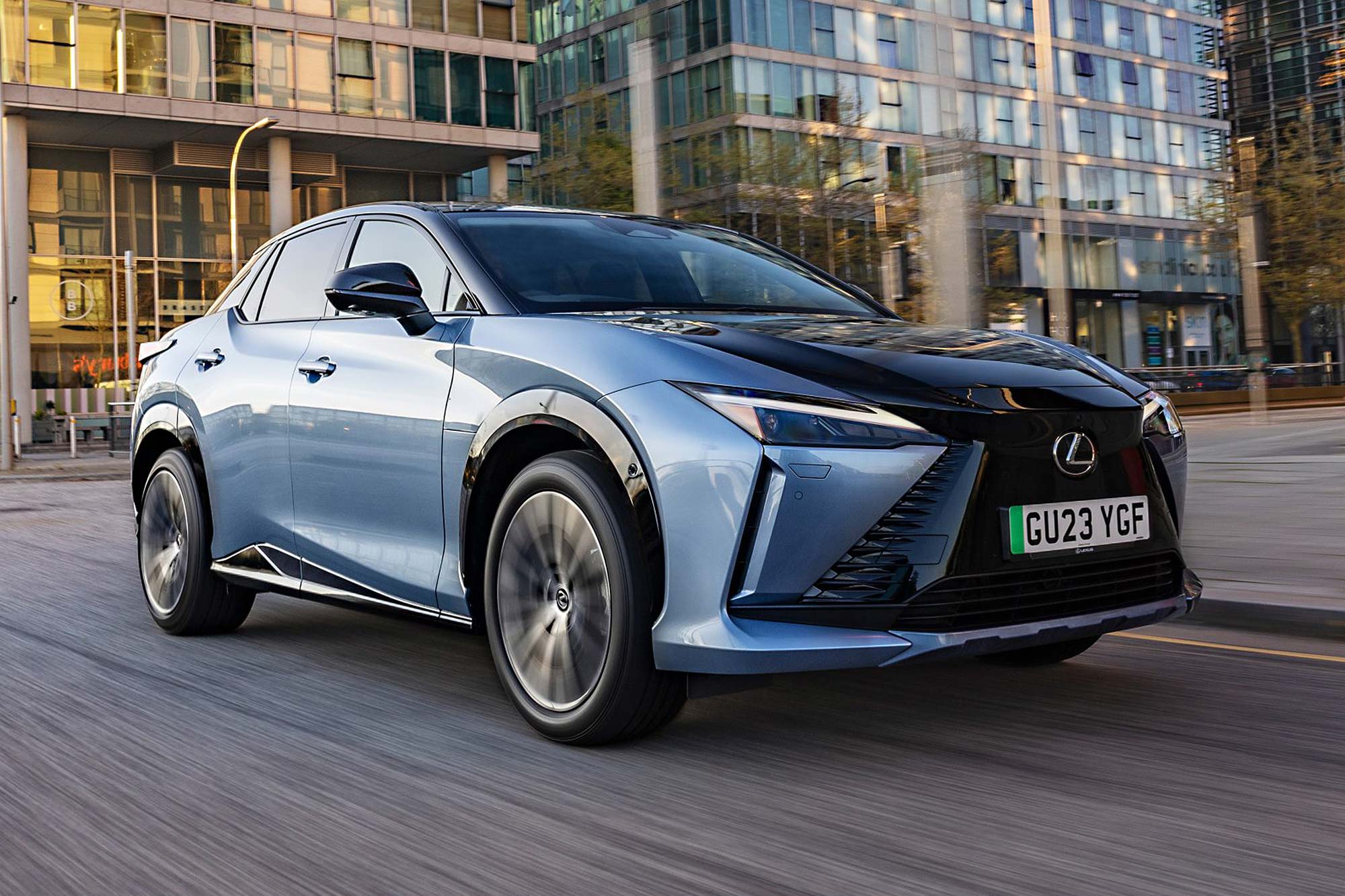
The Lexus RZ makes the strongest case if what you want from an electric SUV is calmness, quality and comfort rather than headline-grabbing numbers. It feels every inch a Lexus inside, with excellent refinement, lovely material quality and a distinctly soothing character on the road. The important point for 2026 is that the RZ is now easier to recommend than before. Earlier versions were undermined by relatively modest range, but the updated car addresses that with a larger battery, faster charging and a broader line-up. It is still not cheap, and rivals such as the Audi Q4 e-tron often look stronger on paper, but if you value luxury and serenity over simple spreadsheet logic, the RZ has a lot going for it.
The Lexus Rz in more detail
The RZ has always been an interesting proposition because it asks buyers to think slightly differently about what a premium electric SUV should be. Rather than chasing the most dramatic performance figures or the most overtly futuristic cabin, Lexus has focused on refinement, material quality and a feeling of calm.
That approach made sense from the start, but the original car also had a fairly obvious weakness: battery range. It simply did not go far enough on a charge to feel fully competitive at this price point, especially when compared with more practical, more efficient or simply cheaper alternatives.
The 2026 update is therefore a significant one, even if the RZ does not look radically different at first glance. Lexus has fitted a new 77kWh battery, improved the charging hardware, introduced battery pre-conditioning and broadened the range to include 350e, 500e and the new 550e F Sport derivatives.
That matters because it changes the RZ from being a lovely but flawed luxury EV into something more rounded. There is now up to 346 miles of official range in the line-up, which is a meaningful improvement over the old car, and the introduction of the more performance-led 550e F Sport gives the RZ some extra showroom appeal too.
At the same time, Lexus has kept the qualities that made the original RZ likeable. It remains beautifully screwed together, very quiet on the move and noticeably more relaxed in character than many electric SUVs. If the old car felt a bit like a premium detour that was slightly too compromised to recommend wholeheartedly, the latest one feels more like a properly sorted contender.
What's the best Lexus Rz trim and battery option?
For most buyers, the sweet spot is the RZ 350e Premium Plus.
The 350e now has the strongest range in the line-up and enough performance for the way most people actually use a premium SUV. Premium Plus adds the sort of extra comfort and tech kit buyers in this part of the market will appreciate, without pushing the price into Takumi territory.
The 500e makes sense if you want all-wheel drive and a stronger turn of speed, while the 550e F Sport is the one to consider if you are especially taken by the new steer-by-wire story and the sportier visual treatment. For a calmer, more convincing all-round ownership case, though, the 350e still looks like the smartest pick.
What’s the price of the Lexus Rz?
The current Lexus RZ range starts at £48,615 for the 350e Premium. The 350e Premium Plus is £49,615.
The all-wheel-drive 500e starts at £56,295 in Premium trim, rises to £57,795 in Premium Plus and reaches £62,595 in Takumi form. At the top of the range, the new 550e F Sport starts at £67,795 and the 550e F Sport Takumi costs £71,095.
That means the RZ is clearly a premium-badged purchase, and the upper end of the range pushes deep into territory where buyers will quite reasonably compare it with more overtly prestigious or better-known electric SUVs.
The key thing in the RZ’s favour is that it does feel expensive in the right ways. The cabin quality, refinement and equipment count go a long way towards justifying the outlay, even if some rivals still make a stronger value argument.
Alternatives to the Lexus Rz
The Audi Q4 e-tron is the conservative premium choice if you want badge appeal and a broad range, while the BMW iX3 remains a strong all-rounder for drivers who value ease of use and maturity over flamboyance.
You cannot ignore the Tesla Model Y either, particularly if space, charging infrastructure and efficiency matter more to you than cabin richness. It is less plush than the Lexus, but there is no question that it does a lot well.
Then there are the RZ’s mechanical relatives, the Toyota bZ4X and Subaru Solterra. Both undercut the Lexus and share some of its engineering, but neither comes close to matching the RZ’s interior quality or premium feel.
What's the interior like in the Lexus Rz?
This is where the RZ earns its badge. The cabin is one of the best things about the car, combining smart design, genuine material richness and the sort of tactile quality Lexus has built its reputation on.
Lexus Rz boot space and practicality
The RZ feels spacious enough in the front, with plenty of adjustment in the seats and a slightly lower, more car-like driving position than some SUV rivals. You still sit commandingly enough, but it does not feel like a towering off-roader.
Rear-seat space is competitive for the class. Adults should be comfortable enough, although the high window line can make the back feel a little darker than in some rivals. The middle rear seat is best treated as occasional use only.
Boot space stands at 522 litres, which is solid for this type of premium SUV and usefully ahead of some alternatives. Fold the rear seats and the space opens up enough to make the RZ a realistic family car, even if it is not the class leader for outright versatility.
What the RZ does especially well is create a sense of occasion around everyday practicality. The cabin feels durable, the storage is well judged and the general sense of quality means even ordinary journeys feel a bit more special than they might in a mainstream alternative.
Lexus Rz dimensions
The Lexus RZ measures 4,805mm long, 1,895mm wide & 1,635mm high. That makes it a sizeable SUV, though not an intimidating one.
It is larger than some obvious rivals in this part of the market, but it is still neatly proportioned enough to avoid feeling cumbersome. That balance helps it feel substantial and premium without drifting into cumbersome full-size SUV territory.
Tech and infotainment in the Lexus Rz
The RZ uses a 14-inch central touchscreen across the range, and visually it looks every inch the modern premium-SUV setup. The screen is bright, sharp and mounted high enough to be easy to glance at.
The issue is not the hardware so much as the interface. Lexus has made big strides compared with older systems, but the menus can still feel more complicated than they need to be, and there is too much diving around for certain functions.
At least the voice controls are effective, and smartphone connectivity is strong. Wireless Apple CarPlay is standard, while Android Auto uses a wired connection. Multiple USB-C ports, wireless charging and built-in navigation all feature, too.
The Takumi versions add the Mark Levinson sound system, which suits the RZ’s quiet cabin especially well. In a car this refined, a good audio setup becomes more than a luxury-extra box tick.
Materials available on the Lexus Rz
The RZ’s interior quality is one of the main reasons to choose it over a mechanically similar Toyota bZ4X or Subaru Solterra. It feels genuinely high-end throughout, with rich materials on the dashboard, doors and major contact points.
Even the lower trims feel expensive in the right areas, while the upper-end cars add more indulgent finishes and extra visual drama. Takumi’s upholstery in particular helps underline the RZ’s more design-led, luxury-focused side.
This is not a minimalist cabin in the Tesla mould, nor is it aggressively tech-led in the German premium style. It feels like a Lexus, which is to say calm, beautifully assembled and built around tactile satisfaction as much as wow-factor styling.
What's the Lexus Rz like to drive?
The RZ is not a sporty electric SUV in the traditional sense, but it is one of the more relaxing and refined ways to cover ground in this class. That makes it feel very true to the Lexus brand.
Lexus Rz range and performance
The updated RZ line-up now starts with the front-wheel-drive 350e, which produces 224PS. Lexus quotes 0-60mph in 7.5 seconds and up to 346 miles of range.
Above that sits the all-wheel-drive 500e, which produces 380PS and can travel up to 306 miles depending on version. At the top of the range is the 550e F Sport, with 408PS and up to 287 miles of range in standard F Sport form.
The 350e is likely to be enough for most buyers, while the 500e already offers more pace than the RZ’s character really demands. The 550e is there for those who want the flagship experience more than the last word in value or efficiency.
Performance data
| Model | Engine/battery size | Power | 0-62mph | Range/MPG |
|---|---|---|---|---|
RZ 350e | 77kWh | 224PS | 7.5 seconds | Up to 346 miles |
RZ 500e | 77kWh | 380PS | 4.6 seconds | Up to 306 miles |
RZ 550e F Sport | 77kWh | 408PS | 4.4 seconds | Up to 287 miles |
Lexus Rz driving and refinement
This is where the RZ really plays to its strengths. It rides with impressive softness and composure, and there is a genuine feeling of isolation from the road that many electric rivals struggle to match.
The steering is light and natural in conventional versions, while the new steer-by-wire setup on the 550e F Sport introduces a more unusual yoke-style steering arrangement. It is an interesting technical step and one that helps distinguish the RZ from its rivals, even if some buyers may prefer the familiarity of a normal wheel.
Body control is tidy enough, though there is a little more lean than in more overtly sporty alternatives. That is not really a problem, because the RZ is clearly engineered for comfort first.
Refinement is first class. Wind and road noise are very well suppressed, the power delivery is smooth and the whole car feels like it has been tuned to lower your pulse rather than raise it. That is a rare quality, and one of the Lexus’s main selling points.
How safe is the Lexus Rz?
The Lexus RZ has a five-star Euro NCAP safety rating, which is exactly what buyers in this class will expect.
It also comes with a very wide spread of standard safety systems through Lexus Safety System+, including pre-collision warning, lane assistance, adaptive cruise control, driver monitoring and safe-exit assistance. It is one of those cars that makes its safety story felt constantly through the depth of technology on board.
Running costs: What it's like to live with a Lexus Rz
The RZ should be easier to live with than the earlier car thanks to its range and charging improvements, but it is still a premium electric SUV with premium purchase and insurance costs. This is not a bargain-minded option.
Lexus Rz charging times and costs
The RZ now benefits from faster charging through improved battery pre-conditioning, cooling and the addition of a 22kW AC onboard charger.
On DC rapid charging, Lexus quotes 10 to 80 per cent in 28 minutes. That is a useful improvement and helps make the RZ far more convincing as a longer-distance EV than before.
At home, the 22kW onboard charger is welcome if you have access to the right hardware, though many UK domestic users will still be charging at lower AC rates overnight. The broader point is that the updated RZ now feels more properly equipped for real EV life than the old one did.
Lexus Rz warranty and servicing
The Lexus RZ comes with a standard three-year/60,000-mile manufacturer warranty. Once that expires, qualifying services at an official Lexus Centre can activate a further 12 months or 10,000 miles of vehicle cover at a time, potentially extending protection up to 10 years or 100,000 miles.
The EV traction battery is covered separately for eight years or 100,000 miles, including protection against its capacity falling below the specified level. Lexus Battery Care can renew eligible battery cover after servicing until the RZ reaches 10 years old or one million miles.
Lexus Rz insurance groups
Insurance groups remain relatively high, which is no surprise for a premium electric SUV with a lot of expensive technology on board.
The 350e sits around groups 38 to 40, while the more powerful all-wheel-drive versions rise to groups 43 to 45. That means the RZ is not going to be especially cheap to insure, particularly in 500e and 550e form.
How much does it cost to tax a Lexus Rz?
After year one, the Lexus RZ pays the standard annual VED rate, currently £200.
Because every current RZ sits above the £50,000 Expensive Car Supplement threshold for EVs, the whole range also attracts the additional annual charge from years two to six. At current rates, that adds £440 a year, taking the total annual bill to £640 during that period.
What trims are available with the Lexus Rz?
The current Lexus RZ line-up is built around Premium, Premium Plus, Takumi and F Sport grades, depending on powertrain.
Premium already comes with a strong equipment list, which is why the 350e Premium makes a decent entry point. Premium Plus adds the extra comfort and convenience kit most buyers in this class are likely to want.
Takumi is the more indulgent luxury choice, with richer materials, extra audio and more visual drama, while F Sport introduces the sportier styling, flagship positioning and, in the 550e, the more unusual steer-by-wire setup.
Ask the Drive experts: common questions
How much does the Lexus RZ cost?
What’s the maximum range of the Lexus RZ?
Is the Lexus RZ practical?
What is the best Lexus RZ version?
Get our latest advice, news and offers
Keep me updated by email with the latest advice, news and offers from Drive.
.jpg)
.jpg)