Peugeot Boxer Review

Written By Ivan Aistrop
- 2014
- Van
- Diesel
What we love
Strong and flexible diesel engines
Huge choice of body sizes and conversions
Competitive load volume and payload figures
Things to consider
Unsettled ride and considerable road noise
Awkward driving position
Newer rivals feel more sophisticated
The DRIVE take on the Peugeot Boxer, is it the right car for you?
The Peugeot Boxer remains a thoroughly capable workhorse for businesses that prioritise carrying capacity, payload and value over refinement. Its muscular diesel engines cope well with heavy loads, the cargo area is broad and square, and the extensive range of body lengths, roof heights and conversion platforms should cover almost every commercial requirement.
Its age is increasingly difficult to ignore, though. The driving position is awkward, the ride rarely settles and the cabin becomes noisy at speed. A Ford Transit, Mercedes-Benz Sprinter or Volkswagen Crafter feels more modern and polished, but the Boxer still makes sense when straightforward practicality matters more than how sophisticated a van feels from behind the wheel.
The Peugeot Boxer in more detail
Large vans often stay in production far longer than passenger cars, and the Peugeot Boxer is a good example. The current model dates back to 2014, but underneath it is an evolution of the Boxer first launched in 2006. That makes it one of the older designs in the class, although regular updates have helped keep its technology, equipment and powertrains competitive.
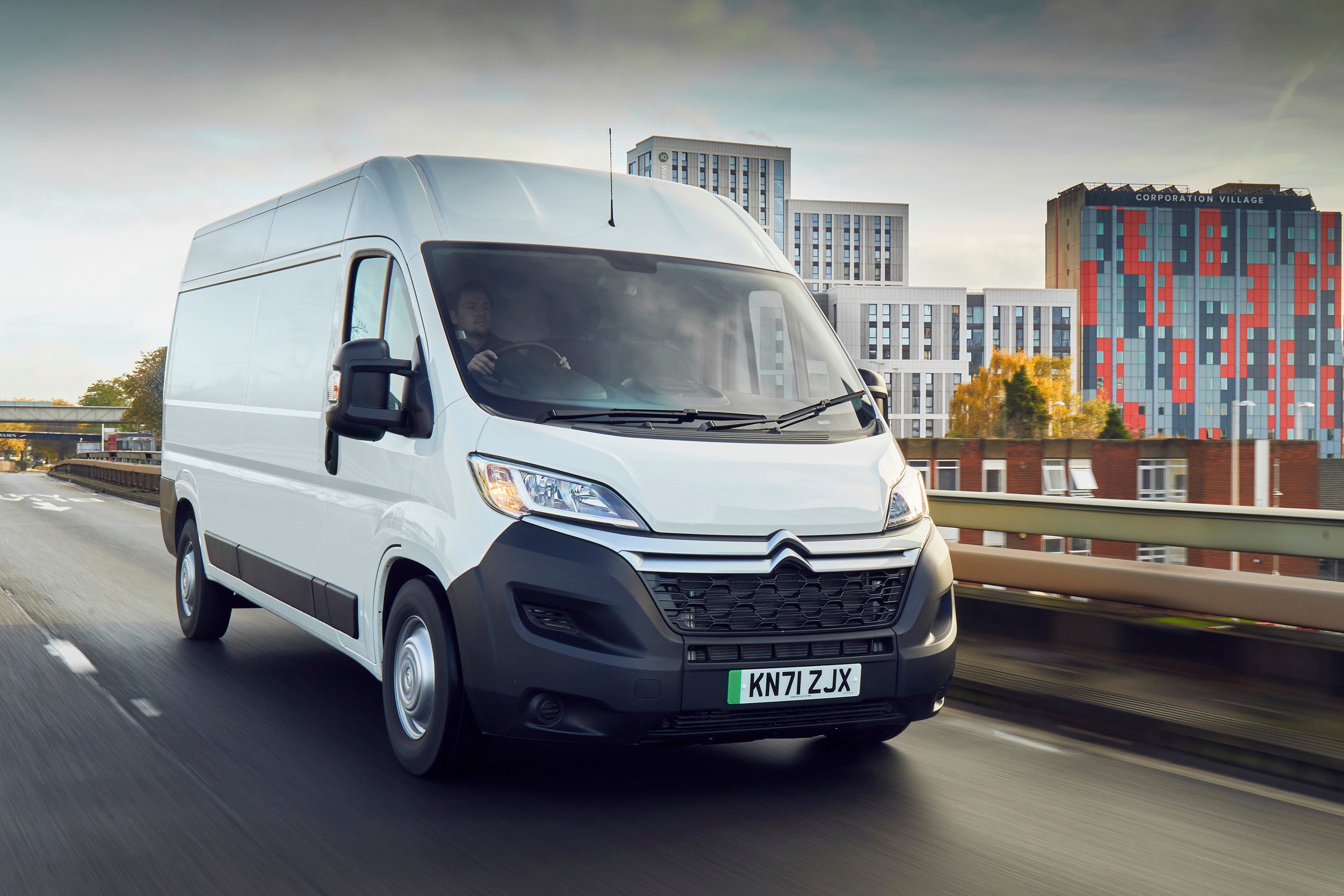
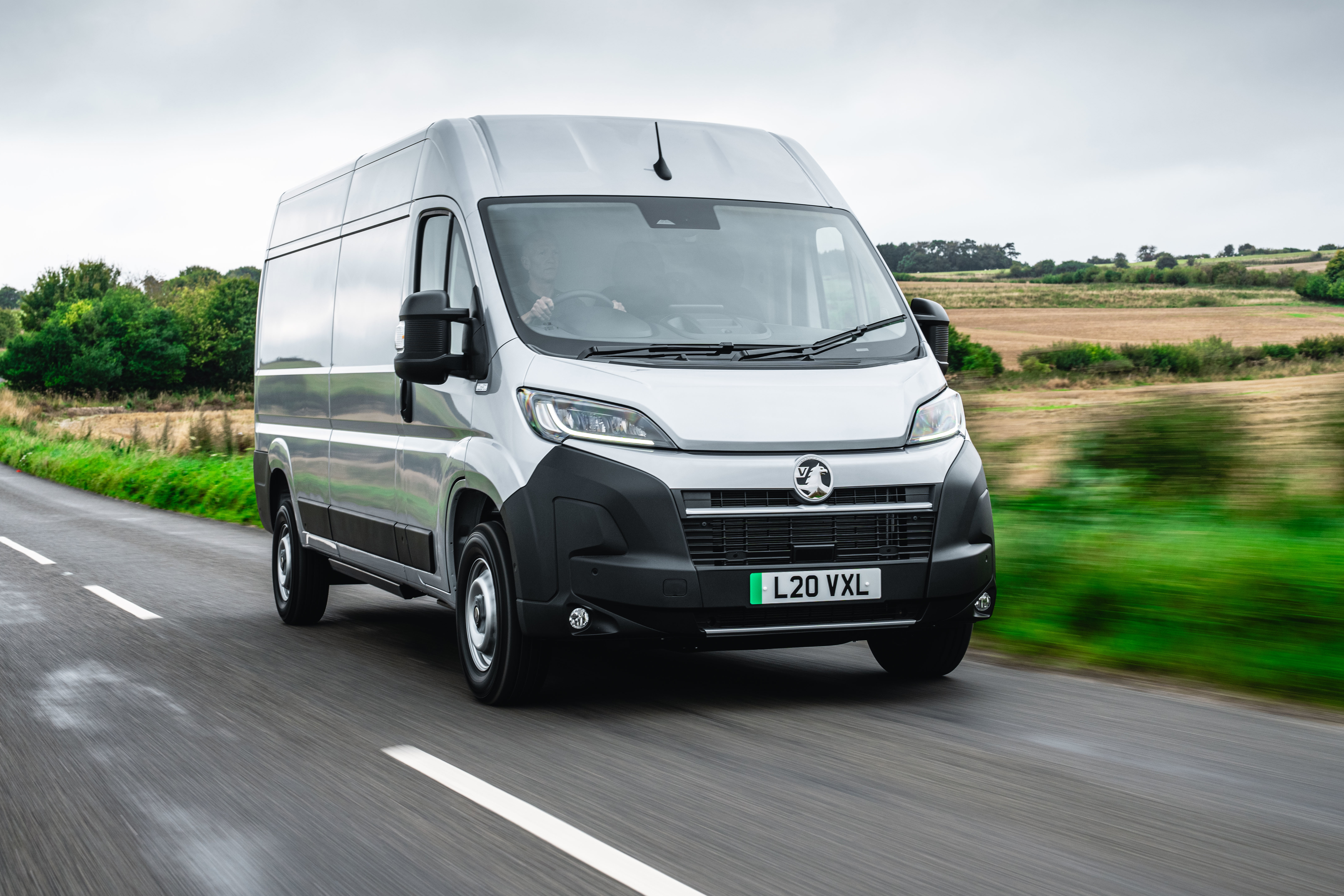
The Boxer is closely related to the Fiat Ducato, Citroen Relay and Vauxhall Movano, with all four now sitting within the Stellantis group. That shared engineering gives buyers a wide choice of closely related large vans, so price, specification, dealer support and finance can be just as important as the badge on the front.
Current Boxer models are available with diesel and electric powertrains, along with a broad choice of body lengths, heights and conversions. That flexibility is one of its biggest strengths, making it suitable for everything from straightforward delivery work to specialist conversions and heavier-duty use.
If you are considering an electric Boxer, later models are the ones to look for. The 2024 update brought a much stronger electric powertrain, a larger battery and a significant improvement in range compared with earlier versions, making it a more realistic option for businesses with predictable daily mileage and access to charging.
Despite its age, the Boxer still makes a strong practical case. It offers useful payload and load capacity, a wide range of configurations and a competitive level of standard equipment. It is not as refined or car-like to drive as some newer rivals, but for buyers who place capacity, versatility and value ahead of outright sophistication, it remains a credible large-van choice.
What's the best Peugeot Boxer trim and engine option?
The Boxer is available in a wide range of body lengths, roof heights and configurations, so choosing the right version matters. The best approach is to buy only as much van as you genuinely need, keeping purchase price and running costs down without compromising the space or payload required for the job.
Diesel versions remain the better choice for high-mileage and long-distance work, especially where the van is regularly carrying heavier loads. The electric Boxer is better suited to predictable local routes with regular access to charging, where lower day-to-day running costs can offset its higher purchase price.
What’s the price of the Peugeot Boxer?
Current diesel Boxer Panel Vans range from £33,540 to £40,547 on the road excluding VAT.
The entry-level L2H1 BlueHDi 140 manual Professional is the cheapest option, while the more useful L2H2 starts at £34,350. Asphalt trim and the eight-speed automatic add to the price, with the 180PS automatic sitting at the top of the range.
Fleet discounts, dealer support and finance offers can make a significant difference to the final cost, so quotes should be compared carefully.
Used Boxers are much cheaper, but a post-2024 model is worth targeting for its updated engines, revised dashboard, automatic gearbox and improved safety equipment.
Alternatives to the Peugeot Boxer
The Volkswagen Crafter should be near the top of the shortlist. It has a more car-like driving position, a higher-quality cab and feels more polished on the road, making it particularly appealing for drivers covering long distances.
The Ford Transit is another strong all-rounder, with good road manners and a huge servicing and conversion network. The Mercedes-Benz Sprinter is more refined again, although it can be more expensive to buy and repair.
The Citroen Relay, Fiat Ducato and Vauxhall Movano are much closer to the Boxer mechanically, so price, availability and dealer support are likely to be the main deciding factors. The latest Renault Master is also worth considering for its newer design and competitive efficiency.
What's the interior like in the Peugeot Boxer?
Climb into the Boxer, and it is quite a climb, and you will find a cabin designed around durability and ease of use rather than visual flair. The 2024 update made the dashboard smarter and less cluttered, but Peugeot sensibly retained physical controls for important functions.
Peugeot Boxer boot space and practicality
The Boxer is offered in a broad range of panel van and chassis configurations, with three body lengths, three roof heights and 3.5-tonne or 4.25-tonne Gross Vehicle Weight options.
Panel Van load volume ranges from 10m³ in the L2H1 to 17m³ in the L4H3, with load lengths of roughly 3.1 to 4.1 metres depending on body size. Width between the wheelarches is just over 1.4 metres.
Payload varies considerably by version. Diesel models can carry from around 1,235kg to just over two tonnes, while electric versions generally carry less. Towing capacity reaches up to 3,000kg on selected diesels and 2,400kg on the e-Boxer.
Twin rear doors and a nearside sliding door are standard, with a second sliding door available on some versions. The cab seats three across the front and is wide enough to do so comfortably.
Peugeot Boxer dimensions
The Boxer Panel Van measures from 5,413mm to 6,363mm long, around 2,050mm wide and between 2,254mm and 2,779mm high, depending on body style.
Load length ranges from 3,120mm to 4,070mm, with up to 2,172mm of internal height and 1,422mm between the wheelarches.
Its size means larger versions need more care in tight spaces, while H2 and H3 models may be excluded by some car-park height restrictions.
Tech and infotainment in the Peugeot Boxer
The Boxer’s infotainment has evolved considerably over its long life, but current models still keep things relatively simple.
Diesel versions use a small central touchscreen with DAB, Bluetooth and USB connectivity, while electric models add a digital instrument display and a slightly larger screen. Higher-spec technology packs upgrade the Boxer to a 10-inch touchscreen with navigation, Apple CarPlay, Android Auto, wireless phone charging and additional USB ports.
The system is not especially sophisticated by modern standards, but that works in its favour. The menus are straightforward, the main functions are easy to find and there is less touchscreen complexity than in many newer vans.
Materials available on the Peugeot Boxer
The Boxer’s cabin is designed first and foremost for hard commercial use. Most surfaces are made from durable, wipe-clean plastics, while the latest dashboard looks cleaner and more modern than before.
Buttons and switches feel sturdy enough for everyday work, and the overall finish should stand up well to regular use. It does not feel as polished as a Volkswagen Crafter or Mercedes-Benz Sprinter, but the cabin is robust, functional and well suited to life as a working van.
What's the Peugeot Boxer like to drive?
The Boxer becomes manageable once the driver has adjusted to its dimensions, but the restless ride, slow steering and high noise levels reveal the age of the underlying design.
Peugeot Boxer range and performance
Most current Boxers use a 140PS 2.2-litre diesel, available with either a six-speed manual or eight-speed automatic. The manual will suit most operators, with strong low-rev pull and enough performance for everyday work, while the automatic is the more relaxed choice for heavier loads, frequent traffic and longer days behind the wheel.
A 180PS diesel is also available with the automatic gearbox. It offers more performance, but the 140PS version should be sufficient for most businesses.
The latest e-Boxer is much stronger than earlier electric versions, with a 110kWh battery and 280PS motor. Normal mode gives more than enough performance for most situations, while Power feels unnecessarily forceful in a van of this size. Eco reduces performance and limits top speed, but remains usable for urban and local work.
Performance data
| Model | Engine/battery size | Power | 0-62mph | Range/MPG |
|---|---|---|---|---|
2.2 BlueHDi 140 manual | 2.2-litre | 140PS | TBC | Up to 44.8mpg |
2.2 BlueHDi 140 automatic | 2.2-litre | 140PS | TBC | Up to 40.4mpg |
2.2 BlueHDi 180 manual | 2.2-litre | 180PS | TBC | Up to to 37.2mpg |
Peugeot Boxer driving and refinement
The Boxer is easier to manoeuvre than its size suggests, thanks to light steering and a generous amount of lock. The steering itself is slow, so low-speed work still requires plenty of wheel movement, but the turning circle is better than you might expect from such a large van.
It never feels like a van that encourages fast driving, though. Its size is always apparent, especially on narrow roads and in tighter urban areas, so a measured approach suits it best.
Ride comfort is one of the Boxer’s weaker areas. It can feel jittery when lightly loaded and becomes more unsettled over rougher surfaces, although adding weight to the load bay helps slightly. Newer rivals such as the Volkswagen Crafter and Mercedes-Benz Sprinter feel more composed.
How safe is the Peugeot Boxer?
The current Boxer received a five-star result in Euro NCAP’s 2025 Commercial Van Safety assessment, replacing the Gold classification awarded under the organisation’s previous system.
Standard driver-assistance equipment includes automatic emergency braking, lane support, traffic-sign recognition, intelligent speed assistance and driver-attention monitoring.
Three front airbags are fitted, while additional side and curtain airbags are available according to specification.
Optional equipment can include blind-spot monitoring, rear cross-traffic alert, front and rear parking sensors, a reversing camera and a digital rear-view mirror.
The Boxer’s safety specification changed considerably during its long production life. Buyers considering a used example should therefore check the equipment fitted to the individual vehicle rather than assuming it matches the current model.
Running costs: What it's like to live with a Peugeot Boxer
The 140PS manual should deliver the lowest overall running costs, although body size, load and driving pattern will have a greater influence on fuel consumption than the difference between the available engine outputs.
Peugeot Boxer fuel economy
Official diesel economy varies widely across the Boxer range because body size, weight and specification have such a big effect. The most efficient 140PS manual versions can return more than 40mpg on paper, while heavier automatic and 4.25-tonne models sit much lower.
For most operators, low-to-mid 30s mpg is a more realistic expectation in mixed use, with larger or heavily loaded Boxers likely to use noticeably more fuel, particularly around town.
The 2024 engine updates improved efficiency, but choosing the smallest body that suits the job, keeping motorway speeds sensible and avoiding unnecessary idling will have the biggest impact on day-to-day fuel costs.
Peugeot Boxer warranty and servicing
The Peugeot Boxer comes with a three-year commercial-vehicle warranty. Mileage is unlimited for the first two years, with the third year capped at 100,000 miles.
Servicing requirements vary with use, but keeping a complete maintenance record is especially important for vans carrying heavy loads, covering high mileages or working in demanding conditions.
Peugeot Boxer insurance groups
Current diesel Boxer models generally sit in insurance groups 36 to 38.
The final premium will depend on the body, Gross Vehicle Weight, annual mileage, type of business use, security arrangements and where the van is kept overnight.
Specialist conversions may require a dedicated commercial-vehicle policy rather than standard Panel Van cover.
How much does it cost to tax a Peugeot Boxer?
Boxers with a revenue weight of up to 3,500kg are normally taxed as Light Goods Vehicles, with a standard annual rate of £360 for 2026/27.
Heavier versions fall into the goods-vehicle tax system, where the amount due depends on plated weight, axle configuration and taxation class. Operators should check the V5C for the exact vehicle before budgeting for annual tax.
What trims are available with the Peugeot Boxer?
Professional is the core trim across most of the current Boxer diesel range and covers the basics well. Standard equipment includes air conditioning, cruise control, rear parking sensors, electric windows, heated and electrically adjustable mirrors, DAB radio and Bluetooth.
Asphalt is available on selected L2H2 and L3H2 Panel Vans and adds the features most useful to drivers spending long days behind the wheel. These include a larger touchscreen with Apple CarPlay and Android Auto, a reversing camera, front parking sensors, automatic climate control, automatic lights and wipers, and high-beam assistance.
For most businesses, Professional will be sufficient. Asphalt is the better choice if driver comfort and easier manoeuvring matter more.
The wider Boxer range spans Panel Van, Crew Van and a variety of chassis-based conversions, while the 140PS diesel is available with manual or automatic transmission in selected versions. The 180PS engine is reserved for the heavier 4.25-tonne L4H2 automatic.
Ask the Drive experts: common questions
What is the Peugeot Boxer’s maximum payload?
How much can a Peugeot Boxer carry?
How much does a Peugeot Boxer cost?
What MPG does a Peugeot Boxer achieve?
Get our latest advice, news and offers
Keep me updated by email with the latest advice, news and offers from Drive.
.jpg)
.jpg)
.jpg)
.jpg)