Ford Transit Review

Written By Andrew Brady
- 2014
- Van
- Diesel, Electric
What we love
More refined and better to drive than many of its rivals
Impressive interior quality
Powered by excellent range of diesel engines
Things to consider
Other vans offer more overall loadspace
2.0 EcoBlue engine needs frequent AdBlue changes
Suspension is on the firm side
The DRIVE take on the Ford Transit, is it the right car for you?
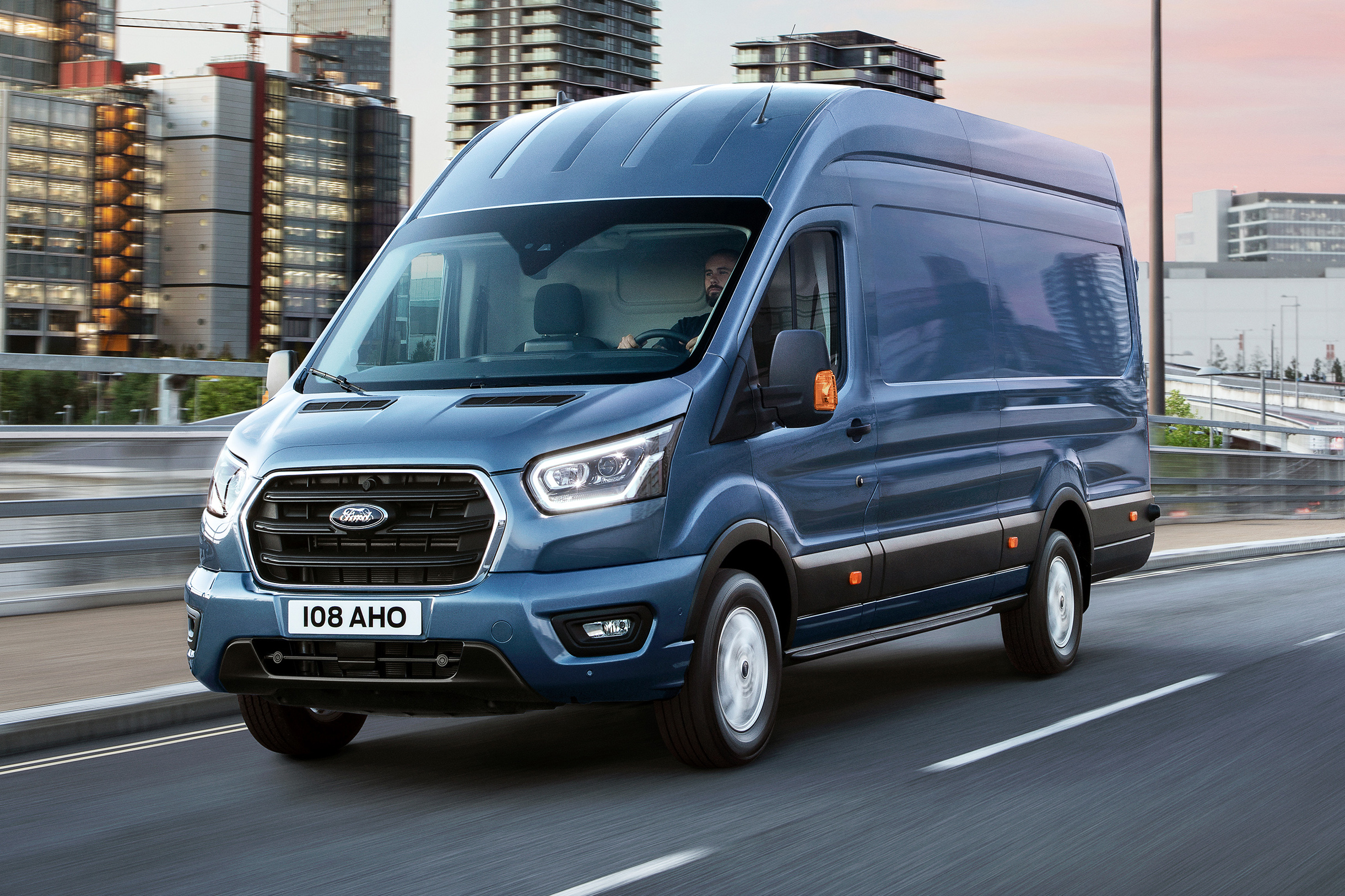
It isn't by chance that the Ford Transit has become the knee-jerk choice for UK van buyers over several decades. Throughout that entire time, it's provided customers with affordable, dependable and practical commercial transport, and most versions have also been better than most of their rivals to drive. The latest version is no different, and continues to be a massive seller.
The Ford Transit in more detail
Once upon a time, if you mentioned the Ford Transit, you were essentially talking about the same vehicle, albeit one available in a wide range of shapes, sizes and bodystyles. These days, however, things are a bit different. The Transit name is now used for an entire range of Ford commercial vehicles, from very diverse mechanical backgrounds. At the smaller end of the scale, you have the Transit Courier (based on the Ford Puma) and Transit Connect (based on the Volkswagen Caddy) small vans, in the middle you have the Transit Custom (based on the Volkswagen Transporter) one-tonne van, while the classic Ford Transit name is reserved for this, the two-tonne van, the largest in the line-up.
But although the mechanicals at the core of the two-tonne Ford Transit remain constant, don't go thinking that there's any less choice. The biggest Transit comes in two different heights and three different lengths, making up five different size variations in total. And that's just the panel van variant: you can also choose from Double-Cab-In-Van variants with an extra row of seats, buses, or you can simply buy a chassis cab version and have a whole variety of different body types built onto it, either at source by Ford, or by an external conversion firm.
There's as much choice on the powertrain front. The big Transit can be had with front-, rear-, or all-wheel drive, with a variety of diesel engines, with manual or automatic gearboxes, and its also available with a couple of all-electric powertrains.
With so much choice regarding so many different aspect of the vehicle, you can be pretty sure that, whatever your use case for your large van, there's probably a Transit to suit it.
And like any vehicle that's been on sale since 2014, there's been lots of change to the Transit lineup over time. We'll try to touch on the main parts of this for the benefits of buyers who might be considering a used Transit, but for the most part, we'll concentrate mainly on the Transit offering as it is today.
What's the best Ford Transit trim and battery option?
That will depend entirely on the use case of your van, and there are so many variables with the Transit that the precise answer to that question will be different for everybody.
A few things to keep in mind, though. If your work takes place mainly within the local area, and depending on how/where you're able to charge it, then opting for the electric version could save you a significant amount long-term in running costs. If you need the ability to take your work farther afield, though, then one of the diesels will be a better bet.
When it comes to the size and bodystyle of your van, go for the smallest one you can get away with, as that will likely reduce your running costs, but don't overdo it and leave yourself with a van that's too small to be able to carry out your work easily and efficiently.
With trim levels, it's a bit difficult because the various trims come with a different amount of kit depending on your powertrain and a few other factors. For instance, there's no air-conditioning in entry-level Leader trim if you have a diesel engine, but go for the electric Transit in Leader form, and it is provided. That's something you and your colleagues will really want, so be sure to keep an eye out for it.
What’s the price of the Ford Transit?
Wading through the Ford Transit pricelist is definitely a marathon and not a sprint. There are just so many variables - size, bodystyle, power source, gearbox, driven wheels, weight class, etc - that the number of individual versions available runs into the hundreds. And that's just when you're talking about the panel van: factor in the double-cab-in-van versions, buses, chassis cabs and all the other conversion types available, and you're easily talking about the same amount again.
Prices begin at around £46,000 (excluding VAT on the assumption that you'll be able to claim that back) for the smallest, most basic of Transits. From there, prices escalate according to your choices on the nature of the van you need. It doesn't stop there, either, because there are a vast number of optional extras and accessories available, the availability of which are unbelievably complicated. The highest non-VAT price we've seen for a Transit panel van is around £65,000, but like we say, that could still elevate significantly with options.
Compared with rivals, the Transit certainly isn't the cheapest large van out there, but it's certainly not the most expensive, either, and it feels like pretty good value for the ability you get in return.
Alternatives to the Ford Transit
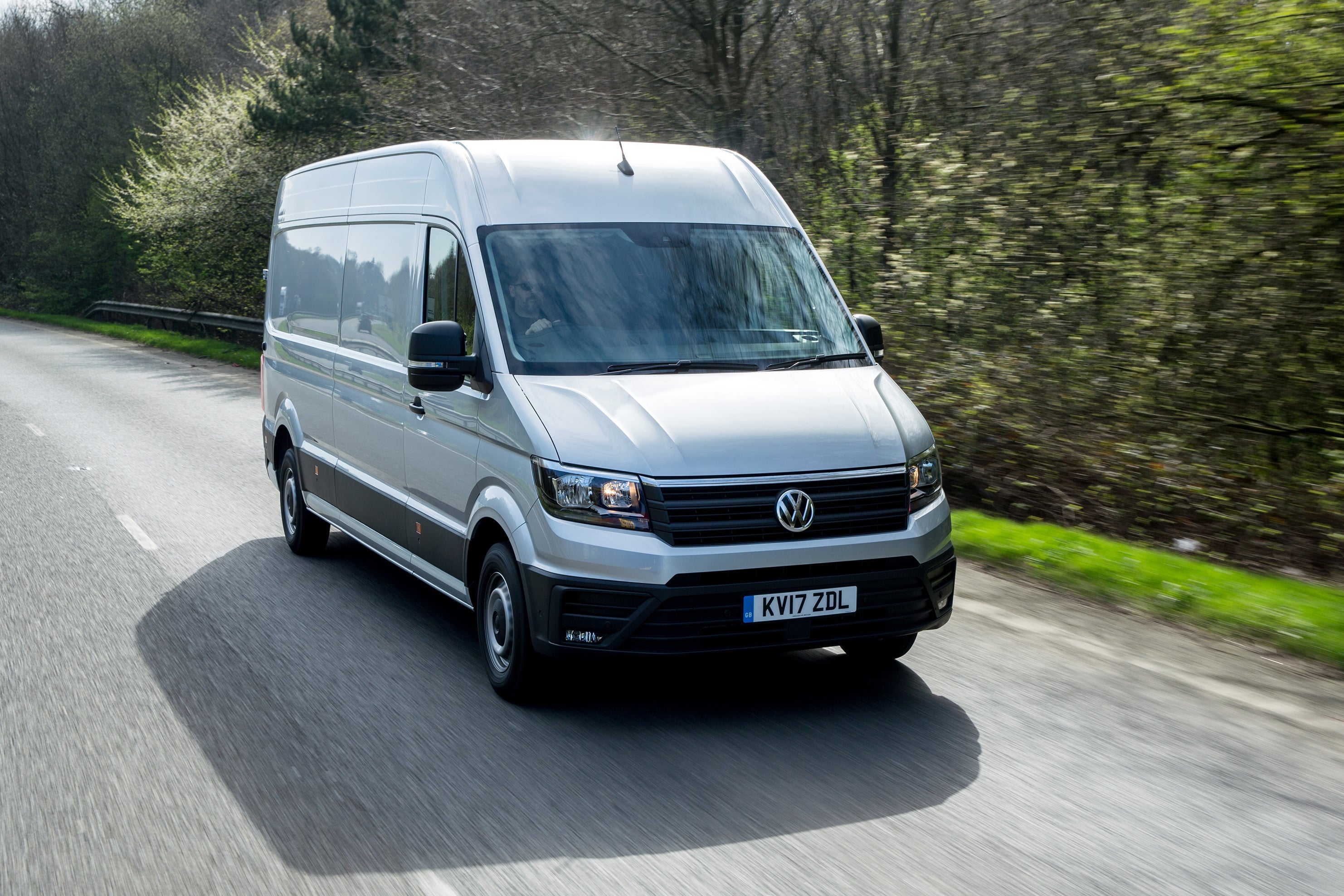
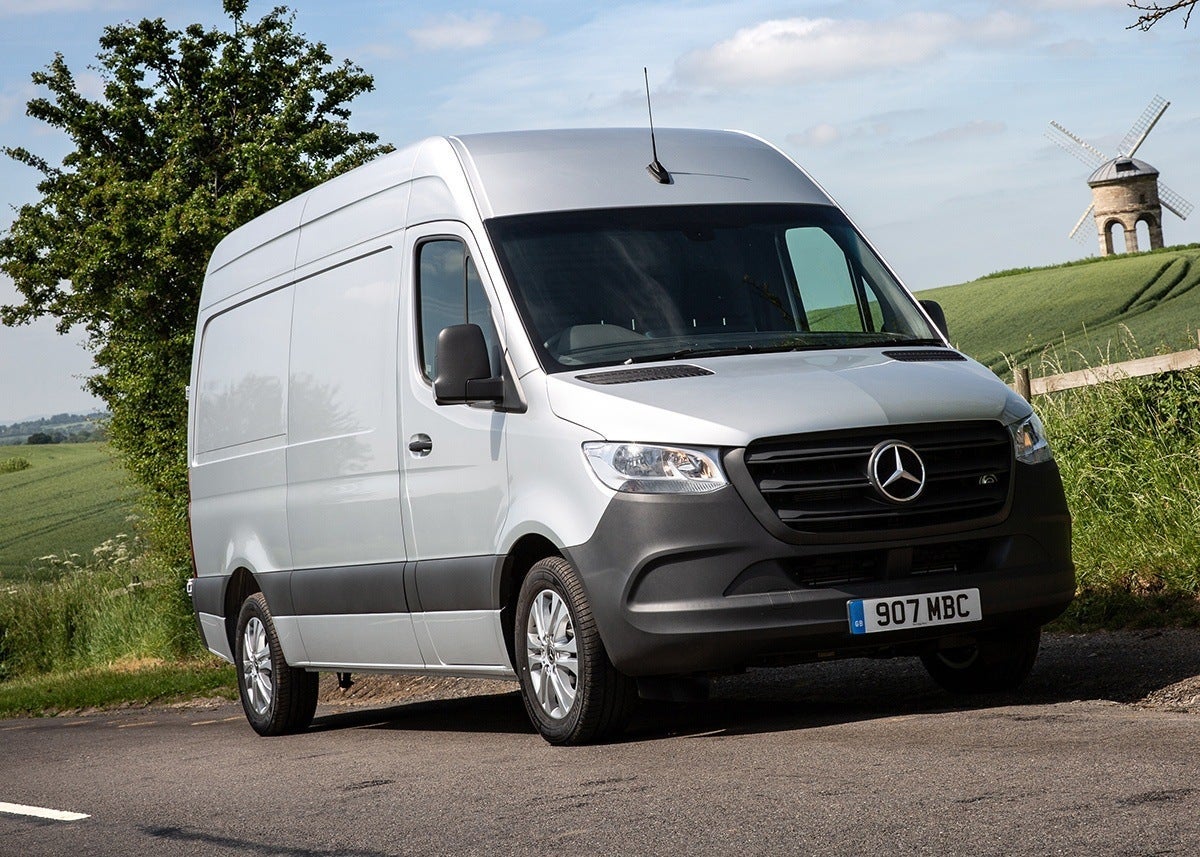
The Ford Transit's rivals in the large van arena are numerous and vary varied in their appeal. At the more premium end of the scale, you have the Volkswagen Crafter and Mercedes-Benz Sprinter.
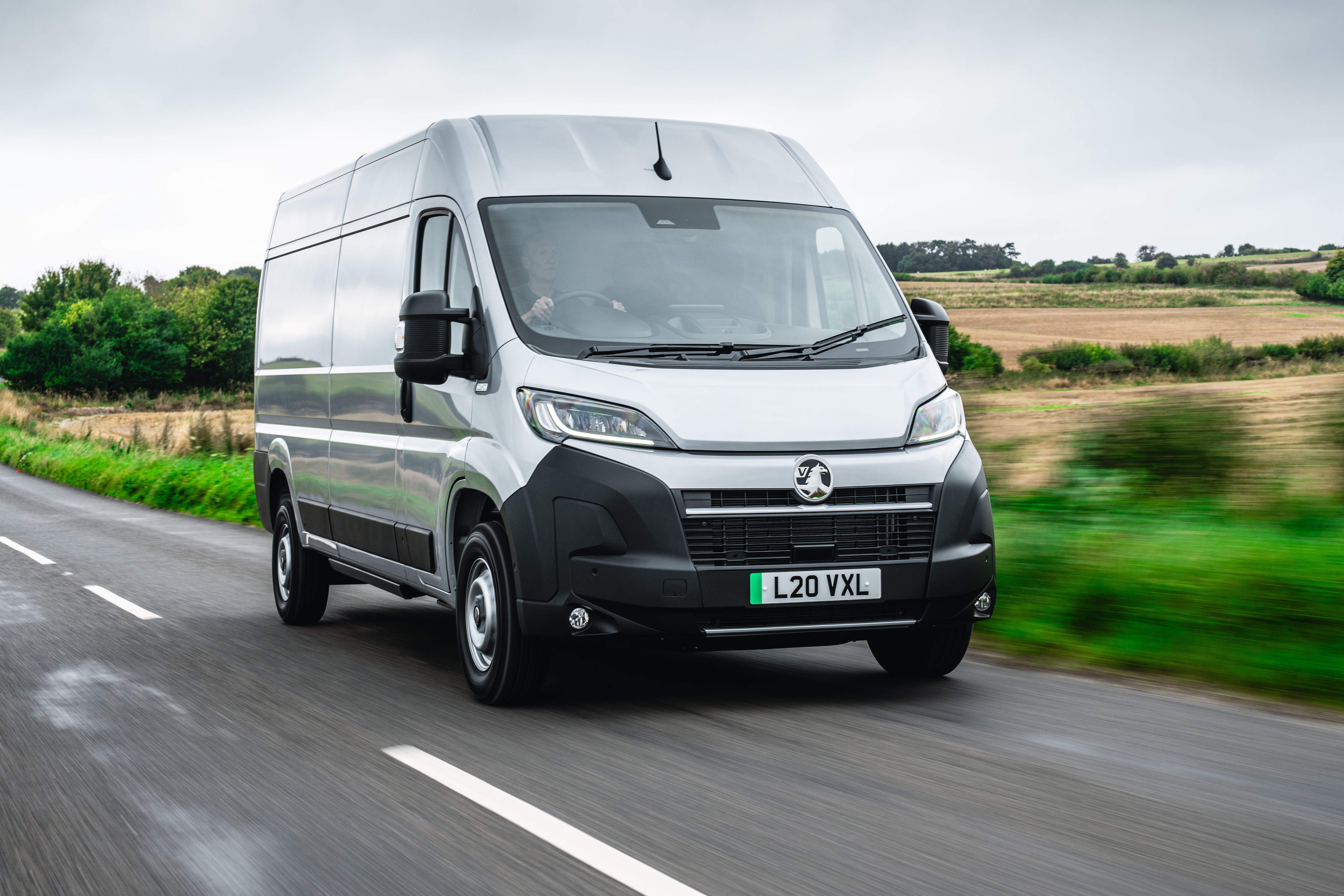
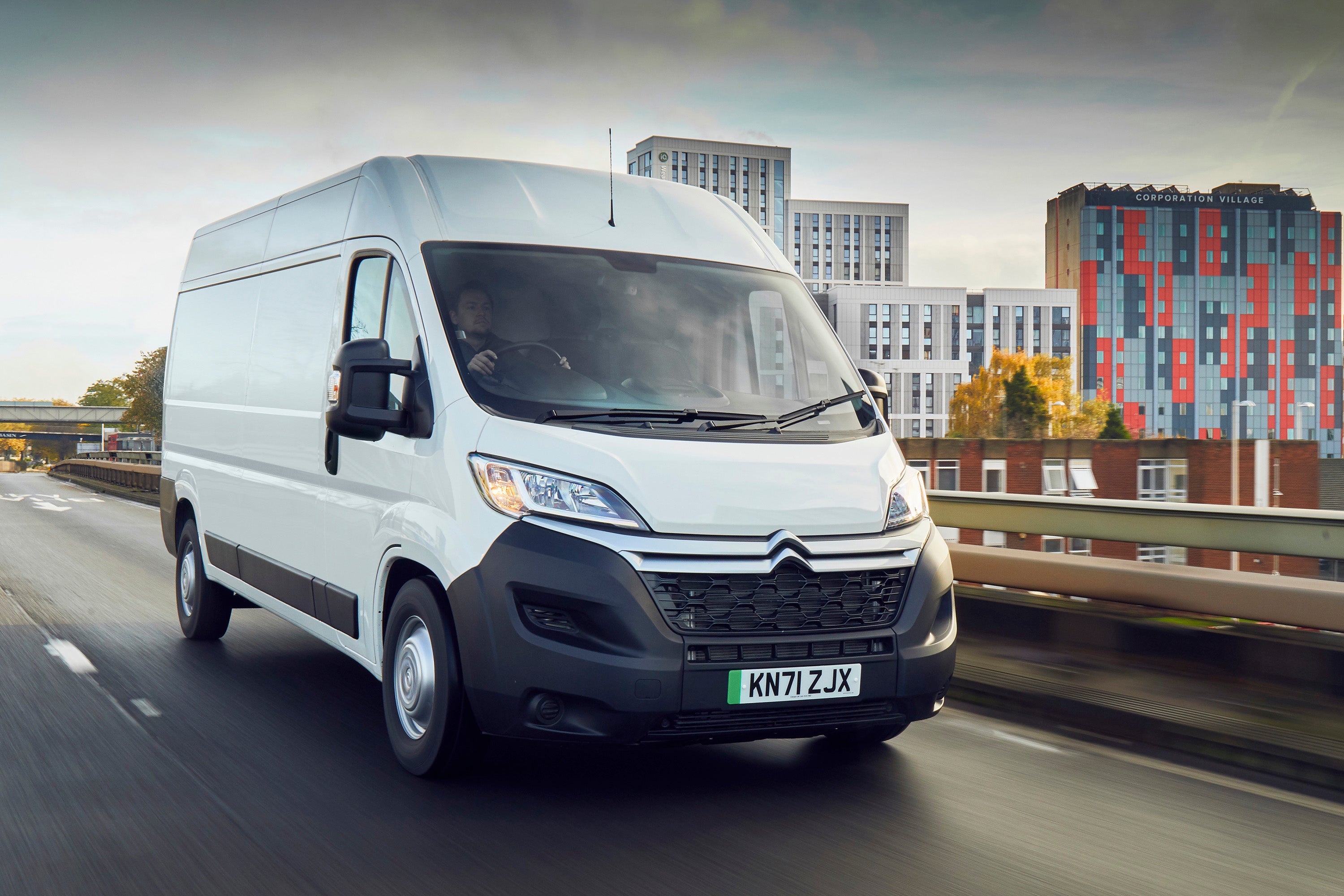
At the more workhorse-like end of the scale, you have the various large-van offerings from the Stellantis stable, those being the Citroen Relay, Fiat Ducato, Peugeot Boxer, and Vauxhall Movano, all of which are mechanically identical to one another (badge engineering - the process of several different companies offering identical vehicles to share development and production costs - is especially rife in the van sector). Toyota also offers a version of the same van in the form of the Proace Max, despite not being part of Stellantis. Other affordable options in the class include the Iveco Daily and Maxus Deliver 9
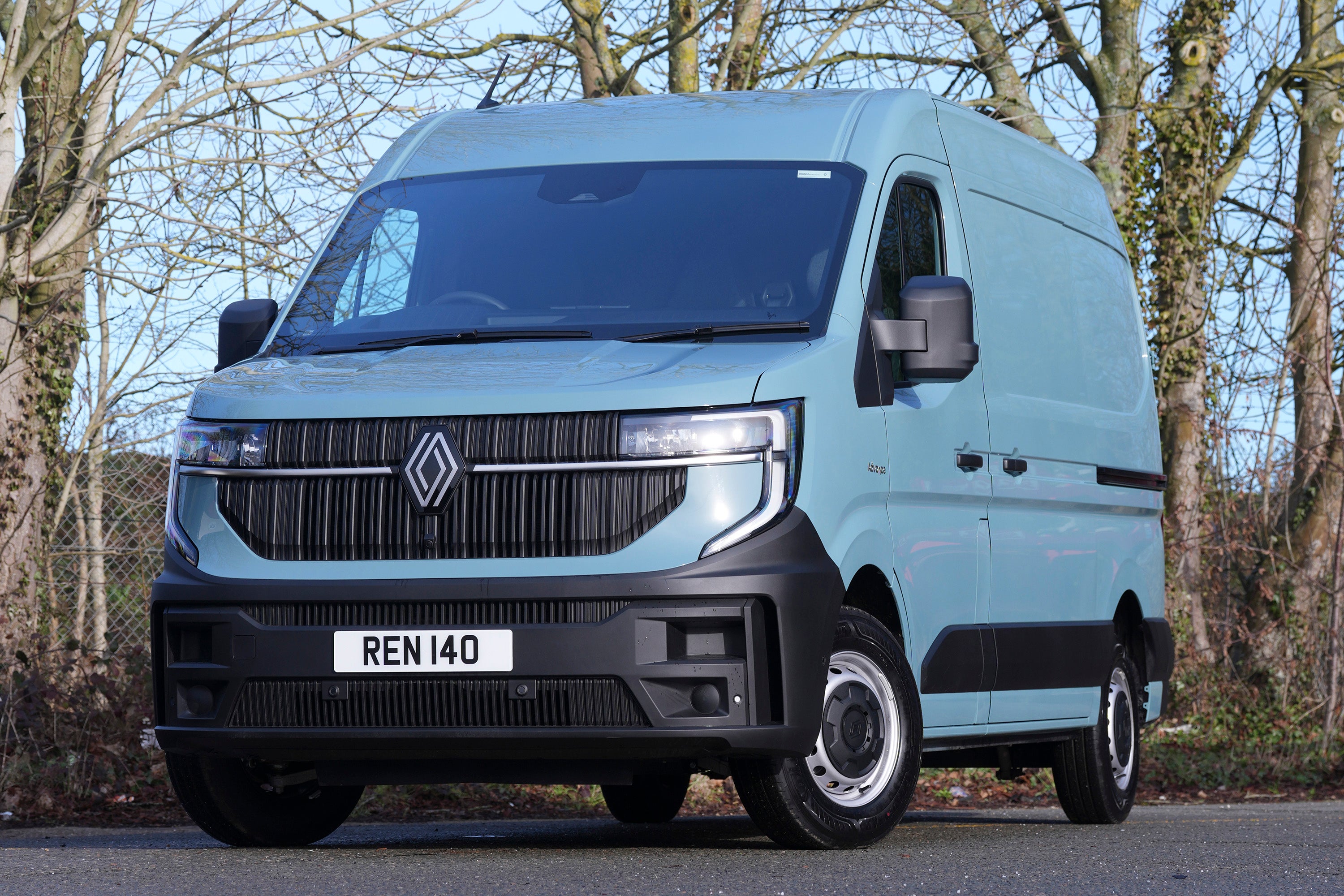
We see the Ford Transit sitting around the middle of the pack when it comes to desirability and pricing, an area of the market is shares with the Renault Master and Nissan Interstar, another pair of badge-engineered twins.
What's the interior like in the Ford Transit?
The huge range of size and weight options offered by the Transit means there should be a Transit for just about any task, and the cabin is one of the more pleasant-feeling ones in the class, but when it comes to maximum load capacities, the big Ford actually trails many of its rivals.
Ford Transit boot space and practicality
As we've mentioned already, the Ford Transit comes in a variety of different forms, and its overall level of practicality will depend on which you choose.
In terms of loadspace dimensions, all versions of the panel van have a loadbay with a maximum width of 1,784mm, or 1,392mm when measured between the wheelarches. The height of the loadbay obviously depends on which roof height you choose, and even then, precise height measurements have quite a bit of of variation depending on what length of Transit they're combined with, and what kind of powertrain sits on board. Depending on your choices, you loadbay height will be anywhere between 1,786mm and 2,125mm.
If you're interested in the length of your loadbay, it measures 3,083mm long in the L2 version, extending to 3,533mm in the L3 and 4,256mm in the L4.
All of that equates to overall maximum load volumes of 10.0 cubic metres in the L2H2, 11.2 cubic metres in the L2H3, 11.5 cubic metres in the L3H2, 13.0 cubic metres in the L3H3, and a maximum of 15.1 cubic metres in the L4H3. In almost all cases, though, that volume drops by around 0.5 cubic metres if your Transit has rear- or four-wheel drive.
And even with front-drive versions, these maximum load volumes are some way lower at pretty much every stage than they are for several rivals, those rivals including the Volkswagen Crafter and all of those from the Stellantis stable. That's certainly something to bear in mind if outright capacity is a pressing priority for your business.
Obviously, double-cab-in-van version lose more cargo space due to them having an extra row of seats so that you can carry more colleagues. Load volumes for those stand at between 6.1 cubic metres and 10.6 cubic metres, smallest version to largest version.
In terms of Gross Vehicle Weight (GVW), there's a large amount of variation, ranging anywhere between 3.1 tonnes right up to 5.0 tonnes. There's just as much variation with payloads, which vary from less than 1.0 tonne all the way up to almost 2.5 tonnes.
Access to the business end of your Ford Transit is through twin rear doors, and by a single sliding side door, the latter of which opens up an aperture up to 1.3 metres wide, which is good for the class and makes loading with a forklift a little easier. Sliding doors on both sides can be added as an optional extra.
The Transit's cabin is very comfortable, with lots of space and an eight-way adjustable drivers seat and a steering column that adjusts for both height and reach. Space is also pretty generous for your two passengers on their combined bench seat, so colleagues can travel without feeling like they're having to get too overfamiliar with each other.
Storage is plentiful with cubbies and pockets aplenty, and a full-width overhead shelf that's sturdy and has two sections in the middle with a grippy lining so things won't slide about.
Ford Transit dimensions
As we've already discussed, the Ford Transit panel van is available in three different lengths and two different heights, giving five different size variants in total (not all height options are available with all length options). The shortest L2 van is 5,531mm long, ihile the midsize L3 version boosts this measurement to 5,981mm, and the longest L4 version is 6,704mm long.
The two height options are H2 and H3, the latter being the taller of the pair. Precise height measurements have lots of variation depending on what length of Transit they're combined with, and what kind of powertrain sits on board.
The width of all versions is 2,474mm if you include the door mirrors, or 2,112mm if you fold them back.
Tech and infotainment in the Ford Transit
All current Transits get a large 12.0-inch 'floating' central touchscreen and an 8.0-inch digital instrument cluster behind the steering wheel. Both screens look good, with graphics that are crisp and clear, and layouts that are easy to read and aren't too cluttered.
The central screen runs Ford's Sync4 operating system, and it's one of the better systems on the market. The screen reacts promptly and reliably to taps and swipes, and the various menus are arranged with a reasonable amount of logic.
Apple CarPlay and Android Auto phone mirroring is standard, as is a built-in 5G modem, facilitating connected navigation with real-time traffic updates. It also allows occupants internet access (those that aren't driving, obviously), and an increased amount of connectivity through the Ford Pass app, allowing you to remotely monitor all kinds of different types of data regarding your van.
Materials available on the Ford Transit
The Ford Transit has one of the posher-feeling cabins in the large van class. Like most vans, the more structural parts of the surfaces you see in front of you are fashioned from hard plastics that are chosen for their durability rather than their tactility (something they do very well), but they're not so functional as to give a low-rent feel, and there are a few details - such as the same designs of steering wheels and gearlevers that you'll find in Ford's passenger cars, plus the large 'floating' central touchscreen - that elevate the feeling of quality.
What's the Ford Transit like to drive?
All the powertrains we've tried are up to the job of hauling this huge vehicle around, and once you're up and running, you'll enjoy impressive comfort and confidence-inspiring handling.
Ford Transit range and performance
When this generation of Transit has been with us since 2014, it's no surprise that the engine range has undergone a bit of change over time.
Once upon a time, power came from a 2.2-litre TDCi diesel engine with three outputs, 100PS, 125PS and 155PS, all linked to a positive shifting six-speed transmission as standard. Front-, rear- and all-wheel drive variants were available. All versions of the engine felt powerful enough for everyday use, with plenty of torque for hauling heavy loads, and are also impressively refined with little noise or vibration.
In 2017, Ford replaced the 2.2 TDCi with the 2.0-litre EcoBlue diesel engine and added a six-speed automatic gearbox to the range for the first time. Power outputs were also increased to 105PS, 130PS and 170PS, although nowadays, the range-topping option has 165PS. The entry-level engine comes with a six-speed manual gearbox, while the other two can be specified with either that or an automatic (now eight- or ten-speed items, depending on version). Front-, rear- and four-wheel drive powertrains are still available, too.
To be honest, the entry-level one will be adequate enough for most drivers. It has enough low-down muscle to get you rolling at a decent rate, even when you have a decent slice of weight on board. It's no rocket ship, but in a vehicle like the Transit, it really doesn't need to be. The pokier engines add a wee bit more pace, but only a wee bit, and they don't ultimately make your life that much easier, so we wouldn't bother spending the extra. Unless, that is, you need your van to have a higher payload, which may make the 130PS version necessary as a minimum.
The all-electric E-Transit is available in two power outputs, with either 184PS or 269PS. We haven't tried either yet, and we can't really hazard a guess as to what their performance might feel like as Ford doesn't publish 0-62mph figures for any version of the Transit. So, we'll just have to update this review when we finally manage to get a go in one.
Both versions of the electric Transit can be specified with battery packs of either a 68kWh or 89kWh. The precise range figures these achieve vary quite a lot depending on the size and weight of the van they're placed in, but broadly speaking, official average combined figures hover around the 180-mile mark for the smaller battery and around 230 miles for the larger one.
Performance data
| Model | Engine/battery size | Power | 0-62mph | Range/MPG |
|---|---|---|---|---|
2.0 EcoBlue 105 manual | 2.0 Diesel | 105PS | TBC | Up to 35mpg |
2.0 EcoBlue 130 manual | 2.0 Diesel | 130PS | TBC | Up to 34mpg |
2.0 EcoBlue 130 automatic | 2.0 Diesel | 130PS | TBC | Up to 32mpg |
2.0 EcoBlue 165 manual | 2.0 Diesel | 165PS | TBC | Up to 34mpg |
2.0 EcoBlue 165 automatic | 2.0 Diesel | 165PS | TBC | Up to 32mpg |
E-Transit 68kWh | 68kWh | 184PS/269PS | TBC | Around 180 miles |
E-Transit 89kWh | 89kWh | 184PS/269PS | TBC | Around 230 miles |
Ford Transit driving and refinement
Ford usually has a habit of making its vehicles more pleasurable to drive than rivals, and this is even the case with a massive panel van like the Transit. Key to that is its responsive steering, which helps it to feel reasonably alert and agile for a vehicle of this size, although those large dimensions mean you do need to take things easy when negotiating narrow city streets. Do so, though, and you'll find the Transit a surprisingly easy thing to drive, with good visibility and light, consistent-feeling controls.
Body roll is also kept under better control than it is in most vans, which helps keep things tidy if you accidentally enter a bend too fast, and it also helps inspire confidence and improve stability at higher speed. Part of this is due to suspension that's a wee bit firmer than in older Transits, but it's still compliant and comfortable by the standards of the class: it's a wee bit bouncy if your loadbay is empty, but it settles down quite a bit with some weight on board, and it doesn't take much weight for that to happen.
This civilised feel is helped further by an impressive level of overall refinement. The diesel engines stay smooth and refined at pretty much all times, and are distant and muted when cruising on the motorway, where you'll also find wind- and road noise to be impressively well isolated. The manual gearbox can be a touch notchy, but it's not too bad. We haven't tried a Transit with a automatic 'box or an electric powertrain, though, so we can't say for sure how those fare for refinement.
How safe is the Ford Transit?
Entry-level Leader trim comes with a collision mitigation system, traffic sign recognition, lane keeping aid and blind spot warning. Trend trim adds front- and rear parking sensors and a reversing camera, while Limited trim adds adaptive cruise control, 360-degree cameras, and a digital rearview mirror.
The Ford Transit has achieved the full five-star rating in Euro NCAP's dedicated van crash tests.
Running costs: What it's like to live with a Ford Transit
The running costs of your Ford Transit will depend on an incredibly wide variety of factors: obviously what powertrain it has, but also how big it is, how heavy it is, how many driven wheels it has, and so on. You can be confident, though, that the Transit will be competitive on this score with most vans of a similar size and type.
Ford Transit charging times and costs
The Fpord E-Transit is available with two Lithium-ion battery options. The Standard Range has a useable capacity of 68kWh 115kW 37 minutes 9.5 hours, while the Enhanced Range has a battery with 89kWh of useable space.
Hook your van up to a regular 7kW home wallbox charger, and a full 0%-100% charge of the Standard Range version will take around 9.5 hours. On the same hookup, fully charging the Enhanced Range version will take around 12.5 hours.
If you're charging up on-the-fly, then the Standard Range version can accept DC rapid charging at a rate of up to 115kW, meaning that if you can find a sufficiently powerful charging station running at sufficient capacity, a 10%-80% charge can be delivered in 37 minutes. The Enhanced Range version hikes that maximum DC charging sped to 180kW, delivering that same 10%-80% charge in 28 minutes, despite the bigger battery.
Ford Transit fuel economy
Obviously, the size and weight of the Transit varies so much depending on what version you go for that the fuel economy you get from the various engines varies enormously, too. The figures also vary according to how many driven wheels your van has, further muddying the water.
To give you some sort of flavour, we'll give you the very best figures achieved by the front-wheel-drive versions, which are the most economical of the lot. The 105PS engine can achieve up to 35.3mpg, while the 130PS engine can return up to 34.4mpg when fitted with a manual gearbox, or 32.8mpg when fitted with an automatic. The 165PS engine, meanwhile, can do up to 34.0mpg in manual form, and up to 32.8mpg in automatic form.
Remember, though, that these are best-case-scenario figures, and the bigger your van, the further away from these figures you'll get. Remember also that these are laboratory figures, and real-world return are unlikely to match up.
Ford Transit warranty and servicing
Ford provides a warranty of three years or 100,000 miles, whichever occurs first, on its commercial vehicles, That's better than you get with the firm's passenger cars (three years or 60,000 miles), but it's about average for the van market.
Expect to need a service on your Transit every 24 months or 25,000 miles, whichever occurs first.
Ford Transit insurance groups
Insurance groupings for commercial vehicles are, for reasons we can't quite fathom, extremely difficult to find online. According to data we've seen, the Transit falls between groups 23 to 50, but we can't be sure how accurate that data is. You're best off checking with the seller when you buy.
How much does it cost to tax a Ford Transit?
If your Transit has a Gross Vehicle Weight (GVW) of 3,500kg or less, then you pay the flat rate of VED road tax for Light Goods Vehicles (LGVs), which currently stands at £360 per year.
If the GVW of your van is more than that, though, which it is on many versions, things become more complicated because your vehicle is taxed as a Heavy Goods Vehicle (HGV), which carries much more variation. The best thing to do is to check the vehicle’s V5C document for your van’s tax class, and then check online or with the DVLA.
What trims are available with the Ford Transit?
With the current Transit having been around since 2014, there's been plenty of change over the years regard the precise specs of the various versions, those various versions currently being called Leader, Trend and Limited. What's more, the precise specs of the various versions vary according to what powertrain is on board, and also on what weight class it sits in, making things even more confusing.
Loosely speaking, if you go for the entry-level Leader trim, you can expect your van to have electric windows, cruise control, reversing sensors and the infotainment system with 12.0-inch touchscreen, Apple CarPlay and Android Auto. Combine Leader trim with the electric powertrain, meanwhile, and you can add to that powered door mirrors, heated seats, a heated steering wheel, a QuickClear heated windscreen, and automatic air-conditioning (note that there's no air-con of any type on diesel-powered Leaders, which is something you'll really want).
Trend trim gets chilled air, the heated windscreen and powered door mirrors as standard, along with front fog lights, rain-sensing wipers, front parking sensors, a reversing camera, a leatherette steering wheel, keyless start and an alarm. The electric version of the Trend is broadly similar on kit, but you do get a slightly more advanced lane-keeping system.
Limited trim adds alloy wheels and various other exterior styling enhancements, plus power folding door mirrors, adaptive cruise control, 360-degree cameras, and a digital rear-view mirror. Again, the electric version of the Limited is broadly similar.
Ask the Drive experts: common questions
Is the Ford Transit a van?
Is the Ford Transit electric?
How big is the loadbay of the biggest Ford Transit?
Get our latest advice, news and offers
Keep me updated by email with the latest advice, news and offers from Drive.