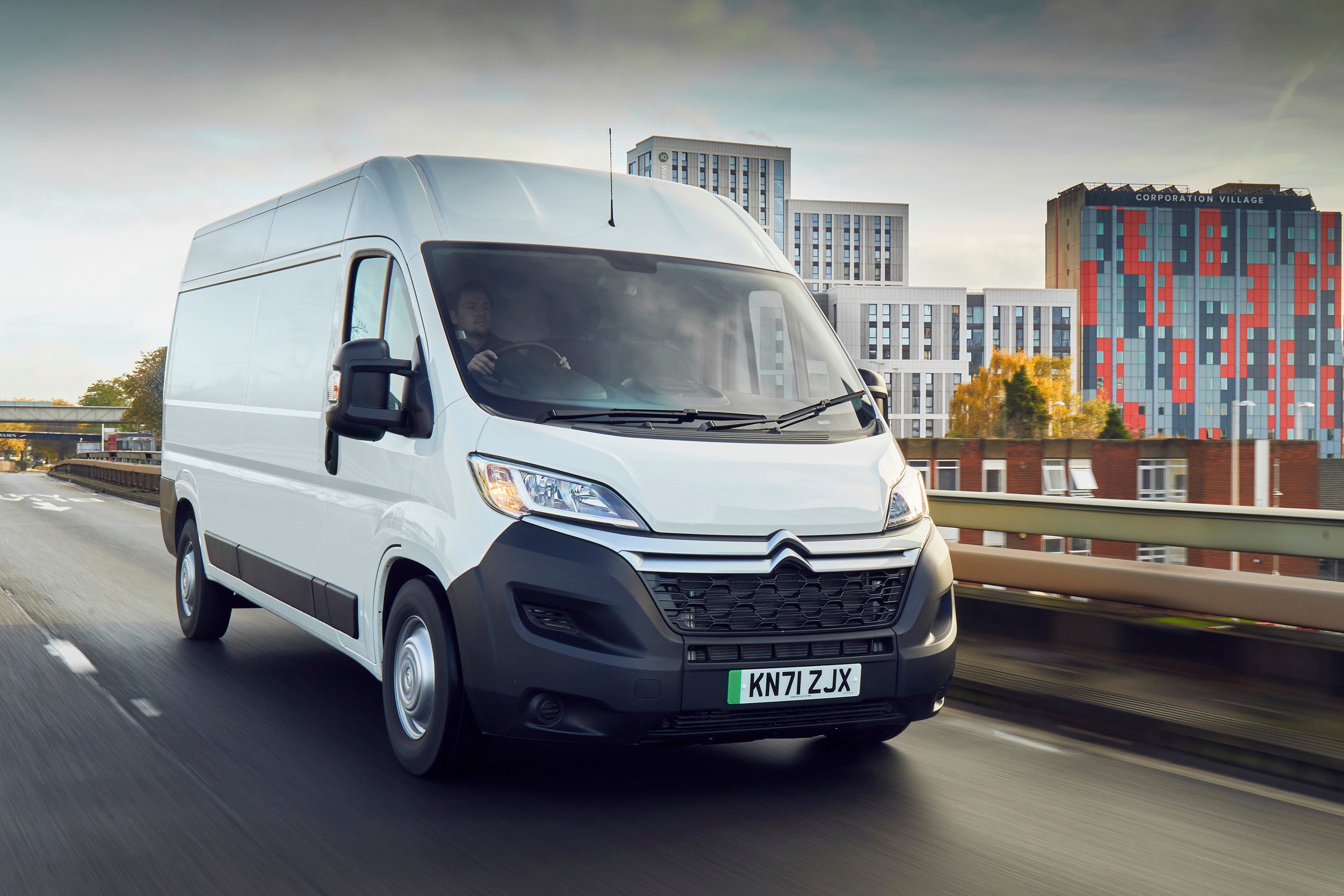
Vauxhall Movano Review

Written By Ivan Aistrop
- 2021
- Van
- Diesel, Electric
What we love
Strong diesel engine
Solidly built
Lots of cargo space and versatility
Things to consider
Strange driving position
Slightly lumpy ride
Stingy kit on some versions
The DRIVE take on the Vauxhall Movano, is it the right car for you?
If your business needs a large van with vast space and a massive amount of versatility and flexibility, then the Vauxhall Movano has plenty going for it. With lots of choice over length, height, body style and powertrain, along with a vast array of off-the-shelf conversion and customisation options available at source, there should be a Movano to suit you and your business.
The Vauxhall Movano in more detail
The Movano name isn’t new, having been around since 1998. However, the nature of the vehicle that has worn the nameplate has changed in recent years. You see, the process of badge engineering is rife in the van market, moreso than in the car market. Badge engineering? That’s the process of two or more companies striking a deal to share the development and manufacturing costs of a vehicle, and then all parties selling a version of the same mechanically identical vehicle, but with different branding and subtle design changes.
Now, for most of its life, the Movano shared its mechanicals - and pretty much everything else - with the contemporary Renault Master. However, that changed in 2021, after Vauxhall had been bought out by the PSA Group (that owned Citroen, Peugeot, DS), which then itself merged with the FCA Group (that owned Fiat, Alfa Romeo, Jeep, and more) to form the manufacturing powerhouse that is Stellantis. With so many van-producing brands already in-house, the Renault deal no longer made sense, so a new Movano was launched that shared its bits and pieces with the Citroen Relay, Peugeot Boxer and Fiat Ducato. And that’s where we find ourselves today.
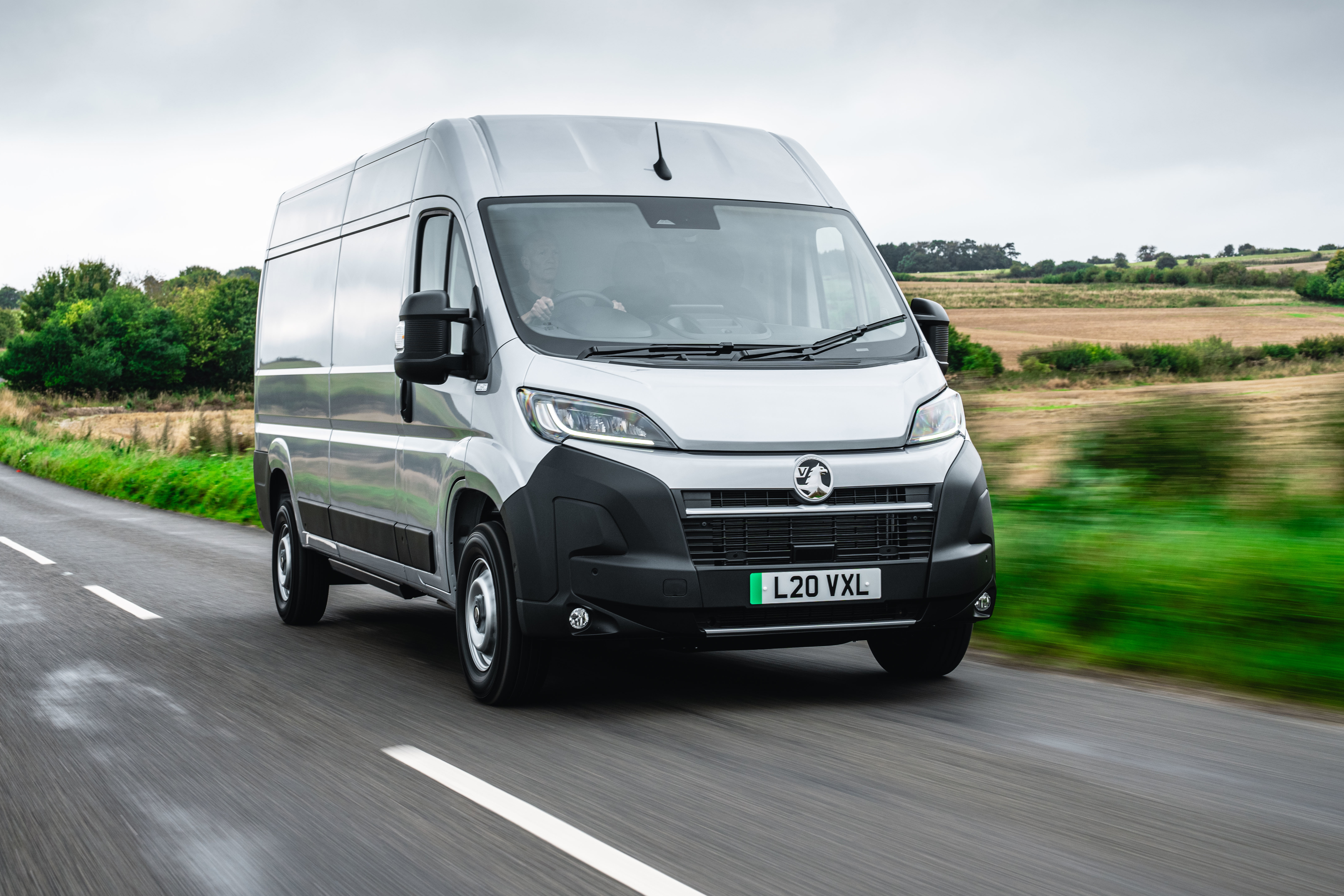
Like most large vans, the Vauxhall Movano is available in a great many forms. For instance, the panel van variant can be had in three different lengths, three heights, three Gross Vehicle Weight options, and with diesel or fully electric powertrains. On top of that, the vehicle can also be had in chassis cab, double cab chassis and platform cab forms.
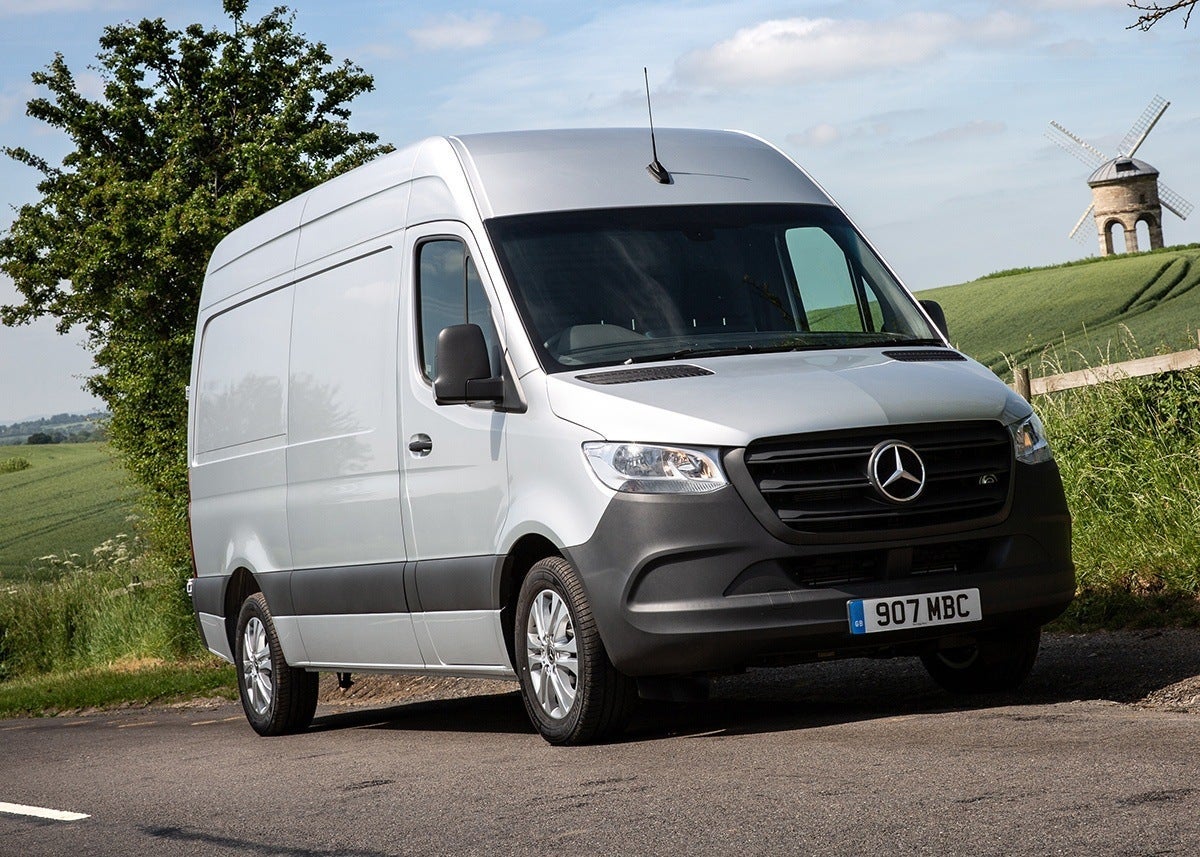
Competition is rife in this part of the market. The full-size Ford Transit is arguably the most recognisable rival, while the Mercedes Sprinter and Volkswagen Crafter are also popular choices. The Renault Master and Nissan Interstar will also have a say in where your money goes, while more leftfield choices include the Iveco Daily and the Maxus Deliver 9.
Overall, the Movano is a competitive package, with excellent capacity and payload figures, solid build quality and a decent driving experience. However, read on to discover whether it’s the large van for you.
What's the best Vauxhall Movano trim and battery option?
That depends entirely on your needs. The Vauxhall Movano can be used for all sorts of different business applications, and what you’re using it for will govern which of the vast variety of different versions will suit you best. As a general rule of thumb, we’d advise choosing a van that’s as small as you can get away with, because that will limit your purchase prices and running costs. Just don’t overdo it and lumber yourself with a van that’s too small for you to be able to conduct your business quickly and easily.
If your business takes you all over the country, you’ll be wanting one of the punchy diesels. If your work takes place exclusively (or mainly exclusively) in the local area, and you have somewhere to charge it, then you can significantly cut your running costs by choosing the battery-electric version of the Movano.
What’s the price of the Vauxhall Movano?
If you’re buying a brand new Vauxhall Movano, then prices for the diesel versions of the panel van start at around £35,000, and rise to around £42,000, not including VAT. Some of the other bodystyles, such as the chassis cab and platform cab, can be had a little cheaper than the panel van, presumably because you're literally getting less metal for your money.
The electric versions of the panel van are a bit more expensive. Prices (again, excluding VAT), begin at around £52,000, rising to approximately £54,000, depending on the version you choose. However, if you qualify for the Government’s Plug-in Van Grant (PiVG), then what you’re left to pay drops to between £47,000 and £49,000. Again, some of the more specialised bodystyles are a little cheaper.
Compared with rivals, prices are predictably pretty similar to what you'll pay for the other vans within the Stellantis group, which are pretty much the same in most other ways, too. You'll pay a bit more if you decide to go for a Ford Transit, Volkswagen Crafter or Mercedes Sprinter.
Alternatives to the Vauxhall Movano
There are a handful of large vans that are very much like the Vauxhall Vivaro: in fact, they’re pretty much identical mechanically, and more-or-less identical in appearance. These are the large vans from other brands within the enormous Stellantis manufacturing stable, including the Citroen Relay, the Peugeot Boxer and the Fiat Ducato.
Those aren’t the only large vans on the market, though. The full-size Ford Transit plays rival, as does the VW Crafter, the Mercedes Sprinter, and the Renault Master.
What's the interior like in the Vauxhall Movano?
The Movano is a massive vehicle, and posts some very impressive figures for both capacity and payload. You might have a few issues with the off driving position, but otherwise, there's very little to complain about.
Vauxhall Movano boot space and practicality
It would be unforgivably glib of us to simply say that, yes, an enormous vehicle like the Movano is very practical, with shedloads of loadspace. So, allow us to put a little meat on the bones for you.
Essentially, the Movano can be a variety of vehicles to suit a variety of different uses. It can be had in a variety of different body configurations: a panel van, a chassis cab, a double cab chassis and a platform cab. It can be had in three lengths (L2, L3 and L4), three heights (H1, H2 and H3), and in two different Gross Vehicle Weight (GVW) options (3.5 tonnes and 4.25 tonnes). Go a few years back in time, and even more length and GVW choices were offered, but these have since been discontinued and are too numerous to go into here.
In all versions of the modern-day Movano, the load width between the wheel arches is identical at a little over 1.4 metres. However, depending on the height and length options you choose, your load bay can be between 1.6 metres and 2.2 metres tall, and between 3.1 metres and 4.1 metres long. Even the smallest iteration (the L2 H1) has a load volume of 10 cubic metres, while the biggest version (the L4 H3) packs a whopping 17 cubic metres of cargo capacity.
In terms of payload, the precise permissible figure of your van will depend on its size and powertrain. For the electric version, the very smallest version has a payload of just 730kg, but otherwise, the figures sit between 1,385kg and 1,770kg, with most versions sitting at around the 1,400kg mark.
Viewed generally, the diesels will lug a bit more. The lowest payload figure for one of these is 1,260kg, but again, 1,400kg is more like the norm, while the biggest figures you’ll see total a whopping 2050kg.
If you need to tow, which you might well, then the EV versions are rated to pull a braked trailer of up to 2,400kg. On the diesels, towing weights range between 2,250kg and 3,000kg, depending on the version.
On all Movanos, you get twin rear doors to get access to your loadspace, and these can open up to 180 degrees to improve access. You also get a single sliding door on the nearside of the van, giving excellent access, while a second sliding door on the other side can be added as an optional extra. You get illumination in the load bay as standard, and the floor of the load bay is finished in bare metal.
In the cabin, you get three seats side-by-side, and the generous width of the vehicle means that three burly colleagues will sit in reasonable comfort without having to get too cosy with one another.
Given the size of the Movano, it’s no great surprise that you sit up very high at the steering wheel, allowing you to peer out over the top of most other traffic at the road ahead.
Your forward visibility isn’t perfect, though. The thick windscreen pillars, combined with the massive door mirrors, mean it can be tricky to see the inside kerb beneath as you try to place the van on the road when turning a corner. The pillars can also block your view a bit at junctions.
Obviously, your rear visibility is limited to what you can see in those mercifully enormous door mirrors, and all versions get rear parking sensors as standard. However good your wagon-wielding skills, though, manoeuvring a vehicle this enormous is made much easier if you add the rearview camera that's optional on most versions, or standard on the lesser-spotted Pro trim.
Finding a comfortable driving position might also prove a bit tricky for the uninitiated. If you’re used to cranking your seat up and down with a lever as you do in most passenger cars and small vans, then the Movano’s seat height adjustment might dumbfound you. There are two catches on the side of the seat, one to adjust the angle of the seat base from the front, and one to do it from the back, and you basically faff about with these until you find the right height, at which point you level the seat off.
Whatever you do, though, some will find the driving position awkwardly upright, with the pedals placed a long way below you, making you have to angle your feet strangely in order to reach them. It’s also a bit strange that the steering column adjusts for reach, but not for height.
The dashboard design is predictably simple, with physical buttons and knobs in the middle of the dash for controlling the air-con, plus a few other minor functions, which is better than relying on a touchscreen interface. The same was true when the dashboard was redesigned during the 2024 facelift for a smarter, less cluttered look.
Vauxhall Movano dimensions
With so many different sizes of Movano, and so many different bodystyles (some of which actually have very little body to speak of, namely the chassis cab variants), there's a huge variety of different sizes of vehicle you can have. And, as some variants are sold with the intention to undergo conversions to turn them into a specialised vehicles, the variation becomes pretty much endless. Just know that in all forms, the Movano is massive.
If you're talking about the panel van, the shortest L2 version is 5,413mm long, the middle-rung L3 is 5,998mm long, and the big boy, the L4, is 6,363mm long. There's all over two metres wide (2,050mm) when you don't include door mirrors, or 2,770mm wide when you factor them in.
In terms of heights, the H1 versions are 2,254mm tall, the H2s are 2,524mm tall (or 2,534mm in L4 form), while the H3 is 2,764mm in L3 form and 2,779mm in L4 form. The electric versions are ever so slightly different again, adding even more variation into the mix.
Tech and infotainment in the Vauxhall Movano
Early Movanos were offered in Edition and Dynamic trim levels. The former was very basic, with just a DAB radio, Bluetooth and USB ports, while the Dynamic got a 5.0-inch colour touchscreen with integrated navigation. We never got to experience either system, though.
On present-day Movanos, the standard infotainment system you get depends on what type of fuel your Movano uses. As standard, diesel models get a 5.0-inch colour multimedia touchscreen display with Bluetooth, DAB, a USB connection and voice control. The electric models get all that, except the touchscreen is swapped for a 7.0-inch item, the voice control is swapped for Siri/Google Assistant, plus you get Apple CarPlay and Android Auto as well. As part of the package, the EV version also throws in automatic climate control in lieu of the diesel’s manual air-con. The Pro version also gets the larger 7.0-inch screen.
There’s a difference with your driving instruments, too. Diesel models get traditional dials with a 3.5-inch digital display in the middle, while the electric version has a 7.0-inch digital instrument cluster instead.
However, we’ve seen none of that, because all Movanos we’ve driven have been fitted with the optional infotainment upgrade. This brings a 10.0-inch touchscreen with navigation, Bluetooth, Apple CarPlay, Android Auto, wireless phone charging, a full digital cockpit display, and automatic climate control.
It’s actually pretty easy to use by modern standards, purely because it’s a bit more basic than many of the ludicrously complicated systems you come across nowadays. Not all the menus are totally intuitive, but you get used to them with practice, so navigating the system isn’t too hard.
Materials available on the Vauxhall Movano
Commercial vehicle interiors tend to focus more on durability and functionality than they do on outright poshness: after all, during your working day, you want a cabin that’ll resist marking and wipe clean, rather than one that’ll look posh for five minutes before it gets scuffed up forever. So, the swathes of hard plastic found in the cabin of the Movano aren’t just acceptable, they’re totally understandable and thoroughly appropriate. Everything feels solidly constructed, and the cabin feels like it’ll withstand years of hard daily use.
That’s not to say that the Movano feels totally utilitarian, though. Some of the surfaces are cleverly textured so that they look a bit posher than they really are, while the switches work with neat precision.
What's the Vauxhall Movano like to drive?
The Movano isn't the most comfortable or sophisticated van of its type to drive, but it's good enough that it won't cause you any problems in everyday use. The diesel engines are strong, while the EV version is surprisingly perky.
Vauxhall Movano range and performance
If you’re after a combustion-engined Movano, then the vast majority of versions are powered by a 2.2-litre diesel engine with 140PS. This is available with either a six-speed manual gearbox or an eight-speed automatic transmission.
The manual is really all you need. The engine is brawny and eager right off the bottom of the rev range, so it builds speed at a very decent rate without you having to work it crazy hard. And to be honest, if you do feel the need to work it, then the acceleration comes at a rate that feels like too much for a vehicle like the Movano.
The vast bulk of the big Vauxhall means you might need to make a downshift when the traffic in front of you slows up, but that’s to be expected and is not much of a hardship. The automatic transmission, meanwhile, is smooth enough that you don’t really notice it going about its business (always a good sign with an automatic transmission) and it seems to do a decent enough job of keeping the engine within its power band, but without over-revving it.
There’s also a 180PS version of the 2.2 diesel, but we haven’t tried it yet. Neither did we ever get to try the 120PS and 165PS versions of the same engine that have now been discontinued.
If you’re considering an electric Movano, early pre-2024 examples had a 120PS motor and a 75kWh battery, but we never got to try this version. During the 2024 facelift, the electric powertrain was completely overhauled to feature a much larger 110kWh battery, and an electric motor with a power output of 279PS.
And you might be surprised by quite how sprightly this version feels. There are three driving modes - Power, Normal and Eco - which serve up varying levels of acceleration, depending on whether that’s your immediate priority, or whether you’d prefer to maximise your range (the car starts in Normal mode by default, but you can switch things up or down from there). In all of the modes, your off-the-mark acceleration is really strong, maybe even unnervingly strong in a vehicle as massive as this. In Power mode, your on-the-move acceleration is also really strong so prodigious pace is never far away. In truth, we can’t really see why you’d want to go this fast in a large van like the Movano.
Remain in Normal mode, and your acceleration is a fraction more measured in both regards, but compared with Power mode, you’ll notice the bigger difference in your on-the-move pickup, which is markedly more gentle, although still brisk. In Eco mode, your off-the-mark acceleration feels barely any weaker than in Normal mode, but your on-the-move pickup becomes gentler still, and your top speed is limited to 56mph. Even in this mode, though, you’ll seldom feel like you’re left wanting for pace.
If you’re considering an electric Movano, there are some important things to take into account. Early examples had a modest 75kWh battery, and the official WLTP range was given at just 154 miles.
Electric Movanos from after the 2024 facelift do much better. These have a large 110kWh battery pack (that’s total capacity, 97.8kWh of it is usable), which gives an official WLTP range of between 235- and 263 miles, depending on the version. That’s quite a lot compared to most electric vans.
As always with electric vehicles, though, this figure should be treated very much as a best-case scenario, and you’ll do very well to replicate this laboratory-gleaned figure in the real world. And that’s if you’ve got an empty load bay: stick some weight on board and you’ll have no chance. You’ll also see your range readout tumble in cold weather, and if you undertake too many motorway miles, neither of which are things that EVs like.
Performance data
| Model | Engine/battery size | Power | 0-62mph | Range/MPG |
|---|---|---|---|---|
2.2 diesel 140 manual | 2.2 diesel | 140PS | TBC | Up to 44mpg |
2.2 diesel 140 automatic | 2.2 diesel | 140PS | TBC | Up to 40mpg |
2.2 diesel 180 automatic | 2.2 diesel | 180PS | TBC | Up to 37mpg |
Movano Electric | 110kWh | 279PS | TBC | Up to 263 miles |
Vauxhall Movano driving and refinement
You’d expect an enormous load-lugging leviathan like the Movano to feel a bit cumbersome, and it most assuredly does. It’s always going to be when the vehicle you’re driving is between five-and-a-half and six-and-a-half metres long.
It’s not hard to muscle it around the place because the steering is nice and light, and although its slowness means that plenty of arm-flailing is needed to conduct tight turns, at least there’s plenty of wheel articulation, which makes the turning circle tighter than it would otherwise be.
Even so, you need to have your wits about you when moving around a vehicle of this size and be conservative with the speed at which you do it. Not that you’re ever tempted to do otherwise, because it’s not a vehicle that encourages you to go quickly unless you’re on a wide, open motorway. The rest of the time, you’ll find yourself happy to just tiptoe along, keeping an eye on the extremities of the Movano’s gigantic body as you go.
When you do hit the motorway, the Movano feels stable and assured, if not very settled. There’s a brittleness to the ride that results in a jitter that never settles down, even on a relatively smooth surface. Throw a few bumps and cracks into the mix, and the jitter is joined by plenty of jolts, and clonks. That brittleness is evident at low speeds, too, and the suspension also has a tendency to feel crashy over large bumps and potholes at lower speeds as well.
None of that is particularly surprising given the basic nature of the vehicle’s mechanical makeup, not to mention the fact that it’s built on a platform that’s been around since 2004. The ride settles a little when you put more weight in the load bay for a more comfortable time, but even so, many rival vans are more comfortable. It's not so uncomfortable so as to be a pain in everyday use, though.
The 2.2-litre diesel engine gives off that typical black-pump clatter as you build speed, and it can get pretty loud with lots of revs on the dial. However, because it’s quite brawny, you don’t have to rev the merry hell out of it to pick up speed at a reasonable rate, so it doesn’t often get too noisy.
The noise of the engine melts away into the background on a constant throttle at a steady motorway cruise, too. It will pipe up again if you ask for more acceleration, but again, the level of the noise is rarely problematic. You will feel vibrations from the diesel engine coming through the steering wheel and pedals at pretty much all times, though, and the gearshift in the manual model is a touch notchy and imprecise. The automatic gearbox slushes through the ratios fairly smoothly, too, and without too much of a delay. Obviously, the electric version doesn’t have a gearbox at all, and predictably, the electric motor makes very little noise.
Wind noise at motorway speed is surprisingly well suppressed given the Movano’s blunt shape, but it might well be more that it’s drowned out by the road noise rumbling away from underneath you, which is unfortunately, slightly overbearing. It begins at moderate speed, and by the time you hit the motorway limit, you’re raising your voice to be heard by the passengers who are sitting right next to you.
How safe is the Vauxhall Movano?
To help protect occupants in a smash, the present-day Movano comes with a driver’s front airbag and double passenger airbags. Do be aware, though, that in early Movanos, only a driver airbag was standard, and the other two were an optional extra.
Early Movanos didn’t have much in the way of driver assistance systems to help prevent that smash happening in the first place, and of the ones it did offer were optional extras. Later on, though, driver aids such as a lane support system (which comprises a variety of lane-related aids), traffic sign recognition, driver drowsiness detection, and intelligent speed assist were all made standard.
The options list contains more safety gear. Blind spot assist with rear cross-traffic alert is available, as is a package containing 360-degree parking sensors and a digital rearview mirror (this comes as standard on the Pro version). Adaptive cruise control can now also be had, although it couldn't always.
The Movano has been tested in Euro NCAP’s dedicated Commercial Vehicle safety programme (well, the Fiat Ducato has, and the two are so similar that the rating applies to both), and achieved the full five-star rating.
Running costs: What it's like to live with a Vauxhall Movano
The electric versions have the potential to be very cheap to run, and the Movano's massive battery means it has a much more impressive range than most electric vans. The diesels are a bit thirsty, but that's the norm with vehicles of this size, and rivals are no better on that score.
Vauxhall Movano charging times and costs
If you’re considering an early Movano Electric, then expect its 75kWh battery to take around 12 hours to fully replenish on a regular 7.4kW AC home wallbox charger. If you need to charge quickly on the move at a public DC rapid charging station, then a maximum DC charging speed of just 50kW means that it’ll take around an hour to take on a 0-80% charge.
If you’re considering an electric Movano from after the 2024 facelift, then its much bigger 110kWh battery will take a lot longer to replenish on a domestic wallbox charger; a figure of 16 hours and 40 minutes is given.
However, the facelift also resulted in the maximum DC charging speed being hiked up to 150kW, which is much more like it. So, despite having a much larger battery, that same 0-80% top-up can be delivered in just 55 minutes.
If you pay the UK's national average rate for your domestic electricity, then a home charge will cost somewhere in the region of £28. If you're on variable a tariff that allows you to charge up an EV overnight on massively discounted off-peak power, though, then you'll likely trim that sum down by more than half. Conversely, you can probably treble that cost whenever you need to fill up on a public DC rapid charger.
Vauxhall Movano fuel economy
In terms of the official WLTP figures for these later engines, the maximum returns on the combined cycle sit at between 37mpg and 44mpg depending on the version. The minimum figures sit at between 21mpg and 31mpg, though, so expect the average to sit somewhere around the mid-to-late thirties.
Mind you, real-world returns are likely to be closer to the lower end of that spectrum, especially if your van spends its days constantly loaded up with heavy cargo.
Vauxhall Movano warranty and servicing
All Movanos come with a three-year, 100,000-mile mechanical warranty, which consists of a year's worth of unlimited-mileage cover, followed by two years with the mileage cap applied. On BEV versions, the battery is covered by a separate eight-year, 100,000-mile warranty.
Electric versions of the Movano need a service every year or 16,000 miles, whichever comes first. The diesels can go up to two years between services, but the mileage limit on that interval is the same at 16,000 miles. That mileage limit has changed relatively recently, because Vauxhall used to advise 32,000 between services on the diesel.
Vauxhall Movano insurance groups
If you’re getting yourself a diesel-powered Movano, then there’s one variant of it (L2H1) that sits in insurance group 37 (of 50, 50 being the most expensive), and all others sit in group 38.
Go for the electric Movano, and the one variant with a 3,500kg Gross Vehicle Weight sits in group 39. All other electric Movanos, which have a 4,000kg GVW, sit in groups 43 or 44.
How much does it cost to tax a Vauxhall Movano?
If your Movano has a Gross Vehicle Weight (GVW) of 3,500kg, which most of them do, then you pay the flat rate of VED road tax for Light Goods Vehicles (LGVs), which currently stands at £360 per year.
If the GVW of your van is more than that, though, things become a bit more complicated because your vehicle is taxed as a Heavy Goods Vehicle (HGV), which carries much more variation. The best thing to do is to check the vehicle’s V5C document for your van’s tax class, and then check online or with the DVLA.
What trims are available with the Vauxhall Movano?
Early Movanos came in a couple of different trim levels, known as Edition and Dynamic. Edition versions were a bit too basic: there was no air-conditioning (an absolute must if you’re spending several hours per day in your van), no rear parking sensors (another must in a vehicle as massive as this) and only a very basic infotainment system. Dynamic trim righted these wrongs, so if buying used, that’s the one you want.
Come the 2024 facelift, the Movano was offered in a single key trim level, known as the Prime. This provides rear parking sensors, cruise control, electric windows, and twin-lens door mirrors with heated and electrically adjustable upper section.
From then on, the spec is different depending on whether you choose a diesel model or an all-electric model. The diesel has manual air-con and a basic infotainment system, while the EV has automatic climate control air-con and an upgraded infotainment system (see infotainment section for details). The EV also has a digital driver display and an electronic parking brake.
Later on, Vauxhall added another trim level over the Prime, known as the Pro, although it's only offered in a very limited number of body formats of the diesel-powered panel van, not on the EV or other bodystyles. This adds the upgraded infotainment, rearview camera, all-round parking sensors, automatic air-con, high-beam-assist headlights, front fog lights, and automatic lights and wipers.
A wide range of options is offered, along with a bunch of option packs, allowing you to spec your van up to the nines if you so wish, and if your budget allows.
Ask the Drive experts: common questions
Is the Vauxhall Movano a van?
Is the Vauxhall Movano any good?
Is the Vauxhall Movano electric?
Get our latest advice, news and offers
Keep me updated by email with the latest advice, news and offers from Drive.
.jpg)
.jpg)
.jpg)