Renault Master Review

Written By Ivan Aistrop
- 2024
- Van
- Diesel, Electric
What we love
Fresh-feeling interior
Good Infotainment and features
Comfortable driving experience
Things to consider
Some rivals are cheaper
Options list can quickly drive the price up further
Middling capacity and payload figures
The DRIVE take on the Renault Master, is it the right car for you?
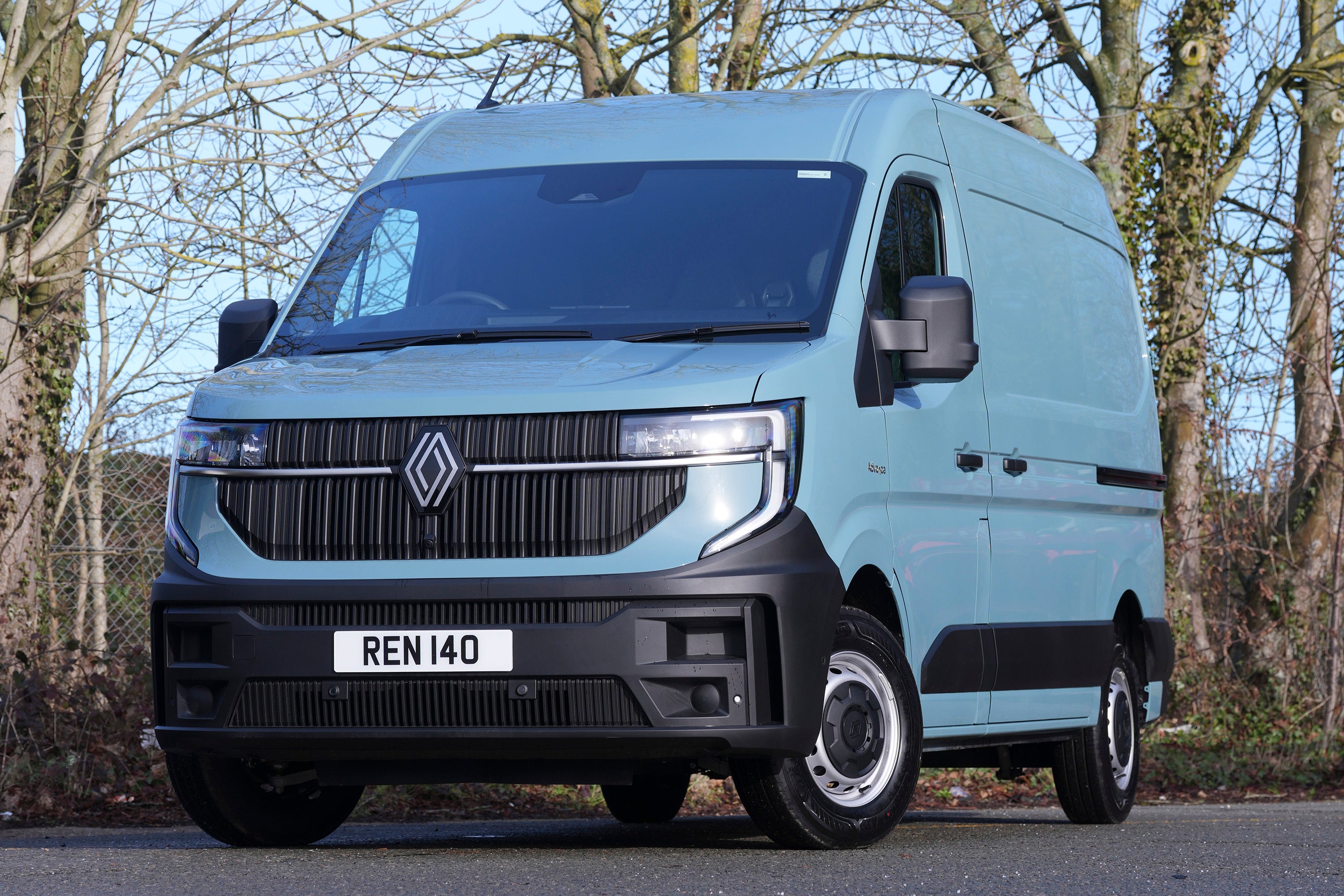
If you want your large van to feel up-to-date and modern, then the Renault Master is absolutely worthy of your consideration. While passenger car models are usually replaced every five to eight years, van models have to last much longer, usually double that. As a result, most of the big Renault’s rivals have been around for a good old while already. This latest fourth-generation Renault Master, however, was only introduced in late 2024, so it’s the freshest van of its type, along with its sister van, the Nissan Interstar.
The Renault Master in more detail
The Renault Master may not have the instant recognisability of the Ford Transit, but it’s a name that’s been kicking around in the van world for several decades, with the original being released way back in 1980. So, does this latest fourth-generation version prove that Renault has used that time to learn how to make a properly good van? Find out in our 2026 Renault Master review.
But while the Master name is pretty old, the engineering of the latest fourth-generation version most certainly isn’t. The fact is that vans have a far longer shelf life than passenger cars: while cars are replaced every five to eight years, vans usually have to last ten, twelve, and maybe longer. This means that most of the Master’s rivals have already been knocking around for a good few years, while the fourth-generation of the big Renault was all-new in 2024, and is much fresher as a result.
This means that most of the latest driver assistance tech is offered in the Master, and the infotainment tech is pretty cutting-edge, too. A variety of shapes and sizes are offered, as well as a variety of diesel engines, plus an all-electric version known as the E-Tech.
It’s a very good all-rounder, the Renault Master. It doesn’t deliver game-changing figures for load capacity or payload, etc, but it is competitive in those areas, and it’s a comfortable and relatively easy large van to drive. It has a decent slice of standard equipment to give your working day a little extra dose of civility, and while it’s not the cheapest van of its type, it still looks like decent value for money.
What's the best Renault Master trim and battery option?
If your work is concentrated in the local area, then you could save quite a chunk in running costs by choosing the all-electric Master E-Tech. Just make sure you have the right charging solution, and that the limited range will suit your business. It's a lot better than the old one in terms of how far it'll go on a charge, though.
If your work takes you further afield, you’ll want one of the diesels. So far, we’ve only tried the weakest 130PS version, which we found entirely adequate, so we can’t see much point in spending more to upgrade to the more powerful units.
Again, Extra trim doesn't get much more in the way of kit than the base-level Advance, so we don’t see much point in upgrading.
What’s the price of the Renault Master?
If buying a brand new Renault Master, then prices for diesel versions range between approximately £42,000 at the bottom of the range to around £49,000 at the top. The exceptions are the Crew Van versions which cost a little more: these are between £52,000 and £55,000, roughly speaking.
If you’re considering the E-Tech all-electric version, then brand new prices range between £47,000 and £52,000, and that's despite the £5,000 Plug-in Van Grant (PiVG) from the Government to help even up costs.
Overall, these prices are a bit more than you’ll pay for large vans from Citroen, Fiat, Peugeot and Vauxhall, but a bit less than you’ll pay for a Ford, Mercedes or Volkswagen.
Alternatives to the Renault Master
If you're looking for a van that's similar to the Renault Master, we can go one better than 'similar': the Nissan Interstar is entirely identical to the Master, other than branding differences. Previously, the Vauxhall Movano was based on the Master, but from 2021 onwards, it was replaced by a 'new' model based on the Fiat Ducato owing to Vauxhall becoming part of the huge Stellantis group of manufacturers. We say 'new' because the Ducato is now ancient, older even than the previous-generation Master. As a result, the Master feels far fresher than the Movano, Ducato and its relatives, including the Citroen Relay, Peugeot Boxer, and Toyota Proace Max.
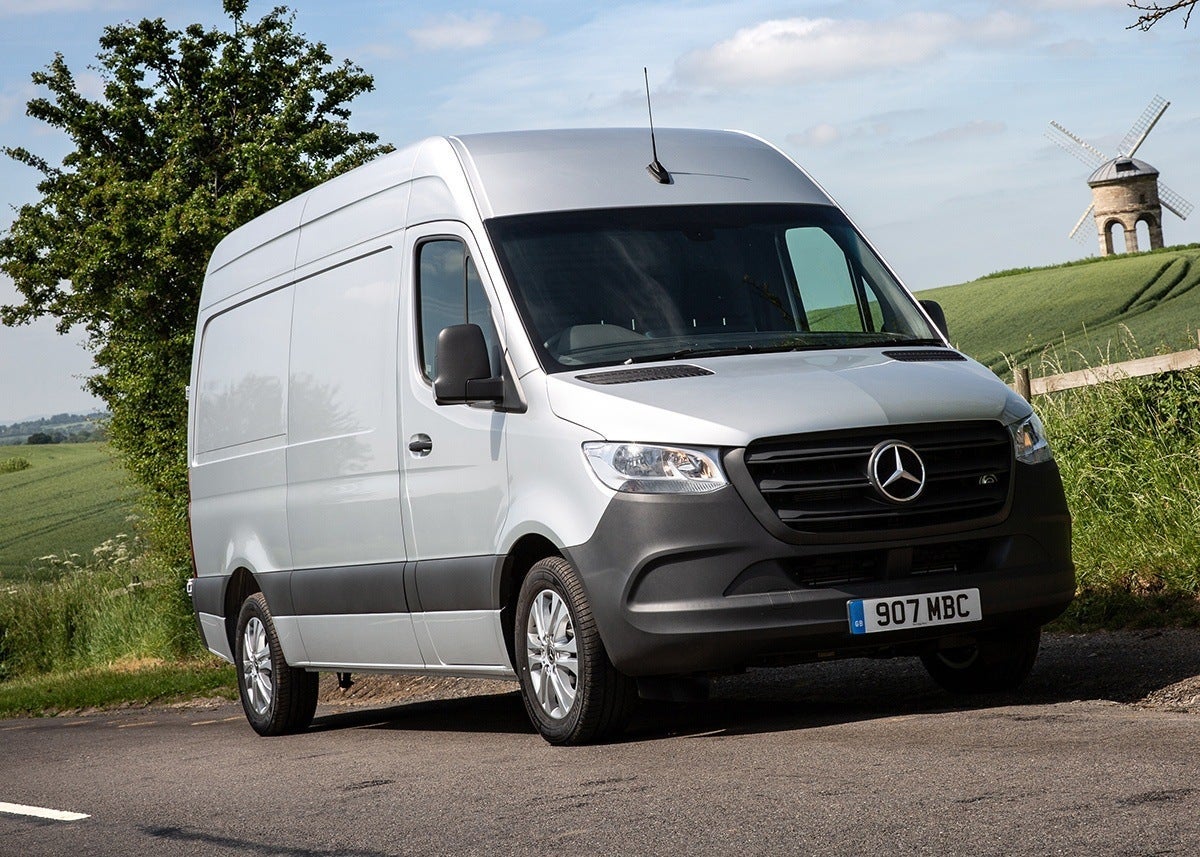
Other large van offerings you'll likely be considering are the Volkswagen Crafter, the Mercedes-Benz Sprinter, and the top-selling Ford Transit. As slightly more budget alternatives, you can also choose from the Iveco Daily and the Maxus eDeliver9.
What's the interior like in the Renault Master?
Some of the Master's rivals offer slightly better figures for things like payload, cargo capacity and towing capacity, but the big Renault is competitive in all these areas. The cabin is comfortable and smart, too.
Renault Master boot space and practicality
The Renault Master is available in two lengths and two heights, resulting in a variety of configurations. The shorter van measures 5,680mm long, while the longer one measures 6,315mm. Most of the extra length goes into the wheelbase, but a little of it sits in the rear overhang. The load length in the former (at floor level) measures 3,225mm, while the equivalent figure in the latter is 3,855mm. In both, the width between the wheel arches measures 1,380mm.
The shorter van is only available with the standard roof height, giving you a loadspace height of 1,885mm, and an overall loading volume of 10.8 cubic metres. Go for the long wheelbase van, and you can have either the standard roof height or the high roof: the former has an overall load volume of 13.0 cubic metres, while the latter ups that to 14.8 cubic metres thanks to the extra load height that totals 2,138mm.
As standard, you get a single sliding rear door on the left-hand side of the vehicle, and it opens up a loading aperture that measures 1,312mm wide and 1,753mm high. You also get twin rear doors that open up a load-through space of 1,537mm wide and 1,755mm tall. They open up to 90 degrees at first, but as standard, you can unhook the stoppers, allowing them to open at up to 180 degrees. As an optional extra, you can also specify doors that open to 270 degrees, meaning that they basically fold backwards down the sides of the van.
Most versions have a gross vehicle weight (GVW) of 3,500kg, but a couple of variants - both electric ones - have a GVW of 4,000kg. Depending on the version, payload figures range between 941kg and 1,482kg, and towing weights for a braked trailer range between 1,000kg and 2,500kg (it’s 750kg across the board for an unbraked trailer).
Compared with the competition, some rivals do better on maximum payload, maximum load volume and maximum towing capacity, but the Master’s figures are nonetheless competitive by and large.
The cab of the Renault Master panel van contains three seats side-by-side, with enough shoulder room so that three burly colleagues can travel without having to get too cosy with each other. The two passenger seats flip up to reveal a large 66-litre storage area underneath, which is very handy, especially in the E-Tech as it’s a good way of keeping your charging cable out of the main loadbay. That area contributes to an overall figure of 135 litres of cabin storage, with cubbies, shelves, pockets and recesses dotted around absolutely everywhere.
The seats in the cab of the Renault Master are reasonably supportive, so you and your workmates should stay comfortable. The driving position has a good amount of adjustment: you crank your seat up and down and slide it backwards and forwards, and there’s a decent amount of travel in both directions. There’s a decent amount of travel in the steering adjustment, too.
The high-set seats mean your view of the road ahead is tremendous, allowing you to look out over the top of most other traffic. That does mean, however, that you climb up into the van rather than dropping down into it like you do in a car, and that takes a little bit of muscle.
Renault does offer a Crew Van version of the Master, with an extra row of seats for carrying more colleagues. However, we haven't encountered one before, so we can't tell you how these extra seats fare for space, and we've seen no figures from Renault detailing how much cargo space is lost to the extra seats.
The Master's dashboard design is simple and intuitive, and the controls are chunky and well-marked, making them easy to use. The centre console is angled towards the driver, putting the main controls within easy reach.
Renault Master dimensions
As we've said, the Master is available in two lengths and two heights, with the taller roof height only being available with the longer body, meaning three formats in total. Whatever version of the Master you choose, it'll be the same width: that's 2,080mm without mirrors, or 2,466mm if you include them. The shorter L1 body totals 5,680mm long, while the L2 version extends that to 6,315mm. The standard H2 roof height is 2,502mm, while the taller H3 version extends that to 2,780mm.
Tech and infotainment in the Renault Master
All versions of the Master come with a slick-looking 10.0-inch touchscreen infotainment system mounted in the middle of the dashboard. The system has the functionality you’ll demand in a modern vehicle, including DAB, Bluetooth and wireless Apple CarPlay and Android Auto.
Go for the higher-spec Extra trim level, and the system is upgraded to incorporate Google Built-In, which gives you navigation powered by Google Maps, voice control powered by Google Assistant, and access to a wide variety of apps on the Google Play Store.
Either way, the system is reasonably easy to use thanks to the fact that it’s not too complicated, and there’s a decent amount of logic to how the various menus are arranged. It also helps that you get separate physical controls for the air-conditioning system (which look nice and work really well thanks to small digital displays incorporated into the dials themselves), so you don’t have to root around in countless touchscreen menus just to knock the cabin temperature up a degree or two.
The diesels come with a pair of analogue dials behind the steering wheel, set either side of a small 3.5-inch black and white TFT display. In the E-Tech, this arrangement is replaced by a 7.0-inch digital driver information display. Either way, these are easy to use and understand.
Materials available on the Renault Master
You wouldn’t expect any van to be the last word in opulence and swankiness, so it’s entirely forgivable that the Master’s interior is fashioned from functional, hard-wearing plastics. These plastics look and feel durable, and don’t seem to mark up too easily, so the cabin feels like it’ll stand up well to the rigours of hard use.
That said, there are a couple of swanky touches that dial up the feel of sophistication a bit. The large, colourful touchscreen display looks good, and so do the air-con dials, which incorporate small digital displays within them: these look smart and work well.
What's the Renault Master like to drive?
The Renault Master is a fairly pleasant thing to drive every day. It's comfortable enough, and all the powertrains we've tried are up to the job of hauling that massive body around. And given its colossal size, the Master is actually fairly easy to drive.
Renault Master range and performance
The Master is offered with a choice of traditional diesel engines and as an all-electric E-Tech version. The diesel choices are all 2.0-litre four-cylinder units that deliver either 130PS, 150PS or 170PS to the front wheels. The 130PS version comes exclusively with a six-speed manual gearbox, the 170PS comes exclusively with a nine-speed automatic gearbox, while the 150PS engine can be had with a choice of either transmission. E-Tech electric version, meanwhile, has a 140PS motor on the front axle, fed by an 87kWh battery.
Manufacturers don’t tend to publish 0-62mph acceleration figures on commercial vehicles: after all, they’re fairly meaningless where passenger cars are concerned, and they’re even more irrelevant for a large van like the Master. What’s important here is that your progress is easy and flexible, and happily, in the versions we’ve tried - those being the entry-level 130PS diesel and the E-Tech - it is.
The diesel’s lower gears are quite short, so you’ll be stirring the manual gearbox a bit when getting up to speed, but it’ll get there reasonably comfortably, even with a heavy load in the back. It won’t get there particularly quickly, mind, but there’s enough briskness to keep pace with normal traffic conditions. And when the entry-level diesel engine delivers thoroughly adequate performance, we can’t see the more powerful units struggling in this area, either.
The E-Tech feels a lot brisker away from the mark, as EVs so often do thanks to the thumping great slice of torque that’s delivered as soon as the electric motor starts turning. OK, so you won’t be out-dragging Ferraris, but the electric Master feels sprightlier off the mark than you might be expecting. Once you’re up to around 30- to 40mph, the level of acceleration becomes more moderate, and it tails off more and more the faster you go, another common EV trait. It always feels pokey enough for any everyday driving situation, though, and the absence of gear changes makes your progress even more seamless and easy.
All versions of the Master E-Tech electric get the same 87kWh battery pack. Depending on the size and weight of your van, that’s good for between 255 miles and 285 miles of range, according to official WLTP combined figures.
As always, though, don’t take these figures as gospel when it comes to real-world returns. Even in optimal conditions, these figures tend to be optimistic, so factor in a loss of at least 50 miles on average. Cold-weather and/or prolonged high-speed motorway running will see your returns drop further, but by contrast, your returns will improve if your van is used exclusively at low urban speeds.
Still, that's a big improvement on the electric version of the last Master, the Z.E, whose real-world range was about 75 miles at best. In our time with an E-Tech, we managed comfortably over 200 miles on a charge despite doing mostly motorway miles, although we did have to keep the speed down to more like 60mph to avoid the range dropping off like a stone. We averaged 2.6 miles per kWh.
Performance data
| Model | Engine/battery size | Power | 0-62mph | Range/MPG |
|---|---|---|---|---|
Blue dCi 130 manual | 2.0 Diesel | 130PS | TBC | Up to 38mpg |
Blue dCi 150 manual | 2.0 Diesel | 150PS | TBC | Up to 37mpg |
Blue dCi 150 automatic | 2.0 Diesel | 150PS | TBC | Up to 36mpg |
Blue dCi 170 automatic | 2.0 Diesel | 170PS | TBC | Up to 36mpg |
E-Tech | Electric 87kWh | 140PS | TBC | Up to 285 miles |
Renault Master driving and refinement
Vans usually ride a little better with a bit of weight in the load bay. We’ve driven the Master both when empty and when loaded up, and that’s certainly the case here.
With no weight on board, the ride can be a little jumpy, especially at low urban speeds, and you hear a bit of clonking going on beneath you, too. However, it’s still more comfortable than most other rival vans, and certainly nothing that’ll irritate you on a daily basis. Loaded up, the ride does calm down a bit for a more settled time, and again, it’s one of the more comfortable offerings on the market.
Of course, a vehicle of this size is always going to feel rather cumbersome when changing direction, and that’s entirely forgivable. Yes, the tall body leans over a bit in bends, and narrow lanes will have you on your toes, but it’s no worse than in other large vans. It’s a pretty easy van to drive, considering, though. The steering is light and responsive, if rather slow (again, you expect that slowness in this type of vehicle), and the turning circle actually feels tighter than you expect for very decent manoeuvrability.
In the diesel version we tried, however, we found the other controls to be slightly less polished. The manual gearshift is fine, but the throttle pedal needs quite a lot of pressure before any reaction comes, while the brake pedal needs hardly any before the brakes grab on, usually more strongly than you expect. Chuck in a very long-travel clutch pedal, and there isn’t much consistency. This is less of an issue in the EV version - not least because there’s one less pedal - although the brakes are still a wee bit grabby.
Refinement is about what you expect from a large van. With a rudimentary suspension setup beneath you, and a large open space behind you isolated only by a thin steel bulkhead, you hear a fair amount of creaks, clonks and squeaks as you make your way down the road. This is true of all large vans, though, and it’s no worse here than in the competition. Wind- and road noise are also at very average levels.
The diesel engines we’ve tried have the characteristic clatter you expect, but they’re not bothersome in any way, and don’t have to be worked too hard in order to get you around effectively. Obviously, the E-Tech electric versions are quieter, but maybe not by as much as you might expect, because you hear a fair amount of whine from the motors as you accelerate. Again, it’s not bothersome, just noticeable.
We did wonder if a lack of rumbling diesel engine might make wind- and road noise in the E-Tech a lot more obvious, but it's not bad at all at cruising speeds.
How safe is the Renault Master?
As standard, the Master comes with safety measures including driver and passenger airbags and tyre pressure monitoring, along with driver assistance features such as automatic emergency braking, driver attention alert, speed limit assist with traffic sign recognition, and lane keep assist. On top of that, E-Tech versions also get blind spot warning, along with pedestrian and cyclist collision warning. The traffic sign recognition isn't great, though, frequently picking up the wrong limit. It's annoying having the speed limit warning bonging away when you're nowhere near breaking it.
In Euro NCAP commercial vehicle ratings the Renault Master has achieved the full five-star rating. That’s the same as the rating achieved by the Nissan Interstar (not surprising when they’re the same vehicle underneath), and as the Citroen Relay, Fiat Ducato, Peugeot Boxer, Toyota Proace Max, Vauxhall Movano (not surprising when these vans are all mechanically identical to one another), Ford Transit and Mercedes Sprinter. The only large-van models that have failed to get the full five-star rating are the Maxus eDeliver9 and Iveco Daily, both of which scored four stars. They then achieved the full five stars after a retest, so pretty much the entire class now has five stars. The Volkswagen Crafter is yet to be tested, mind.
Running costs: What it's like to live with a Renault Master
From the data we've seen, running a Renault Master should by no means be a ruinous experience. The diesels do fairly well for fuel economy given the vast size of the vehicle, while if used in the right way, the all-electric E-Tech version has the potential to be even cheaper to run.
Renault Master charging times and costs
We wouldn’t recommend relying on a normal domestic three-pin socket for keeping your Master E-Tech charged up. Not only will the cable that enables you to do so cost extra, but a full charge of the 87kWh battery from such a power outlet will take in excess of two full days.
If charging at home, get yourself a 7.4kW wallbox charger installed. One of these will deliver a full charge in around 14 hours, so if you plug in when you get home after work, it’ll be sorted by the time you leave again in the morning. At the UK’s national average for the cost of domestic power, a full charge will cost a little over £20, or around half that if you’re charging overnight on discounted off-peak power, provided you're on the right tariff, of course.
If you need to charge in a hurry, the Master E-Tech supports DC rapid charging at up to 130kW, and if you can find a powerful enough charger running at full capacity, a full charge on one of these can be delivered in an hour and ten minutes, or a top-up to 80% will take around 38 minutes. This will be by far the most expensive way of charging, though.
Renault Master fuel economy
According to official WLTP fuel consumption figures, the 130PS diesel will return between 36.7mpg and 38.2mpg depending on the size of van you go for. The 150PS version meanwhile, will do between 36.7mpg and 37.7mpg when fitted with the manual gearbox, and between 35.3mpg and 36.7mpg when fitted with the automatic. Choose the 170PS version, and you'll get between 36.2mpg and 36.7mpg.
All diesel versions offer broadly similar fuel economy, then, but we wouldn’t be surprised if the more powerful engines proved to be fractionally more efficient in the real world because it won’t need to work as hard for equivalent performance. Either way, there’s likely to be very little in it.
Renault Master warranty and servicing
The warranty on the Renault Master is about par for the course in the van market. The first two years of your cover has no mileage limited, and that's followed by a third year of cover, limited to 100,000 miles.
Both diesel and electric versions have service intervals of two years or 24,000 miles, whichever happens first, although the electric version will need an initial inspection at one year/12,000 miles to make sure everything is running as it should.
Renault Master insurance groups
For some reason, accurate data on insurance group ratings for commercial vehicles is exceptionally hard to find online, and despite several requests to Renault for information, we've still received nothing. So, your guess is as good as ours here, we're afraid.
How much does it cost to tax a Renault Master?
VED (Vehicle Excise Duty) tax on vans is pretty easy to work out, because on all N1 and N2 classified vans (which all Masters are), you pay a flat rate of £360 per year. You won't get out of that by buying the E-Tech, though, because from April 2025 onwards, electric vans lost their VED exemption.
What trims are available with the Renault Master?
The Master is offered in two trim levels known as Advance and Extra. The base-level Advance trim is pretty well stocked as it is, coming with LED daytime running lights, 16-inch steel wheels, remote central locking, electric windows, automatic lights and wipers, manual air-conditioning, door mirrors that are heated and electrically adjustable, cruise control, and rear parking sensors. That’s on top of the infotainment and safety equipment that we’ve talked about in other sections.
Extra trim comes with an enhanced infotainment setup (see corresponding section for more details), plus different seat fabric, one-touch electric windows, LED lighting in the load area, and front fog lights with a cornering function.
Regardless of trim level, the all-electric E-Tech version gets a few different bits and pieces on top. This includes a 7.0-inch digital driver information display in place of the analogue dials found in the diesels, along with extra safety kit in the form of blind spot warning and pedestrian and cyclist collision warning.
Ask the Drive experts: common questions
How big is the Renault Master?
Is the Renault Master the same as the Nissan Interstar?
When was the latest Renault Master released?
Get our latest advice, news and offers
Keep me updated by email with the latest advice, news and offers from Drive.
.jpg)
.jpg)