Skoda Kodiaq vRS (2019-2024) Review

Written By Andrew Brady
- 2019
- SUV
- Diesel, petrol
What we love
Fast enough to feel genuinely special
Still keeps the Kodiaq’s big-cabin practicality
Better ride comfort than you might expect
Things to consider
Performance is balanced with everyday usability
Tyres and brakes can be costly to replace
Third row remains occasional-use seating
The DRIVE take on the Skoda Kodiaq, is it the right car for you?
The older Skoda Kodiaq vRS is a niche used buy, but an appealing one if you want a seven-seat SUV with some proper pace and a bit of attitude. It is not a pure driver’s car, and it is certainly not the cheapest way into Kodiaq ownership, but it blends real-world family usefulness with performance in a way very few SUVs manage. If you want something practical first and fast second, it makes more sense than you might expect.
The Skoda Kodiaq in more detail
The Kodiaq vRS was always an unusual idea. It took one of the most sensible family SUVs on sale and gave it the familiar vRS treatment, adding more power, a more assertive look and a stronger dose of driver appeal.
That could have turned it into a gimmick, but the result is more convincing than that. The Kodiaq vRS still does all the normal Kodiaq things well, with a roomy cabin, useful seven-seat flexibility and the kind of calm long-distance ability that makes it easy to live with. The difference is that it also has enough performance to feel genuinely brisk and enough visual attitude to stand apart from the regular range.
Browse used Škoda Kodiaqs for sale →
Used buyers do need to be aware that there are really two Kodiaq vRS versions. Early cars used a bi-turbo diesel, while later cars switched to a 2.0-litre turbo petrol. Both have their merits, but they suit slightly different buyers.
That makes the vRS more nuanced than it first appears. If you are expecting a giant hot hatch, you may come away a little underwhelmed. But if you want a rare all-rounder with proper straight-line shove, plenty of family space and a bit more character than the average seven-seat SUV, the Kodiaq vRS still makes a very strong case.
Looking for the new model? Take a look at our Skoda Kodiaq vRS review.
What's the best Skoda Kodiaq trim and engine option?
The good news is that trim choice is simple because the vRS effectively sat as a standalone flagship. The more complicated decision is the engine.
For most used buyers, the later 2.0 TSI petrol is the more desirable choice if you want the sharper, faster-feeling vRS. It is the version that better fits the badge’s character, and it feels more in tune with the idea of a performance SUV.
The earlier bi-turbo diesel still has a lot going for it, though. It is not as overtly sporty in character, but it suits the Kodiaq’s size very well and makes a lot of sense if you cover longer distances or want stronger towing-friendly torque.
As ever with a car like this, condition and history matter more than obsessing over every option. A well-kept vRS is worth more than a poorly maintained one with a longer options list.
What’s the price of the Skoda Kodiaq?
Used Skoda Kodiaq vRS prices now start from around £30,000 for early diesel cars, while later petrol versions and lower-mileage examples still sit much higher. Usefully there are plenty of used Škoda Kodiaqs for sale on the secondhand market.
That means the vRS remains a relatively expensive way into Kodiaq ownership, but that is partly because it was always a niche product and still looks quite desirable in the used market.
The important thing is to judge it against what it is trying to be, not against a regular family SUV. It is pricey, yes, but there are not many genuinely quick seven-seat SUVs around this part of the used market.
Alternatives to the Skoda Kodiaq
The most obvious alternative is a regular Skoda Kodiaq in one of the stronger diesel trims, because for many buyers that will do the family job just as well for much less money.
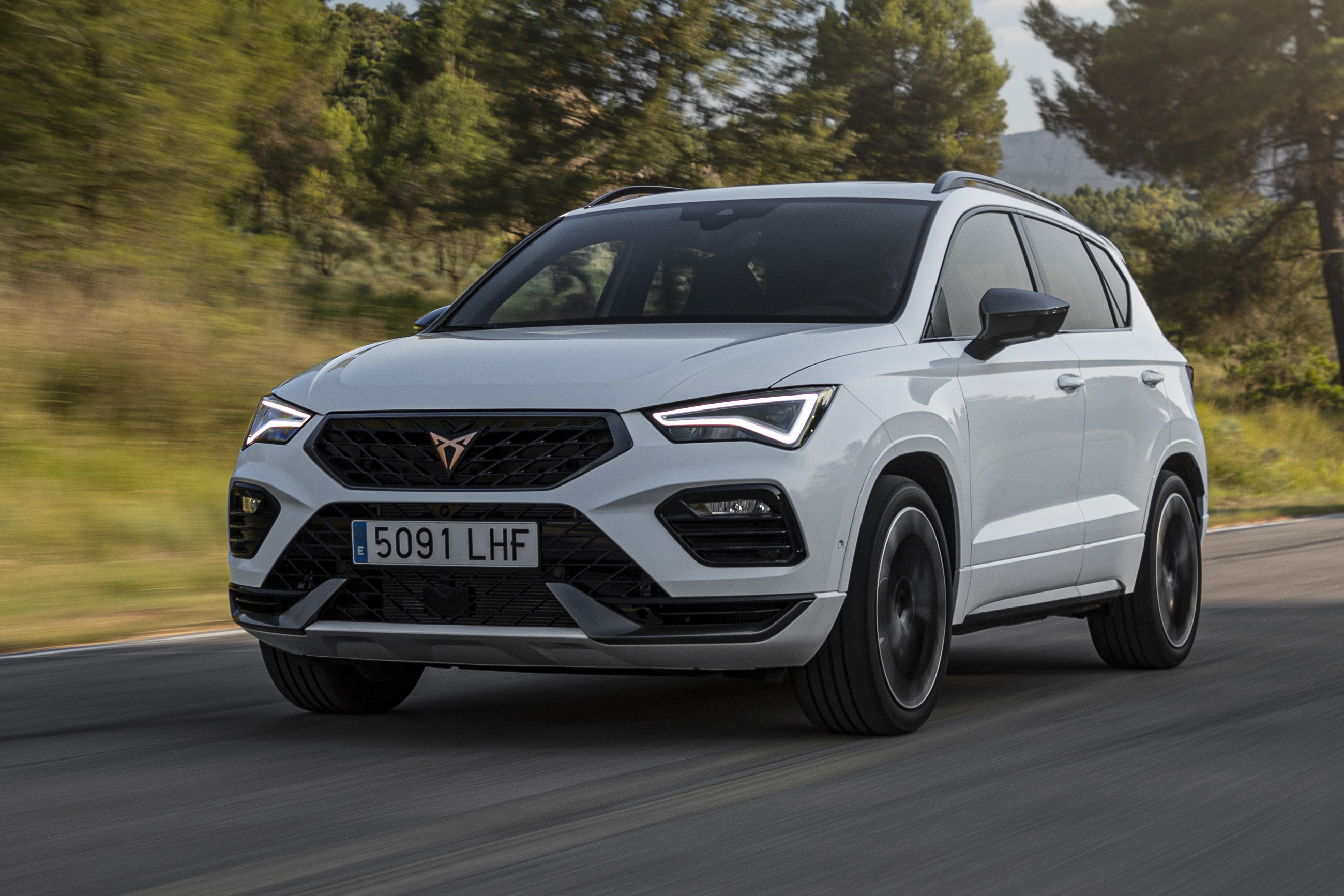
If you want something sportier and are willing to sacrifice some space, the Cupra Ateca, Volkswagen T-Roc R and Audi SQ2 all make sense. If you want something more premium, a Land Rover Discovery Sport or a pricier SUV from Audi or BMW may also tempt you.
The Kodiaq vRS’s unique selling point is that it combines real seven-seat practicality with usable performance. Very few cars at this money pull off both.
What's the interior like in the Skoda Kodiaq?
The Kodiaq vRS interior builds on the strengths of the regular car, but the sportier trim and details help it feel more special without sacrificing the everyday usability that makes the Kodiaq so effective.
Skoda Kodiaq boot space and practicality
One of the vRS’s biggest strengths is that it keeps the standard Kodiaq’s practicality largely intact. That means lots of room in the front, a family-friendly middle row and enough flexibility to make it far more usable than most performance SUVs.
The third row remains the obvious compromise. It is handy for occasional use and children will cope better than adults, but this is not a true seven-up people carrier. If you regularly need all seven seats, a more conventional MPV would still do the job better.
With the third row folded, the boot is still very useful at 630 litres, and the load area remains flat and easy to use. Even with all seven seats up, there is still enough room left for lighter family luggage rather than almost nothing at all.
That is what makes the vRS so unusual. It does not just look like a fast SUV. It still works as a family car in the way that really matters.
Skoda Kodiaq dimensions
The Skoda Kodiaq vRS measures 4,699mm long, 1,882mm wide and 1,665mm high. It is clearly a large SUV, but it carries its size well.
On the road, it feels more manageable than the numbers suggest, which helps make it an easier everyday proposition than some of its more overtly premium alternatives.
Tech and infotainment in the Skoda Kodiaq
The biggest and best infotainment system available in the Kodiaq is offered as standard in the vRS. It’s the 9.2-inch Columbus navigation system, which provides sharp graphics and quick responses to pinch and swipe finger gestures.
While it’s very good on its own, you can use Apple CarPlay and Android Auto to mirror apps from your phone onto the display. This is great if you’d prefer to use third-party navigation apps like Google Maps or Waze, or if you wish to access your podcasts and music playlists. WiFi is integrated, too, so your passengers won’t have to drain all their phone data on a long journey.
Also standard is the 10.25-inch virtual cockpit, which replaces the conventional dials behind the steering wheel. This is a really desirable system which contributes to the cabin feeling more upmarket than you’d expect for a Skoda. It’s not as distracting as you might expect, either, and drivers can select from a number of different displays.
Audiophiles may wish to look for a Kodiaq with the optional Canton sound system. This uses 10 speakers dotted around the cabin to provide a clear sound, but it’s a £420 option when new.
Materials available on the Skoda Kodiaq
Material quality is strong, and the vRS-specific details do a decent job of making the cabin feel a little more special than the regular car. The sport seats, contrast stitching and trim detailing all help.
There are still some hard plastics if you go looking for them, but the overall impression is of a large family SUV that has been given enough extra polish to justify its flagship billing.
What's the Skoda Kodiaq like to drive?
Skoda Kodiaq range and performance
You might expect a sporty SUV like this to be hiding a powerful petrol engine under the bonnet. The small Cupra Ateca, for example, uses a 300PS turbocharged 2.0-litre unit.
However, the Skoda Kodiaq vRS ‘makes do’ with a 245PS 2.0-litre petrol paired with a DSG automatic gearbox. It’s powerful enough on paper, but it doesn’t feel super quick in reality. It’ll accelerate to 62mph in 6.4 seconds flat, which is going to be quick enough for joining a motorway or overtaking a dawdling Honda Jazz. It’s a big, heavy SUV though, and it’s not going to defy physics.
There’s a useful 370Nm of torque which means it’ll effortlessly build speed when required, but it is hindered slightly by its standard DSG automatic gearbox. The seven-speed transmission can be a little hesitant to respond, especially from a standstill. You can get paddles behind the steering wheel to take control of the gearbox but it’s still not as involving as a manual gearbox.
Early cars used a 2.0-litre bi-turbo diesel with 240PS and has stronger low-down torque that suits the size and weight of the Kodiaq, and for long-distance drivers it can actually feel like the more natural fit.
Performance data
| Model | Engine/battery size | Power | 0-62mph | Range/MPG |
|---|---|---|---|---|
TDI DSG 4x4 | 2.0-litre bi-turbo diesel | 240PS | 7.0 seconds | 38.2mpg |
TSI DSG 4x4 | 2.0-litre turbo petrol | 245PS | 6.4 seconds | 32.4mpg |
Skoda Kodiaq driving and refinement
Skoda’s chucked everything at the Skoda Kodiaq vRS to make it feel a bit more special than a standard car, however. You get meaty disc brakes all around, big wheels with wide tyres, and Skoda’s Dynamic Chassis Control (DCC). This lets you use the drive modes to firm up the suspension when you’re in the mood.
It’s certainly more agile than the standard Skoda Kodiaq, helped by progressive steering which requires smaller inputs at higher speeds. There’s also an intelligent four-wheel-drive system which can shift up to 85% of torque to any given wheel in a fraction of a second. You can’t really feel it moving power about, but it’s fair to say there’s an enormous amount of grip available.
Ultimately, though, if you’re after B-road thrills, you’d be better with the smaller Volkswagen T-Roc R or Cupra Ateca. Or buy a standard Kodiaq and spend the remaining cash on a Mazda MX-5.
Surprisingly, despite its big wheels and trick suspension, the Skoda Kodiaq vRS remains fairly composed on bumpy roads. Sure, the softer DCC settings will become your friend if you’re looking to travel in comfort, but a rogue pothole isn’t going to catch you out as much as you might expect.
The standard Kodiaq is a very refined choice - so you’d expect the range-topping model to be even more civilised, right? Except, this is sporting the vRS badge. Even though it’s powered by a 2.0-litre petrol engine, Skoda’s attempted to make it sound like a V8 muscle car.
Under acceleration, you’ll hear a distinct engine noise that sounds nothing like a modern 2.0-litre petrol. That’s because it’s got a Dynamic Sound Boost feature, which essentially uses a speaker to mimic the sound of something throatier and remind passengers that they’re in a sportier-than-average Kodiaq.
Settle into a cruise and it’s a refined enough SUV. You’ll notice a bit more road noise from the rumble of the 20-inch alloy wheels, but wind noise is pretty well hushed. You’re not going to notice any serious vibration through the controls and the Kodiaq isn’t too focussed to use as a family car. That’s a good thing for a seven-seat SUV.
How safe is the Skoda Kodiaq?
The Kodiaq scored a five-star Euro NCAP rating and the vRS benefits from the same fundamentally strong structure and family-SUV brief.
Some of the most desirable assistance features were optional rather than standard, though, so it is worth checking the exact equipment on any used example rather than assuming a vRS came with everything.
Running costs: What it's like to live with a Skoda Kodiaq
The Kodiaq vRS is inevitably costlier to run than the standard car, but it is still a relatively sensible proposition by performance-SUV standards. That is part of what makes it interesting.
Skoda Kodiaq fuel economy
Fuel economy depends heavily on which used Kodiaq vRS you buy. The diesel is the thriftier choice, while the petrol is noticeably hungrier if you use the performance regularly.
The key point is that neither version is ruinous by the standards of a fast seven-seat SUV, but they are both a step on from the standard Kodiaq. That is simply part of the vRS deal.
Skoda Kodiaq warranty and servicing
Any remaining Skoda warranty will depend on the age of the car, but Approved Used examples remain the most reassuring place to start.
Skoda Plus Approved Used currently includes 1 year’s Warranty, 1 year’s Roadside Assistance, comprehensive multi-point checks, independent vehicle history and mileage checks and a service history check. That is a useful layer of reassurance on a used performance SUV, where previous care matters more than ever.
Skoda servicing is generally straightforward, but on used examples it is still worth checking the history carefully. With a vRS, that also means paying close attention to tyres, brakes and signs of harder use.
Skoda Kodiaq insurance groups
The Skoda Kodiaq vRS is going to be quite an expensive car to insure, particularly if you’re a young or inexperienced driver. It’s placed in insurance group 31, making it (unsurprisingly) the costliest Kodiaq you can insure. Still, the smaller Cupra Ateca falls into insurance group 33 - so it could be worse. We’d always recommend shopping around for quotes, anyway.
How much does it cost to tax a Skoda Kodiaq?
Unfortunately, you’re going to have to splash the cash on road tax. All petrol and diesel cars registered since April 2017 are subject to a flat rate of £200 a year in tax. On top of that, premium cars (with a list price of more than £40,000), are charged a ‘premium tax’ of an extra £440 a year for five years (from the second year onwards).
That means - even if you don’t pay more than £40,000 for a used Skoda Kodiaq vRS - you’ll have to pay £640 a year in tax.
What trims are available with the Skoda Kodiaq?
The Skoda Kodiaq vRS tops the standard Kodiaq range, meaning it’s loaded with kit. Its extensive equipment list includes 20-inch alloy wheels, bespoke front and rear bumpers, black exterior highlights and dual exhaust pipes. Metallic paint is included, while front and rear LED lights are also standard.
Inside, you’ll find Alcantara sports seats with red stitching and vRS logos. They’re heated in the front, while the driver’s seat gets electric adjustment with adjustable lumbar support. All Skoda Kodiaq vRS models come with the 9.2-inch Columbus navigation system as well as the Virtual Cockpit.
Front and rear parking sensors are included, as well as Dynamic Chassis Control. You’ll find Isofix child seat fittings on the outer rear seats, while a tyre repair kit replaces the conventional spare wheel.
Despite all this standard equipment, there are quite a few desirable optional extras to look out for. These include a heated windscreen (£310 on a new Skoda Kodiaq vRS), adaptive cruise control (also £310) and a panoramic sunroof (£1205). Park assist will help you tackle a tight parking space (£330), while a rear-view camera is a useful option (£395).
If you cover lots of miles, it might be worth looking for one with the £1,075 driver assistance package. This brings with it lane assist, blind-spot detection, traffic jam assist, rear traffic alert, emergency assist and adaptive cruise control.
Ask the Drive experts: common questions
Should I buy the diesel or petrol Skoda Kodiaq vRS?
Is the Skoda Kodiaq vRS a proper seven-seater?
Is the Skoda Kodiaq vRS better than a Cupra Ateca?
Get our latest advice, news and offers
Keep me updated by email with the latest advice, news and offers from Drive.
.jpeg)
.jpg)