Volkswagen Arteon Review

Written By Andrew Brady
- 2017
- Premium
- Petrol, diesel, plug-in hybrid
What we love
Elegant looks, inside and out
Huge practicality, comfort and space
Comprehensive equipment across the range
Things to consider
Rear headroom is a little tight for taller passengers
The interior is smart rather than especially distinctive
Larger-wheel versions can ride more firmly
The DRIVE take on the Volkswagen Arteon, is it the right car for you?
There are a number of ways you can look at the Volkswagen Arteon, and whichever path you take it’s undoubtedly attractive. As an anti-premium machine you can revel in all the luxury and style that you’d usually have to go to an upmarket showroom for, and enjoy it all with a badge that doesn’t irk the hoi polloi. So, yes, there’s a good chance the Volkswagen Arteon is for you, it’s arguably the thinking person’s upmarket car, and one that comes without any of the negative – perceived or real – baggage that some of those upmarket brands are burdened with. No, it’s not as sharp to drive as those premium machines, which when your daily reality is more likely to be mundane motorway monotony and cursed commuting its more comforting bent is actually a good thing.
The Volkswagen Arteon in more detail
The big issue facing the Volkswagen Arteon is that at a premium price level, many buyers want to see a BMW or Mercedes-Benz badge on the nose. Not a Volkswagen. So can the Volkswagen Arteon do the impossible and sway buyers? Find out in our Volkswagen Arteon review.
Volkswagen might translate to people’s car, but the brand equity is strong enough that it’s not just for the mainstream masses, with cars like the Volkswagen Arteon competing in the premium market. It arrived in 2017, Volkswagen denying it was a replacement for the previous Volkswagen CC, even if the timing suggested otherwise.
Browse used Volkswagen Arteons for sale →
Instead, the Volkswagen Arteon is described as a model that’s more distinct from its Volkswagen Passat relation, which goes some way to explaining the new name.
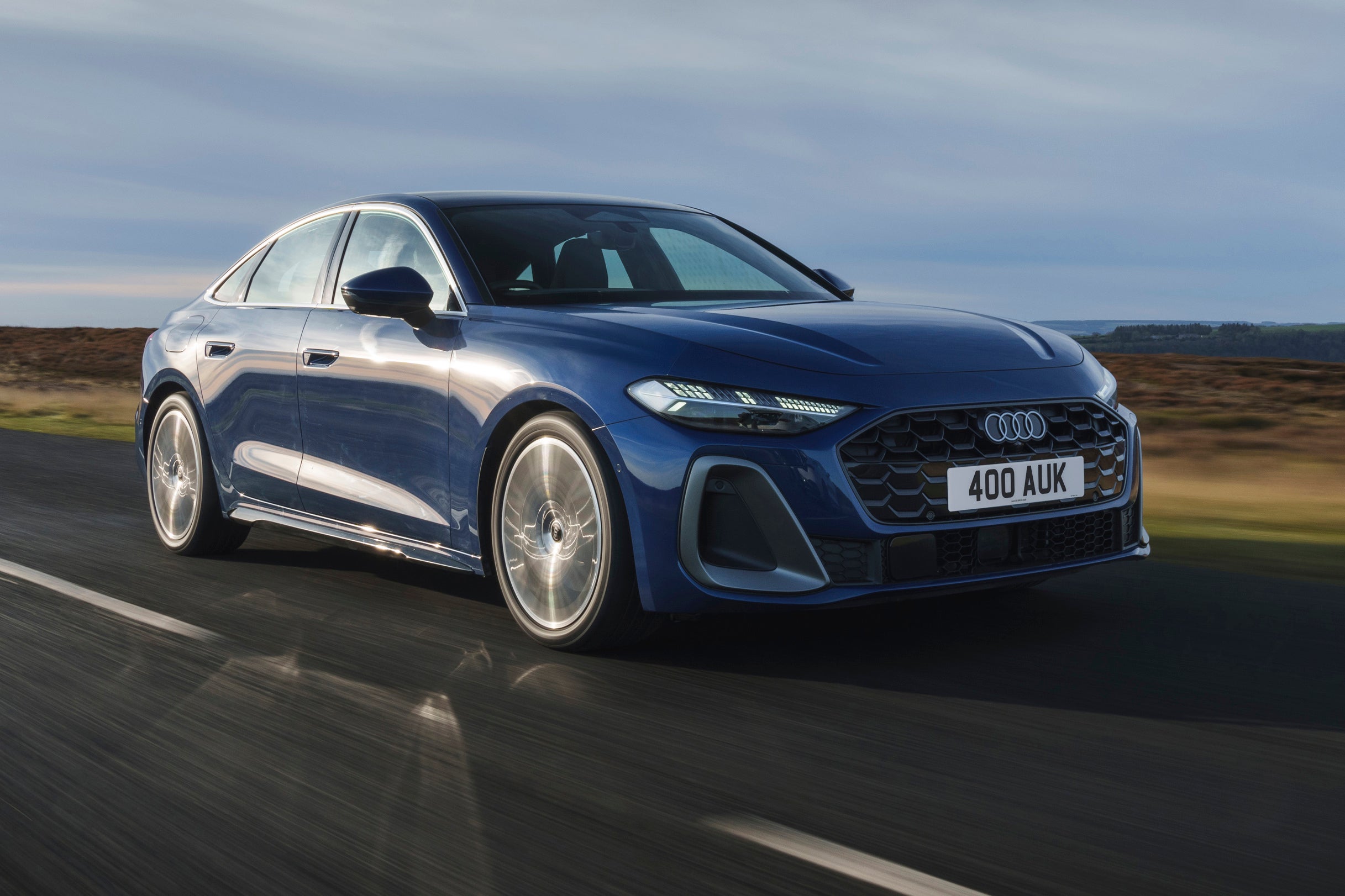
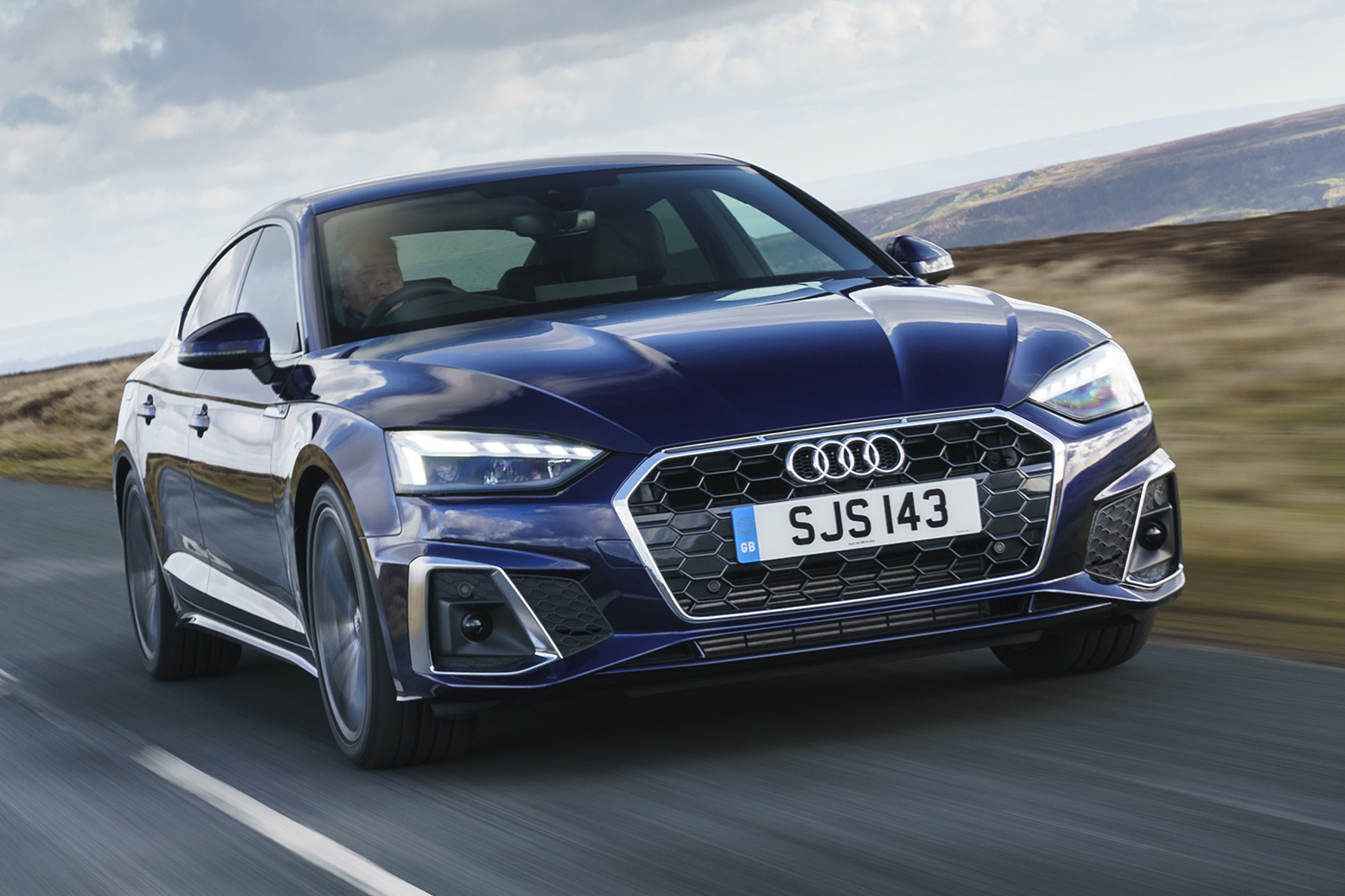
The Volkswagen Arteon is to be seen as a rival for cars like the BMW 4 Series Gran Coupe and Audi A5 Sportback, cars which manufacturers somewhat uncomfortably refer to as four-door coupes, when in fact they’re simply elegant hatchbacks – or perhaps inelegant, in the case of the latest BMW.
While SUVs may be more popular than ever, four-door saloons still have an audience. There’s no denying the Volkswagen Arteon is a fine-looking thing. Far wider and more rakish in its lines than the Volkswagen Passat it’s based on, it’s certainly got the looks to cut it among its premium branded contemporaries, indeed, their ubiquity works in the Volkswagen Arteon’s favour, making the big Volkswagen the stand-out car among them.
The exterior looks aren’t subterfuge to an interior that’s not up to the lofty standards witnessed in the class that the Volkswagen Arteon aspires to. Yes, the cabin is largely lifted from the Volkswagen Passat, but given it’s a car we consider to be at the top of its class, and indeed capable of rivalling and in some cases bettering, the interiors of cars in the premium sector above, that really is no complaint.
It might lack the flair of some inside, but there’s a lot to be said for the Volkswagen Arteon’s understated elegance, its simplicity here a virtue, especially in relation to longevity – it's still certain to look good in years to come.
That interior doesn’t just exude a feeling of neat classiness, but plentiful space and comfort, the Volkswagen Arteon’s cabin being big, which means there’s space for four adults in real comfort, even with its rakish rear profile. There’s practicality, too, the Volkswagen Arteon sharing that with its Passat relation, only here the massive, good shaped boot is accessed by a large hatchback, making the Volkswagen Arteon a useful load carrier.
Underlining its upmarket status is an engine range that does without the smaller 1.6-litre turbodiesel and 1.5-litre TSI engines from the Volkswagen Passat, instead only featuring 2.0-litre turbocharged petrol and diesel choices. A significant update to the Volkswagen Arteon range in 2020 added a plug-in hybrid model, high-performance R model along with the Volkswagen Arteon Shooting Brake, an estate version of the model.
Discontinued in 2023, the VW Arteon makes a great used buy.
What's the best Volkswagen Arteon trim and engine option?
There’s choice in the line-up, but then we reckon there’s only really one to go for, at least when it comes to the engine. We’d go for the long-legged ease and economy of the Volkswagen Arteon 2.0-litre TDI SCR diesel in 190PS form. Why not the 150PS version with its even better economy?
Because the Volkswagen Arteon deserves the easier nature of the bigger output version. With it you get the seven-speed DSG automatic as standard, which is, again, correct for a car like this. Regarding trim, it’s a toss-up between the Elegance or the R-Line, the decision down to whether you prefer the more overt assertive style of the R-Line over the Elegance’s relative understatement. We’d go R-Line, but that’s just us.
The Volkswagen Arteon eHybrid version usefully quick and has enough pure electric range to make it a viable option if you do a lot of short journeys - or if you want to cut your company car tax.
What’s the price of the Volkswagen Arteon?
As a used or nearly-new buy, the Volkswagen Arteon now starts from around £15,000, while newer, lower-mileage facelifted cars sit much higher depending on engine, trim and condition. You can see current prices of used Volkswagen Arteons for sale here.
That is where the Arteon starts to make real sense. At used prices, it no longer has to justify itself against brand-new premium rivals. Instead, it can be judged on what it actually offers, and that is a lot of car for the money.
Plug-in hybrid versions still tend to command noticeably stronger prices, while the most desirable late R-Line and Shooting Brake models also carry a premium. Even so, the Arteon is far easier to justify used than it ever was new.
Alternatives to the Volkswagen Arteon
The Volkswagen Arteon’s pitched as a classier, more rakish alternative to the mainstream premium saloons, which means it’s up alongside cars like the BMW 4 Series Gran Coupe and Audi A5 Sportback. We'd also add the Kia Stinger as a car with a similar approach.
Of course there are also the usual premium four-door suspects like the BMW 3 Series, Audi A5 and Mercedes-Benz C-Class. Against its intended four-door coupe rivals it’s appealing, against the premium saloon norm it’s even more so.
What's the interior like in the Volkswagen Arteon?
Volkswagen Arteon boot space and practicality
Following the 2020 update all Volkswagen Arteon models get the smart Active Info Display, which adds a 12.3-inch TFT screen in place of conventional dials. Earlier SE models make do with conventional instruments however.
Standard specification sees even the entry-level Volkswagen Arteon SE model feature six-way electrical adjustment for the driver’s seat, with four-way electrically adjustable lumbar support. The steering wheel is adjustable for rake and reach, which makes finding a comfortable driving position easy.
Those front seats are heated as standard with all, while also featuring three-zone electronically controlled climate control. There’s automatic windscreen wipers, electric, heated rear-view mirrors and active cruise control on all too.
From Volkswagen Arteon Elegance upwards the cloth upholstery is replaced by leather, while the options list allows Arteon buyers to add things like a heated steering wheel, rear-seat heating (outer pair), either 12 or 14-way electronic adjustment to the front seats and massage function, a rear-view camera and keyless entry.
Volkswagen might have given the Arteon a wide stance in a bid to give it dynamics and a stance to rival its premium rivals on the road, but it’s paid dividends in interior space, too. There’s loads of it, for both passengers and luggage. Those in the front have masses of space, while rear-seat passengers, so often given the short end of the stick, are similarly generously accommodated with plenty of leg and shoulder room.
Indeed, the Volkswagen Arteon’s cabin is wide enough that you’re not committing an act of cruelty to subject an adult to sitting in the rear middle seat, such is the shoulder room on offer.
We’d only recommend that for a shorter trip as the rear middle seat’s cushion is, like most cars in this class, an afterthought, being sculpted more as a raised division for the outer rear seats, and thus making perching your posterior on it less than ideal. That’s true of all the Arteon’s rivals, so it’s no real complaint. There are two ISOFIX child seat mounts on those outermost rear seats for fitting baby and toddler seats securely.
There’s good oddment storage throughout the interior, with all doors having decent-sized bins, a deep glovebox and a lidded cubby between the front seats.
It’s the boot though that really marks out the Volkswagen Arteon as hugely practical, because it’s huge. The measured volume with the seats up is 563 litres, while dropping them via a 60/40 split – increases that load space to an estate car rivalling 1,557 litres. There’s a ski hatch, through-load facility as well, should you need it.
The boot is a useful shape, too, being long and wide, while access to it is excellent thanks to the huge hatchback boot lid, which is powered if you opt for the Keyless entry option on Elegance and R-Line models.
Volkswagen Arteon dimensions
The Volkswagen Arteon measures 4,866mm long, 1,871mm wide and 1,460mm high. That gives it the sort of low, wide stance that helps it look more expensive than many regular hatchbacks or saloons.
The upside is real presence and very strong cabin space. The downside is that it is not the smallest thing to slot into older parking spaces, but visibility is decent enough and it never feels intimidating to place.
Tech and infotainment in the Volkswagen Arteon
The Volkswagen Arteon SE features an eight-speaker stereo system with a DAB receiver, with the Discover Navigation System featuring an 8-inch touchscreen with a 2D or 3D map view.
There’s a single CD player, USB connection and Bluetooth telephony and music streaming, the touchscreen enabling two smart devices to be connected simultaneously.
There’s also Apple CarPlay and Android functionality with the base system up. It works well, indeed, it’s arguably better than the Discover Navigation Pro Infotainment system that arrives with Elegance and R-Line models, thanks to the slightly smaller screen having physical volume and zoom buttons on them, making quick adjustments on the move easier. It's certainly one of the better infotainment systems around.
Most Volkswagen Arteon owners will buy Elegance and R-Line models, though, which brings that larger 9.2-inch screen without any knobs, which does impact on its ease of use.
There’s gesture control, but it feels a bit gimmicky, and indeed, doesn’t work brilliantly in practice. A Dynaudio Confidence soundpack was optional on pre-facelift models, which featured 11 speakers and a subwoofer, powered by a 700 watt amplifier, only offered on Elegance and R-Line models. New Arteons have the option of a Harman Kardon system with 700 watts and 12 speakers.
All post 2020 Arteons gain the 12.3-inch Active Info Display in place of conventional instruments. Like all such displays, it’s configurable to show things like consumption or mapping, entertainment information, it adding to the Arteon’s upmarket feel and, like most of the functions within the central display, can be controlled via steering wheel-mounted buttons.
Materials available on the Volkswagen Arteon
The interior design pleases with the Volkswagen Arteon and so does the material quality throughout. If anything, Volkswagen’s aspiration to elevate its status to premium is advantageous, as it’s really worked hard to ensure that every surface, even those you might never touch, feels of a quality that’s befitting of the upmarket arena that Volkswagen covets.
That status is a little bit blighted in entry-level Volkswagen Arteon SE specification, with the absence of leather upholstery, but elsewhere in the range the quality is easily as good as those rivals in the premium class.
The finish, too, is rock solid, with the gaps all tight, the Arteon’s interior feeling, and looking exceptionally well-constructed throughout. That feeling of assured weight and substance is evident not just in things like how the controls operate, but when doing things like dropping the rear seats, the overall feeling being one of expense, which, actually, isn’t always the case with the cars the Volkswagen Arteon rivals.
What's the Volkswagen Arteon like to drive?
Volkswagen Arteon range and performance
Befitting of the Volkswagen Arteon’s more upmarket positioning is the fact that it does without the entry-level engines of the Passat it’s related to.
Instead every engine is a 2.0-litre in capacity bar the eHybrid, and turbocharged, whether it’s petrol or diesel. The petrol choices are 190PS and 272PS, while the turbodiesels options are 150PS, 190PS and 240PS. Smooth and responsive as those petrol engines are, it’s the turbodiesels that make the most sense here, their easier delivery and low-rev punch, allied to excellent economy make them able cruisers, which works with the Arteon’s grand touring gait.
Of those diesels it’s the 190PS version that’s the best all-round choice, its 8.0 second 0-62mph time respectable rather than sparkling. It’s got enough pace to make the Volkswagen Arteon feel brisk, without asking too much of its chassis.
All, bar one 2.0 TDI 150PS model comes with a seven-speed DSG automatic, that sole manual being a six-speed gearbox, and the lowest emitting Arteon in the line-up. The quickest? If that’s your thing, then the 272PS 2.0 turbo petrol with 4Motion, manages a sub-6.0 seconds 0-62mph time, the fastest diesel taking 6.5 seconds.
The Volkswagen Arteon eHybrid sits somewhere in the middle on the performance spectrum, offering 218PS but with a little additional weight to carry around - 0-62mph takes 7.8 seconds with an official electric range of 38 miles.
The seven-speed automatic makes for an easier life, but hurry it and it can be a little bit keen to hang onto ratios. That manual gives a nice clean shift, but in this class of car the expectation is of an auto, and if you pick the manual you’ll pay for it when you come to sell it, as it’ll reduce the Arteon’s appeal to most buyers.
Performance data
| Model | Engine/battery size | Power | 0-62mph | Range/MPG |
|---|---|---|---|---|
2.0 TDI DSG | 2.0-litre diesel automatic | 190PS | 8.0 seconds | 58.9mpg |
2.0 TSI DSG | 2.0-litre petrol automatic | 190PS | 7.7 seconds | 49.0mpg |
2.0 TSI 4Motion DSG | 2.0-litre petrol automatic four-wheel drive | 280PS | 5.6 seconds | 38.7mpg |
eHybrid DSG | Plug-in hybrid automatic | 218PS | 7.8 seconds | 235.4mpg |
Volkswagen Arteon driving and refinement
There’s the choice of front or four-wheel drive versions, but unless you’re planning to take regular trips to the snowy mountains in it – and even then you’ll need winter tyres – there’s little real need to go for a 4Motion model.
All models apart from the limited Volkswagen Arteon R-Line Edition make do with conventional passive dampers with its suspension, that range topping model getting Volkswagen’s Dynamic Chassis Control (DCC) as standard. It’s available optionally, and it brings a choice of damper settings, from Normal, Comfort, Sport and Individual.
Option it on an Elegance or a R-Line and DCC also drops the chassis by 15mm as standard, or, with the 4Motion models a 20mm lowering. It’s an option that many buyers tick, that Comfort mode helping with the ride of the larger 19-inch standard wheels of the R-Line which can otherwise be a bit busy at low speeds on rough surfaces.
Rounded, then, rather than exceptionally dynamic, but that’s a good thing, the Volkswagen Arteon is able and stable, with decent ride comfort, which works well with the easy nature of the powertrains it’s fitted with.
Refinement is good in the Volkswagen Arteon, with the engines all working away quietly, the petrol choices smoother here, without some of the background sounds of the diesels.
It’s never intrusive, though, and rarely even apparent, meaning the Arteon provides a mostly hushed drive. There’s a bit of road noise on rougher surfaces, exacerbated by the largest wheel choices and the lowered suspension of some models.
Wind noise is nicely suppressed, too, which is an impressive feat, as the Volkswagen Arteon features frameless doors, which while adding a real sense of sophistication, are often prone to producing greater wind noise. That’s not evident here, particularly if you option the Acoustic Pack which brings sound-insulating laminated glass and additional interior noise suppression, indeed with it, the Arteon’s a nicely quiet place in which to wind away some big miles.
How safe is the Volkswagen Arteon?
The Volkswagen Arteon was independently crash tested by Euro NCAP at its launch in 2017 and it scored a maximum five-star overall score.
That’s hardly surprising given the standard list of safety equipment, with all Arteons coming with ABS brakes with Brake Assist and Electronic Brake Force Distribution, an Active Bonnet that pops up to lessen pedestrian injuries, Electronic Stability Control, Traction Control, Engine Drag Torque Control with trailer stabilisation, a pair of Isofix child seat mounts, tyre-pressure loss indicator, Adaptive Cruise Control with City Emergency Braking and road recognition, the list goes on.
2020 on Volkswagen Arteon models also offer the option of Travel Assist, a higher level of automated driving which can automatically slow the car for bends, roundabouts and junctions as well as in response to speed limit signs.
There’s the possibility to add to that from the options list, with things like a rear-view parking camera, Side Assist with Rear Traffic Alert, a Head-up Display and Emergency Assist – a system that intervenes if the car detects the driver is incapable of driving.
Running costs: What it's like to live with a Volkswagen Arteon
The Volkswagen Arteon should be fairly straightforward to live with as a used car if you buy carefully. It uses well-known Volkswagen Group mechanicals, the cabin is robust enough for long-term ownership and the hatchback practicality remains a genuine everyday benefit.
Volkswagen Arteon fuel economy
Fuel economy depends heavily on engine choice. Diesel versions are still the best fit for buyers doing bigger distances, while the eHybrid only really makes sense if you will regularly charge it and take advantage of the electric running.
Petrol versions are fine, but they tend to make less sense unless your mileage is low enough that diesel or plug-in hybrid benefits are not especially relevant.
Volkswagen Arteon warranty and servicing
Any remaining manufacturer warranty on a used Arteon will depend on its age and mileage, but Volkswagen Approved Used examples are still particularly appealing. That programme brings a 12-month unlimited-mileage warranty, 12 months of roadside assistance, independent history and mileage checks, service history verification and a comprehensive multi-point inspection by Volkswagen technicians.
Servicing can be on either a fixed or flexible LongLife schedule, so it is worth checking not just whether the history is complete, but which regime the car has followed and whether maintenance has been done at the right intervals.
Volkswagen Arteon insurance groups
The insurance group ratings for the Volkswagen Arteon span from 21 for the entry-level SE with the 150PS turbodiesel, right up to 32 for the 2.0 BiTDi 4Motion model in R-Line Edition trim. The likely best seller, the Volkswagen Arteon 2.0 TDI 190 DSG spans groups 25 to 28, that highest grouping for the R-Line Edition model with 4Motion four-wheel drive.
How much does it cost to tax a Volkswagen Arteon?
For most Volkswagen Arteons registered from 1 April 2017 onwards, the standard annual VED rate is now £200. Higher-spec cars that originally cost more than £40,000 may also be liable for the Expensive Car Supplement for five years from the second tax year, so it is worth checking the exact registration date and original list price of the car you are considering. This can add an extra £440 each year and is particularly relevant with the Arteon, because plenty of well-optioned examples crossed the £40,000 threshold when new.
What trims are available with the Volkswagen Arteon?
The Volkswagen Arteon SE has 18-inch alloy wheels, LED headlights, 6-way electrically adjusted driver’s seat, 3 Zone climate control, heated front seats, Discover Navigation Infotainment with DAB, Apple CarPlay and Android Auto, Adaptive Cruise Control and Parking sensors front and rear.
Volkswagen Arteon Elegance trim adds Dynamic Light Assist, Leather Upholstery, Body coloured side skirts with chrome detailing, Discover Navigation Pro with 9.2-inch touchscreen, Active Info Display 12.3-inch high resolution screen for instrumentation.
Volkswagen Arteon R-Line models have 19-inch alloy wheels and R-Line specific exterior styling while the R-Line Edition comes with 20-inch alloy wheels, Dynamic Chassis Control, Keyless Entry, 360 degree camera view, Park Assist and Side Assist Plus with rear traffic alert.
Ask the Drive experts: common questions
Is the Volkswagen Arteon still available new in the UK?
Is the Volkswagen Arteon a premium car?
Is the Arteon the same as Passat?
Get our latest advice, news and offers
Keep me updated by email with the latest advice, news and offers from Drive.
.jpg)
.jpg)