Volkswagen Grand California Review

Written By Andrew Brady
- 2019
- Motorhome
- Diesel
What we love
Spacious, well-packaged interior
Easier to drive than its size suggests
Proper fitted bathroom and shower
Things to consider
The 600 and 680 suit different types of touring
Heavier versions require C1 licence entitlement
680 needs a little more thought in tighter spaces
The DRIVE take on the Volkswagen Grand California, is it the right car for you?
The Grand California makes the strongest case if you want a big motorhome without the uncertainty that can come with a third-party conversion. It’s roomy, thoughtfully laid out and much easier to live with on the road than you might expect from something based on a large van. It won’t suit everyone, because it’s expensive and some versions need a C1 licence, but if you want a polished all-in-one tourer with a proper kitchen, shower and toilet, it’s one of the most convincing factory-built options on sale.
The Volkswagen Grand California in more detail
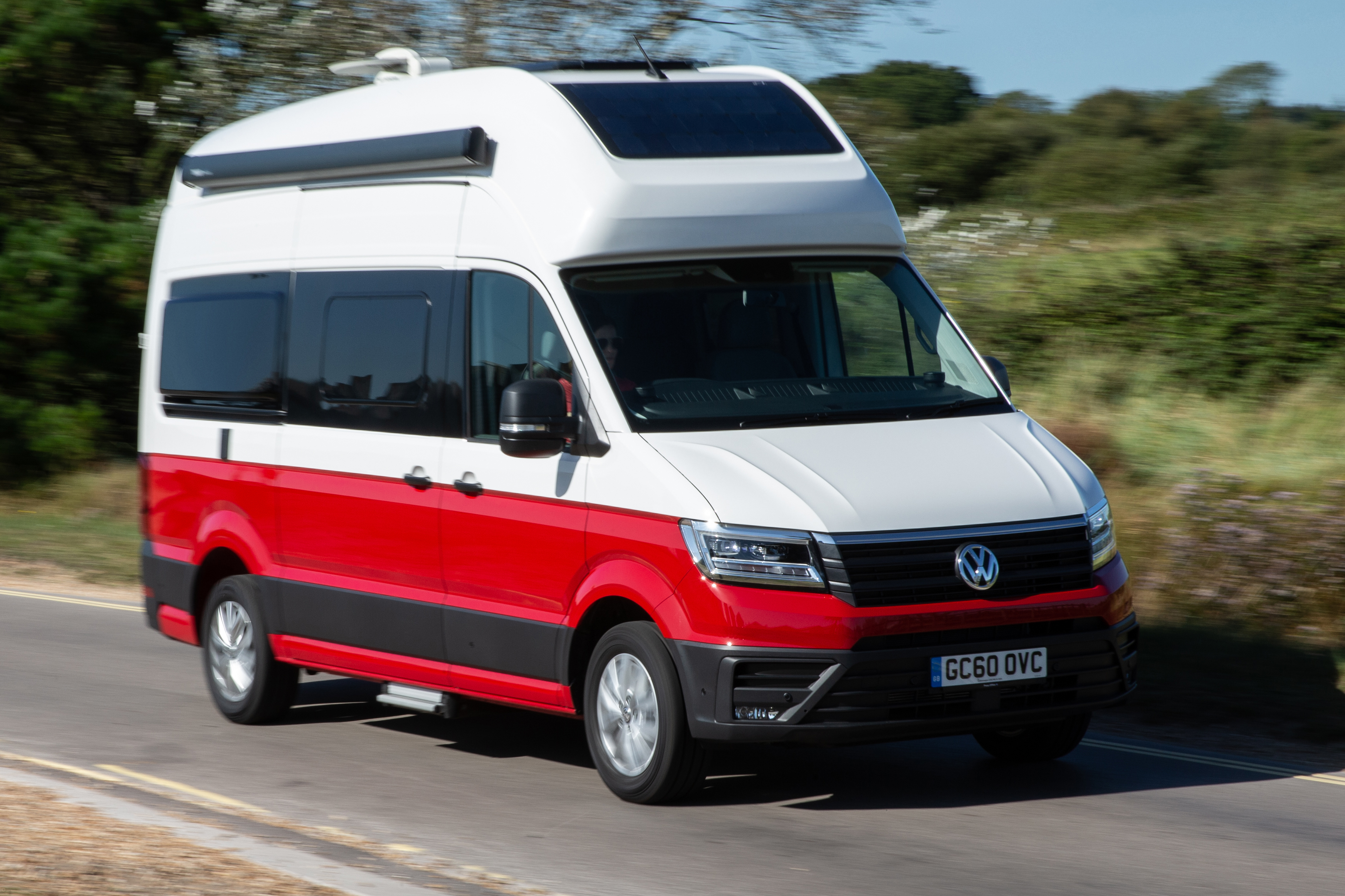
Volkswagen has had the California name in its locker for years, but the Grand California is a different proposition from the smaller campervan. This isn’t a cleverly adapted day van with a pop-top roof. It’s a full-sized motorhome based on the Crafter van, with fixed beds, a fitted kitchen, a washroom and enough onboard kit to make it feel like a real touring machine rather than a weekend compromise.
There are two versions. The Grand California 600 is the shorter model at just under six metres long and is the one that will suit more buyers in the UK. It feels a touch easier to place on narrow roads, offers the option of an over-cab bed for children, and in 3.5-tonne form it can be driven on a standard licence. The Grand California 680 stretches out to 6.8 metres and gives you a longer rear bed and a bit more galley space, but every UK-spec 680 sits at 3.88 tonnes, so you’ll need C1 license entitlement.
If you passed your test after 1 January 1997 and haven’t added C1, the lighter 600 3.5T is your only choice.
Even so, there’s a lot to like whichever version you pick. The wet room is a genuine plus, because it means you’re not relying on campsite blocks every time you stop. The kitchen is properly integrated, the seating area is well thought through, and the whole thing has a robustness that feels reassuring if you’re heading off for long trips rather than occasional weekends away.
The biggest weakness is value. The Grand California isn’t cheap in any form, and a well-specced 680 4MOTION gets deep into serious money. But this is one of those vehicles where the appeal isn’t only the spec sheet. What you’re buying is the confidence of a factory-developed motorhome with a broad dealer network behind it, and that does count for something.
What's the best Volkswagen Grand California trim and engine option?
This one’s simpler than most reviews because there isn’t a broad trim and engine ladder to wade through. Every Grand California sold in the UK now uses a 2.0-litre TDI diesel with 163PS and an eight-speed automatic gearbox, so the real choice is body style, weight class and whether you need four-wheel drive.
For most buyers, the Grand California 600 3.5T is the one to go for. It keeps things easiest from a licence point of view, it’s the most manageable version on UK roads, and it’s the cheapest way into the range. It also has the family-friendly advantage of the optional over-cab bed, which makes more sense for buyers travelling with children.
The 600 3.88T only makes sense if you genuinely need the extra payload and already have C1 entitlement. The 680 is the better fit if your priority is sleeping comfort, you like the idea of a lengthways rear bed and there are only two of your, but it’s harder to justify unless you really will use the extra interior space. The 680 4MOTION is the niche pick for buyers who tour year-round or head to muddy sites, ski trips and loose-surface campsites, but it comes with a hefty premium.
What’s the price of the Volkswagen Grand California?
At current UK list prices, the Grand California 600 3.5T starts at £85,408 on the road, rising to £86,080 for the 600 3.88T. The 680 starts at £88,186, while the 680 4MOTION tops the range at £96,250.
That means the step from the entry 600 to the standard 680 is just under £2,800, while the jump to the four-wheel-drive 680 is far more substantial.
These figures look steep next to many cars, but they need to be judged against the motorhome market rather than family SUVs or MPVs. A professional conversion based on a big panel van can also get expensive quickly once you start matching this sort of equipment. If you’re looking for a cheaper route in, used Grand Californias start from the low £70,000s through Volkswagen’s wider approved used network.
Alternatives to the Volkswagen Grand California
The Grand California doesn’t have many direct showroom rivals because most large motorhomes come from specialist converters rather than mainstream manufacturers. That makes it a slightly unusual thing to judge, but there are still a few sensible alternatives depending on what kind of trips you have in mind.
The obvious in-house alternative is the regular Volkswagen California. It’s much smaller, much easier to use day to day and cheaper to buy, but it can’t match the Grand California for onboard comfort. There’s no fitted bathroom, the kitchen is far more compact and it’s aimed at a different sort of camping.
If you want another manufacturer-backed camper, the Ford Transit Custom Nugget is worth a look. It’s a more compact campervan rather than a proper motorhome, so again it doesn’t go head-to-head on layout, but it makes more sense if you want something that can double as everyday transport.
Beyond that, you’re into the world of specialist converters, where the appeal is flexibility rather than factory reassurance. If you want a more bespoke layout, a warmer cabin atmosphere or different bed arrangements, converters can do that. If you’d rather buy something that feels cohesive and easy to support through a main dealer network, the Grand California keeps its advantage.
What's the interior like in the Volkswagen Grand California?
The VW Grand California’s cabin is more practical than cosy, but it’s well organised, hard-wearing and easy to understand. Up front it feels close to a high-spec Crafter, while the living area is smartly packaged and gives you the sort of built-in storage, washroom and kitchen functionality that makes longer trips much easier.
Volkswagen Grand California boot space and practicality
Nobody buys a motorhome like this for boot litres, but practicality is one of the VW Grand California’s strongest areas. The big win is that Volkswagen has used the available space sensibly, so it feels like a proper mobile living area rather than a van with camping furniture bolted in.
The 600 and 680 differ most in bed layout and kitchen length. In the 600, the rear bed runs across the van, measuring 1.93m by 1.36m, and there’s the option of an over-cab bed designed for children. In the 680, the longer wheelbase allows a lengthways rear bed, measuring 2.00m by 1.67m on one side and 1.90m by 1.67m on the other. If one of you is tall, the 680 is clearly the more comfortable overnight option.
The fitted wet room is a genuine selling point rather than a brochure gimmick. It includes a toilet, sink and shower, and while no motorhome bathroom of this size will feel luxurious, having one onboard makes a big difference when you’re travelling off-grid or arriving late at a stopover. The 110-litre fresh water tank and 90-litre waste water tank are useful touring figures, too.
The kitchen is properly usable rather than decorative. Both versions get a twin-burner gas hob, sink and 70-litre fridge, while the 680 gives you a little more worktop and storage. You also get cupboards, drawers and under-bed storage for bulkier kit. There’s no classic hatchback-style luggage area, but for this kind of vehicle that misses the point. Storage is spread throughout the cabin, and there’s enough of it for bedding, clothes, cooking gear and outdoor kit if you pack sensibly.
The front seats swivel to form part of the lounge area and the rear bench helps create a social space when you’re parked. It all feels sturdy, and that matters. Cupboard doors, catches, hinges and fittings feel as though they’re designed for life on the move rather than occasional showroom demonstrations.
Volkswagen Grand California dimensions
The VW Grand California 600 measures 5,980mm long, 2,040mm wide and 2,970mm high, while the 680 stretches to 6,800mm long, keeps the same 2,040mm width and stands 2,840mm high. Width across the mirrors is 2410mm, and both versions have a 13.6-metre turning circle.
That means neither is something you’ll thread casually through multi-storey car parks or village lanes without thinking. The 600 is easier to manage than the 680, but both need proper route planning and some height awareness. If you’re comparing it with a smaller campervan, this is where the Grand California’s motorhome character becomes obvious.
Tech and infotainment in the Volkswagen Grand California
Up front, the VW Grand California feels much like a well-equipped Crafter, which is largely a good thing. The dash layout is clear, the driving position is commanding, and the infotainment system is easy enough to use without demanding too much of your attention on the move.
The bigger story is what happens behind the cab. The Grand California combines regular vehicle infotainment with a second control environment for the living area, allowing you to manage heating, water and interior functions more like a compact apartment than a van. That split works well because it keeps the camper-specific systems separate from your driving controls.
Connectivity and socket provision are also decent for real touring use. Volkswagen gives you USB, 12V and 230V sockets around the cabin, which matters far more here than it would in a family car. If you’re using a site hook-up, cooking, charging devices and running cabin systems all feels properly integrated.
The main weakness is navigation. As with plenty of van-based systems, you’ll want to stay alert to size restrictions and route suitability rather than trusting the screen blindly. It’s competent rather than class-leading.
Materials available on the Volkswagen Grand California
Volkswagen has gone for a clean, contemporary look rather than a traditional cottage-on-wheels feel. That means hard-wearing surfaces, wipe-clean finishes and light colours that make the cabin feel airy. If you want plush textures and handcrafted warmth, a specialist converter may feel more personal.
That said, the materials do suit the brief. The VW Grand California is designed to be used, not tiptoed around. Vinyl-style flooring, robust cabinetry and durable trim make more sense in a vehicle that may be dealing with muddy boots, wet waterproofs and constant loading in and out.
The standard seat trim is fabric in Titanium Black, and the interior theme stays functional rather than decorative. It won’t be to every taste, but it fits the vehicle’s character. This is a motorhome that majors on usability and longevity more than old-school ambience.
What's the Volkswagen Grand California like to drive?
For something this large, the Grand California is impressively undemanding. It feels tall and wide, because it is, but the driving position, visibility and ease of the eight-speed automatic help take the stress out of long journeys. You always know you’re in a motorhome, yet it’s more relaxing to cover distance in than many buyers will expect.
Volkswagen Grand California range and performance
The UK range is straightforward. Every VW Grand California uses a 2.0-litre TDI diesel producing 163PS, paired with an eight-speed automatic gearbox. Most versions are front-wheel drive, while the range-topping 680 adds 4MOTION.
That power figure might not sound huge given the size of the vehicle, but it suits the Grand California’s job well enough. This isn’t something you drive for punchy overtakes or quick getaways. What matters more is that the engine delivers its shove in a calm, usable way and doesn’t feel strained in normal touring use.
In practice, the key choice isn’t performance but weight class and traction. The heavier versions increase payload and flexibility, while 4MOTION gives more confidence on slippery grass, mud or poor surfaces. For most buyers touring mainly on tarmac and campsite roads, the standard front-wheel-drive setup will do the job.
Performance data
| Model | Engine/battery size | Power | 0-62mph | Range/MPG |
|---|---|---|---|---|
Grand California 600 3.5T TDI | 2.0-litre diesel automatic front-wheel drive | 163PS | Around 26mpg | |
Grand California 600 3.88T TDI | 2.0-litre diesel automatic front-wheel drive | 163PS | 26mpg | |
Grand California 680 TDI | 2.0-litre diesel automatic front-wheel drive | 163PS | Around 26mpg | |
Grand California 680 4MOTION TDI | 2.0-litre diesel automatic all-wheel drive | 163PS | Around 24mpg |
Volkswagen Grand California driving and refinement
The VW Grand California is one of those vehicles that feels easier once you’ve done the first few miles. Initially, the sheer size dominates your attention. You sit high up, you’re conscious of the length behind you, and you quickly learn to watch for width restrictions, overhanging branches and awkward turns.
After that, it settles into a pretty natural rhythm. The steering is light enough to take the strain out of manoeuvring, visibility is good for something of this size, and the automatic gearbox suits the character of the vehicle perfectly. You don’t want to be working a manual gearbox in a large motorhome in town traffic if you can avoid it, and Volkswagen doesn’t ask you to.
The suspension does a good job of taking the edge off rough surfaces, which matters because a harsh-riding motorhome gets tiring quickly. It also helps the Grand California feel more settled on a motorway than some converted vans. You notice crosswinds, of course, but the whole thing feels broadly secure and composed rather than nervous.
The 680 doesn’t feel dramatically more awkward than the 600 once you’re moving, but the extra length is harder to ignore in tighter spaces. That’s why the 600 will be the easier recommendation for mixed UK use.
Refinement is good by motorhome standards. There’s some diesel noise under load and you can’t ignore the bluff shape at speed, but it doesn’t feel rattly or flimsy. In fact, the solidity of the living area is one of the Grand California’s best qualities.
How safe is the Volkswagen Grand California?
Campervans and motorhomes aren’t usually tested by Euro NCAP in the same way as ordinary passenger cars, so there isn’t a directly comparable star rating to quote here. What matters more is the kit Volkswagen includes.
The Grand California gets a useful baseline of assistance systems, including adaptive cruise control, front assist with city emergency braking, crosswind assist, post-collision braking, lane keeping assistance and blind spot monitoring in current brochure specification. Parking assistance features such as a reversing camera, park assist and rear traffic alert are either available or standard depending on how the vehicle is specified.
For a motorhome, crosswind assist is particularly relevant because it helps reduce the intimidation factor on exposed roads. That doesn’t change the laws of physics, but it does make the Grand California feel less daunting in poor conditions.
Running costs: What it's like to live with a Volkswagen Grand California
This is an expensive thing to buy, so no one should pretend it’s cheap to own, but the Grand California’s running costs are more predictable than some alternatives. The diesel engine is proven, the factory-backed aftersales support is a real advantage, and the current 5 Plus Promise improves the ownership proposition from new.
Volkswagen Grand California fuel economy
Both two-wheel drive versions of the Grand California are rated at around 26mpg, while the 4Motion’s all-wheel drive system drops this to 24mpg. In our experience, though, 30mpg is just about possible on a gentle cruise.
Volkswagen Grand California warranty and servicing
The Grand California now comes with Volkswagen Commercial Vehicles’ 5 Plus Promise, which bundles in five services, three MOTs, five years of roadside assistance and a warranty lasting up to five years or 124,000 miles.
That’s more generous and more useful than the older three-year commercial vehicle warranty structure, and it strengthens the case for buying new if you’re comparing factory-backed options with specialist conversions.
It’s also worth remembering that an approved used Volkswagen Commercial Vehicle can bring more reassurance than a privately sold converted camper, because you’re buying into a mainstream dealer network. That won’t erase all motorhome running costs, but it does lower some of the ownership anxiety.
Volkswagen Grand California insurance groups
The Grand California doesn’t sit in the normal 1 to 50 insurance group structure used for most cars. Motorhomes are usually assessed differently, often through specialist insurers who take account of vehicle size, use, storage and value.
That means you shouldn’t expect one headline insurance number to tell the full story. Quotes can vary a lot depending on where it’s kept, how often you travel abroad and whether you need cover for accessories or personal contents. In practice, the version you choose matters less than your usage profile.
How much does it cost to tax a Volkswagen Grand California?
Tax depends on weight class. A motorhome up to 3500kg falls into the private or light goods category if its engine size is over 1549cc, which means £375 a year on current GOV.UK rates. Motorhomes over 3,500kg fall into the private heavy goods class, which is currently £177 a year.
That means the lighter Grand California 600 costs more to tax annually than the heavier 3.88-tonne versions. It sounds odd, but that’s how the current UK system works. It’s also one more reason the 3.88-tonne vans can make sense for the right buyer, assuming the C1 licence requirement isn’t a blocker.
What trims are available with the Volkswagen Grand California?
The Grand California range is less about trim ladders and more about body style, gross weight and drivetrain. In effect, you’re choosing between the 600 and 680 layouts, then deciding whether you need the 3.5-tonne or 3.88-tonne version, and in the case of the 680 whether 4MOTION is worth the extra spend.
The Grand California 600 is the most broadly appealing version. It gives you a transverse rear bed, the option of the over-cab bed for children, a 70-litre fridge, twin-burner gas hob, fitted wet room and the best chance of staying within standard licence rules if you choose the 3.5-tonne model. It’s the most versatile all-rounder and the version most buyers should start with.
The 600 3.88T is effectively the same basic package with extra weight allowance. That matters if you tour heavily loaded, travel with more gear, or want a little more margin for accessories and payload.
The Grand California 680 changes the layout rather than the equipment philosophy. It gives you the longer kitchen and the more comfortable lengthways bed, and loses the 600’s over-cab bed. If you’re a couple planning longer tours, that extra sleeping comfort may matter more than the 600’s family flexibility.
The 680 4MOTION is the most expensive and most specialist model. It’s the one to choose if your trips routinely take you to winter destinations, muddy fields or less forgiving surfaces, but many buyers will be paying a lot for capability they won’t use very often.
Ask the Drive experts: common questions
Can you drive a Volkswagen Grand California on a standard licence?
What’s the difference between the Grand California 600 and 680?
Does the Volkswagen Grand California have a toilet and shower?
Is the Volkswagen Grand California worth the money?
Get our latest advice, news and offers
Keep me updated by email with the latest advice, news and offers from Drive.
.jpg)