Volkswagen ID.3 Review

Written By Andrew Brady
- 2020
- Family hatch
- Electric
What we love
Spacious cabin for the footprint
Relaxing and refined to drive
Broad battery and range choice
Things to consider
Rear seats do not fold completely flat
Larger wheels can make the ride a little firmer
Range varies quite a bit depending on battery size
The DRIVE take on the Volkswagen Id3, is it the right car for you?
The Volkswagen ID.3 has a lot of competition in the compact electric hatchback class, with more and more coming along all the time. But despite that, it still remains a very recommendable choice.
Like Volkswagens usually are, it’s just such a solid all-rounder, doing a good job in the vast majority of areas. It’s comfortable, relaxing and easy to drive, and if you’re moving into an EV from a combustion-powered car for the first time, there’s nothing off-putting or intimidating about the way it goes about its business. Considering its compact footprint, it’s impressively roomy for passengers and luggage, while there’s plenty of standard equipment on offer for a not-unreasonable price. Sure, it’s not perfect, the ID.3 is still a very capable contender in a very competitive class, and it’s well worthy of your consideration.
The Volkswagen Id3 in more detail
The ID.3 arrived with enormous expectations. Volkswagen effectively framed it as the third great pillar of the firm’s history, following the Beetle and Golf as models of the utmost significance to the company.
That was quite a burden to place on a new mid-sized electric hatchback. And it didn’t help that the first cars to reach buyers had clunky software, cheap-feeling interior trim, and a general sense that the car had been pushed into production before it was truly ready.
That damaged the ID.3’s image and appeal slightly, but underneath those early frustrations was always a fundamentally good car. The EV-dedicated MEB platform gave it a lot of the things buyers want in a family EV: the cabin is roomy, the turning circle is usefully tight, the rear-drive layout gives it a tidy feel on the road, and the levels of comfort and refinement are impressive.
Browse used Volkswagen ID.3s for sale →
Over time, there’s also been a vast range of choice on offer when it comes to battery size, motor output and trim level, which while slightly bamboozling when trying to get your head around the range, does at least mean that there’s an option to suit most use cases.
2023 was a key point for the ID.3, because that’s when the car was facelifted, addressing the areas that most obviously needed attention. The cabin materials were improved, the infotainment system - and the software that drove it - was improved, and this made the ID.3 feel a bit more like the car it should always have been.
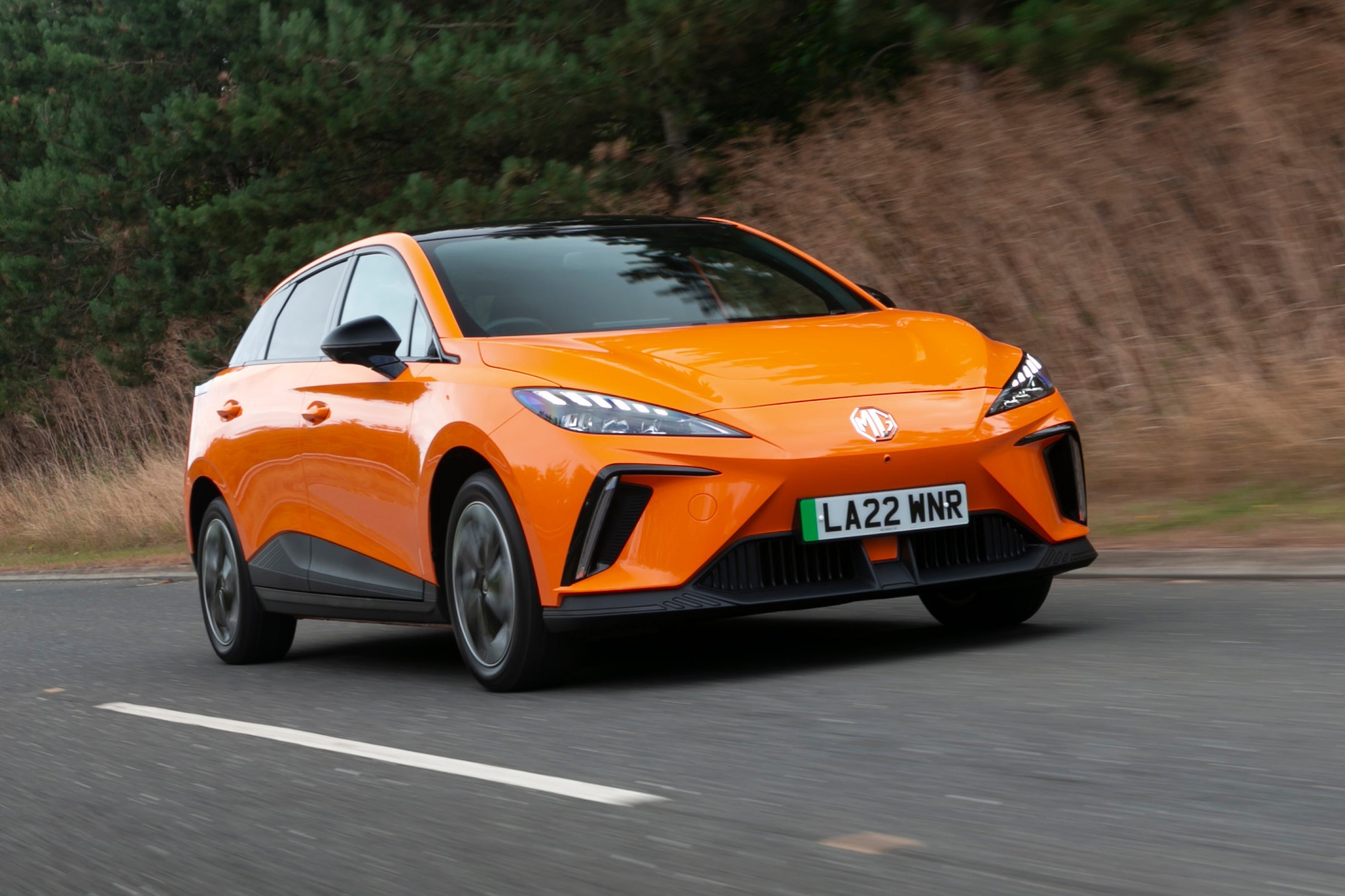
The market around the ID.3 is now much stronger than it was at launch, however. The Cupra Born offers a closely related package with a sportier edge, the Renault Megane E-Tech is stylish and convincingly modern, while the MG4 continues to offer formidable value for money.
Even so, the Volkswagen ID.3 is a competitive offering in the class due to its solid all-round ability and relaxed, easy-going demeanour. It’s not the most exciting electric hatchback, and it’s certainly not the cheapest, but it combines numerous other attributes in a very convincing package.
What's the best Volkswagen Id3 trim and battery option?
There have been so many different versions of the ID.3 over the years in terms of power level, battery size and equipment specification that, if you’re a used buyer, this is a tricky question to answer. At the point in 2026 when the original ID.3 was replaced by the ID.3 Neo, we reckon that the best version of the original was the Pro S Essential.
This has the biggest battery on offer for the chunkiest official range figure of 352 miles, and the standard kit list is plenty generous enough for most, but while still saving buyers a considerable amount in purchase price compared to the higher-spec Match version.
If you don’t need the range afforded by that big battery, you could consider the Pure Essential version instead, but bear in mind that it comes with significantly less standard kit as well as less range and power.
One version we’d steer you away from is the GTX Performance, which is pricier and more powerful than an ID.3 needs to be. We’ve written a separate review for that version, though, so throughout the rest of this review, we’ll concentrate solely on the more mainstream versions.
What’s the price of the Volkswagen Id3?
The Volkswagen ID.3 range - which is currently on run-out in advance of the arrival of the all-new ID.3 Neo later in 2026 - starts at £30,860 for the Pure Essential. If you discount the GTX Performance - which we are here because we’ve written a separate ID.3 GTX review of that car - then the mainstream range tops out with Pro S Match at £39,940. There are also plenty of used Volkswagen ID.3s for sale for considerably less.
The ID.3 isn’t especially cheap when compared with rivals, then, but nor is it outlandishly expensive. Importantly, the prices make the car attainable, and they feel fair for the amount of car you get, provided you choose your version carefully.
Alternatives to the Volkswagen Id3
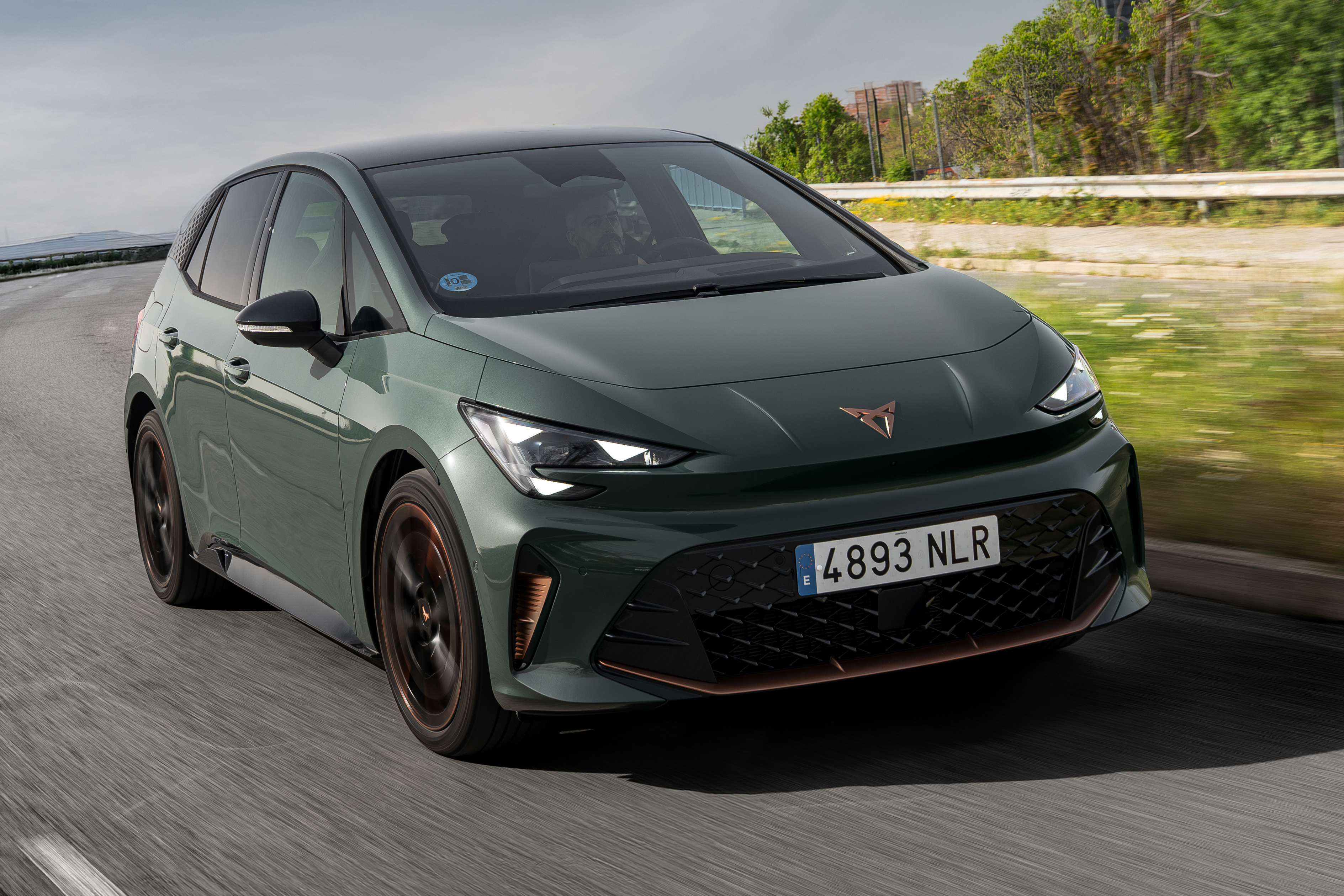
The Cupra Born should be near the top of any shortlist containing the ID.3, because its closely related, both mechanically and conceptually. It shares much of the Volkswagen’s underlying hardware, but presents it with a sportier design, and a slightly more focused driving experience. If you like the ID.3’s basic appeal but want something with a bit more attitude, the Born is the obvious place to look.
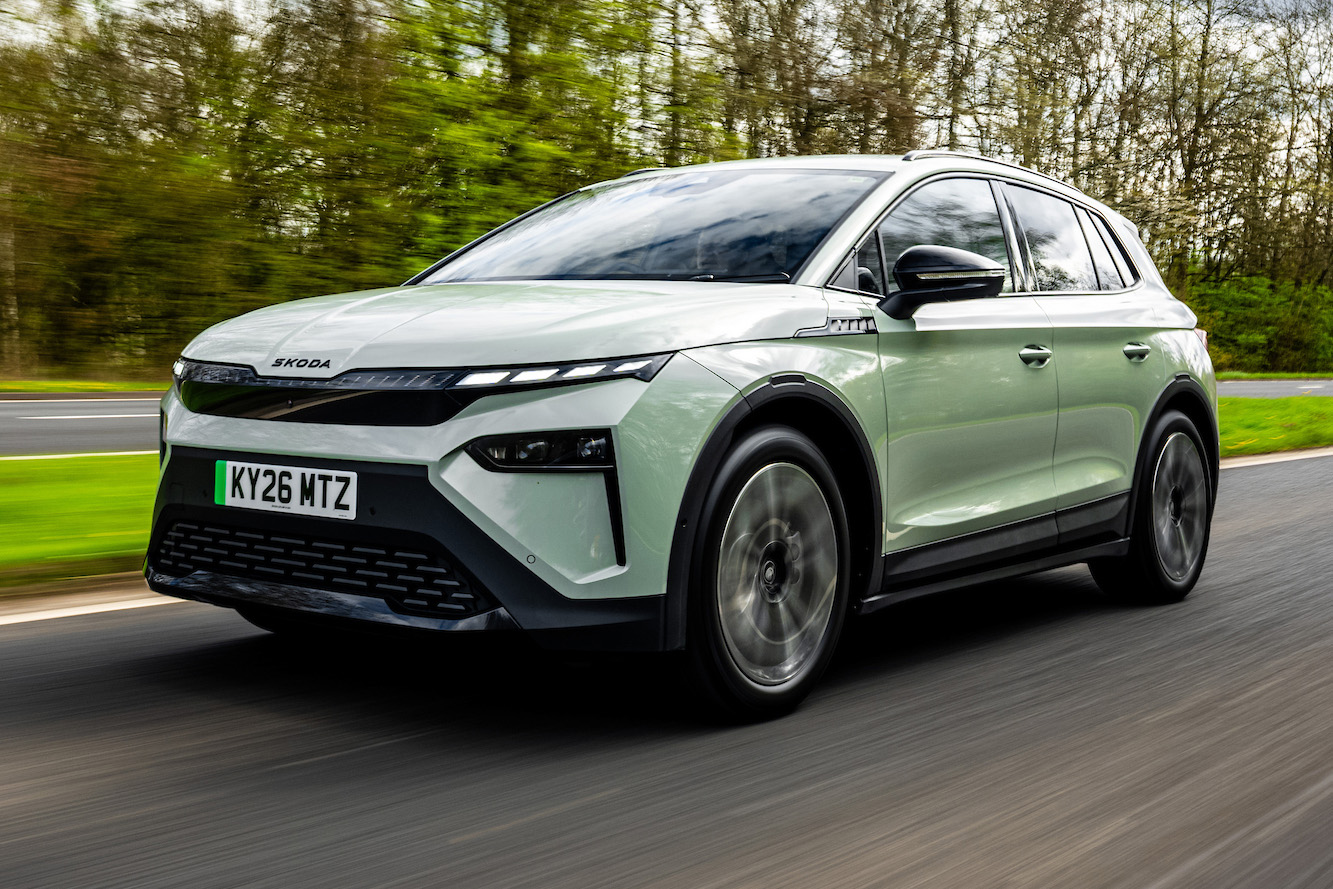
The Skoda Elroq might also be relevant in your thinking, because it delivers all of the same Volkswagen Group EV underpinnings in a similarly sized package, albeit one with an SUV stance and styling, which to be fair, is the shape that many family-car buyers now prefer.
The Renault Megane E-Tech is another car that blends traditional hatchback appeal with SUV-esque styling, and does it well. It feels more modern inside than the Volkswagen, has one of the better infotainment systems in the class, and looks fresh.
The MG4 remains impossible to ignore because it undercuts the ID.3 on price so convincingly, while still being very good to drive. It does not have the same badge appeal, but it is one of the best-value options in the electric hatchback market.
What's the interior like in the Volkswagen Id3?
On first impressions, the Volkswagen ID.3 has a cabin that looks just as futuristic as its exterior. It’s nothing you won’t get used to, though - there’s a digital instrument pod behind the steering wheel with a gear selector on the side of it, as well as a 12.9-inch media system perched in the centre of the dashboard.
Volkswagen Id3 boot space and practicality
While the ID.3 isn’t an electric SUV (take a look at the VW ID.4 if that’s what you’re after), you sit higher than you do in alternatives like the Vauxhall Astra Electric. Combine this with a useful armrest and excellent all-round visibility, and the cabin feels a fairly relaxed and pleasant place to spend time.
This is helped by a wide colour palette - as much as you can class various shades of black, white and grey as a colour palette. The white bits do help lift the cabin, but we wonder how quickly they might start to look dirty.
With big windows and light-coloured materials, the ID.3’s interior has an airy vibe about it. You can, however, spec a huge panoramic glass sunroof which, we reckon, will lift the cabin even more.
For a car that’s not much bigger than a Golf (the ID.3's dimensions if you're interested are 4261mm long and 1809mm wide), the ID.3 feels very spacious. There’s loads of headroom in the front and it’s wide enough to prevent awkward arm bashing with your passenger. There’s a plethora of useful storage pockets, too, including fairly big door pockets and a huge centre console bin. There are also two cup holders up front.
Access to the rear is easy thanks to two wide-opening doors. There’s loads of headroom back there and a decent amount of legroom, even for adults. Two USB-C chargers will keep the teenagers happy, while there are also two useful door bins for storing bottles of water and the like. Although there are three seat belts on the back row, we wouldn’t recommend the middle seat should be used for anything other than occasional journeys as it’s quite cramped. There’s also a lump in the floor hindering foot room.
The Volkswagen ID.3's boot space is big enough for a car of this size, able to accommodate up to 385 litres of luggage with the rear seats in use - although a Renault Megane E-Tech or Kia Niro EV can take more. There is quite a lip for hoisting items over, too, and you’d struggle to fit the charging cables in the small underfloor storage area. That’s a bit frustrating.
If you need more room, the rear seats split 60:40 and drop easily enough, although they’re far from entirely flat. With them dropped, the ID.3 can take 1267 litres of luggage.
There are ISOFIX points aplenty, making the ID.3 car an easy car for transporting young children. These are fitted to the rear seats as well as the front passenger seat.
Volkswagen Id3 dimensions
The Volkswagen ID.3 measures 4,264mm long, 1,809mm wide and 1,564mm high. That makes it very similar in size to the Golf, the perennial default choice in the hatchback class. It sits a little higher than a Golf, which helps the interior feel airy and gives you a slightly more commanding driving position, but it is not so tall that it starts to feel like a crossover.
Those dimensions are a big part of the ID.3’s overall appeal. It is compact enough to feel easy in town (helped by an impressively tight turning circle), yet spacious enough inside that it can operate as a genuine family car.
Tech and infotainment in the Volkswagen Id3
Early on, this was arguably the VW ID.3’s biggest achilles heel. The original 10.0-inch touchscreen looked good with clean graphics, but the software was prone to glitches and the menu structure was over-complicated and user-hostile.
The usability problems weren’t limited to the just the touchscreen, either. The stereo volume and cabin temperature were adjusted with touch-sensitive slider controls rather than physical knobs or buttons, which is a less precise - and thus, more distraction - way of doing things. These controls weren’t backlit, either, so they were all but impossible to use at night. The steering wheel also featured touch-sensitive controls for various functions, and these were too easy to brush and set off by accident.
The car’s 2023 facelift saw the arrival of a new infotainment system with a larger 12.9-inch screen and a new menu structure. The software behind it was far smoother and less glitchy, and the user-interface was also improved, although it was still far from perfect on that score. The menu structure could still be simpler, and the design of some of the on-screen icons is a little ambiguous, so it’s not immediately clear what they do.
The irritating steering wheel controls remained, as did those sliders for the volume and temperature, but at least the latter were now illuminated.
These days, all versions have DAB, Bluetooth and wireless operation and Apple CarPay and Android Auto. The entry-level Essential trim misses out on native satnav as standard (this comes with Match trim), but the smartphone integration means this isn’t an issue.
Materials available on the Volkswagen Id3
We were just talking about the early ID.3’s biggest achilles heels, and this was the other one. There was just too much hard and unappealing plastic on show inside the ID.3’s cabin, and this not only put it at a level of quality beneath that expected of a Volkswagen, but it also put it at a level below that of many competitors.
This was addressed during the 2023 facelift, with more tactile soft-touch materials in the places that you look at and touch most often. The upturn in quality was significant, with a generally classier feel, but it’s still not the class-leader in quality that many would expect it to be. Some surfaces lower down in that cabin are still not up to the standard set by other Volkswagen models.
What's the Volkswagen Id3 like to drive?
The ID.3 is not especially exciting, but it is a comfortable, relaxed and very easy car to drive.
Volkswagen Id3 range and performance
Over the years it’s been on sale, the VW ID.3 has been offered with a wide variety of battery- and powertrain options, with the range going through almost-constant change.
Before the 2024 facelift, it was offered with a 45kWh battery pack powering a 150PS electric motor, or with a larger 58kWh battery powering motors of either 145PS in the Pro or 204PS in the Pro Performance. The original Pro S version also had a 204PS motor, but paired with a bigger 77kWh battery.
These days, the range includes the Pure, which has a rear-mounted motor developing 170PS, fed by a 52kWh battery. The range stands at around 240 miles (it varies by a single mile according to trim level), and the 0-62mph sprint is taken care of in 8.2 seconds. We haven’t tried this version yet, though, so can’t tell you what it feels like.
Presumably, it feels a lot like the Pro S version, which we have tried. This has a more powerful 204PS motor, but this time fed by a bigger, heavier 79kWh battery, giving it exactly the same 0-62mph time of 8.2 seconds. In terms of sensation, the acceleration feels marginally stronger than the number suggests, particularly off the line where the electric motor delivers its full torque as soon as it starts spinning, but the pace still feels easy and moderate, rather than properly quick. It’ll be plenty for most ID.3 buyers. This version also has the greatest range at upwards of 350 miles.
The ID Pro Match version also has 204PS, but it’s marginally quicker (0-62mph in 7.6 seconds) because the motor is paired with a lighter 59kWh battery. Range drops to 268 miles as a result. We haven’t tried this version yet, either.
Performance data
| Model | Engine/battery size | Power | 0-62mph | Range/MPG |
|---|---|---|---|---|
VW ID.3 Pure Essential | 52kWh | 170PS | 8.2 seconds | Up to 241 miles |
VW ID.3 Pure Match | 52kWh | 170PS | 8.2 seconds | Up to 240 miles |
VW ID.3 Pro Match | 59kWh | 204PS | 7.6 seconds | Up to 268 miles |
VW ID.3 Pro S Essential | 79kWh | 204PS | 8.2 seconds | Up to 352 miles |
VW ID.3 Pro S Match | 79kWh | 204PS | 8.2 seconds | Up to 351 miles |
Volkswagen Id3 driving and refinement
All versions of the ID.3 are rear-wheel drive, with their electric motor positioned on the rear axle, beneath the boot floor. This means that the front wheels only have to deal with the steering, which allows them to do that job much better, making the car feel alert, particularly in town. The turning circle is super-tight, and this combines with excellent visibility and light steering to make the car feel unusually manoeuvrable for a family hatchback of this size. All versions get front- and rear parking sensors for extra help when manoeuvring, too.
It feels pretty agile out on the open road, too, with tight control over body movements resulting in crisp changes of direction. It’s not a car that encourages you to throw it around - it’s too heavy for that, while the steering is too light - but that’s certainly not a problem in a sensible family EV.
Hit the motorway, and the ID.3 feels stable and settled, giving it impressively grown-up cruising manners. The ride quality helps here, too. It’s comfortable at all speeds, being more forgiving than most EV rivals, but it feels particularly plush at the motorway limit.
That mature feel is amplified by the ID.3’s excellent refinement. The motor is predictably hushed, while wind- and road noise are well isolated, too. At all speeds, it’s a very relaxing way of getting around.
If you switch the car’s drive selector from D to B, the car’s regenerative braking is cranked up, so you slow down more strongly when you take your foot off the accelerator pedal. With a bit of practice, you can roll around while hardly having to use the friction brakes, but it’s never strong enough to be the proper one-pedal driving experience that you get in some EVs, and you can’t vary the strength through more degrees of adjustment, either.
How safe is the Volkswagen Id3?
The Volkswagen ID.3 earned a five-star rating from independent safety organisation Euro NCAP when first tested in 2020. It was reassessed in 2025 following updates, and again achieved a five-star result.
The level of safety kit is pretty good, with the standard roster including automatic emergency braking with cyclist and pedestrian detection, a driver attention and drowsiness monitor, dynamic road sign display, lane assist and adaptive cruise control.
The ID.3 has three Isofix child seat mounting points, two in the back and one on the front passenger’s seat.
Running costs: What it's like to live with a Volkswagen Id3
Running costs remain one of the ID.3’s strongest selling points, especially if you can charge at home.
Volkswagen Id3 charging times and costs
Like with any electric car, the cheapest way of running your ID.3 will be to charge it at home, and the most convenient way of doing that will be to get a 7kW home wallbox charger installed.
On such a connection, the 52kWh battery will take around 7.5 hours to recharge from empty to full, and assuming for a moment that your domestic electricity is billed at the UK’s national average rate, that charge will cost you around £14.
If your ID.3 has the 59kWh battery, then you’ll be looking at a charge time of 8.5 hours, and a cost of around £16. With the 79kWh battery pack, that same full charge will take around 11.5 hours, and cost around £22. In every case, that’s a sight cheaper than fuelling a car with petrol or diesel.
However, much bigger savings can be made if you take the simple step of putting your home onto a variable electricity tariff that allows you to charge your car overnight on heavily discounted off-peak power. Doing so will likely slash your charging costs down to around a third of those quoted.
You can flip that on its head when you make use of DC public rapid chargers: you’ll likely pay three times more than the national average for the power that comes out of those due to the convenience it provides. That’s why we’d only rely on such chargers in emergencies. Different versions of the car have different maximum DC charging speeds: the 52kWh car will charge at up to 145kW, the 59kWh car will charge at up to 165kW, while the 79kWh car will charge at up to 185kW. In any case, a 10-80% top-up can be delivered in around 25 minutes if conditions are perfect.
Volkswagen Id3 warranty and servicing
Volkswagen covers the ID.3 with a three-year or 60,000-mile vehicle warranty. The high-voltage battery is covered for eight years or 100,000 miles, which is rather more competitive.
Servicing will be simpler than with a combustion-engined car because there are far fewer moving parts, but don’t expect a service to be any cheaper. Your car will need servicing less often, though, with intervals of two years regardless of mileage. That alone should save you cash.
Volkswagen Id3 insurance groups
If you discount the GTX, which we have done for the purposes of this review, then the insurance groupings of the mainstream versions sit between groups 20 and 30. That’s fairly middling for cars of this type, so while premiums won’t be super-cheap, there shouldn’t be any nasty surprises, either.
How much does it cost to tax a Volkswagen Id3?
Currently, if the list price of your EV sits below £50,000, then you pay the annual flat rate of £200 per year for your VED road tax. If the list price of your electric car is higher than that, then you pay the Expensive Car Supplement on top of that, adding another £440 to your annual bill. That applies between years two and six of the car’s life, after which you revert to paying just the regular flat rate.
Right now, no version of the ID.3 busts that barrier in its standard form. Do bear in mind, though, that the threshold includes any optional extras added, and if you’re not careful with speccing your car, it is possible (although unlikely) to take the highest-spec versions over. If buying used, it can’t hurt to perform a quick Google search of the reg of any potential purchase just to make sure you’re not lumbering yourself with an unexpected cost, and a hefty one at that.
What trims are available with the Volkswagen Id3?
The VW ID.3 has been offered in seemingly countless different trim levels over its many years on sale, undergoing almost constant change in that regard. There are far too many to talk about in detail here, so we’ll concentrate on the trim levels available in the car’s latest form.
The current Volkswagen ID.3 range starts with the Pure Essential version, which comes with a decent amount of kit. You miss out on alloy wheels, with 18-inch steel wheels being provided instead, but you do get LED headlights, electrically adjusting and folding door mirrors, rain-sensing wipers, front- and rear parking sensors, keyless entry and go, a leather-wrapped multi-function steering wheel, climate control, 10-colour ambient lighting, adaptive cruise control, and the core infotainment system with 12.9-inch screen, DAB radio, Bluetooth, four USB-C charging ports, and wireless Apple CarPlay/Android Auto.
Go for the Essential trim in bigger-batteried Pro S form, and you not only get more range and power, but you also get a shade more kit, too. That includes 20-inch alloy wheels and high-beam-assist headlights.
The exact specification of Match trim also varies very slightly depending on which powertrain you pair it with. Choose the entry-level Pure version, with its 52kWh battery, and you get those high-beam-assist headlights, along with 18-inch alloy wheels, rear privacy glass, reversing camera, dual-zone climate control, native navigation, wireless smartphone charging, and heated front seats.
When paired with the mid-range Pro powertrain with its 59kWh battery, Match trim also provides matrix LED headlights, rear lights with dynamic turn signal, and exterior ambient lighting. Pair Match trim with the Pro S powertrain option (79kWh battery), and you get 20-inch alloys and a two-tone exterior styling pack.
Ask the Drive experts: common questions
Is the Volkswagen ID.3 a good electric car?
Which Volkswagen ID.3 is best?
What is the range of the Volkswagen ID.3?
Does the Volkswagen ID.3 get the Expensive Car Supplement?
Get our latest advice, news and offers
Keep me updated by email with the latest advice, news and offers from Drive.
.jpg)
.jpg)