Renault Megane E-Tech Review

Written By Andrew Brady
- 2022
- Hatchback
- Electric
What we love
Stylish inside and out
Excellent Google-based infotainment
Quiet, refined and easy to live with
Things to consider
Boot access is not especially convenient
Cupra Born and MG4 are more fun to drive
Too many stalks and controls around the steering column
The DRIVE take on the Renault Megane, is it the right car for you?
The Renault Megane E-Tech still feels like one of the smartest electric family cars on sale. It is stylish without trying too hard, well equipped without becoming confusing, and refined enough to make the jump from petrol or diesel feel much less intimidating than some rivals do. It does not have the sheer playfulness of an MG4 or Cupra Born, and the boot is not as user-friendly as the best alternatives, but if you want an EV that feels polished, modern and easy to recommend, the Megane E-Tech remains a very strong choice.
The Renault Megane in more detail
The Megane E-Tech marked a real turning point for Renault. Instead of simply electrifying an existing family hatchback formula, Renault used the Megane badge to create something much more distinctive. The result is a car that sits somewhere between hatchback and crossover, with a slightly raised stance, sharp design details and a much stronger sense of identity than older Meganes ever managed.
That identity matters because the electric family-car market is now properly crowded. The Volkswagen ID.3, Cupra Born, MG4, Kia Niro EV and a growing list of Chinese alternatives all chase broadly the same buyers. Renault needed more than a familiar badge and a decent battery to stand out.
What helps the Megane E-Tech is that it does not feel like a first draft. The styling is crisp, the cabin is one of the best Renault has produced in years and the technology generally works in the way buyers will hope it does. You do not climb in and immediately start excusing awkward controls or cheap-feeling trim because it is an EV. It simply feels like a well-resolved car.
The UK range has also been simplified. While some early coverage talked about different battery choices, the current UK car uses the more appealing 60kWh comfort-range battery across the line-up, paired with the same 220PS motor. That keeps the buying decision refreshingly straightforward and means even the cheapest Megane E-Tech does not feel like a compromised version.
That simplicity is a strength. There is no need to spend ages decoding a complicated battery and motor structure. Instead, the key decision is trim and whether you want to prioritise value, visual appeal or the last word in convenience kit.
What's the best Renault Megane trim and battery option?
For most buyers, the best Renault Megane E-Tech is the techno esprit Alpine. It sits in the sweet spot of the range, adding the larger 12-inch infotainment display, front and rear parking assist, the more sophisticated cruise-control setup and the smarter esprit Alpine detailing without pushing the price too close to the top car.
The entry-level techno still deserves real credit. Because every current UK Megane E-Tech uses the same 60kWh battery and 220PS motor, you are not sacrificing range or performance by sticking with the cheapest version. In fact, the smaller 18-inch wheels can make it the most sensible choice if comfort and outright range matter more than appearance.
iconic esprit Alpine is the one for buyers who want the fullest ownership experience. It adds the around-view 3D camera, digital rear-view mirror and hands-free parking, which all help reinforce the Megane’s premium ambitions. Useful as those extras are, most people do not need them.
What’s the price of the Renault Megane?
The Renault Megane E-Tech currently starts at £31,295 for the techno. The techno esprit Alpine starts at £34,095, while the iconic esprit Alpine rises to £35,495.
That pricing keeps the Megane E-Tech competitive in this part of the EV market. It is not bargain-basement cheap in the way some MG models are, but it feels more substantial and more premium than the headline figures alone might suggest.
It also helps that Renault has loaded even the base car with enough kit to avoid that stripped-out feeling some entry EVs still suffer from. Heated seats, heated steering wheel, rear-view camera, adaptive cruise control and a heat pump all help make the lowest-priced Megane feel complete.
Used values remain fairly strong, but there are enough cars filtering into the market now that approved-used and nearly new examples are beginning to make increasing sense. If you want the shape, range and cabin without stretching to list price, there is finally a bit more choice than there was a year ago.
Alternatives to the Renault Megane
The Volkswagen ID.3 is one of the Megane E-Tech’s clearest rivals because it goes after a similar buyer: someone who wants a practical electric hatchback that can replace a conventional family car without too much compromise. The Volkswagen feels more familiar in some ways, but the Renault counters with a much richer cabin and a more interesting design.
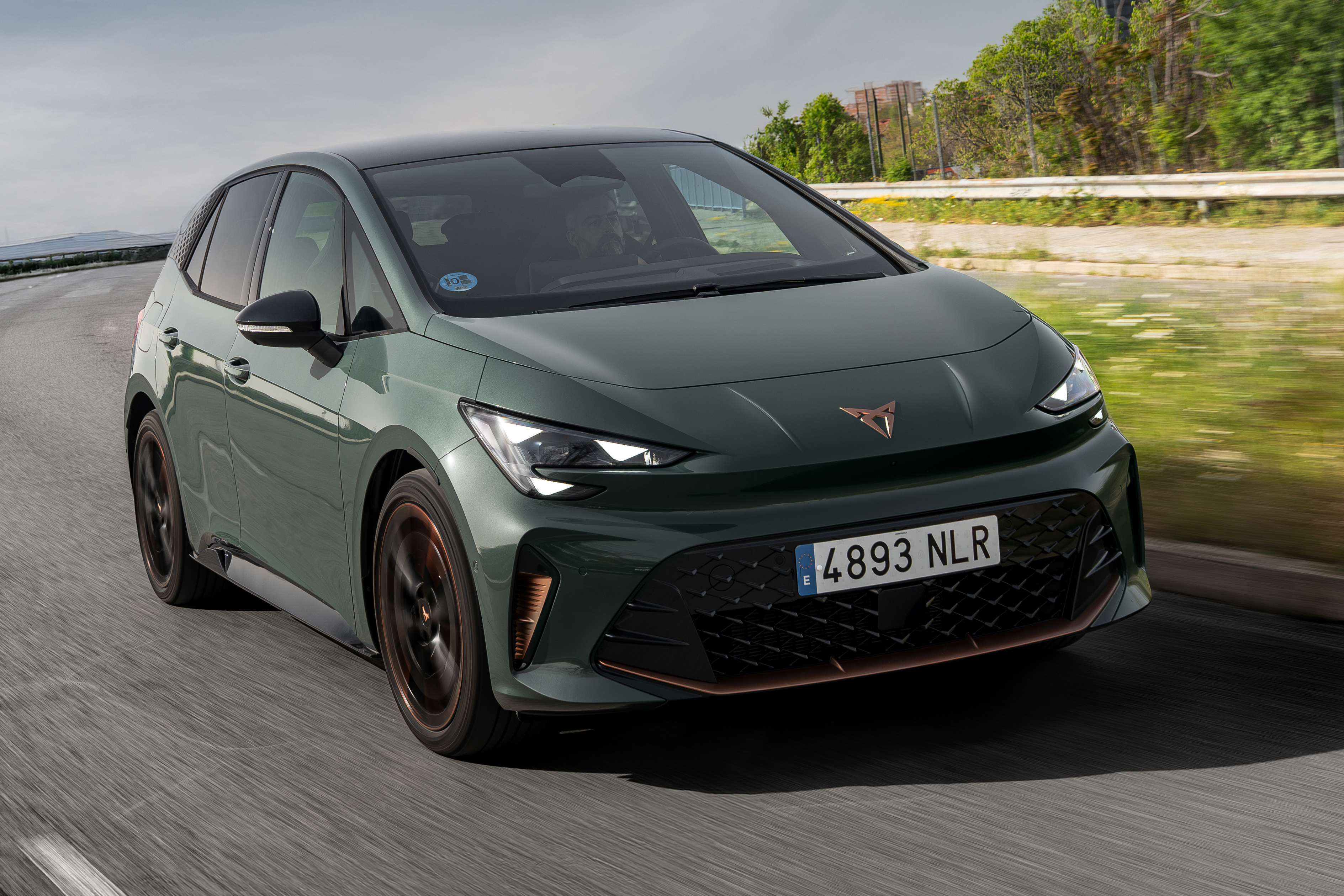
The Cupra Born is the more driver-focused alternative. It shares much with the ID.3 underneath, but adds a more assertive image and sharper road manners. If you actively care about fun behind the wheel, the Born makes a stronger case than the Renault.
The MG4 remains impossible to ignore because of its value. It is cheaper, surprisingly capable and more entertaining to drive than you might expect. The Renault fights back with better perceived quality, stronger infotainment and a more polished feel overall.
Beyond those three, the Kia Niro EV is worth a close look if practicality matters most, while the Citroen e-C4 appeals if comfort is a higher priority than driving involvement. The Renault Megane E-Tech makes most sense if you want one of the best all-round blends of style, usability and refinement in an electric family car.
What's the interior like in the Renault Megane?
The Megane E-Tech’s interior is one of its strongest arguments. It feels modern and high quality without losing all sense of usability, which is not something every EV in this class manages.
Renault Megane boot space and practicality
The Renault Megane E-Tech offers 440 litres of boot space, which is a useful figure for a family hatchback and enough to make it genuinely practical for day-to-day life. It is more generous than a Volkswagen ID.3, though still shy of the roomier Kia Niro EV.
The main drawback is not outright volume, but access. The boot opening is wide and the space itself is deep, yet the lip is fairly high and there is no adjustable false floor to smooth things out. That means loading heavier or bulkier items is more awkward than it should be in a family car.
Drop the rear seats and there is more room, but again the load area is not perfectly flat. So while the Megane is practical enough, it is not the last word in family-car convenience.
Passenger space is better than the sleek shape first suggests. Two adults can sit in the back in reasonable comfort and headroom is surprisingly good, helped by the low seating position. There is not a huge amount of room for feet under the front seats, but overall it works well enough as a compact family EV.
Renault Megane dimensions
The Renault Megane E-Tech measures 4,200mm long, 1,783mm wide & 1,505mm high. That makes it shorter than some family hatchbacks and crossovers, but Renault has packaged it cleverly enough that it still feels substantial inside.
That compact footprint is part of the appeal. The Megane is easy enough to park and manoeuvre in town, yet it does not feel cramped or compromised in the way some smaller EVs can.
Tech and infotainment in the Renault Megane
This remains one of the Megane’s standout features. Renault’s Android Automotive-based system is among the best mainstream infotainment setups because it combines strong functionality with a level of familiarity many drivers will appreciate.
Google Maps integration is especially helpful in an EV, because route planning and energy information are handled in a way that feels natural rather than grafted on. Voice control is also genuinely useful, which is still rare enough to be worth saying.
The current line-up uses either a 9-inch or 12-inch portrait touchscreen depending on trim. Both are decent, but the larger 12-inch system in the esprit Alpine trims is the one to go for if technology matters to you, because it adds charging route planning and a little more polish to the overall experience.
It is not perfect. The screen can still attract fingerprints, and there are perhaps more steering-column controls than strictly necessary. But as a complete infotainment package, it is one of the Megane E-Tech’s strongest cards.
Materials available on the Renault Megane
Renault has put real effort into making the Megane E-Tech feel special inside. Fabric trim across the dashboard, smart stitching, recycled materials that actually look and feel good, and a general absence of cheap visual clutter all help create a cabin that feels a step up from much of the class.
There are still one or two harder surfaces lower down, but that is hardly unusual at this price point. What matters is that the Megane feels cohesive and well judged, not like a good dashboard sitting on top of a cheaper cabin.
What's the Renault Megane like to drive?
The Megane E-Tech is not trying to be the sportiest EV in the class, and that is probably the right call. It majors on refinement, comfort and easy everyday performance instead.
Renault Megane range and performance
Every current UK Megane E-Tech uses a 60kWh battery paired with a front-mounted 220PS motor. Renault quotes up to 285 miles of WLTP range, which remains very competitive for an electric car of this size.
Performance is usefully strong too. The 0-62mph time of 7.5 seconds means the Megane feels brisk in exactly the way most family buyers will want. It is quick enough to merge, overtake and generally feel effortless, but not so aggressive that it becomes tiring.
Performance data
| Model | Engine/battery size | Power | 0-62mph | Range/MPG |
|---|---|---|---|---|
E-Tech | 60kWh | 220PS | 7.5 seconds | Up to 285 miles |
Renault Megane driving and refinement
The Megane E-Tech’s road manners are easy to like. Even on 20-inch wheels it rides better than many EVs, avoiding the brittle, crashy feel that can afflict heavier battery-powered hatchbacks.
The steering is light rather than full of feedback, but that suits the car’s character. Around town it feels easy and manoeuvrable, while on faster roads it settles down nicely without becoming vague.
Front-wheel drive means it does not have the same playful balance as a Cupra Born or MG4, and if you accelerate hard in slippery conditions you can sometimes feel the front tyres working. But overall the Renault feels secure and well sorted rather than inert.
Refinement is a major plus. Wind noise is low, road noise is well suppressed and the whole car has the sort of calm, isolated feel that many EVs promise but not all deliver. The Megane E-Tech genuinely feels more expensive than some direct alternatives once you are up to speed.
How safe is the Renault Megane?
The Renault Megane E-Tech earned a full five-star Euro NCAP rating, which is exactly what buyers in this class will want to see.
Standard safety kit is generous, too. Automatic emergency braking, lane-keeping assistance, distance warning, driver-drowsiness monitoring and Renault’s useful configurable shortcut for muting some of the more intrusive warning systems all help make the car feel thoughtfully equipped.
That last point matters more than it sounds. Plenty of modern cars bombard you with alerts. The Megane at least gives you a sensible way to tailor the systems without having to dig around in menus every single journey.
Running costs: What it's like to live with a Renault Megane
The Megane E-Tech should be relatively straightforward to own if you can charge at home. Energy use is respectable, service needs are modest and EV tax rules are now clearer than they were at launch.
Renault Megane charging times and costs
The Megane E-Tech supports DC rapid charging at up to 130kW. Renault says that allows a 15 to 80 per cent top-up in around 32 minutes, which remains competitive enough even if some newer rivals now go faster.
At home, the charging story is more relevant for most owners. Renault’s UK material highlights the car’s 22kW AC capability, though what you actually achieve depends on the charger available to you. On a typical 7kW wallbox, a full overnight charge is easy enough and fits the way most owners will use the car.
The key point is that the Megane E-Tech does not demand any strange ownership compromises. Plug it in overnight at home and it should slot into normal life very neatly.
Renault Megane warranty and servicing
Renault covers the Megane E-Tech with a three-year vehicle warranty, while the traction battery is covered separately for eight years or 100,000 miles.
Servicing intervals are the more useful ownership detail here. Renault schedules routine servicing every 12 months or 18,000 miles, which is straightforward enough by EV standards and should help keep maintenance manageable for most drivers.
Renault Megane insurance groups
Insurance groups sit at 26 or 27 depending on trim, which puts the Megane E-Tech broadly where you would expect for a family EV with this level of performance.
It is not bargain-basement cheap to insure, but it should not come as a nasty surprise to buyers already shopping in this part of the market.
How much does it cost to tax a Renault Megane?
The Renault Megane E-Tech now costs £200 a year in VED after year one, which is the current standard annual rate for electric cars.
The EV Expensive Car Supplement applies only to electric cars with a list price above £50,000. The Megane E-Tech sits comfortably below that threshold, so there is no additional premium-car charge to worry about.
What trims are available with the Renault Megane?
The Renault Megane E-Tech line-up consists of techno, techno esprit Alpine and iconic esprit Alpine.
Megane E-Tech techno is the entry point, but it does not feel basic. It comes with 18-inch alloy wheels, the 9-inch portrait touchscreen, heated front seats, heated steering wheel, rear park assist, rear-view camera, LED headlights, adaptive cruise control and the 60kWh battery with heat pump.
Megane E-Tech techno esprit Alpine is the trim that best balances visual appeal and equipment. It adds 20-inch wheels, the larger 12-inch display with charging route planning, more sophisticated cruise-control functions, front and rear parking assist, adaptive lighting and electric front seats with a massage function for the driver.
Megane E-Tech iconic esprit Alpine sits at the top and adds the around-view 3D parking camera, hands-free parking, digital rear-view mirror and a few extra trim details. It is the most feature-rich Megane E-Tech, but also the least essential.
Ask the Drive experts: common questions
Is the Renault Megane E-Tech a good electric car?
Which Renault Megane E-Tech is best?
What is the real-world range of the Renault Megane E-Tech?
Does the Renault Megane E-Tech get the Expensive Car Supplement?
Get our latest advice, news and offers
Keep me updated by email with the latest advice, news and offers from Drive.
.jpg)
.jpg)
.jpg)