Volkswagen ID.Buzz Cargo Review

Written By Ivan Aistrop
What we love
Looks unlike any other van on sale
Easy and enjoyable to drive in town
Strong official range for an electric van
Things to consider
Payload varies depending on version
Its width is worth considering in tighter urban spaces
Its electric drivetrain suits predictable daily mileage best
The DRIVE take on the Volkswagen Idbuzz, is it the right car for you?
The Volkswagen ID.Buzz Cargo is not the rational choice in the small-van market if your priorities are payload, outright carrying capacity or getting the lowest monthly cost. It’s too expensive for that and too compromised in load-carrying terms. But the Volkswagen ID.Buzz Cargo was never really designed to win that sort of argument. Instead, it makes its case through design, image, urban drivability and the fact it feels more desirable than almost anything else wearing commercial plates. If you need an electric van that doubles as part of your business’s identity, and your working life doesn’t demand maximum payload or endless motorway mileage, the Volkswagen ID.Buzz Cargo makes far more sense than its raw numbers first suggest.
The Volkswagen Idbuzz in more detail
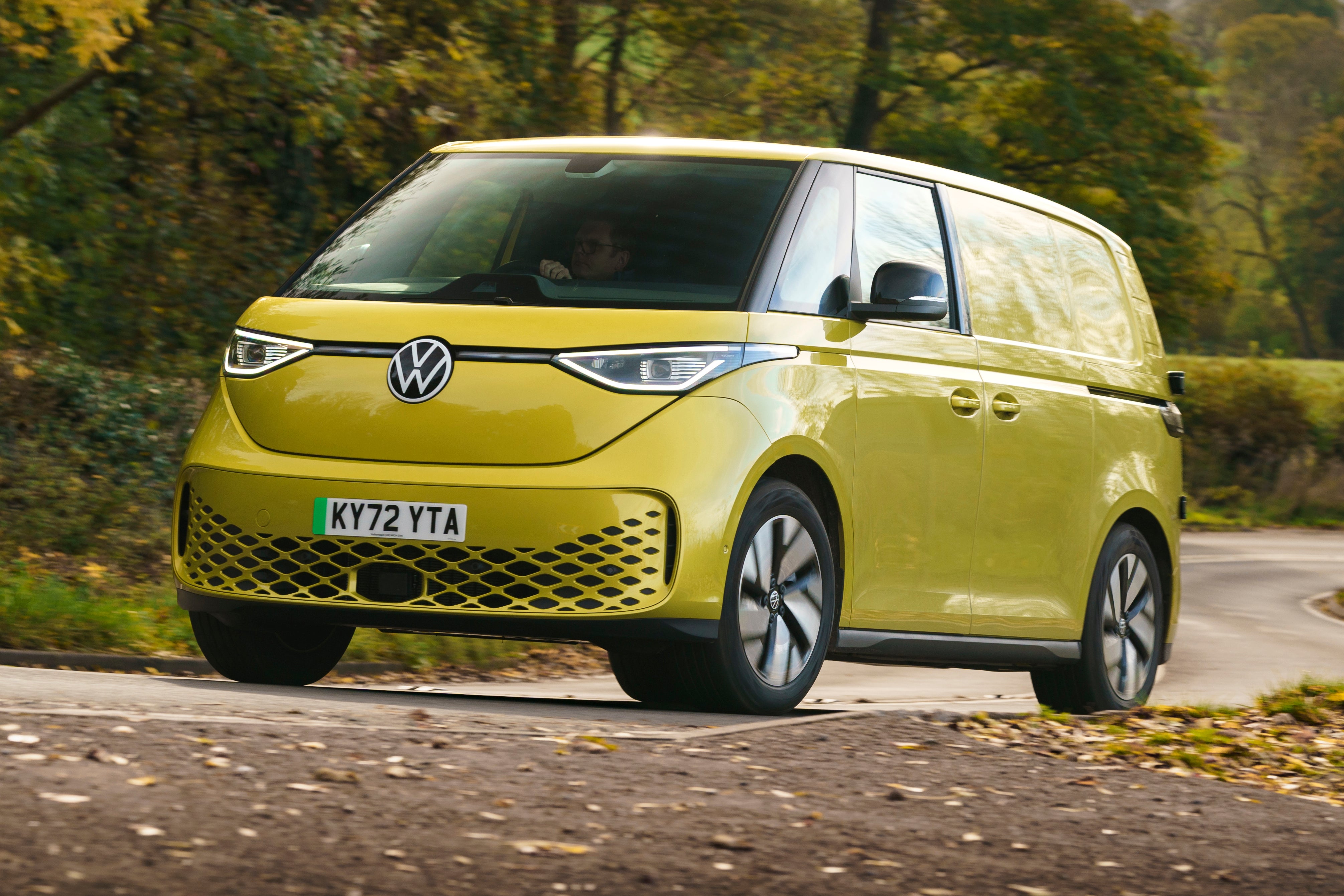
The Volkswagen ID.Buzz Cargo is absolute proof - if it were needed - that sometimes, it’s just all about the presentation. You see, the Volkswagen ID.Buzz Cargo is a panel van based on the ID.Buzz, and by the standards upon which most panel vans are judged, it’s completely and utterly useless. Vans are supposed to give maximum load area and payload for ultimate practicality and versatility, and they’re supposed to do so with minimal costs, so that your work transport doesn’t eat into your business’s profit margin too much.
The VW ID.Buzz Cargo, meanwhile, has comparatively dreadful figures for load-carrying capacity and payload - both sets of figures put it on a par with far smaller vans, in fact - and even compared with larger rivals, it’s outrageously expensive. What’s more, the fact that it’s only available as an all-electric vehicle means that it’ll immediately be completely out of the question for most high-mileage users.
And yet, for the right type of user, the ID.Buzz Cargo will be completely and utterly perfect.
The fact is, not all businesses need absolute maximum capacity: they just need enough to get the job done. And for some businesses, creating the right impression with clients is more important than anything else, and at doing that, the VW ID.Buzz Cargo is second-to-none.
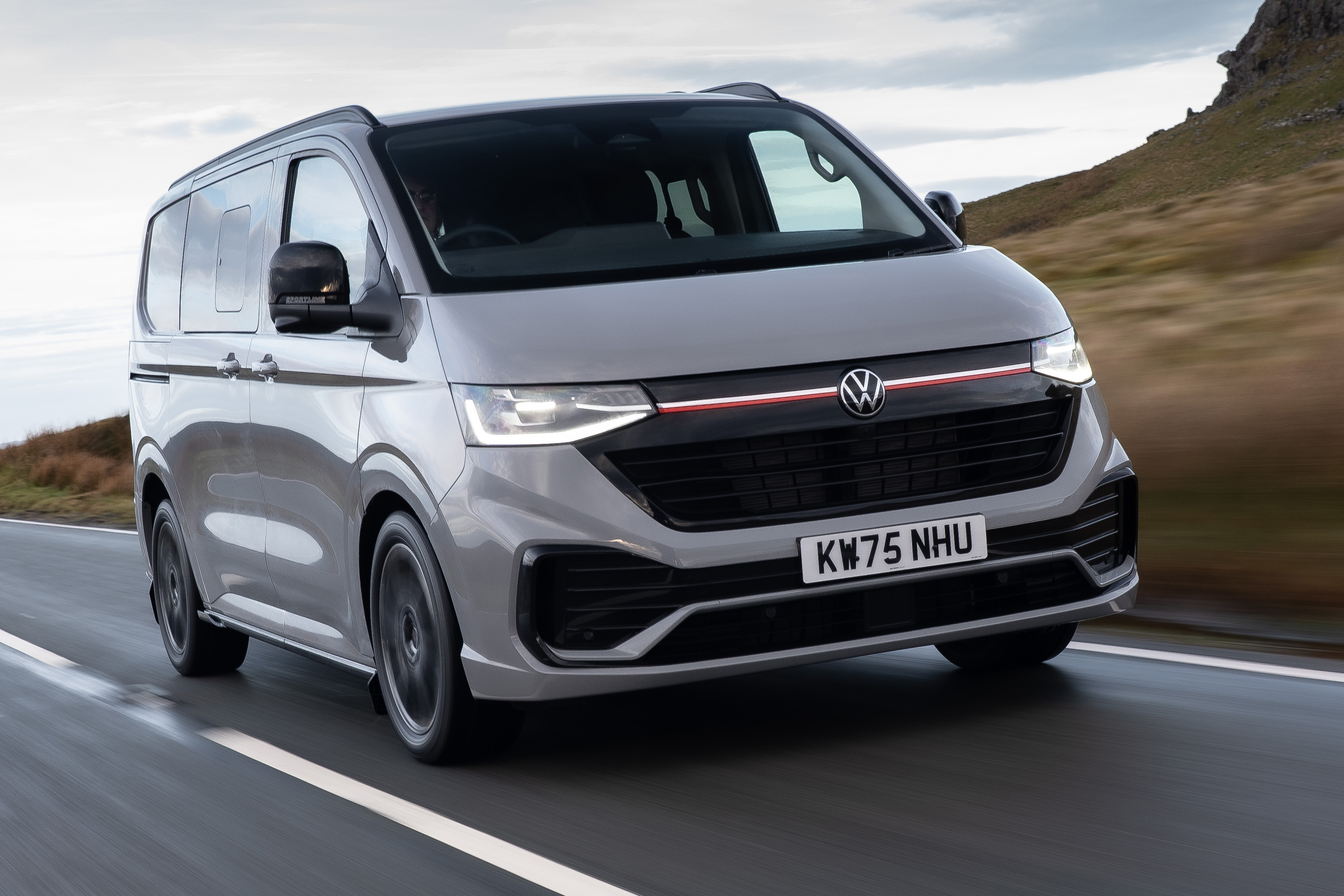
As a commercial vehicle variant of the ID.Buzz people carrier, it has effortless style and desirability, especially compared with others in the commercial vehicle fraternity. Like its passenger-carrying compadre, it takes its styling cues from Volkswagen’s iconic Type 2 Bus of the 1960s, and by association, that gives it a level of coolness and swagger that make it stand out a mile. And if yours is a business that could benefit from your van immediately communicating an image of taste, prosperity and sheer coolness as soon as you turn up to a job, then the ID.Buzz Cargo could just be your perfect companion.
You’ll have to be prepared to pay for it of course, because like we said, the ID.Buzz is expensive. However, your money gets you more ability than just style. Being based on Volkswagen's all-electric MEB passenger car platform rather than a dedicated commercial vehicle platform, it’s better than most vans to drive (although not quite as good as the passenger-carrying version), with a reasonably settled ride and tidy handling. Performance is also very keen, and with official range figures of 250 miles and upwards, you’ll go further on a charge than you will in most electric vans. And, throw in your low electric car running costs, and the finances start to even out a little.
What's the best Volkswagen Idbuzz trim and battery option?
For most buyers, it's the Volkswagen ID.Buzz Cargo Commerce Plus with the 79kWh battery and rear-wheel drive. That version gets the longest official range in the current line-up at 277 miles, the stronger 286PS motor and the extra equipment that makes daily use easier. It also avoids the 4MOTION version’s lower payload and shorter range.
The smaller-battery Commerce makes sense only if price matters more than long-range usability, while the 4MOTION model looks like a niche answer for buyers who genuinely need the extra traction or the higher 1,800kg braked towing capacity.
What’s the price of the Volkswagen Idbuzz?
The Volkswagen ID.Buzz Cargo range runs from £44,221 to £53,665 including VAT before the Plug-in Van Grant is applied. Volkswagen’s current price list also shows a PiVG-adjusted range of £39,221 to £48,665 including VAT, where eligibility criteria are met.
That's a lot of money for a van with this kind of carrying capacity, and it makes the Volkswagen ID.Buzz Cargo very hard to defend if you are thinking like a fleet accountant.
The defence comes from elsewhere. Few electric vans feel this desirable, few have this much curbside appeal and few make the same impression when you arrive on a client’s driveway or outside a boutique business. The Volkswagen ID.Buzz Cargo is a premium-image commercial vehicle first and a pure value proposition second.
Alternatives to the Volkswagen Idbuzz
In practical terms, the Mercedes-Benz eCitan and Renault Kangoo E-Tech are among the closest rivals if you are comparing load space and urban electric van use.
The Volkswagen e-Transporter and related Ford E-Transit Custom sit at a similar sort of price point in some forms, but they're much larger and more overtly work-focused machines. The Vauxhall Combo Electric, Peugeot E-Partner and Citroen e-Berlingo Van all make a stronger value-led case if you simply want an electric van that gets the job done.
None of them matches the Volkswagen ID.Buzz Cargo for style, image or sheer want-one factor, and that remains its biggest point of difference.
What's the interior like in the Volkswagen Idbuzz?
The Volkswagen ID.Buzz Cargo does not have the same playful finish as the passenger ID.Buzz, but it still feels a cut above the average van cabin for design interest alone.
Volkswagen Idbuzz boot space and practicality
This is where the Volkswagen ID.Buzz Cargo has to be judged honestly. It’s practical enough for the right type of work, but it’s not some hidden load-lugging champion.
Cargo volume is 3.9m3, which puts the Volkswagen ID.Buzz Cargo in the same ballpark as some smaller vans rather than the more spacious mid-sized ones, its price can make you think of. Load length is 2,208mm with the standard rear wing doors, or 2,232mm if you choose the optional tailgate, while the width between the wheel arches is 1,230mm. That means the van can take a Euro pallet crosswise, which is a genuinely useful feature in everyday use.
Access is good. There are sliding side doors on both sides, rear wing doors as standard and a low, well-shaped load area. The load bay also gets LED lighting and a wooden floor as standard, while the step on the driver’s side hides a useful compartment for the charging cable.
Payload is much less impressive. The best figure in the range is 712kg for the 59kWh Commerce. Move to the more desirable 79kWh rear-wheel-drive versions, and that drops to 707kg in Commerce form and 691kg in Commerce Plus. Choose the 79kWh 4MOTION, and the payload falls to 612kg.
That is the core compromise with the Volkswagen ID.Buzz Cargo. It’s spacious enough for many jobs and cleverly packaged, but if your business regularly hauls heavy loads, there are far better vans for the money.
Volkswagen Idbuzz dimensions
The Volkswagen ID.Buzz Cargo measures 4,712mm long, 1,985mm wide excluding mirrors and 1,899mm high, with a 2,989mm wheelbase.
Those numbers make it usefully compact by van standards, which is one of the reasons the Volkswagen ID.Buzz Cargo works so well in town. It’s easier to place and less intimidating than many larger electric vans, while the bluff shape makes good use of its footprint.
Tech and infotainment in the Volkswagen Idbuzz
Every Volkswagen ID.Buzz Cargo gets Volkswagen’s 12.9-inch touchscreen infotainment system, along with DAB, wireless Apple CarPlay and Android Auto, four USB-C ports and a digital driver display.
Commerce Plus adds built-in navigation, while the broader system has become easier to live with than early Volkswagen ID software once was. It’s still not perfect, though. The slider-based controls for volume and temperature remain one of the weaker parts of the setup, and climate control living in the screen is just not ideal in a working vehicle.
Volkswagen has at least improved one of the older system’s most irritating flaws. On earlier examples, the touch sliders were not backlit, which made night-time use pointlessly awkward. That's no longer the case on later vans, which makes the system easier to live with, even if proper physical controls would still be better.
Materials available on the Volkswagen Idbuzz
Compared with the passenger ID.Buzz, the Volkswagen ID.Buzz Cargo’s interior is plainer and more workmanlike. That is no bad thing in itself, and the harder-wearing materials make sense in a commercial vehicle.
Even so, the Volkswagen ID.Buzz Cargo still feels well assembled and more interesting to look at than most vans. The design has some flair, the front seats are comfortable and the view out is superb, helped by the huge quarterlights at the base of the windscreen.
What's the Volkswagen Idbuzz like to drive?
The Volkswagen ID.Buzz Cargo is one of the easiest electric vans in the class to like from behind the wheel.
Volkswagen Idbuzz range and performance
The current Volkswagen ID.Buzz Cargo range now spans three distinct powertrain formats. The entry point is the 59kWh rear-wheel-drive version, which uses a 170PS motor. That version officially manages 201 miles of WLTP range and a 712kg payload. It’s the cheapest way into the range, but not the most convincing overall.
Above it sits the key version for most buyers: the 79kWh rear-wheel-drive model with 286PS. In Commerce and Commerce Plus form, it offers up to 277 miles of WLTP range, city range of up to 446 miles and a 0-62mph time of 7.9 seconds. That is quick for a van, and it feels usefully brisk in real-world use.
At the top of the line-up is the 79kWh 4MOTION version, which adds a second motor and lifts total output to 340PS. Official range falls to 258 miles, and payload drops to 612kg, but towing capacity rises from 1,200kg to 1,800kg. Volkswagen’s brochure still lists the 0-62mph time as to be confirmed for this version.
Performance data
| Model | Engine/battery size | Power | 0-62mph | Range/MPG |
|---|---|---|---|---|
Volkswagen ID.Buzz Cargo Commerce | 59kWh single motor | 170PS | 201 miles | |
Volkswagen ID.Buzz Cargo Commerce 79kWh | 79kWh single motor | 286PS | 7.9 seconds | 277 miles |
Volkswagen ID.Buzz Cargo Commerce Plus 79kWh | 79kWh | 286PS | 7.9 seconds | 277 miles |
Volkswagen ID.Buzz Cargo 4MOTION 79kWh | 79kWh dual-motor | 340PS | 258 miles |
Volkswagen Idbuzz driving and refinement
Most vans are based on dedicated commercial-vehicle platforms, but the Volkswagen ID.Buzz Cargo sits on Volkswagen Group’s MEB electric car architecture. You can feel that from the first few miles.
The steering is light and accurate, the driving position is excellent and the Volkswagen ID.Buzz Cargo feels more agile than a van of this size really has any right to. It turns tightly, responds promptly and feels particularly at home in urban work where that easy manoeuvrability makes a genuine difference.
Ride quality is not quite as plush as the passenger ID.Buzz because the suspension has to deal with load-carrying duties, and an empty Volkswagen ID.Buzz Cargo can still fidget around over rough surfaces like any van. But it is never crude, and overall comfort is good.
Refinement is another strength. With no diesel engine rattling away up front, the cabin feels calm at low speeds and civilised at a cruise. There is still some road noise on faster roads, as you would expect from a bluff-fronted commercial vehicle, but the overall impression is much more relaxed than in most traditional vans.
How safe is the Volkswagen Idbuzz?
The Volkswagen ID.Buzz Cargo has a strong safety story by van standards. Euro NCAP’s commercial-vehicle testing awarded it a Platinum rating, while the closely related passenger ID.Buzz earned a five-star crash-test result.
Commerce Plus adds more of the driver-assistance kit buyers will actually value, including adaptive cruise control, lane change assistance and side assist. Even the standard safety package still includes autonomous emergency braking with pedestrian and cyclist detection, along with speed-limit assistance.
Running costs: What it's like to live with a Volkswagen Idbuzz
The Volkswagen ID.Buzz Cargo is expensive to buy, but the ownership case is broader than the sticker price alone.
For local and urban businesses, electric running costs can be attractively low if you charge at home or on a business depot tariff. Range is strong by electric-van standards, servicing should be simpler than with a diesel and there is definite value in the image the van projects.
That said, the Volkswagen ID.Buzz Cargo only really makes financial sense if its specific mix of style, electric running and modest carrying needs genuinely matches the job. If you are regularly relying on public rapid charging or carrying heavy loads, the numbers look less convincing very quickly.
Volkswagen Idbuzz charging times and costs
The Volkswagen ID.Buzz Cargo will take about eight hours to charge from a 7.4kW home wallbox if you have a version with the smaller battery, while the larger one takes about 10 and a half hours. On a typical tariff, the cost will be about £13.50 for the small battery and about £18 for the larger one.
DC charging is much more relevant in day-to-day commercial use. Volkswagen quotes up to 170kW DC charging for the Pro battery variant in one part of the brochure and 185kW DC charging capability elsewhere, with 10 to 80 per cent taking around 30 minutes in the right conditions. The key point is that the Volkswagen ID.Buzz Cargo charges competitively for this class, even if most owners will still want to do the bulk of their charging overnight rather than on expensive public rapid chargers.
Volkswagen Idbuzz warranty and servicing
The Volkswagen ID.Buzz Cargo comes with a three-year, 100,000-mile vehicle warranty and three years of unlimited-mileage roadside assistance.
The high-voltage battery is covered for eight years or 100,000 miles. Volkswagen also includes three services as standard, along with the first MOT, three brake-fluid changes and three pollen-filter changes on the current Commerce Plus offering.
That is a decent package overall, even if it doesn’t go as far as the five-year commercial-vehicle cover Volkswagen now offers on some of its combustion-engined vans.
Volkswagen Idbuzz insurance groups
Insurance sits on the high side for a van of this size. Volkswagen’s own figures place the Commerce in group 38 and Commerce Plus and 4MOTION versions in group 39.
That’s not outrageous in context, but it does reinforce the sense that the Volkswagen ID.Buzz Cargo is a premium electric van rather than a bargain working tool.
How much does it cost to tax a Volkswagen Idbuzz?
Most electric vans now pay the standard annual rate for light goods vehicles. From 1 April 2026 that rate is £360 a year, which is the figure most Volkswagen ID.Buzz Cargo buyers should budget around.
The other potential saving is the Plug-in Van Grant. The ID.Buzz Cargo remains eligible, with Volkswagen’s current pricing showing the grant already deducted in the PiVG-adjusted on-the-road figures where applicable.
What trims are available with the Volkswagen Idbuzz?
The Volkswagen ID.Buzz Cargo range centres on Commerce and Commerce Plus.
Volkswagen ID.Buzz Cargo Commerce is the simpler and cheaper option, but it’s not bare-bones. It includes heated front seats, climate control, LED load-bay lighting, a robust cab floor covering, power-adjustable heated door mirrors, sliding doors on both sides, front and rear parking sensors, the 12.9-inch touchscreen, App-Connect Wireless and a front passenger bench to create a three-seat cab.
Volkswagen ID.Buzz Cargo Commerce Plus adds the sort of equipment many users will actually want. It brings navigation, a reversing camera, power-folding mirrors, a heated windscreen, extra driver-assistance functions and the more polished feel that suits the Volkswagen ID.Buzz Cargo’s premium-market pitch.
In simple terms, Commerce is enough if cost matters most, but Commerce Plus is the version that best matches what the Volkswagen ID.Buzz Cargo is trying to be.
Ask the Drive experts: common questions
Is the Volkswagen ID.Buzz Cargo a good van?
Which Volkswagen ID.Buzz Cargo is best?
How much can the Volkswagen ID.Buzz Cargo carry?
Is the Volkswagen ID.Buzz Cargo expensive?
Get our latest advice, news and offers
Keep me updated by email with the latest advice, news and offers from Drive.