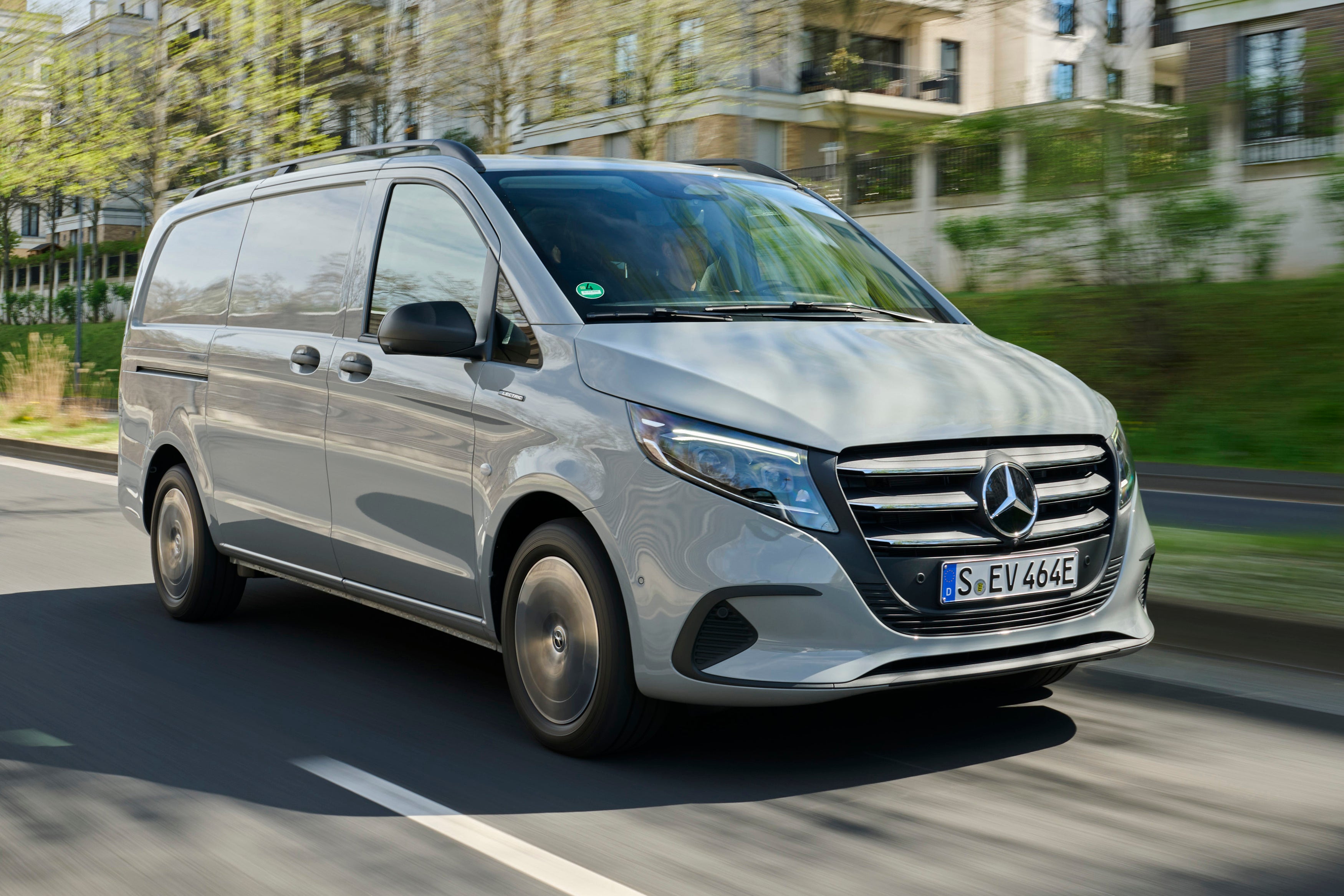
Mercedes-Benz Vito Review

Written By Ivan Aistrop
- 2024
- Van
- Diesel, Electric
What we love
Good to drive
A cut above for interior quality
Sheer desirability
Things to consider
Some optional kit should be standard
Rear-drive only, so payload could be higher
Not a cheap option
The DRIVE take on the Mercedes Benz Vito, is it the right car for you?
If you or your business is in need of a mid-size van, but you want it to feel like a cut above in terms of quality because you’ll be spending working day after working day in it, then the Mercedes Vito is definitely for you. It’s also a good choice if you want your work transport to create the right impression with customers and clients. After all, even where vans are concerned, few automotive badges communicate success like a Mercedes badge.
The Mercedes Benz Vito in more detail
The Mercedes Vito has been a high-roller in the mid-size van game for some time, and not just because it’s a big seller that generates significant income for its maker. It’s also because it makes those who own and operate it feel like a high-roller as well. Find out why in our 2026 Mercedes-Benz Vito review.
This generation of Mercedes Vito has actually been around since 2015, but in the middle of 2024, it received a facelift, and the upgrades were so significant, and made such a difference, that we felt the latest incarnation needed its own separate review. If you’re looking for something a little older on the used van market, check out our review of the 2015-2023 Vito here.
Central to the 2024 updates is the new infotainment system, an area in which Mercedes has been smashing it in recent years. The Mercedes Vito received a version of the company’s revered MBUX system, albeit a rather more basic version, but it still delivers broad functionality and good ease-of-use. It also gives the Mercedes Vito a slightly more high-tech feel than you get in many vans, and that helps towards the Vito’s inherent feeling of sophistication.
So do two other things. Firstly, there’s the three-pointed star on the nose, which not only makes the owner/operator feel like something a bit special, but it also has the beneficial by-product of immediately conjuring up impressions of success and prosperity in the minds of you customers and clients as you roll up for jobs.
And then there’s the quality of the interior. Granted, like in pretty much all other vans, the materials used are more focused on durability than tactility, and are therefore less appealing to the fingertips than they are in the firm’s passenger cars. Compared with rivals in the commercial vehicle sector, though, it’s a real cut above.
It’s a sophisticated-feeling thing to drive, too. The ride is perhaps a little bit firmer than you might expect, but it feels stable and assured on the road, and there are never any nasty surprises in the way it behaves. The three diesel engines on offer - there’s an all-electric version, too - do a good job on economy and refinement, and the most powerful one (which is the only one we’ve tried so far) delivers brawny, eager performance.
Importantly for any panel van (it’s available with three seats in the front, or as a crew van with an extra row of seats behind), it does a very reasonable job in terms of load-carrying: it’s not class-leasing for load volume or payload, but it is competitive.
And granted, it’s not cheap in the scheme of things, but neither is it outrageously expensive compared with more mainstream rivals, and you do get a very decent slice of standard equipment for your money. Overall, it’s a very compelling package for any owner/operator looking for a commercial vehicle with a little something extra about it.
What's the best Mercedes Benz Vito trim and battery option?
So far, we’ve only had a go in a Mercedes Vito with the range-topping 119 engine option, which is a 2.0-litre unit with 190PS delivered to the rear wheels via a nine-speed automatic gearbox. There’s a lot to like about how it operates, but it’s the priciest option there is, and having not tried them, we can’t say for sure whether the lesser versions will suffice.
Trim-wise, most of the upgrades that Select trim gets you over the Pro are aesthetic, so we’d probably stick with the entry-level version and save ourselves a few quid. And in terms of whether you go for the panel van or the crew cab, that depends entirely on your needs and what you’ll be using the van for.
For those in the market for an electric van, there's the eVito to consider. This combines a 66kWh battery pack (of which 60kWh is useable) with a single electric motor powering the front axle, making this the only front-wheel drive version of the Vito.
What’s the price of the Mercedes Benz Vito?
If you're factoring in VAT to the price of your van, then prices for the panel van range between approximately £41,000 and £55,000 depending on the version you choose.
If it's the crew van version you after, you'll be paying somewhere between £51,000 to £57,000 depending. on how high up the range you go.
If you're looking at the all-electric eVito (which is only available in panel-van form and can't be had as a crew van), then you'll be looking at ballpark prices of around £59,000 to £63,000.
Such pricing makes the Vito a predictably expensive option compared to the alternatives from other manufacturers, but it's not so much more expensive that it looks ludicrous. If you want your work transport to convey a certain image of prosperity, then you may well be prepared to pay the extra.
Alternatives to the Mercedes Benz Vito
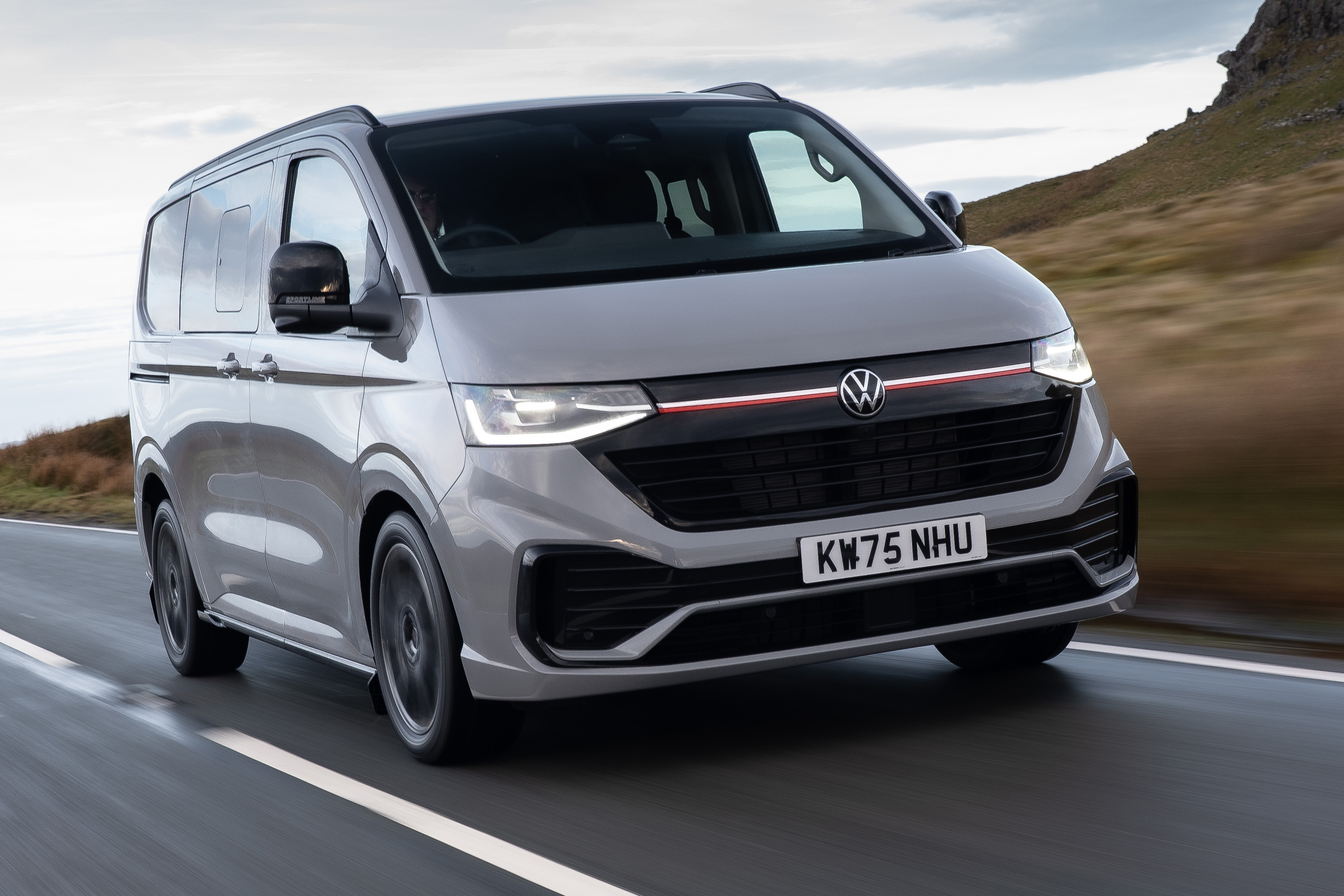
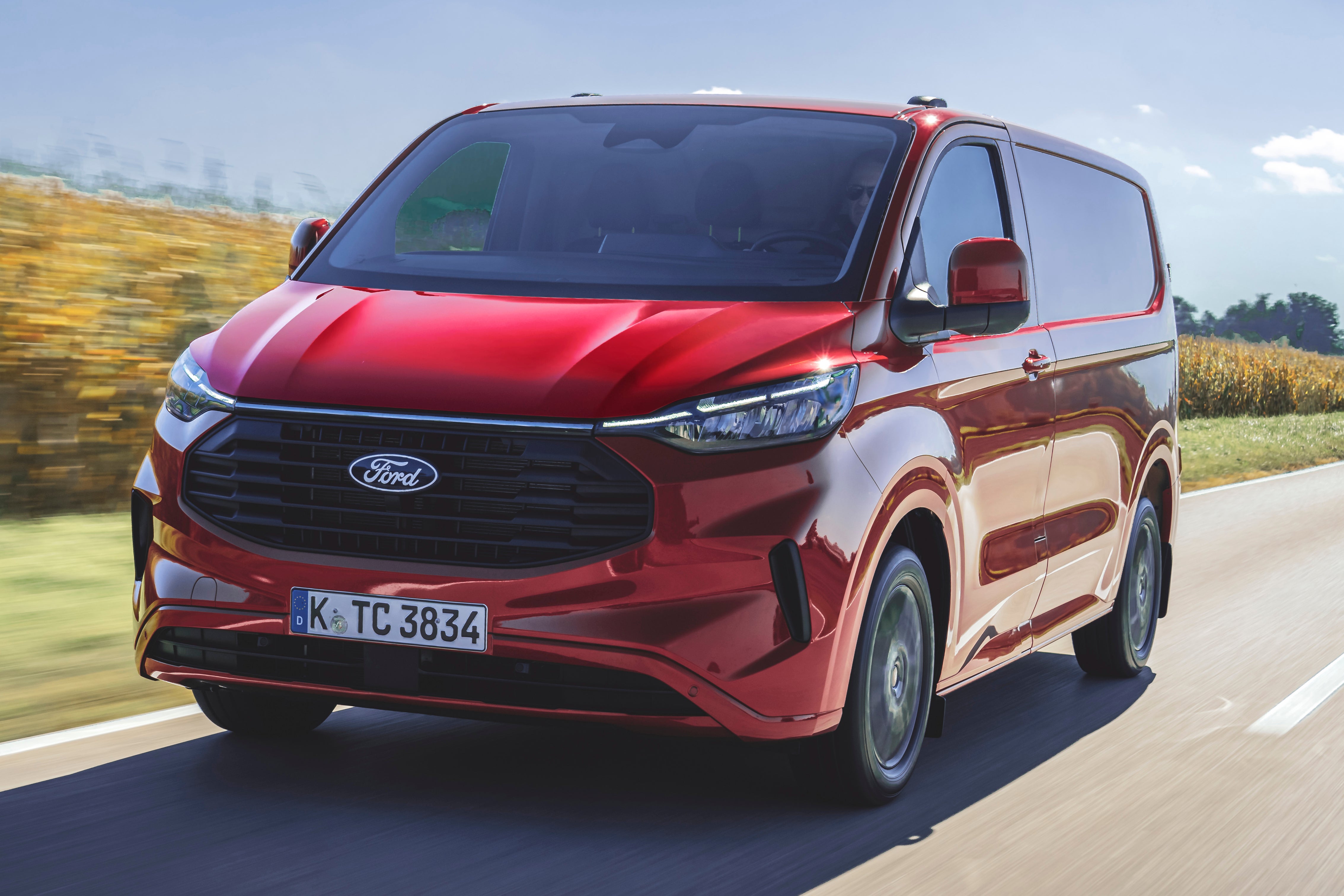
The Mercedes Vito competes in the mid-size van market, which is densely populated and ultra-competitive. Probably the closest rival in terms of being a premium option is the Volkswagen Transporter, while the biggest-selling vehicle in the sector - and incidentally, the entire motor industry - is the all-conquering (and brilliant) Ford Transit Custom. The most recent versions of those two are actually the same van in all but name, badging, and styling.
That's far from the only example of technology and parts sharing in this area of the market. The Renault Trafic and the Nissan Interstar have plenty in common, for instance, while the Stellantis stable offers the Citroen Dispatch, the Peugeot Expert, Vauxhall Vivaro and Fiat Scudo and the Toyota Proace (which is mechanically identical despite Toyota not being part of Stellantis).
What's the interior like in the Mercedes Benz Vito?
In terms of loadspace and payload, the Vito does an acceptable job rather than a class-leading one. It's a nicer place to sit for hours on end than most other vans, though, thanks to smart design, good infotainment, comfortable seats and plusher-than-average materials.
Mercedes Benz Vito boot space and practicality
Let’s kick things off in this area with the all-important bit for many, and that’s the dimensions. Two length options are available with the Vito, the L2 and L3. There are also two seating layouts available: the regular panel van has three seats up front, while the crew van variant sacrifices a chunk of its loadspace to accommodate an extra row of three seats behind.
All versions of the Vito measure 2,244mm wide. The panel van measures 1,915mm tall when unladen, while crew van variants are a few millimetres lower in this regard, presumably due to the weight of the extra seats pressing down on the suspension springs.
The biggest variable between the various versions is length, both in terms of the vehicle itself and of the load bay. L2 Vitos are 5,140mm long, while L3 versions are 230mm longer, and all of that extra length lies in the wheelbase (the distance between the front and rear wheels).
In all Vitos, the load bay measures 1,252mm high and 1,270mm wide between the wheelarches. In panel van variants the loadbay in the L2 measures 2,831mm in length, giving an overall load capacity of 6.0 cubic metres, while in L3 versions, the loadbay length is 3,061mm, taking the loadbay volume up to 6.6 cubic metres.
With the crew van variant, the loadbay is considerably shorter due to the extra seats. In the L2, it’s 1,644mm long, giving an overall loading capacity of 3.6 cubic metres, while in the L3, the load bay length is 1,894mm, giving a capacity of 4.1 cubic metres.
In panel vans, the load bay has a wood lining, while in the crew van, you get a hard-wearing plastic lining and a generally more civilised interior trim.
The gross vehicle weight (GVW) of all diesel Vitos is 3,000kg. In terms of payload, they’re between 772kg and 806kg on the panel van, and between 721kg and 773kg on the crew van. It’s not quite a perfect science, but generally speaking, the lower the spec of your van, the higher its payload. The eVito models have a slightly higher GVW of 3,200kg, with payloads ranging from 783 kg to 794kg.
Panel van versions of the Vito get twin side-hinged doors on the back end that can open up to 180 degrees for better access to the loadspace, while crew van versions get a single massive top-hinged tailgate instead, which could prove more tricky to get open if your work is taking place in a tight space. All Vitos also get a pair of sliding side doors, but on crew van variants, these are more for access to the rear seats than they are for access to the load bay.
The Vito we tried was a crew van, and we can confirm that there’s masses of headroom and legroom in those rear seats, so tall folk will be able to stretch out. We actually think there might be a little too much in the way of legroom, and that the rear seats could have been mounted a little further forward in the interests of prioritising loadspace. However, the rear seats in the crew van can be removed (if you’re strong enough) to restore your loadspace to parity with the panel van.
Up front, meanwhile, the three seats are wide enough to accommodate a generously proportioned adult posterior, and there’s enough width in the cabin to accommodate three sets of shoulders without the owners of them having to get too cosy with each other. Oddly, though, the L3 version of the eVito only gets a single front passenger seat rather than the double seat you get in all other Vitos, for reasons we can't quite fathom.
Like in most mid-size vans, you get a proper king-of-the-road driving position due to how high you sit above the road, and it’s easy to see where the extremities of your bonnet are for manoeuvring.
Concerning your rear view, you don’t really have one in the panel van version outside of what you can see in your heated- and electrically adjusting door mirrors, but when you’re parking, you have the help of a rear-view camera on all versions. In the crew van version, there is a window in the rear tailgate, complete with rear wash/wipe, but even here, your view isn’t great because it’s impaired by the high-set headrests on the rear seats.
There’s a reasonable amount of adjustment for the driver’s seat, plus rake and reach adjustment on the steering column, so drivers of all shapes and sizes should be able to get themselves comfy.
Most of the switches on the dashboard are shortcut buttons for the infotainment system, but it is good that you have a row of physical buttons and switches to operate the ventilation system so you don’t have to go traipsing through on-screen menus. It is slightly irritating, though, that the vast smattering of touch-sensitive controls on the steering wheel are easy to brush by accident, thus instigating an action you never intended.
The instrument dials are traditional analogue ones with a 5.5-inch digital display inset between them, and they’re very clear and easy to read.
Mercedes Benz Vito dimensions
All versions of the Vito are 2,244mm wide. The panel van measures 1,915mm tall when unladen, while crew van variants sit a few millimetres lower in this regard, probably due to the weight of the extra seats pressing down on the suspension springs. L2 Vitos are 5,140mm long, while L3 versions are 230mm longer, and all of that extra length is located in the wheelbase (the distance between the front and rear wheels).
Tech and infotainment in the Mercedes Benz Vito
The infotainment system was one of the major upgrades brought about by the Vito’s 2024 facelift. It’s a version of the company’s impressive MBUX system, albeit a less sophisticated one than that found in most of Merc’s passenger cars. It operates through a 10.25-inch central touchscreen, and supports functions like Bluetooth, DAB radio and Apple CarPlay/Android Auto. If you want native satnav instead of streaming navigation instructions through the screen from your phone, it’s an optional extra across the board, as is wireless phone charging.
The system is reasonably easy to find your way around, and the screen reacts reliably and swiftly to prods and swipes. A couple of more peripheral functions can be a little difficult to locate within the menu structure, though, and the voice control system isn’t as good as it is on other versions of MBUX.
Materials available on the Mercedes Benz Vito
Commercial vehicles always feel rather less posh than their passenger car counterparts, and the same is true of the Vito. Where the materials in most areas are soft and sumptuous in, say, a C-Class, they’re harder and more durable in the Vito. This is utterly expected and perfectly forgivable, because you’d much rather have hard-wearing panels that will shrug off the effects of hard daily use, rather than plusher ones that would mark up at the first sign of contact. And because Mercedes products generally have a higher bar in terms of quality than most other manufacturers of mid-size vans, the interior in the Vito still feels a good bit posher than it does in most rivals.
That’s helped by a few thoughtful splashes of chrome trim and glossy piano black panelling dotted around the place to break up the swathes of plastic, and it’s really effective. The circular air vents are similar to those you’ll find in the firm’s passenger cars as well, while the same goes for the slickly operating ventilation controls, and this all helps lift the ambience inside the Vito still further.
What's the Mercedes Benz Vito like to drive?
Mercedes Benz Vito range and performance
There are three diesel options available, all powered by the same 2.0-litre four-cylinder turbodiesel engine. The entry-level choice is known as the 114, and it delivers 136PS to the rear wheels, and comes with a six-speed manual gearbox. This choice is only available on the panel van and not on the crew van.
The 116 variant is available on both, and it ups the power ante to 163PS and adds a nine-speed automatic gearbox for good measure. The range-topping 119 gets the same transmission but hikes the output to 190PS.
We’ve so far only had the chance to try the most powerful 119 variant, and it does a good job. It feels pleasantly brawny when putting on speed and maintaining it, so your progress is always easy and relaxed.
Your pace is perhaps slightly hampered by the rather slow reactions of the automatic gearbox, mind. It’s rather reluctant to shift down when you want to pick up the pace a little bit, leaving you in the doldrums slightly. You’ll also find yourself pressing the accelerator pedal harder than you wanted to in order to provoke it into a gearchange, and that means that when the gearbox finally does kick down, the engine is working harder than it should be.
You can get around this partially by selecting the Sport driving mode (why a van even has such a thing is beyond us!), but while this remedies the gearbox's reluctance to change down, it also has the reverse effect of making the transmission reluctant to shift up, and that means things are noisier than they need to be.
Having not tried the lesser versions yet, we can’t really say how they compare for performance, and because Mercedes doesn’t publish performance figures for the Mercedes Vito, we can’t even make an educated guess. We’ll just have to try and get a go in them and update this review once we manage it.
The eVito (sounds a bit like a musical, doesn’t it?!) electric van produces 116PS, sent to the front wheels, making it the only front-whee-drive version of the Vito. We haven't tried it, and again, there are no performance figures to work with, so we can't say what performance is like for sure. However, it's the least powerful derivative in the Vito range, and it's also the heaviest, so don't expect to be getting to your next delivery in a hurry. The official range figures from the 66kWh battery (60kWh is useable) are limited, too, at 159 miles or 160 miles, depending on the version.
Performance data
| Model | Engine/battery size | Power | 0-62mph | Range/MPG |
|---|---|---|---|---|
Vito 114 | 2.0 diesel manual | 136PS | TBC | Around 40mpg |
Vito 116 | 2.0 diesel automatic | 163PS | TBC | Around 39mpg |
Vito 119 | 2.0 diesel automatic | 190PS | TBC | Around 39mpg |
eVito | Electric 66kWh | 116PS | TBC | Around 160 miles |
Mercedes Benz Vito driving and refinement
In terms of ride comfort, the suspension is perhaps a little firmer than you might expect, so there are some rival mid-size vans that’ll provide a plusher ride. However, it never gets to the point where you feel uncomfortable, and things settle down a bit more when you load it up with some extra weight in the load bay. Get yourself at a steady motorway cruise, meanwhile, and it feels as settled and as stable as you could hope.
The handling feels very tidy and assured, too. The Mercedes Vito has very decent control over its body movements, so the van doesn’t lurch about as you change direction, as long as those direction changes are conducted at a reasonable speed. The steering is nicely weighted and very responsive, and the turning circle feels tighter than you might expect, so low-speed manoeuvres don’t take too much arm-flailing.
The diesel engine we tried stayed hushed and smooth the majority of the time, and while we’ve just discussed the circumstances in which it can get a little louder, it never got overly intrusive. And while the reactions of the automatic gearbox could be quicker, the gearchanges are usually smooth and fuss-free. You can, of course, ditch the engine noise altogether by opting for the eVito.
Wind- and road noise are pretty well suppressed at the legal motorway limit, too, so long cross-country schleps won’t be something you want to avoid in the Mercedes Vito if that’s where the work takes you.
How safe is the Mercedes Benz Vito?
As standard throughout the range, the Mercedes Vito comes with automatic emergency braking, attention assist, active lane keep assist, blind spot assist, intelligent speed limit assist, and eCall function to automatically alert the emergency services with your precise location in the event of an accident.
The Vito has been subjected to Euro NCAP's commercial vehicle testing programme, and it achieved the full five-out-of-five-star rating.
That said, while you get twin front airbags as standard, you have to pay extra if you want side- and curtain airbags. Adaptive cruise control is also optional across the board.
Running costs: What it's like to live with a Mercedes Benz Vito
The running costs of the Mercedes Vito should be reasonable by the standards of the mid-size van class. All the diesel engines return close to 40mpg regardless of their power level, while the EV version will be even cheaper to run if charged at home or work, although range is rather limited.
Mercedes Benz Vito charging times and costs
Plugged into a home wallbox, the eVito will take just under 10 hours to charge. This is how most EV owners charge their cars. While it's possible to use a three-pin domestic plug, the cable that allows you to do so isn't supplied with the vehicle, and it's also not recommended for various reasons. including that it'll take the best part of 30 hours to fully charge the battery from empty, and also because it isn't great for your home electrics.
Either way, it should cost around £17 to charge the battery from empty at home, based on the current average per kWh cost of domestic electricity. If you haven't already, it's worth investigating tariffs that give cheaper rates overnight and timing your charging to take advantage of the savings.
The eVito has a DC fast-charging capacity of 80kW, which is lower than some rivals: a Toyota Proace Electric, for example, can receive a 100kW charge. It's enough to mean you shouldn't have to wait around for too long, however, with a 10 to 80% charge possible in around 35 minutes. Be prepared to pay much more than you will for a home charge, though.
Mercedes Benz Vito fuel economy
Despite the various engines, transmissions and body styles available within the Mercedes Vito range, there’s actually surprisingly little variation in the official WLTP fuel consumption between the various versions.
The best figure on offer comes on the lowest-spec versions of the panel van, the 114 manual in Pro trim, and stands at 40.4mpg, but even the thirstiest one returns 38.7mpg. The cleanest version of the crew cab, meanwhile, returns 39.2mpg according to the figures, while the grubbiest still manages 38.2mpg.
It would seem that fuel economy isn’t much of a factor when choosing an engine for your Vito, then, so just pick the pokiest one you can afford.
Mercedes Benz Vito warranty and servicing
Mercedes provides a slightly better-than-average warranty on the Vito, but we do mean only slightly. You only get three years of cover, which isn’t as generous as some, but there’s no mileage limit, either.
Meanwhile, eVito models also include a battery capacity warranty. This can be claimed against if the battery capacity drops below 70% of its original capacity within either eight years of delivery, or up to 100,000 miles of driving, whichever comes first.
Service intervals are quite short compared to some vans at one year or 10,000 miles, whichever occurs first. Services alternate between and more basic 'Service A' and a more comprehensive 'Service B'.
Mercedes Benz Vito insurance groups
Insurance groupings for the Mercedes-Benz Vito run from 27 to 44 depending on the particular version you have. Obviously, that’s not the only factor that influences your insurance costs, so there are other measures you can take to cut premiums, such as locking it away in a garage or warehouse overnight, and maybe installing additional security measures.
How much does it cost to tax a Mercedes Benz Vito?
As a light goods vehicle, the Mercedes Vito is liable for a flat rate of Vehicle Excise Duty (VED) for such vehicles. This is currently charged at £360 per year.
The eVito is no longer exempt from paying VED, as is now the case for every electric van. It'll be liable for the same £360 per year fee levied at all light goods vehicles.
What trims are available with the Mercedes Benz Vito?
There are two trim levels available with the Vito, Pro and Select, the Pro being the more basic of the pair, but the precise level of kit you get with each varies ever so slightly depending on whether you’re talking about the panel van or the crew van. Let’s look at the former first.
The Pro still gets all the essentials in the panel van, and a half-decent amount of luxury gear, too, including air-conditioning, cruise control, a multi-function steering wheel, and a reversing camera. Of course, that’s on top of all the safety kit and infotainment stuff we talked about earlier on.
Select versions look a little sharper from the outside with alloy wheels, body-coloured bumpers, metallic paint and a few additional chrome trims, while you also get power folding door mirrors, multibeam LED headlights with automatic high beam, and a parking package. The interior also gets a few additional splashes of chrome, along with a leather steering wheel and interior ambient lighting.
Crew van models are broadly similar, except for the fact that Pro models get alloy wheels and body-coloured bumpers for a slightly smarter look from the outside, while they also get a tailgate on the rear instead of the twin rear doors, and the interior trim is also smarter, with the loadbay having plastic flooring rather than wood.
Interestingly, leatherette upholstery is a very cheap option on all Vitos, and so is a very affordable way to instantly make your van feel that little bit posher. However, this option costs slightly more on the crew van because there are more seats to cover.
Ask the Drive experts: common questions
Is the Mercedes Vito a van?
Is the Mercedes Vito any good?
Is the Mercedes Vito the same as the Renault Trafic?
Get our latest advice, news and offers
Keep me updated by email with the latest advice, news and offers from Drive.