Mercedes-Benz Citan Review

Written By Matt Robinson
- 2023
- Panel van, crew van
- Diesel, Electric
What we love
Top-notch interior quality
Lots of safety features
Drives well
Things to consider
Rivals can carry more
Limited choice of engines
Can’t load through bulkhead
The DRIVE take on the Mercedes Benz Citan, is it the right car for you?
The Mercedes Benz Citan in more detail
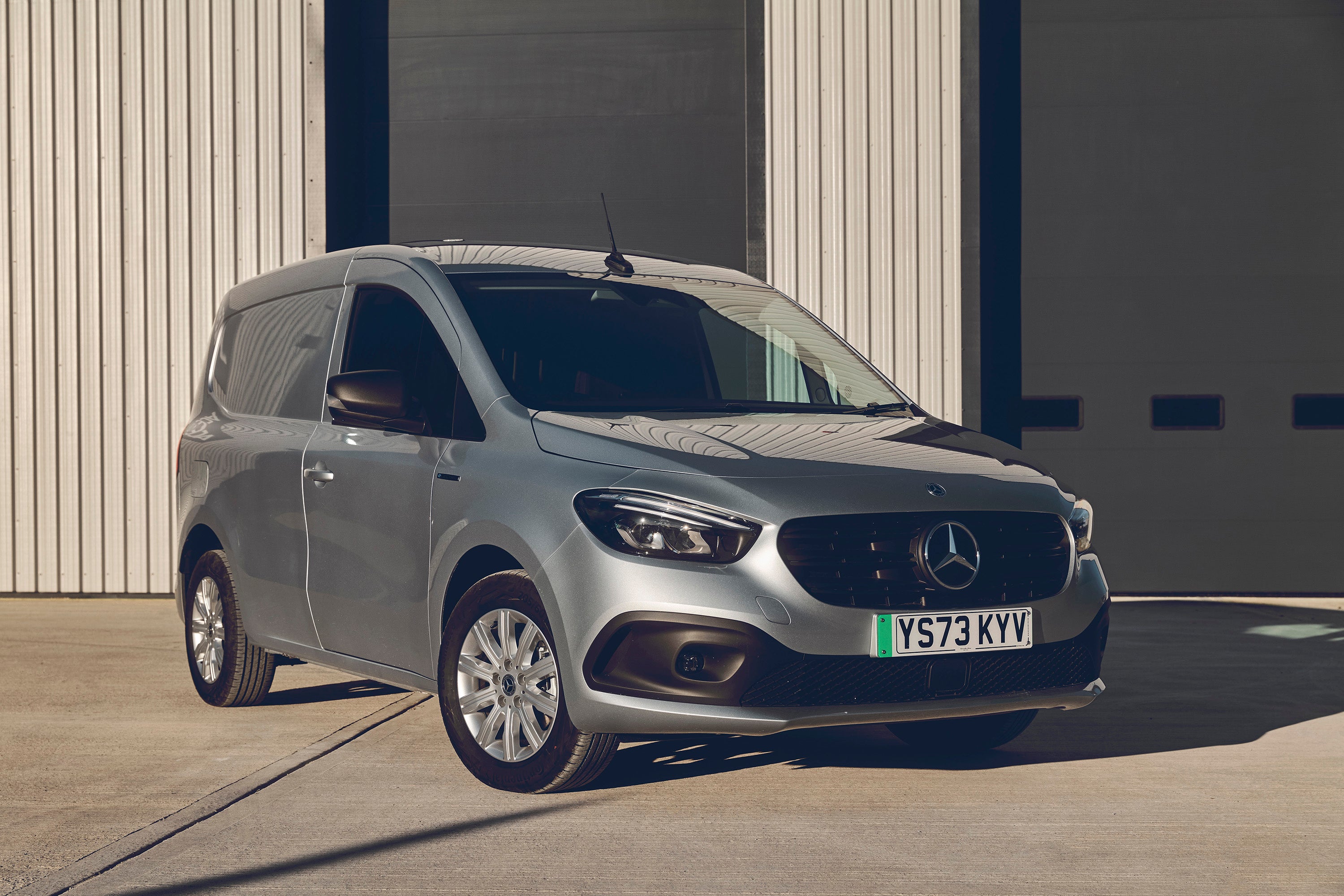
After the successful introduction of the Mercedes-Benz Citan small panel van in 2013, the second-generation model arrived in 2023 and moved things on considerably. The first Citan was heavily based on the Renault Kangoo and while the latest model also shares the same underpinnings as the latest Renault van, the Citan’s development has seen far more direct involvement from Mercedes. The result is a vehicle that feels much closer to the brand’s premium cars, in terms of both design and the driving experience.
It didn't last that long, however. In 2026, Mercedes decided to withdraw the Citan from sale as a brand new vehicle in order to concentrate on the production and marketing of the firm's more lucrative larger vans, the Vito and the Sprinter. There are plenty of example of the Citan on the used car market, though.
Both L1 and L2 sizes of Citan are available, and there's a five-seater crew van variant offered as well. There isn't much choice when it comes to diesel engines, with just two available, but both are strong enough to cope, and if you prefer, there's also an electric version of the Citan, called the eCitan, which we've covered here as well. The Citan's biggest problem, though, is the fact that it's far from the most practical van of its type: the load area is comparatively small, and payload figures are also low compared to what most other small vans can haul.
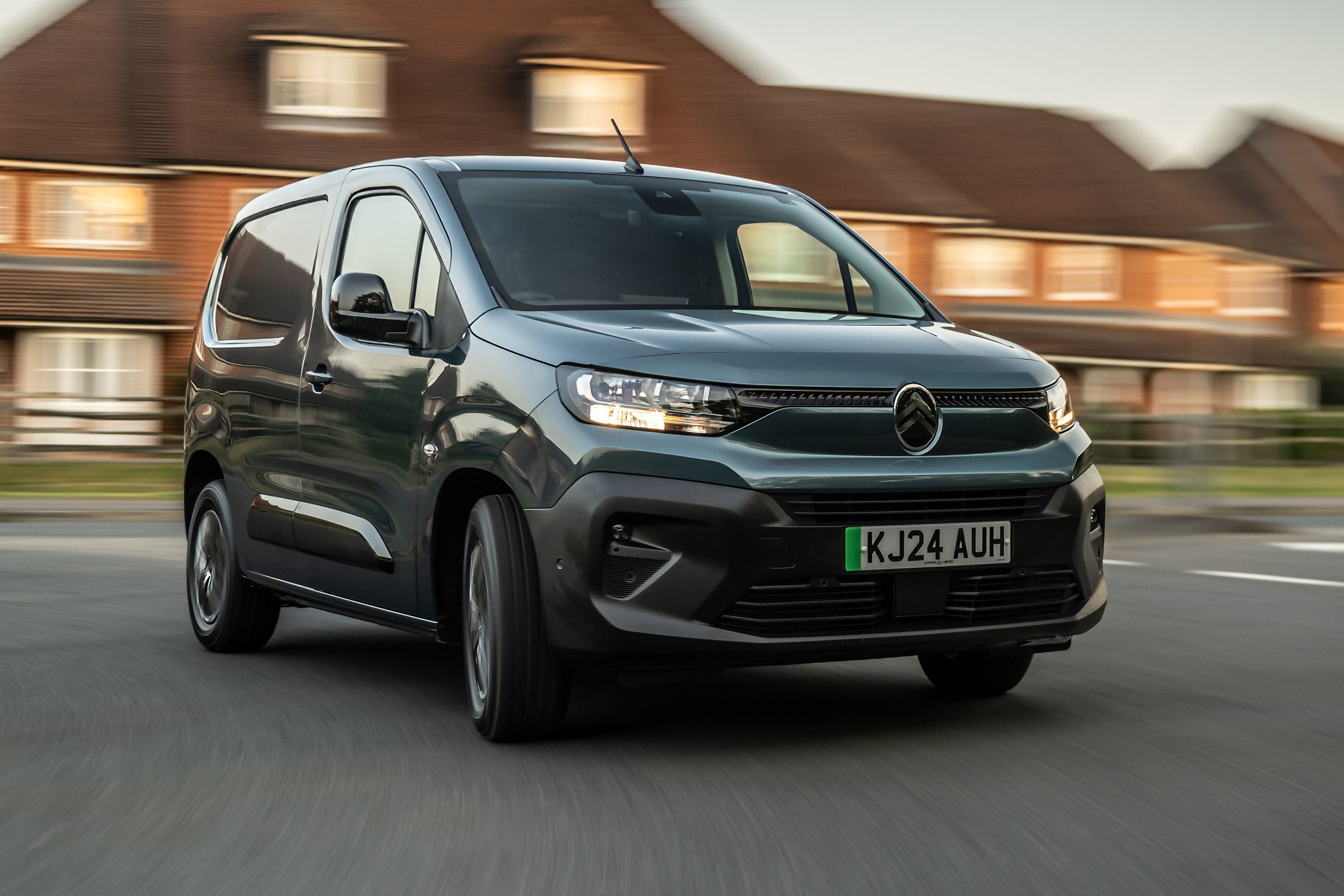
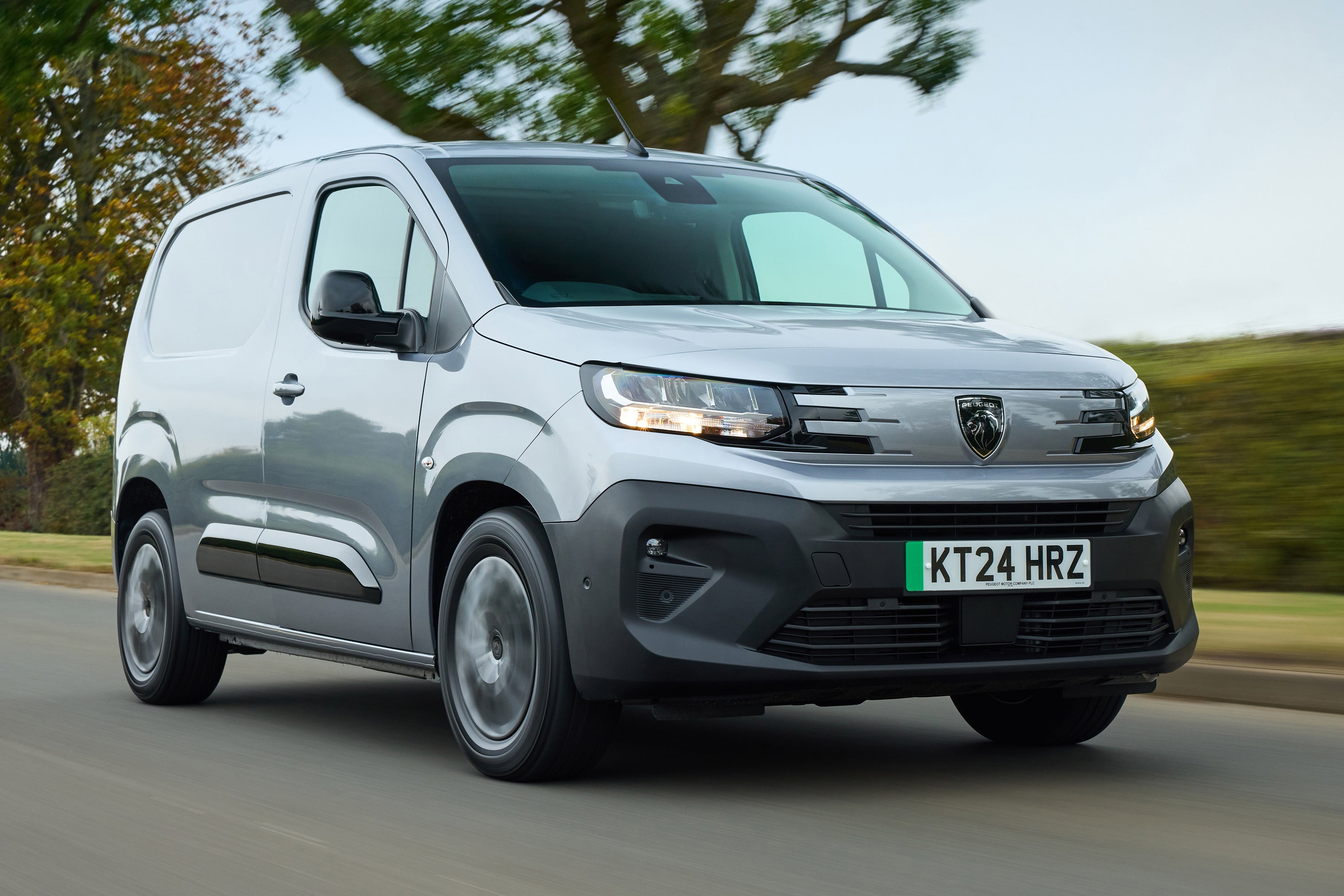
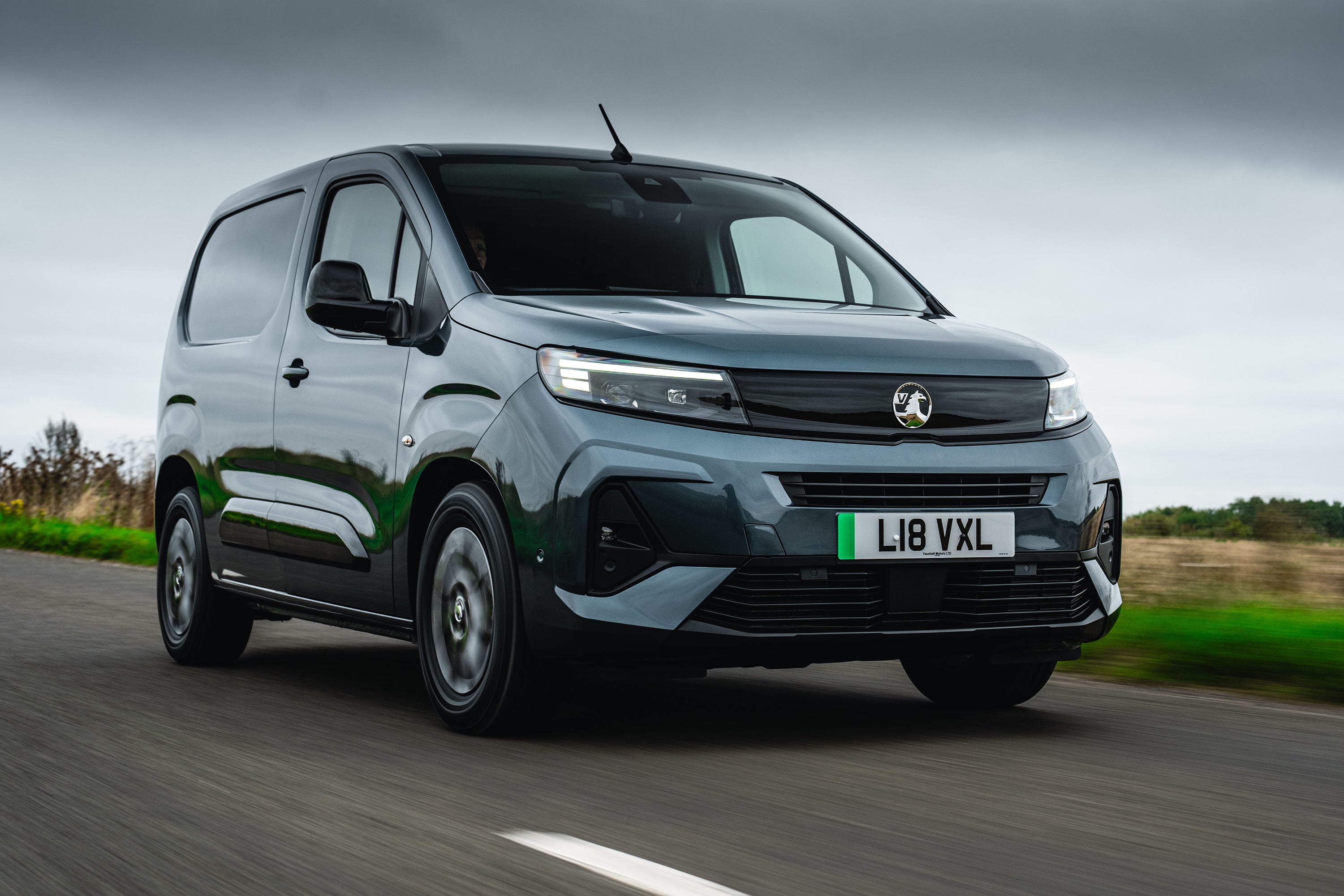
As well as the Kangoo, the Citan competes with other small vans like the Volkswagen Caddy Cargo, and the Ford Transit Connect as well as the likes of the Citroen Berlingo, Peugeot Partner and the Vauxhall Combo Cargo. While you’ll pay a premium for the Citan, that extra gives you a high level of equipment included as standard, and interior quality that sets it apart from pretty much all of its rivals.
If your priorities are sophistication, lots of features and a comfortable drive, mostly around town rather than covering long distances, then the Mercedes Citan could be right up your street. However, if maximum space and payload are particularly important to you, then there are other vans available that'll fit the bill better. The premium price of the Mercedes - even on the used car market - could be a consideration, too, as there are plenty of more affordable alternatives. But that said, the Citan is well-equipped in terms of features, and the build quality reflects the extra cash, too.
What's the best Mercedes Benz Citan trim and battery option?
The Mercedes Citan is available as an L1 or L2 panel van, and as a five-seater crew van (the panel vans have two seats), and the one you choose will depend on the practicality needs of your business.
There are two diesel engines available, but neither is very punchy, so you might as well settle for the entry-level one, which is labelled the 110 CDI and has 95PS. Alternatively, there is also an all-electric eCitan available in both the L1 and L2 sizes, which could be a good option if you're able to charge at home and if your journeys tend to be local ones. That last bit is important, because the eCitan's range is very limited.
Early on, your choices in trim were between the entry-level Progressive model or the Premium. Equipment levels are fairly similar between the two, and the Premium’s extras are mainly cosmetic. Later on, the trim levels available changed to Base, Pro and Select, giving a broader range of choice. We think Base or Pro Citans are the ones you want.
What’s the price of the Mercedes Benz Citan?
Shortly before the Citan went off sale as a brand new vehicle, it was priced roughly between £22,000 and £27,000 for a diesel version (excluding VAT), depending on bodystyle, engine and trim level. That meant it was a bit more expensive than rival small vans from other brands, but not by as much as you might think given its premium badge and swanky interior.
Obviously, you'll pay a bit less than that these days now that the Citan is only available as a used vehicle, but it's worth noting that, if anything, the price difference between the Citan and rivals of a similar vintage might well have increased, because the Citan's swankier badge will mean it holds onto its value more securely.
As ballpark indicator of what you'll pay these days, we've observed early 2023 Citans in our listings with around 40,000 miles on the dial for around £13,000. That's for a 110CDI in Progressive trim
It's an entirely different story with the all-electric eCitan, mind you. Shortly before its discontinuation, prices stood at between £33,000 and £38,000 (excluding VAT), roughly speaking. That made it many, many thousands more expensive than electric versions of rival vans, and no amount of depreciation is going to level of a disparity of that size.
Alternatives to the Mercedes Benz Citan
Those considering the Mercedes-Benz Citan will likely want to consider its close rivals. These include the Volkswagen Caddy Cargo and the Ford Transit Connect, which both offer larger load spaces and higher payload capacities. There’s also the Stellantis range of small vans – the Citroen Berlingo, Peugeot Partner and Vauxhall Combo Cargo – all of which are based on the same platform, and again offer more space. None look or feel as premium as the Citan, however.
What's the interior like in the Mercedes Benz Citan?
The premium interior of the Citan is one of its major selling points. We’ll touch on the quality and finish later, but the design is taken straight from Mercedes’ range of cars, as is the excellent infotainment system.
Mercedes Benz Citan boot space and practicality
There’s little sign of the van’s Renault Kangoo roots. In fact, if you didn’t know you were in a van, you could easily think you were in a car. The seats are comfortable and supportive and there’s plenty of adjustment in them.
The cabin of the Mercedes Citan is very well thought out, with lots of places for storing odds and ends. There’s a pair of cup holders between the seats and a small storage tray ahead of that: space freed up by the mounting of the gear lever in the middle of the dashboard. Another large space can be found under the central armrest and there’s a big shelf in the ceiling in which to keep all manner of larger items. The door bins are easily large enough for a drinks bottle and there’s a reasonable glove box, too.
In the back, you’ve got 2.9 cubic metres of space in the L1 model and 3.6 cubic metres in the L2. That’s the same as in the SWB and LWB Ford Transit Connects, but the standard Volkswagen Caddy Cargo will give you 3.1 cubic metres, and the LWB will give you 3.7 cubic metres. The SWB versions of the Stellantis-produced vans, meanwhile, will give you 3.3 cubic meters. while the figure is 3.9 cubic meters in the LWB versions.
Asymmetric rear double doors and a sliding door on the left are standard, with a right-hand sliding door optional. Unlike some rivals, there’s no hatch in the bulkhead to load through longer items. That means a maximum load length of 1806mm in the L1 and 2170mm in the L2. Obviously, the extra seats in the crew van version - only available in L2 form - eat into cargo space, that version having a load length of 1390mm.
Payloads vary by trim, but they're comparatively low across the board. The best of the bunch can only haul 854kg, where many rivals will be bettering 1,000kg, while the weediest diesel Citan can only muster a maximum load of just 643kg. Things are even worse in the eCitan, in which permissible payloads range between 427kg and 634kg.
Mercedes Benz Citan dimensions
As we've said, there are three versions of the Citan, the short-wheelbase L1, the long-wheelbase L2, and the crew can, which is a five-seater based on the L2. The L1 is 4,498mm long, 2,159mm wide (including door mirrors) and 1,910mm high. The L2 is the same width, but it's 4,922mm long and 1,916mm high.
Tech and infotainment in the Mercedes Benz Citan
Like Mercedes cars, the Mercedes-Benz Citan comes with the MBUX infotainment system, which is one of the best on the market. Apple CarPlay and Android Auto are both included for smartphone connectivity, DAB radio is built-in and wireless device charging is available as an option. A reversing camera is standard as well, as are rear parking sensors.
About the only downside of the system is that the icons on the fairly small 9.5-inch screen can be tricky to touch on the move. However, there are some shortcut buttons under the screen to jump between different features.
Materials available on the Mercedes Benz Citan
Build quality and the material finish in the Citan is very good for a van, although if you’ve experienced the level of quality in Mercedes cars, you’ll find the plastics a few steps harder than in something like an A-Class. It is a working vehicle, after all. But while there’s more of a wipe-clean flavour to the materials, they don’t feel cheap. For this type of vehicle, the Citan feels right at the classiest end.
What's the Mercedes Benz Citan like to drive?
The Mercedes Citan delivers a comfortable and relatively engaging driving experience. The suspension strikes a good balance between comfort and handling, and the steering is light enough for easy manoeuvring in town, helped by a tight turning circle. At higher speeds the steering lacks feel, but it doesn’t hinder your progress.
Mercedes Benz Citan range and performance
For quite a while, the Citan’s sole combustion-engine option was the 110CDI, but it was later joined by the 112CDI. Both are 1.5-litre diesel units, and the former develops 95PS while the latter ups the ante slightly to 116PS. The 110CDI had a six-speed manual gearbox as standard while the 112CDI got a seven-speed automatic as standard, but both engines could be specified with both gearboxes at the ordering stage.
As you'd expect, the 110CDI is no ball of fire, but its maximum torque (260Nm) is delivered from just 1750rpm, so it's an easy engine to keep on the boil and it'll drag you along at a fairly decent rate when you need it to in most situations. The manual gearshift is slick and easy to use, too. The engine can start to feel a little out of its depth at motorway speeds, though, due to the limited amount of power. It should also be noted that we've only tried the 110CDI with an empty loadbay, so we can't be sure how it'll cope with the extra demands of a heavy load.
We haven't sampled a Citan with the automatic gearbox, and neither have we had the chance to drive the brawnier 112CDI, so we can't tell you whether there's a vast difference in how it performs. Mercedes doesn't publish performance figure for the Citan, either, so we can't even make an educated guess based on the 0-62mph numbers. However, the upgrade in power is modest, so we can't imagine there'd be a game-changing difference.
The electric eCitan uses a 45kWh battery and a single electric motor which powers the front wheels. It's more powerful than the diesels, putting out 122PS, but that's offset by a higher weight figure. Again, there are no performance figures available to throw at you, but we can tell you that the eCitan feels relaxing and effortless to drive, even feeling pretty brisk off the line. Again, as with the diesel Citan, we haven't tried one fully loaded, but given how the car responds empty or with lighter loads, we don't think it'll ever feel like it's struggling. The lack of gears also means there's less to think about, while trundling along in traffic is a lot easier.
The biggest problem with the eCitan is that, with a modest 45kWh battery pack, the it can't go all that far on a full charge. The official electric range figure is between 162 miles and 176 miles, which really isn't much at all, and this will rule the electric version out entirely for a lot of business. The situation looks even bleaker when you consider that lab-obtained figures like these are nigh-on impossible to replicate in real life, so we wouldn't bank on getting much more than 120-130 miles, even in optimal conditions. That said, the eCitan did reasonably well in terms of efficiency when we tested it, averaging three miles per kWh despite it being a cold time of year and us covering a lot of ground on dual carriageways at 70mph, neither of which are things that EVs like.
Performance data
| Model | Engine/battery size | Power | 0-62mph | Range/MPG |
|---|---|---|---|---|
Citan 110CDI | 1.5 diesel | 95PS | TBC | Up to 54.3mpg |
Citan 112CDI | 1.5 diesel | 116PS | TBC | Up to 53.3mpg |
eCitan | Electric 45kWh | 122PS | TBC | Up to 176 miles |
Mercedes Benz Citan driving and refinement
The thing that you'll notice first about driving the Citan is how comfortable it is. The suspension does a really good job of mopping up the effects of a lumpy road surface, filtering out all but the worst potholes and cracks really effectively. You might not be quite as comfortable as you would be in most passenger cars, but you'll get a lot closer than you would in most compact vans.
Despite that, the Citan doesn't feel like a complete pudding of a thing when you arrive at a corner, either. The suspension balances ride comfort with body control really well, so while body roll is noticeable, it's far from unreasonable, and there always feels like there's plenty of grip. Of course, this isn't a vehicle that you'll relish chucking around, but importantly, it is one that feels controlled and stable if you happen to enter a bend too quickly, and that feels nimble enough to get you from job to job in an easy, painless fashion. That's helped in no small part by steering that's light enough for easy manoeuvring in town, and a tight turning circle.
The eCitan is a lot heavier than the diesel, tipping the scales around 1,800kg, compared to around 1,500kg for the combustion model. It doesn't necessarily feel that heavy, though, probably due to the batteries sitting quite low in the van's structure. This keeps the centre of gravity low, an the eCitan feels pretty much as agile and as comfortable as the diesel-powered version.
You get a faint whirr from the motor during heavier throttle inputs, but unless you have the stereo turned off, it's barely audible. While the diesel engine can be gruff when revved hard, you don't often have to, because the engine's torque is served up so readily. Refinement is pretty good elsewhere, too, with minimal road- and wind noise thanks to the Citan's solid build and sound insulation. Again, it's not as refined as your average passsenger car, but it's ahead of the curve among compact panel vans.
How safe is the Mercedes Benz Citan?
The Citan underwent Euro NCAP's dedicated van-testing programme in 2025, and it achieved the full five-star rating which is a very encouraging result. Standard safety kit includes six airbags, automatic emergency braking, active lane keep assistance, traffic sign assist, driver attention monitor and rear parking sensors with a reversing camera. Pro trim adds a blind-spot warning system. It’s a very decent list of systems for this type of vehicle.
Running costs: What it's like to live with a Mercedes Benz Citan
Whether you plump for a Citan with a diesel engine, or the all-electric eCitan, running costs for the vehicle should be very competitive with those of most rivals.
Mercedes Benz Citan charging times and costs
It's not recommended to regularly charge an EV from a domestic three-pin socket for various reasons (one being that it isn't great for your home's electrics), but if you do so, it'd take around 25 hours to fully 'brim' the eCitan from empty.
Most owners will use a wallbox at home, with the higher output of these devices (typically 7.4kW) allowing for a full charge of the eCitan's battery in a much more reasonable six hours. Either method of at-home charging will cost you around £12 based on the current average per kWh cost of electricity, but if you have a lower tariff at certain times of day, it could be possible to drastically reduce that figure.
The eCitan has a lower DC rapid charging capacity than some rivals, with a cap of 75kW. Even so, you shouldn't have to wait too long at a public charger to get the range you need, with a 10 to 80% top-up taking 38 minutes according to Mercedes. Charging this way is very expensive, though, so don't rely on public DC chargers on a regular basis.
One particularly neat touch with the eCitan, as also seen on some other Mercedes-Benz vans, the charge port is hidden behind the brand's three-pointed star logo on the front grille.
Mercedes Benz Citan fuel economy
According to official WLTP figures, the most efficient versions of the diesel-powered Citan are the L1 110CDIs: these can return 54.3mpg if you believe the official numbers (which we don't). The L2s are only slightly behind with figures of between 50.4mpg and 51.4mpg depending on trim. The CDI112s in L1 form achieve between 52.3mpg and 53.3mpg. The thirstiest version is the CDI 112 L2 crew van, with a figure of 50.4mpg.
As alluded to just now, though, these laboratory-gleaned figures are very difficult to match in real-world driving, so bank on getting a wee bit less.
Mercedes Benz Citan warranty and servicing
Mercedes provides its vans with a three-year, unlimited-mileage warranty. It's transferrable, so used versions that fall within those parameters will still be covered, but there are vans with more generous arrangements. The eCitan has a battery warranty for eight years, 100,000 miles, which is the legal requirement.
Service intervals depend on the powertrain you choose. The diesels need routine maintenence every two years or 18,000 miles, while the eCitan meeds work every year, but you can stretch the mileage out to 25,000 within that timeframe.
Mercedes Benz Citan insurance groups
Depending on the model, the Mercedes Citan sits between insurance groups 27 and 31 of 50, which is slightly higher than the Renault Kangoo, but not massively so.
How much does it cost to tax a Mercedes Benz Citan?
As a light goods vehicle, the Mercedes Citan is subject to the standard flat rate of Vehicle Excise Duty (VED), which is currently £360 a year. Note that EVs are no longer exempt from VED road tax, so the eCitan will be liable for the same VED costs as diesel-powered versions.
What trims are available with the Mercedes Benz Citan?
The latest Mercedes Citan comes in three trims: Base, Pro and Select. Even the Base version gets Mercedes-Benz's 9.5-inch MBUX infotainment system, plus electric windows, a reversing camera, cruise control, lane keeping assistance.
The Pro builds on this with 16-inch alloy wheels, heated electric mirrors, front fog lamps, LED load compartment lighting, traffic sign recognition, blind spot assistance and hill start assist.
The range-topping Select is the smartest looking of the bunch thanks to the use of body-coloured bumpers. You also get some additional equipment including LED interior lighting, LED headlights, keyless entry and start, a leather steering wheel and some extra safety tech.
Ask the Drive experts: common questions
Is the Mercedes-Benz Citan a Renault Kangoo?
Is the Mercedes-Benz Citan a good van?
How practical is the Mercedes-Benz Citan?
Get our latest advice, news and offers
Keep me updated by email with the latest advice, news and offers from Drive.
.jpg)
.jpg)