Ford Transit Custom Review

Written By Phill Tromans
- 2023
- Van
- Diesel, plug-in hybrid
What we love
Excellent to drive by van standards
Clever, spacious and well-designed cab
Huge choice of bodies, engines and specifications
Things to consider
Touchscreen climate controls can be distracting
Taller passengers may find cab headroom tight
Prices rise quickly on high-specification models
The DRIVE take on the Ford Transit Custom, is it the right car for you?
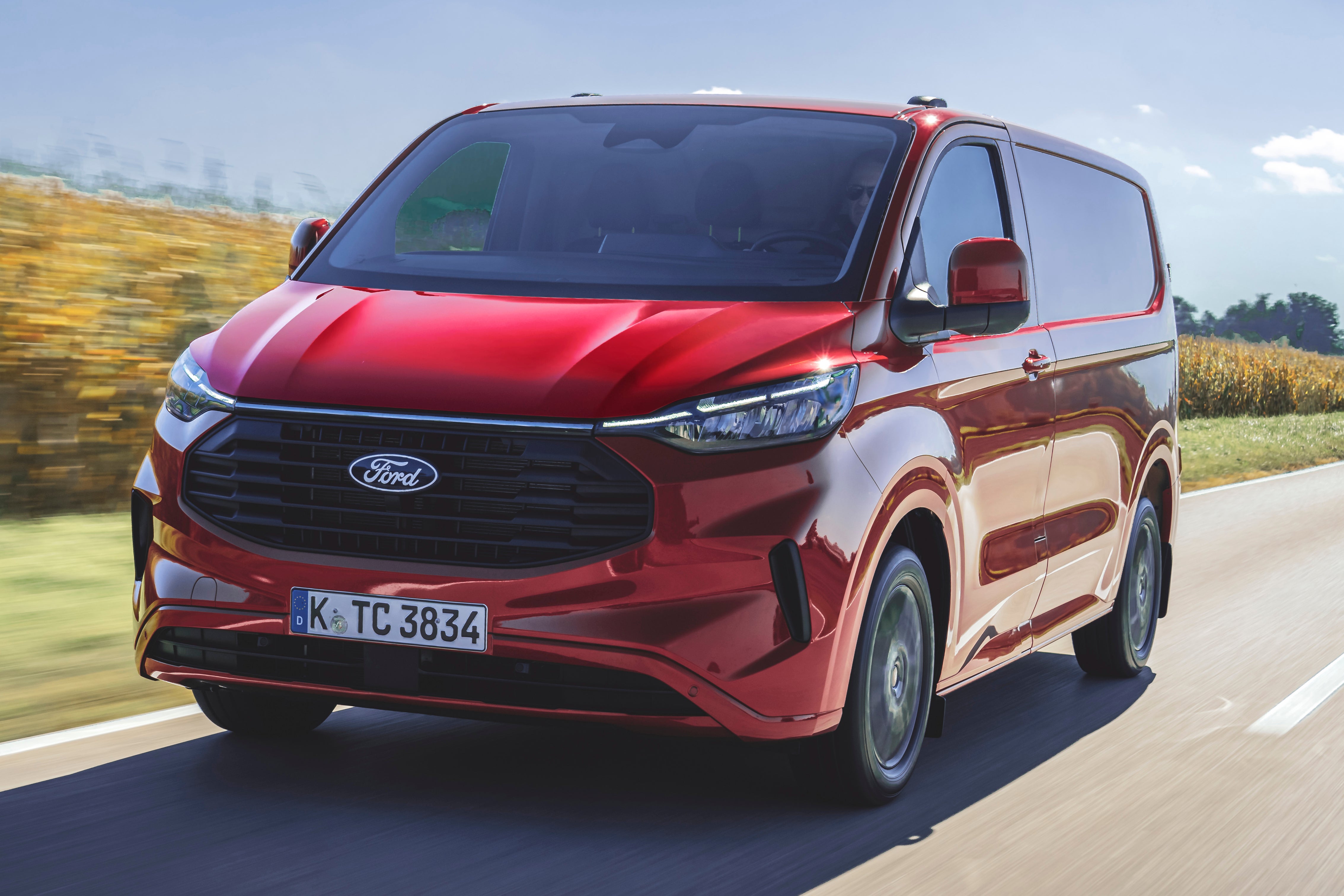
The Ford Transit Custom remains the medium van to beat, with excellent road manners, a practical cab and one of the broadest model ranges in the class. But the Volkswagen Transporter runs it very close, combining strong everyday usability with good refinement, a wide choice of versions and the familiarity that continues to appeal to both fleets and owner-drivers.
The 150PS diesel is the best all-round choice for mixed use, balancing performance, economy and payload capability. The plug-in hybrid makes more sense for businesses with predictable daily mileage and regular access to charging, especially where its ability to supply power to tools or equipment could be useful.
The Ford Transit Custom in more detail
The previous Ford Transit Custom established an enviable reputation as one of the best vans in Britain, topping the sales charts for years because it balanced commercial practicality with the comfort and usability required by drivers spending an entire working day behind the wheel.
Replacing it was a substantial challenge, so Ford redesigned the Transit Custom from the ground up rather than simply refining the old model. The current generation arrived in 2023 with a stiffer structure, independent rear suspension, a lower load floor and a more sophisticated cab, improving its driving experience, practicality and everyday usability.
Browse used Ford Transit Customs for sale →
It now drives with a level of composure few medium vans can match, while the cabin makes intelligent use of the available space and every version comes with a generous package of technology.
The range is extensive. Panel Vans are offered in L1 and L2 lengths, while Double Cab-in-Van, MultiCab and Kombi derivatives provide additional seating. Ford also supplies versions designed for camper conversions, together with the Tourneo Custom passenger carrier.
This review concentrates on the diesel and plug-in hybrid models - once we've driven the fully electric E-Transit Custom, you'll be able to find a separate review.
The diesel line-up is based around Ford’s familiar 2.0-litre EcoBlue engine, with outputs ranging from 110PS to 170PS. Manual and automatic transmissions are available, while selected automatic models can also be ordered with all-wheel drive. Certain manual versions offer a mechanical limited-slip differential.
The plug-in hybrid uses a 2.5-litre petrol engine, an electric motor and an 11.8kWh battery. Its combined output is 232PS, making it the most powerful combustion-engined Transit Custom, while its official electric range extends to around 33 miles depending on body style and specification.
Importantly, choosing the PHEV does not remove the Transit Custom’s core commercial ability. A long-wheelbase Panel Van still offers up to 6.8m³ of load volume, while the hybrid can tow as much as 2,300kg.
Ford’s optional Pro Power Onboard system also allows tools and electrical equipment to draw power from the van, potentially removing the need to carry a separate generator.
Diesel remains the straightforward answer for high-mileage work, regular towing and routes where charging is impractical. The PHEV is more convincing for operators returning to a home or depot charger each night and completing much of their mileage locally.
That breadth of choice, combined with its strong driving experience and carefully designed cab, makes the Transit Custom exceptionally difficult to overlook.
What's the best Ford Transit Custom trim and engine option?
The 150PS diesel with the six-speed manual gearbox is the best all-round powertrain. It provides enough low-speed pulling power for a loaded van, responds cleanly when joining faster roads and retains competitive fuel economy without the expense of the most powerful engine.
The 170PS automatic is better suited to regular towing, heavier work or drivers spending long hours in traffic, with its smooth eight-speed gearbox removing much of the effort from urban driving.
Trend is the strongest-value trim because it adds automatic air conditioning, front parking sensors and a reversing camera to an already generous equipment list.
Limited is worth considering where heated seats, additional comfort equipment and twin sliding side doors will be useful. The PHEV is best reserved for predictable local routes where its battery can be charged daily.
What’s the price of the Ford Transit Custom?
The current Panel Van range starts at £35,150 excluding VAT and on-road costs for the short-wheelbase Trend 280 with the 110PS diesel and six-speed manual gearbox. A 136PS manual Trend starts at £36,190, while the equivalent automatic costs £38,190. The 150PS Limited manual is priced from £39,100, and a 170PS Limited automatic starts at £41,900.
The PHEV begins at £40,350 in short-wheelbase Trend specification. Limited costs from £41,900, while Sport starts at £43,800.
At the top of the combustion-engined range, the 170PS diesel MS-RT with all-wheel drive costs £57,050 excluding VAT before on-road charges. The PHEV MS-RT is £54,550. There are also plenty of used Ford Transit Customs for sale for considerably less.
These are manufacturer list prices, so delivery, registration, first-year tax and number plates increase the on-the-road total. Options, conversions and load-area accessories can add considerably more.
Alternatives to the Ford Transit Custom
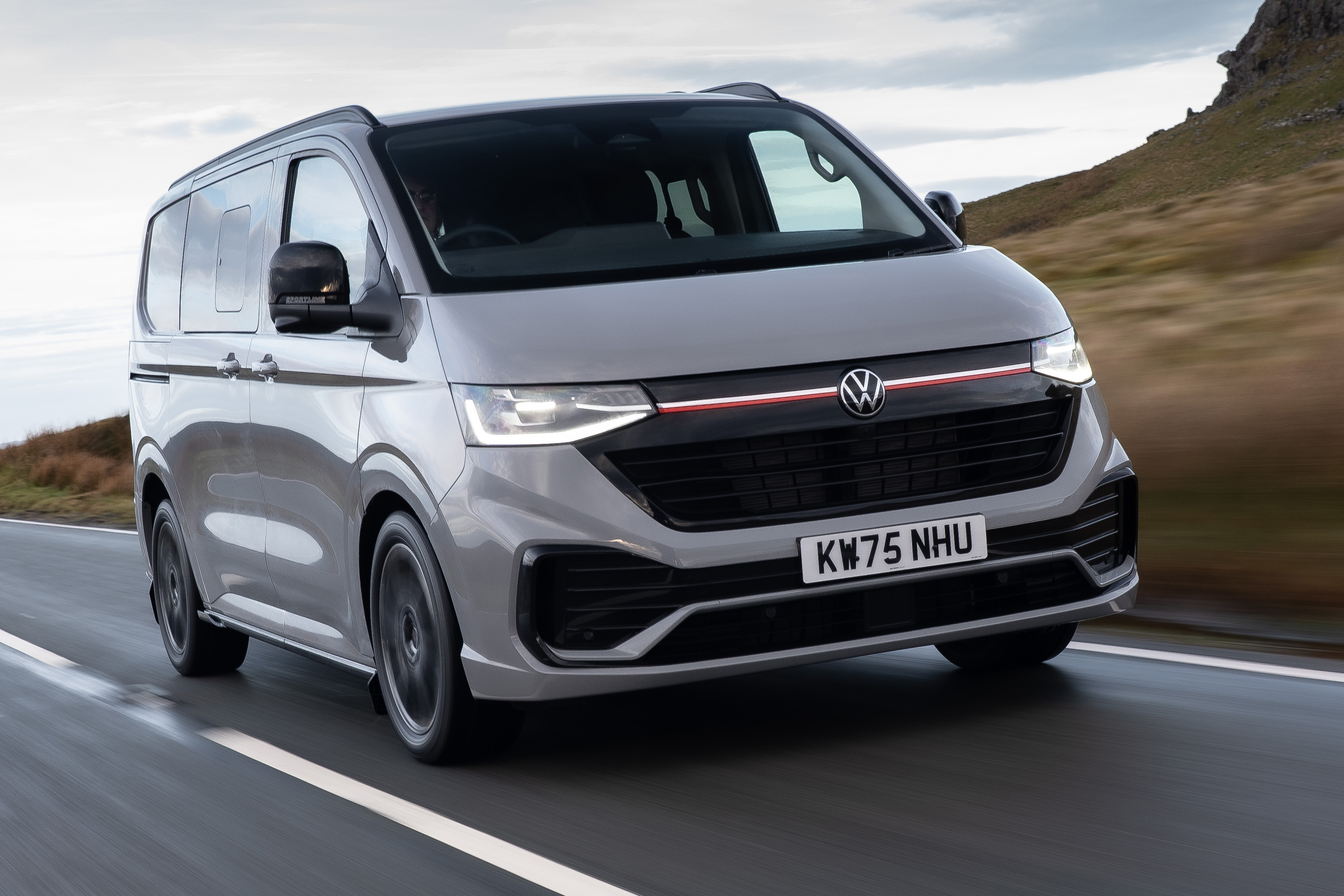
The latest Volkswagen Transporter is the closest alternative because it shares much of its structure and technology with the Ford. It has its own styling and dealer network, but the two vans are fundamentally closely related.
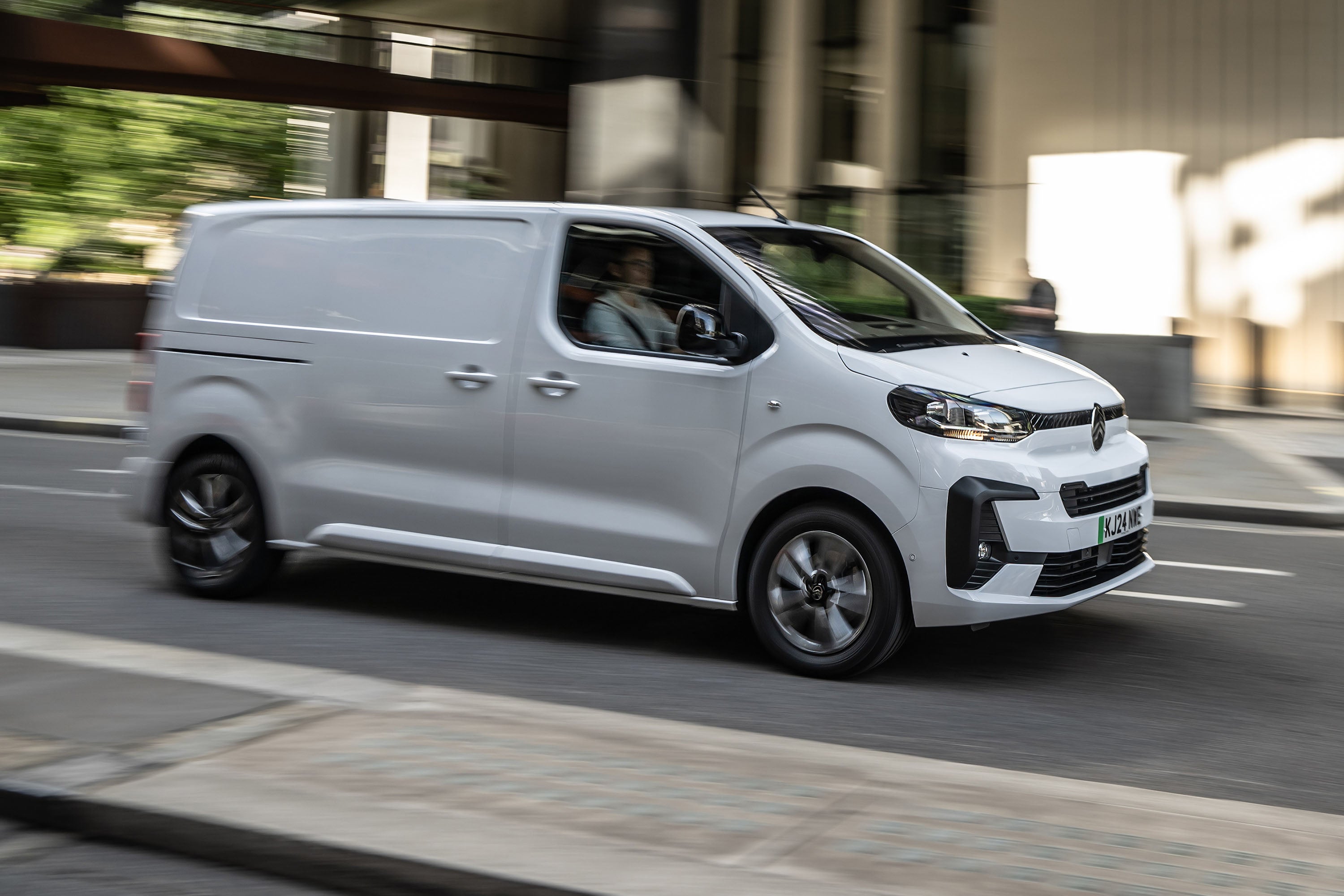
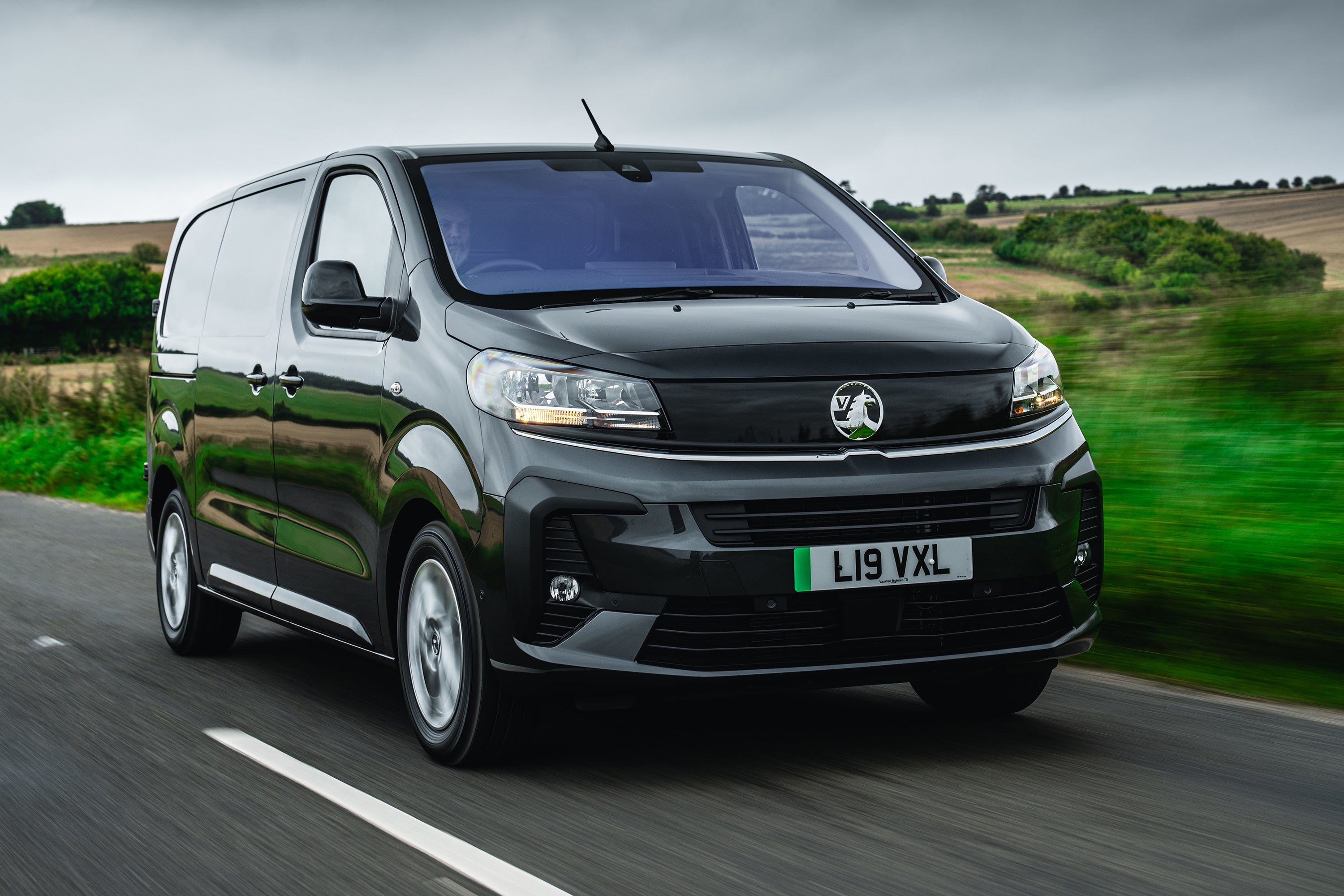
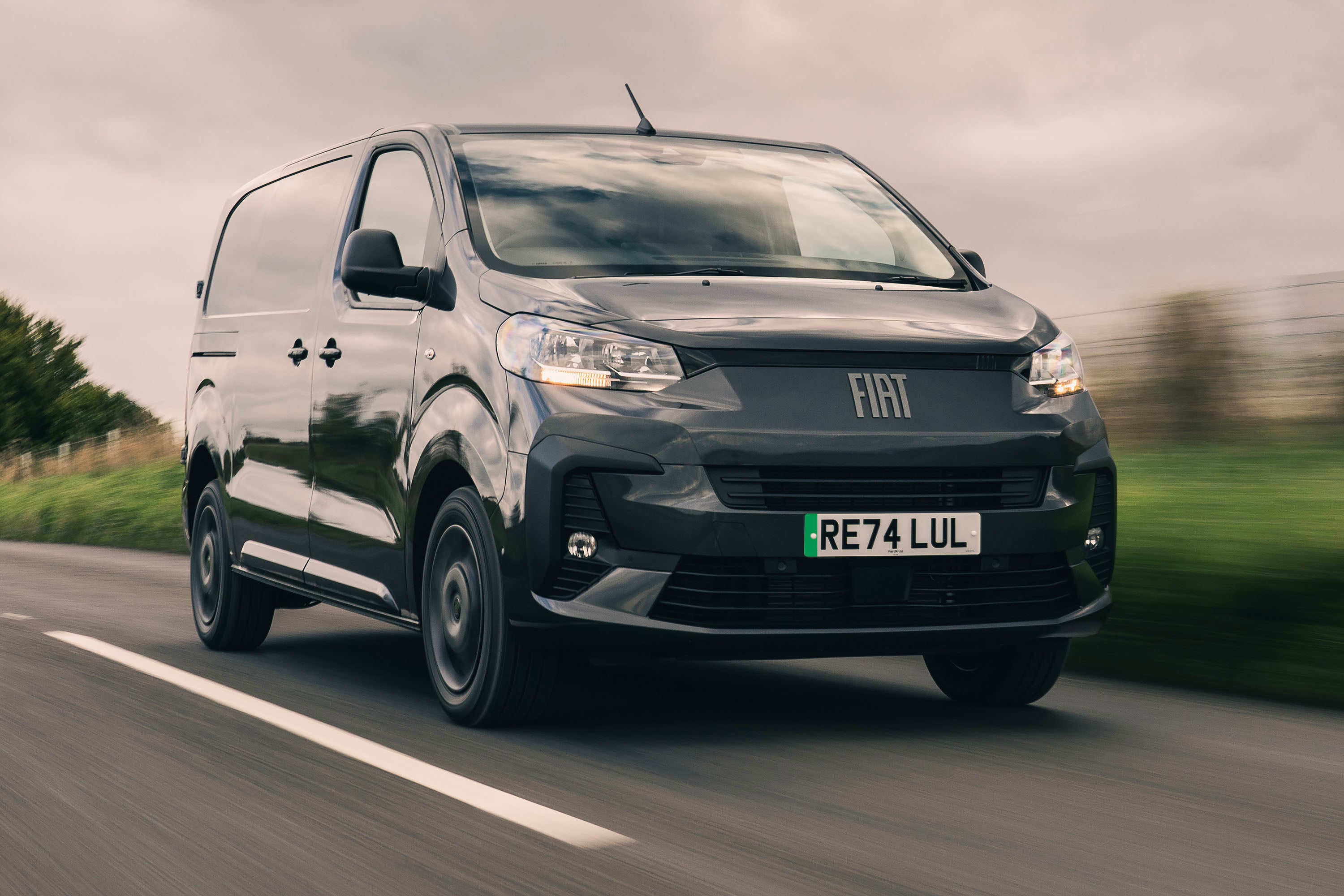
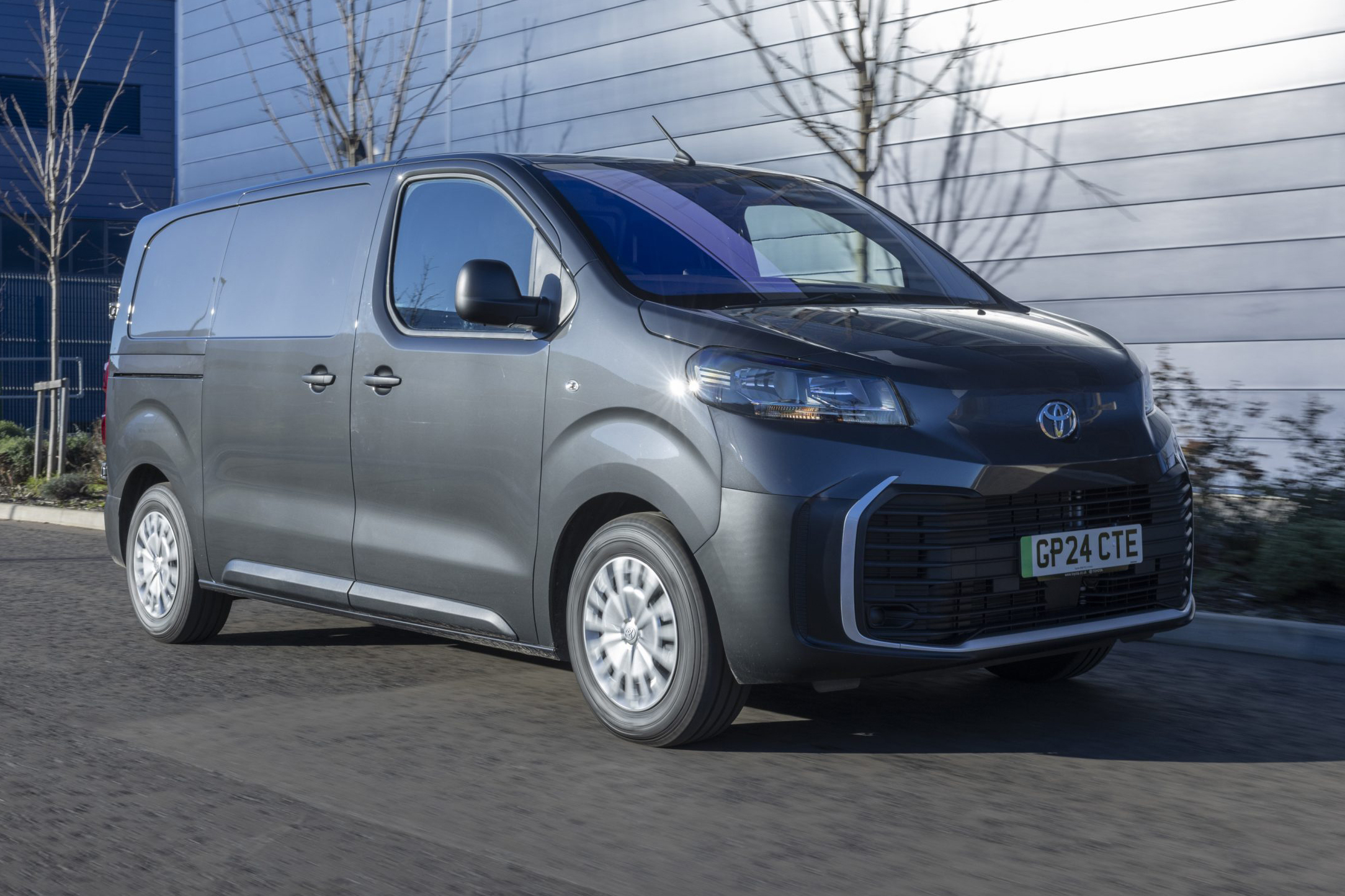
The Peugeot Expert, Citroen Dispatch, Vauxhall Vivaro, Fiat Scudo and Toyota Proace form another family of closely related medium vans. They are compact and can carry impressive payloads, although their maximum load volumes are lower than the Ford’s.
The Renault Trafic and Nissan Primastar are ageing but practical choices with large cargo areas and proven diesel engines.
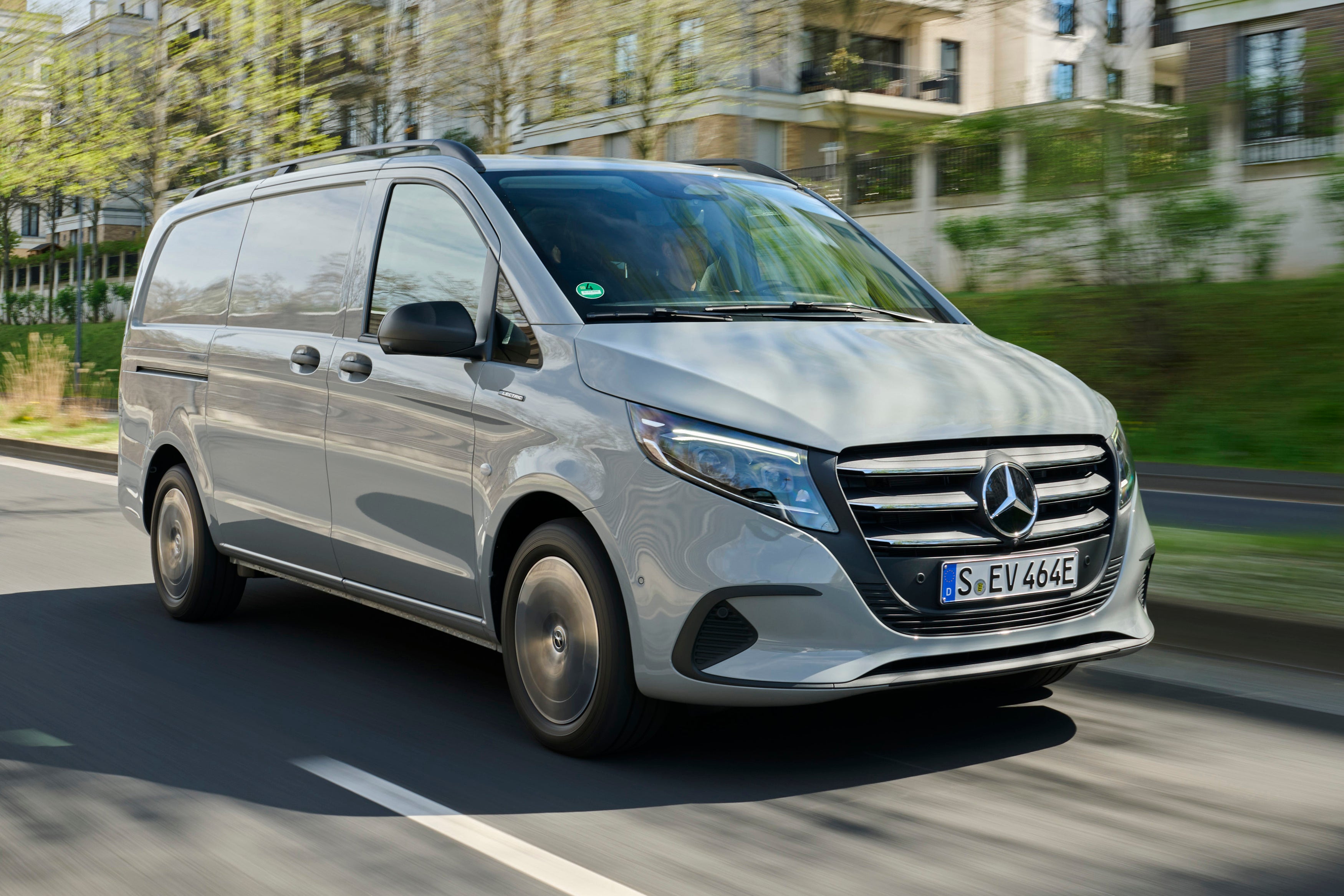
The Mercedes-Benz Vito has a high-quality cab and strong long-distance refinement, although equivalent versions can be expensive.
What's the interior like in the Ford Transit Custom?
The Ford Transit Custom has one of the best-designed cabins in the medium-van class, combining generous storage, a comfortable driving position and modern technology with a level of finish that feels closer to a passenger car than a traditional working van.
Ford Transit Custom boot space and practicality
Cargo space in the back of the L1H1 Ford Transit Custom we tried is actually down on the previous model, from 6m³ to 5.8m³, but with improved access you should find it more usable than before. The floor is lower for easier access, and the aperture in the side sliding door is now more than a metre wide and has a step built into it. The double doors at the back no longer feature retaining arms, which makes for easier access, as does a wider aperture. Limited trim and higher get dual side doors as standard, rather than just one kerbside door.
Up front, practicality has been very well thought out in the Ford Transit Custom. There are two cupholders on each front corner of the dashboard, and another than folds out of the centre of the dash. In each front door is a large angled slot for a drinks bottle, and three separate pockets for storage. Ford has relocated the passenger airbag into the roof, freeing up space for an opening storage space on top of the dashboard, with a regular-sized glovebox beneath. There’s also loads of space on top of the dash behind the steering wheel for odds and ends. On top of that, the centre of the passenger seat folds down for a flat writing surface, with an elastic strap to stop stuff sliding about.
One impressive and innovative optional feature is the tilting steering wheel on the Ford Transit Custom, included as part of the Mobile Office pack. This allows you to press a button on the base of the wheel and tilt the outer rim forward, either to flat or to around 45 degrees. A plastic tray can then be mounted to form a table, which could be great for laptop or tablet work, or even just eating your lunch. Oh, and yes, the wheel only tilts when you’re not in motion.
Ford Transit Custom dimensions
The short-wheelbase L1 Panel Van provides 5.8m³ of load volume, while the longer L2 increases this to 6.8m³.
Conventional load length is 2,602mm in the L1 and 3,002mm in the L2. Using the under-seat load-through facility extends those figures to 3,050mm and 3,450mm respectively, allowing narrow items such as timber or pipes to pass beneath the passenger seat.
The cargo area is 1,777mm wide at its broadest point, with 1,392mm between the wheelarches. The sliding side-door opening measures 1,030mm, while the rear aperture is 1,400mm wide.
Tech and infotainment in the Ford Transit Custom
Every Transit Custom has a 13-inch central touchscreen running Ford’s SYNC 4 software, together with wireless Apple CarPlay and Android Auto, a digital instrument display and a built-in 5G modem.
The screen looks modern, responds quickly and uses clear menus, while its generous size makes maps and camera views easy to read. Its principal weakness is the absence of separate physical climate controls. Adjusting the temperature or fan speed requires interaction with the screen and is less intuitive than turning a conventional dial.
FordPass Pro allows smaller businesses to monitor up to five vehicles, while Ford Pro Telematics provides larger fleets with location, maintenance and usage data.
The Upfit Integration System allows external equipment such as beacons, work lights and refrigeration systems to be controlled through the touchscreen rather than requiring extra switches drilled into the dashboard.
Materials available on the Ford Transit Custom
The cab uses plenty of hard plastic, but that is appropriate for a working vehicle.
The materials feel sturdy, are easy to clean and should withstand tools, muddy clothing and repeated commercial use. Patterned sections break up the larger surfaces and prevent the dashboard from appearing overly plain.
The steering wheel and main controls have a more car-like finish, while the switches feel reassuringly solid.
Limited, Sport and MS-RT versions add upgraded upholstery and cosmetic details, but even Trend feels well assembled.
What's the Ford Transit Custom like to drive?
Independent rear suspension, a stiffer structure and reduced weight make the current Transit Custom one of the most accomplished vans on the road, with impressive composure in town, on country roads and at motorway speeds.
Ford Transit Custom range and performance
We think most buyers will fare best with the diesel, and of the four power options available, the 150PS option is the most well-rounded, with enough grunt to make good progress on any road, even with a loaded van.
That said, you can’t get the 150PS model with the excellent eight-speed automatic gearbox, which is very pleasant to use, or with all-wheel drive. If front-wheel drive or the six-speed manual gearbox aren’t for you, the 136PS or 170PS models are the best options.
For vans used predominantly in the city centre, the Ford Transit Custom plug-in hybrid model could be a good option, though it’s a jump up in price. Using a 2.5-litre petrol engine with an electric motor and a battery that promises up to 34 miles of electric-only power, it boasts the most performance of any Transit Custom, with 227PS.
It also comes with 2.3kW of power for tools and equipment – a feature also included on the electric E-Transit Custom.
Performance data
| Model | Engine/battery size | Power | 0-62mph | Range/MPG |
|---|---|---|---|---|
EcoBlue 110 manual | 2.0-litre | 110PS | TBC | Up to 40.4mpg |
EcoBlue 136 manual | 2.0-litre | 136PS | TBC | Up to 39.8mpg |
EcoBlue 136 automatic | 2.0-litre | 136PS | TBC | Up to 37.2mpg |
EcoBlue 150 manual | 2.0-litre | 150PS | TBC | Up to 38.7mpg |
EcoBlue 170 automatic | 2.0-litre | 170PS | TBC | Up to 36.7mpg |
Plug-in Hybrid | 2.5-litre petrol | 232PS | TBC | Up to 176mpg |
Ford Transit Custom driving and refinement
With a slightly elongated wheelbase and new independent rear suspension, the new Ford Transit Custom has one of the most impressive driving experiences of any van on the market. While it's not quite like driving a car, it’s really not far off, with the suspension doing a brilliant job on our German test drive of suppressing lumps and bumps in the road surface.
What particularly impressed us was during a passenger ride in the back of the Tourneo Custom, which is the people-mover model – even sitting directly over the rear axle, the ride was supple and smooth.
Our test van had 400kg of weight in the back, and felt brilliantly composed, whether on twisting country roads, at high speeds on the motorway or through town. Ford has reduced the van weight of the Transit Custom by more than 100kg and upped the stiffness of the structure by some 30% and it makes a real difference. The steering is nicely weighted to feel solid at speed but light and easy around town, and the turning circle is suitably tight for deliveries and manoeuvring.
The 2.0-litre diesel engine is a proven workhorse. We tried it in 150PS form with a six-speed manual gearbox, and found it to be more than adequate; torquey and responsive at low speeds and able to quickly get us up to speed when going onto the motorway. We also tried the 170PS model with an eight-speed automatic gearbox, which is similarly effortless in its power delivery and shifts really smoothly.
The 227PS petrol plug-in hybrid model uses the same 2.5-litre powertrain as the Ford Kuga and promises up to 34 miles of electric-only driving. The transitions between its power sources are smooth, and the van feels reasonably quick when running only on electric power. When you do want to go a bit faster, though, the engine does make a bit of a racket, not helped by the use of a continuously variable transmission or CVT.
This is a bit like having a single-speed gearbox, with a ratio that - as the name implies - is infinitely variable. Put your foot down, and the revs spike significantly, and at a certain RPM, there's an unpleasant resonance that fills the cabin. It's certainly quick when both power sources are giving their all, though.
How safe is the Ford Transit Custom?
Euro NCAP awarded the current Transit Custom five stars in its 2025 Commercial Van Safety assessment, praising the breadth and effectiveness of its crash-avoidance technology.
Standard systems include automatic emergency braking, lane-keeping assistance, traffic-sign recognition, intelligent speed assistance, driver monitoring, automatic high beams and rear parking sensors.
Additional equipment includes adaptive cruise control, blind-spot monitoring, rear cross-traffic alert, reverse brake assist, an exit warning system and a 360-degree camera.
Ford’s Delivery Assist package can automate several routine actions when the driver leaves the van, including applying the parking brake, closing the windows, activating the hazard lights and locking the doors.
Running costs: What it's like to live with a Ford Transit Custom
Efficient diesel engines and long service intervals should help contain operating costs. The PHEV can reduce petrol consumption on short routes, but its financial advantage depends on frequent charging.
Ford Transit Custom fuel economy
Diesel economy ranges from the mid-30s to around 40mpg, depending on engine, gearbox, body style and drive system.
The 110PS manual is nominally the most efficient, while automatic and all-wheel-drive versions use more fuel.
The 150PS manual should produce the strongest real-world balance because it has enough torque to move a loaded van without needing to be worked excessively hard.
The PHEV’s weighted official economy can exceed 170mpg, but this figure assumes regular charging and substantial use of its electric range.
Ford quotes up to around 33 miles of electric driving. A van covering short local journeys and charging every night may use very little petrol, while one completing repeated long-distance routes will fall far short of the official figure.
Once the useful battery charge has been depleted, the petrol engine is officially rated at around 39.8mpg under WLTP testing.
The 11.8kWh battery takes approximately four hours and 15 minutes to charge from a suitable 16-amp supply, or close to seven hours from a lower-powered connection. The PHEV does not support DC rapid charging.
Ford Transit Custom warranty and servicing
The Transit Custom has a three-year or 100,000-mile warranty. Diesel and PHEV servicing is scheduled every two years or 25,000 miles, although demanding commercial use may require additional maintenance.
The PHEV’s high-voltage battery and associated components are covered for eight years or 100,000 miles.
Ford Transit Custom insurance groups
The latest Ford Transit Custom sits in insurance groups 23 to 29, depending on engine, trim and body style. Higher-spec versions generally sit towards the top of that range, while plug-in hybrid models can also attract higher premiums because of their more complex powertrain and greater replacement costs.
How much does it cost to tax a Ford Transit Custom?
A Transit Custom registered as a Light Goods Vehicle and weighing no more than 3,500kg pays the flat commercial-vehicle rate. The 2026/27 rate is £360 for 12 months.
Benefit-in-Kind treatment, VAT and capital allowances are separate from Vehicle Excise Duty and depend on the body style and how the vehicle is used.
What trims are available with the Ford Transit Custom?
Trend is the starting point for most current Transit Custom Panel Vans and covers the essentials well. Standard equipment includes the 13-inch touchscreen, digital instruments, smartphone mirroring, LED headlights, keyless start, air conditioning, parking sensors and a reversing camera, so it does not feel overly basic even in entry-level form.
Limited adds a more polished look and a little more comfort, with body-coloured exterior trim, alloy wheels, heated front seats, extra driver adjustment, keyless entry and twin sliding doors. It is likely to suit buyers who want something that feels less workmanlike without moving into the sportier trims.
Trail takes a different approach, with a tougher appearance and the option of all-wheel drive or a mechanical limited-slip differential depending on the engine and gearbox. It is the version aimed more at buyers who regularly deal with poor surfaces, worksites or slippery conditions.
Sport adds a more distinctive visual treatment, including larger wheels, exterior graphics, LED rear lights and a rear spoiler. Inside, it also gains dual-zone climate control and a powered driver’s seat, making it a more upmarket choice as well as a more striking one.
MS-RT sits at the top of the range with bespoke bodywork, 19-inch wheels, sports seats and distinctive interior trim. It is significantly more expensive and makes most sense for owner-drivers or businesses that place a high value on appearance and road presence.
The Transit Custom is also available as a Double Cab-in-Van, MultiCab and Kombi, broadening its appeal beyond a conventional two or three-seat panel van. Depending on configuration, these versions can provide between five and nine seats while still retaining varying degrees of load-carrying ability.
Ask the Drive experts: common questions
What is the Ford Transit Custom’s maximum payload?
How much can a Ford Transit Custom carry?
What is the Transit Custom PHEV’s electric range?
How much can a Ford Transit Custom tow?
Get our latest advice, news and offers
Keep me updated by email with the latest advice, news and offers from Drive.