Volkswagen ID.7 Tourer Review

Written By Ivan Aistrop
- 2024
- Estate
- Electric
What we love
Exceptionally spacious and practical
Quiet, comfortable long-distance cruiser
Strong standard equipment
Things to consider
Its size is worth considering for urban use
The rear seats do not fold completely flat
Touchscreen still handles a lot of everyday functions
The DRIVE take on the Volkswagen Id7, is it the right car for you?
The Volkswagen ID.7 Tourer is one of the most convincing electric estates on sale. It combines huge passenger- and boot space with excellent refinement, excellent long-range ability and the sort of mature road manners that make it feel sophisticated and classy. The overly-touchscreen-dependent cabin has its frustrations and the price is high, but if you want a practical family EV that feels genuinely grown up, the Volkswagen ID.7 Tourer deserves a place near the top of your shortlist.
The Volkswagen Id7 in more detail
Plenty of buyers still want the space, efficiency and lower loading height of a big estate, but there aren’t many left in a family car market dominated by SUVs, especially for those after an all-electric car. The VW ID.7 Tourer bucks the trend, making it something of a rarity, and it’s all the more appealing for it.
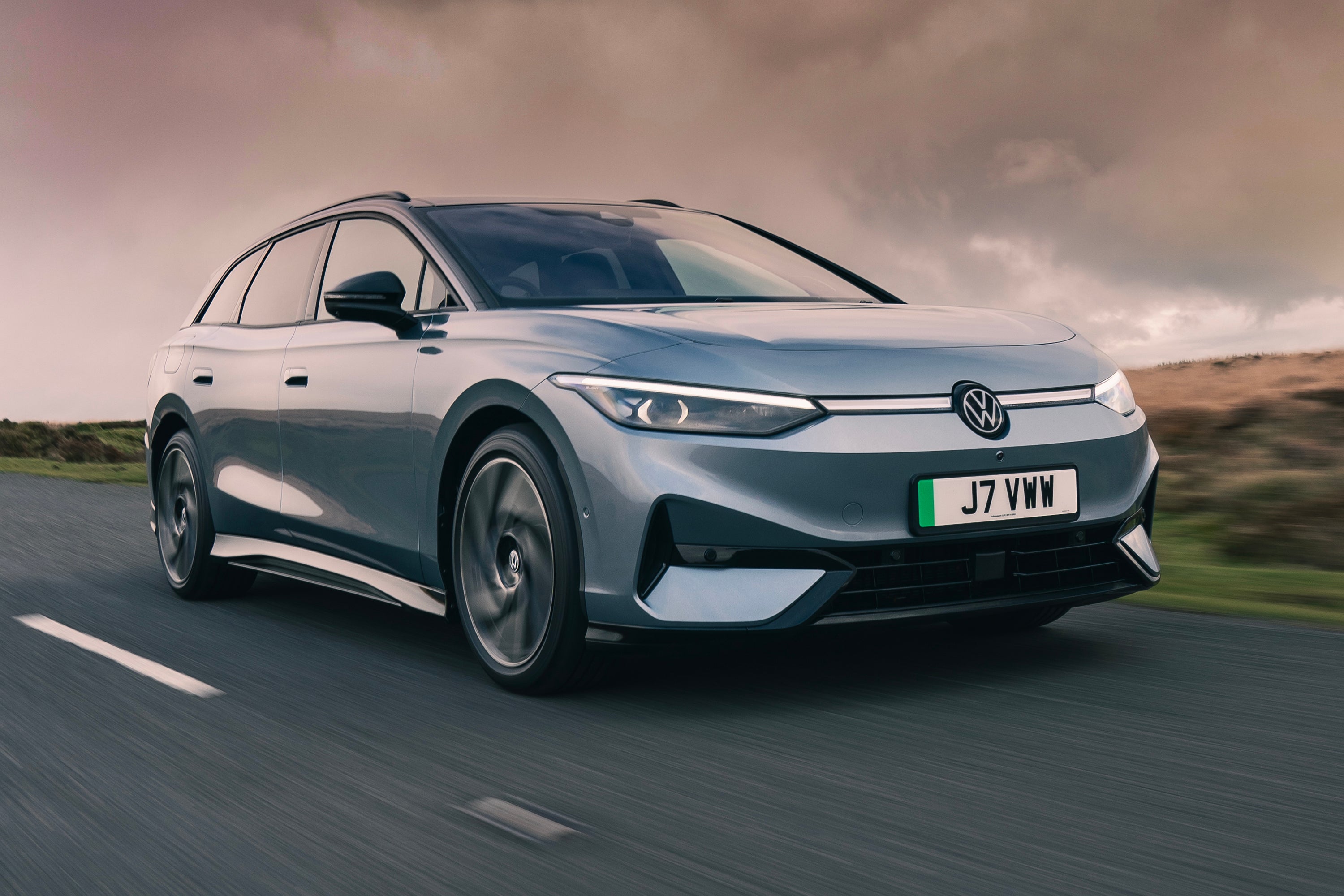
The ID.7 Tourer plays to all the strengths an estate car should have. It’s big, roomy and hugely practical, with loads of space in the back and a massive 605-litre boot. But despite all that, it also feels sleek rather than boxy, and it’s impressively refined on the move. While the ID.7 is already an excellent family car with an executive aura, the Tourer has even more practicality and versatility, and to some eyes, it looks better as well.
In this review, we discuss the two mainstream derivatives, the Pro Match Plus and the Pro S Match Plus. There’s a sportier GTX Plus that sits above them, but we’ve covered that in a separate review. For the core line-up, the most important choice is between the standard 77kWh battery of the Pro and the larger 86kWh pack in the Pro S. The former has an official WLTP range of 360 miles while the latter’s official range is 420 miles. That gives the ID.7 Tourer plenty of long-legged ability to complement its other abilities.
And that range is especially useful because the Volkswagen ID.7 Tourer feels very well suited to long journeys. It is quiet, stable and very settled at speed making long distances comfortable and relaxed in equal measure. It’s very good on all sorts of road, though, with its comfortable ride being combined with surprisingly tidy handling.
Volkswagen has also moved things on inside. The infotainment system is improved compared with earlier ID models, while the cabin quality is stronger and the overall sense of polish is much better. It still relies too heavily on the touchscreen system, and some of the climate and vent controls remain more complicated than they need to be, but that’s about the extent of the gripes you’ll have.
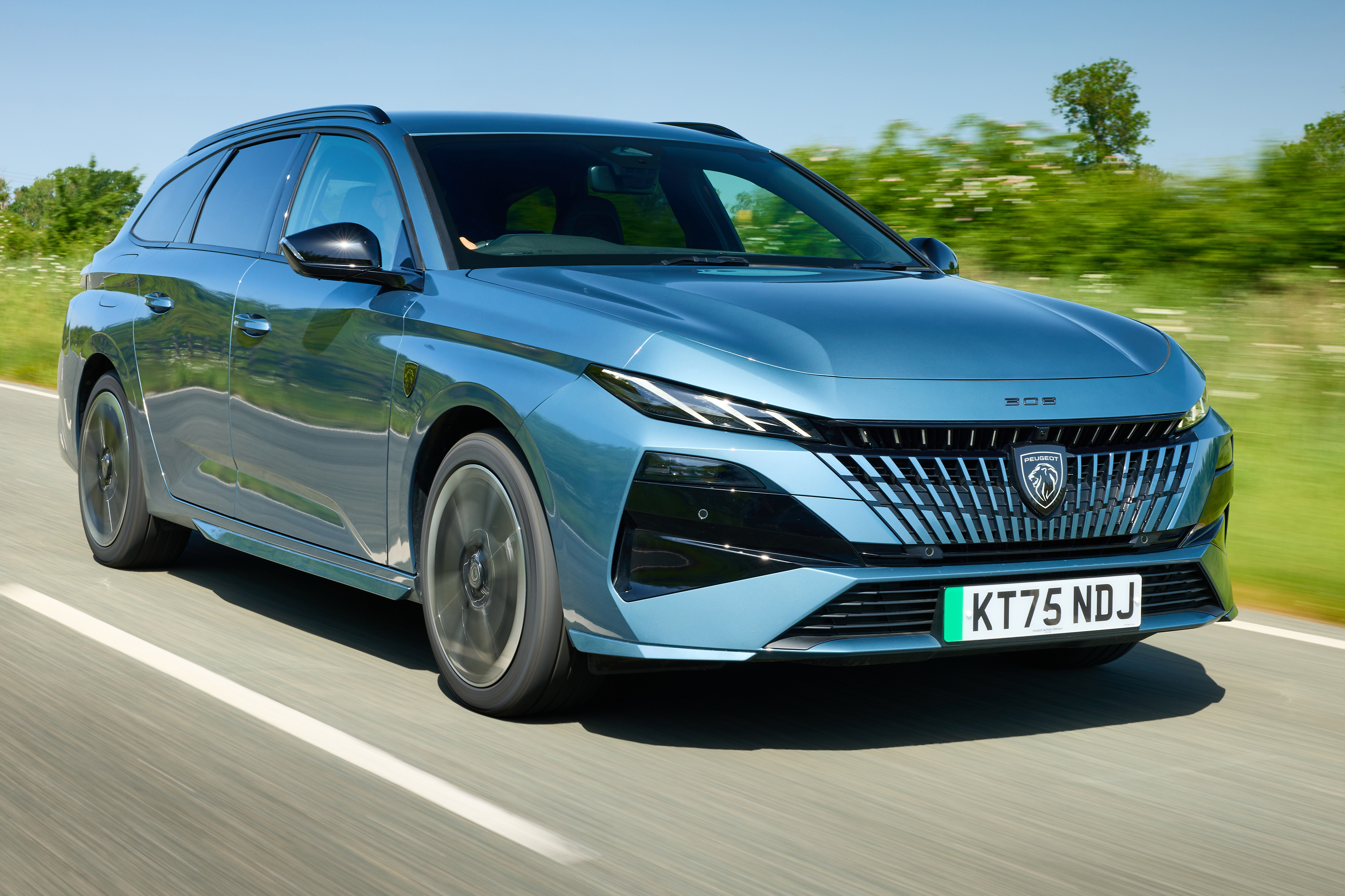
Well, the other one you might have is the price: the Volkswagen ID.7 Tourer is certainly not cheap. That said, alternatives such as the BMW i5 Touring, Audi A6 Avant E-Tron cost a lot more still, and while the electric versions of the Vauxhall Astra Estate, Peugeot 308 Estate are cheaper, they’re also a lot smaller. The same goes for the Mercedes CLA Shooting Brake.
What's the best Volkswagen Id7 trim and battery option?
For most buyers, the Volkswagen ID.7 Tourer Pro Match Plus is the sweet spot. It gets the 77kWh battery, the 286PS rear-mounted motor and all the core strengths of the car without pushing the price unnecessarily high. With up to 360 miles of official range in Tourer form, it should be more than enough for most drivers, and it still feels every bit as polished and as practical as the more expensive version.
The Pro S Match Plus is the choice if you regularly cover very big distances and want the reassurance of the longest possible range. Its 86kWh battery raises the official figure to 420 miles, which is a strong headline number, but you pay more for a car that otherwise feels exactly the same.
If you are interested in the quicker four-wheel-drive version, head to our Volkswagen ID.7 GTX review.
What’s the price of the Volkswagen Id7?
The mainstream Volkswagen ID.7 Tourer range currently starts at £52,225 for the Pro Match Plus and rises to £55,710 for the Pro S Match Plus. The GTX Plus costs more still at £60,400.
Those prices put it well into territory where buyers will expect a lot for their money. In fairness, the ID.7 Tourer does feel expensive in a convincing way. It is spacious, very refined and generously equipped, and it has the sort of range that helps justify the price.
In terms of its pricing compared with rivals, the ID.7 occupies a kind of middle ground. It’s a lot more expensive than smaller rivals from Peugeot and Vauxhall, a bit more than the smaller Mercedes CLA Shooting Brake, but it’s cheaper than more comparably sized rivals such as the Audi A6 Avant E-Tron and BMW i5 Touring.
Alternatives to the Volkswagen Id7
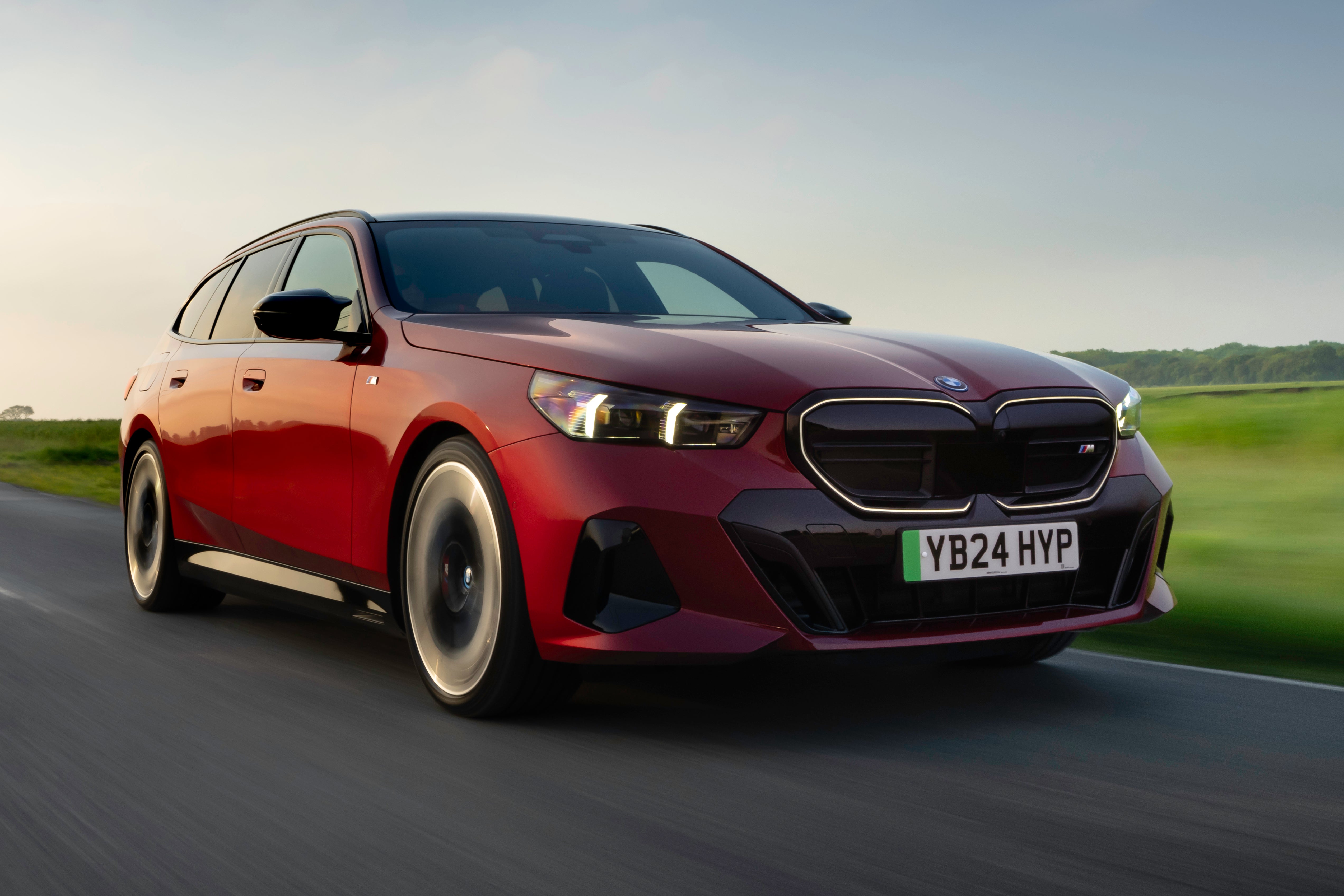
The BMW i5 Touring is one of the most obvious alternatives. It is a lot more expensive, but it brings a more prestigious badge and a more obviously premium interior. The Volkswagen counters with a lower starting price and a boot that is larger on paper and easier to use than some sleeker fastback rivals.
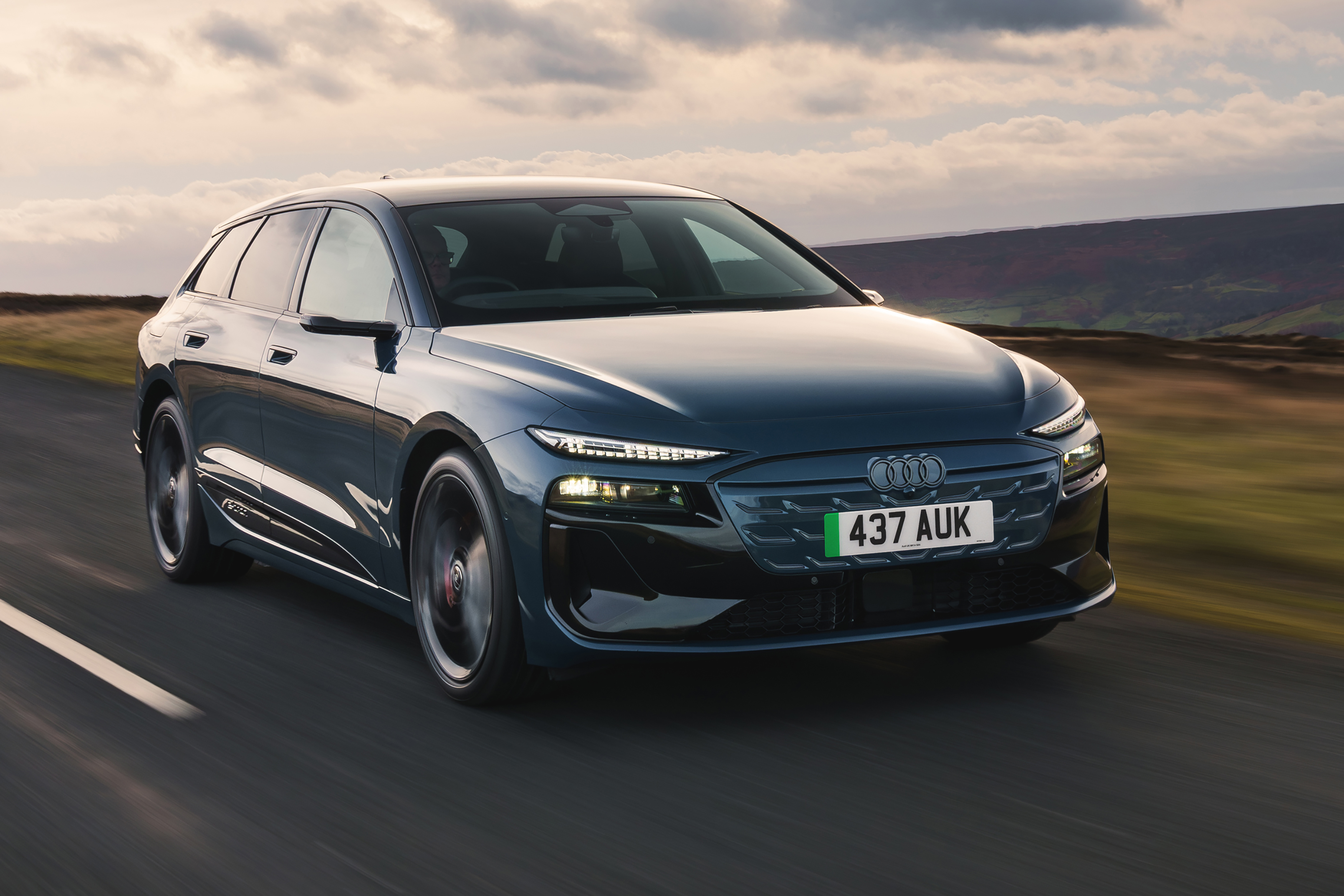
It’s a similar story with the Audi A6 Avant e-tron. The Audi isn’t as pricey as the BMW, but it’s significantly more than the VW. It feels more overtly premium than the Volkswagen, has the badge appeal to match, and targets much the same sort of high-end electric estate buyer. The question is whether you value that extra polish enough to justify the higher asking price.
If you’re willing to move away from the traditional estate car, the Tesla Model Y is hard to ignore. It is cheaper, good strong on range and charging convenience, and offers huge carrying capacity. The ID.7 Tourer is ultimately more practical, though, and feels more refined and more mature, especially on a long journey.
The Peugeot E-308 SW and Vauxhall Astra Sports Tourer Electric are cheaper electric estates, but they are smaller and less capable long-distance cars than the Volkswagen. At the other end, the Porsche Taycan Sport Turismo is far more expensive and much more performance-focused.
If you want something with a similar brief but with a more conventional powertrain, the Volkswagen Passat remains an obvious alternative. If you want the same electric underpinnings in a less practicality-focused body, there is also the standard ID.7 hatchback.
What's the interior like in the Volkswagen Id7?
Finding a comfy driving position is a piece of cake in the ID.7 Tourer, because there’s lots of adjustment in the steering column, and all versions have electrically adjusting seats as standard. Those seats will even give you a massage if you ask nicely.
Volkswagen Id7 boot space and practicality
The Volkswagen ID.7 Tourer is a very large estate car, so you’d expect it to excel in this area. And happily, it does. The front seats are easy to get comfortable in, there’s loads of (electric) adjustment, and the wide cabin means you won’t be banging elbows with your front passenger.
Rear-seat space is one of the car’s biggest strengths, though. Legroom is generous enough to feel properly limo-like, and headroom is good despite the sleek roofline, so even tall, gangly adults will have space to spare. The wide cabin, combined with the almost-flat rear floor, helps make the middle seat more usable than in many cars, too.
Obviously, the biggest news is the boot. With 605 litres of space on offer, the Volkswagen ID.7 Tourer’s loadspace isn’t quite as big as a Passat’s, but it’s more than you get in a BMW i5 Touring. The shape of the loadbay is usefully square, too, while the opening is massive.
There’s ample storage space for your charging cables under the false boot floor, which also levels off the small load lip at the entrance of the boot, and the step up to the rear seatbacks when you fold down the 60/40 split rear seats. However, the backrests lie at a slight angle, leaving you with a small slope in your extended load area. Dropping the seats is very easy, because they’re spring-loaded and can be released by pulling catches in the boot.
Volkswagen Id7 dimensions
The Volkswagen ID.7 Tourer measures 4,961mm long, 1,862mm wide and 1,551mm high. That makes it a very large estate by current standards, and larger than many buyers may expect when they first see it.
The upside is huge interior space, both for passengers and cargo. The downside is that you need to be a little more careful in tighter urban settings and smaller parking spaces. Thankfully, visibility is decent enough and the light controls stop the car feeling too unwieldy.
Tech and infotainment in the Volkswagen Id7
The Volkswagen ID.7 Tourer gets the same 15.0-inch central touchscreen as the hatchback, along with a slim driver display and augmented-reality head-up display. The basic hardware is impressive and the system is a meaningful improvement on what Volkswagen used in earlier ID models.
The layout is more logical, the screen is quicker to respond and the permanent shortcut areas make the system easier to navigate. Apple CarPlay and Android Auto are standard, as are navigation, DAB and wireless phone charging, and there are plenty of USB-C ports, too.
That said, there are still some ergonomic shortcomings. You still need to use the touchscreen to operate too many functions, and the touch-sensitive slider-style controls for the cabin temperature and stereo volume are also less accurate and more fiddly than proper buttons and switches would be.
Materials available on the Volkswagen Id7
Material quality is much improved over earlier Volkswagen EVs. There are more soft-touch surfaces, smarter finishes and a generally more expensive feel to the cabin, particularly higher up around the dashboard and doors.
The ID.7 Tourer stops short of feeling like a full-on luxury car inside, because there are harder plastics to be found lower down in the footwells, but that doesn’t stop the car from feeling generally mature and classy. Importantly, it feels plush enough to help justify the ID.7’s high price tag.
What's the Volkswagen Id7 like to drive?
The Volkswagen ID.7 is a very relaxing car to drive. Comfort and refinement are its biggest strengths, and it feels especially well-suited to motorway use, but it feels at home on all sorts of road.
Volkswagen Id7 range and performance
Both the mainstream versions of the VW ID.7 have exactly the same electric motor, delivering 286PS to the rear wheels. The biggest difference between the two versions is that the Pro Match Plus gets a 77kWh battery for an official WLTP range of up to 360 miles, while the Pro S Match Plus has a bigger 86kWh battery for a range of up to 420 miles.
In both cases, the level of off-the-line performance isn’t hugely dramatic, but it is effortlessly brisk, and that’s just fine because it really suits the car’s laid-back character. The Pro Match Plus gets from 0-62mph in 6.6 seconds, while the slightly heavier Pro S Match Plus takes 6.7 seconds. In both cases, that’s marginally slower than in the ID.7 hatchback, but it’ll still be plenty quick enough for most drivers.
At the top of the range, the more powerful GTX derivative has a second motor driving the front wheels, giving four-wheel drive and 340PS. It’s capable of 0-62mph in 5.5 seconds and a range of up to 364 miles.
Performance data
| Model | Engine/battery size | Power | 0-62mph | Range/MPG |
|---|---|---|---|---|
Pro Match Plus | 77kWh | 286PS | 6.6 seconds | Up to 360 miles |
Pro S Match Plus | 86kWh | 286PS | 6.7 seconds | Up to 420 miles |
Volkswagen Id7 driving and refinement
The Volkswagen ID.7 can be had with a choice of two suspension arrangements: the standard one is a conventional steel-sprung passive setup, or there’s a DCC adaptive suspension: this is standard on the GTX, or optional on the mainstream variants we’re talking about here.
Even with the standard suspension, the ID.7 is a really pleasant thing when you’re out on the road. The steering is accurate and well weighted, body movements feel pretty tightly controlled, and there’s a general sense of composure and ease to the way it goes down the road. It’s not an entertaining car to drive, but you wouldn’t expect that of a car like the ID.7, and you might be surprised by how crisply and competently it changes direction, and how much of a sense of connection you feel with the car.
Where the ID.7 really shines, though, is on comfort. The suspension is really good at soaking up bumps and ruts in the road, and that’s the case on all types of road, and at all speeds. That makes for a very comfortable life at all times. The car feels especially at home on the motorway, where it dispatches mile after mile in an entirely settled, stable and unflustered way. This impressive comfort is complemented by sensational refinement: there’s very little noise from the electric motor, and wind- and road noise are also really well isolated.
The adaptive suspension option, too, is excellent. It has 15 levels of adjustment between its softest settings and its hardest, and you’ll genuinely notice the difference between the extremes (not always the case with such systems, it has to be said). Even in the hardest setting, however, the ride is still comfortable, while it becomes properly cosseting in the softest. In the middle of the spectrum, meanwhile, the Normal mode gives you a really nice balance of comfort and control.
But while the DCC is very good, we don’t think that its advantage over the still-excellent standard suspension is big enough to justify the extra money you’ll pay for it. That’s partly due to the fact that it only comes as part of an expensive option pack that also includes other pricey items.
How safe is the Volkswagen Id7?
The Volkswagen ID.7 Tourer itself has not been separately crash tested by Euro NCAP, but the closely related ID.7 hatchback has a five-star rating, and Euro NCAP has stated that the same rating applies to the Tourer.
Standard safety equipment is comprehensive. You get the expected autonomous emergency braking, along with various levels of lane support, driver monitoring, road sign recognition, front- and rear cross traffic alert, and adaptive cruise control. You also get an extensive collection of airbags and three Isofix child seat mounting points, two on the outer rear seats and one on the front passenger seat.
Running costs: What it's like to live with a Volkswagen Id7
The Volkswagen ID.7 Tourer should be affordable to run if you have home charging. It has very passable range figures, and decent rapid-charging capability. The main drawback is the high purchase price, which means it makes the most obvious sense for company-car users rather than private buyers.
Volkswagen Id7 charging times and costs
The Volkswagen ID.7 Touring doesn’t have quite as slippery a shape as the hatchback version, and as such, it doesn’t go quite as far on a full charge, but it’s not too far behind and the numbers are still very decent at up to 360 miles on the 77kWh car and 420 miles on the 86kWh car. A standard heat pump also helps you as much mileage as possible for every kWh of power you put in.
Most buyers - at least, those with any sense - will charge their car at home on a 7.2kWh wallbox charger. On such a hookup, a full charge of the smaller 77kWh battery will take around 11 hours, while the larger 86kWh item will stretch that to 12 hours. If you pay for your domestic electricity at the UK’s national average rate, the former charge will cost around £22, while the latter one will cost around £24. That’s significantly much cheaper than fueling a petrol or diesel car, but if you get yourself on a variable home power tariff that allows you to charge your car overnight on heavily discounted off-peak electricity, you’ll easily cut those costs in half.
Conversely, the power that comes out of public DC rapid chargers will cost you way more, usually around three times the amount of the average cost of home power. As such, don’t rely on such connections on a regular basis, and only use them as a last resort in an emergency.
The 77kWh battery has a maximum DC charging speed of 185kW, while the equivalent figure for the larger 86kWh battery is 199kW. In both cases, you’ll be able to get a 10% to 80% top-up in a little less than half an hour in perfect conditions.
Volkswagen Id7 warranty and servicing
The ID.7 Tourer is sold by Volkswagen with a three-year, 60,000-mile vehicle warranty. Battery cover is better, at eight years or 100,000 miles. If the capacity drops below 70% of its original capacity before that period expires, the battery will be repaired or replaced at no cost to the owner.
Servicing will be simpler than it will be on an equivalent combustion-engined car, simply because there are fewer moving parts to maintain. Don’t expect an individual service to be any cheaper, but you will likely go longer between services, as routine work is only needed every two years (there’s no mileage limit).
Volkswagen Id7 insurance groups
As there’s very little difference between the two mainstream versions of the ID.7 other than their range and price, it’s of very little surprise that both are very close on insurance groupings, with ratings of 37 or 38. That is a fraction lower than for equivalent versions of the ID.7 hatchback, though, and we’re not sure why.
It all means that cover won’t be cheap, but bills will be by no means outrageous for a large, expensive EV with strong performance.
How much does it cost to tax a Volkswagen Id7?
Electric cars are no longer exempt from Vehicle Excise Duty, and not only that, those with a list price of £50,000 or more when brand new are also liable for steep higher-rate tax. This takes the lower-rate sum, currently charged at £200 per year, and adds on another large additional sum - currently £440 per year - for a five-year period, between years two and six of the car’s life.
Unfortunately, all versions of the ID.7 - the Tourer included - bust that £50,000 price threshold, so higher-rate tax is inevitable.
What trims are available with the Volkswagen Id7?
There are two mainstream versions of the Volkswagen ID.7 Tourer, Pro Match Plus and Pro S Match Plus. The only real difference between the two is the battery you get, and the range that battery gives you. This means that equipment levels are pretty much identical between the two.
Happily, those equipment levels are very generous. The standard list includes LED matrix headlights, 19-inch alloy wheels, front- and rear parking sensors, a reversing camera, rain-sensing wipers, a heated windscreen, rear privacy glass, a powered tailgate, keyless entry and start, powered and heated front seats with massaging function, three-zone air-conditioning, 30-colour ambient lighting, adaptive cruise control, a heat pump, a self-parking feature, and the augmented-reality head-up display. And that’s on top of all the safety and infotainment kit we talked about earlier. By pretty much anyone’s standards, that will probably do.
The sporty GTX Plus model gets a few more performance-enhancing goodies to cement its status as the racy range-topper.
Ask the Drive experts: common questions
Is the Volkswagen ID.7 Tourer a good electric family car?
Which Volkswagen ID.7 Tourer version is best?
How much range does the Volkswagen ID.7 Tourer have?
Is the Volkswagen ID.7 Tourer better than a BMW i5 Touring?
Get our latest advice, news and offers
Keep me updated by email with the latest advice, news and offers from Drive.
.jpg)
.jpg)