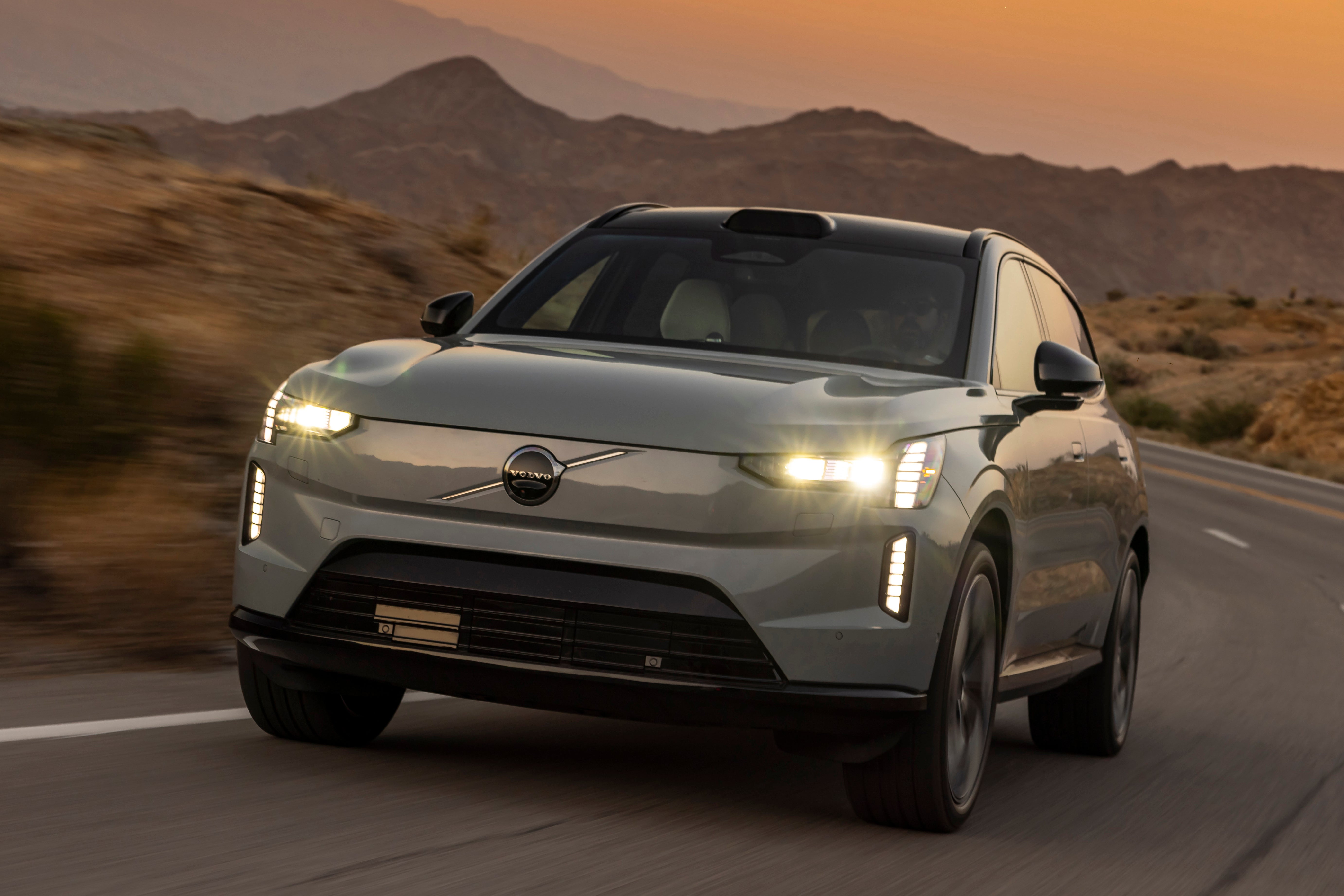
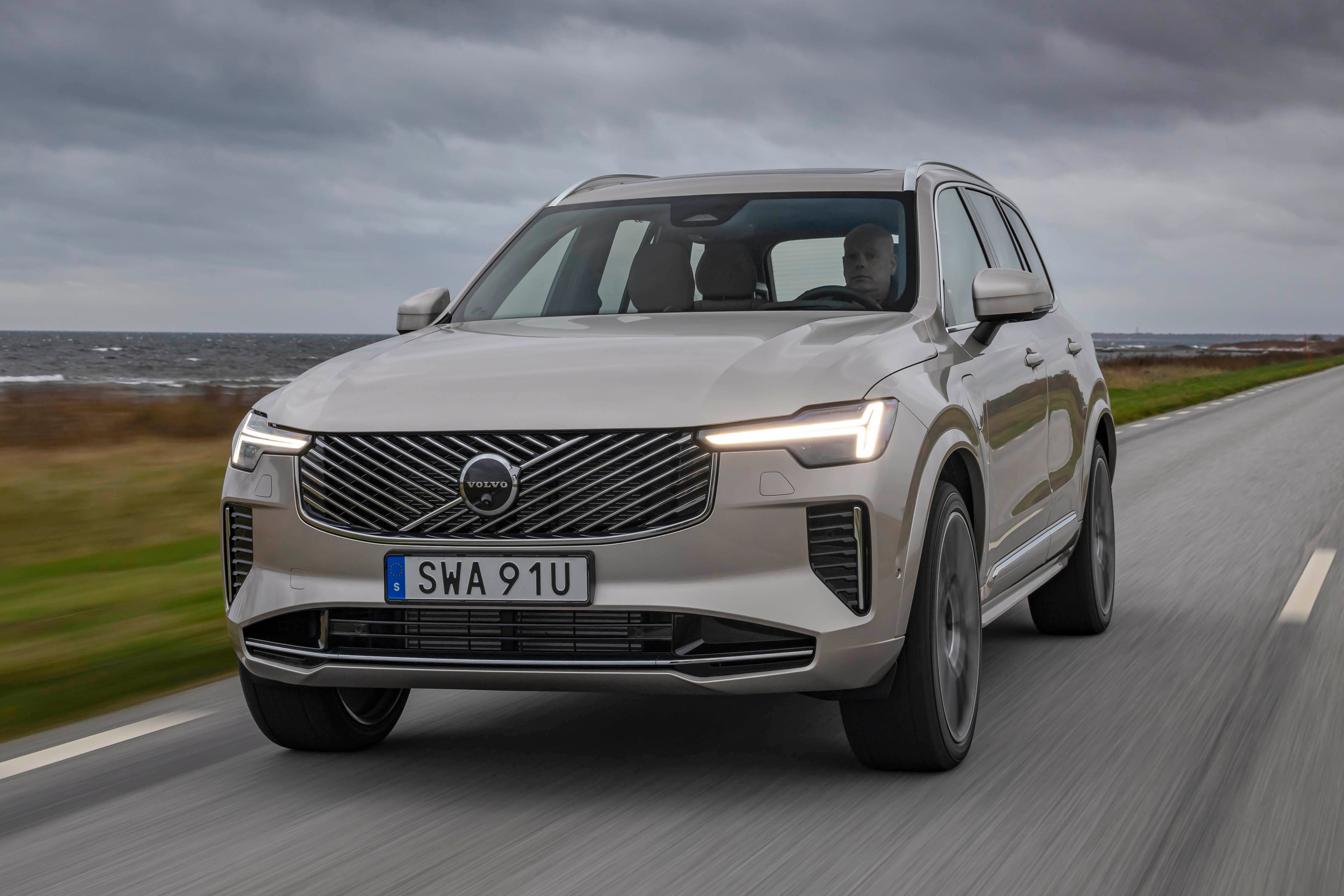
Volvo XC90 Review

Written By Phil Hall
- 2015
- SUV
- Petrol mild hybrid, plug-in hybrid
What we love
Still one of the smartest-looking seven-seat SUVs
Exceptionally practical and genuinely usable in all three rows
Strong safety package and a very relaxing long-distance car
Things to consider
Not as polished to drive as the best rivals
Plug-in hybrid range is useful rather than class-leading
Every version is expensive and all attract premium car tax
The DRIVE take on the Volvo Xc90, is it the right car for you?
The Volvo XC90 remains one of the most convincing large family SUVs on sale. It looks smart, feels expensive inside and still does the big jobs better than most rivals, especially if you need seven seats that are genuinely usable. It is more about comfort, calmness and safety than outright driver appeal, and it is undeniably expensive, but if you want a stylish, practical and reassuring family SUV, the XC90 still makes a very strong case for itself.
The Volvo Xc90 in more detail
The XC90 has been around for a long time in modern-car terms, but it has aged with unusual grace. When this second-generation car arrived in 2015 it reset the tone for Volvo’s whole range, introducing the clean design language, high-quality cabin and safety-first thinking that still define the brand now. More than a decade on, it remains a deeply likeable thing.
Part of that is because Volvo has not left it to stagnate. There was a facelift in 2019, a broader interior and infotainment update in 2021, and another more meaningful refresh in 2025 that brought a revised front end, new interior details and the larger 11.2-inch infotainment screen. Those changes have helped the XC90 feel fresher than its age might suggest.
Browse used Volvo XC90s for sale →
What keeps it relevant, though, is not just the way it looks. It is the way it works as a family car. The XC90 is a seven-seater as standard, with five large seats in the first two rows and a third row that is genuinely useful rather than a token gesture. Adults can fit in the back for shorter journeys, and children will be perfectly comfortable. That alone gives it an edge over several premium SUV rivals that talk a good game on practicality but do not deliver as convincingly.
The current UK line-up is simpler than it once was. New XC90 buyers now choose between the B5 mild hybrid and the T8 plug-in hybrid. Both are automatic, both are four-wheel drive and both are tuned more for smooth, easy progress than sporty response. The B5 is the straightforward choice if you cover a lot of motorway miles or simply do not want to think about charging. The T8 makes more sense if you can plug in regularly and want the lower running costs that come with short electric trips.
It is also one of the safer cars in its class, which is exactly what many XC90 buyers will want to hear. Volvo’s reputation here is not just branding. The standard safety package is extensive, and the XC90 earned a five-star Euro NCAP rating when tested, with especially strong scores for adult occupant protection and safety assistance.
There are compromises. The XC90 is not as sharp to drive as a BMW X5, and an Audi Q7 still shades it for ride polish in some conditions. But the Volvo’s blend of style, practicality and calm long-distance comfort is still highly persuasive.
What's the best Volvo Xc90 trim and engine option?
For most buyers, the B5 Plus is the version to go for. The B5 mild hybrid has 250hp, four-wheel drive and enough performance to make the XC90 feel effortless rather than merely adequate. It gets from 0-62mph in 7.7 seconds, which is perfectly respectable for a seven-seat SUV of this size, and it suits the car’s easy-going character very well.
The T8 plug-in hybrid is much quicker, with 406hp and a 0-62mph time of 5.4 seconds, but outright pace is not really what this car is about. Its appeal is lower day-to-day running costs if you can charge regularly and use the official 42.9-mile electric range. If you cannot do that, the B5 is the simpler and more logical choice.
Trim-wise, Plus is the sweet spot. Core already comes with a lot of equipment, but Plus adds the kind of luxury and convenience features buyers at this price point are likely to want, including a panoramic roof, Harman Kardon audio, air suspension and richer cabin trim. Ultra is very plush, but it is also very expensive, and the XC90 makes most sense before the price gets too wild.
What’s the price of the Volvo Xc90?
The XC90 range now starts at £66,270 for the B5 Core. From there it rises to £69,995 for the B5 Plus and £71,995 for the B5 Ultra. Ultra Pro versions push that to £75,495, while the Ultra Pro Black Edition costs £75,995.
The plug-in hybrid range starts at £73,765 for the T8 Core, then moves to £77,495 for the T8 Plus and £79,495 for the T8 Ultra. At the top of the range, the T8 Ultra Pro is £86,295, and the Ultra Pro Black Edition tops out at £86,795. There are also plenty of used Volvo XC90s for sale for considerably less.
That means the XC90 sits squarely among the more expensive seven-seat premium SUVs. It is broadly comparable with the Audi Q7 and BMW X5 once you match trims and performance, although Volvo’s standard equipment is generous enough that the entry cars do not feel sparse. Used values are still strong, but there is now a wide enough spread on the market that older cars offer a clear saving if you do not need the most recent screen and trim updates.
Alternatives to the Volvo Xc90
The Audi Q7 is the most obvious alternative if you want another big seven-seat premium SUV with a strong family focus. It rides a little more smoothly in some conditions and has a similarly usable third row, although the Volvo feels more distinctive inside.
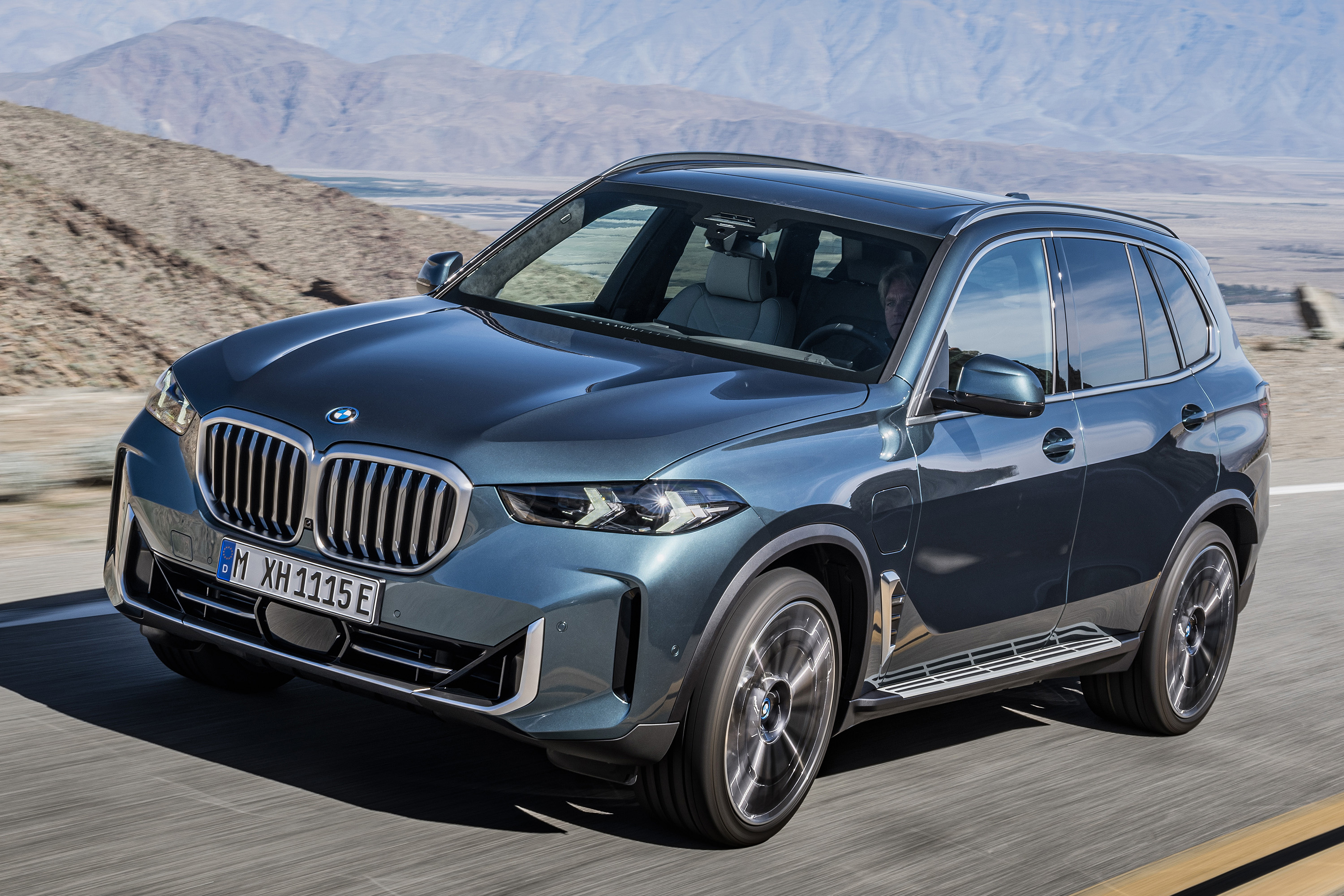
The BMW X5 is the driver-focused option, with sharper steering and a more engaging feel on the road, but it is not as convincingly seven-seat-friendly in standard form. If you need more space still, the BMW X7 is the larger and pricier alternative, although that sits above the XC90 in both size and cost.
The Land Rover Discovery is worth a look if outright practicality and a proper seven-seat layout matter most, while a Kia EV9 offers a very different all-electric take on the same brief. The XC90 fights back with one of the classiest interiors and a more understated feel than most of them.
What's the interior like in the Volvo Xc90?
The XC90’s cabin still feels special. It is clean, expensive-looking and thoughtfully laid out, with a calmer, more grown-up atmosphere than many rivals. The latest 11.2-inch touchscreen update has helped keep it feeling current, but the bigger win is that the seats, materials and general sense of space still make it a lovely place to spend time.
Volvo Xc90 boot space and practicality
Practicality is one of the XC90’s strongest cards. This is a genuine seven-seater, not a five-seater with a couple of occasional perches squeezed into the boot floor. The first two rows are spacious enough for adults, while the third row is roomy enough for children and still usable for adults on shorter trips.
Getting comfortable up front is easy. All current cars get electrically adjustable front seats, and the driving position is exactly what buyers in this class tend to want: commanding without feeling bus-like. Visibility is good for such a large SUV, helped by the big glass area and relatively slim pillars.
The second row is particularly family-friendly. There is plenty of space for child seats, good access through the rear doors and enough legroom that adults will not feel hard done by. The third row folds neatly away when not in use, preserving a flat load area and making the XC90 feel flexible rather than compromised.
Boot space is strong. With five seats in use, the mild-hybrid XC90 offers 653 litres, while the plug-in hybrid gives 650 litres. Even with all seven seats in place you still get 247 litres in the B5 and 244 litres in the T8, which is enough for a few soft bags or the weekly essentials. Fold everything down and maximum capacity rises to 1,950 litres in the B5 and 1,941 litres in the T8.
That stacks up well against key rivals. An Audi Q7 offers a larger boot with five seats in use, while a Land Rover Discovery is even more accommodating if maximum carrying capacity matters above all else. Even so, the Volvo remains one of the most practical premium SUVs in the class because of how well it combines seven-seat usability with a tidy, easily loaded boot.
Volvo Xc90 dimensions
The Volvo XC90 is 4,953mm long, 1,931mm wide and 1,771mm high, with a 2,984mm wheelbase. That makes it a large SUV by any measure, but it is still easier to place than some rivals thanks to the clean body shape and good visibility.
Width rises to 2,140mm including mirrors, so it still needs care in tight car parks and on narrow roads. Volvo quotes a 12.0-metre turning circle, which is reasonable for a seven-seat SUV of this size.
Tech and infotainment in the Volvo Xc90
The latest XC90 uses an 11.2-inch centre touchscreen and a 12.3-inch driver display. That larger centre screen is a big improvement over the older 9.0-inch set-up, and it helps the cabin feel more modern without changing the Volvo’s clean dashboard design too much.
Google built-in is standard, so you get Google Maps, Google Assistant and access to apps through Google Play. Apple CarPlay and Android Auto are included as well, although the Volvo still relies more heavily on the touchscreen than some buyers may like.
The interface is clearer than before and generally easier to navigate, but a few commonly used functions still feel a bit buried compared with the best systems in this class. That said, the XC90’s infotainment is no longer the weak point it once was.
Audio quality is strong, too. Core comes with decent standard sound, Plus adds the Harman Kardon system, and Ultra upgrades to Bowers & Wilkins. The latter is genuinely impressive, but the Plus trim already gives you a more than good enough set-up for most family use.
Materials available on the Volvo Xc90
The XC90 still feels expensive in a reassuringly understated way. Core uses quilted Nordico upholstery and chequered aluminium trim, which already gives the cabin a smart, high-quality feel. Plus and Ultra bring richer finishes, more ambient lighting and a generally warmer atmosphere.
Move to Ultra and you get perforated and ventilated Nappa soft leather, along with more premium trim details such as the crystal gear selector and wood inlays depending on theme. Black Edition cars switch to a darker, more monochrome look. Even now, few rivals feel quite as tasteful inside.
What's the Volvo Xc90 like to drive?
The XC90 is at its best when driven calmly. It majors on comfort, refinement and easy progress rather than trying to feel sporty, and that suits a large family SUV like this. It is not the most entertaining car in the class, but it is one of the easiest to live with.
Volvo Xc90 range and performance
The current XC90 line-up is very simple. There is one mild hybrid and one plug-in hybrid, both with four-wheel drive and an automatic gearbox as standard.
The B5 suits the XC90’s character best if you use it mainly as a long-distance family car. It is smooth, strong enough and less dependent on how and where you drive than the plug-in hybrid.
The T8 is significantly quicker and can be much cheaper to run if you keep it charged. Its official electric range of 42.9 miles is useful, but it is now beaten by some newer plug-in hybrid rivals, so buyers should not assume it is class-leading just because the power figure is so strong.
Performance data
| Model | Engine/battery size | Power | 0-62mph | Range/MPG |
|---|---|---|---|---|
Volvo XC90 B5 AWD | 2.0-litre petrol mild hybrid auto | 250PS | 7.7 seconds | 33.6mpg |
Volvo XC90 T8 AWD | 2.0-litre plug-in hybrid auto | 406PS | 5.4 seconds | 235.4mpg / 42.9 miles |
Volvo Xc90 driving and refinement
The XC90 is a comfortable cruiser first and foremost. On standard suspension it already does a respectable job of taking the edge off poor roads, but the optional and upper-trim air suspension improves things noticeably, especially in a car this size.
At higher speeds the Volvo settles down very nicely. It feels secure, refined and properly relaxed on the motorway, which is exactly what you want in a big seven-seater designed to carry families over distance.
Through corners, the XC90 is stable and composed rather than playful. There is enough grip and body control to inspire confidence, but a BMW X5 is more enjoyable on a twisty road and an Audi Q7 is slightly more polished over the roughest surfaces. The Volvo’s steering is accurate enough, but not especially rich in feel.
The T8’s brake pedal can feel a little awkward at lower speeds as the car blends regeneration and conventional braking, which makes smooth progress a bit harder than in the B5. Even so, the overall character remains one of comfort and calmness rather than excitement.
How safe is the Volvo Xc90?
Safety is still one of the XC90’s strongest reasons to exist. Euro NCAP gave it a five-star rating when tested in 2015, and it stood out at the time for particularly strong scores in adult occupant protection and safety assistance.
Current cars come with a very broad standard safety package. Core models include Pilot Assist, adaptive cruise control, Blind Spot Information System with steer assist, cross-traffic alert with autobrake, rear collision warning and mitigation, front collision warning with full auto brake, rear auto brake, front and rear parking sensors, a rear camera and Volvo’s Driver Understanding System with eye tracking.
The XC90 still feels like one of the most reassuring cars in the class.
Running costs: What it's like to live with a Volvo Xc90
Running costs depend heavily on whether you choose the B5 or the T8. The mild hybrid is straightforward but fairly thirsty for a petrol SUV, while the T8 can be very efficient if you keep it charged and use it for lots of shorter trips. Either way, this is a big, expensive premium SUV, so buyers should not expect bargain-basement ownership costs.
Volvo Xc90 fuel economy
The B5 mild hybrid has an official combined fuel economy figure of 33.6mpg. In reality, that is about what you should expect in mixed driving, which makes it decent rather than outstanding for a large seven-seat petrol SUV.
The T8 plug-in hybrid has an official combined figure of 235.4mpg and an electric range of up to 42.9 miles. As ever with a plug-in hybrid, the real-world result depends on how often you charge it and how many of your journeys fit within that electric range. Use it mainly for short local trips with a full battery and it can be impressively cheap to run. Use it like a normal petrol SUV without plugging in and the benefits quickly fade.
Charging is AC only. The XC90 T8 has a 19kWh battery and Volvo quotes a 0-100 per cent charging time of around three hours using a 2-phase 16A supply. In practical terms, home or workplace charging is straightforward enough, but this is not a plug-in hybrid designed for rapid top-ups on longer trips.
Volvo Xc90 warranty and servicing
The XC90 comes with a three-year or 60,000-mile warranty. Paintwork defects and surface rust are covered for three years, while rust perforation cover runs for 12 years. Plug-in hybrid battery cover is eight years or 100,000 miles.
Volvo Assistance breakdown cover is included for three years and can be extended for 12 months for £149, or renewed automatically after a qualifying retailer service. That all feels solid enough, although some rivals and several mainstream brands now offer longer basic warranty cover.
Volvo Xc90 insurance groups
Insurance is never going to be cheap on a large premium SUV like this, but the XC90 is not quite as punitive as you might expect. Current B5 models start from group 37, while the T8 plug-in hybrid rises to group 43 in lower trims and up to group 45 higher up the range.
That puts it in line with most obvious premium rivals, and it reflects the XC90’s combination of high value, strong performance and costly repair potential.
How much does it cost to tax a Volvo Xc90?
The standard VED rate from the second year onwards is £200 a year for petrol and hybrid cars registered on or after 1 April 2017. Every current XC90 also sits above the £40,000 list-price threshold, so buyers should also budget for the £440 Expensive Car Supplement for five years from the second year of taxation.
In practice, that means every new XC90 costs £640 a year in VED from years two to six.
What trims are available with the Volvo Xc90?
Core is the entry point, but it is not a bare-bones version. Standard kit includes the 11.2-inch centre touchscreen, 12.3-inch driver display, Pilot Assist, adaptive cruise control, Blind Spot Information System, cross-traffic alert, front and rear park assist, rear camera, automatic Matrix LED headlights, heated front and rear seats, four-zone climate control, quilted Nordico upholstery, hands-free tailgate and 20-inch alloy wheels.
Plus adds the luxury touches many buyers at this price point will want. That means a panoramic roof, Harman Kardon audio, heated steering wheel, heated windscreen, air suspension and richer interior trim. This is the trim that makes most sense for private buyers.
Ultra brings a more lavish cabin treatment and extra comfort features. Depending on version, that includes perforated and ventilated Nappa leather, upgraded seats, and more premium audio and trim finishes.
Above that sit Ultra Pro and Ultra Pro Black Edition versions, which lean even harder into luxury and visual drama. They look the part, but the XC90’s core appeal is already present much lower down the range, which is why Plus remains the sensible choice.
Ask the Drive experts: common questions
How much does the Volvo XC90 cost?
Is the Volvo XC90 a good family SUV?
Is the Volvo XC90 a seven-seater?
Should I choose the Volvo XC90 T8 plug-in hybrid?
Get our latest advice, news and offers
Keep me updated by email with the latest advice, news and offers from Drive.
.jpg)