BMW X5 Review

Written By Lawrence Allan
- 2018
- SUV
- Diesel, petrol, plug-in hybrid
What we love
A brilliantly broad talent set
Genuinely premium cabin with excellent seats
The xDrive50e plug-in hybrid is fast and smooth
Things to consider
Third row costs more and is not very spacious
Expensive, and gets even more so with options
Some rivals are roomier
The DRIVE take on the Bmw X5, is it the right car for you?
The BMW X5 is one of the most convincing big premium SUVs on sale because it covers so many bases at once. It feels expensive inside, rides with real polish, and is unusually enjoyable to drive for something this large. If you want a luxury SUV for long trips, family duties and occasional towing, it’s very easy to recommend.
The main caveat is value: you pay plenty for the badge and the breadth of ability, and rivals such as the Audi Q7 or Land Rover Discovery are stronger if seven-seat flexibility is your top priority. Even so, as a five-seat luxury SUV, the X5 deserves a place near the top of your shortlist.
The Bmw X5 in more detail
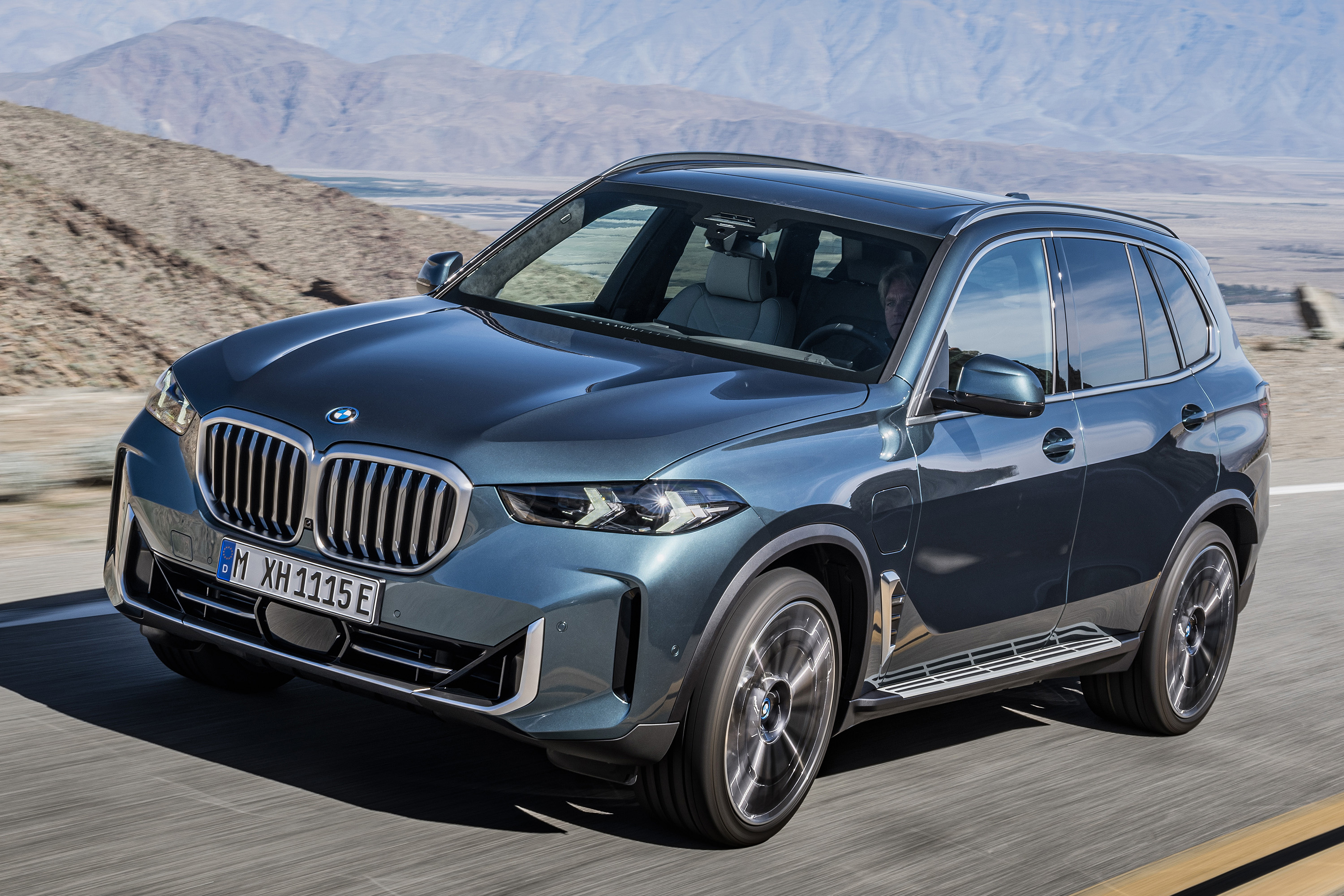
The fourth-generation ‘G05’ BMW X5 has been around since 2018, but the 2023 facelift gave it a meaningful update with revised styling, a curved-display dashboard and a rationalised engine line-up. That matters because the X5 competes in a class where expensive SUVs need to feel convincingly up to date. Against an Audi Q7, Mercedes-Benz GLE, Volvo XC90 and Porsche Cayenne, the BMW makes its case by being one of the most rounded choices rather than the most specialised.
That has long been the X5’s appeal. Some rivals lean harder into comfort, some offer better third-row space, and some are more overtly sporty, but the BMW’s trick is the way it mixes luxury-SUV plushness with a sense of driver appeal that most alternatives never quite match. It feels substantial and reassuring on the move, but it also shrinks around you more effectively than you expect.
The current UK range is led by six-cylinder mild-hybrid diesels in xDrive 30d and xDrive 40d form, plus the xDrive 50e plug-in hybrid and the V8-powered M60i at the top of the regular line-up. Every version uses all-wheel drive and an eight-speed automatic gearbox. That consistency helps because there is no obvious dud in the range. The main question is not whether the X5 works, but which version best suits the way you use a big SUV.
Practicality is good rather than class-leading. Five adults fit without complaint, and the square boot is easy to load. The Audi Q7 and Land Rover Discovery are more convincing if you need seven seats regularly. The X5’s optional third row is useful to have, but it is not the core reason to buy one.
The other major strength is the cabin. BMW has moved the X5 in a more digital direction, but without making it feel fussy or flimsy. It looks and feels like a proper premium product, and the latest infotainment system is among the better ones in this class. If you are after a large SUV that feels expensive, effortless and reassuringly complete, the X5 makes a very strong first impression.
BMW revealed the fifth-generation ‘G65’ X5 in summer 2026, although the first deliveries won’t be happening until a good way through 2027. The G05 is no longer in production, but it will be possible to buy a new version from stock for a while yet.
What's the best Bmw X5 trim and engine option?
For most private buyers, that’s the BMW X5 xDrive30d in xLine or M Sport trim. The 3.0-litre six-cylinder diesel has 298PS and 670Nm of torque, which is more than enough in a car of this size, and it suits the X5’s laid-back long-distance character beautifully. It’s smooth, muscular and easy to drive, while the official economy figure is stronger than the more powerful alternatives. If you do regular motorway miles, tow, or simply want the easiest X5 to live with, this is the one to start with.
The xDrive40d is the more indulgent diesel choice. With 352PS and 720Nm, it feels effortlessly strong, and it’s arguably the most complete version in the range if you want extra pace without sacrificing much economy. It does, however, cost a noticeable chunk more.
The xDrive50e is the best choice for company-car users and for private buyers who can charge at home or at work. It combines a six-cylinder petrol engine with plug-in hybrid hardware for a hefty 489PS and 700Nm, plus an official electric range of up to 64 miles. Used properly, it can slash fuel bills on shorter trips. Ignore the charging side, and its advantage narrows quickly.
Unless you specifically want the V8 soundtrack and the extra drama, the M60i feels like an indulgence.
What’s the price of the Bmw X5?
The BMW X5 range starts from £74,280 in the UK. From there, the prices move up quickly once you get into the versions most buyers actually want. The X5 xDrive30d M Sport is £81,305, the X5 xDrive50e M Sport is £83,055, and the X5 M60i xDrive starts from £101,110.
That means the real heart of the X5 range sits in the low- to mid-£80,000s, with the plug-in hybrid and the better-specced diesel versions landing right where you would expect a premium large SUV to be. The M60i takes things into six-figure territory.
In market terms, that puts the X5 directly up against cars like the Audi Q7 and Mercedes-Benz GLE. A Volvo XC90 can look cheaper, while a Porsche Cayenne usually ends up costing more once you equip it to a similar standard. The one thing to watch with the BMW is how quickly the total rises once you start adding bigger wheels, luxury packs and optional tech.
Alternatives to the Bmw X5
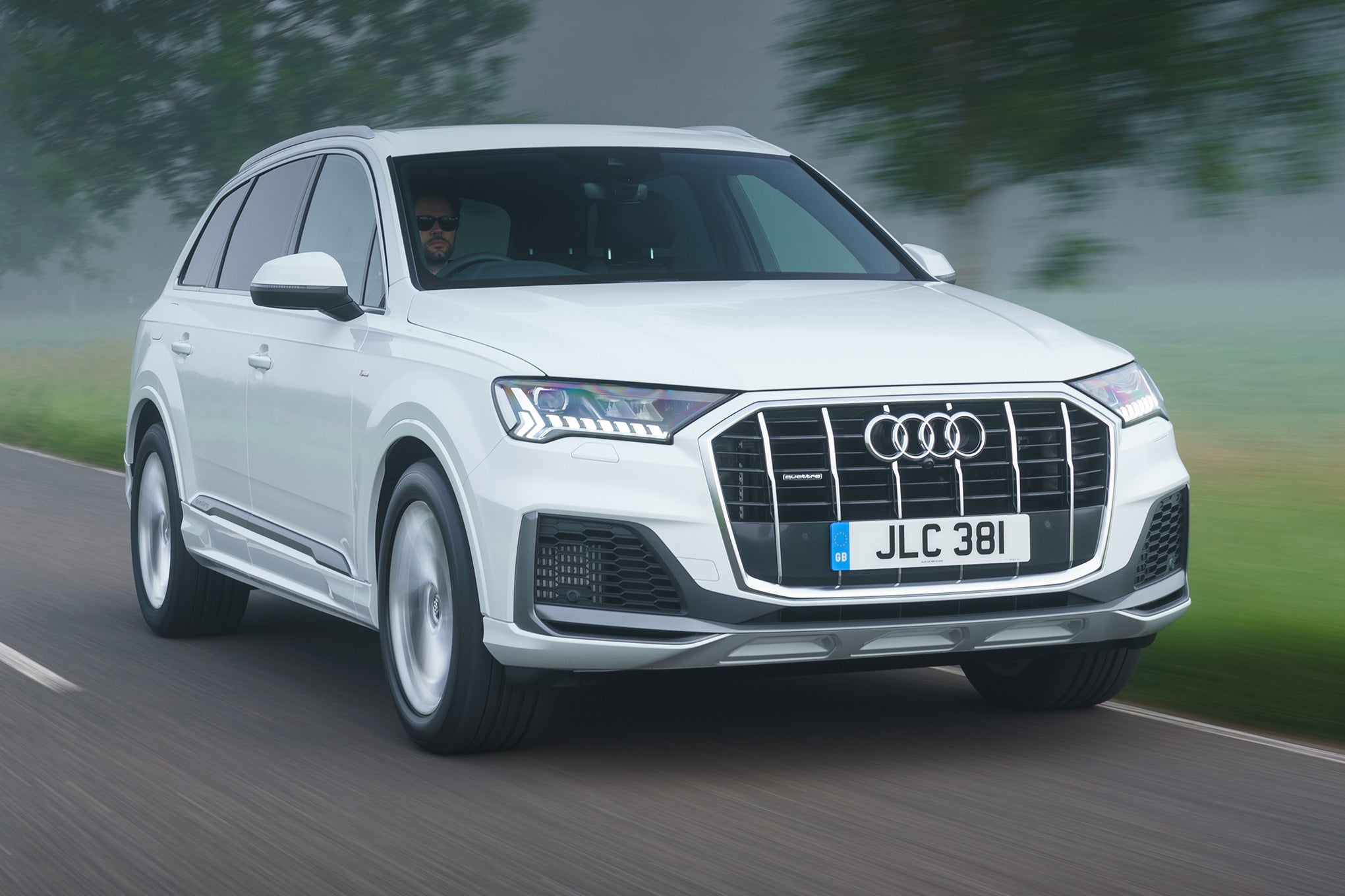
The most obvious alternative is the Audi Q7. It’s less engaging to drive, but it counters with a roomier interior, seven seats as standard and a bigger sense of family-friendly practicality. If this is going to be your one car and you regularly carry lots of people, the Audi may be the more rational choice. Just bear in mind that, like the X5, the Q7 is currently being replaced, and at the time of writing, we’ve not tried the new-generation model.
The Mercedes-Benz GLE is another close rival, majoring on comfort and kerbside presence. It feels plush and relaxed, although its interior usability is not quite as convincing as the BMW’s and it doesn’t steer with the same confidence.
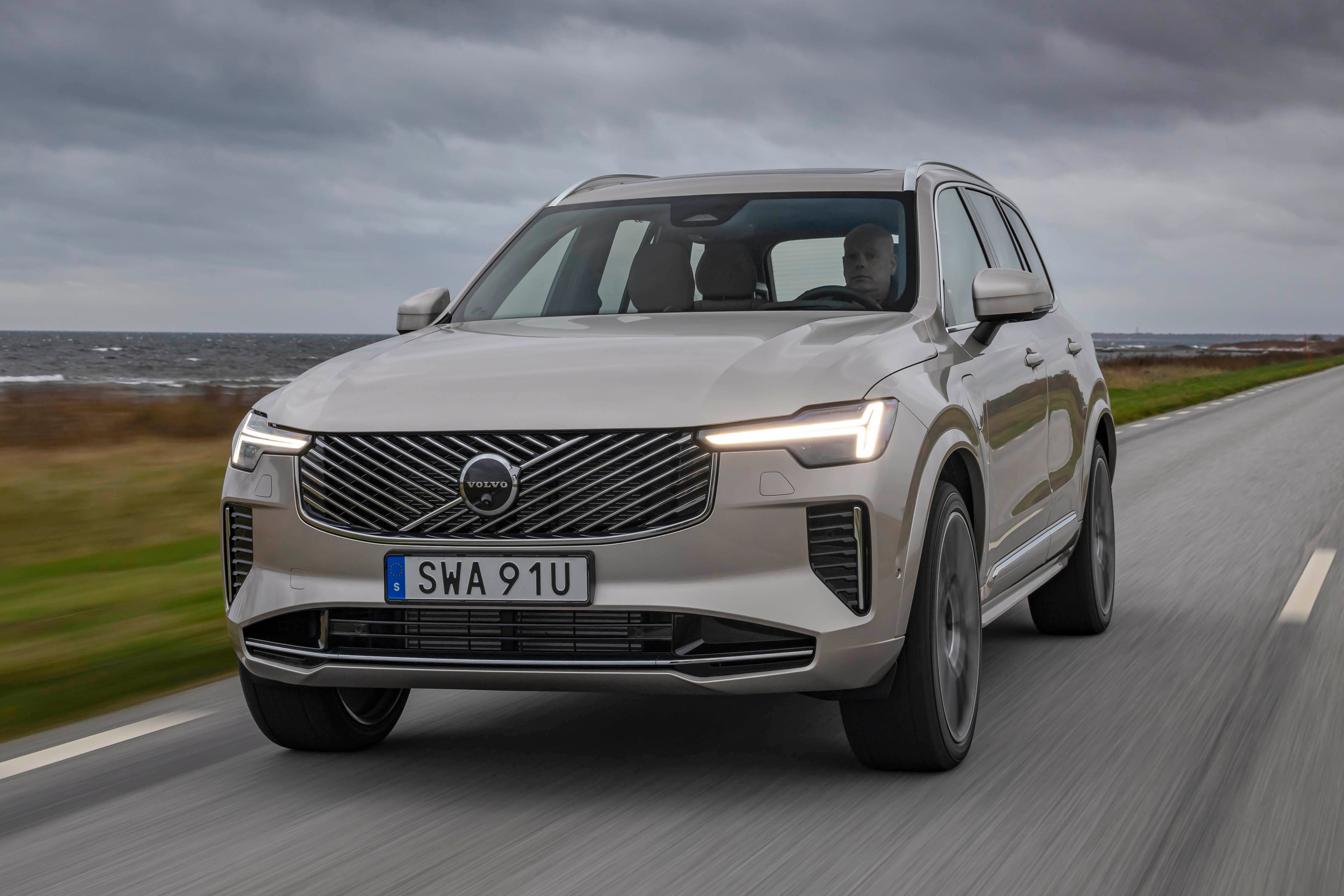
Volvo’s XC90 appeals in a different way. It looks classy, majors on safety and family appeal, and is a more overtly calming thing to drive. The trade-off is that it feels older in places and less polished dynamically.
If driving enjoyment matters most, the Porsche Cayenne is the sharper option. It corners better and feels more athletic, but it’s harder to justify on value and does not have the same all-round ease as the BMW.
For buyers who genuinely need off-road talent and full-size seven-seat practicality, the Land Rover Discovery is the one to beat.
What's the interior like in the Bmw X5?
The BMW X5’s interior is one of its strongest selling points. It feels plush, spacious and thoughtfully designed, with excellent front seats and a driving position that makes a big SUV easy to place. BMW has moved to a more screen-heavy layout, but usability remains strong, and the cabin has the sense of solidity you expect at this price.
Bmw X5 boot space and practicality
The BMW X5 is a large car, and it makes good use of that size. You sit high, visibility is decent for something this bulky, and there’s plenty of room in the front for taller drivers. Rear-seat space is generous too, with enough knee room and headroom for adults to get comfortable on longer trips.
As a five-seater, the X5 is very practical. Diesel and petrol models offer 650 litres of boot space, expanding to 1,870 litres with the rear seats folded. The luggage bay is usefully square, the split tailgate is handy in everyday use, and the 40:20:40 rear-seat layout gives the BMW some extra flexibility when carrying longer loads. If you are comparing it with a Q7 or GLE, there is not a night-and-day difference in five-seat mode, but the Audi edges ahead if you need outright family-hauling versatility.
The xDrive50e plug-in hybrid gives away some practicality because of its battery packaging. Boot space drops to 500 litres, which is a meaningful reduction in a car bought as much for family duties as status. It’s not a deal-breaker, but it’ worth knowing before you assume every X5 offers the same load-carrying ability.
BMW does offer a third row on some versions, but this is best viewed as an occasional-use feature rather than a genuine seven-seat solution. Children will be much happier back there than adults, and luggage space takes a heavy hit when all seats are in place. If regular seven-seat use matters, a Land Rover Discovery or Audi Q7 is the smarter answer.
Bmw X5 dimensions
The BMW X5 measures 4,935mm long, 2,004mm wide and 1,765mm tall. That makes it a touch shorter than an Audi Q7, but it is very much a full-size SUV in day-to-day use. You feel that in tight car parks and narrow urban streets, although accurate steering, strong camera systems and a commanding driving position make it less intimidating than the dimensions suggest.
Tech and infotainment in the Bmw X5
The facelifted X5 benefits from BMW’s curved display setup, which combines a 12.3-inch driver display with a 14.9-inch central touchscreen. It looks modern without tipping into gimmickry, and more importantly, it works well. BMW’s latest iDrive system is quick, crisp and easier to get along with than plenty of rival setups.
The main screen is responsive, the menus make sense after a short acclimatisation period, and BMW’s rotary controller continues to be a useful alternative to jabbing at the touchscreen on the move. Wireless Apple CarPlay and Android Auto are included, and the available head-up display is one of the better systems of its type.
There are some compromises compared with older BMW interiors, particularly around climate controls, because more functions are now routed through the screen. Even so, the X5 avoids the worst usability mistakes of some rivals. The net result is a cabin that feels high-tech, but not exhausting.
Materials available on the Bmw X5
The BMW X5 gives you a fairly wide spread of interior finishes, depending on model and options. On current UK cars, Extended Merino leather is an available upholstery choice, including a Coffee/Black combination shown on the main X5 page, while the performance-led end of the range also offers full Merino leather through BMW Individual.
For trim, you can keep things more understated with the standard interior finishes tied to xLine or M Sport, or move into more distinctive territory with options such as BMW M Carbon interior trim. BMW also offers the CraftedClarity package, which swaps key cabin controls for crystal-glass elements.
What's the Bmw X5 like to drive?
The BMW X5 is one of the most satisfying big SUVs to drive because it does not force you to choose between comfort and control. It rides with real composure, feels secure and easy-going on a long run, and turns into bends with more confidence than most vehicles this size. It’s not a sports car in disguise, but it is more engaging than the usual luxury SUV norm.
Bmw X5 range and performance
BMW has trimmed the range down to a strong set of engines, and every one of them suits the X5’s character in a slightly different way.
The xDrive 30d uses a 3.0-litre six-cylinder mild-hybrid diesel with 298PS and 670Nm of torque. It covers 0-62mph in 6.1 seconds. It’s the most sensible engine in the line-up and the one that best matches the X5’s role as a long-distance luxury SUV.
Step up to the xDrive 40d, and you get another 3.0-litre six-cylinder diesel, this time with 352PS and 720Nm. The extra shove is obvious, especially when overtaking or pulling out onto faster roads, and 0-62mph falls to 5.5 seconds. For some buyers, this is the range highlight, because it delivers effortless pace without sacrificing the diesel X5’s natural motorway ability.
The xDrive 50e plug-in hybrid combines a 3.0-litre six-cylinder petrol engine with an electric motor for a total of 489PS and 700Nm. It manages 0-62mph in 4.8 seconds, which is seriously quick for a large family SUV, and it can travel up to 64 miles on electric power according to the official WLTP figure. If your routine includes lots of shorter trips and reliable charging access, this is the most compelling X5 on paper and often in practice, too.
At the top sits the M60i, powered by a 4.4-litre V8 mild-hybrid petrol with 530PS and 750Nm. It cracks 0-62mph in 4.3 seconds and brings a more aggressive character, but this is the point where the X5 starts to shift away from all-rounder status and into indulgence.
Performance data
| Model | Engine/battery size | Power | 0-62mph | Range/MPG |
|---|---|---|---|---|
X5 xDrive30d | 3.0-litre | 298PS | 6.1 seconds | Up to 39.2mpg |
X5 xDrive40d | 3.0-litre | 352PS | 5.5 seconds | Up to 38.2mpg |
X5 xDrive50e | 3.0-litre | 489PS | 4.8 seconds | Up to 64 miles EV range |
X5 M60i | 4.4-litre V8 | 530PS | 4.3 seconds | Up to 23.7mpg |
Bmw X5 driving and refinement
The X5’s biggest dynamic strength is how natural it feels. Around town, it is easier to thread through traffic than its size suggests. The steering is precise, the automatic gearbox is smooth, and the high driving position gives you plenty of confidence.
On a motorway, the BMW comes into its own. It settles into a relaxed, refined stride, with excellent seat comfort and very good noise suppression. Diesel versions suit this kind of use particularly well, because they deliver easy overtaking performance without needing much effort. The xDrive50e is especially refined at lower speeds when running on electric power.
On a country road, the X5 does something most large SUVs struggle to replicate. It disguises its mass well enough to feel enjoyable rather than merely competent. Body control is well judged, grip is strong, and the steering has enough weight and accuracy to make the car feel keyed in. A Porsche Cayenne is the sharper tool if this really matters to you, but the BMW gets impressively close while hanging on to better everyday comfort.
The only versions that shift the balance a little too far are those on very large wheels, and to some extent the M60i, which adds pace and drama but loses a little of the standard car’s easy-going polish.
How safe is the Bmw X5?
The BMW X5 earned a five-star Euro NCAP rating when tested in 2018, although that result is now marked as expired because of the age of the original assessment rather than any sudden issue with the car itself. Safety kit is generous, with autonomous emergency braking, lane-departure warning, parking sensors and a reversing camera all part of the package, while BMW’s optional assistance packs add more advanced features for motorway driving and active lane support. ISOFIX points are fitted to the two outer rear seats, but there are none in the middle seat or the optional third row.
Running costs: What it's like to live with a Bmw X5
The BMW X5 is not a cheap car to own, but running costs depend heavily on which engine you choose and how you use it. The diesels make the most sense for regular long journeys, while the 50e can look very attractive on paper and in practice if you charge it faithfully. The M60i is the one to buy with your heart rather than your calculator.
Bmw X5 fuel economy
The xDrive 30d is the range’s economy champion in everyday mixed driving, with an official WLTP figure of 39.2mpg. The more powerful xDrive 40d is only slightly behind on paper, at 38.2mpg, which makes it easier to justify than you might expect, given the extra performance.
The xDrive50e is the complicated one. Officially, it can return up to 313.9mpg and up to 64 miles of electric range, but figures like that only make sense if the battery is charged regularly and your journeys suit a plug in hybrid. Run it as intended, and it can be genuinely cost-effective. Treat it like a conventional petrol SUV, and the benefit falls away quickly, with fuel consumption once the battery is depleted quoted at 30.7mpg.
Bmw X5 warranty and servicing
BMW covers the X5 with a three-year unlimited-mileage new-car warranty in the UK. For the plug-in hybrid, BMW says the high-voltage battery warranty varies by model generation, with Generation 5 PHEV batteries covered for eight years or 100,000 miles. BMW also offers Service Inclusive plans, and for X5 and X6 petrol, diesel and PHEV models, those plans cover servicing up to the car’s fifth birthday or 62,000 miles if purchased in time.
Bmw X5 insurance groups
Insurance is predictably steep, but there is a clear spread through the range. The X5 xDrive30d sits in group 43, the X5 xDrive40d rises to group 47, the X5 xDrive50e is in group 48, and the X5 M60i lands in the top group 50 bracket. In other words, even the sensible diesel is hardly cheap to insure, while the V8 is very much in full-fat luxury-performance SUV territory.
How much does it cost to tax a Bmw X5?
The BMW X5 is taxed at the same flat rate as any other car, which stands at £200 per year. Do be aware, however, that because all versions cost (considerably) more than £40,000 to buy new, they’re classed by the exchequer as luxury cars, meaning that you must pay an additional surcharge on top of that for five years, between years two and six of the car’s life. That surcharge amounts to £440, taking your annual road tax bill for that period up to £640.
What trims are available with the Bmw X5?
In the UK, the X5 line-up centres on xLine and M Sport, with the M60i xDrive sitting above them as the V8 range-topper. Across the range, the X5 comes well equipped, with BMW’s curved display and iDrive 8.5 infotainment, adaptive LED headlights, sport seats, heated and electrically adjustable front seats, Parking Assistant and wireless phone charging all part of the package.
The xLine is the cleaner, more understated version. It rides on 19-inch light-alloy wheels as standard and keeps the X5’s look more conventional, which suits buyers who want the luxury-SUV brief front and centre.
The M Sport is where the spec turns more assertive. It upgrades the car to 20-inch M light-alloy wheels and adds the expected M Sport exterior treatment, making it the more visually aggressive and probably more popular version of the two.
At the top of the range, the M60i xDrive gets 22-inch M light-alloy wheels as standard, along with the model-specific M treatment that separates it from the rest of the line-up. It’s the version for buyers who want the full-fat V8 X5 with the strongest visual and performance emphasis.
For most buyers, the important point is that the X5 already has plenty of standard equipment before you even start looking at option packs. The real spending trap is not basic kit, but how quickly larger wheels, upgraded trim and extra luxury packs can push the final price beyond the headline figure.
Ask the Drive experts: common questions
How much does the BMW X5 cost?
Is the BMW X5 a seven-seater?
Which BMW X5 engine is best?
How big is the BMW X5 boot?
Get our latest advice, news and offers
Keep me updated by email with the latest advice, news and offers from Drive.
.jpg)
.jpg)
.jpg)