- Home
- …
- Electric Cars
- Electric car battery health explained: Everything you need to know before you buy
02/07/2026
Electric car battery health explained: Everything you need to know before you buy

Written By Tom Phillips

If you drive a petrol- or diesel-fuelled car, as time and mileage increase, the power the engine produces and its fuel efficiency will worsen as the engine wears.
It’s a similar situation with the high-voltage batteries fitted to electric cars. From the factory, the battery will be of the same standard as those used to calculate the official WLTP Combined cycle driving range figure, although matching it in the real world can be very tricky. Over time the potential range figure EVs can deliver reduces – not because of wear to the motor, but because the amount of charge the battery can hold declines over time, just the same as it does with a mobile phone.
One big difference between combustion-engined cars and electric ones is that EVs log their battery health as a data file that can give an accurate idea about how much life the cells have left.
When a brand-new EV is made its battery State of Health – or SoH for short – is at 100%. Over time, miles and repeated charging cycles, the SoH reduces. Charging predominantly at home, where the electricity flows into the battery at a rate no higher than 7.4kW will result in the lowest levels of SoH reduction – you can realistically expect a 2.3% SoH drop annually.
Modern EV batteries are designed to last well over a decade and deliver six-figure mileage, and using the 2.3% average figure, it is likely to still offer around 75% of its original power after 10 years on the road. In fact, many batteries from earlier EVs such as the first-generation Nissan Leaf and Renault Zoe will typically outlast the car they were originally fitted to, going on to have a second life as a home energy storage device.
If you’re buying a used EV, it's crucial that you get the SoH of the battery as a certificate, giving you the percentage the cells have left and an idea of the kind of range to expect on a full charge.
What does State of Health (SoH) actually mean?
A battery’s State of Health is the amount of power its cells can store and deliver. Say a brand-new Skoda Enyaq has a 61kWh battery pack and has a claimed maximum driving range of 282 miles – that’s with its battery at a 100% SoH. Check back in after a decade of use and the battery might now be at 75% SoH, which means it effectively holds as much as a comparable 45.8kWh battery with a maximum theoretical range of around 211.5 miles.
State of Health is important as it’s used by manufacturers to assess warranty claims. The legally required warranty on a high-voltage battery being that after eight years or 100,000 miles, whichever comes sooner, the pack will still have at least a 70% SoH.
Is SoH the same as State of Charge (SoC)?
No it isn't and it's important not to confuse one with the other, which is easier said than done if you're new to EVs given they sound similar and both involve percentages.
State of Health relates directly to how much electrical energy the battery can hold relative to when it was brand new and had an SoH of 100%. Even if a brand new EV was never driven and sat unused, checking its SoH years later would still show a small drop.
State of Charge (SoC) is a reflection of the proportion of the battery which is charged at any given time – think of this more along the lines of how 'full' the battery is. If the battery has a 50% SoC than it's 'half full' based on the maximum charge it can hold.
Of course, that SoC percentage is relative to the SoH level. Using the Skoda Enyaq example above, a 50% SoC when the battery's SoH is 100% would yield a theoretical driving range of 141 miles. But when the SoH falls to 75%, a 50% SoC of that reduced overall capacity would result in a potential range of 105.8 miles.
How to check and verify battery health on a used electric car
If you’re checking the SoH on a used electric car you’re interested in purchasing, most retailers will provide a certificate from an independent provider that gives an up to date percentage of the battery’s health.
It’s in the interest of both sides of the deal, as the seller has done their bit by proving the health of the car being sold, while the buyer can be more certain of the performance their prospective new car will offer.
Very few EVs allow you to access battery SoH data from the car’s screen or app. However, it’s possible to purchase third-party dongles that allow you to access SoH data. If you’re not comfortable doing this, there are a range of services available that can check and certify an EV’s battery SoH if the vendor does not provide a certificate.
Mileage versus history: What actually wears out an EV battery?
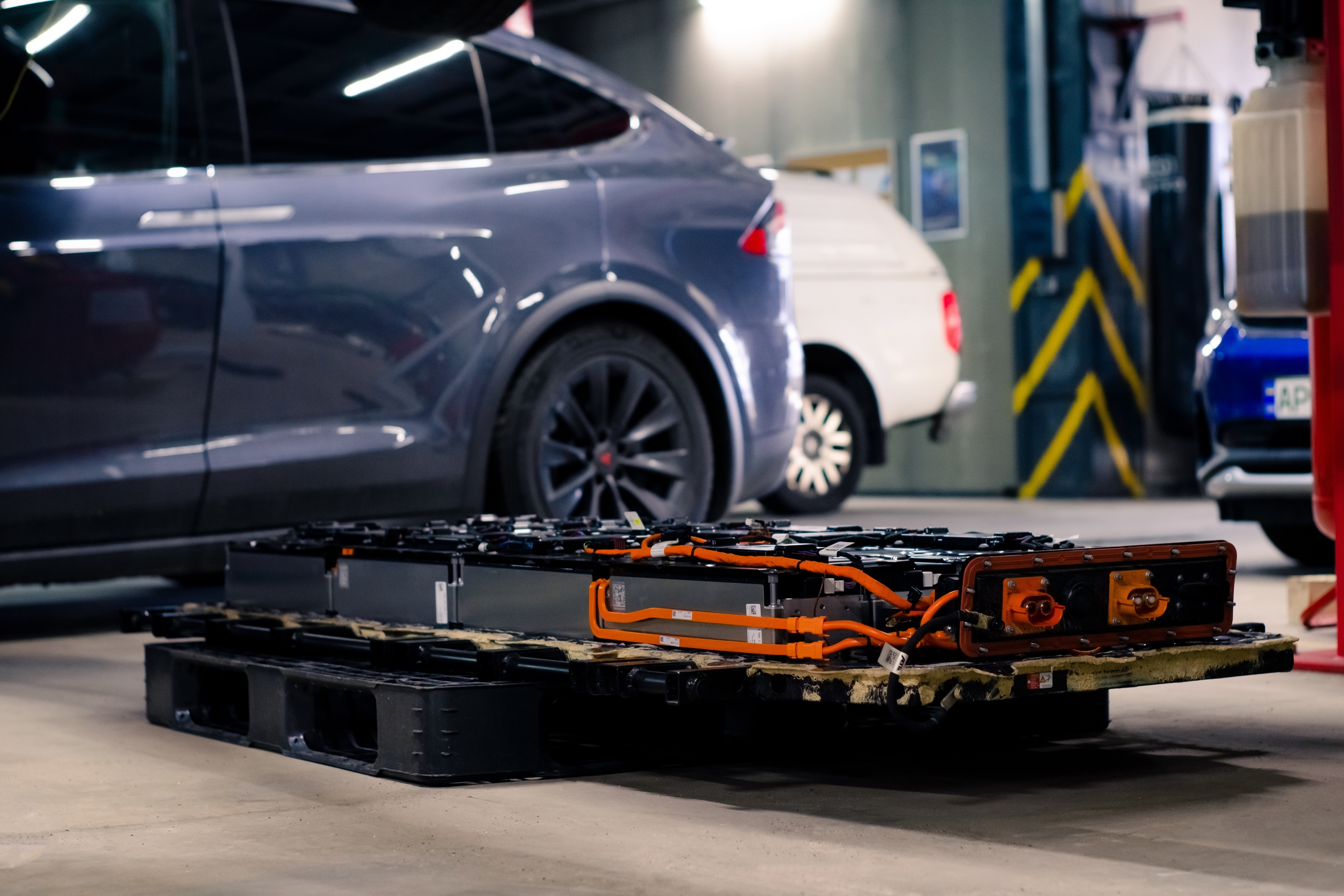
There are two major types of ageing that determine the longevity of an EV’s battery – calendar ageing, which is how the battery degrades over time, and cycle ageing, which is caused by how often a car’s battery is charged and discharged. However, as long as the car has been looked after, the impact of these factors shouldn’t prove too much of an issue.
In more detail, calendar ageing is literally how old the car is when you take ownership plus the impact of the environment in which the car’s been kept. If an electric car is kept in a hot environment, this can speed up wear and tear on battery components. Keeping a battery at 0% or 100% charge can add stress to the cells, too.
Cycle ageing isn’t about the number of miles on the clock, but more how the car has racked up its miles. For example, if the car is regularly charged using a DC fast charger, this generates more heat, which can speed up cell degradation. The depth of the discharge of the battery is important too, as charging from 5% to 100% may cause more wear than charging from 20% to 80%.
However, if you’re on a long drive and need to rapid charge repeatedly, fret not as the impact of this on battery life is minimal and factored in by the manufacturer as to how they expect the car to be used.
Fast charging v home charging: Does it make a difference?
Fast charging using a high-speed public DC charger, like those you get at a motorway services, is a great way of adding range quickly to your EV. In the time it takes to grab a coffee your battery is back to 80%. However, it’s considerably more expensive than a home charger, while the heat fast charging generates can have a negative impact on your car’s battery in the longer term, partciularly if you take the SoC beyond 80%.
Public rapid and ultra-rapid chargers deliver power into the vehicle at anywhere from 50kW to 400kW, depending on the rate the car's on-board charger can handle. Forcing that massive amount of current into the cells creates rapid heat spikes. Even though your EV’s liquid cooling systems work overtime to keep things chilled, the thermal stress is inherently higher and more damaging to its SoH.
EVs that rely almost exclusively on public DC fast charging see an average SoH loss of closer to 3% per year.
Home charging is where EVs are really advantageous, so having a drive or somewhere to charge using a standard home 7.4kW charger is a big consideration if you’re planning on going electric. These wallboxs feed electricity into the car at a gentler pace – because the energy trickles in, relatively speaking, very little heat is generated, allowing the battery to stay in its thermal comfort zone.
EVs predominantly plugged into a home AC charger's SoH degrades at nearer to 1.5% per year.
Understanding the eight-year warranty
To build consumer confidence in electric cars, their batteries are required to have a warranty specifically for the high-voltage battery, ensuring it performs well over the lifetime of the car.
The industry standard term is that your battery must deliver a minimum 70% SoH for the first eight years or 100,000 miles, whichever occurs sooner. If not, it needs to be repaired or replaced.
Some carmakers go further. For example, if you buy a Volkswagen EV, the battery’s SoH must be 78% or better in the car’s first three years or 40,000 miles and 74% minimum at five years to 60,000 miles.
Most carmakers offer an eight-year warranty, provided the battery hasn’t been damaged by negligence or tampered with, and it’s generally transferable to a new owner. If the car qualified for the government’s Electric Car Grant (ECG), it had to have a eight-year/100,000 mile warranty as a stipulation of the deal.
No, a high mileage doesn’t mean the car’s battery is worn out. The battery’s condition is less about how many miles it's been driven and more dependent on the car’s age, the environment it’s been kept in and how it has been charged. Generally electric car batteries can take all that most drivers can throw at them.
Most sellers will offer a battery State of Health (SoH) certificate when selling a used EV. That way the seller can be confident in what they’re selling and the buyer knows what to expect in terms of the car’s range and battery performance.
If no certificate is available, home testing dongles are available as are battery checking services. A more old-school test is to charge the car to 100%, note the mileage, drive it until 10% on a mixed route and recheck the distance travelled. This figure can then be compared with the manufacturer’s claimed range.
If you use rapid DC charging every time your battery needs a boost then it will, over time, have more of a negative impact on the battery's SoH than not going so. Rapid charging increases heat, which speeds up the wear and tear of the battery.
However, it’s unlikely that most people would choose to rapid charge all the time anyway, because it’s far more expensive than a slower home wallbox charger, not to mention much less convenient, as DC chargers don’t tend to be located right outside your house.
The average degradation figure of 2.3% per year for an EV battery’s SoH takes into account some rapid charging, so as to be more representative.
This depends if the car’s battery is still within its warranty period, which is that the battery is still at least at 70% SoH after eight years or 100,000 miles, whichever comes first.
The warranty is transferable, so as long as conditions have been met, contacting the dealer, who will then check the battery’s SoH before advising on next steps should be the first thing on your list.
If the car is outside its warranty period, then it would be up to you to decide whether it’s worth paying for a repair, which could be pricey, or replacement, which would be even more so.
Find an electric car for sale
Volkswagen ID.Buzz250kW Commerce 79kWh Auto 4Motion
20263,051 milesElectric£39,440
inc. VATYO304WWVolkswagen Golf99kW e-Golf 35kWh 5dr Auto
201952,490 milesElectric£9,961
LE111APVolkswagen ID.Buzz250kW GTX Pro 86kWh 5dr 4MOTION LWB Auto [7 Seat]
20269,200 milesElectric£52,990
WR99AUVolkswagen ID.Buzz210kW Commerce 79kWh Auto
20262,989 milesElectric£32,989
inc. VATL249PBVolkswagen ID.Buzz210kW Style Pro 79kWh 5dr Auto
20255,989 milesElectric£49,900
GL24NEVolkswagen ID.Buzz210kW Style Pro 86kWh 5dr LWB Auto [7 Seat]
20261,723 milesElectric£54,991
OL12BBVolkswagen ID.Buzz150kW Style Pro 77kWh 5dr Auto
202317,618 milesElectric£34,700
CW15XNVolkswagen ID.Buzz210kW Commerce Plus 79kWh Auto
20259,750 milesElectric£30,500
BS43QB
More electric car guides
From choosing the right EV to understanding charging, running costs and more, our guides can help.