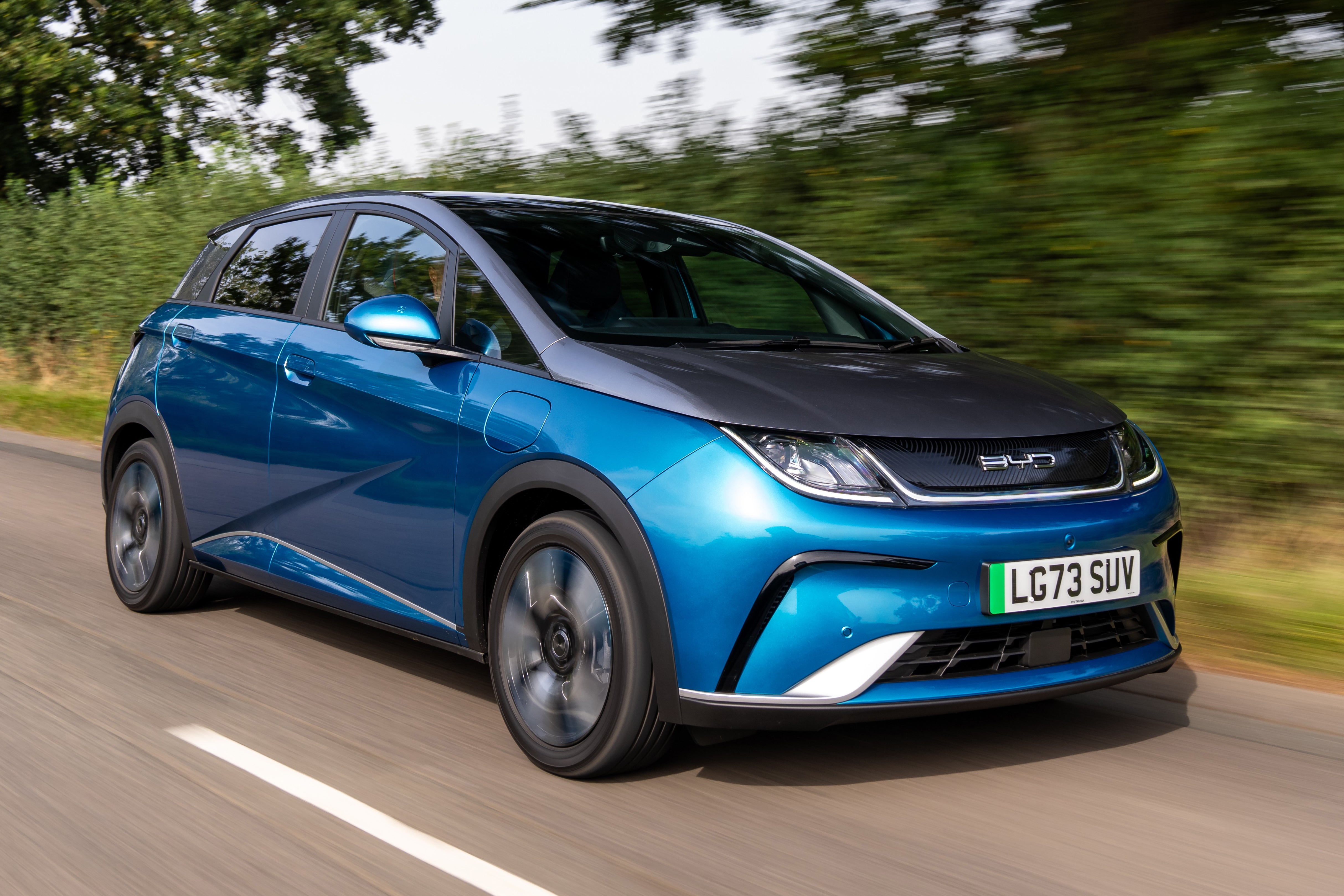
BYD Dolphin Review

Written By Al Suttie
- 2023
- Hatchback
- Electric
What we love
Spacious cabin with generous rear legroom
Comfortable ride and good refinement
Extensive standard equipment
Things to consider
Infotainment menus can be distracting
Brake pedal makes smooth stops difficult
Rapid charging is slower than many rivals
The DRIVE take on the Byd Dolphin, is it the right car for you?
The BYD Dolphin is a strong choice if you want a practical and comfortable electric hatchback without paying for a premium badge. It has plenty of passenger space, a useful 265-mile official range and an extensive standard specification. Comfort is the version to choose because it provides nearly everything available on Design for £1,500 less. Its awkward touchscreen and inconsistent brake response prevent it from feeling fully polished, but neither issue undermines its everyday appeal.
The Byd Dolphin in more detail
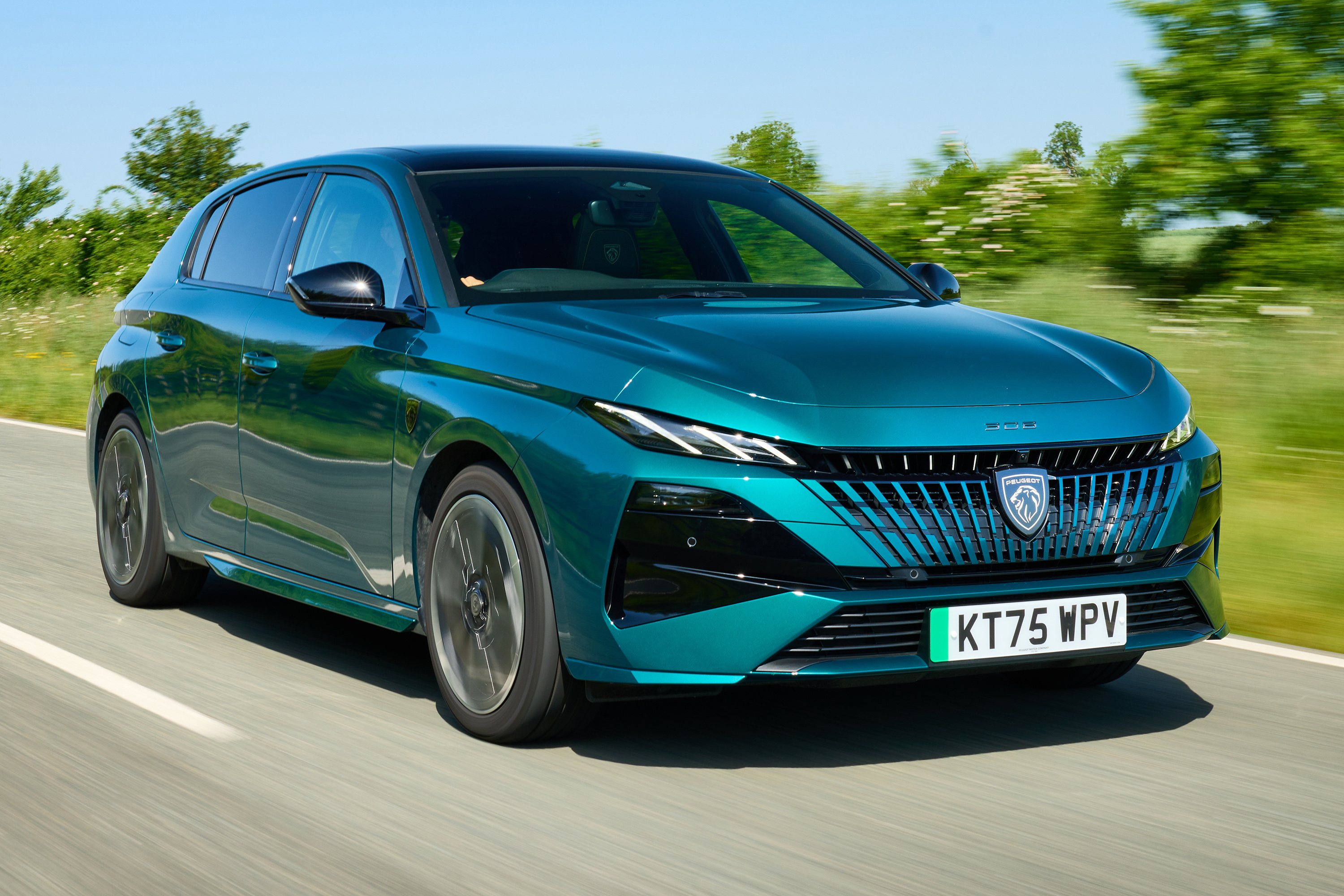
The Dolphin is BYD’s five-seat electric family hatchback, positioned above the smaller four-seat Dolphin Surf. It is similar in size to the Volkswagen ID.3, MG4 EV, Citroen e-C4, Peugeot E-308 and Vauxhall Astra Electric, although its tall body and long wheelbase give it a particularly spacious cabin.
When the car first arrived in the UK, the range included Active and Boost versions with a smaller 44.9kWh battery and a choice of 95PS and 176PS motors. Those versions are no longer included in BYD’s current new-car line-up, although both remain widely available on the used market.
New buyers now choose between Comfort and Design. Both have a 60.4kWh Blade Battery, a 204PS front-mounted motor and an official WLTP range of 265 miles. Performance is identical, with 0-62mph taking seven seconds.
The Dolphin’s appeal is not based solely on price. At more than £30,000, it sits close to several better-known alternatives. Its value comes from the amount of equipment included and the space it provides inside.
Comfort has electrically adjustable, heated and ventilated front seats, a heated steering wheel, a heat pump, a 360-degree camera, adaptive cruise control and the rotating 12.8-inch infotainment display. Design adds a panoramic glass roof, wireless phone charging and several cosmetic upgrades rather than changing the fundamental car.
Interior quality is better than some buyers may expect. The styling will not appeal to everybody, but the mixture of materials gives the cabin character and the main controls feel solidly assembled. Passenger space is generous in both rows, although the 345-litre boot is only average for the class.
On the road, the Dolphin prioritises comfort over agility. Its soft suspension deals well with broken urban surfaces and motorway refinement is good, but the body leans more than it would in an MG4 EV or Volkswagen ID.3. The brake pedal is the more persistent irritation because it can be difficult to bring the car to a completely smooth stop.
This is an easy-going, practical and well-equipped EV rather than a car that leads the class in every area. Buyers looking for sharper handling, faster charging or a larger boot will find stronger alternatives, but the Dolphin’s space and comfort make it a sensible family hatchback.
What's the best Byd Dolphin trim and battery option?
Comfort is the best version of the BYD Dolphin. It costs £30,230 and uses the same 60.4kWh battery, 204PS motor and front-wheel-drive layout as Design.
Both versions have an official range of 265 miles and reach 62mph in seven seconds, so upgrading does not improve performance, charging or efficiency. Comfort also includes nearly all the equipment that makes a meaningful difference in everyday use.
Standard features include 17-inch alloy wheels, electrically adjustable front seats, heating and ventilation for both front occupants, a heated steering wheel, dual-zone climate control and a heat pump. A 360-degree parking camera, adaptive cruise control and the 12.8-inch rotating touchscreen are also included.
Design costs £1,500 more and adds a panoramic glass roof, rear privacy glass, wireless phone charging, tri-colour alloy wheels and two-tone exterior finishes. Those additions make it the more desirable version, but not necessarily the better buy.
The panoramic roof gives the cabin a brighter and more upmarket feel, while wireless charging is useful. Neither feature changes how the Dolphin drives or how far it travels, however, so Comfort provides the better balance of price and equipment.
Used buyers may also encounter Active and Boost versions with the smaller 44.9kWh battery. Active is noticeably slower, while Boost combines better performance with a shorter official range. Their lower used prices may suit predominantly urban drivers, but neither is as versatile as the current 60.4kWh models.
What’s the price of the Byd Dolphin?
The BYD Dolphin Comfort costs £30,230, while Design is priced at £31,730.
The £1,500 step to Design adds a panoramic glass roof, wireless phone charging, rear privacy glass and distinctive exterior finishes. It does not change the battery, motor, performance or official range.
That positions the Dolphin between smaller budget EVs and more established electric family hatchbacks. It costs considerably more than the BYD Dolphin Surf, Dacia Spring and Leapmotor T03, but those cars are smaller, have shorter ranges and are less suitable as main family transport.
The MG4 EV remains one of its most important competitors and offers sharper handling, quicker charging and a wider choice of batteries and power outputs. The Volkswagen ID.3 generally costs more but feels more mature on the road, while the Citroen e-C4 places an even greater emphasis on ride comfort.
BYD regularly supports the Dolphin with finance offers and retailer discounts. A lower transaction price can strengthen its value, but buyers comparing monthly figures should also check the customer deposit, interest rate, contract length, annual mileage allowance and optional final payment.
Earlier Active and Boost cars are available used, alongside Comfort and Design examples from the Dolphin’s first years on sale. Nearly new cars can provide a worthwhile saving, although buyers should compare them with discounted new stock carrying the full manufacturer warranty.
Alternatives to the Byd Dolphin
The Volkswagen ID.3 feels more settled and mature at higher speeds. Its rear-wheel-drive layout gives it cleaner handling, while the latest infotainment system is a meaningful improvement over the software fitted to earlier cars. Comparable versions may cost more than the BYD.
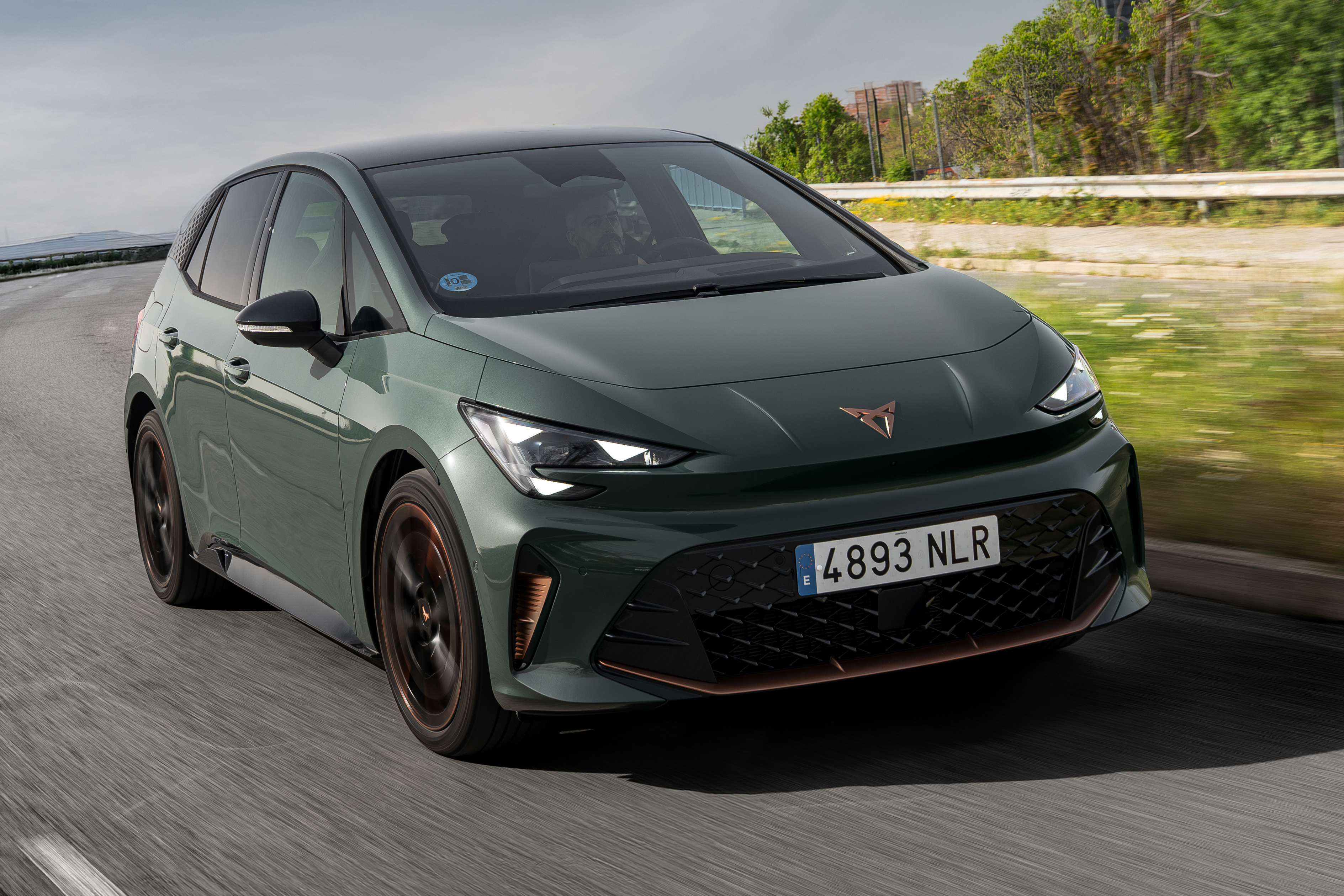
The Cupra Born is the sportier alternative. It is sharper to drive and has a more cohesive cabin design, but its firmer ride will not suit everybody and similarly equipped versions are likely to cost more.
The MG4 EV is the most obvious alternative. It is more enjoyable to drive, charges more quickly and offers a wider selection of batteries, including versions with longer ranges. Its cabin is less distinctive and does not feel as substantial in some areas, but it remains a highly competitive electric hatchback.
A Citroen e-C4 suits buyers who value ride comfort above handling precision. It has an even softer and more relaxed character, although the Dolphin provides more rear passenger space.
What's the interior like in the Byd Dolphin?
The Dolphin has a spacious and solidly assembled interior with more visual character than many electric hatchbacks. Its curved dashboard and rotating touchscreen make it distinctive, although the screen-based climate controls are less convenient than physical switches.
Byd Dolphin boot space and practicality
The Dolphin’s upright body and long 2,700mm wheelbase create more passenger room than its exterior dimensions suggest. The driving position is relatively high for a family hatchback, giving a clear view ahead and making it easy to get in and out.
There is a useful range of adjustment for the driver’s seat and steering wheel. The integrated front seats are comfortable enough for longer journeys, although some drivers may prefer the firmer cushioning and greater side support available in sportier rivals.
Front headroom and legroom are generous, while the cabin provides enough shoulder room for two adults to sit comfortably. Storage includes large door pockets, a covered central compartment and an open tray beneath the centre of the dashboard.
Rear passenger space is one of the Dolphin’s biggest strengths. Legroom is generous and the completely flat floor makes the centre position more useful because there is no transmission tunnel to straddle.
Headroom is also good, helped by the tall roof. The main compromise is limited room beneath the front seats, which can make it difficult for taller rear passengers to position their feet comfortably. Even so, the Dolphin has more usable adult space in the back than many conventional family hatchbacks.
Isofix child-seat mounting points are fitted to both outer rear seats and the front passenger seat. The doors open widely enough to make installing a child seat straightforward, while the raised seating position reduces the amount of bending required.
Rear visibility is less impressive. The back window is narrow and the head restraints further restrict the view, although a reversing camera, parking sensors and a 360-degree camera are standard.
The boot holds 345 litres with the rear seats upright. That is enough for a weekly shop or several cabin-sized suitcases, but it trails the Volkswagen ID.3 and several petrol-powered family hatchbacks.
Its regular shape makes the space reasonably easy to use, although the load lip is higher than ideal and the curved sides can complicate loading larger cases. Folding the 60:40 split rear seatbacks increases capacity to 1,310 litres.
The seatbacks do not create a completely level extended floor, but the total capacity is useful for occasional larger loads. There is no storage compartment beneath the bonnet, so charging cables need to share space with luggage in the rear.
Byd Dolphin dimensions
At 4,290mm long, 1,770mm wide and 1,570mm high, the BYD Dolphin is slightly shorter and considerably taller than a Volkswagen Golf. Its compact width makes it easy to position on narrow urban roads, while the high roof contributes to its generous passenger space.
Rear parking sensors, front parking sensors, a reversing camera and a 360-degree view are standard on current Comfort and Design cars. These features compensate for the narrow rear window and make the Dolphin straightforward to park.
Tech and infotainment in the Byd Dolphin
The centre of the dashboard is dominated by BYD’s 12.8-inch rotating touchscreen. Pressing an on-screen control or a steering-wheel shortcut turns it through 90 degrees between landscape and portrait layouts.
The two orientations can occasionally be useful. Landscape mode works best for media and smartphone mirroring, while portrait mode provides a taller view of the built-in navigation map.
The mechanism does not disguise the software’s weaknesses. Menus are not organised as logically as they could be, so changing some settings requires several taps and a degree of familiarity with BYD’s terminology.
The screen responds quickly enough, but too many climate functions are incorporated into the interface. Adjusting the temperature is relatively simple because shortcuts remain visible, yet changing the airflow direction or accessing more detailed settings is distracting while driving.
Wireless Apple CarPlay and Android Auto are standard, providing easy access to familiar navigation, music and messaging apps. Apple CarPlay operates in landscape orientation rather than adapting to the portrait display.
A small digital instrument screen sits behind the steering wheel. It shows speed, range and assistance information, although its compact size and busy presentation make some details harder to read at a glance than they should be.
Voice control can operate a selection of vehicle functions. It is useful when it understands a request correctly, but it is not consistent enough to compensate for the lack of clear physical controls.
A six-speaker audio system and USB connections for front and rear passengers are standard. Design adds wireless phone charging. The overall technology specification is generous, but usability remains one of the Dolphin’s weaker areas.
Materials available on the Byd Dolphin
Synthetic leather upholstery is standard, with the available colour combinations varying according to exterior finish and trim. Both versions have heated and ventilated front seats, while Design’s panoramic roof makes the cabin feel brighter.
The dashboard combines padded surfaces, patterned trim and rounded details inspired by marine forms. The result is more playful than the restrained interiors of a Volkswagen ID.3 or MG4 EV.
Not every flourish will suit every buyer, but the switches and main touchpoints feel substantial. There are fewer exposed hard plastics than the price might suggest, while the doors close with a reassuring solidity.
What's the Byd Dolphin like to drive?
The Dolphin is comfortable, quiet and easy to operate, particularly in town. Its soft suspension deals well with poor surfaces, although it allows more body movement than the best family hatchbacks and the brake pedal can make smooth stops difficult.
Byd Dolphin range and performance
Both current versions use the same front-mounted motor, producing 204PS and 310Nm of torque. Performance is brisk rather than dramatic, with 0-62mph taking seven seconds and a top speed of 99mph.
The immediate response makes the Dolphin feel lively away from junctions and provides more than enough performance for joining fast roads. Hard acceleration can make the front tyres struggle for grip on wet or uneven surfaces, but the power delivery is generally easy to control.
Comfort and Design share the same 60.4kWh lithium iron phosphate Blade Battery and have an official WLTP combined range of 265 miles.
That is competitive rather than class-leading. Long-range versions of the MG4 EV and Volkswagen ID.3 travel further, but the Dolphin should provide enough capacity for a typical working week of commuting or a longer journey with one charging stop.
Official range figures are best treated as a comparison between cars rather than a guaranteed result. Cold weather, motorway speeds, short journeys and use of the cabin heating will reduce the distance available.
The standard heat pump helps limit the impact of low temperatures. In mild mixed driving, careful users should be able to approach the official figure, although sustained motorway use is likely to bring the practical range closer to 200 miles.
Used Active and Boost versions have a smaller 44.9kWh battery. Active has 95PS and an official range of 211 miles, while the quicker 176PS Boost reduces the figure to 195 miles. These versions are no longer part of the current new-car range.
Performance data
| Model | Engine/battery size | Power | 0-62mph | Range/MPG |
|---|---|---|---|---|
Dolphin Comfort | 60.4kWh | 204PS | 7.0 seconds | 265 miles |
Dolphin Design | 60.4kWh | 204PS | 7.0 seconds | 265 miles |
Byd Dolphin driving and refinement
The Dolphin is at its best around town. Its light steering, compact width and raised seating position make it easy to guide through traffic, while the soft suspension deals effectively with potholes, patched surfaces and speed humps.
There is little unwanted noise or harshness from the suspension. The car feels particularly composed over the broken urban roads that can expose the weight and firm spring rates of some electric rivals.
At higher speeds, the same soft setup allows more vertical movement and body lean. The Dolphin remains secure and predictable, but it does not change direction with the precision of an MG4 EV, Cupra Born or Volkswagen ID.3.
The steering has a sensible weight and provides enough information to place the car accurately, although it is not especially engaging. Grip is strong during normal driving, but enthusiastic acceleration can overwhelm the front tyres.
The brake pedal is the main dynamic weakness. Initial response is predictable, but the final transition between regenerative and conventional braking can feel inconsistent. Bringing the car to a completely smooth halt in stop-start traffic takes more practice than it should.
Regenerative braking can be adjusted, although even the stronger setting does not provide the decisive one-pedal operation offered by some rivals. Drivers still need to use the brake pedal regularly.
Refinement is good. There is little motor noise around town, while road and wind noise remain well controlled at motorway speeds. Conversations do not require raised voices and the audio system does not need to be turned up excessively.
The comfortable ride and low noise levels make the Dolphin a relaxed long-distance car once it is up to speed. Its modest rapid-charging performance, rather than its motorway manners, is the greater limitation on extended journeys.
How safe is the Byd Dolphin?
The BYD Dolphin received a five-star Euro NCAP rating in 2023. It scored 89 per cent for adult occupant protection, 87 per cent for child occupant protection, 85 per cent for vulnerable road-user protection and 79 per cent for safety assistance.
The passenger compartment remained stable in the frontal-offset test, although protection of the driver’s chest was rated as marginal. Protection was otherwise good or adequate, and the Dolphin achieved maximum points for child protection in the frontal-offset and side-barrier assessments.
Automatic emergency braking, adaptive cruise control, blind-spot monitoring, lane-keeping assistance, front and rear cross-traffic alerts, traffic-sign recognition and driver-fatigue monitoring are standard.
Euro NCAP found that the automatic emergency braking system performed well when responding to other vehicles, pedestrians, cyclists and motorcyclists. BYD updated the lane-support software in March 2024 to improve its usability without affecting the five-star rating.
Front, side and curtain airbags are fitted, along with a centre airbag designed to reduce contact between the front occupants in a side impact.
Running costs: What it's like to live with a Byd Dolphin
The Dolphin’s efficiency, standard heat pump and long warranty should keep routine costs manageable. Its 88kW rapid-charging limit is modest, but overnight home charging is straightforward and neither current version attracts the Expensive Car Supplement.
Byd Dolphin charging times and costs
Home charging is the easiest and cheapest way to charge and you can reckon on spending a much more wallet-friendly £8.50 for the same amount of range.
Using a home charger will take around seven hours to fully charge an Active model from near flat to 100% charge. With the other trims, you'll be looking at around six hours for the same recharge. Use a fast public charger and the Dolphin should go from 10- to 80& charge in around 40 minutes.
All DolpBoth current versions can accept up to 88kW from a suitable DC rapid charger. BYD quotes 29 minutes to charge the battery from 30 to 80 per cent under favourable conditions.
That is slower than the best rivals. Some versions of the MG4 EV, Volkswagen ID.3 and Hyundai Kona Electric can recover a similar amount of range more quickly, reducing the length of repeated stops during a long journey.
Peak speed is only part of the charging picture, and the Dolphin’s relatively modest battery means a typical top-up should remain manageable. The maximum rate will not be maintained throughout the session, while temperature, charger performance and the battery’s starting condition can all affect the time required.
An 11kW onboard AC charger is standard. A complete charge takes a little over six hours from a compatible three-phase supply.
Most UK homes have a 7kW wallbox, where replenishing a nearly empty battery will take closer to nine or ten hours once normal charging losses are included. Owners will usually replace only the energy used during the day, making overnight charging straightforward.
The cost depends on the electricity tariff. Charging at home on a low off-peak rate can make the Dolphin inexpensive per mile, while relying on public rapid chargers will cost considerably more.
Drivers without off-street parking should compare local network prices before assuming that an EV will be much cheaper to run than a petrol or hybrid car. The difference can narrow substantially when most energy is bought from expensive rapid chargers.
A heat pump is standard and reduces the energy required to warm the cabin in cold conditions. Vehicle-to-load capability also allows the car to power compatible electrical equipment through an adaptor.
Byd Dolphin warranty and servicing
The BYD Dolphin has a six-year or 93,750-mile vehicle warranty, whichever comes first.
The electric drive unit is covered for eight years or 93,750 miles, while the Blade Battery has an eight-year or 125,000-mile warranty.
Byd Dolphin insurance groups
Current Comfort and Design models sit in insurance group 33.
That is higher than many similarly sized petrol or hybrid hatchbacks, although the Dolphin’s 204PS output and electric drivetrain partly explain the classification.
Older Active and Boost versions sit in lower groups, so used buyers should check the exact derivative rather than relying on the current new-car figure.
Insurance premiums depend on the driver’s age, address, occupation, claims history and annual mileage as well as the car’s group. Obtain a quote for the exact registration before committing to a purchase, lease or finance agreement.
How much does it cost to tax a Byd Dolphin?
Electric cars pay the standard annual Vehicle Excise Duty rate after their first year. The current annual rate is £200.
Both current Dolphin versions have list prices well below the £50,000 zero-emission Expensive Car Supplement threshold, so the additional charge does not apply.
What trims are available with the Byd Dolphin?
The current BYD Dolphin range consists of Comfort and Design. Both use the same 60.4kWh battery and 204PS motor, so the decision comes down to equipment and appearance.
Comfort costs £30,230 and is the best-value version. It has 17-inch alloy wheels, LED headlights, keyless entry, electrically folding door mirrors and a heat pump.
Inside, it includes synthetic leather upholstery, electrically adjustable front seats, heating and ventilation for both front occupants, a heated steering wheel and dual-zone climate control.
The 12.8-inch rotating touchscreen includes navigation, wireless Apple CarPlay and Android Auto. A digital driver display, USB connections and a six-speaker audio system are also standard.
Parking and safety equipment includes a 360-degree camera, front and rear parking sensors, adaptive cruise control, blind-spot monitoring, lane assistance and automatic emergency braking.
Design costs £31,730 and adds a panoramic glass roof, wireless phone charging, rear privacy glass, tri-colour alloy wheels and a selection of two-tone exterior finishes.
The glass roof makes the cabin brighter and gives Design a more upmarket appearance, while wireless charging is a useful convenience. The remaining additions are largely cosmetic.
Comfort therefore makes the most sense for buyers prioritising value. Design is the more desirable choice when its appearance and panoramic roof justify the additional £1,500.
Used buyers will also encounter Active and Boost. Both use the smaller 44.9kWh battery. Active prioritises range over performance, while Boost has a stronger motor but travels less far on a charge. Their lower second-hand prices may appeal to urban drivers, but neither is as versatile as the current 60.4kWh cars.
Ask the Drive experts: common questions
How much does the BYD Dolphin cost?
What is the maximum range of the BYD Dolphin?
How big is the BYD Dolphin’s boot?
What is the difference between the BYD Dolphin and Dolphin Surf?
Get our latest advice, news and offers
Keep me updated by email with the latest advice, news and offers from Drive.
.jpg)
.jpg)