Vauxhall Astra Electric Review

Written By Andy Brady
- 2023
- Family hatchback
- Electric
What we love
Straightforward and unintimidating to drive
Much more competitive pricing than before
Good equipment and up to 281 miles of range
Things to consider
Boot space trails several rivals
Ride is firmer than some alternatives
Performance and charging speeds are unexceptional
The DRIVE take on the Vauxhall Astra, is it the right car for you?
The Vauxhall Astra Electric makes sense if you want an EV that behaves like an ordinary family hatchback rather than an electric car trying too hard to be futuristic. It’s easy to drive, easy to understand and generously equipped, which gives it a straightforward appeal.
The 2026 updated model is also considerably easier to recommend than the earlier Astra Electric. Its new battery stretches the maximum official range to 281 miles, while the starting price has fallen to £29,995 before the Electric Car Grant. That’s more than £5,000 less than the outgoing equivalent and puts the Astra Electric on much more competitive terms with its rivals. If you want a sensible electric family car that asks very little of you, it works well. If you want something more spacious, more comfortable or simply more memorable, there are stronger alternatives.
The Vauxhall Astra in more detail
The Astra Electric is part of Vauxhall’s long-running strategy of electrifying familiar names rather than creating a separate sub-brand of EV-only models. That means the Astra Electric is exactly what it sounds like: an Astra hatchback powered by a battery and motor instead of a petrol engine.
There’s something reassuring about that approach. While some rivals still make electrification feel like an event, the Astra Electric just feels like a normal family hatchback that happens to be quieter and smoother than a petrol version. For plenty of buyers, that’s a real selling point.
The Astra was substantially updated in 2026. The revised design includes a narrower interpretation of Vauxhall’s Vizor front end, an illuminated Griffin badge and updated lighting, while the cabin gets new finishes and a clearer infotainment interface. The basic shape and proportions remain familiar, so it’s still recognisably the same generation of Astra underneath.
The more important change for electric-car buyers is beneath the floor. The current model uses a larger battery, which increases the maximum official range to 281 miles, around 22 miles more than the outgoing model. Battery preconditioning, selectable regenerative braking and vehicle-to-load functionality are also now included.
The motor continues to produce 156PS and 270Nm, so the updated Astra Electric isn’t dramatically quicker than before. The emphasis remains on efficiency, easy driving and a familiar ownership experience rather than startling performance.
The broader 2026 update has also transformed the car’s value. The Astra Electric now has the same pre-grant price as equivalent hybrid and plug-in hybrid versions, while the Electric Car Grant reduces the customer price by a further £1,500. That’s a much healthier position than before, when the electric Astra looked rather expensive for what it offered.
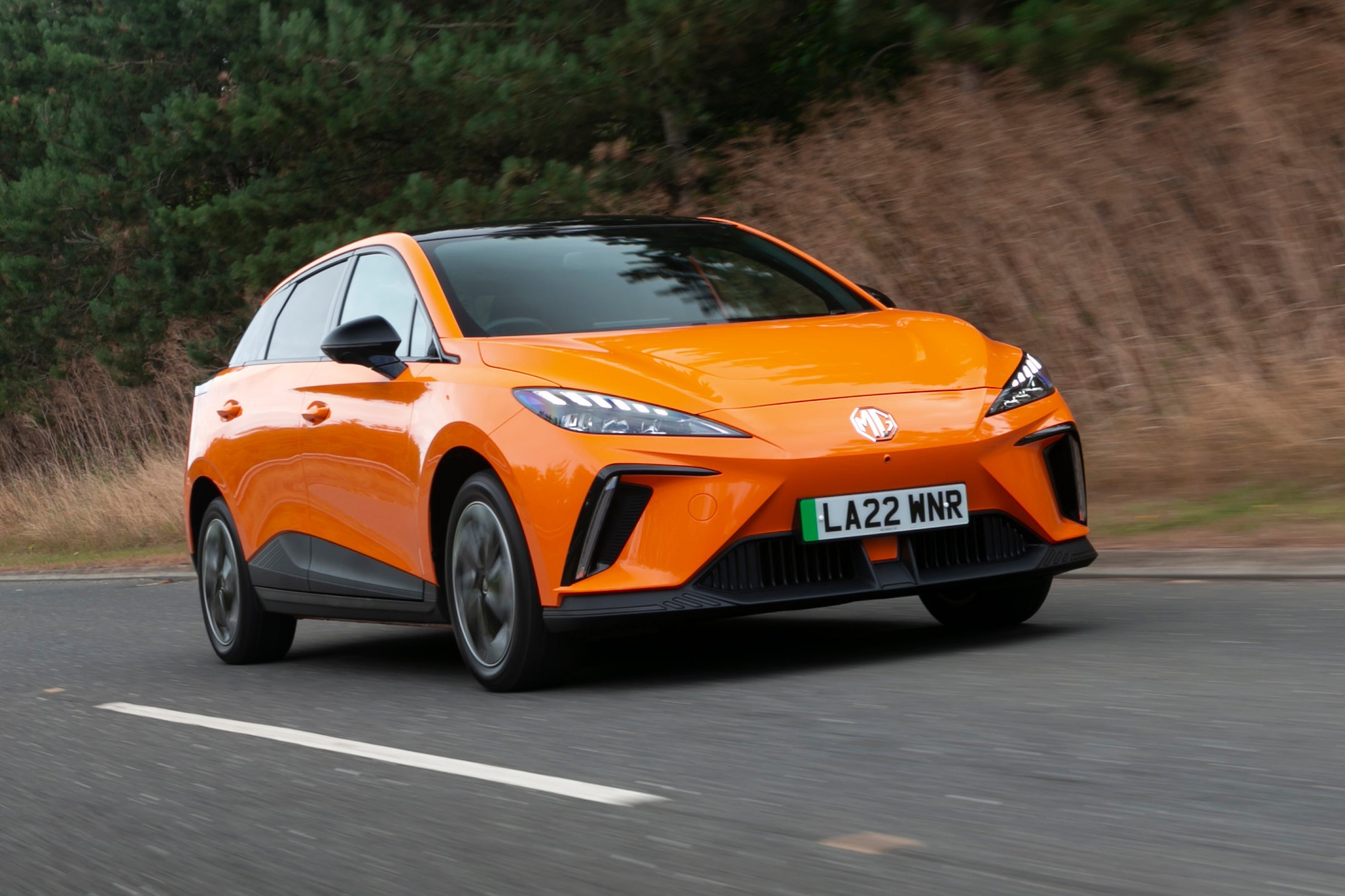
Even so, the Astra Electric remains a car you buy for rational reasons rather than emotional ones. It’s neat, tidy and easy to recommend, but it doesn’t have the rear-seat space of some dedicated EVs or the dynamic sparkle of an MG4. What it does offer is familiarity, and that still counts for a lot.
What's the best Vauxhall Astra trim and battery option?
For most new-car buyers, the Astra Electric Griffin is now the version to choose.
There’s only one battery and motor combination to worry about, so the choice is all about trim rather than deciding how much range you can afford. Every version gets the new 58.3kWh battery, 156PS motor and an official range of up to 280 or 281 miles, depending on specification.
Griffin is unusually well equipped for an entry-level version. Electric models get unique 18-inch wheels, along with an illuminated Vizor front end, black roof, tinted rear windows, navigation, wireless Apple CarPlay and Android Auto, adaptive cruise control, front and rear parking sensors, heated front seats, a heated steering wheel and an AGR-certified driver’s seat.
GS adds sportier styling, black alloy wheels, a more neatly integrated PurePanel Pro display, a 180-degree reversing camera, sports seats, keyless start and dual-zone climate control. Those are worthwhile additions, but Griffin already includes most of the equipment buyers will use regularly.
Ultimate adds Intelli-Lux HD headlights, a head-up display, wireless phone charging and a broader driver-assistance package. Its ReNewKnit front seats are heated, electrically adjustable and equipped with massage functions, while a heated windscreen is also standard. It’s appealing and no longer outrageously expensive, but Griffin still represents the strongest value.
Used buyers will find a wider choice of trims, including Design and earlier versions of Griffin, GS and Ultimate. The specification attached to each trim changed during the car’s life, so it’s important to check the equipment fitted to the individual vehicle rather than relying solely on its badge.
An earlier 54kWh GS is likely to be the used sweet spot because it combines useful equipment with more affordable second-hand prices. An Ultimate may also be worth considering if its original high list price has been substantially reduced.
What’s the price of the Vauxhall Astra?
The Vauxhall Astra Electric range starts at £29,995 for Griffin. GS costs £31,495, while Ultimate is £33,995.
Those are the official on-the-road prices before the Electric Car Grant. The current £1,500 grant reduces the effective prices to £28,495 for Griffin, £29,995 for GS and £32,495 for Ultimate. Retailers apply the grant to eligible orders, so buyers don’t need to claim it separately.
Vauxhall charges exactly the same prices for the larger Astra Sports Tourer Electric. The electric, hybrid and plug-in hybrid versions also share the same list price within each trim, although the grant means the Astra Electric costs £1,500 less in practice.
That’s a dramatic improvement over earlier Astra Electric pricing. The car launched in GS and Ultimate trims, with prices starting at around £39,995. Design later reduced the entry point to £37,795, while subsequent price changes and the arrival of Griffin brought it down to around £35,000 before the 2026 update.
Alternatives to the Vauxhall Astra
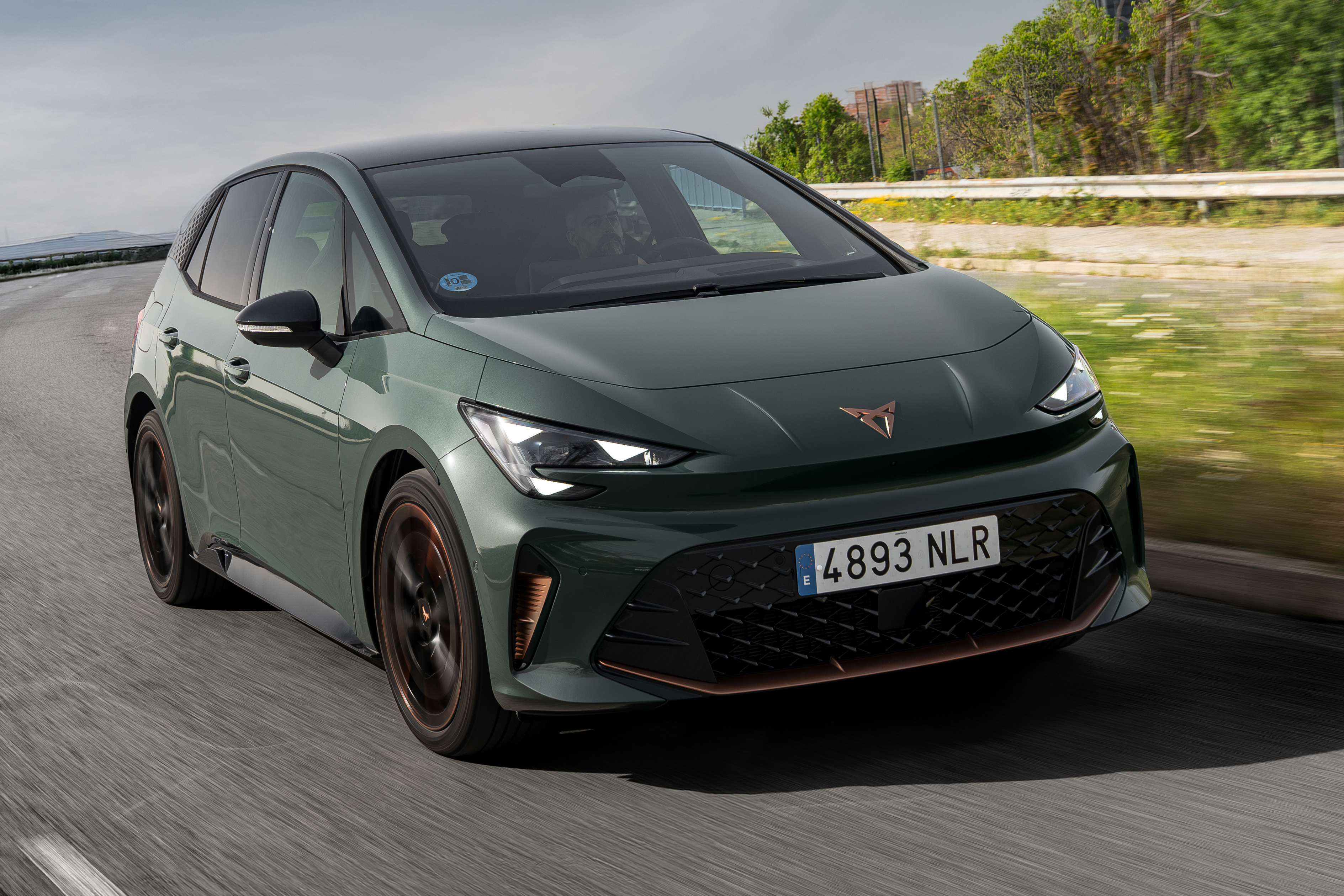
The most obvious alternatives are the Volkswagen ID.3, the Cupra Born, the MG4 and the Renault Megane E-Tech. All bring something the Astra Electric lacks, whether that’s stronger performance, better driver appeal, more interior space or a more distinctive identity.
The Peugeot E-308 is the nearest in spirit and hardware because it shares much of the same basic platform and electric running gear. It’s a little more stylish inside and out, though it isn’t necessarily any more practical.
You could also look at the Citroen e-C4 if comfort matters more than handling, or the Kia Niro EV if you’re prepared to move into crossover territory for more cabin and boot space.
The Vauxhall’s lower current price strengthens its position considerably. It makes most sense if you want a conventional-looking family hatchback with plenty of standard equipment and don’t feel the need for the more overtly electric character of a dedicated EV platform.
What's the interior like in the Vauxhall Astra?
The Astra Electric’s cabin is recognisably part of the latest Astra family. It’s clean, slightly angular and modern-looking, even if it doesn’t feel particularly special.
The 2026 update introduces scratch-resistant satin-grey finishes in place of some of the previous gloss-black trim, along with revised displays, seven-colour ambient lighting and Vauxhall’s Intelli-Seat design as standard. Physical controls remain for key functions including the climate control and drive modes.
Earlier cars have the same basic dashboard architecture but use different trim finishes and older infotainment software. They can also have a more traditional seat design, depending on trim and model year.
Vauxhall Astra boot space and practicality
One of the Astra Electric’s weaker points is outright practicality compared with the best electric family cars. Passenger room is decent enough in the front, where the driving position is comfortable and the supportive seats remain one of the car’s stronger features.
Rear-seat space is acceptable rather than generous. Adults can fit, but the low roofline and slightly enclosed feel in the back mean it isn’t the roomiest car in the class for taller passengers. That makes the Astra Electric feel more like a conventional hatchback than a space-efficient EV designed around rear passengers.
The boot is the bigger issue. At 352 litres, it’s smaller than several key rivals and only just acceptable for a family hatchback. The shape is useful enough, but the headline figure still matters because buyers in this class have plenty of roomier options.
Fold the back seats and the available capacity rises to 1,268 litres. Buyers who need more space can choose the Astra Sports Tourer Electric, which provides 516 litres with its rear seats upright and 1,553 litres when they’re folded. It now costs exactly the same as the hatchback.
While the Astra Electric is practical enough for everyday life, it isn’t a class leader for carrying family clutter.
Vauxhall Astra dimensions
The Vauxhall Astra Electric measures 4,374mm long, 2,062mm wide & 1,441mm high. Those dimensions place it squarely in the heart of the family-hatchback class and help explain why it feels conventional rather than space-maximised.
That's not a bad thing in itself. The Astra Electric is easy enough to place on the road and easy enough to park, but the trade-off is that it doesn’t extract the same packaging advantage from being electric as some dedicated-EV rivals do.
Tech and infotainment in the Vauxhall Astra
Every current Astra Electric gets a 10-inch digital instrument display and a 10-inch central touchscreen, along with satellite navigation and wireless Apple CarPlay and Android Auto.
The revised software is clearer than before, while Vauxhall has sensibly retained physical controls for regularly used functions. Over-the-air updates and connected journey planning are also included, with the electric-car navigation able to help plan charging stops.
Griffin uses the standard PurePanel arrangement, while GS and Ultimate get the more neatly integrated PurePanel Pro setup with edge-to-edge glass. GS also gains a 180-degree reversing camera, while Ultimate adds a head-up display and wireless phone charging.
The system isn’t perfect. There are slicker and prettier interfaces elsewhere, and some menus can still take longer to navigate than they should. However, the combination of smartphone mirroring, physical shortcuts and familiar screen layouts makes it reasonably easy to live with.
Earlier 54kWh cars also have twin 10-inch screens, but the software and standard connectivity vary by year and trim. Used buyers should check whether features such as navigation, wireless smartphone integration, a reversing camera and wireless charging are actually fitted.
Materials available on the Vauxhall Astra
The Astra Electric’s interior quality is mixed. Some of the major touchpoints feel respectable enough, and the vegan-leather steering wheel helps lift the impression, but there are still plenty of harder plastics and some trim pieces that feel built to a cost.
The 2026 update replaces some of the glossy surfaces with more durable satin-grey finishes and introduces a greater proportion of recycled fabrics. It doesn’t transform the basic cabin, but it makes the interior look a little calmer and should reduce fingerprints and visible scratches.
Ultimate does the best job of lifting the atmosphere. Its ReNewKnit material has a suede-like texture but is made from recycled fibres, while the front seats gain additional adjustment, heating, lumbar support and massage functions.
Older Ultimate versions used a different mix of upholstery and trim, so the equipment and materials aren’t directly comparable with the current model.
The Astra’s interior is perfectly serviceable and should wear well, but it still doesn’t trade heavily on richness or flair.
What's the Vauxhall Astra like to drive?
The Astra Electric is all about being easy and predictable. That suits the brief, even if it does leave the car feeling a little anonymous from behind the wheel.
Vauxhall Astra range and performance
The current Astra Electric uses a 58.3kWh gross battery, of which 55.4kWh is usable, and a single front-mounted motor producing 156PS and 270Nm.
It will zip from 0-62mph in 9.3 seconds and on to a top speed of 106mph. Official WLTP range is up to 281 miles for the hatchback, depending on trim and specification. Ultimate sits fractionally below the maximum because of its additional equipment.
The previous Astra Electric used a 54kWh battery with the same 156PS and 270Nm outputs. It was quoted at 0-62mph in 9.2 seconds and offered between approximately 252 and 260 miles, depending on its model year, wheels and trim. The original launch figure was 258 miles. Those versions are no longer available new but remain widely available used.
Those remain respectable numbers rather than headline-grabbing ones. The Astra Electric is quick enough to feel easy and responsive in everyday driving, but it never feels notably urgent by EV standards.
The current car’s extra range makes it more useful on longer journeys, although it still isn’t the kind of figure that transforms the Astra into a dedicated motorway-mileage hero.
Performance data
| Model | Engine/battery size | Power | 0-62mph | Range/MPG |
|---|---|---|---|---|
Vauxhall Astra Electric | 58.3kWh | 156PS | 9.3 seconds | Up to 281 miles |
Vauxhall Astra driving and refinement
The Astra Electric starts, stops and steers much like any other Astra, which is exactly what some buyers will want. The controls are intuitive, the car feels easy to place and there are no odd electric-car quirks to learn.
The current model adds three levels of regenerative braking, selected using paddles on the steering wheel. That gives the driver more control over how strongly the car slows when the accelerator is released, although it still doesn’t offer the strongest one-pedal driving experience in the class.
It’s not especially exciting to drive. The steering is secure rather than engaging, and while the car feels stable enough, it doesn’t have the same sense of fun as a Cupra Born or an MG4. That said, keen drivers were never going to be the Astra Electric’s core audience.
Ride comfort is less impressive. The electric Astra is firmer than some petrol or hybrid alternatives and doesn’t always deal with rougher surfaces as neatly as you might hope. It isn’t disastrously uncomfortable, but there are softer and more forgiving alternatives in the class.
Refinement is decent. At lower speeds, it feels pleasantly hushed, and even on faster roads it’s civilised enough, although you do notice some road noise from the 18-inch wheels.
How safe is the Vauxhall Astra?
The Astra received a four-star rating from independent safety organisation Euro NCAP in 2022. Euro NCAP criticised aspects of the autonomous emergency braking system and the lack of a centre airbag, which helps explain why it fell short of five stars.
Standard equipment includes automatic emergency braking, lane-departure warning and assistance, speed-sign recognition, adaptive cruise control, high-beam assistance and front and rear parking sensors.
GS adds a 180-degree reversing camera. Ultimate has a broader Intelli-Drive package incorporating blind-spot monitoring, lane-change assistance, lane-positioning assistance and rear cross-traffic alert.
Earlier versions have a different spread of driver-assistance equipment, so used buyers should check the precise specification of the individual car. In particular, a panoramic or reversing camera shouldn’t be assumed to be standard across every trim and model year.
While the crash-test headline is not ideal, the day-to-day safety kit is decent.
Running costs: What it's like to live with a Vauxhall Astra
Running costs should be one of the Astra Electric’s stronger suits if you can charge at home, although it isn’t quite a class standout.
The lower purchase price also changes the financial picture considerably. Current buyers pay substantially less than early adopters did, while the Astra Electric now undercuts equivalent hybrid and plug-in hybrid versions after the Electric Car Grant.
Vauxhall Astra charging times and costs
The current Astra Electric gets an 11kW onboard charger as standard and can DC rapid-charge at up to 100kW.
Vauxhall quotes 32 minutes for a 20% to 80% charge from a suitable rapid charger. The same top-up takes around three hours and 20 minutes from an 11kW AC point or approximately five hours using a normal 7.4kW home charger.
Those figures are perfectly workable for a family hatchback, and overnight home charging is the obvious fit. Rapid charging is competitive enough without being class-leading, particularly as several newer rivals can accept substantially more than 100kW.
The previous 54kWh model also supported 100kW DC charging. At launch, Vauxhall quoted around 30 minutes for a 10–80% charge, while some later specifications used a 20–80% figure of approximately 26 minutes.
The updated car includes battery preconditioning, which can prepare the battery for rapid charging in cold weather, as well as vehicle-to-load functionality for powering suitable external equipment. Neither feature was part of the original Astra Electric specification.
How much charging costs will depend heavily on where and when you plug in. A cheap overnight home tariff should make the Astra inexpensive to run, while frequent use of high-priced public rapid chargers can make its energy costs much less attractive.
Retail buyers also receive Vauxhall’s Electric All In package. This currently includes eight years of roadside assistance and £500 towards an eligible home wallbox or selected public-charging services. Other benefits and eligibility conditions apply.
Vauxhall Astra warranty and servicing
Vauxhall’s standard warranty is three years. That consists of one year with unlimited mileage and years two and three capped at 60,000 miles. The battery is covered for eight years or 100,000 miles and guaranteed to retain at least 70% of its capacity.
The official service interval is an initial inspection at 8,000 miles or one year, then every 16,000 miles or two years, whichever comes sooner.
That's straightforward enough, but several rivals still offer more generous vehicle warranty cover.
Vauxhall Astra insurance groups
Insurance groups are 25 for Griffin and 26 for both GS and Ultimate. That's broadly in line with what you would expect for an electric hatchback of this size and price.
How much does it cost to tax a Vauxhall Astra?
The Astra Electric pays the standard annual VED road tax rate, which currently £200. All models sit below the £50,000 expensive car threshold, so avoid the additional annual charge.
What trims are available with the Vauxhall Astra?
The current Astra Electric line-up is built around Griffin, GS and Ultimate.
Griffin is a very good place to start. All electric versions have unique 18-inch alloy wheels, while standard equipment includes the illuminated Vizor front end, a black roof, heated front seats, a heated steering wheel, adaptive cruise control, navigation, wireless Apple CarPlay and Android Auto, tinted rear windows, keyless entry and an AGR-certified driver’s seat.
GS adds black 18-inch wheels, a sportier front bumper, the edge-to-edge PurePanel Pro display treatment, a 180-degree reversing camera, sports seats, keyless start and dual-zone climate control. It looks more distinctive, but it doesn’t add enough essential equipment to displace Griffin as the value choice.
Ultimate sits at the top with diamond-cut wheels, Intelli-Lux HD headlights, a head-up display, wireless charging, a heated windscreen and Vauxhall’s broader Intelli-Drive assistance package. Its ReNewKnit front seats are heated and offer additional adjustment and massage functions.
Ask the Drive experts: common questions
How much does the Vauxhall Astra Electric cost?
What’s the maximum range of the Vauxhall Astra Electric?
Is the Vauxhall Astra Electric practical?
What is the best Vauxhall Astra Electric version?
Get our latest advice, news and offers
Keep me updated by email with the latest advice, news and offers from Drive.
.jpg)
.jpg)
.jpg)