Cupra Leon VZ Review

Written By Matt Robinson
- 2020
- Hatchback, estate
- Petrol, plug-in hybrid
What we love
Quick, composed and easy to exploit
Distinctive styling inside and out
e-Hybrid offers impressive electric-only range
Things to consider
Petrol and e-Hybrid versions suit different driving patterns
Higher VZ trims add more equipment rather than extra pace
e-Hybrid sacrifices some luggage space
The DRIVE take on the Cupra Leon, is it the right car for you?
The Cupra Leon VZ is a little more grown-up than its SEAT Leon Cupra predecessors, but it’s still a thrilling car, especially in petrol hatchback form. It’s more versatile than ever thanks to the inclusion of a plug-in hybrid for the first time, while anyone looking for practicality will be well-served by the Estate version, which comes with all-wheel drive capability.
The VZs are the most expensive versions of the Cupra Leon, but the pricing is in line with what we expect, considering the performance of these cars and their level of standard equipment.
The Cupra Leon in more detail
Once upon a time, Cupra was the sporty sub-brand of Spanish manufacturer SEAT. A SEAT Leon Cupra typically used similar components to cars like the Volkswagen Golf GTI and Golf R, but in a slightly spicier, more stylish setting.
Today, Cupra is a brand in its own right. But that doesn’t mean cars like the Cupra Leon are bereft of sporty derivatives. Instead, VZ is the moniker you need to look for if you’re after higher performance.
Much like the final SEAT Leon Cupra models, the Cupra Leon VZ is available with a 300PS 2.0-litre engine, providing fast acceleration. There’s more diversity now, though, because you can also spec the Cupra Leon VZ as an ‘e-Hybrid’ with a powerful plug-in hybrid system.
These versions are a little way off the pace of the pure petrol VZs because of their extra weight, but they make up for that with up to 75 miles of electric-only running, potentially making them very cheap to run. They’re ideal for company car choosers, as well.
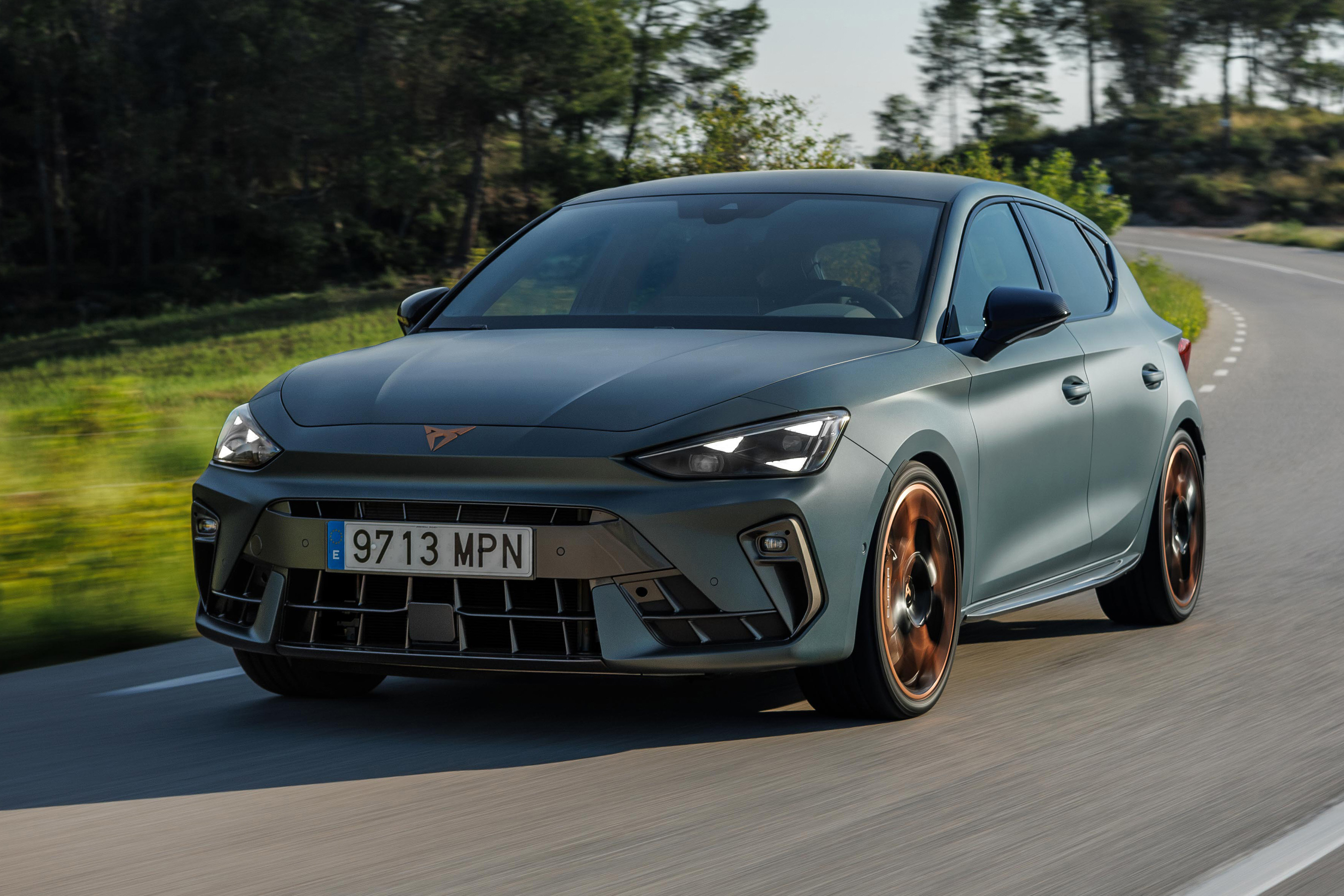
A mid-life refresh for the Cupra Leon has left the car looking much more distinct from the SEAT Leon it’s based on. It’s also more ‘out there’ than the more safely styled Volkswagen Golf GTI with which the Leon VZ shares much.
The Cupra Leon VZ has long been a strong choice amongst its rivals, but these days, it has much less competition, remaining in production while the likes of the Ford Focus ST and Renault Sport Megane have been discontinued.
The hatchback comes with a decent amount of practicality, but for those after a little more in this regard, there’s the Leon VZ Estate to consider. Along with the bigger boot, the VZ Estate in its pure petrol form comes as standard with all-wheel drive, making it by far the most versatile version of the Leon VZ.
What's the best Cupra Leon trim and engine option?
Which engine option is ‘best’ is going to depend on your circumstances. If your workplace has a company car scheme and/or you’re able to cheaply charge the e-Hybrid at home and make the most of its electric-only range, it makes the most sense.
The petrol hatchback is the most exciting version of the car to drive, though, if that’s what matters to you. As much as we love the practicality of an estate, the wagon version’s all-wheel drive does make for a less lively experience behind the wheel.
As far as trim grades go, the VZ1 looks hard to beat in terms of balancing value and standard equipment. The upgrades brought by the VZ2 and VZ3 models are nice to have, but they’re far from must-haves.
What’s the price of the Cupra Leon?
As you’d expect, the VZs are the most costly versions of the Cupra Leon. In hatchback form and with the petrol engine, it’s £42,865 for the VZ1, £45,370 for the VZ2 and £48,765 for the VZ3. You’ll need to add an extra £1,450 to each if you want a plug-in hybrid.
For the Cupra Leon Estate, it’s the other way around, with the petrol model charged at a higher price, because you’re paying extra for all-wheel drive. The e-Hybrids come in at £45,200 for a VZ1, £47,705 for a VZ2 and £51,100 for a VZ3, and it’s an extra £2,920 to spec each as a petrol-powered 4Drive.
This is about what we’d expect, with comparable versions of the Volkswagen Golf priced similarly. It’s worth pointing out that the e-Hybrid has a low Benefit in Kind (BiK) tax rate, so it’ll make for a cheap company car. Also, as the Cupra Leon VZ has been around for a few years now, you can get one for a lot less than the new price by going used.
Alternatives to the Cupra Leon
On the new market, there aren’t actually many obvious alternatives for the petrol-powered Cupra Leon VZ. Numerous former competitors, including the Ford Focus ST and Renault Sport Megane, have been discontinued, leaving the Volkswagen Golf GTI Clubsport as the Leon VZ’s main rival.
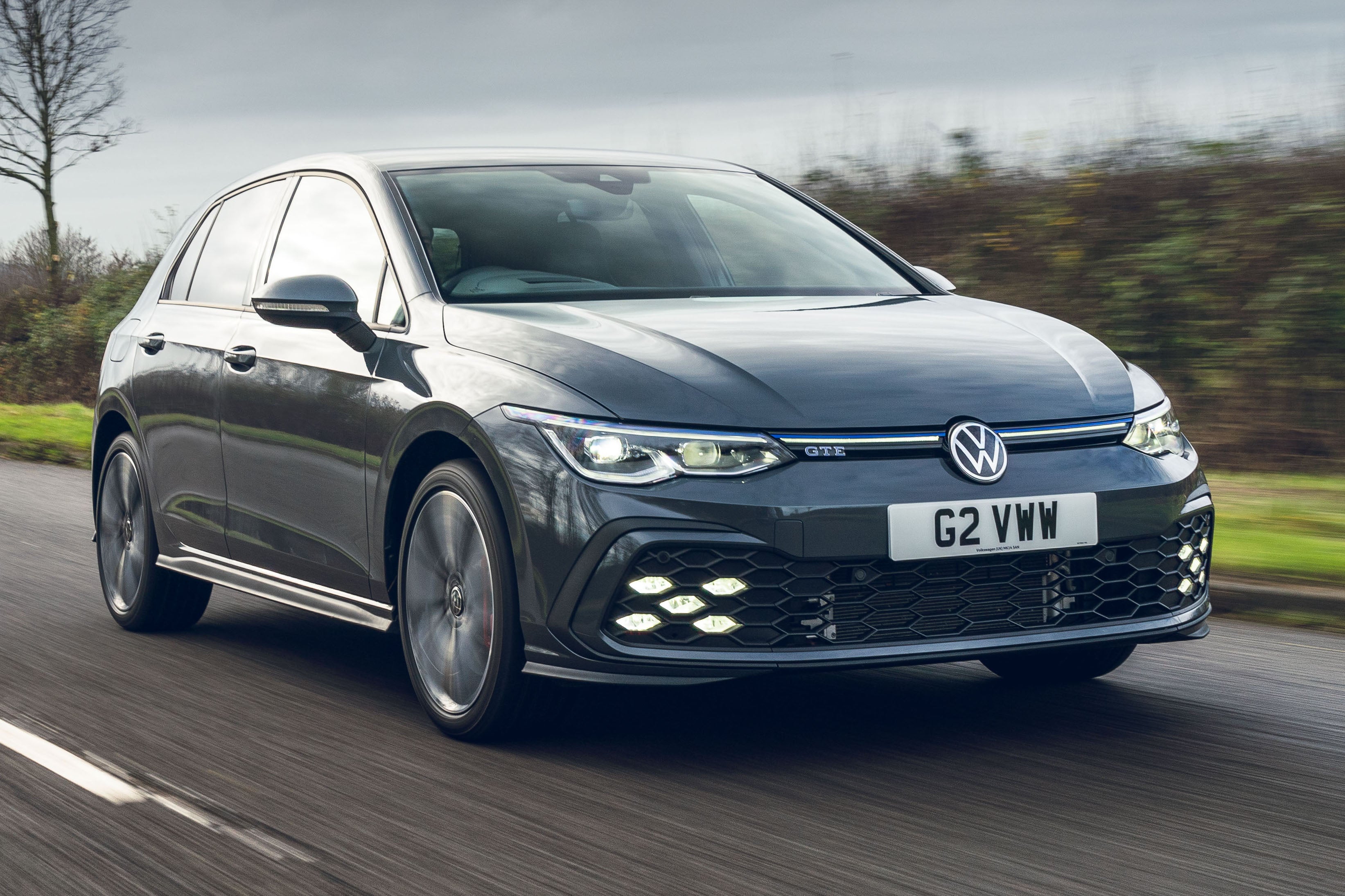
It’s a particularly interesting point of comparison, because the GTI Clubsport is the Leon VZ’s corporate cousin, sharing the same platform, engine and technology, while prices are pretty similar. The execution of each is a little different, however. The cars take a very distinct direction in terms of interior and exterior styling, and the Cupra has a slightly more focused edge to the way it drives.
The Cupra will soon have the legs on the Clubsport when the 325PS version arrives, but there’s a GTI-shaped answer to that in the form of the new Edition 50.
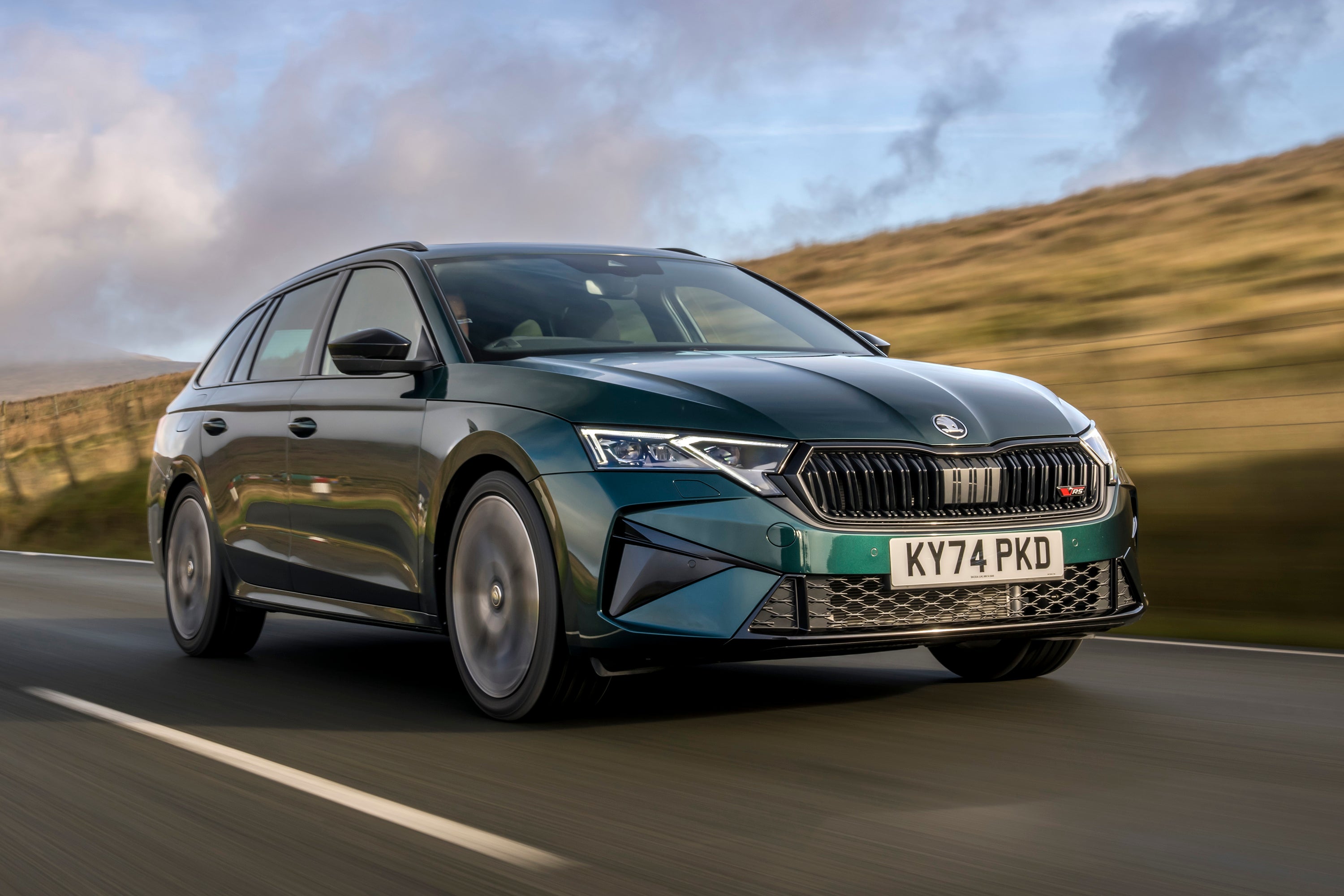
The most obvious alternative to the estate comes once again from the Golf family, but this time the R Estate, because like the Leon VZ Estate, it features all-wheel drive.
It’s a similar issue looking for alternatives to the e-Hybrid version. Again, it’s a Golf derivative that looks like your best bet, in the form of the Golf GTE, which uses the same plug-in hybrid setup. However, there’s no estate version, and while the Skoda Octavia vRS estate used to provide an alternative option, the PHEV has been discontinued in both body styles.
You can buy a Peugeot 308 PHEV as both a hatch and an estate, but it’s much less powerful and isn’t pitched as a performance car.
What's the interior like in the Cupra Leon?
The Leon VZ has a suitably sporty interior with finishes that vary depending on the trim level. All feature a decent-sized infotainment system and an easy-to-read digital instrument cluster.
Not everyone will be a fan of the lack of physical climate and audio controls, and it’s worth pointing out that while the petrol models are reasonably practical (and the Estate cars very practical), the e-Hybrid versions lose boot space due to the packaging of the battery.
Cupra Leon boot space and practicality
The Leon VZ has 380 litres of boot space in petrol hatchback form, reducing to 270 litres in the e-Hybrid due to the location of the battery pack under the boot floor. Once the rear bench is folded flat, there’s 1,301 litres of space, or 1,210 litres in the e-Hybrid.
There’s a big increase in capacity if you opt for the Leon VZ Estate. There’s 620 litres of space in the petrol version, expanding to 1,620 litres with the rear seats folded, while the e-Hybrid manages 470 litres behind the rear seats and a total of 1,450 litres with them folded.
Space for rear-seat passengers is perfectly reasonable for a car of this type, with a decent amount of head and legroom. There’s also a healthy array of storage areas dotted around the cabin, and a double cupholder between the front seats.
Cupra Leon dimensions
The hatchback version of the Cupra Leon VZ is 4,398mm long, 1,992mm wide (including the door mirror) and 1,444mm tall. The Estate is longer at 4,659mm, and marginally taller at 14,63mm.
The hatchback is more than 100mm longer than a Volkswagen Golf hatch, while the estate versions of each are near enough the same. A Peugeot 308 meanwhile, is 4,365mm long as a hatchback and 4,635mm long in estate form.
Tech and infotainment in the Cupra Leon
Every version of the Cupra Leon VZ has a 12.9-inch touchscreen infotainment system. It responds quickly to touch inputs and is logically laid out, but if you’re coming from a car with physical climate controls, it might take some getting used to changing these on the Leon’s display.
There are touch-sensitive temperature keys on the lower screen bezel to make things a bit easier, plus shortcuts for things like the seated heats and the windscreen demisting.
There’s an in-built navigation system that works well, but if preferred, standard-fit wireless Apple CarPlay and Android Auto make it easy to connect your smartphone and use an app like Google Maps or Waze. Unlike the native nav system, though, you can’t display the maps of third-party services in the digital instrument cluster.
Audiophiles might be interested in the VZ3 model because of its 10-speaker Sennheiser sound system, but this is available on the VZ1 and VZ2 as a cost option.
Materials available on the Cupra Leon
The interior materials inside the Leon VZ will depend on the version you’ve picked. The VZ1 features a microfibre-like material called Dinamica, finished in black and complemented by copper stitching, with a dashboard covered in leather.
Upgrading to the VZ2 switches the Dinamica for ‘Moon Slate Metallic’ leather for the seats and door inserts and PVC seat sides, while the VZ3 swaps the leather for textured ‘Turbine’ fabric.
VZ1 and VZ2 models have chrome and copper cabin accents, which are switched for dark chrome in the VZ3. All have a black headlining.
What's the Cupra Leon like to drive?
How the Leon VZ drives depends on the version you go for. The petrol hatchback is definitely the most fun thanks to its high-power, front-wheel drive format, with the all-wheel drive petrol VZ Estate feeling more surefooted but a bit less engaging. The plug-in hybrid is a different kettle of fish again. It’s quick, but it isn’t quite as thrilling as either petrol version. It’s also a very relaxing car to drive in its smooth, quiet electric-only mode.
Cupra Leon range and performance
There are three distinct versions of the Cupra Leon VZ. The petrol-powered hatchback uses a 2.0-litre ‘EA888’ petrol engine shared with many other Volkswagen Group cars, including the Volkswagen Golf GTI. Here, it develops 300PS and 400Nm of torque.
It’s a smooth, punchy unit which takes the hatchback from 0-62mph in 5.7 seconds, on to an electronically limited top speed of 155mph. If you spec the VZ as an estate, though, the ‘4Drive’ all-wheel drive system is brought into the mix, and while the output rises slightly to 333PS and 420Nm of torque. This brings the 0-62mph time down to 4.8 seconds, although the top speed remains the same.
The e-Hybrid, meanwhile, combines a 1.5-litre engine with an electric motor and a 19.7kWh battery pack. The total system power is 272PS and 400Nm of torque, only slightly less power and the same torque as a petrol Leon VZ hatchback. The battery pack adds weight, though, so the 0-62mph is a more modest 7.1 seconds, or 7.3 seconds in the Cupra Leon estate.
Performance data
| Model | Engine/battery size | Power | 0-62mph | Range/MPG |
|---|---|---|---|---|
VZ TSI | Petrol | 300PS | 5.7 seconds | 37.2mpg |
VZ TSI Estate | Petrol | 333PS | 4.8 seconds | 34mpg |
VZ e-Hybrid | PHEV | 271PS | 7.1 seconds | 188.3mpg |
VZ e-Hybrid Estate | PHEV | 271PS | 7.3 seconds | 188.3mpg |
Cupra Leon driving and refinement
All versions of the Leon VZ come with adaptive suspension, which lets you choose how firm you want it to ride. In the firmer modes, the VZ has less body roll, but the trade-off is a reduction in comfort.
Even in its softest suspension setting, the Leon VZ corners confidently and with a perfectly acceptable amount of lean. The petrol models feel light on their feet and are happy with quick changes of direction.
There’s an added sense of security in the way the Estate 4Drive models drive, although this comes at a cost of outright fun. The front-wheel drive hatchbacks put their power down in a slightly less refined way, and you can really feel the electronically controlled front differential shuffling the power between the front wheels to best get you around a corner. It’s just a bit more engaging.
Along with lacking the straight-line pace of the pure petrol models, the e-Hybrid versions don’t feel quite as lively in the corners owing to their extra weight. If you’re after a more relaxing time behind the wheel, though, the e-Hybrid is the way to go with its smooth, quiet electric running.
The four-cylinder engine is plenty smooth as well, though, largely disappearing into the background when you’re on a motorway cruise. At the same time, wind and road noise are kept down to a reasonably low level.
How safe is the Cupra Leon?
Euro NCAP tested the Cupra Leon in 2025, and it was a strong result, with the car scoring the maximum five stars. In terms of the individual categories, the Leon managed 88% for adult occupants, 86% for child occupants, 82% for vulnerable road users and 77% for its safety assistance systems.
All versions of the Cupra Leon come with autonomous emergency braking, lane keeping assistance, adaptive cruise control, front/rear parking sensors and a rear parking camera. VZ3 models add stronger brakes, a lane changing assistance system and a side assistance system with blind spot monitoring.
Running costs: What it's like to live with a Cupra Leon
The petrol Leon VZ can be surprisingly economical, but your MPG will plummet if you enjoy its performance too often. The plug-in hybrid could potentially be much cheaper to run thanks to its healthy electric-only range, especially if your electricity tariff has cut-price off-peak periods.
All versions of the VZ are over the threshold for the government’s expensive vehicle tax supplement, so your VED payments will be pricey from years two to six. In better news, the Leon VZ comes with an above-average length warranty.
Cupra Leon fuel economy
The Cupra Leon VZ hatchback manages 37.2mpg according to the WLTP combined cycle, with the all-wheel drive system in the Estate causing a slight drop to 34mpg.
The e-Hybrid is officially rated as 188.3mpg, a figure which isn’t worth reading too much into – what you actually achieve will vary wildly depending on many factors, including the level of charge at the time of departure, the kind of driving you’re doing and how far you’re going. Thanks to its electric range of up to 75 miles, some journeys might not require the engine to power the car at all.
The old SEAT Leon Cupra used to come as standard with a six-speed manual gearbox, but the current Cupra Leon VZ is exclusively available with smooth-shifting dual-clutch automatic gearboxes. The petrol models use a seven-speed unit, while it’s a six-speed gearbox in the e-Hybrids. You can still have manual control over the ratios using steering wheel-mounted paddles.
Cupra Leon warranty and servicing
The Cupra Leon VZ’s warranty lasts for five years and 90,000 miles, whichever comes first, although there is unlimited mileage coverage in the first two years. This goes above the three years and 60,000 miles offered by many other brands.
On top of this, the high-voltage battery in the e-Hybrid gets the mandated eight years and 100,000 miles of separate coverage. This guarantees that you’ll have at least 70% of the original charge capacity.
Service intervals are every 10,000 miles or 12 months. The automatic gearbox requires an oil and filter change every 40,000 miles.
Cupra Leon insurance groups
Insurance groups for the VZ range from 28 - 34 out of 50, which is in line with what we’d expect for a car of this price and performance. For context, less powerful versions of the VZ range from groups 20 - 27.
How much does it cost to tax a Cupra Leon?
A flat rate of £200 from year two onwards applies to all new cars. Because the VZ versions of the Cupra Leon are all above £40,000 at their RRP, you’ll also need to pay an additional £440 annually from years two to six for the government’s Expensive Car Tax supplement.
What trims are available with the Cupra Leon?
The Leon VZ is available in three trim levels - VZ1, VZ2 and VZ3.
The Cupra Leon VZ1 already ticks all the most important boxes. Standard equipment highlights include 19-inch alloy wheels, electrically adjustable, folding and heated door mirrors, digital instrument cluster, 12.9-inch touchscreen infotainment system, wireless phone charger, electrically adjustable and heated ‘Dinamica’ front seats, interior ambient lighting, adaptive suspension, front/rear parking sensors, rear parking camera, three-zone climate control and adaptive cruise control.
The Cupra Leon VZ2 builds on the above with a different design of 19-inch wheel, leather upholstery and the additional safety features mentioned earlier. Finally, the Cupra Leon VZ3 switches the leather front seats for ‘Cup’ bucket seats (which are still electrically adjustable) while adding a 10-speaker Sennheiser sound system, uprated brakes and a sportier body kit.
Ask the Drive experts: common questions
How much is a Cupra Leon VZ?
What’s the fastest Cupra Leon?
Who makes the Cupra Leon VZ?
Get our latest advice, news and offers
Keep me updated by email with the latest advice, news and offers from Drive.
.jpg)