Peugeot 308 Review

Written By Lawrence Allan
- 2022
- Family Hatch
- Hybrid, diesel, plug-in hybrid
What we love
Attractive and quirky inside and out
Tech is much better than previous 308
Good overall driving experience
Things to consider
Rear seat space is mediocre for the class
i-Cockpit driving position still will not suit everyone
Some rivals are better value
The DRIVE take on the Peugeot 308, is it the right car for you?
The Peugeot 308 is one of the more stylish family hatchbacks on sale, and that matters in a class where many alternatives lean heavily on rationality rather than desirability. It feels smart inside, drives with more polish than some rivals and now has much better infotainment than older Peugeots. The compromise is that rear-seat space is not especially generous and the unusual driving position still needs trying before you buy. Even so, if you want a family hatchback that feels a bit more special than the norm, the Peugeot 308 deserves a place near the top of your shortlist.
The Peugeot 308 in more detail
With some manufacturers moving away from selling family hatchbacks, it's great to see Peugeot double-down with a bunch of mid-life updates for the 308. It's more stylish than ever, making the Volkswagen Golf seem dull by comparison, but what can it offer besides good looks? Find out in our full Peugeot 308 review.
The original Peugeot 308 came at a time when the French brand's offerings looked challenging and lacked lustre. In the years since, Peugeot has got its act together, which the current 308 ably demonstrates.
Yes, it also sells swanky SUVs such as the Peugeot 5008 but the family hatchback arena isn't exactly known for visual flair, making the striking 308 stand out.
Although the Peugeot 308 has one less rival to worry about now that production of the Ford Focus has ceased, there are still plenty of alternatives to choose from. Those include the smoothly styled Mazda 3 and the econonomical Toyota Corolla.
There's competition from much closer to home in the form of the Vauxhall Astra. If you could peel back its bodywork it would be clear to see that its underpinnings and mechanical components are essentially the same as those used by the Peugeot 308.
Attractive finance packages often work in favour of more upmarket brands which means the likes of the Audi A3, the BMW 1 Series and the Mercedes A-Class are also 308 rivals.
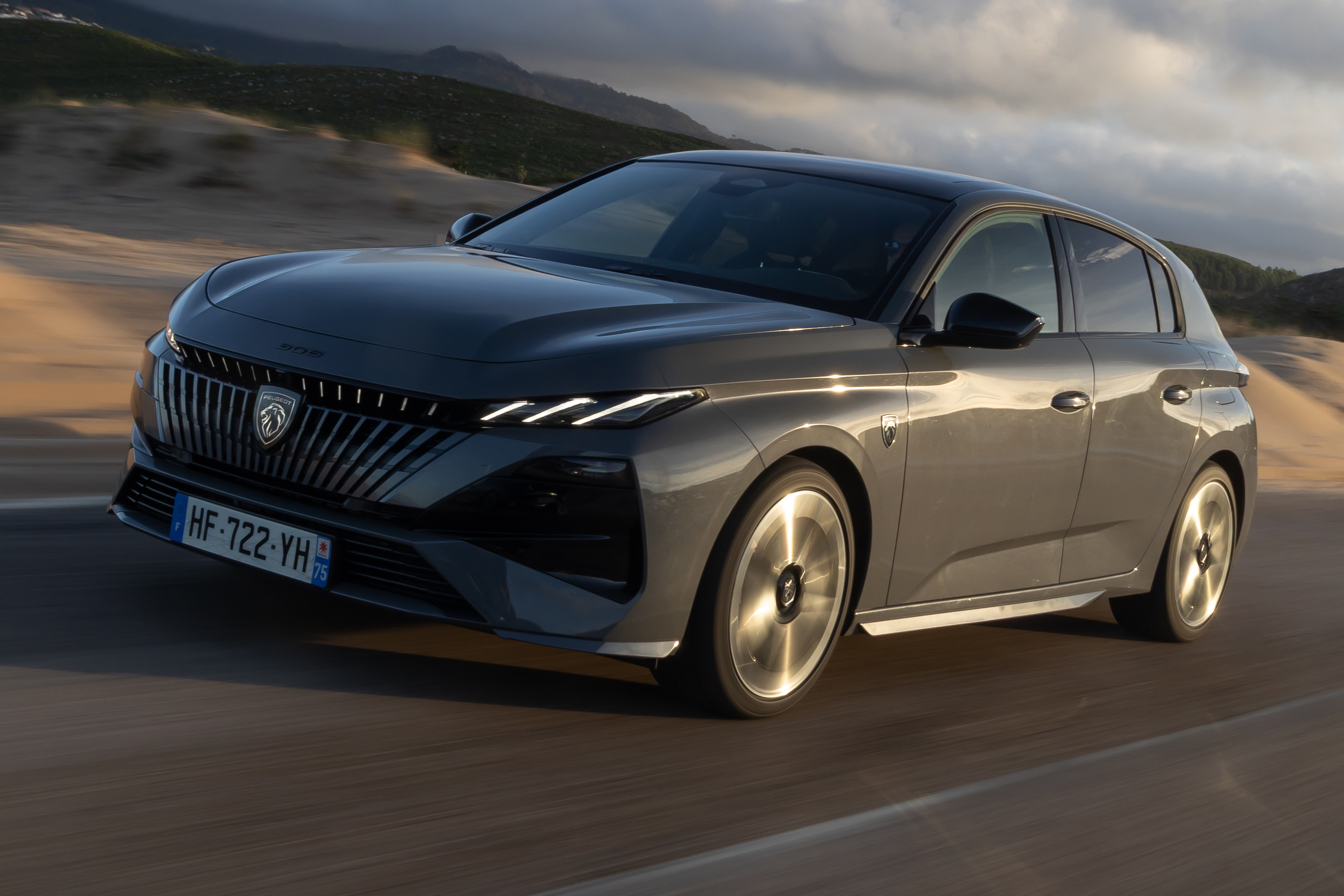
While the Peugeot 308 wasn't exactly crying out for design changes, its 2025 facelift has ushered in a number of visual modifications, mostly at the front end.
The pre-update model's distinctive and massive 'lion's claw' daytime-running lights, stretching from the headlights down the edges of the bumper are gone. That might sound like a backwards step, but result is neater and remains distinctive.
Now there are three 'claw' elements in each headlight, tying in with the illuminated flecks above the grille, although the backlit Peugeot lion emblem is a bit much, if on trend with other manufacturers. The rear has changed less, although the light clusters have been revised.
To go with the aesthetic rejig are some important changes beneath the Peugeot 308's bodywork. These include new gearboxes and a bigger battery for Plug-in Hybrid versions, although this was also available in the latest pre-facelift cars.
To drive, the Peugeot 308 isn't especially sporty but feels more than capable enough while — importantly — proving comfortable and refined. That is, when you aren't revving the Hybrid 145's three-cylinder engine too hard. It's less vocal here than in some other cars from the Stellantis group of brands, but should you want something quieter, your only other option is the Plug-in Hybrid 195.
Perhaps surprisingly, the 1.5-litre BlueHDi diesel engine hasn't been dropped to coincide with the 308's update. While we applaud the option still being available, in the now diesel-averse UK market, we suspect that most interest in that model will come from police fleets, which have been using this Peugeot for years.
While we're on the subject of propulsion choices, it's worth noting you can have the 308 as an electric car. The Peugeot E-308 has also been given the facelift treatment as well a decent uplift in driving range.
Or if you want something with a greater degree of practicality the estate-bodied Peugeot 308 SW has also had a makeover.
What's the best Peugeot 308 trim and engine option?
For most buyers, the best Peugeot 308 is the Hybrid 145 in Allure trim. It gives you the strongest mix of price, efficiency and equipment without making the car feel expensive for the sake of it.
The diesel still has a case if you do a lot of motorway mileage. It remains the long-distance specialist in the range and should still suit drivers who cover serious annual miles, even if the wider market has moved away from diesel power.
The Plug-in Hybrid 195 is the more premium-feeling choice on paper and brings the promise of much lower fuel use if you can charge regularly, but it also pushes the 308 into a far more expensive part of the market. For a lot of private buyers, that makes it harder to justify.
As for trim, Allure is where the Peugeot 308 starts to feel properly rounded. GT looks a little smarter and gets more visual drama, but Allure already brings the key comfort, infotainment and convenience features that matter in daily use.
In simple terms, Allure is the smartest buy, GT is the style-led choice and the Hybrid 145 is the engine most buyers should start with.
What’s the price of the Peugeot 308?
The Peugeot 308 hatchback currently starts from £27,995 in Hybrid 145 Allure form. The diesel sits slightly above that, while Plug-in Hybrid 195 versions start from £33,100 and rise to £36,695 in GT trim.
That means the Peugeot 308 is not the cheapest family hatchback around, and it is easy to find rivals that ask for less. But the 308 does make a stronger visual and cabin-quality case than some of those alternatives, so it never feels as though you are simply paying more for the badge.
Used values also help its appeal. The Peugeot 308 still feels a little more special than many mainstream hatchbacks, which supports its desirability as a nearly new buy.
Alternatives to the Peugeot 308
The Volkswagen Golf is the obvious rival if you want the most complete all-rounder. It is roomier in the back, easier to get comfortable in and more polished in some of the details, even if it does not have quite the same sense of visual flair.
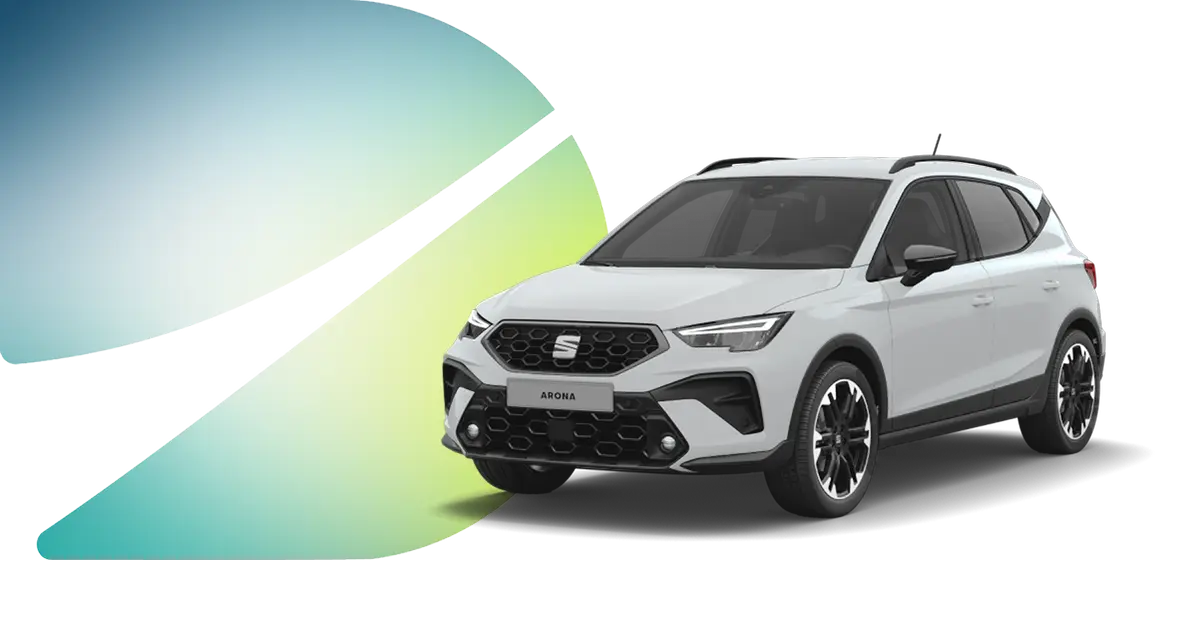
The SEAT Leon is another strong alternative if you want something with a little more style than the Golf but without giving away much in practicality or everyday usability. It remains one of the best-balanced hatchbacks in the class.
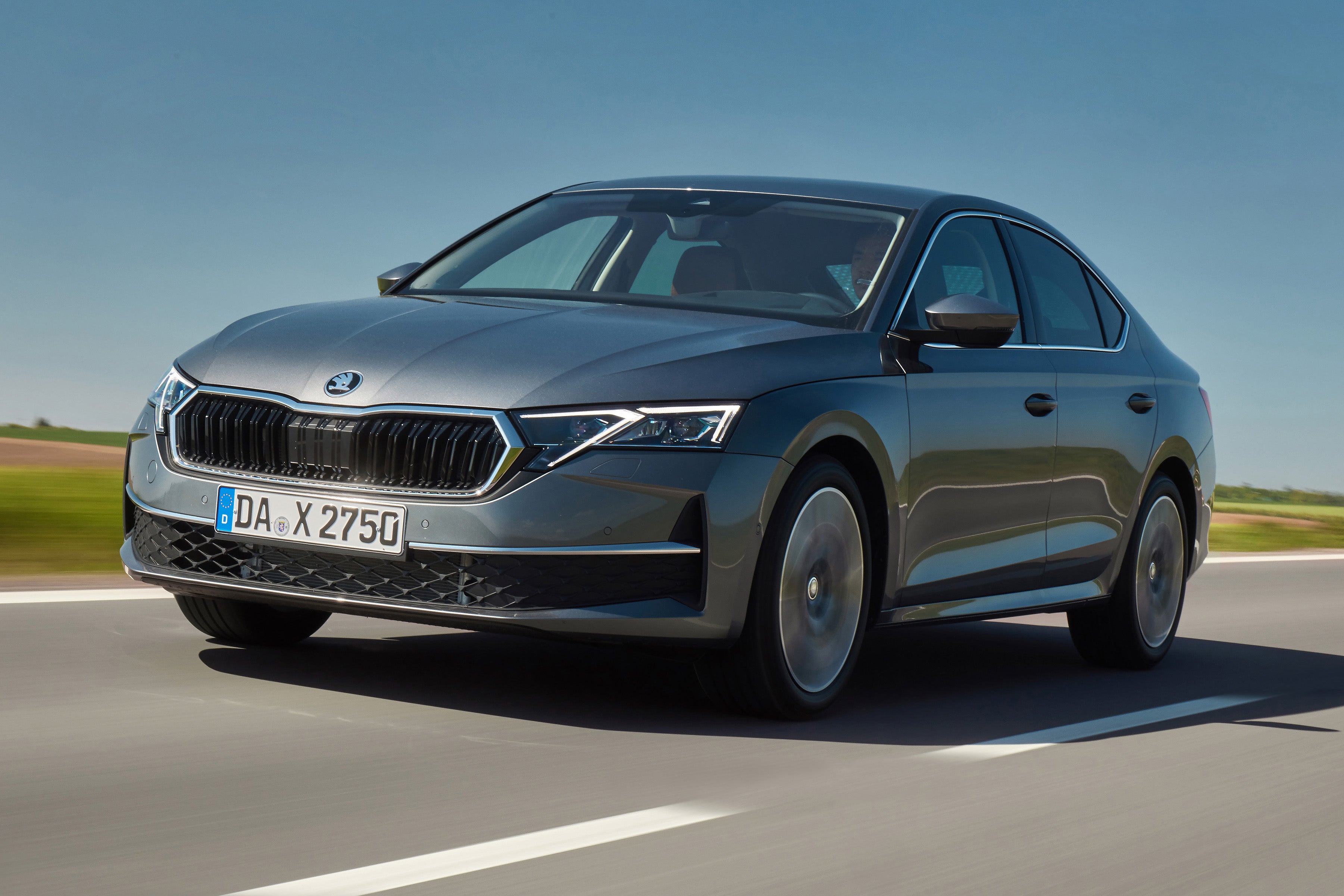
The Skoda Octavia is the rational choice. It is bigger, roomier and more practical than the Peugeot 308, and if rear-seat space and boot room matter most, it makes an even stronger family case.
Beyond those three, the Toyota Corolla is still worth a close look if efficiency matters most, while the Mazda 3 remains a tempting option if you want similar design flair. The Peugeot 308 makes the most sense if you want your family hatchback to feel less ordinary than the norm without straying into premium-badge territory.
What's the interior like in the Peugeot 308?
The Peugeot 308 has one of the most distinctive interiors in the class. It feels modern, well finished and usefully more interesting than many mainstream alternatives, even if the layout still needs trying for size.
Peugeot 308 boot space and practicality
Practicality is the most disappointing aspect of the Peugeot 308, even though it's larger than its predecessor. For reference those increases include a 55mm longer wheelbase, a 110mm overall increase in length to 4367mm and 57mm greater width (now 1859mm)
Those figures promised to make the current 308 a more accommodating car. While we've no complaints with head or legroom up front, the pedals are mounted a too close relative to the seat even for taller drivers, meaning your knees sit higher.
That might be less of an issue were it not for Peugeot's i-Cockpit layout, which combines a small, low-set steering wheel that you look over to see the dial display. Those of above average height may find their ideal driving position is compromised as a result. When balance is achieved, the 308 is a comfortable place to sit.
We can't say the same for the rear, however, where those six feet tall sitting behind those of a similar height will find head, leg and foot space all at a premium. Some smaller cars are roomier, although adults below average height and children in car seats will be fine back there, plus the seats themselves are comfortable.
While it's slightly better than the previous 308, this generation's rivals, barring the svelte Mazda 3, are all more generous with cabin space.
Still, the 308's 412-litre boot is larger than most cars of this size, as is its 1323 seats-down capacity.
Note that the latest Plug-in Hybrid 195's capacity is much reduced to 314 litres with the seats up (361 for the older Plug-in Hybrid 180) due to the larger capacity battery under the boot floor. Seats folded that total capacity drops to 1258 litres, down from 1271 litres for the smaller-batteried model.
Peugeot 308 dimensions
The Peugeot 308 measures 4,367mm long, 1,852mm wide & 1,441mm high. That puts it right in the middle of the family hatchback class and makes it slightly larger than some older rivals without becoming difficult to place on the road.
In practical terms, it is compact enough to handle town use and car parks without much fuss, but large enough to feel substantial and motorway-friendly. That balance works in its favour.
Tech and infotainment in the Peugeot 308
Regardless of which Peugeot 308 you go for you get a 10.0-inch central touchscreen paired with a 10.0-inch digital dial display. All but the very cheapest — and no longer sold — Active Premium models feature a third, smaller screen below the main touchscreen, bubbed i-Toggle.
It's a configurable shortcut display that allows you to preset six chunkily sized virtual buttons to access your most used functions, such as the climate control, navigation, your favourite radio station or even a phone number you ring often. Being so large it works well on the move — certainly better than the fiddly shortcuts of the old 308.
We can't help but wonder if that space would be better used with some physical buttons for the climate control — it's a pain having to bring up a dedicated screen, temporarily replacing your navigation, just to change the temperature or fan speed.
There are some secondary piano-style physical keys underneath, while the main touchscreen itself is clear, bright and more responsive than older Peugeots. The software behind all this can be a bit laggy, though and the integral navigation isn't the easiest to follow.
From the 2025 facelift, all 308s get wireless Apple CarPlay and Android Auto as standard. A Focal sound system is an optional extra models, although we weren't exactly blown away by it.
Materials available on the Peugeot 308
The Peugeot 308’s cabin materials are one of the reasons it feels more upmarket than many mainstream hatchbacks. Soft-touch surfaces, neatly integrated trim pieces and details such as suede-effect or leather-look sections help give it a richer feel than some obvious rivals.
It is not flawless. Lower down in the cabin, there are still some harder plastics, and some competitors feel more uniformly solid. But judged as a whole, the Peugeot 308 makes a stronger first impression than most family hatchbacks at this money.
What's the Peugeot 308 like to drive?
The Peugeot 308 strikes a decent balance between comfort and agility. It is not the softest-riding hatchback in the class and not the sharpest to drive either, but it is polished enough to feel competitive in both areas.
Peugeot 308 range and performance
Previously, you could choose the Peugeot 308 with the 1.2-litre Puretech 130 three-cylinder petrol engine, the self-charging Hybrid 180 as well as both the Plug-in Hybrid 180 and 225, but the line-up has subsequently been rejigged.
Entry point to the range now is the Hybrid 145. It uses the same three-cylinder engine but adds mild hybrid technology in the form of a small battery and electric motor combination to give some light assistance. It can run on electricity alone, but only at very low speeds and for less than a mile.
Although it struggles in Peugeot's SUVs, it's perfectly suited to the lighter 308. Despite its name it produces 147PS and 230NM of torque make for a 0-62mph time of 9.3 seconds and a top speed of 130mph. Although it's not the smoothest thing when you're extracting its full output, the 308 is soundproofed well enough to get away with it.
Its six-speed dual-clutch automatic gearbox is one found in many other Stellantis products, Peugeot models included. It's occasionally clunky in its responses and takes an age to kickdown, but shifts smoothly most of the time.
Now with less power, the Plug-in Hybrid 195 uses a seven-speed dual-clutch transmission in place of the previous traditional eight-speed automatic. It's less powerful than the 224PS version you could get previously, developing 196PS and 360Nm of torque.
That makes it a little slower than its predecessor, with a 0-62mph time of 7.9 seconds (up from 7.5) and a top speed of 140mph (a 6mph drop), or 84mph in electric-only mode.
It's not exactly a rocketship but it covers ground effortlessly thanks to its extra oomph compared to the Hybrid 145. The fake engine noise in Sport mode is unnecessary — it sounds like something from an early entry in the Gran Turismo video game series.
It should be noted that the transition between electric-only and hybrid running can sometimes be abrupt, usually when you're demanding a lot of power.
The 1.5-litre BlueHDi 130 diesel engine has been retained for the facelift, albeit arriving several months later. We previously drove it in the pre-updated car and found the refinement to be good, while its 300Nm of torque means it didn't need to be worked as hard as its modest 131PS power output might suggest.
Performance data
| Model | Engine/battery size | Power | 0-62mph | Range/MPG |
|---|---|---|---|---|
308 Hybrid 145 | 1.2-litre | 145PS | 9.0 seconds | Up to 62.6mpg |
308 BlueHDi 130 | 1.5-litre | 130PS | 10.6 seconds | Up to 59.6mpg |
308 Plug-in Hybrid 195 | 1.6-litre | 195PS | 7.6 seconds | Up to 52 miles EV range |
Peugeot 308 driving and refinement
The Peugeot 308 is a tidy, capable hatchback to drive. The small steering wheel gives it an eager feel at low speed, and around town it is easy to manoeuvre and simple to place. Parking is straightforward enough, helped by decent visibility at the front, even if the rear view is more restricted.
On a winding road, the Peugeot 308 is agile enough to be enjoyable, but it is not as sharp or interactive as a Ford Focus used to be. It turns in neatly, stays well controlled and feels secure, but the main impression is one of competence rather than excitement.
Ride comfort is generally good. It is slightly firmer than the most comfort-focused hatchbacks, but it avoids the brittleness some sporty-looking rivals suffer from. At motorway speeds it settles down nicely and feels refined enough for long-distance work.
Overall, the Peugeot 308 gets the comfort-and-handling balance about right. It does not dominate the class in either direction, but it is good enough in both.
How safe is the Peugeot 308?
The Peugeot 308 comes with a good spread of standard safety kit, including automatic emergency braking, lane-keeping assistance, speed-limit recognition and driver attention monitoring. More advanced adaptive cruise and assistance features are available further up the range.
The latest 308 received a four-star Euro NCAP rating, which was slightly disappointing in a class where several rivals have managed the full five stars. That does not make it unsafe, but it is worth knowing if top-tier crash-test scores matter to you.
Running costs: What it's like to live with a Peugeot 308
Running costs vary quite a bit depending on whether you choose the hybrid, diesel or plug-in hybrid. The good news is that none of them should be ruinous, but some make more sense than others depending on how you use the car.
Peugeot 308 fuel economy
The Hybrid 145 is officially rated at up to 62.6mpg, which makes it the obvious all-round economy choice for many buyers. It should deliver strong real-world efficiency in mixed driving without needing any charging effort from you.
The BlueHDi 130 diesel is rated at up to 59.6mpg and remains the best fit for higher-mileage drivers, especially those who spend most of their time on faster roads.
The Plug-in Hybrid 195 can return extremely high official figures and up to 60 miles of electric-only range, but as always with PHEVs, those numbers depend heavily on charging discipline and usage pattern. Used well, it can be very efficient. Used badly, it can be disappointingly thirsty.
Peugeot 308 warranty and servicing
Peugeot’s standard warranty is three years from first registration. In the first two years it is unlimited mileage, while the third year is capped at 60,000 miles.
That is acceptable rather than generous, and it does not stand out against the stronger warranty cover offered by some rivals. Servicing costs should be manageable enough by class standards, but service history will matter if you are buying used, especially on more complex plug-in hybrid versions.
Peugeot 308 insurance groups
Insurance groups for the Peugeot 308 currently run from around group 19 for lower-spec combustion versions to group 28 for higher-spec plug-in hybrids.
That puts the 308 broadly in line with what you would expect for a modern family hatchback. Cheaper hybrid or diesel versions should be manageable enough, but the more powerful and more highly equipped models naturally sit higher.
How much does it cost to tax a Peugeot 308?
The Peugeot 308 now costs £200 a year in VED after year one, which is the current standard annual rate.
For combustion-engined versions, the Expensive Car Supplement applies if the list price is more than £40,000. If a Peugeot 308 crosses that threshold, you pay an extra £440 a year for five years from the second year of registration, on top of the standard £200 annual VED rate. That means a qualifying car costs £640 a year for those five years.
Most regular Hybrid 145 and diesel versions sit below that threshold, but higher-spec plug-in hybrids can cross it, and options can push cars over the line too. That makes it worth checking carefully before you order.
What trims are available with the Peugeot 308?
The Peugeot 308 line-up is now centred on Allure and GT.
Allure is the sensible starting point and already comes well equipped. It gives you the 10.0-inch touchscreen and digital instrument cluster, 17-inch alloys, rear parking sensors, a reversing camera, ambient lighting and the main technology features that make the 308 feel modern.
GT is the more visually striking version and adds the design-led features that suit the car’s character. That includes larger 18-inch alloys, upgraded exterior styling, 3D digital instruments, Matrix LED headlights and richer cabin materials. It also brings more advanced convenience kit, which helps the 308 feel more premium day to day.
In simple terms, Allure covers everything most buyers really need, while GT is the one to choose if the 308’s sense of style is a big part of the appeal.
Ask the Drive experts: common questions
Is the Peugeot 308 a good family hatchback?
Which Peugeot 308 is best?
Is the Peugeot 308 practical enough for a family?
Is the Peugeot 308 better than a Volkswagen Golf?
Get our latest advice, news and offers
Keep me updated by email with the latest advice, news and offers from Drive.
.jpg)
.jpg)
.jpg)
.jpg)