Hyundai Ioniq 5 N Review

Written By Andrew Brady
- 2024
- SUV
- Electric
What we love
It is hilariously entertaining when you want it to be
Still a very capable everyday EV
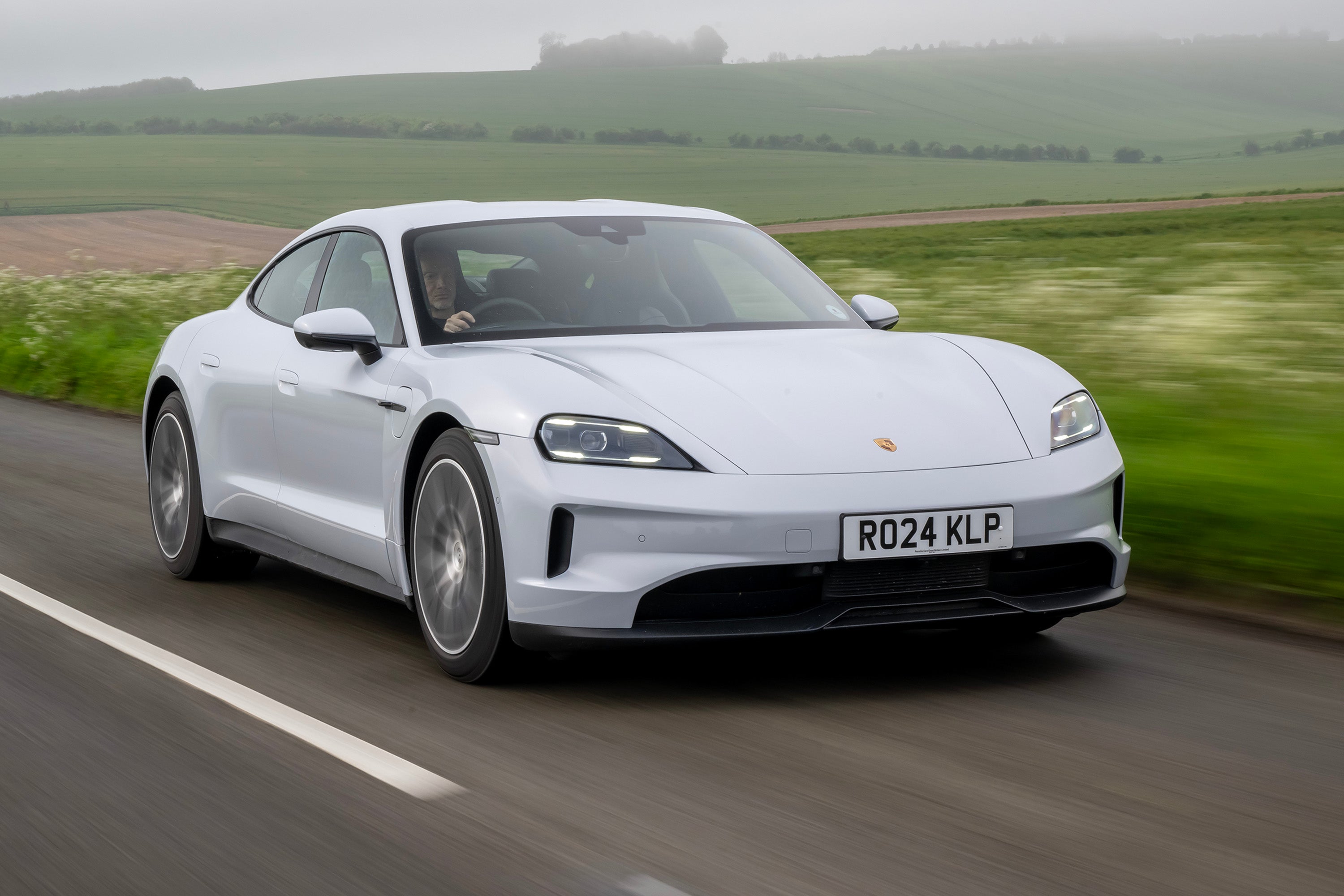
Much cheaper than a Porsche Taycan
Things to consider
There are roomier family EVs
Cabin does not feel as special as the price suggests
Some of the synthetic performance features will not be for everyone
The DRIVE take on the Hyundai Ioniq 5 N, is it the right car for you?
The Hyundai Ioniq 5 N is one of the most convincing arguments yet that an electric performance car does not have to feel clinical. It is devastatingly quick, genuinely engaging and full of the sort of playful engineering flourishes that make you grin rather than simply marvel at the numbers.
What makes it so impressive is that it is not just a fast gimmick. Underneath the drama, there is still a spacious, practical and easy-to-live-with electric family car. The downside is that it is expensive, not especially subtle and not everyone will warm to the artificial gearshifts and synthetic soundtrack. But if you want an EV that feels alive rather than merely fast, the Ioniq 5 N is in a class of its own.
The Hyundai Ioniq 5 N in more detail
The standard Hyundai Ioniq 5 was already one of the best electric family cars on sale, so turning it into a 650PS performance flagship could have gone one of two ways. It could have ended up as an absurd point-and-squirt EV with huge numbers and not much else, or it could have become something far more interesting. Thankfully, Hyundai chose the second route.
The Ioniq 5 N has been developed by the same N division that turned the i20 N and i30 N into some of the most entertaining hot hatches of recent years, and that spirit comes through strongly. This is not a car that relies only on brutal straight-line pace. It has been engineered to feel adjustable, mischievous and involving, with features such as N e-Shift, N Active Sound+ and drift mode designed to make it feel more interactive than the average EV.
That does not mean it is all theatre. The fundamentals are serious. You get an 84kWh battery, dual motors, all-wheel drive, an e-LSD, electronically controlled suspension, huge brakes and a bodyshell that has been thoroughly reworked for the job. Peak output is 650PS with N Grin Boost engaged, 770Nm of torque and a 0-62mph time of 3.4 seconds. On paper alone, that puts it right in serious performance-car territory.
What makes the Ioniq 5 N especially interesting is the way it blends that performance with everyday usability. It is still spacious, still comfortable enough when you calm it down and still benefits from the standard Ioniq 5’s strong charging tech. So while it is plainly not a rational buy in the usual sense, it is far easier to live with than many cars that offer this sort of pace.
The result is a car that feels unusually broad in ability. One minute it can feel almost absurdly playful, the next it settles down into a refined motorway cruiser. That breadth is a huge part of its appeal, and it is why the Ioniq 5 N feels much more substantial than a one-trick electric performance car.
What's the best Hyundai Ioniq 5 N trim and battery option?
There is only one version of the Ioniq 5 N in the current UK range, so the decision is refreshingly simple. Every car gets the 84kWh battery, 650PS all-wheel-drive powertrain and a very generous standard specification.
That means the real choice is not which trim to have, but whether the optional Vision Roof is worth adding and which colour best suits the car. Performance Blue remains the obvious signature shade, but Soultronic Orange and the matte finishes also suit the Ioniq 5 N’s extrovert personality.
What’s the price of the Hyundai Ioniq 5 N?
The Hyundai Ioniq 5 N is currently priced at £65,800 on the road. That is a lot of money for any Hyundai, and it immediately puts the car into serious performance territory.
The flip side is that there is remarkably little else at this price point that does quite the same thing. A Porsche Taycan is still much more expensive once you spec one properly, while the Kia EV6 GT is only a little cheaper and does not feel as playful or as complete as the Hyundai. So although the Ioniq 5 N is expensive, it is not obviously overpriced for what it offers.
Alternatives to the Hyundai Ioniq 5 N
The closest rival is the Kia EV6 GT because it shares much of the same underlying electric architecture and offers similarly outrageous pace. The Kia is very fast, but it does not have quite the same sense of humour or interaction as the Hyundai.
If you are thinking more broadly, the Tesla Model 3 Performance is another obvious benchmark because it combines huge EV pace with stronger efficiency, while the Porsche Taycan is the premium-badge alternative for buyers willing to spend much more. The BMW i4 M50 is also worth considering if you want something more subtle and a little more conventional in the way it delivers its performance.
You could also argue that the Ioniq 5 N is competing with petrol performance cars rather than just EVs. Cars such as the BMW M340i Touring or even a Volkswagen Golf R still make a different sort of emotional case, but the Hyundai is one of the first EVs that genuinely feels as though it belongs in that conversation.
What's the interior like in the Hyundai Ioniq 5 N?
The Ioniq 5 N’s cabin is recognisably based on the standard car’s, which means it is roomy, practical and easy to use. Hyundai has added enough N-specific detail to remind you this is not just another family EV, even if the overall ambience still falls a little short of what the price might lead some buyers to expect.
Hyundai Ioniq 5 N boot space and practicality
One of the clever things about the Ioniq 5 N is that it remains a genuinely usable family car. The battery packaging and long wheelbase mean there is loads of cabin space, and the flat floor helps make the rear feel especially roomy.
The rear seats still slide backwards and forwards, which lets you trade rear legroom against boot space depending on what you need. That means the Ioniq 5 N keeps a lot of the standard Ioniq 5’s flexibility rather than sacrificing practicality on the altar of performance.
The boot measures 480 litres, which is a useful enough figure and broadly on par with an EV6 GT, although it is down on the standard Ioniq 5 and some rivals make better use of their footprint. There is enough room for family luggage or the weekly shop without the car ever feeling compromised, but if outright carrying ability matters most, a Tesla Model Y or Skoda Enyaq still make a stronger case.
So the Ioniq 5 N is practical enough rather than class-leading. The important point is that it does not ask you to give up much everyday usefulness in return for all that extra performance.
Hyundai Ioniq 5 N dimensions
The Hyundai Ioniq 5 N measures 4,715mm long, 1,940mm wide & 1,585mm high. That makes it a substantial thing on UK roads, and you do notice the width more than the height when threading it through tighter spaces.
Those dimensions help explain the generous passenger room and broad-shouldered stance, but they also mean this is not a compact hot hatch in the traditional sense. It feels like a big, serious performance car.
Tech and infotainment in the Hyundai Ioniq 5 N
The Ioniq 5 N uses the same basic dual-screen layout as the standard Ioniq 5, with a 12.3-inch touchscreen and 12.3-inch digital driver display. That is no bad thing because Hyundai’s system remains clear, responsive and easy to operate.
What changes here are the performance layers. Hyundai has added extra N-specific menus, drive settings and data displays, plus a standard head-up display that can show augmented-reality navigation and performance information. The system packs in a lot of functionality, but crucially it does not become intimidating.
Wireless Apple CarPlay and Android Auto are standard, as are a wireless phone charger, Bose premium audio and over-the-air updates. So while the Ioniq 5 N majors on driving entertainment, it is still properly equipped on the everyday tech front.
Materials available on the Hyundai Ioniq 5 N
The main visual difference inside is the standard bucket-seat treatment, finished in a mix of leather and Alcantara. They look serious, but they are more comfortable than you might expect and suit the car’s dual-purpose brief well.
There are also N-specific touches such as the steering wheel, knee pads and various trim details, but the overall material quality is best described as good rather than truly premium. It is solid, sporty and likely to wear well, but it does not quite deliver the sense of occasion you might expect at this price point.
So the cabin is appealing and well judged, but it does not quite feel like a £65,000 interior in the same way the car feels like a £65,000 performance machine.
What's the Hyundai Ioniq 5 N like to drive?
This is where the Ioniq 5 N justifies its existence. Plenty of electric cars are fast. Very few are entertaining. The Hyundai manages to be both, and in a way that feels much more deliberate and much less gimmicky than it first sounds.
Hyundai Ioniq 5 N range and performance
The Ioniq 5 N uses an 84kWh battery and dual-motor all-wheel drive. Standard output is 609PS and 740Nm, rising to 650PS and 770Nm for up to 10 seconds when you press the N Grin Boost button.
That is enough for 0-62mph in 3.4 seconds and a top speed of 161mph. Those are serious numbers, and they are backed up by a chassis that is much more sophisticated than the typical fast EV’s simple point-and-fire approach.
Official WLTP range is up to 278 miles. That is respectable rather than outstanding for an EV at this price, and it is the price you pay for the tyres, power and overall performance focus. In the real world, a comfortable 200 miles or more between charges is realistic in mixed use, but enthusiastic driving will obviously take a chunk out of that.
The key thing is that the Ioniq 5 N does not feel defined purely by its acceleration. The figures are dramatic, but the way it delivers them is what really matters.
Performance data
| Model | Engine/battery size | Power | 0-62mph | Range/MPG |
|---|---|---|---|---|
Ioniq 5 N AWD | 84kWh | 650PS boost / 609PS standard | 3.4 seconds | Up to 278 miles |
Hyundai Ioniq 5 N driving and refinement
The Ioniq 5 N feels astonishingly capable for something that weighs well over two tonnes. There is huge grip, strong body control and enough adjustability to make it feel much more like an oversized hot hatch than a blunt-force electric SUV.
Hyundai’s N division has also managed to make the synthetic elements feel more enjoyable than cynical. The fake gearshifts, the sound design and the various performance modes could have been irritating, but in reality they add a layer of interaction that most EVs simply do not offer. Some drivers will still find them contrived, but they make much more sense from behind the wheel than they do on paper.
What really impresses is the breadth of ability. Put the Ioniq 5 N into its calmer settings and it settles down into a refined, impressively comfortable motorway cruiser. The ride is firm, but never intolerable, and the car feels much more relaxed than something this focused has any right to be.
So while the Ioniq 5 N is at its most memorable when you are leaning on it, it also succeeds because it can still function as an everyday electric family car when the mood changes.
How safe is the Hyundai Ioniq 5 N?
The Ioniq 5 N itself has not been crash tested by Euro NCAP, but the regular Ioniq 5 has a five-star rating and the N shares a very broad suite of safety and driver-assistance technology.
Standard equipment includes Blind Spot Collision Avoidance Assist, Blind Spot View Monitor, Forward Collision Avoidance Assist, Highway Drive Assist 2, Lane Follow Assist, Lane Keep Assist, Remote Smart Park Assist 2, a Surround View Monitor and tyre pressure monitoring. There is enough here to make the Ioniq 5 N feel every bit as modern and safety-conscious as the standard car.
Running costs: What it's like to live with a Hyundai Ioniq 5 N
The Ioniq 5 N is not going to be a cheap car to buy, insure or rapid charge, but it does soften the blow by being relatively efficient for its performance level and by offering very strong charging capability.
Hyundai Ioniq 5 N charging times and costs
Thanks to its 800V architecture, the Ioniq 5 N can charge at up to 240kW in ideal conditions. Hyundai says 10 to 80 per cent can take as little as 18 minutes on a sufficiently powerful charger, although the official spec sheet quotes 18 to 36 minutes depending on conditions.
At home, a 7kW wallbox takes around 11 hours 30 minutes for a full charge, while Hyundai quotes 7 hours 35 minutes from a 10.5kW three-phase wallbox. So it remains easy enough to keep topped up overnight if you can charge at home.
As with any EV, the cheapest running costs come from home charging on a good off-peak tariff. Use public ultra-rapid chargers all the time and costs rise sharply, which matters more in a performance EV that may encourage enthusiastic driving.
Hyundai Ioniq 5 N warranty and servicing
Hyundai covers the Ioniq 5 N with a five-year unlimited-mileage warranty, while the high-voltage battery is covered for eight years or 100,000 miles. That remains a reassuring package, especially given how much performance and technology the car packs in.
Hyundai also includes annual vehicle health checks and roadside assistance. In broad terms, there is no obvious reason to be especially worried about ownership, even if tyres and brakes are likely to be the consumables that bite first if you use the car hard.
Hyundai Ioniq 5 N insurance groups
The Ioniq 5 N sits in insurance group 49, which should tell you most of what you need to know. This is not going to be a cheap car to insure, and buyers should absolutely get quotes before committing.
That is not unusual given the price, power and complexity involved, but it is worth being explicit about because this is one running-cost area where the Hyundai does not pretend to be a sensible mainstream buy.
How much does it cost to tax a Hyundai Ioniq 5 N?
The Ioniq 5 N pays the standard annual VED rate, currently £200.
Because the Ioniq 5 N has a list price of more than £50,000, it also attracts the Expensive Car Supplement from years two to six. At current rates, that means an extra £440 a year on top of the standard annual rate, taking the yearly total to £640 in that period.
What trims are available with the Hyundai Ioniq 5 N?
There is just one Hyundai Ioniq 5 N trim in the UK, which keeps things simple.
Standard specification is generous. Outside, you get 21-inch forged alloy wheels, Pirelli P Zero tyres, gloss black mirrors, LED projection headlights, LED rear lights, rear privacy glass and the full N exterior package.
Inside, the Ioniq 5 N comes with Alcantara bucket seats, heated and ventilated front seats, heated outer rear seats, a heated steering wheel, head-up display, Bose premium audio, wireless phone charging, 64-colour ambient lighting, dual-zone climate control and the dual 12.3-inch screens.
There is also a wide spread of performance and driver-assistance kit as standard, including electronic control suspension, e-LSD, Remote Smart Park Assist 2, Surround View Monitor, Blind Spot View Monitor and Highway Drive Assist 2. The only real decision is whether you want to add the optional Vision Roof and which paint finish suits it best.
Ask the Drive experts: common questions
How much does the Hyundai Ioniq 5 N cost?
How fast is the Hyundai Ioniq 5 N?
What’s the range of the Hyundai Ioniq 5 N?
Is the Hyundai Ioniq 5 N practical?
Get our latest advice, news and offers
Keep me updated by email with the latest advice, news and offers from Drive.

.jpg)
.jpg)
.jpg)