Skoda Enyaq vRS Review

Written By Matt Robinson
- 2023
- SUV
- Electric
What we love
Serious real-world pace with useful all-wheel drive traction
Still roomy, comfortable and easy to live with every day
One of the better sporty EVs if you want speed without a harsh ride
Things to consider
vRS performance comes with a price premium
Performance is geared towards effortless pace
Many functions are accessed through the touchscreen
The DRIVE take on the Skoda Enyaq, is it the right car for you?
The Skoda Enyaq vRS makes most sense if you want an electric family SUV that feels properly quick but still behaves like a sensible everyday car. It has the pace, traction and extra visual bite you would expect from a vRS car, yet it keeps the Enyaq’s big boot, roomy cabin and easy-going on-road character. This is not a full-fat performance car, and if you want something raw or especially entertaining, you may come away wanting more. As a fast, polished and practical EV, though, it is very easy to recommend. Not cheap, mind.
The Skoda Enyaq in more detail
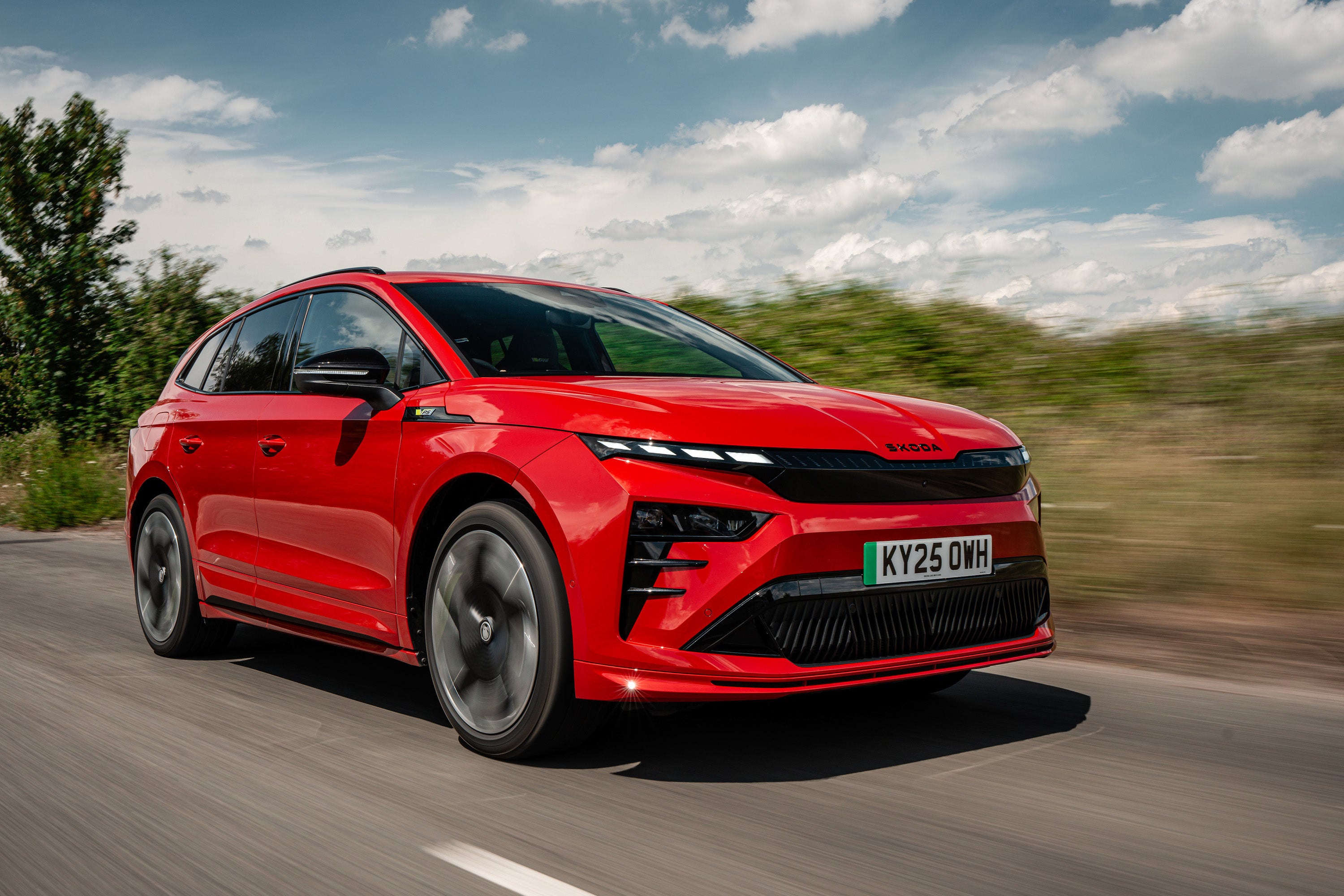
The Skoda Enyaq vRS sits at the top of the regular Enyaq range and gives Skoda’s largest electric family car a more purposeful edge. In simple terms, it takes the regular Enyaq’s strengths, which are immense space and practicality, impressive comfort, and excellent quality, and adds more power, all-wheel drive and an adaptive suspension.
The ordinary Skoda Enyaq is already one of the more convincing family EVs on sale, and has always been easy to recommend to buyers who want something roomy, practical and sophisticated, but who also want something less showy and better value than an Audi or BMW alternative. The vRS version builds on that by giving you stronger straight-line performance and a bit more visual attitude, but without making the car awkward to live with.
Browse used Škoda Enyaqs for sale →
While the regular Enyaq first arrived in 2021, the vRS version didn’t follow until 2023. It’s available in two forms, both in a regular SUV shape, or as a sleeker Enyaq Coupe. The entire Enyaq range was overhauled during an extensive facelift in 2025, bringing new looks, revised powertrains and more standard equipment.
As such, the Skoda Enyaq vRS now uses a 340PS dual-motor four-wheel drive system (up from 300PS before the facelift), and an 84kWh battery. That means a 0-62mph time of 5.2 seconds, and an official range of up to 344 miles in SUV form, or 347 miles in the sleeker Coupe.
The important thing to note is that the Skoda Enyaq vRS still feels like an Enyaq first and a performance model second. And in our eyes, that’s not a criticism. It means you still get a high seating position, a large boot (585 litres in the SUV, 570 litres in the Coupe), back seats that can comfortably handle tall adults, and the sort of comfort, refinement and ease-of-use that makes it easy to live with every day.
Yes, it’s true that for some more enthusiastic drivers, the vRS badge will promise more excitement than the car’s driving experience actually delivers. It is brisk, secure and well rounded rather than being playful or especially engaging. However, we think most potential buyers will like the balance it strikes between sporty and sensible.
What's the best Skoda Enyaq trim and battery option?
That’s a far easier question to answer than it is on most Drive reviews because the Skoda Enyaq vRS is its own standalone model available in just one main trim and with one powertrain. With the Skoda Enyaq vRS, you’re getting an 84kWh battery, dual motors, four-wheel drive, a 340PS output and a whole bunch of luxury kit. Just choose your bodystyle (SUV or Coupe), your colour and your optional extras, and away you go.
The main choice is not between vRS variants, then, but whether the vRS is the right Enyaq for you at all. For most buyers, the sweet-spot in the wider Enyaq range is likely to be a cheaper rear-drive model such as an SE L 85. Those more modest versions keep the same family-friendly character, and offer longer range, for a lot less money.
The Skoda Enyaq vRS only really makes sense if you definitely want the extra pace, brasher looks and added standard kit. If you do, the standard vRS spec is generous enough that you don't need to go crazy with the options list. A panoramic roof is a nice luxury, but it’s certainly not essential.
What’s the price of the Skoda Enyaq?
The Skoda Enyaq vRS starts at £52,470 for the SUV, jumping up to £54,370 for the Coupe version. That’s a big jump up from the regular Enyaq range and enough to push it firmly into premium-EV money. At this level, buyers will also be looking at cars such as the Cupra Tavascan, Audi Q4 e-tron and high-end versions of the Kia EV6 and Hyundai Ioniq 5. There are also plenty of used Škoda Enyaqs for sale for considerably less.
That means the Enyaq vRS doesn’t really have Skoda’s traditional high-value appeal, but it still makes a decent case for itself. Standard equipment is strong, the cabin is roomy, and the performance is properly brisk.
If budget matters more than speed, a lower-level Enyaq version will make far more sense, but if you’re considering a vRS, you probably already know that, and have decided to consider it anyway. Sensible cars don’t always have to be completely sensible, right?
Alternatives to the Skoda Enyaq
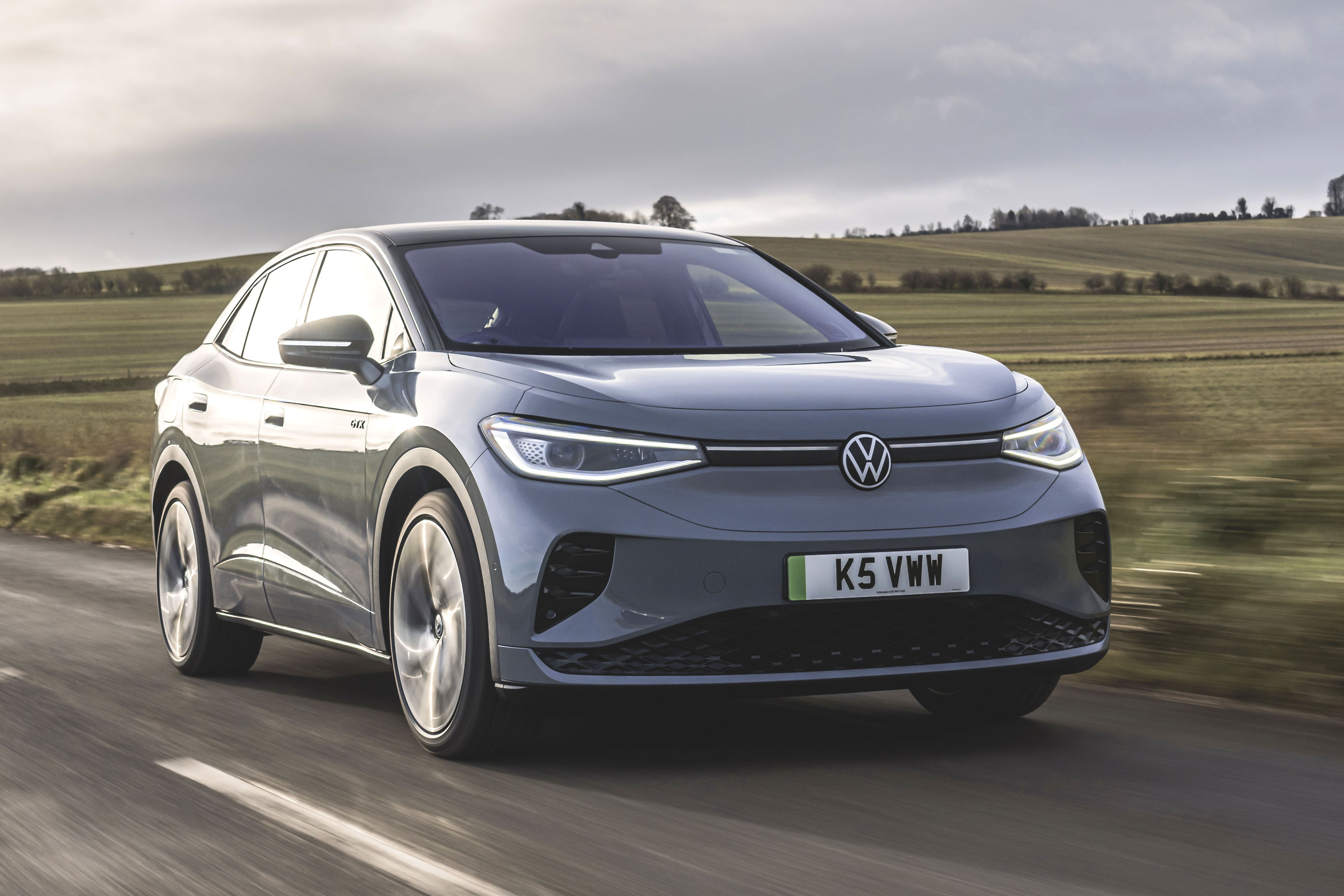
The closest alternatives are probably the ones that are closely related to the Enyaq. The Cupra Tavascan is a left-field alternative. It has a much more dramatic design and a cabin that feels more overtly sporty. The Audi Q4 e-tron is another natural rival if badge appeal particularly matters to you, although it can look very expensive once specced to a similar level. VW's own ID.4 and ID.5 GTX are also largely identical underneath to the Enyaq vRS
Elsewhere, the Kia EV6 and Hyundai Ioniq 5 remain strong alternatives because they blend rapid charging, solid range and good usability with the potential for super-strong straight-line performance. They feel a little less conventional inside than the Skoda, but they are still among the most complete EVs in this price bracket.
What's the interior like in the Skoda Enyaq?
The Skoda Enyaq vRS has one of the better interiors in this class if your priorities are space, practicality and quality. It feels sportier than the standard car, but does not sacrifice the Enyaq’s core strengths in the process.
Skoda Enyaq boot space and practicality
One of the Skoda Enyaq vRS’s biggest strengths is that its extra sportiness has not come at the expense of family friendliness. You still get a 585-litre boot in the SUV, which is very generous for an electric SUV of this size, and capacity rises to 1710 litres when you fold the rear seats down. The Coupe version doesn’t lose all that much space, either: there’s 570 litres with the rear seats in place, and 1610 litres with them folded. The is also easy to load thanks to the square opening and low lip, and a powered bootlid comes as standard on all models.
Passenger space is another big plus. The back seats have massive legroom and headroom, and the rear bench is wide enough that you can fit three adults across it without feeling too pinched. The back seats don’t slide back and forth like they do in some rival SUVs, but the flat floor means there’s plenty of room for everyone’s feet.
Up front, the Skoda Enyaq vRS gets chunkier sports seats and a sportier look, but the basic layout is familiar Enyaq. That means a high driving position, a commanding view out and plenty of storage. It also means that too many functions are controlled by the touchscreen rather than by physical buttons and switches, but we’ll learn more about this in the infotainment section below.
Skoda Enyaq dimensions
In regular SUV form, the Skoda Enyaq vRS measures 4,660mm long, 1,879mm wide (or 2,148mm wide if you include the door mirrors) and 1,618mm tall. You might expect the Coupe’s lower roofline to result in less height, but it’s actually a fraction taller at 1,620mm. The Enyaq sits at the larger end of the midsize SUV class, then, but not so much so that it becomes cumbersome on tight streets.
Tech and infotainment in the Skoda Enyaq
The Skoda Enyaq vRS uses the same basic infotainment system as the rest of the Enyaq line-up, built around a large central 13.0-inch touchscreen and 5.0-inch digital driver display. The system incorporates built-in navigation, wireless smartphone connectivity, wireless smartphone charging, DAB radio and USB-C ports front and rear. On top of the regular roster, vRS cars (along with SportLine ones) also have an upgraded Canton sound system and a head-up display.
The screen looks good, with smart fonts and slick graphics, and the system responds quickly and reliably to taps and swipes. However, there are a few issues with usability. Firstly, the screen’s position on top of that dashboard means it attracts reflections on sunny days. Secondly, and more severely, and like with so many cars these days, there are simply too many functions that have to be operated through the touchscreen, making the whole interface feel too complicated and cluttered. This includes the climate controls, which we feel really should be operated through regular buttons and switches instead, because doing it through the touchscreen is complicated, time-consuming and distracting.
Materials available on the Skoda Enyaq
The regular Enyaq already feels like a classy car, with soft-touch panels in all the places you expect to find them, and some you don’t. Even the plastics lower down in the cabin look smart, even though they have a harder, more durable finish. Depending on trim level, the dashboard and door tops are trimmed with textiles to make things look more interesting, and it works really well.
The vRS, meanwhile, gets its own sportier interior treatment over lesser Enyaq models, including the vRS Suite Design Selection. This brings upholstery and dashboard trims in premium leather (a mix of real leather and man-made leather), plus you get chunkier sports seats. Alternatively, you can specify the vRS with the optional vRS Lounge Design Selection, which swaps the leather for a mix of microsuede and artificial leather with green stitching as a no-cost option (although you lose seat ventilation if you do).
It’s all effective in making the vRS feel a little bit sporty and distinct from the rest of the range, but it doesn’t go too far so as to make the cabin feel gimmicky.
What's the Skoda Enyaq like to drive?
The Enyaq vRS is fast, secure and easy to drive quickly, but it stops short of feeling like a genuinely exciting performance SUV. Think polished pace rather than hot-hatch hoonery, and you’ll be about right.
Skoda Enyaq range and performance
The current Skoda Enyaq vRS has a twin-motor powertrain delivering four-wheel drive, not to mention the small matter of 340PS. This can propel the vRS - which weighs well over two tonnes, remember - from 0-60mph in 5.2 seconds. That’s very brisk indeed, and certainly quick enough for a large family SUV like this, even one that purports to be sporty.
As you’d expect, the acceleration feels most explosive off the line, like it does with most EVs, but while the level of accelerative potential does tail off a bit when you’re already going along at a decent pace, it doesn’t tail off as much as it does in some EVs, so there’s always plenty of go on hand.
It’s all fed by an 84kWh battery with a usable capacity of 79kWh, the largest in the Enyaq range, albeit by only a whisker. The official WLTP range this gives stands at 344 miles in the regular SUV version, and 347 miles in the Coupe thanks to its slightly more slippery shape. That’s respectable for the class, especially given the power on offer, although do be aware that making maximum use of that power will see real-world returns plummet, as will prolonged motorway use and cold weather, neither of which EVs like.
One other thing to note where range and cold weather are concerned is that no version of the Enyaq - not even the vRS range-topper - gets a heat pump as standard for more efficient cabin heating, while many rivals do. You can add one to your Enyaq as an option, but it’ll cost you more than a grand.
Performance data
| Model | Engine/battery size | Power | 0-62mph | Range/MPG |
|---|---|---|---|---|
Enyaq vRS | 84 kWh | 340PS | 5.2 seconds | Up to 344 miles |
Skoda Enyaq driving and refinement
The Skoda Enyaq vRS gets Dynamic Chassis Control adaptive suspension as standard, and that gives it a really impressive breadth of abilities. Select one of the softer, more relaxed modes, and it’s easily comfortable enough to keep life settled and comfortable, and on all sorts of roads at all sorts of speeds. There’s the tiniest bit of edge to the ride that lets you know you’re riding on massive 20-inch wheels, but it’s nothing that upsets the calm, meaning that the Enyaq’s inherent family-friendly sensibleness remains intact even in its sportiest form. And we think this is a very good thing.
Select a sportier setting, and you do feel the suspension hunker down a wee bit, making the car feel a fraction more focused, but it never takes things too far, even in this mode, the ride is still very decent, and whatever mode you select, body control is strong enough to keep direction changes feel crisp and assured.
Will the vRS thrill you like the best hot hatches can? Nope, it’s too big and heavy for that, and while the steering has good weighting throughout its various modes, it feels rather artificial when you’re flinging the car about. There isn’t much playfulness when changing direction, just relentless grip and traction. It’s not the thrill-ride some may be expecting from the vRS badge, then, but it’s sensationally capable and a very fast point-to-point machine.
Refinement is another strong point. There’s not much noise from the motor, obviously, and wind noise is also very well contained. Those big wheels, shod with broad tyres, do stir up a bit of road noise on the motorway, but it’s nothing that’ll bother you.
Around town, the high driving position, good visibility and responsive controls make it an easy car to pootle around in despite its size, and the perky off-the-line pace makes it easy to exploit gaps in traffic.
How safe is the Skoda Enyaq?
The Enyaq has a five-star Euro NCAP rating and benefits from a broad suite of standard driver assistance systems, including adaptive cruise control, lane support, blind spot assistance, and traffic sign recognition. On top of all the regular Enyaq’s safety kit, the vRS also gets a really advanced self-parking function as standard.
Running costs: What it's like to live with a Skoda Enyaq
The Enyaq vRS is not cheap to buy, insure, or charge if you repeatedly rely on public rapid-charging networks. Charge at home, though, and putting power in it will be very affordable.
Skoda Enyaq charging times and costs
The Skoda Enyaq vRS supports DC rapid charging at up to 185kW, with a quoted 10% to 80% top-up time of 26 minutes in ideal conditions. That’s quick enough to make motorway stops manageable, even if some rivals give better rapid charging speeds.
That said, we wouldn’t recommend rapid charging on a regular basis anyway. It’s way more expensive than charging at home, and as such, should only be relied on in emergencies.
Home charging on a conventional 7kW wallbox charger will take around 12 hours from empty to full, and will cost around £22 if you pay for your domestic electricity at the UK national average rate. That’s already cheaper than a tank of petrol or diesel, but things get even better if you get yourself on a variable domestic power tariff that allows you to charge your car overnight on heavily discounted off-peak electricity. That way, you’re likely to cut the cost of that full charge down to less than a tenner.
Skoda Enyaq warranty and servicing
Like the rest of the Skoda range, the Enyaq vRS gets a three-year vehicle warranty, made up of two years with unlimited mileage plus a third year up to 60,000 miles. The high-voltage battery is covered for eight years or 100,000 miles, with free repair or replacement if battery capacity drops below 70% within that period.
Servicing intervals stand at two years, and Skoda offers service plans to help keep on top of costs. Enyaq plans include a battery state-of-health check at every service.
Skoda Enyaq insurance groups
Both versions of the Skoda Enyaq vRS sit in insurance group 39, which is quite a bit higher than most of the mainstream Enyaq versions. That’s to be expected given the power and price of the car, though.
How much does it cost to tax a Skoda Enyaq?
A lot. Both versions have a list price of over £50,000, the price at which EVs become liable for the higher rate of VED road tax. As such, you’ll pay £640 per year between years two and six of the car’s life, after which annual payments drop down to just the lower-rate flat fee, currently charged at £200 per year.
If you’re talking company car tax, though, the situation looks a lot rosier. EVs still command a much lower rate of Benefit-in-Kind tax than combustion-powered cars, and will do for a wee while yet.
What trims are available with the Skoda Enyaq?
The Skoda Enyaq vRS is a standalone model with its own trim level and powertrain. The good news is that it comes with enough standard equipment to make it feel appropriately high-end.
From an appearance point of view, you get 20-inch Draconis black alloy wheels, dedicated vRS bumpers and the more distinctive vRS styling package. Inside, you get the vRS Suite interior with black perforated leather.
Standard comfort and convenience features include three-zone climate control, adaptive cruise control, electrically adjusting front seats with heating, ventilation and massaging function, a heated steering wheel, handsfree electric tailgate, front- and rear parking sensors, 360-degree cameras, adaptive suspension, the advanced self-parking function and the full infotainment setup complete with head-up display and upgraded Canton sound system.
The Coupe also gets a panoramic roof as standard, but that’s still an optional extra on the regular SUV.
Ask the Drive experts: common questions
How much does the Skoda Enyaq iV vRS cost?
What range does the Skoda Enyaq vRS have?
Is the Skoda Enyaq vRS four-wheel drive?
Is the Enyaq vRS worth it over a regular Enyaq?
Get our latest advice, news and offers
Keep me updated by email with the latest advice, news and offers from Drive.
.jpg)
.jpg)
.jpg)
.jpg)