Polestar 2 Review

Written By Andrew Brady
- 2020
- Hatchback
- Electric
What we love
Minimalist Scandi-cool design
Strong build quality and cabin finish
Enjoyable to drive
Things to consider
Rear space is only average
Ride can be firm
Dual-motor versions are expensive
The DRIVE take on the Polestar 2, is it the right car for you?
The Polestar 2 remains one of the easiest premium EVs to warm to. It has the design flair, cabin quality and individuality that some buyers still find missing from more obvious electric choices, yet it isn’t style over substance. A major 2023 update brought rear-wheel drive to single-motor versions, more power, better efficiency and longer range, while subsequent model-year changes have kept the technology fresh. The Long range Single motor can now officially cover as much as 409 miles. It isn’t the cheapest or roomiest option in the class, but if you want a premium electric fastback with a strong sense of character and genuinely good road manners, the Polestar 2 remains a very appealing choice.
The Polestar 2 in more detail
The Polestar 2 has always occupied an interesting spot in the EV market. It’s close enough in size and price to the Tesla Model 3 to be cross-shopped directly, but it comes at the brief from a very different angle. Where the Tesla majors on efficiency, software and straight-line pace, the Polestar leans harder on design, quality and a more conventional premium-car feel.
That still works in its favour. The Polestar 2 looks distinctive without being shouty, and inside it feels expensive in a way some rivals still struggle to match. The materials are smart, the layout has real character and the Volvo connection is obvious in the solidity of the whole thing.
Browse used Polestar 2s for sale →
The 2023 update was much more significant than the subtle styling changes suggested. Single-motor cars switched from front- to rear-wheel drive, the dual-motor model became more rear-biased and battery, power and charging improvements substantially increased range and performance.
Polestar has continued to develop the car since then. For 2026, it fitted a faster Qualcomm Snapdragon infotainment processor, introduced optional Bowers & Wilkins audio, added Plug & Charge capability and created a new Prime pack combining several popular option packs.
Even now, though, the Polestar 2 isn’t a default choice. The BMW i4 feels more traditionally premium, the Tesla Model 3 remains exceptionally efficient and the Hyundai Ioniq 6 is a very capable long-distance EV. The Volkswagen ID.7 offers considerably more passenger space.
But the Polestar’s appeal is that it still feels like one of the more complete and characterful cars in this class.
What's the best Polestar 2 trim and battery option?
For most buyers, the Long range Single motor remains the Polestar 2 to have. It gives you the best combination of range, performance, efficiency and price without the expense or excess of the dual-motor versions. Its 82kWh battery provides an official 409-mile range, while its 299PS rear-mounted motor gets it from 0–62mph in 6.2 seconds – comfortably quick enough for everyday use while giving it the longest official range in the line-up.
The Standard range Single motor is still a credible option if price matters most. Its updated 70kWh battery provides as much as 344 miles of range, which is plenty for many buyers. The Long range Dual motor is considerably quicker, while the Performance pack turns the Polestar 2 into a genuinely rapid car. Neither is necessary unless that extra performance is something you specifically want.
There isn’t a conventional trim hierarchy – instead, Polestar offers equipment packs. The Prime pack now makes particular sense because it combines the Pilot, Plus and Climate packs with rear privacy glass.
What’s the price of the Polestar 2?
The Polestar 2 starts at £45,210 for the Standard range Single motor. The Long range Single motor costs £49,210, putting it just below the £50,000 threshold for the electric-car Expensive Car Supplement before options. The Long range Dual motor starts at £53,210, while the Long range Dual motor with Performance pack is £58,210. There are also plenty of used Polestar 2s for sale for considerably less.
That puts it firmly in premium-EV territory. Used cars are considerably more affordable, and earlier examples can represent strong value if you’re willing to accept shorter range and slower charging than the newest versions.
Alternatives to the Polestar 2
The Tesla Model 3 is the most obvious rival. It’s extremely efficient, offers strong charging integration and provides more rear-seat space, but the Polestar counters with a richer-feeling interior and a more conventional driving environment.
The BMW i4 is another strong choice if you want a more traditional premium experience. It has excellent road manners and a particularly polished cabin, although prices can climb quickly.
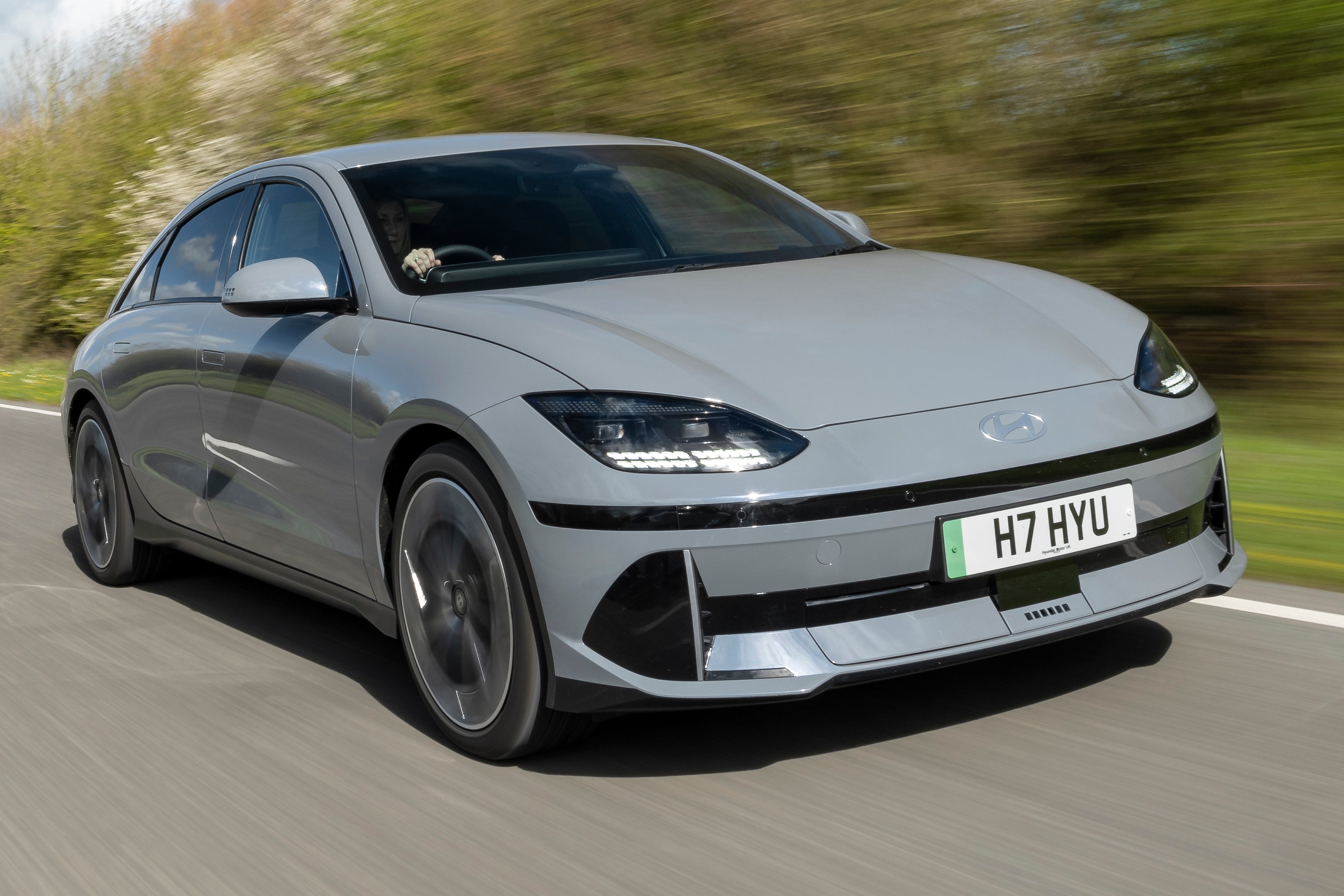
The Hyundai Ioniq 6 is the efficiency-led alternative. Its unusual styling won’t suit everyone, but it offers impressive range and much faster rapid-charging capability.
The Volkswagen ID.7 is worth considering if practicality and comfort matter more. It’s considerably roomier than the Polestar and works particularly well as a long-distance family car.
The BYD Seal is another increasingly credible alternative if value matters.
The Polestar 2 still makes most sense if you want an electric car that feels stylish, solid and a little different from the mainstream choices.
What's the interior like in the Polestar 2?
The Polestar 2’s cabin remains one of its strongest selling points. It feels calm, solidly built and carefully designed, with a stronger sense of occasion than many electric rivals.
The tall centre console creates a more cocooning driving position than you’ll find in something such as a Tesla Model 3, while the portrait touchscreen and separate digital instrument display keep the dashboard looking clean without stripping away useful information.
Material choice is another strength, with Polestar using textiles and more unusual surfaces rather than simply covering everything in leather-effect plastic. The downside is that the high centre console eats into some usable space and the rear cabin isn’t especially generous.
Polestar 2 boot space and practicality
The Polestar 2 is practical enough for everyday family life, but it isn’t the roomiest car in the class. Up front there’s plenty of space, the seats are supportive and the driving position feels low and cocooning in a way that suits the car’s more driver-focused character.
Rear-seat space is decent rather than outstanding. There’s enough legroom for adults, but the sloping roofline means taller passengers will notice the headroom limit sooner than they might in a Tesla Model 3 or Volkswagen ID.7. The central rear tunnel also makes the middle seat less comfortable than you might expect from an EV.
The main boot provides 407 litres including the underfloor compartment. That figure isn’t exceptional, but the Polestar’s roof-hinged hatch makes the space considerably easier to access than the conventional saloon boot of some rivals. Fold the rear seats and capacity increases to 1,097 litres. Polestar also provides a 41-litre front compartment, which is a handy place to keep charging cables. The back seats split 60:40 and include a useful ski hatch for longer items.
While a Volkswagen ID.7 or many electric SUVs will carry more, the Polestar 2 remains usefully practical for a five-door fastback.
Polestar 2 dimensions
The Polestar 2 measures 4,606mm long, 1,859mm wide excluding its mirrors and 1,479mm high, with a 2,735mm wheelbase. The Performance pack reduces height slightly to 1,473mm. With its mirrors extended, the Polestar 2 is 1,985mm wide. That makes it noticeably shorter than something such as a Volkswagen ID.7, while remaining substantial enough to provide a proper premium-car feel.
Visibility to the rear isn’t brilliant, though, so parking sensors and the optional 360-degree camera are worthwhile.
Tech and infotainment in the Polestar 2
The Polestar 2 uses an 11.2-inch portrait central touchscreen alongside a 12.3-inch digital driver display. Its Android Automotive operating system with Google built-in remains one of the more convincing native infotainment systems on the market. Google Maps is particularly useful in an EV because its route planning can take charging stops and energy use into account, while Google Assistant makes voice control genuinely useful.
The significant update for model year 2026 is a Qualcomm Snapdragon processor, introduced to improve reaction times, app performance and general responsiveness. That addresses one of the areas where the ageing hardware had begun to show its age.
Apple CarPlay and Android Auto are available through a wired connection, while over-the-air updates continue to add and improve functionality. Plug & Charge is now supported too, allowing compatible public chargers to identify the car automatically.
Standard audio uses eight speakers and a 250W amplifier. The Plus pack upgrades this to a 600W, 13-speaker Harman Kardon system, while 2026 cars can also be specified with a 1,350W, 14-speaker Bowers & Wilkins system in eligible configurations.
Some controls are still buried more deeply in the touchscreen than ideal, but the separate driver display means basic information is always directly ahead of you.
Materials available on the Polestar 2
The Polestar 2 takes a slightly different approach to cabin materials from many premium rivals. Standard cars use Charcoal embossed textile upholstery with 3D-Etched decorative inlays, which gives the cabin a clean, understated appearance without relying on imitation leather.
The Plus pack changes this to bio-attributed MicroTech upholstery in Charcoal with Black Ash trim, while also adding features such as the panoramic roof and enhanced interior lighting.
For buyers who prefer a more traditional premium finish, a Nappa upgrade is available with the Plus pack. It uses Bridge of Weir leather in Zinc or Charcoal, together with Light Ash trim and ventilated front seats.
That variety is part of the Polestar 2’s appeal. The interior feels premium without simply copying the usual German executive-car formula.
What's the Polestar 2 like to drive?
The Polestar 2 remains one of the more satisfying EVs to drive if you value confidence, body control and well-judged steering. The 2023 switch to rear-wheel drive for the single-motor versions made those cars noticeably more engaging, while the dual-motor model provides huge traction and performance.
The standard suspension strikes the better balance for most drivers. The Performance pack sharpens things further but introduces firmer Ohlins dampers and larger wheels that make less sense on rough everyday roads.
Even without the Performance pack, the Polestar feels substantial, planted and more natural to drive than many EV rivals.
Polestar 2 range and performance
There are four current Polestar 2 powertrain configurations. The Standard range Single motor uses a 70kWh battery and a rear-mounted electric motor producing 272PS and 490Nm. It reaches 62mph in 6.4 seconds and has an official WLTP range of 344 miles.
The Long range Single motor upgrades to an 82kWh battery and a 299PS motor. Torque remains at 490Nm, but 0–62mph drops to 6.2 seconds while range rises to an impressive 409 miles.
The Long range Dual motor uses the same 82kWh battery but adds a second motor for all-wheel drive. Combined output is 421PS and 740Nm, cutting 0–62mph to 4.5 seconds. Despite the extra performance, official range remains a healthy 370 miles.
Finally, the Performance pack increases output to 476PS, retains 740Nm and cuts the 0–62mph time to 4.2 seconds. Range drops to 352 miles.
For most buyers, the Long range Single motor remains the standout. Its combination of 409 miles of official range, strong performance and lower price makes it considerably easier to justify than the dual-motor cars.
Performance data
| Model | Engine/battery size | Power | 0-62mph | Range/MPG |
|---|---|---|---|---|
Polestar 2 Standard range Single motor | 70kWh | 272PS | 6.4 seconds | Up to 344 miles |
Polestar 2 Long range Single motor | 82kWh | 299PS | 6.2 seconds | Up to 409 miles |
Polestar 2 Long range Dual motor | 82kWh | 421PS | 4.5 seconds | Up to 370 miles |
Polestar 2 Long range Dual motor Performance pack | 82kWh | 476PS | 4.2 seconds | Up to 352 miles |
Polestar 2 driving and refinement
The Polestar 2’s road manners are one of its strongest assets. It feels secure, planted and intuitive in a way that some EVs still don’t quite manage.
The steering isn’t bursting with feedback, but it’s accurate and nicely weighted. The rear-wheel-drive single-motor versions also have a more natural balance than the front-wheel-drive cars sold earlier in this generation. There’s no escaping the car’s weight, but the Polestar carries it well. Body control is strong and there’s a pleasing sense of connection between the steering and chassis that makes it enjoyable on a flowing road.
Ride comfort is generally good in standard cars, although there’s a firm underlying edge. The Performance pack is a much more specialised proposition. It adds manually adjustable Öhlins dampers with 22 settings, 20-inch wheels and Brembo brakes. Those upgrades bring tighter control when you’re driving hard, but the bigger wheels and firmer suspension make the regular chassis the more sensible choice for everyday UK roads.
Refinement is strong. The motors are quiet, road noise is well controlled and motorway journeys are relaxing, although there’s some wind noise around the car’s relatively upright nose.
Overall, this remains an EV that feels as though someone cared how it drove rather than simply concentrating on acceleration figures.
How safe is the Polestar 2?
Independent safety organisation Euro NCAP awarded the Polestar 2 a maximum five-star safety mark in 2021. It scored 93% for adult occupant protection, 89% for child occupant protection, 80% for vulnerable road-user protection and 83% for safety assist.
The rating was subsequently reviewed after Polestar moved its Blind Spot Information System from standard equipment into the optional Pilot pack. Euro NCAP says that change reduced the relevant safety-assist score slightly but didn’t alter the five-star rating. It's worth remembering that this is a 2021 rating under the testing standards of the time, rather than a fresh 2026 assessment.
Current standard equipment includes adaptive cruise control, lane-keeping assistance, Driver Alert Control, road-sign recognition and collision-avoidance systems. The Pilot pack adds Pilot Assist, blind-spot monitoring with steering assistance, Cross Traffic Alert with braking, Emergency Stop Assist and the 360-degree camera.
Running costs: What it's like to live with a Polestar 2
The Polestar 2 is reasonably efficient for a powerful premium EV, particularly in Long range Single motor form, and home charging should keep everyday energy costs manageable. Servicing is unusually infrequent, while the eight-year battery warranty provides useful long-term reassurance.
The downsides are familiar premium-EV ones. Insurance groups are relatively high, big tyres aren’t cheap and the more expensive versions attract the Expensive Car Supplement.
Polestar 2 charging times and costs
Charging performance depends on which battery you choose. The 70kWh Standard range model can rapid-charge at up to 180kW, with Polestar quoting 26 minutes for a 10–80% charge. The 82kWh long-range versions increase peak charging power to 205kW and take around 28 minutes from 10–80%.
All versions can AC charge at up to 11kW. At that rate, a full 0–100% charge takes about seven hours for the 70kWh battery and eight hours for the 82kWh battery. A typical UK single-phase home wallbox will take longer.
2026 cars onwards also support Plug & Charge, which allows compatible public chargers to authenticate the car automatically rather than requiring a separate charging card or app.
Charging at home on a cheap overnight EV tariff will normally be considerably cheaper than relying on public rapid chargers.
Polestar 2 warranty and servicing
Polestar provides a three-year/60,000-mile vehicle warranty, whichever comes first. The high-voltage battery is covered for eight years or 100,000 miles, and Polestar will repair or replace it if its state of health falls below 70% of original capacity during that period. There’s also a 12-year corrosion warranty.
Servicing is due every 24 months or 18,750 miles, whichever comes first, although the car can request attention sooner if its onboard diagnostics identify a need. That makes routine servicing less frequent than on most petrol or hybrid alternatives.
Polestar 2 insurance groups
The Polestar 2 Standard range Single motor is group 39 (of 50), the Long range Single motor group 41, while the Long range Dual motor and current Performance version sit in group 44.
Earlier versions of this generation span a wider range. Older low-powered single-motor cars can fall as low as group 34, while some highly specified cars and limited BST editions reach group 45–46.
That makes the Polestar 2 fairly expensive to insure compared with an ordinary family EV, although that’s hardly surprising given its premium positioning and performance.
How much does it cost to tax a Polestar 2?
The Polestar 2 now costs £200 a year in VED after year one. The Expensive Car Supplement only applies to electric cars with a list price of more than £50,000, which means the Standard range Single motor and Long range Single motor sit below the threshold, while the Long range Dual motor and Performance pack versions sit above it. If it applies, you pay an extra £440 a year for five years from the second year of registration on top of the standard £200 annual VED rate.
What trims are available with the Polestar 2?
The Polestar 2 does not use a conventional trim hierarchy. Instead, every version starts with a strong core specification, with buyers then able to add equipment packs depending on what matters most.
Standard equipment is generous, with 19-inch alloy wheels, an 11.2-inch touchscreen, 12.3-inch digital driver display, Google built-in, adaptive cruise control, LED headlights, heated front seats, dual-zone climate control, electric front-seat adjustment, wireless phone charging and a powered tailgate.
The Pilot pack focuses on driver assistance and visibility, adding Pilot Assist, blind-spot monitoring with steering support, Cross Traffic Alert, Emergency Stop Assist and a 360-degree camera.
The Plus pack is more about comfort and cabin ambience. It brings a panoramic glass roof, Harman Kardon audio, upgraded upholstery and trim, fully powered front seats, Digital Key, enhanced air filtration and extra interior lighting.
The Climate pack adds a heat pump, heated rear seats, heated steering wheel and heated washer nozzles, making it particularly useful for buyers regularly driving in colder conditions.
For the 2026 model year, the Prime pack combines the Pilot, Plus and Climate packs with rear privacy glass. It is the easiest way to turn the Polestar 2 into a comprehensively equipped car without adding several option packs individually.
Long range Dual motor versions can also be specified with the Performance pack. This raises output to 476PS and adds 20-inch wheels, performance tyres, Brembo front brakes, manually adjustable Öhlins dampers and Polestar Engineered chassis tuning, giving the car a much more focused character.
Ask the Drive experts: common questions
Is the Polestar 2 a good electric car?
Which Polestar 2 is best?
Is the Polestar 2 better than a Tesla Model 3?
Does the Polestar 2 pay the Expensive Car Supplement?
Get our latest advice, news and offers
Keep me updated by email with the latest advice, news and offers from Drive.
.jpg)
.jpg)
.jpg)