Hyundai Ioniq 6 Review

Written By Richard Aucock
- 2022
- Saloon
- Electric
What we love
Dramatic styling makes a real statement
Strong range and very fast charging
Feels more premium than many mainstream EVs
Things to consider
Swoopy shape hurts practicality
Tech can feel over-complicated at times
Ride is firm on the standard 20-inch wheels
The DRIVE take on the Hyundai Ioniq 6, is it the right car for you?
The Hyundai Ioniq 6 is a striking electric saloon with strong range, very fast charging and a more premium feel than most mainstream EVs. It is not the most practical choice in this class, but if you want something sleek, distinctive and accomplished over long distances, it is easy to recommend.
It makes most sense for buyers who value design, efficiency and refinement over outright versatility. If boot access, rear headroom and family-friendly practicality matter more, an Ioniq 5 or Volkswagen ID.7 will suit better. But if you want an EV that feels special every time you walk up to it, the Ioniq 6 remains one of the most appealing choices in this part of the market.
The Hyundai Ioniq 6 in more detail
No pressure, but the Hyundai Ioniq 6 was named World Car of the Year, World Car Design of the Year and World Electric Car of the Year in 2023. It means this electric car has a lot to live up to.
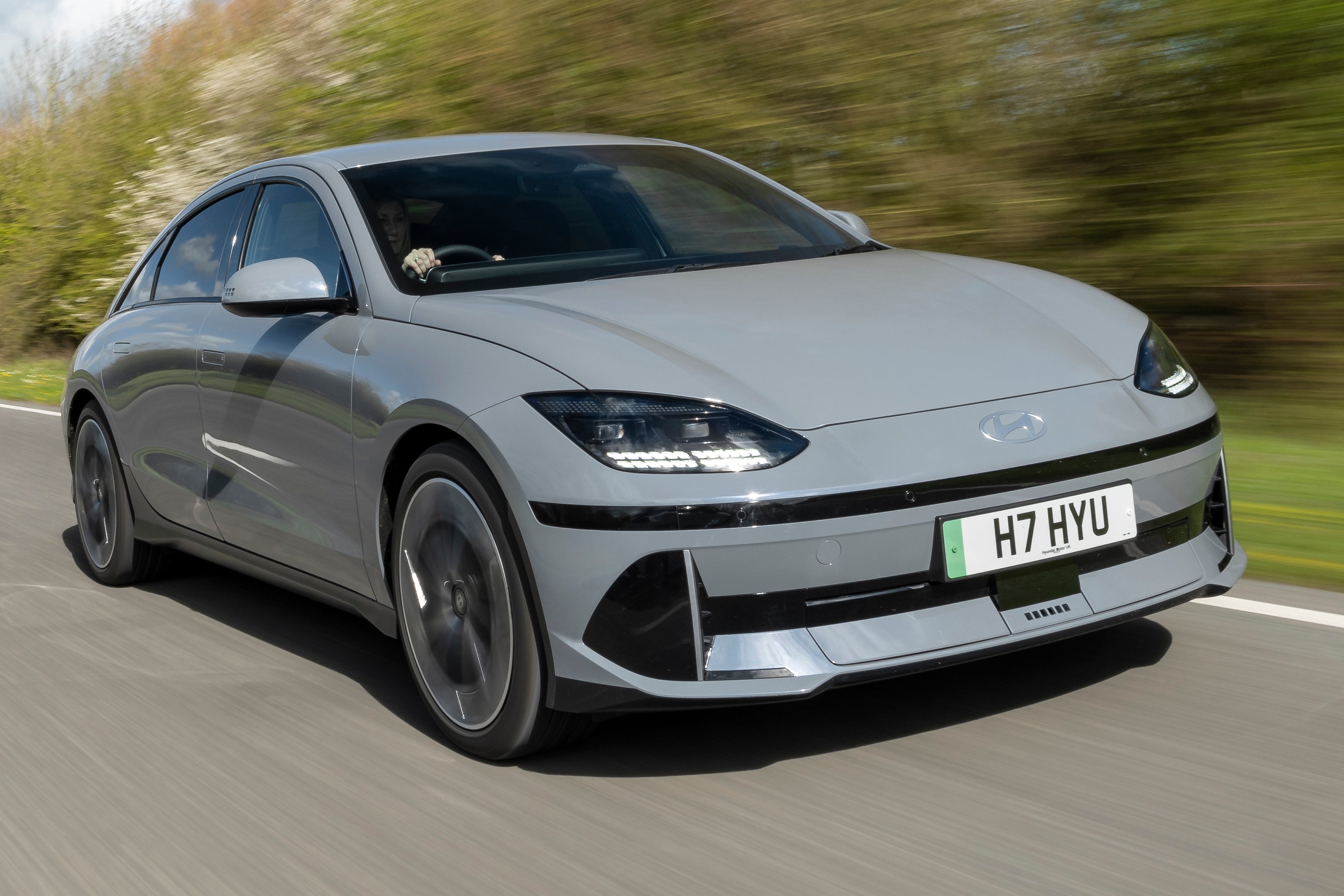
Hyundai is not messing around when it comes to creating new electric cars, with the Ioniq 6 another dramatic addition to its range. Rather than the 1970s influences found on the Ioniq 5 SUV, Hyundai has partly been inspired by older ‘streamliners’ from the 1930s.
The result is an electric saloon that looks like very little else on the road. There is even a hint of classic Porsche 911 Turbo in the shape of the ‘whale tail’ spoiler at the rear. Compared to rivals like the BMW i4, Polestar 2 and Tesla Model 3, the Hyundai Ioniq 6 is certainly the car that will turn the most heads.
Such swoopy looks may boost aerodynamic efficiency, and indeed kerb appeal, but they do limit space inside. Headroom is tight in the Ioniq 6, even for average-height passengers, and the boot is awkward to access through a narrow saloon-style opening.
Although the Ioniq 6 is slightly less radical inside, it still packs two large 12.3-inch display screens and endless amounts of technology. The standard list of equipment is extensive, to the point where the options on the infotainment display have their own search function.
Add in the amount of beeps and bongs from the various warning systems, and the Ioniq 6 can border on technological overload.
Look beyond this, however, and the electric car underneath is a hugely effective one. Hyundai’s E-GMP platform gives the Ioniq 6 a sizable 77.4kWh battery, meaning an official driving range of up to 338 miles. The ability to go from 10-80 percent charge in only 18 minutes with the right device adds to the appeal of the Ioniq 6 for those covering lots of miles.
Being a long-distance cruiser suits the nature of the Ioniq 6. This may be a quick car, with the AWD model able to accelerate from 0-62mph in 5.1 seconds, but it is not a sporty one. There is good body control and plenty of grip, but the Ioniq 6 is not particularly engaging to drive, despite what its firm ride might suggest.
The Hyundai Ioniq 6 is compromised, to a degree, by the pursuit of bold styling and all the technology inside. Yet at its core, this is a high-performing electric saloon that offers a real alternative to the more predictable options.
What's the best Hyundai Ioniq 6 trim and battery option?
For most buyers, the best choice is the rear-wheel-drive Premium. It has the longest range in the line-up, more than enough performance for everyday use and a healthy amount of standard equipment without stepping all the way up to Ultimate money.
The Ultimate does add some worthwhile luxuries, including leather trim, ventilated front seats, a sunroof, a head-up display and a surround-view camera system. But the Premium already gets the essentials right, and it avoids pushing the Ioniq 6 too far into price territory where more premium-badged alternatives begin to loom larger.
As for powertrains, the rear-wheel-drive car is the sensible pick because it combines the best range with a still-usefully brisk turn of speed. The all-wheel-drive model is undeniably quicker, but the Ioniq 6 is not really a sports saloon in character, so the extra shove is more nice-to-have than essential.
What’s the price of the Hyundai Ioniq 6?
The current Hyundai Ioniq 6 range starts at £47,050 for the Premium rear-wheel-drive model. Move to the all-wheel-drive Premium and the price rises to £50,550. Ultimate trim starts at £50,550 in rear-wheel-drive form, with all-wheel drive sitting above that.
That means the Ioniq 6 is not cheap, but it is competitive for what it is. It undercuts some premium-badged EVs while offering a lot of the same sense of sophistication, and the standard equipment count is strong enough that it does not feel meanly specified at the lower end of the range.
It is also a car that benefits from its relative rarity. The Model 3 may still be the obvious default choice in this class, but the Hyundai feels more individual, and that counts for something in a market increasingly full of familiar EV silhouettes.
Alternatives to the Hyundai Ioniq 6
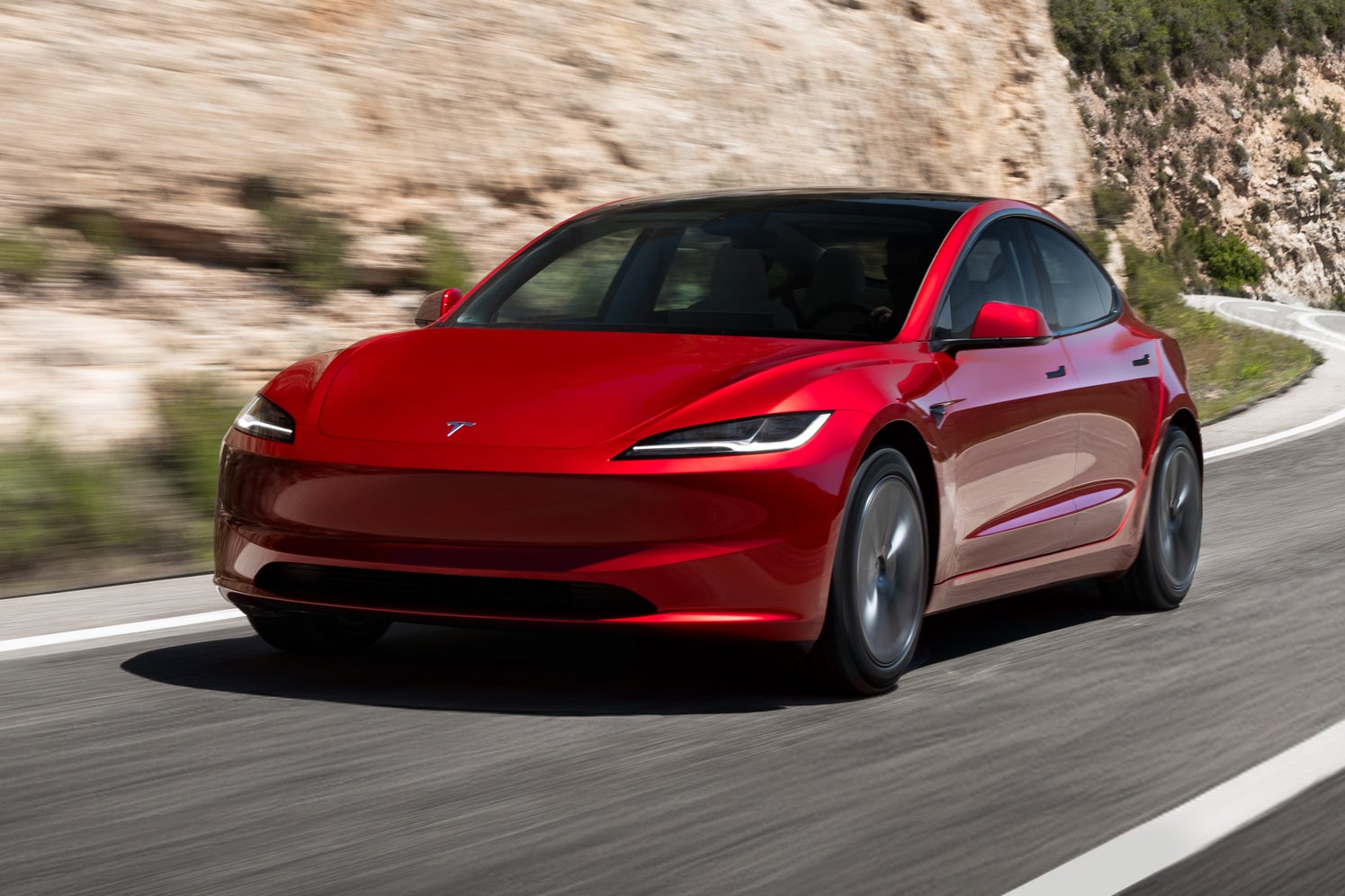
The Tesla Model 3 is the obvious rival because it offers similar long-range EV appeal, strong performance and a more established charging network. It is also the car most likely to appear on buyers’ shortlists by default. The Hyundai counters with more character, a more tactile cabin and a less anonymous feel.
The Polestar 2 and BMW i4 are the premium-badge alternatives if you want something with a little more showroom cachet, while the BYD Seal is now a very relevant rival thanks to its similar shape, strong value and competitive range.
Check out the Volkswagen ID.7 as well. It is larger and more practical than the Hyundai, with a hatchback-style tailgate and a more traditional executive-car brief. The trade-off is that it feels much less visually interesting. Finally, there's also the Kia EV6 if you want the same underlying tech wrapped in a more crossover-like body.
What's the interior like in the Hyundai Ioniq 6?
The Ioniq 6’s cabin is modern, spacious in some areas and clearly designed to feel like a step up from Hyundai’s more conventional models. It does not quite nail every ergonomic detail, but it feels suitably special for the money.
Hyundai Ioniq 6 boot space and practicality
Space in the front is generous. The long wheelbase and EV platform give the Ioniq 6 a lot of legroom, and the broad centre console means you never feel cramped across the front seats. There are useful storage areas too, including a large open space under the centre console and a drawer-style glovebox.
The issue is headroom. The Ioniq 6’s swooping roofline gives it plenty of visual drama, but it also means even average-height occupants can feel close to the headlining. That is true in both rows, and the sunroof on Ultimate versions makes the issue slightly more noticeable in the front.
Rear-seat legroom is excellent, which at least helps offset the tighter headroom. The long wheelbase really pays off here, and the flat floor adds to the sense of space for passengers’ feet.
The boot measures 401 litres, which is decent enough on paper but less convincing in practice because the saloon-style opening is narrow and awkward. The rear seats do fold, and rear-wheel-drive versions get a 45-litre front boot, although all-wheel-drive models reduce that to just 14.5 litres. So the Ioniq 6 is perfectly usable, but it is not the most practical car in its class and buyers who regularly carry bulkier loads may be better served by something with a hatchback tailgate.
Hyundai Ioniq 6 dimensions
The Hyundai Ioniq 6 measures 4,855mm long, 1,880mm wide & 1,495mm high. That makes it a substantial car, although the low, sleek body helps disguise just how much road space it takes up.
Those dimensions help create the generous legroom and long-distance feel of the cabin, but they also mean the Ioniq 6 is not especially compact or easy to judge at first glance. It is more of a sizeable executive-style EV than a compact electric saloon.
Tech and infotainment in the Hyundai Ioniq 6
The Ioniq 6 uses a pair of 12.3-inch displays, one for infotainment and one for the driver’s instruments, and the overall system is much the same as you get in the Ioniq 5. That is largely a good thing, because the graphics are sharp, the responses are quick enough and Hyundai has kept some physical shortcut buttons for the functions you use most often.
There is still a lot going on, though. The Ioniq 6 is packed with features and menus, to the point where the system includes a search function to help you find what you are looking for. Some buyers will appreciate that depth, but others may find it all a little much at first.
Apple CarPlay and Android Auto are standard, as is wireless phone charging. Ultimate trim adds a surround-view monitor and a head-up display, while digital side-view cameras remain an option on some versions. They are clever, but conventional mirrors are easier to live with in poor weather and at night.
Materials available on the Hyundai Ioniq 6
The Ioniq 6 feels more premium than most mainstream Hyundais inside, with ambient lighting, sculpted door trims and a generally thoughtful design helping create a more expensive atmosphere. Cloth trim is standard on Premium, while Ultimate upgrades to leather.
Most of the main touchpoints feel suitably solid and the cabin has a generally durable, well-finished feel. The weak point is that some parts, particularly around the centre console and switchgear, feel harder and cheaper than the broader ambience suggests.
So the Ioniq 6 does not quite feel like a full premium-brand rival in every last detail, but it is close enough to make the point.
What's the Hyundai Ioniq 6 like to drive?
The Ioniq 6 looks like it should be a sporty EV, but in reality it is much more of a refined long-distance cruiser. That suits its shape, range and charging ability perfectly well, even if keen drivers may wish for more involvement.
Hyundai Ioniq 6 range and performance
Every current UK Ioniq 6 uses the same 77.4kWh battery pack. The rear-wheel-drive version produces 228PS and 350Nm, which is enough for 0-62mph in 7.4 seconds and a top speed of 115mph. Official range is up to 338 miles.
The all-wheel-drive version adds a second motor for a combined 325PS and 605Nm. That cuts the 0-62mph time to 5.1 seconds, while official range drops slightly to 322 miles.
The rear-wheel-drive version makes the strongest all-round case because it has all the pace most buyers will need while delivering the longest range. The all-wheel-drive car is undeniably quick, but the Ioniq 6 is not really a sports saloon in temperament.
Performance data
| Model | Engine/battery size | Power | 0-62mph | Range/MPG |
|---|---|---|---|---|
Ioniq 6 RWD | 77.4kWh | 228PS | 7.4 seconds | Up to 338 miles |
Ioniq 6 AWD | 77.4kWh | 325PS | 5.1 seconds | Up to 322 miles |
Hyundai Ioniq 6 driving and refinement
On the move, the Ioniq 6 feels neat and secure rather than overtly exciting. Body control is strong, grip levels are high and Hyundai has done a decent job of disguising the car’s weight, but the steering does not offer much in the way of feedback.
What the Ioniq 6 does very well is refinement. The aerodynamic body keeps wind noise remarkably low, the electric powertrain is generally quiet and the whole car feels well suited to covering long motorway distances with very little fuss.
The main blemish is the ride. On the standard 20-inch wheels, it can feel firmer than you might expect from a car with this sort of long-distance brief. It is not uncomfortable to the point of becoming tiresome, but there is more tautness than the styling and refinement might suggest.
Regenerative braking is adjustable via the steering-wheel paddles, ranging from one-pedal driving to a much freer coasting feel, and Hyundai’s automatic mode does a decent job of choosing an appropriate level by itself. So while the Ioniq 6 never becomes a genuinely engaging driver’s car, it remains very easy and relaxing to use.
How safe is the Hyundai Ioniq 6?
The Hyundai Ioniq 6 has a five-star Euro NCAP rating, with particularly strong scores for adult and child occupant protection. That remains one of the car’s key selling points.
Standard safety kit is extensive, including Forward Collision Avoidance Assist, Lane Keep Assist, Lane Following Assist, Highway Drive Assist, Intelligent Speed Limit Assist and a wide spread of airbags. The latter can be a bit overzealous with its warnings and bongs, but the underlying safety package is hard to fault.
Running costs: What it's like to live with a Hyundai Ioniq 6
The Ioniq 6 should be relatively easy to live with if you can charge at home. It is efficient for its size, rapid-charging capability is excellent and Hyundai’s long warranty adds some welcome reassurance.
Hyundai Ioniq 6 charging times and costs
The Ioniq 6’s 800V architecture means it remains one of the quicker-charging mainstream EVs on sale. On a powerful 350kW ultra-rapid charger, Hyundai quotes a 10 to 80 per cent charging time of just 18 minutes.
Use a more common 50kW public rapid charger and the same top-up takes well over an hour, so the car’s headline charging ability depends on finding the right hardware. At home, an 11kW wallbox will recharge the battery in a little over seven hours, making overnight charging straightforward.
All versions also get vehicle-to-load functionality, which means you can power external devices directly from the car’s battery. It is not something every buyer will use every week, but it is a genuinely useful feature to have.
Hyundai Ioniq 6 warranty and servicing
Hyundai covers the Ioniq 6 with a five-year unlimited-mileage warranty, while the battery gets separate cover for eight years or 100,000 miles. That remains one of the stronger warranty packages in this part of the market.
As with most EVs, the mechanical simplicity of the drivetrain should help reduce servicing needs compared with an equivalent combustion-engined car, even if tyres, brakes and suspension still wear in the normal way.
Hyundai Ioniq 6 insurance groups
Insurance groups start at 36 for the rear-wheel-drive Premium and rise to 41 for all-wheel-drive versions. That is not outrageous for an electric saloon of this size and performance, but it is still far from cheap.
So while the Ioniq 6 should be cost-effective to charge at home, insurance is one of the areas where it still feels like a reasonably substantial, upmarket EV rather than a bargain.
How much does it cost to tax a Hyundai Ioniq 6?
After year one, the Hyundai Ioniq 6 pays the standard annual VED rate, currently £200.
Because the Ioniq 6 sits above the £50,000 threshold in Ultimate form, those versions also attract the Expensive Car Supplement from years two to six. At current rates, that adds £440 a year, taking the total annual bill to £640 during that period. Premium versions sit below the threshold and avoid the supplement.
What trims are available with the Hyundai Ioniq 6?
The current Hyundai Ioniq 6 range is offered in two trims: Premium and Ultimate.
Premium is the starting point, but it hardly feels basic. Standard equipment includes 20-inch alloy wheels, LED lights, heated front and outer rear seats, a heated steering wheel, electric front-seat adjustment with lumbar support, the twin 12.3-inch screens, dual-zone climate control, front and rear parking sensors, a rear-view camera and Highway Drive Assist.
Ultimate adds leather upholstery, ventilated front seats, a sunroof, memory function for the driver’s seat, a head-up display, surround-view camera, remote smart parking assist and some extra lighting and convenience features. It is a generous trim, but the Premium already covers the essentials very well.
Ask the Drive experts: common questions
How much does the Hyundai Ioniq 6 cost?
What’s the maximum range of the Hyundai Ioniq 6?
Is the Hyundai Ioniq 6 practical?
What is the best Hyundai Ioniq 6 version?
Get our latest advice, news and offers
Keep me updated by email with the latest advice, news and offers from Drive.
.jpg)
.jpg)
.jpg)