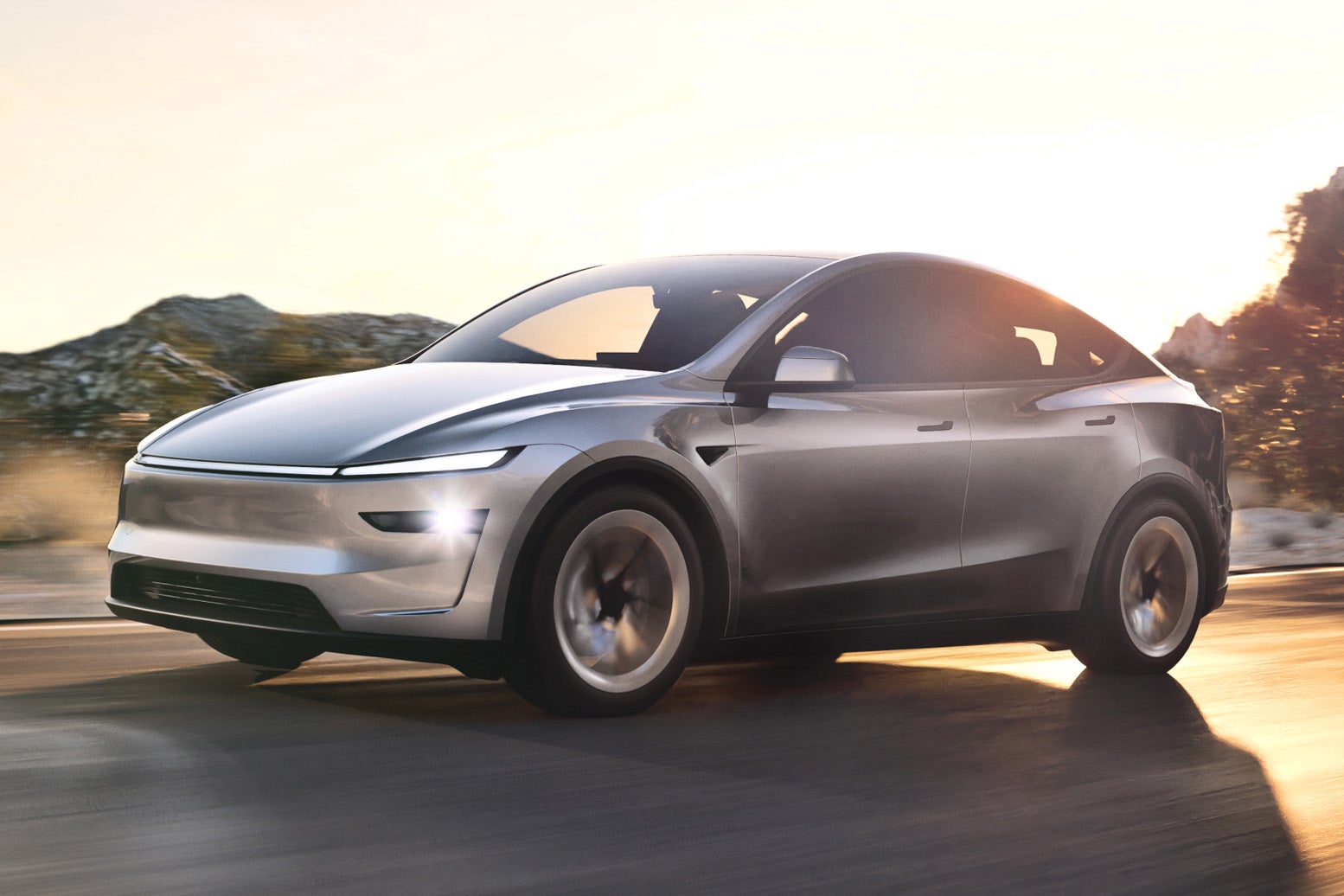
Tesla Model 3 review

Written By Richard Aucock
- 2019
- Saloon
- Electric
What we love
Excellent efficiency and very long range
Much improved ride comfort and refinement
Strong performance across the range
Things to consider
Too many functions rely on the touchscreen
No Apple CarPlay or Android Auto
Saloon boot opening limits practicality
The DRIVE take on the Tesla Model 3, is it the right car for you?
The Tesla Model 3 remains one of the strongest electric saloons. The latest version is quieter, more comfortable and better finished than the original, while its excellent efficiency and well-integrated charging network make long-distance EV driving unusually easy. The Rear-Wheel Drive is the best-value choice, but the Long Range Rear-Wheel Drive is the standout for regular motorway users thanks to its exceptional official range.
The Tesla Model 3 in more detail
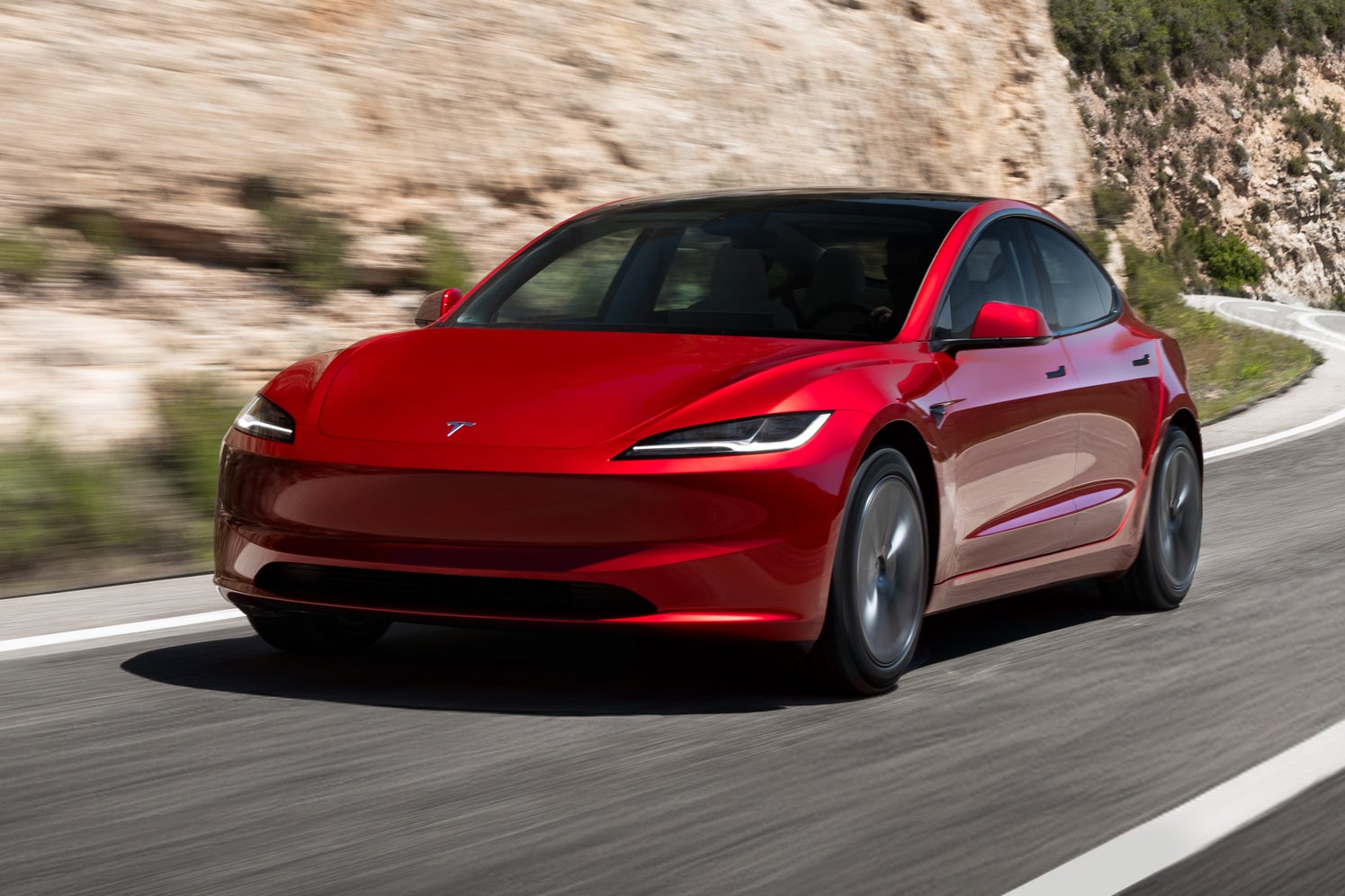
The Model 3 is the car that took Tesla from niche electric-car maker to mainstream global brand. Roughly the size of a BMW 3 Series, it uses its dedicated EV platform to free up more cabin space than you might expect from a conventional saloon of similar dimensions.
The original Model 3 had plenty going for it. It was quick, exceptionally efficient and easy to charge, but the firm ride, inconsistent interior finish and reliance on touchscreen controls attracted criticism. Tesla addressed many of those weaknesses with a substantial update for 2024, bringing sleeker styling, revised suspension, extra sound insulation, improved seats and a noticeably better-finished cabin.
The result is a much more polished car. It rides more comfortably, keeps road and wind noise better contained and feels more in keeping with its price. The current range starts with the £37,990 Rear-Wheel Drive model, with longer-range rear-wheel-drive and dual-motor all-wheel-drive versions above it, plus Performance at the top.
Browse used Tesla Model 3s for sale →
Efficiency remains one of the Model 3’s biggest strengths. It extracts an impressive amount of range from its battery and can travel further per kWh than many competing EVs. Charging is straightforward too, thanks to Tesla’s navigation system, which plans Supercharger stops, monitors battery use and preconditions the battery before arrival.
There are still compromises. The Model 3 is a saloon rather than a hatchback, so the boot opening is relatively narrow despite the generous luggage space. Tesla also continues to route almost every function through the central touchscreen, with no conventional instrument display and no Apple CarPlay or Android Auto.
Even so, the latest Model 3 is a far easier car to recommend than the one that first arrived in the UK.
What's the best Tesla Model 3 trim and battery option?
The Rear-Wheel Drive is the best-value Model 3. It starts at £37,990, has more than enough performance for everyday use and offers an official range comfortably beyond what most drivers will need day to day. Its lower output should also help keep insurance costs more manageable than on the quicker versions.
If you regularly cover long motorway journeys, the Long Range Rear-Wheel Drive is the more compelling choice. Tesla quotes up to 466 miles of WLTP range, putting it among the longest-range EVs at this price, while performance remains strong enough that it never feels like the efficiency-focused option.
The Long Range All-Wheel Drive adds a second motor, extra traction and much stronger acceleration, but the rear-wheel-drive Long Range remains the more rational choice if maximum range matters most.
Performance sits at the opposite end of the spectrum. With 460PS and a 2.9-second 0-60mph time, it delivers genuine sports-car pace, backed up by adaptive suspension, upgraded brakes, sports seats and larger wheels. It is seriously impressive, but the extra cost, higher insurance and shorter range make it harder to justify as the everyday sweet spot.
What’s the price of the Tesla Model 3?
The Tesla Model 3 currently starts at £37,990 for the Rear-Wheel Drive. That makes it highly competitive against premium electric saloons and brings it into contention with several smaller EVs. There are also plenty of used Tesla Model 3s for sale for considerably less.
The more expensive versions add battery capacity, range, performance and, in dual-motor form, four-wheel drive rather than radically different equipment.
Standard specification is generous. The Model 3 includes the large central display, navigation, heated seats, electric front-seat adjustment, a panoramic glass roof and Tesla’s integrated charging and driver-assistance technology. Options are relatively limited compared with premium German rivals. Buyers mainly choose between paint colours, wheels, interior finishes and additional driver-assistance software.
Larger wheels can reduce the official range, so the standard wheels make sense if efficiency matters. Tesla changes prices and finance offers more often than many manufacturers, so the live configurator should always be checked before ordering.
Alternatives to the Tesla Model 3
The BMW i4 is the strongest premium alternative. Its cabin feels more conventional and luxurious, and keen drivers will prefer its steering and chassis, although equivalent versions generally cost more.
The BYD Seal is a closer value rival, with a high-quality interior, generous equipment and strong performance. Tesla still has the edge for efficiency and the way its charging network is integrated into the car.
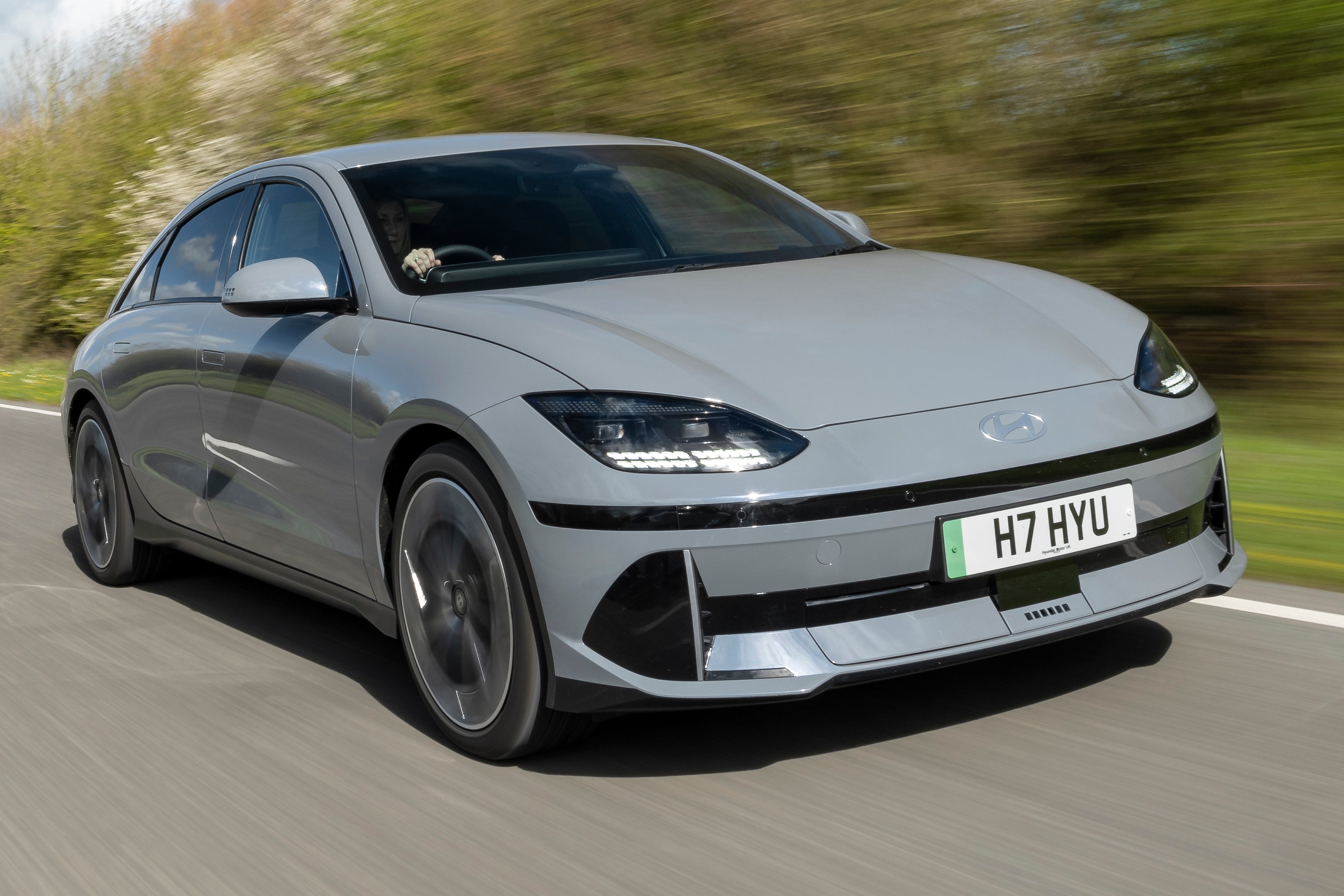
The Hyundai Ioniq 6 is the efficiency-focused alternative. Its slippery shape helps maximise range, while the 800-volt electrical system enables very rapid charging, making it especially appealing for frequent long-distance use.
What's the interior like in the Tesla Model 3?
The latest Model 3 has a significantly better interior than the original. It remains extremely minimalist, but improved materials, seats and sound insulation make it feel much more sophisticated.
Tesla Model 3 boot space and practicality
The Model 3 makes good use of its electric-car packaging, with plenty of space up front and a low, uncluttered dashboard that helps the cabin feel airy. The large windscreen and panoramic glass roof add to that sense of openness, while the redesigned front seats are more supportive than before and offer plenty of adjustment for different driving positions.
Rear space is more mixed. Legroom is generous enough, but the battery under the floor means passengers sit with their knees slightly raised, and taller adults may also find foot space beneath the front seats a little tight. Headroom is decent, though, and the glass roof stops the back from feeling claustrophobic.
Boot space is a strong point on paper, with 594 litres at the rear plus useful underfloor storage and an 88-litre front boot. The catch is access. Because the Model 3 is a saloon, the boot opening is relatively shallow, so bulky items are harder to load than the headline capacity suggests. For everyday luggage, shopping and suitcases, though, there is still plenty of room for a five-seat electric saloon.
Tesla Model 3 dimensions
The current Model 3 measures around 4,720mm long, 1,933mm wide with its mirrors folded and 1,440mm high.
It is therefore similar in footprint to a conventional compact executive saloon.
The low bonnet gives a good view ahead, although rear visibility is more restricted.
Tesla’s extensive camera system helps when parking, but the absence of traditional parking controls and the amount of visual information presented on the screen can take some familiarisation.
Tech and infotainment in the Tesla Model 3
The 15.4-inch central touchscreen dominates the Model 3’s cabin and controls almost everything. There is no separate instrument display, so speed, navigation and driving information all sit on the centre screen. Fortunately, the system itself is excellent, with sharp graphics, quick responses and one of the best integrated navigation setups in the business.
That becomes especially useful on longer trips. The route planner can add charging stops automatically, check charger availability and precondition the battery before you arrive. Tesla’s phone app is just as slick, handling charging, climate, security and remote vehicle access.
The compromise is that so much is screen-based. Climate settings, mirror adjustment and gear selection all live in the touchscreen, while the facelift also replaced conventional indicator stalks with steering-wheel buttons. That takes some acclimatisation and can feel awkward on roundabouts. Apple CarPlay and Android Auto are still missing, although Tesla’s own software and app integration are strong.
Rear passengers get their own 8-inch display for climate and entertainment controls.
Materials available on the Tesla Model 3
Interior quality is significantly better than before. The facelift introduced softer plastics, additional textile finishes and more convincing aluminium detailing.
The redesigned centre console also looks and feels more expensive than the gloss-black unit fitted to earlier cars. Seat upholstery feels smooth and durable, while front-seat ventilation is available on higher versions alongside standard heating.
A BMW i4 still feels more conventionally luxurious, but the Model 3 no longer gives away as much in perceived quality.
What's the Tesla Model 3 like to drive?
The latest Model 3 is more comfortable and refined than before, but still offers the immediate acceleration and low centre of gravity that make an electric saloon enjoyable to drive.
Tesla Model 3 range and performance
The standard Rear-Wheel Drive is brisk enough for everyday use, while the Long Range Rear-Wheel Drive is arguably the sweet spot, combining stronger performance with the longest touring range in the line-up. Dual-motor versions add all-wheel drive, bringing more traction as well as noticeably harder acceleration.
Performance sits at the top of the range and takes things to another level. With a 2.9-second 0-60mph time, it has genuine sports-car pace, although that level of acceleration is far beyond what most drivers will ever need on the road.
Performance data
| Model | Engine/battery size | Power | 0-62mph | Range/MPG |
|---|---|---|---|---|
Model 3 Rear-Wheel Drive | 60kWh | 287PS | 6.2 seconds | Up to 300 miles |
Model 3 Long Range Rear-Wheel Drive | 78.1kWh | 320PS | 4.9 seconds | Up to 466 miles |
Tesla Model 3 Long Range All-Wheel Drive | 78.1kWh | 350PS | 4.2 seconds | Up to 400 miles |
Tesla Model 3 Performance | 78.1kWh | 460PS | 2.9 seconds | Up 350 miles |
Tesla Model 3 driving and refinement
Ride quality is one of the biggest improvements on the latest Model 3. The previous car could feel stiff and unsettled over rough surfaces, but the revised suspension deals with bumps more cleanly and with less noise. It is still controlled rather than soft, but no longer feels unnecessarily harsh.
The steering is better judged too. It remains quick, yet feels calmer at speed and needs fewer small corrections on the motorway. Rear-wheel-drive versions feel especially well balanced, while dual-motor cars add huge reserves of traction.
Performance goes further with adaptive suspension and a more focused chassis setup. It is extremely capable, although a BMW i4 still feels more communicative from behind the wheel.
Refinement has improved as well. Extra sound deadening, better seals and acoustic glass cut wind and tyre noise, making the Model 3 noticeably more relaxing over long distances.
How safe is the Tesla Model 3?
Euro NCAP awarded the current Tesla Model 3 five stars in 2025.
It scored 90 per cent for adult occupant protection, 93 per cent for child occupants, 89 per cent for vulnerable road users and 87 per cent for safety assistance.
Euro NCAP subsequently named the Model 3 its Best in Class Large Family Car for 2025.
The rating applies to right-hand-drive Rear-Wheel Drive, Long Range Rear-Wheel Drive, Long Range All-Wheel Drive and Performance versions.
Standard safety technology includes automatic emergency braking, lane assistance, blind-spot monitoring and driver monitoring.
Tesla’s Autopilot and Full Self-Driving terminology should not be interpreted as meaning the car is autonomous. The driver remains responsible at all times.
Running costs: What it's like to live with a Tesla Model 3
Exceptional efficiency helps keep electricity costs down, while the entry model also avoids the Expensive Car Supplement. Insurance is more likely to be a concern on the fastest versions.
Tesla Model 3 charging times and costs
The Rear-Wheel Drive can rapid-charge at around 175kW, while the longer-range and Performance versions can accept up to 250kW.
Under suitable conditions, around 170 miles of range can be added in approximately 15 minutes.
More important than the headline charging speed is the integration with Tesla’s Supercharger network.
The car plans charging stops automatically, monitors charger availability and preconditions the battery before arrival.
Supercharger prices vary according to location and time.
Home charging remains the cheapest option for most owners, particularly when paired with an off-peak electricity tariff.
Tesla Model 3 warranty and servicing
Tesla provides a four-year or 60,000-mile basic vehicle warranty. Rear-Wheel Drive battery and drive-unit cover lasts eight years or 100,000 miles, while Long Range and Performance cars increase that limit to 120,000 miles.
There is no traditional annual servicing schedule. Maintenance is focused on individual items such as tyres, brake fluid and cabin filters.
Tesla Model 3 insurance groups
Insurance varies considerably according to version. The current Rear-Wheel Drive is cheaper to insure than many earlier Model 3 derivatives, while the more powerful dual-motor cars sit much higher up the insurance scale.
Performance is the most expensive version to cover.
How much does it cost to tax a Tesla Model 3?
Electric cars registered from 1 April 2025 pay the standard £200 annual rate form year two. From 1 April 2026, the Expensive Car Supplement applies to zero-emission cars with an original list price of more than £50,000. The supplement is currently £440 a year and is charged for five years from the second vehicle licence. That means the £37,990 Rear-Wheel Drive sits comfortably below the threshold. More expensive versions should be checked against their original list price, including factory-fitted options.
What trims are available with the Tesla Model 3?
Rear-Wheel Drive is the entry version and starts at £37,990. It prioritises value and efficiency and is the version most buyers need.
Long Range Rear-Wheel Drive combines a larger battery with a single motor and provides the greatest official range, at up to 466 miles.
Long Range All-Wheel Drive adds a second motor and four-wheel-drive traction, along with much stronger acceleration.
Performance sits at the top of the range. It has 460PS, adaptive suspension, upgraded brakes, larger wheels and sports seats.
Its 2.9-second 0 to 60mph acceleration is extraordinary, but higher running costs and reduced range make it a more specialised choice.
Ask the Drive experts: common questions
What is the maximum range of the Tesla Model 3?
How big is the Tesla Model 3’s boot?
How long does a Tesla Model 3 take to charge?
Is the Tesla Model 3 rear-wheel drive or four-wheel drive?
Get our latest advice, news and offers
Keep me updated by email with the latest advice, news and offers from Drive.
.jpg)
.jpg)
.jpg)
.jpg)