Kia Niro EV Review

Written By Andy Brady
- 2022
- Small SUV
- Electric
What we love
Brilliant all-rounder
Spacious cabin with user-friendly tech
Very easy to live with
Things to consider
Charging speed is disappointing by current standards
Performance and range are not a huge leap on from the old e-Niro
Only available used
The DRIVE take on the Kia Niro, is it the right car for you?
The Kia Niro EV remains one of the easiest electric cars to recommend on its core merits. It's roomy, comfortable, efficient and thoughtfully engineered, with none of the awkwardness or unnecessary complication that can still dog some rival EVs.
That's what has always made the Niro EV appealing. It's not trying to dazzle you with wild styling, supercar acceleration or headline-grabbing tech gimmicks. Instead, it gives you the sort of range, practicality and usability that make sense in the real world.
The Kia Niro in more detail
The Niro EV has always been the sensible genius of Kia’s electric line-up. Where the EV6 is the style statement and the halo car, the Niro EV was the one that quietly got on with being brilliant at the jobs family buyers actually care about.
That still largely holds true. The current-generation Niro EV is more modern inside than the old e-Niro, more stylish outside and easier to recommend to buyers who want their EV to feel up to date. Yet it keeps the attributes that made the old car so successful in the first place.
It still majors on space, easy controls and a realistic amount of range. The driving experience is friendly rather than flashy, the interior is practical without looking cheap and the whole thing feels engineered for people who want to swap into an EV without also having to relearn how a car should work.
Browse used Kia Niros for sale →
The challenge is that the market has changed around it. Rivals have improved, charging standards have moved on and Kia itself has launched newer EVs that feel more ambitious. The EV3 and EV6 now pull attention away from the Niro EV in a way that simply did not happen a few years ago.
The issue in 2026 is less about the car itself and more about where it now sits in the UK market. The Kia Niro EV has now been discontinued in the UK and is no longer available to order new. That does not diminish its appeal as a used buy, though, because it remains a spacious, easy-to-live-with electric family car with sensible range, strong practicality and Kia’s generous warranty backing.
That does not make the Niro EV obsolete. It just means its appeal is a little different now. Rather than being the obvious default recommendation in this part of the market, it's the mature, slightly understated option: the one for buyers who care more about getting everything right than about having the newest toy.
What's the best Kia Niro trim and battery option?
Historically, the sweet spot was the Niro EV 3. It added the larger touchscreen, navigation, heated seats and steering wheel, more useful driver-assistance tech and a nicer overall equipment balance than the entry-level car, without pushing so hard into EV6 money.
That recommendation still stands if you are shopping used or nearly new. The entry-level 2 is still perfectly decent, but it misses enough desirable convenience kit to feel like a compromise. The 4 is lavishly equipped, though once you get into that territory the Niro EV starts to look expensive next to larger or more advanced alternatives.
The good news is that there's only one battery and motor combination to worry about. Every Niro EV uses the same 64.8kWh battery and 204PS front-mounted motor, so the choice is mostly about trim, price and availability rather than range anxiety between versions.
What’s the price of the Kia Niro?
Kia’s last official UK retail pricing for the Niro EV sat at roughly £37,000 for the entry-level car and a little over £42,000 for the top-spec version. Now only available used, you can pick up an early 2022 car for around £11,000 upwards, with almost-new models at around £35,000. There are also plenty of used Kia Niros for sale for considerably less.
Values have come down enough to make the Niro EV look very appealing as a second-hand family EV, particularly when you consider that plenty of cars still carry a good chunk of their original warranty cover.
That used-market strength is an important part of the Niro EV’s story now. Even if the UK new-car retail picture has closed, there's still a strong case for it as a sensible, low-risk electric family car if bought at the right money.
Alternatives to the Kia Niro
The Hyundai Kona Electric is the most obvious alternative because it offers a similar blend of manageable size, strong efficiency and straightforward everyday usability. It's the closest thing to a direct rival in spirit.
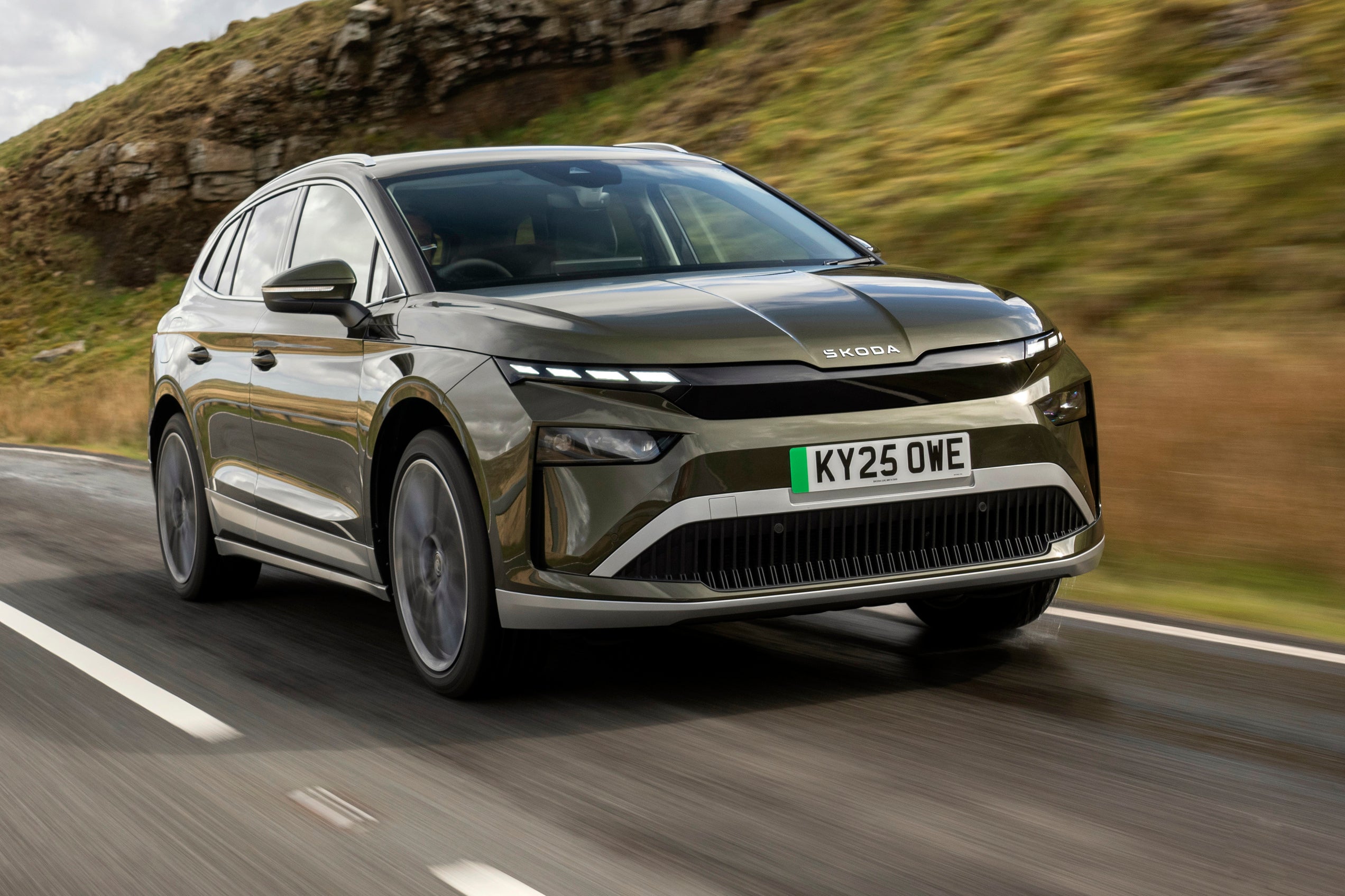
The Renault Megane E-Tech is a more design-led option if you want something that feels a little more modern and fashionable, while the Skoda Enyaq is the practical step-up choice if you want more space and do not mind a slightly bigger footprint.
You should also look at the Peugeot E-2008 and Vauxhall Mokka Electric if you want a compact electric crossover, although neither matches the Niro EV’s all-round polish. The Kia EV3 is another one worth considering now, because it occupies some of the space the Niro EV once owned all by itself.
The earlier e-Niro is also worth a look because it still does so much of the same job well. The newer car is better inside, but the older one remains a deeply sensible EV.
What's the interior like in the Kia Niro?
The Niro EV’s cabin is one of the big reasons it still feels relevant. It manages to look modern and slightly futuristic without making everyday tasks harder than they need to be.
Kia Niro boot space and practicality
The Niro EV feels roomier than its exterior dimensions suggest. That's one of its key talents. It's not a huge SUV, yet it does a very convincing impression of a family car inside.
Up front, there's plenty of room to stretch out and the seats are comfortable enough for long journeys. You do not sit especially high, but the view out is still good and the overall sense of ease from the driver’s seat is strong.
The rear is where the Niro EV really earns its keep. Legroom is generous, headroom is good and the completely flat floor helps make the middle seat more usable than in many rivals. It still is not a miracle of packaging, but it's spacious enough to cope with family life without complaint.
Boot space stands at 475 litres, which is strong for the class, and there's also a small 20-litre front boot that's ideal for cables. Fold the rear seats and capacity rises to 1,392 litres. Those are properly useful numbers and one of the reasons the Niro EV still makes such a strong case as an only car.
Cabin storage is mostly good too. The centre console is useful, there are plenty of charging points and the rear-seat USB-C ports show that Kia has thought carefully about family use. The only slight weak point is that the door bins are not as generous as they could be.
Kia Niro dimensions
The Kia Niro EV measures 4,420mm long, 1,825mm wide & 1,585mm high. Those are tidy dimensions for a family EV and help explain why it feels so easy to slot into daily life.
It's large enough to offer meaningful family space, but compact enough not to feel cumbersome in urban driving or tight parking spaces. That balance is a major part of the Niro EV’s appeal.
Tech and infotainment in the Kia Niro
Kia got the cabin technology balance largely right here. The Niro EV feels modern enough to satisfy buyers stepping into an EV, but it does not lean so hard into digital minimalism that simple tasks become annoying.
The base infotainment system is fine, but the larger 10.25-inch setup on better trims is the one to target. It looks sharper, the built-in navigation is useful enough and the menus are logically arranged. The digital instrument display also helps lift the cabin, making it feel much more sophisticated than the old e-Niro.
The important thing is that Kia has retained useful controls where you want them. There's still a proper volume knob, still a separate control panel beneath the main screen and still enough physical interaction points that using the car does not feel like operating a tablet on wheels.
There are one or two oddities. Wireless smartphone integration is not handled consistently across the range, and some of the haptic-style controls are a little fiddly. Even so, the Niro EV’s system remains easier to live with than many rivals’ setups.
Materials available on the Kia Niro
The Niro EV’s interior quality is one of the biggest step-forwards over the old e-Niro. It's not perfect, and there are still some harder plastics if you go looking for them, but the overall impression is far more upmarket.
Kia has also leaned hard into sustainable materials, with vegan upholstery and recycled elements throughout the cabin. Not all of these feel especially luxurious to the touch, but they do not make the Niro EV feel cheap either.
Most importantly, the cabin feels durable. This is the kind of interior that seems likely to cope well with family life rather than one that merely looks good in a showroom. That matters in a car that's likely to be used every day.
Top-spec cars feel notably richer, thanks to features such as the upgraded upholstery, ventilated seats and better audio system, but even lower trims still feel like a meaningful improvement on the old model.
What's the Kia Niro like to drive?
The Niro EV is not trying to be sporty. Its big strength is that it makes electric driving feel easy, relaxed and very natural.
Kia Niro range and performance
Every Niro EV uses a 64.8kWh battery and a front-mounted electric motor producing 204PS and 255Nm of torque. Officially, 0-62mph takes 7.8 seconds.
That's quick enough to feel properly brisk in the real world, especially given the instant response you get from an electric motor. Around town, the Niro EV feels eager and effortless, while on faster roads it still has enough shove to make overtaking straightforward.
The more important figure is range. Officially, the Niro EV can cover up to 285 miles on a charge, and based on how these cars behave in the real world that number is still credible enough to be useful rather than simply theoretical.
Performance data
| Model | Engine/battery size | Power | 0-62mph | Range/MPG |
|---|---|---|---|---|
Kia Niro EV | 64.8kWh | 204PS | 7.8 seconds | Up to 285 miles |
Kia Niro driving and refinement
Comfort is the Niro EV’s strongest dynamic attribute. Kia has deliberately tuned it to be more forgiving than some rival EVs, and that makes sense because this is exactly the sort of car people buy for commuting, family duties and longer everyday journeys.
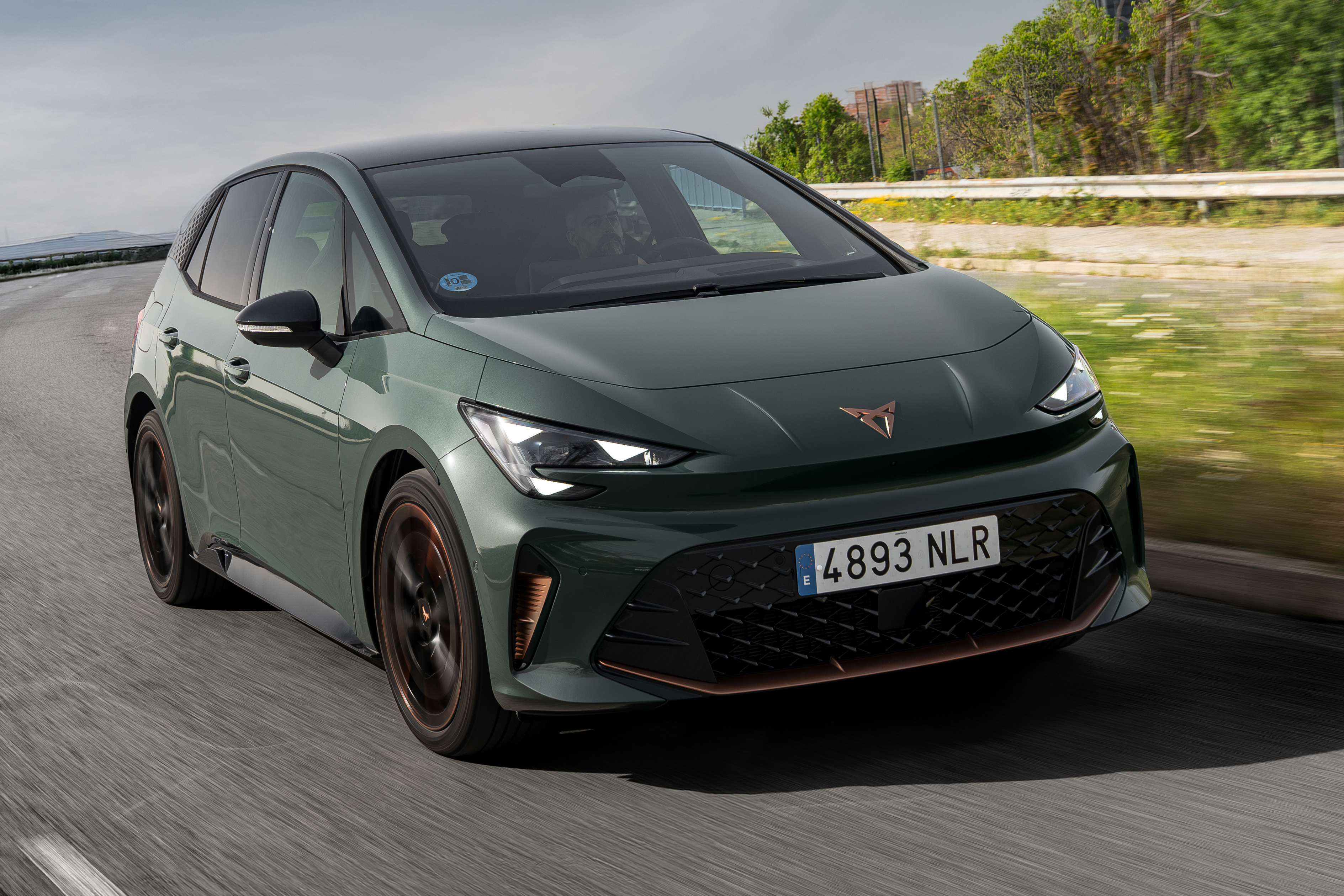
The ride is soft enough to take the edge off rough roads better than many electric cars, and while there's more body lean than in something like a Cupra Born, the Niro EV never feels vague or sloppy.
The steering is light, accurate and easy to trust. Around town the car feels small enough to be unintimidating, and the standard reversing camera and rear sensors make life even easier.
There are also multiple regenerative braking settings operated through the paddles behind the wheel, and these are genuinely useful. Max regen works well in town, while lower settings make the car feel more natural on faster roads.
Refinement is good too. There's little in the way of motor whine, and while some wind or road noise creeps in at higher speeds, it's rarely intrusive. The Niro EV feels grown up rather than impressive-for-an-affordable-EV, which is a subtle but important distinction.
How safe is the Kia Niro?
The Niro scored four stars in Euro NCAP testing in standard form, but achieved five stars when fitted with the optional safety pack.
In practical terms, the safety story is still strong enough. All cars get forward collision avoidance with car, cyclist and pedestrian detection, while higher trims add more advanced assistance systems including Highway Driving Assist and upgraded blind-spot support.
So while the headline Euro NCAP result is not quite as simple as some rivals, the Niro EV still offers the sort of active safety equipment family buyers will expect.
Running costs: What it's like to live with a Kia Niro
Running costs remain one of the Niro EV’s main attractions. It's efficient, mechanically simple by EV standards and backed by a very strong warranty.
Kia Niro charging times and costs
This is the main area where the Niro EV now feels a little old-school. Peak DC charging is just 72kW, and Kia quotes around 45 minutes for a 10 to 80 per cent rapid charge.
That's workable, but it no longer looks impressive against the standards newer EVs have set. Buyers who do lots of motorway miles will notice the difference compared with faster-charging alternatives.
At home, the story is better. A 7kW wallbox can fully charge the Niro EV in around nine and a half hours, which makes overnight charging easy enough for most owners.
So the Niro EV still works perfectly well as a home-charged family EV. It's only once you start making regular long-distance public charging stops that its slower charging curve becomes harder to ignore.
Kia Niro warranty and servicing
Kia’s seven-year or 100,000-mile warranty remains one of the strongest ownership arguments in the class. It's a major selling point for any Kia EV, and particularly reassuring in a car likely to be bought as a used family workhorse.
Kia also has a very solid reputation for reliability, and the older Niro family has established a good track record. Electric cars generally have fewer moving parts than petrol or diesel alternatives too, which only strengthens the case.
In short, the Niro EV still looks like a reassuring long-term ownership proposition.
Kia Niro insurance groups
Depending on the model, the Kia Niro EV sits between insurance groups 28 and 30 of 50. That's reasonable enough for an EV of this type and performance. It's worth getting quotes, as always, but the Niro EV doesn't look unusually painful to insure compared with other electric family cars.
How much does it cost to tax a Kia Niro?
After year one, the Kia Niro EV pays the standard annual EV VED rate, currently £200.
At the time the Niro EV was sold new, only the very top versions pushed near or above the old £40,000 threshold for the Expensive Car Supplement, which was later raised to . The current relevant threshold for EVs is £50,000, and the Niro EV sits below that, so there's no Expensive Car Supplement to worry about on normal UK-spec versions.
What trims are available with the Kia Niro?
When the Niro EV was fully listed in the UK retail line-up, the main trim walk-up was 2, 3 and 4.
The entry-level 2 came with 17-inch alloy wheels, LED headlights, rear sensors and camera, the digital instrument display and smartphone connectivity. It was not a bare-bones car by any means.
The 3 added the larger infotainment screen with navigation, heated seats and steering wheel, front parking sensors, keyless entry, wireless charging and the more useful Highway Driving Assist setup. This was always the sweet spot.
The 4 sat at the top with the head-up display, heated rear seats, ventilated front seats, premium audio, electric tailgate, sunroof and more advanced driver-assistance tech. It was appealing, but expensive enough to blur the gap to larger and more sophisticated EV alternatives.
Ask the Drive experts: common questions
How much does the Kia Niro EV cost?
What’s the maximum range of the Kia Niro EV?
Is the Kia Niro EV practical?
What is the best Kia Niro EV version?
Get our latest advice, news and offers
Keep me updated by email with the latest advice, news and offers from Drive.
.jpg)
.jpg)
.jpg)
.jpg)